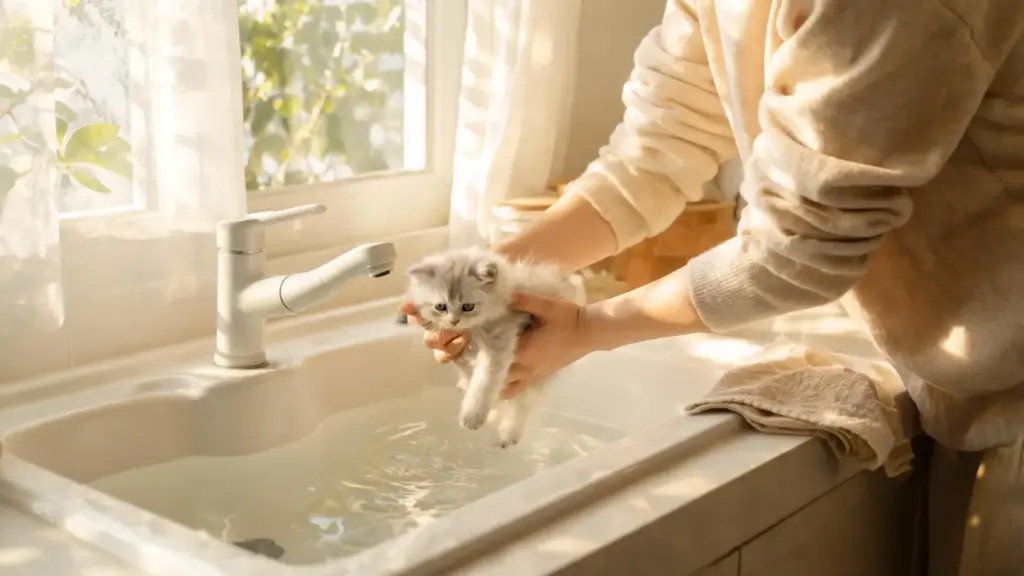
If you have ever tried to give a kitten a bath, you already know that no amount of tutorials could have fully prepared you for what actually happened.
Maybe your kitten turned into a tiny, screaming tornado the moment their paws touched water. Maybe you ended up wetter than they did.
Maybe you came out of the bathroom with three new scratches and a kitten giving you the most betrayed look you have ever seen in your life.
Bathing a kitten is one of those experiences that every cat owner handles differently, and most of them have a story to tell.
Whether this is your first time or your fifth attempt, we have got you covered.
Do Kittens Actually Need Baths?
This is the question most new kitten owners ask, and the cat owner community has a lot to say about it. The honest answer is: not always.
Cats are naturally clean animals. From a very young age, kittens instinctively groom themselves, and in most cases, they do a surprisingly good job.
Adult cats can spend anywhere from 30 to 50 percent of their waking hours grooming, and kittens start developing this habit early.
Bathing is just one small piece of the puzzle; a full kitten care routine covers everything from feeding to vet visits in one place.
What is The Right Cat Bath Temperature?
The right cat bath temperature should feel warm, not hot. Aim for lukewarm water, close to a kitten’s body temperature, around 100°F to 102°F.
A simple way to test it is by placing the water on the inside of your wrist. It should feel gently warm, like water used for a baby bath.
Cold water can make a kitten shake, panic, or quickly lose body heat, while hot water can burn sensitive skin.
Fill the sink or basin with only a small amount of water so the kitten does not feel trapped. Keep the room warm before starting, and have towels ready.
Good temperature control makes the bath safer, calmer, and much easier for both the kitten and the person bathing them.
What to Prepare Before Bathing a Kitten
Before bathing a kitten, keep every item within reach so the bath stays short, calm, and safe. The preparation steps highlight mild cat shampoo, towels, and warm water as basics.
- Mild Cat Shampoo: Use only kitten-safe shampoo because human shampoo can irritate delicate skin and leave unsafe residue behind.
- Soft Towel: Keep a dry towel ready so the kitten can be wrapped and warmed immediately after rinsing.
- Warm Water: Prepare lukewarm water before starting, and test it with your hand to avoid hot or cold shocks.
- Small Sink or Bowl: Use a shallow sink or bowl so the kitten feels secure and does not slip around.
- Washcloth: Keep a soft cloth nearby for gently cleaning dirty spots without pouring water over the kitten’s face.
How to Give a Kitten a Bath: Step-by-Step Process
Bathing a kitten is easier when every step is prepared before water touches the fur. A slow process, warm water, gentle handling, and quick drying help reduce stress and keep the kitten safe.
Step 1: Trim Your Cat’s Nails
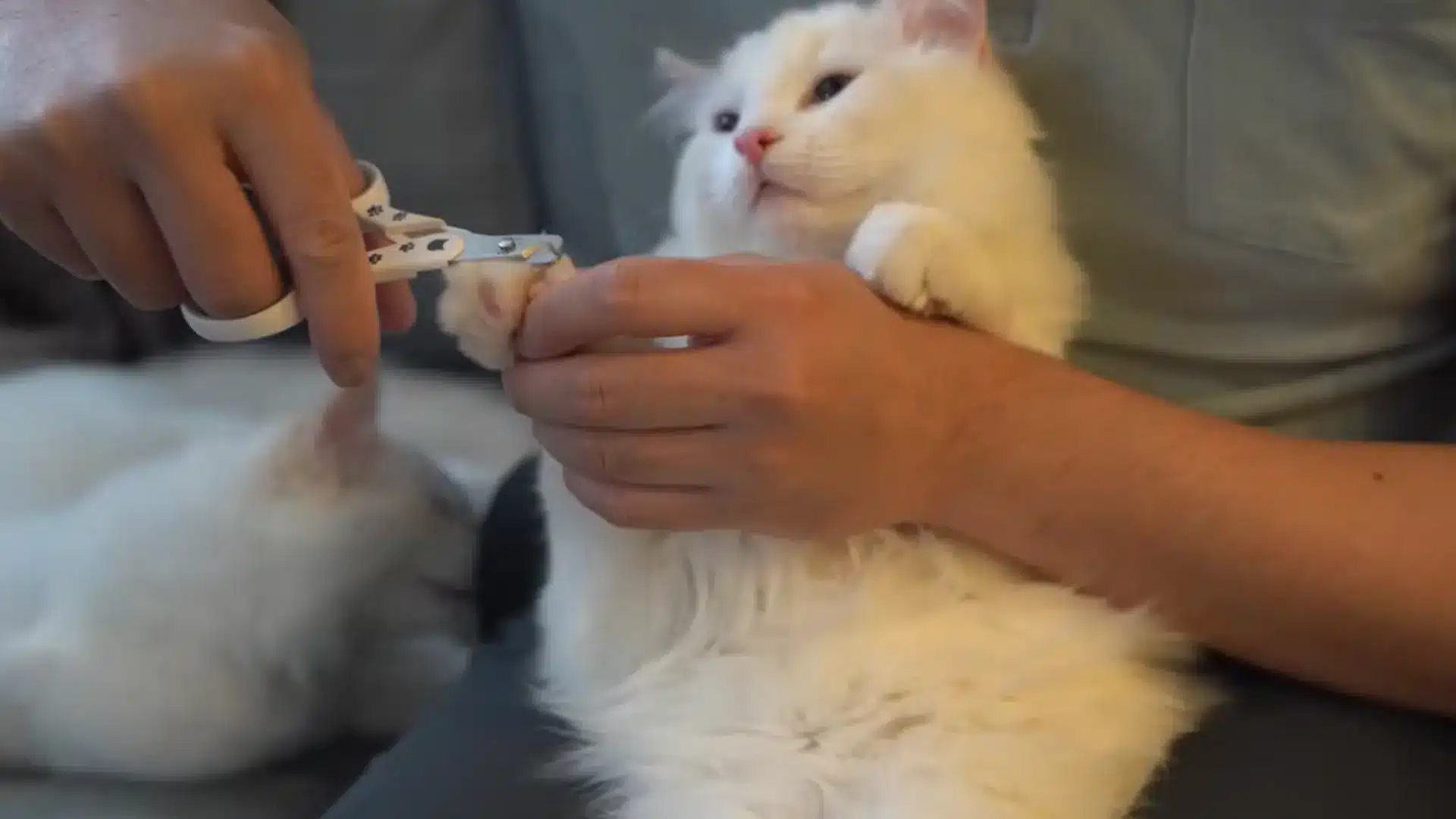
Trim your cat’s nails before bath time to reduce the chance of scratches. This step makes handling safer, especially if the kitten becomes nervous during the bath.
Clip each nail slowly and carefully. Avoid cutting into the quick, which is the pink stripe inside the nail. If the quick is cut, it can cause pain and bleeding.
That can make the kitten harder to calm and much more difficult to handle. If you’re nervous about doing this yourself, a walkthrough on trimming a kitten’s nails at home covers exactly where to stop.
Step 2: Brush Your Cat’s Hair
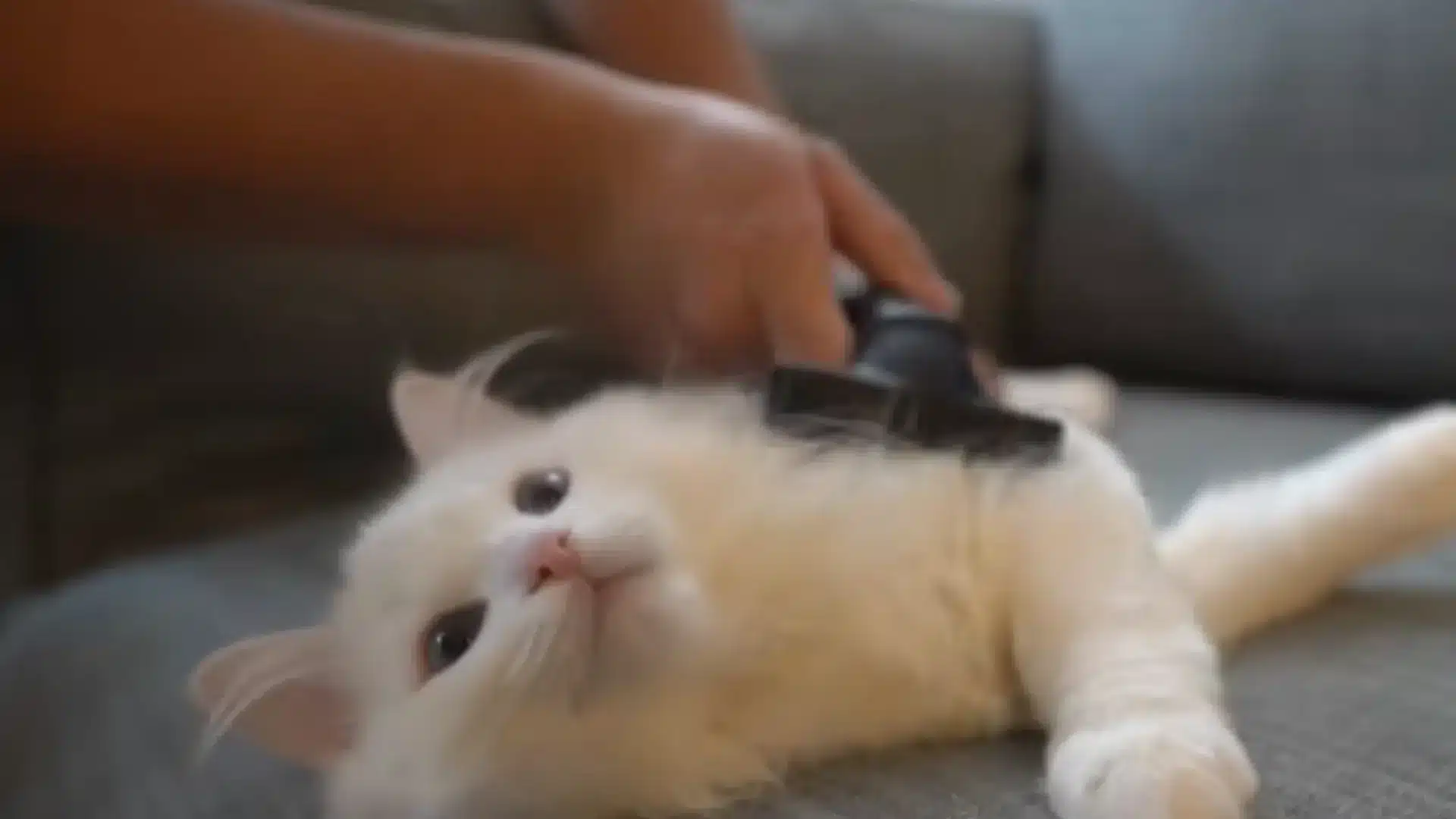
Brush your cat’s hair fully before using any water. This removes loose fur and helps the shampoo reach down to the skin more easily.
Brushing also helps prevent tangles from becoming worse during the bath. Once the coat is wet, mats can become very hard to loosen or remove.
A proper brush-out before bathing makes the washing process smoother and helps the coat clean more evenly from top to bottom.
Step 3: Prepare for the Bath
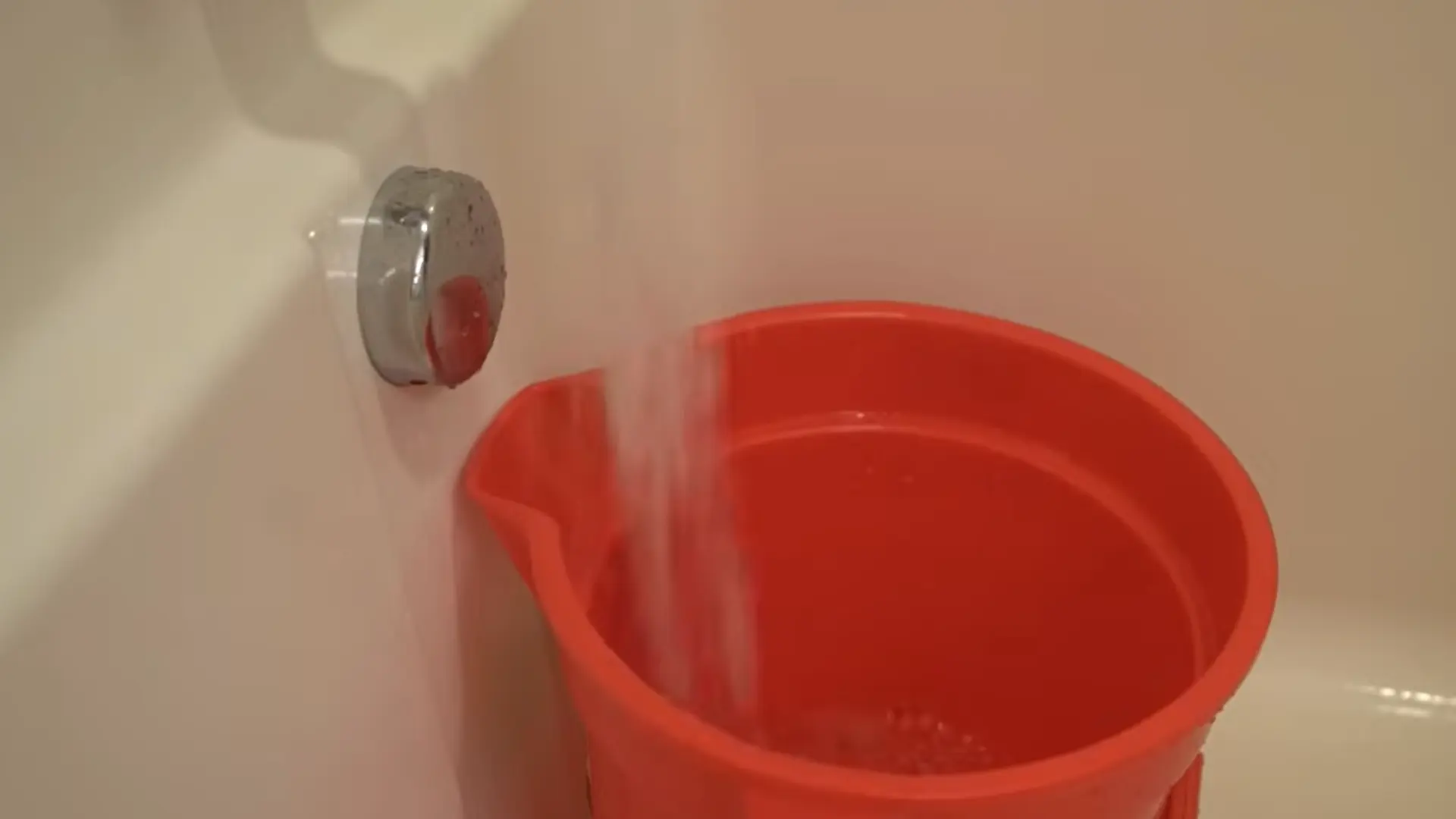
Prepare everything before bringing the kitten to the bath area. Keep a towel, shower cup, cat-specific shampoo, and a bucket of warm water ready nearby.
Fill the bucket before starting so the kitten does not hear running water. That sound alone can stress many cats.
Having everything within reach also keeps the bath shorter and prevents the kitten from being left unattended while searching for supplies.
Step 4: Gently Pour Water Onto Your Cat
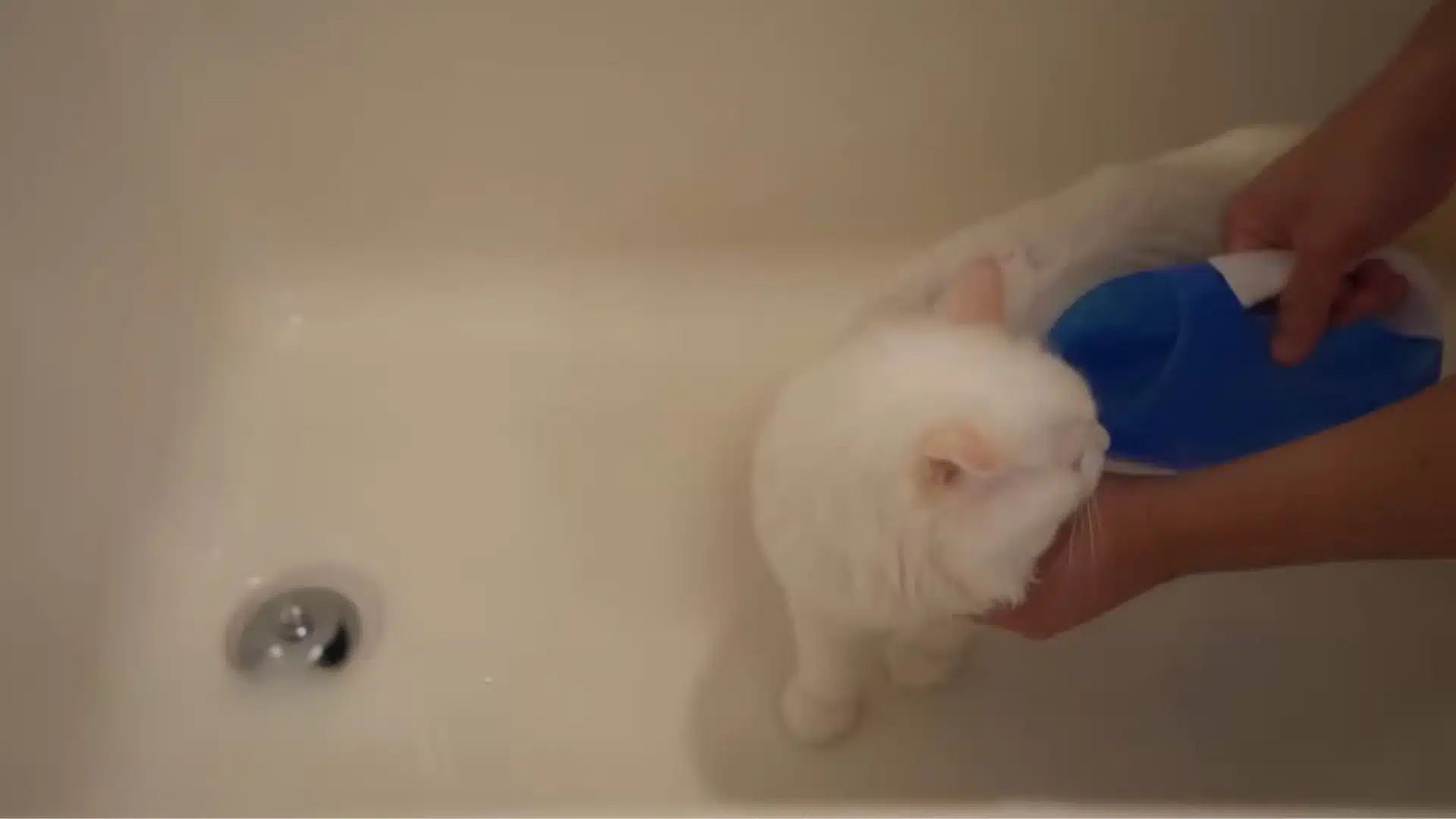
Use a shower cup to slowly and gently pour warm water over the kitten’s body. Do not rush this step, and make sure the coat is fully soaked before moving on to shampoo.
Keep the kitten facing forward while pouring the water. This position makes it harder for them to turn around and scratch.
A slow, steady approach helps the kitten feel more in control and makes the bath easier to manage.
Step 5: Apply Shampoo
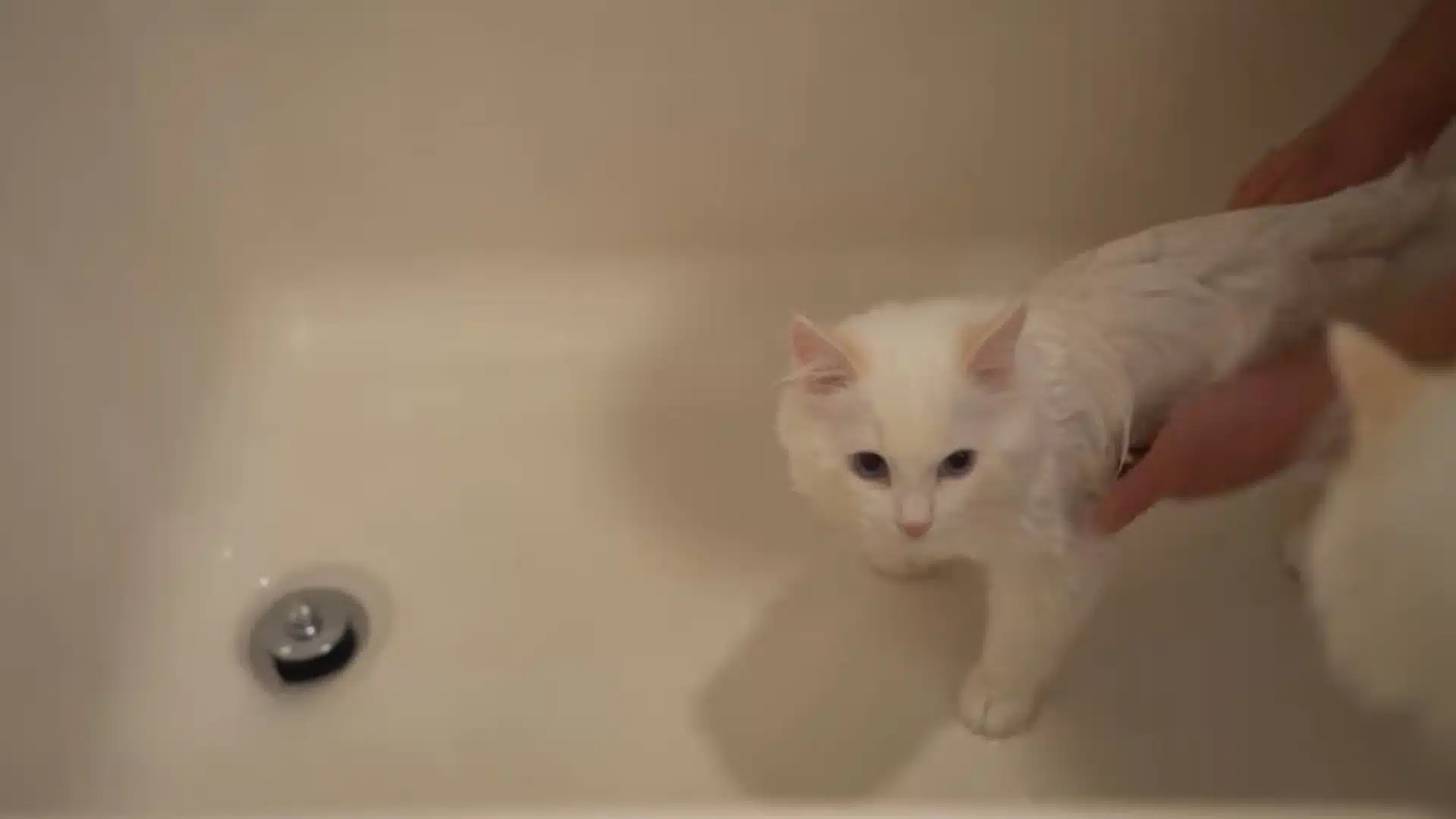
Apply cat-specific shampoo starting at the neck, then work down toward the tail. Massage it into the coat to reach the skin, and avoid shampooing the face directly.
Use a damp cloth for that area instead. Rinse the coat thoroughly after washing, especially around the armpits, groin, and between the toes.
If the coat still feels dirty after rinsing, repeat the shampooing process carefully until the fur feels clean.
Step 6: Dry Off Your Cat
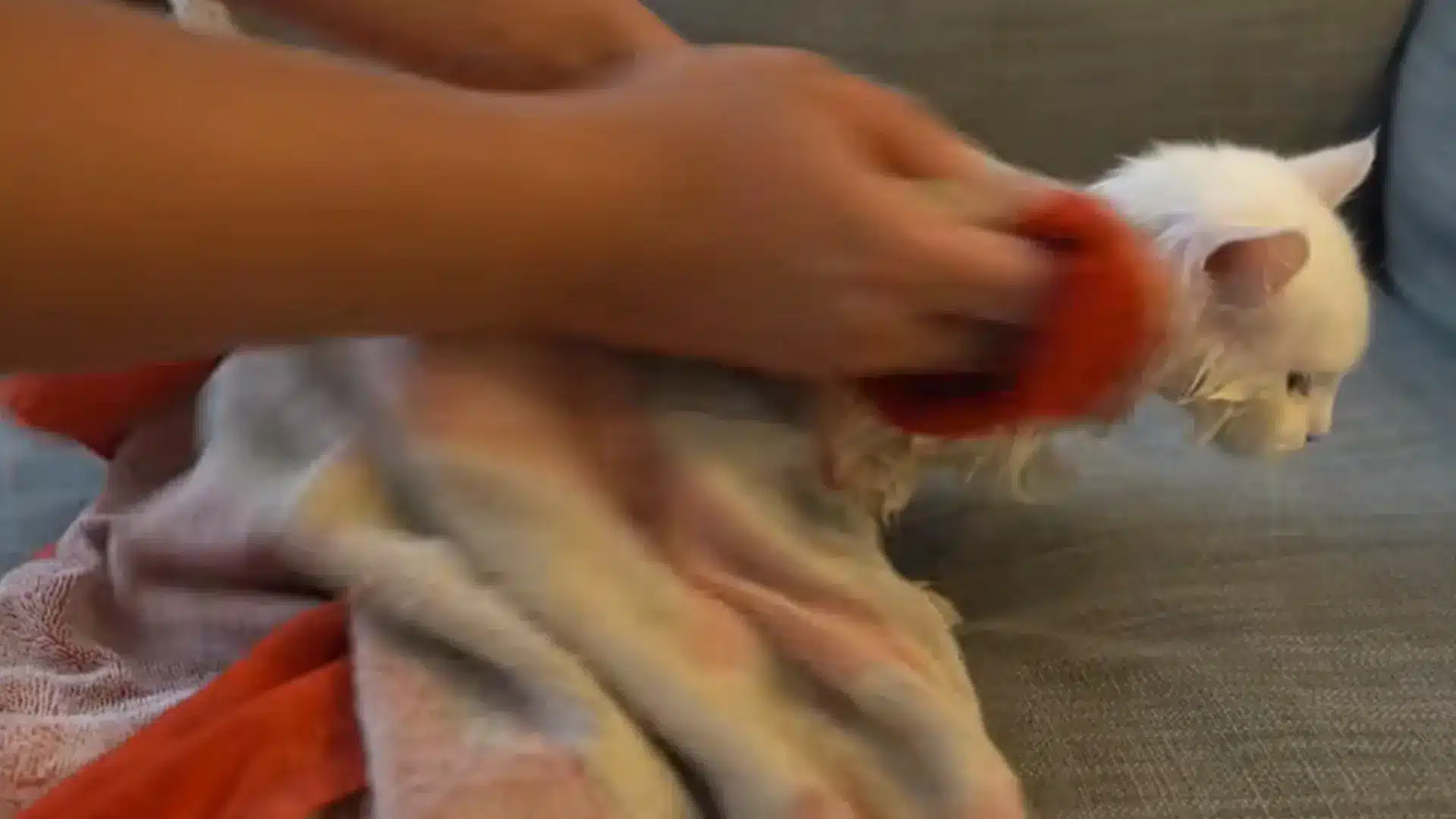
Once the bath is finished, wrap the kitten in a dry towel right away. Wrap your kitten in the warm towel immediately and press gently rather than rubbing.
Rubbing can tangle the fur and irritate the skin, so press and absorb. Have a second dry towel ready to swap in once the first one is soaked.
Keep the kitten warm because wet cats can get cold quickly. Continue towel drying until the coat is no longer dripping.
A hair dryer can help if the kitten accepts the sound, but it should only be used on the lowest heat setting.
This tutorial is based on a helpful video by The Cat Butler You can check out the original video on their YouTube channel or watch it below.
.
How to Wash a Kitten’s Face Safely?
The rule that almost every experienced owner agrees on is simple: never pour water on a kitten’s face, not even a little.
It gets into the ears, it goes up the nose, and it turns a manageable bath into a full panic situation very quickly.
Use a soft, damp washcloth to gently wipe the face. Work from the inside corners of the eyes outward, using a clean section of the cloth for each eye.
Wipe gently around the nose and chin. If there is dried debris around the eyes, hold the warm, damp cloth against it for a few seconds to loosen it before wiping it away.
Clean the face last, not first, as by the time you get to it, your kitten is already as wet and stressed as they are going to get.
Getting water in their face at the start of the bath makes everything that follows ten times harder.
How to Handle Common Kitten Bath Problems?
Here are the scenarios cat owners talk about most, and what actually helped.
“It’s also worth reading about safer ways to handle a resistant cat so you’re not tempted to scruff or force the process.”
The escape artist: Some kittens are remarkably fast and will launch themselves out of the sink before you have even started. Owners who deal with this consistently recommend bathing in a smaller, enclosed space, such as a laundry tub, or having a second person present to help calm the kitten.
The screamer: Some kittens cry loudly throughout the entire bath, regardless of how calm and gentle you are. Owners who have been through this say the most important thing is not to rush and panic in response to the noise.
The full meltdown: If your kitten becomes truly frantic, panting, trembling, or completely unable to calm down, stop. Wrap them up, comfort them, and try again the next day.
Signs That It Is Time to Bathe Your Cat
Most cats do an excellent job of keeping themselves clean, so regular baths are usually unnecessary. However, certain situations make bathing the safest and most effective option.
Knowing these signs can help keep your cat comfortable, prevent skin problems, and remove substances that grooming alone cannot handle.
- Dirty or Greasy Coat: If the fur feels oily, sticky, or is covered in dirt, a bath can remove buildup that normal grooming cannot.
- Strong Unpleasant Odor: A lingering smell that does not disappear after self-grooming may mean your cat needs a bath or a veterinary check.
- Flea Dirt or External Parasites: Flea dirt, debris, or parasites on the coat may require bathing as part of an overall flea treatment plan.
- Sticky or Toxic Substances: If your cat gets paint, oil, food, or another substance on the coat, bathe them promptly using a cat-safe shampoo.
- Long-Haired Coat With Heavy Dirt: Cats with long fur can accumulate mud, dust, and debris that are difficult to remove with brushing alone.
- Medical Recommendation: A veterinarian may recommend bathing with a medicated shampoo to help manage certain skin conditions or infections.
If your cat is simply shedding or has a small dusty patch, brushing or spot cleaning is often enough.
Reserve full baths for times when they are truly needed, and always use lukewarm water with a cat-safe shampoo to make the experience as gentle and stress-free as possible.
How Often Should You Bathe a Kitten?
For most kittens with no specific skin or coat condition, a bath every four to six weeks is more than enough, and many healthy indoor kittens go much longer between baths without any issue.
Hairless breeds like the Sphynx are the exception and typically need a bath every one to two weeks because they produce skin oils that fur would normally absorb.
When in doubt, ask your vet. They can give you a bathing frequency recommendation based on your specific kitten’s breed, coat type, and health.
When to Avoid Bathing a Kitten
Bathing is not always the safest option for every kitten. In some situations, a full bath can cause unnecessary stress or even increase health risks. If any of the conditions below apply, it is usually better to delay the bath or speak with a veterinarian first.
- Very Young Kittens: Kittens under eight weeks old cannot regulate body temperature well. Use a warm, damp cloth instead of giving a full bath.
- Sick or Weak Kittens: A kitten showing signs of illness, low energy, vomiting, or diarrhea should not be bathed until fully recovered or cleared by a veterinarian.
- Immediately After Vaccinations: If your kitten has recently received vaccinations, wait until they have recovered from any temporary soreness or stress before bathing.
- Open Wounds or Skin Problems: Avoid bathing kittens with cuts, stitches, severe rashes, or skin infections unless a veterinarian specifically recommends medicated bathing.
- Severe Flea Infestations: Very young kittens with heavy flea infestations need proper veterinary guidance. Bathing alone may not safely solve the problem.
- Extreme Cold Conditions: Do not bathe a kitten if you cannot keep them warm afterward. Wet kittens lose body heat quickly and can become chilled.
- High Stress or Panic: If your kitten becomes extremely frightened, trembles, pants, or cannot calm down, stop the bath and try again after gradual handling practice another day.
Practical Kitten Bath Tips From Cat Owners
These owner-tested tips can make bath time calmer, warmer, and easier, especially when a kitten is nervous or difficult to handle.
- Use a Pillowcase: Some owners gently place the kitten inside an old pillowcase while rinsing. It helps them feel contained while water still passes through.
- Warm the Towel First: Put the towel in the dryer for a few minutes before bathing. A warm towel helps comfort the kitten quickly after rinsing.
- Avoid Direct Eye Contact: Some kittens give a dramatic warning look during bath time. Staying calm and avoiding staring can help reduce tension.
- Expect The First Bath to Be Hardest: Many owners say the first bath is the most stressful. Repeated calm experiences can build tolerance over time.
- Recruit a Helper: One person can hold and soothe the kitten while another washes. This makes the bath faster and easier to control.
- Use Treats During The Bath: A lick mat with kitten-safe treat paste can keep the kitten focused while the body is being washed.
- Repeat The Same Ending: Use the same towel, treat, and cuddle spot after each bath. A predictable routine helps kittens feel safer.
When Should You Ask for Professional Help
Most kitten baths can be handled at home, but there are situations where a professional groomer or vet is the smarter call.
If your kitten has a medicated shampoo prescribed by a vet, a groomer experienced with cats can apply it far less stressfully than a first-time owner might.
Kittens with matted fur, skin infections, or flea infestations that have gotten out of hand also benefit from professional handling.
If your kitten has had three genuinely traumatic bath experiences in a row and the resistance is worsening rather than improving, a professional groomer can assess whether a calmer, more controlled environment makes a difference.
Conclusion
Giving a kitten a bath is rarely glamorous. It is wet, occasionally dramatic, and almost always a little chaotic, especially the first few times. But it does get easier, and that is worth holding onto on the hard days.
With the right preparation and a calm approach, most kittens gradually build tolerance to bath time.
What feels like a battle in week one often becomes a manageable routine by month three. The scratches fade. The screaming gets quieter. Some kittens even stop giving you the betrayed look afterward.
Stay calm, end every bath on a positive note, and always follow it with something your kitten loves, whether that is a treat, a warm cuddle, or simply being left in peace to recover their dignity.
Have a bath time story of your own? Drop it in the comments below.
Frequently Asked Questions
At What Age Can You Start Bathing a Kitten?
Most vets recommend waiting until a kitten is at least eight weeks old before giving them a full bath.
My Kitten Absolutely Hates Water. What Do I Do?
Start with gradual desensitization. Let them explore an empty sink, introduce damp paws with a washcloth, and build up slowly over several weeks.
Can I Use Dry Shampoo on a Kitten?
Yes, there are dry shampoos specifically made for cats that can work well for light cleaning between baths.
Is It Normal for a Kitten to Shiver After a Bath?
A little shivering right after a bath is common, since wet fur cools down fast. It should stop within a few minutes once your kitten is dry and warm. If the shivering continues, your kitten seems weak or unusually quiet, or this happens after every bath, call your vet.