You spot a red-coated dog at the park and pause. It looks like a Golden Retriever, but smaller, sharper, and almost fox-like in the way it moves.
That is probably a Nova Scotia Duck Tolling Retriever, one of the most fascinating yet overlooked dogs in the retriever family.
Known for its energy, intelligence, and unusual hunting style, the Toller is not just another pretty sporting dog. It was bred to lure ducks, retrieve from cold water, and work closely with people.
At home, it can be affectionate, funny, loyal, and endlessly active. But this breed is not for everyone. Owning one takes time, training, and daily commitment.
In this blog, we cover the Toller’s history, looks, temperament, exercise needs, training, grooming, health, and family suitability.
What is a Duck Toller Retriever?
The Nova Scotia duck tolling retriever is a medium-sized sporting dog developed specifically for waterfowl hunting.
It is also the smallest of all the retriever breeds, making it compact, agile, and well-suited to active outdoor work. The nickname “toller dog” comes from the breed’s unique hunting method.
The dog runs, jumps, and plays near the water’s edge, often mimicking the quick, playful movements of a fox. Ducks become curious and swim closer to investigate the activity.
Once they are within range, the hunter calls the dog back and takes the shot. The Toller then retrieves the downed bird from the water.
It is a clever system that requires energy, intelligence, and teamwork, and the breed performs both parts of the job with natural enthusiasm.
History of the Toller Dog and Its Hunting Origins
The breed’s story begins in Yarmouth County, Nova Scotia, in the early 1800s. Hunters there needed a dog that could lure and retrieve waterfowl in the cold coastal waters of Atlantic Canada.
They called it the Little River Duck Dog, named after the Little River Harbor area where it was developed. The exact mix of breeds that went into creating the Toller isn’t fully settled.
Spaniels, setters, retrievers, and possibly a collie type were likely involved. The goal was a smaller, more active hunting companion that could work in cold water and tight shorelines.
The Canadian Kennel Club gave the breed official recognition in 1945 and renamed it the Nova Scotia Duck Tolling Retriever.
The American Kennel Club granted full recognition in 2003, placing the Toller in the Sporting Group.
Nova Scotia Duck Tolling Retriever Appearance and Size
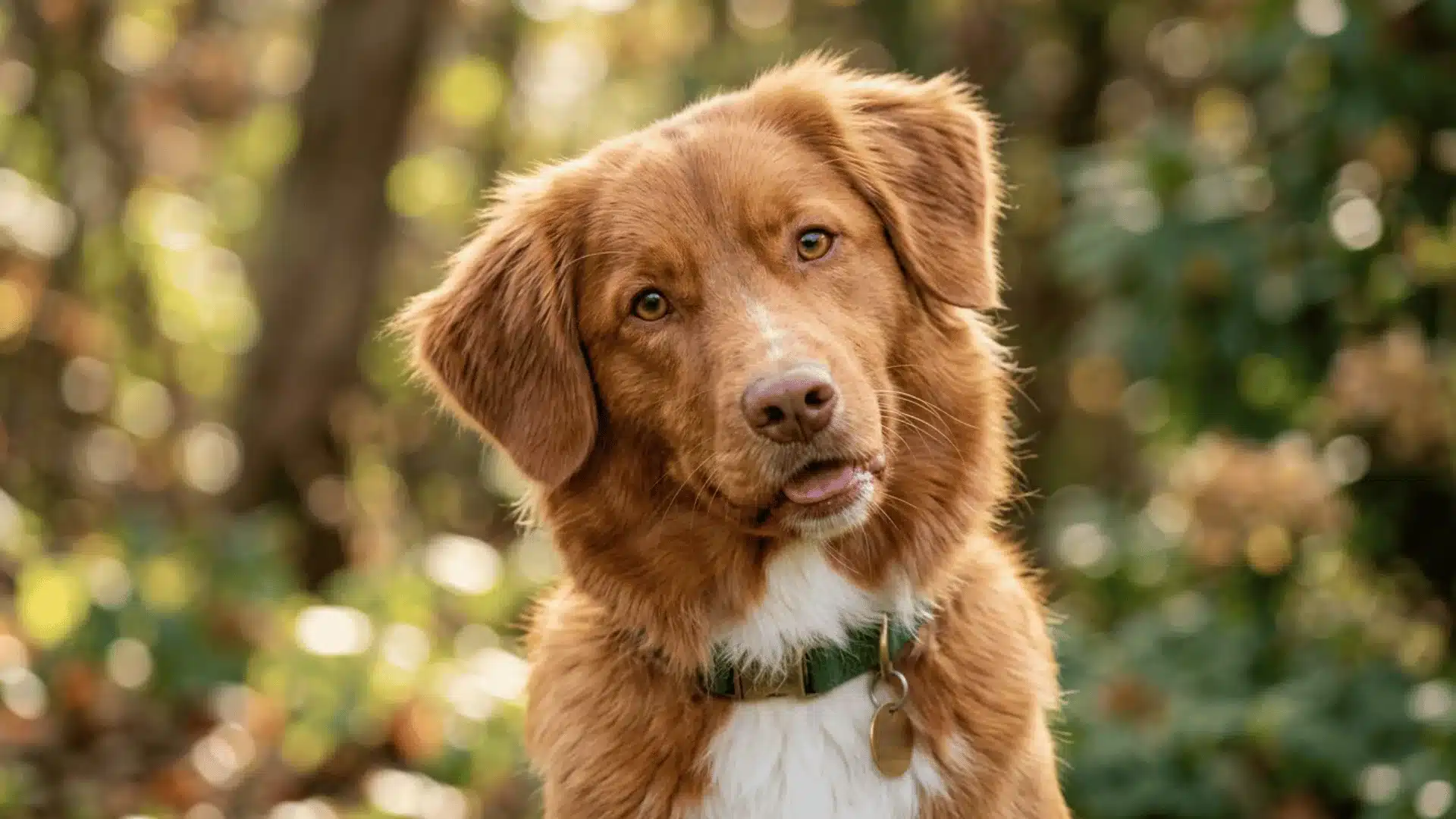
A Nova Scotia Duck Tolling Retriever, or Toller, is a compact, athletic dog with a fox-like face and an alert expression.
It has a medium-length, water-repellent double coat in shades of orange to deep red, often with white markings on the chest, paws, feet, and tail tip.
Tollers also have a long bushy tail, webbed feet, and a sturdy build made for swimming and retrieving.
| Trait | Description |
|---|---|
| Weight | 30 to 50 pounds, with females usually on the lighter end |
| Height | 17 to 21 inches at the withers |
| Coat | Medium-length, dense double coat |
| Color | Red to orange, from coppery tones to deep red |
| Markings | White patches often appear on the chest, paws, feet, and tail tip |
| Tail | Long, bushy, and often carried high |
| Feet | Webbed and well-suited for swimming |
| Build | Compact, muscular, and athletic |
The breed standard is strict about one thing: a Toller should look like a dog that can actually do its job. Heavy or weak builds are penalized in conformation shows.
What is the Nova Scotia Duck Tolling Retriever Temperament Like?
Spend a day with a Toller and one thing becomes clear: this dog is always switched on. Tollers are highly intelligent, alert, outgoing, and ready for action.
They are affectionate with their families, generally patient with children, and often get along well with other dogs when socialized early.
What surprises many new owners is their reserved nature with strangers. This is not shyness. A Toller may simply take time to warm up, but once comfortable, it is friendly.
One quirk worth knowing is the “Toller scream,” a high-pitched cry they make when very excited, often before swimming or fetch. It can startle first-time listeners.
The good news is that after enough exercise and mental stimulation, Tollers usually settle well indoors. They do have an off switch. You just have to earn it.
If you’re thinking about calm dog breeds for a relaxed household, the Toller is not that dog. It’s a working breed that needs a working schedule.
Duck Toller Retriever Exercise and Mental Stimulation Needs

A Toller needs at least one to two hours of exercise every day. Without it, they can become restless, destructive, or bark more than you’d like.
Swimming is often their favorite activity, especially when it involves fetch near water. They also enjoy hiking, running, and anything that lets them move at a steady pace.
Mental stimulation matters just as much as physical exercise. A Toller can have a long run and still feel unsettled if their brain has not been challenged.
Puzzle feeders, scent work, obedience training, and structured games all help. The breed also does well in dog sports such as agility, dock diving, flyball, and rally obedience.
These activities give them a job, which working dogs thrive on. Apartment living can work, but only with a serious daily commitment to outdoor time. A fenced yard makes life much easier.
How to Train a Toller Dog the Right Way?
Tollers are smart, eager retrievers who learn quickly, but they need fun, varied, and positive training to stay focused and confident.
- Keep Sessions Short: Train for around 15 to 20 minutes to prevent boredom and help your Toller stay engaged.
- Use Positive Reinforcement: Reward good behavior with treats, praise, toys, or play, as Tollers respond best to encouragement.
- Avoid Repetition: Once your Toller understands a cue, move on or add a new challenge to prevent them from losing interest.
- Start Training Early: Begin basic cues as early as 8 weeks old to build good habits from the beginning.
- Try Puppy Classes: Around 4 months, obedience classes can help improve manners, confidence, and socialization skills.
Duck Toller Retriever Grooming and Coat Care
The Toller’s coat is lower maintenance than it looks. Under normal conditions, brushing once or twice a week is usually enough. During spring and fall shedding seasons, daily brushing helps keep loose fur under control.
The coat is naturally water-repellent, so dirt often falls off once it dries, making baths every four to six weeks sufficient unless the dog gets especially messy.
Pay close attention to the ears, especially after swimming. Moisture in the ear canal can lead to infections, so checking and drying the ears after water activities is a smart habit.
Trim the nails when they start clicking on hard floors, brush the teeth regularly with dog toothpaste, and check between the toes for debris.
For owners researching dog breeds that shed the least, the Toller is a moderate shedder, but not among the heaviest retrievers.
How Much Should a Toller Dog Eat?
Most adult Tollers do well on about 2.5 to 3 cups of high-quality dry food per day, split into two meals. That said, every dog is different. Age, size, metabolism, and activity level all affect how much your dog actually needs.
Puppies need more frequent meals, three to four times a day up to six months, then twice daily from there. Around 12 months, transition them to adult food.
Keep an eye on your Toller’s weight. They can gain weight if overfed, especially as they age and become less active.
A clean bowl of fresh water should always be available, particularly after exercise or time in the water.
Note: Feeding amounts vary by brand and formula. Check the guidelines on your specific food packaging and consult your vet for a recommendation tailored to your dog.
Nova Scotia Duck Tolling Retriever Health and Lifespan
Tollers typically live 12 to 14 years, which is a healthy lifespan for a medium-sized breed. Like any purebred dog, they carry some breed-specific health risks that prospective owners should know about before committing.
Common health concerns:
- Hip and elbow dysplasia: Structural conditions affecting the joints, manageable with early detection and weight control
- Progressive retinal atrophy: An inherited eye condition that can eventually lead to vision loss
- Collie eye anomaly: Another inherited eye condition where the eye doesn’t develop normally
- Addison’s disease: An autoimmune condition that affects the adrenal glands; this breed has a known susceptibility
- Cleft palate: A genetic defect with a carrier rate of around 15% in the breed population, per research from the Canadian Nova Scotia Duck Tolling Retriever club
When buying from a breeder, ask specifically about OFA certifications for hips and elbows, and DNA testing for eye conditions. Reputable breeders test both parents before any breeding decision. Skipping that step is a red flag.
Nova Scotia Duck Tolling Retriever Pros and Cons
The Nova Scotia Duck Tolling Retriever can be a wonderful companion for the right home, but this breed is not a match for every lifestyle. Here’s a quick look at the main benefits and challenges of owning a Toller.
| Pros | Cons |
|---|---|
| Intelligent and quick to learn | Needs a lot of daily exercise |
| Affectionate and loyal with family | Can be noisy when excited |
| Great for dog sports and outdoor activities | Not ideal for inactive households |
| Compact compared with many retrievers | Can become destructive if bored |
| Strong swimmer and natural retriever | Needs consistent training and mental stimulation |
Overall, the Toller is best suited to active owners who enjoy training, outdoor time, and daily engagement with their dog.
For families that can meet its exercise and mental stimulation needs, this breed can be playful, devoted, and deeply rewarding.
Is a Duck Toller Retriever Right for Your Family?

The Toller is a wonderful dog, but it is not right for every family. This breed suits active owners who enjoy the outdoors and want to train, play, and work with their dog, not just take short walks.
Hunters, hikers, and energetic families with older children often find the Toller an excellent companion. It can also adapt to apartment life, but only with serious daily exercise and mental stimulation.
A home with outdoor space usually makes things easier. Tollers are less suitable for very young families, people who work long hours without dog care, or anyone wanting a low-maintenance pet.
Without enough activity, they can become restless and difficult.
Early socialization with children, pets, and new places is important. For most seniors, the Toller’s energy makes it a poor match unless the owner is very active.
Conclusion
The Duck Toller Retriever is a small retriever with a huge personality. It is clever, athletic, affectionate, and always ready for the next challenge.
For the right owner, this breed can be an unforgettable companion: playful outdoors, loyal at home, and eager to be involved in everything. But a Toller also needs more than basic care.
Daily exercise, mental stimulation, patient training, grooming, and early socialization are all part of life with this energetic dog.
If you can give it the structure and activity it needs, the reward is a devoted partner who brings excitement, humor, and heart into your everyday routine.
Think a Toller could be your perfect match? Drop your thoughts, questions, or personal experiences in the comments below.
Frequently Asked Questions
Are Nova Scotia Duck Tolling Retrievers Good for First-Time Owners?
They can be, but they are usually better for active first-time owners who are ready for daily exercise, training, and mental enrichment. A Toller is smart and trainable, but it can become noisy, restless, or destructive if under-stimulated.
Do Nova Scotia Duck Tolling Retrievers Like Water?
Most Tollers enjoy water because the breed was developed for waterfowl work and retrieving in cold coastal conditions. Swimming, dock diving, and water fetch can be excellent outlets, but puppies should be introduced to water safely and gradually.
Are Tollers Hypoallergenic?
No, Tollers have a medium-length double coat and shed moderately, with heavier seasonal shedding. They are not a good choice for someone specifically looking for a low-shedding or hypoallergenic breed.