You notice it during an ordinary belly rub. Your dog’s skin feels thicker than it did last month, darker in patches, rough under your fingertips, maybe even a little greasy.
Then comes the smell, the itching, the licking, or the same stubborn spots returning after every bath. Suddenly, elephant skin on dogs no longer sounds like a strange phrase online.
It sounds like exactly what you are seeing at home. The hard part is that this skin change is rarely the whole story.
It is usually the visible clue left behind by something deeper that has been irritating the skin for a while.
The reassuring part is that once the real cause is found, the treatment plan becomes much clearer. Let’s look at what this means before it gets worse.
What is Elephant Skin on Dogs?
Elephant skin on dogs is a visible change in skin texture. The skin becomes thick, dark, rough, and leathery after long-term irritation. The medical term is lichenification.
Pachydermatitis is another term for the same thickened-skin pattern.
This usually happens when inflammation continues for weeks or months. A common cause is yeast overgrowth, especially Malassezia pachydermatis.
This yeast normally lives on healthy dog skin, but it can multiply when allergies, moisture, oil buildup, skin folds, or poor airflow disrupt the skin barrier. As yeast increases, itching and inflammation worsen.
The dog may scratch, lick, smell musty, or develop greasy patches. Over time, the skin reacts by thickening and darkening.
The condition is treatable, but the trigger behind the yeast must be found to prevent repeat flare-ups.
Understanding common dog skin conditions can help you recognize when something is off before it progresses this far.
Where Does Elephant Skin Typically Appear?
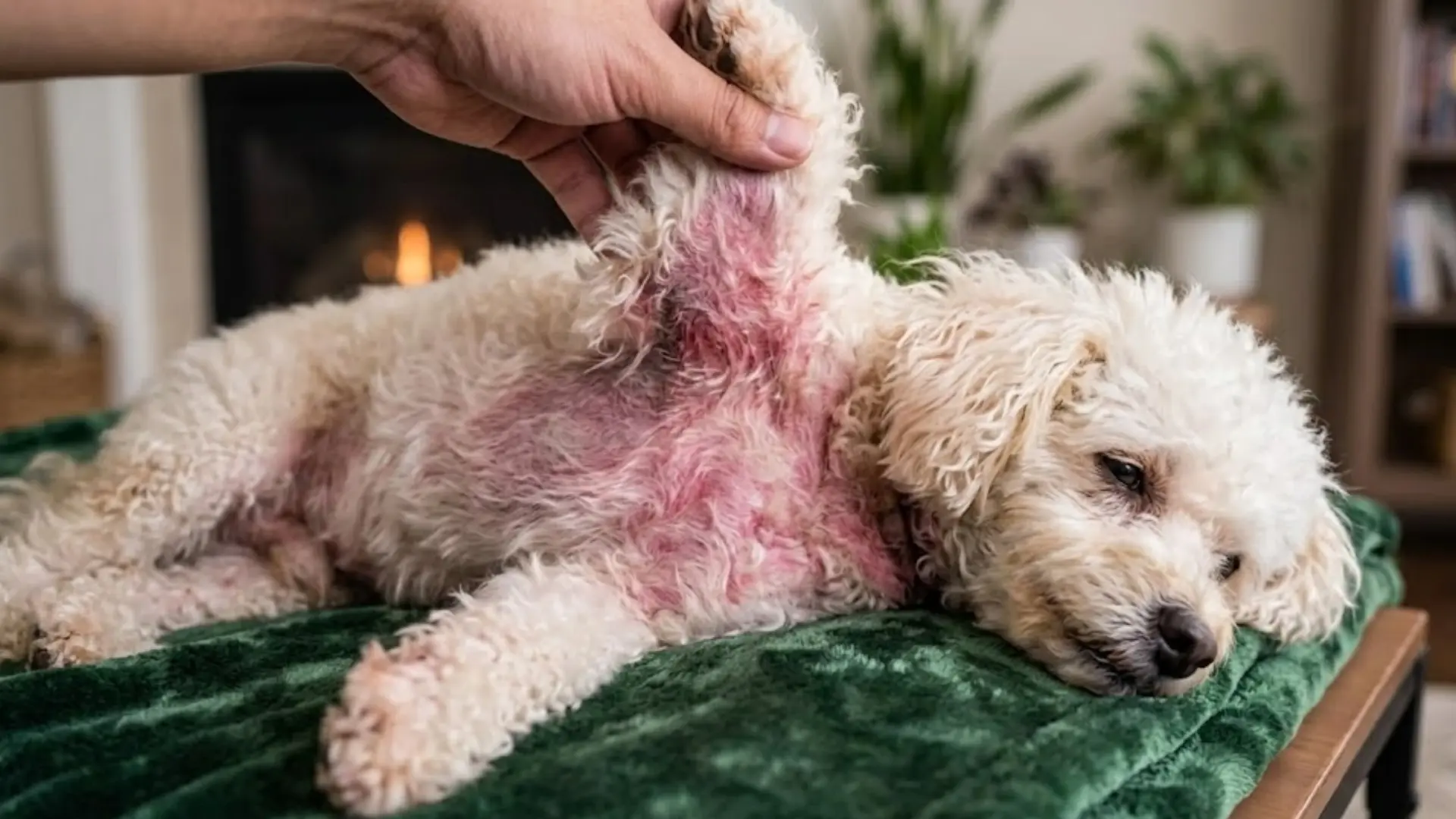
Elephant skin on dogs usually shows up in areas that stay warm, moist, or irritated for a long time. These spots are more likely to trap yeast, oil, dirt, and sweat, which can lead to thick, dark, rough, or leathery skin over time.
- Armpits: This area often traps heat and moisture, making it a common place for yeast buildup, itching, redness, and skin thickening.
- Belly and Groin: The skin here is thinner and more sensitive, so yeast irritation can quickly lead to dark patches, odor, and rough texture.
- Paws: Dogs with yeast problems may lick or chew their paws often, which can cause swelling, brown staining, redness, and thickened skin between the toes.
- Ears: Yeast can grow inside or around the ears, causing odor, scratching, head shaking, greasy buildup, and irritated skin near the ear flap.
- Skin Folds: Breeds with wrinkles or loose skin may develop elephant-like skin in folds around the face, neck, tail, or body, where moisture tends to get trapped.
What Causes Elephant Skin in Dogs?
Elephant skin on dogs usually happens after the skin has been irritated for a long time. Yeast can make the skin itchy, red, oily, and smelly.
1. Allergies
Allergies are among the most common causes of thick, irritated skin in dogs. Environmental allergies can come from pollen, grass, dust, or mold.
Food allergies may also trigger itching, redness, and repeated skin flare-ups. Flea allergy dermatitis is another major cause, especially when a dog reacts strongly to flea bites.
When allergies keep making the skin itchy, the dog may scratch or lick often. Over time, this irritation can lead to yeast overgrowth and elephant-like skin.
If your dog has been dealing with recurring redness and itching, learning about allergic dermatitis in dogs can help you recognize how allergies and skin problems connect.
2. Moisture and Skin Folds
Yeast grows well in warm, damp places. That is why skin folds, ears, paws, armpits, belly, and groin are common problem spots.
These areas can trap sweat, oil, dirt, and moisture, especially in dogs with wrinkles or loose skin.
When the skin stays damp for too long, yeast can multiply, causing itching, odor, redness, and greasy buildup. If the irritation continues, the skin may become darker, thicker, and rough to the touch.
3. Chronic Ear or Paw Infections
Dogs with recurrent ear infections or constant paw licking may also have yeast problems on the surrounding skin.
Yeast often affects the ears because they can stay warm and moist, especially in dogs with floppy ears. Paws are another common spot because dogs may lick them when they feel itchy or irritated.
This licking adds moisture, making the problem worse. Over time, the skin around the ears, toes, or paw pads may become red, smelly, dark, or thickened.
4. Hormonal or Immune Problems
Some dogs are more likely to develop recurring skin infections due to underlying health issues.
Hormonal problems, such as thyroid disease, can affect the skin and coat, making infections easier to develop.
Dogs with weaker immune systems may also have a harder time keeping yeast under control. These problems are not always easy to spot at home.
Symptoms of Yeast Dermatitis in Dogs
Yeast dermatitis in dogs often gets worse over time. Early signs may look mild, but repeated irritation can lead to odor, greasy skin, dark patches, hair loss, and thick elephant-like skin.
- Itching and Scratching: Dogs with yeast dermatitis often scratch, lick, chew, or rub the same spots repeatedly because the skin feels irritated.
- Musty Skin Odor: A strong musty, cheesy, or sour smell can be a clear warning sign, especially when it comes from the ears, paws, or skin folds.
- Greasy or Flaky Skin: The skin may look oily, scaly, crusty, or flaky, and the coat around the area may feel dirty even after bathing.
- Dark, Thickened Skin: Long-term irritation can cause the skin to darken, thicken, and become rougher, creating the elephant-skin look many dog owners notice.
- Ear and Paw Problems: Yeast often affects ears and paws, leading to head shaking, ear scratching, paw licking, redness between the toes, or brown staining around the feet.
These signs should be checked before the infection spreads or becomes chronic. Early treatment can reduce itching and prevent changes in skin thickness.
See how a yeast infection on a dog’s skin looks in its early stages, so you can act sooner.
How Do Vets Diagnose Yeast Dermatitis?
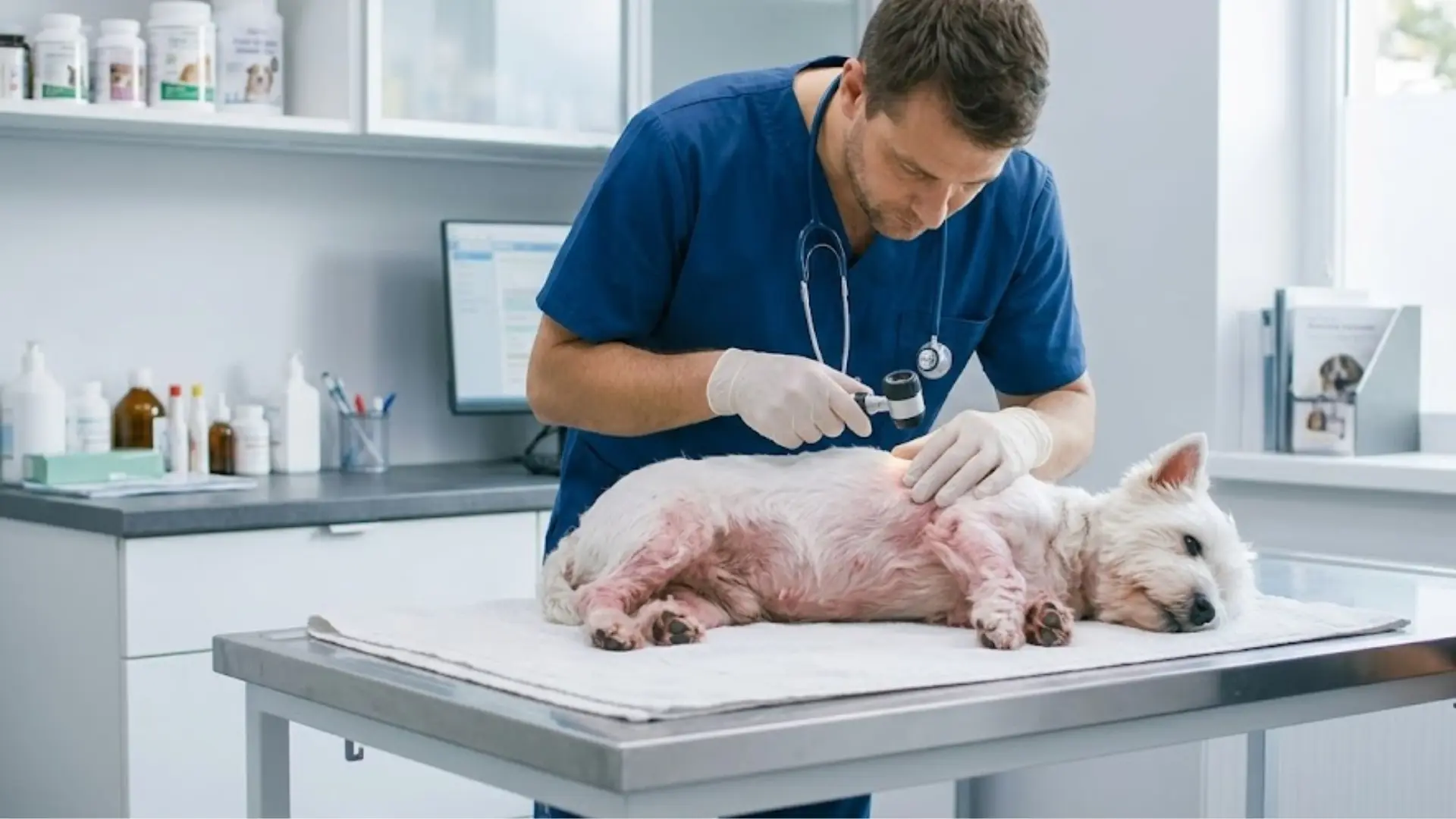
A vet diagnoses yeast dermatitis by looking closely at your dog’s skin and checking the areas that smell, itch, or look thick and dark.
The vet may ask when the itching started, where it happens most, and whether your dog has allergies, ear problems, flea exposure, or repeated paw licking.
To confirm yeast, the vet often collects a small sample from the skin with tape, a swab, or a gentle scrape. That sample is examined under a microscope to determine whether yeast cells are present.
For more complex or stubborn cases, a vet may also perform a skin biopsy, in which a small plug of skin is removed under local anesthesia. This is more invasive but gives substantially more diagnostic detail.
The vet may also check for bacteria, mites, or other skin issues because these can look similar.
If the problem keeps coming back, the vet may suggest allergy testing, bloodwork, or other tests to find the root cause and choose the right treatment plan early.
The content cannot replace diagnosis or treatment from a licensed veterinarian. Call your vet if symptoms are spreading.
Treatment Options for Elephant Skin in Dogs
Treatment works best when it clears the yeast and controls the allergy, moisture, oil, hormone, or immune problem that allowed it to return.
1. Topical Treatments
Topical care is often the first step for mild or moderate yeast dermatitis.
Medicated shampoos remove oil, reduce yeast, and help the skin barrier recover. Dogs with greasy skin may need a degreasing shampoo before antifungal shampoo can work well.
Products may contain chlorhexidine, miconazole, ketoconazole, selenium sulfide, or benzoyl peroxide.
Many shampoos must stay on the skin for about ten minutes before rinsing. Sprays, wipes, or mousses can help folds, paws, and other hard-to-wash areas.
2. Oral Medications
Oral medication may be needed when the infection is widespread, severe, or not improving with baths alone.
Vets may prescribe antifungal drugs such as ketoconazole or itraconazole for several weeks, depending on the case.
If bacteria are also present, antibiotics may be added. These medicines should only be used under veterinary guidance.
Some oral antifungals can affect the liver, so longer courses may require blood work to monitor safety, track response, and adjust treatment when needed.
3. Treating the Underlying Cause
Long-term control depends on treating the cause of the yeast.
If allergies are driving inflammation, your vet may recommend a food trial, allergy testing, immunotherapy, or daily allergy medication.
If hormones are involved, conditions such as hypothyroidism or Cushing’s disease need direct treatment.
Skin folds, excess oil, and frequent moisture also need routine care. Without this step, the current infection may clear temporarily, then return with the same itching, odor, and thickened skin.
Which Dogs are Most at Risk for Elephant Skin?
Any dog can develop yeast dermatitis, but the risk is higher in breeds with skin folds, heavy ear flaps, oily skin, or dense coats.
West Highland White Terriers, Basset Hounds, Cocker Spaniels, Silky Terriers, Australian Terriers, Maltese, Chihuahuas, Poodles, Shetland Sheepdogs, Lhasa Apsos, and Dachshunds are breeds with a genetic predisposition.
Bulldogs, Pugs, Boxers, Shih Tzus, Golden Retrievers, Labrador Retrievers, and English Setters may also face more issues because moisture can stay trapped in ears, folds, or thick coats.
If your dog belongs to one of these breeds, watch the belly, armpits, groin, paws, ears, and skin folds for darkening, odor, grease, itching, or rough patches.
Breed risk does not mean your dog will get it, but early changes should be checked before the skin thickens further.
How Long Does Treatment Take?
Treatment time depends on how advanced the infection is. Mild, limited yeast dermatitis may improve within a few weeks when baths and medication are used correctly.
Long-standing infections with dark, thick skin, hair loss, crusting, or bacterial involvement can take months to resolve. Itching often improves first, followed by decreases in redness, odor, and grease.
Dark patches and leathery texture fade more slowly because the skin needs time to repair. Some thickened areas may not return fully to normal, especially after repeated flare-ups.
Dogs with allergies, hormone disease, or skin folds may need maintenance care after the main infection clears.
Stopping treatment too early is a common reason yeast returns. Follow your vet’s full plan and book rechecks when advised.
This helps confirm the yeast is gone, not just quieter, before the skin flares again.
How to Prevent Yeast Dermatitis Flare-Ups?
Preventing yeast dermatitis flare-ups starts with keeping your dog’s skin clean, dry, and less irritated. A few steady habits can help reduce the risk of itching, odor, redness, and thick, elephant-like skin returning.
- Keep Skin Folds Dry: Wipe and dry skin folds often, especially around the face, neck, tail, and groin, as yeast grows easily in warm, damp areas.
- Manage Allergies Early: Talk to a vet if your dog has ongoing itching, paw licking, or red skin, as allergies can trigger recurrent yeast infections.
- Use Vet-Recommended Shampoos: Medicated shampoos or wipes may help control yeast on the skin, but they should be used only as directed by a vet.
- Clean Ears and Paws Carefully: Dry paws after walks or baths, and follow your vet’s advice for ear care to prevent moisture buildup from causing new flare-ups.
- Stay Consistent With Flea Prevention: Flea bites can make allergic dogs scratch badly, which can damage the skin and give yeast a better chance to grow.
Conclusion
Seeing elephant skin on dogs can make any pet parent feel uneasy, especially when the skin looks dark, thick, itchy, or smells unusual.
Still, this change usually tells a clear story: the skin has been irritated for a while and needs attention.
Yeast dermatitis is treatable, but the key is identifying what triggers it, whether that is allergies, moisture, skin folds, ear trouble, or constant paw licking.
A vet can confirm the cause and guide the right care, while simple habits at home can help lower future flare-ups.
Watch your dog’s skin closely, act early, and do not ignore recurring symptoms.
Has your dog ever had elephant skin or a yeast skin problem? Share your experience in the comments below.
Frequently Asked Questions
Is Yeast Dermatitis Contagious to Other Dogs or Humans?
No. Malassezia yeast normally lives on dog skin and is not usually spread from dogs to people or other pets. Your dog likely developed it because of skin irritation, allergies, moisture, oil buildup, or another health issue.
Can Diet Changes Help Prevent Yeast Overgrowth in Dogs?
Yes, but mainly when food allergies are involved. A vet may suggest a hydrolyzed or novel protein diet to find possible food triggers. Diet can help reduce repeat flare-ups, but it will not clear an active yeast infection without proper treatment.
How Much Does Treatment Cost?
Cost depends on severity and the cause. Mild cases may need a vet exam, medicated shampoo, and basic medication. Chronic cases may cost more if skin tests, blood work, allergy care, or long-term medication are needed.