Dog lice are one of those things no pet parent expects to deal with, and when it happens, the panic sets in fast.
The dog is scratching, the kids have been cuddling with them all week, and suddenly every itch in the house feels suspicious.
We know that feeling well. Before you go down a rabbit hole of worst-case scenarios, take a breath. Dog lice are far less complicated than they seem, and most of the fears pet parents have about them.
Especially around the family, turn out to be based on myths rather than facts.
This blog covers what dog lice actually look like, how dogs pick them up, and how to treat them safely and for good.
What are Dog Lice?
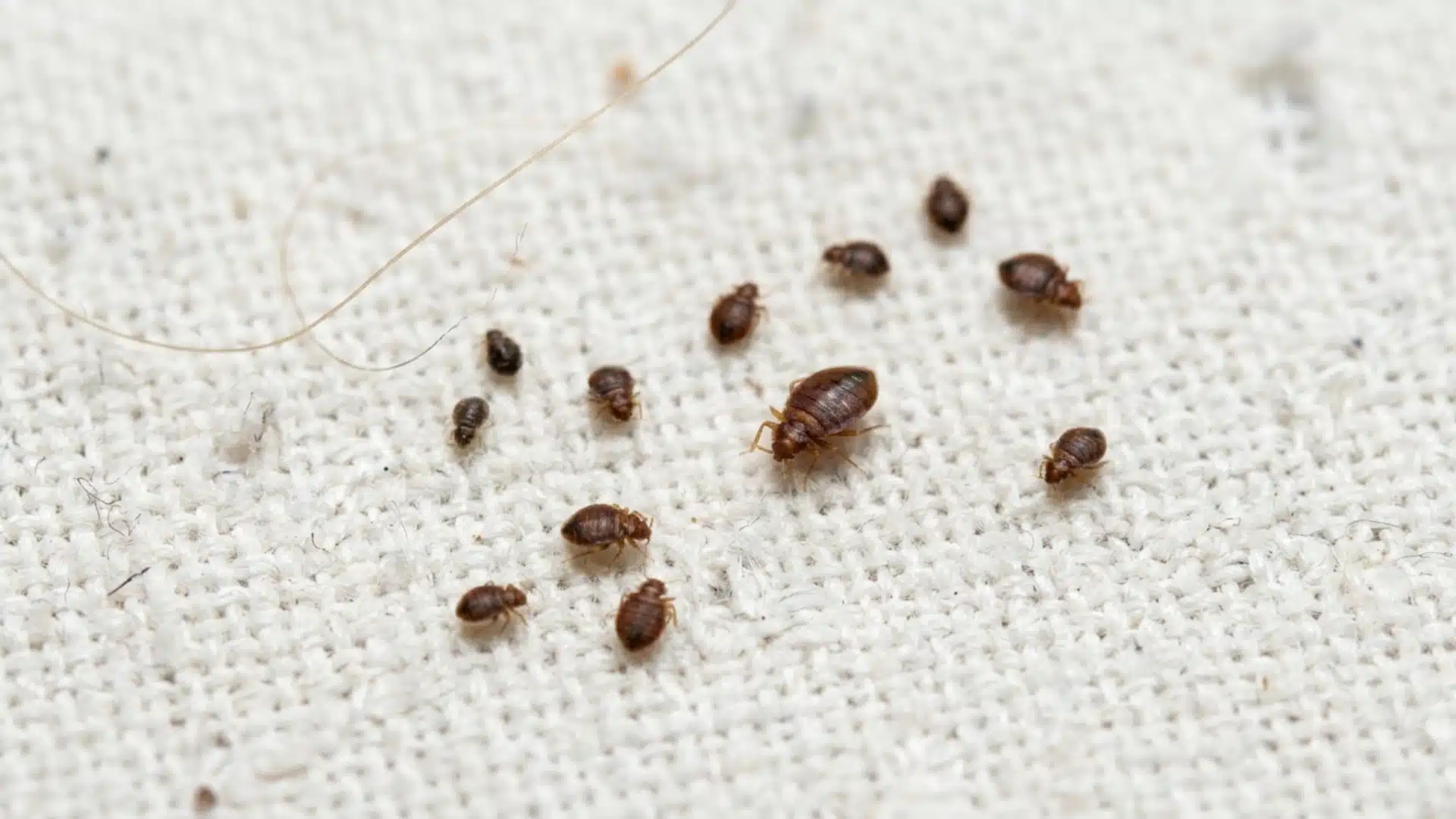
Dog lice are small, flat, wingless insects that spend their entire lives on a dog’s body. They don’t jump like fleas, and they don’t fly.
They crawl slowly through the coat, which actually makes them easier to spot than fleas once you know what you’re looking for.
There are two types that affect dogs:
- Chewing lice (Trichodectes canis): Feed on skin flakes and debris. Found worldwide, and the more common type in pet dogs.
- Sucking lice (Linognathus setosus): Theyhave a narrow, pointed head designed to pierce skin and feed on blood. More likely to cause serious irritation and, in heavy infestations, anemia in puppies.
Adult lice are roughly the size of a sesame seed, yellow to medium brown in color. Their eggs, called nits, appear as tiny pale oval dots attached firmly to individual hair shafts.
Can Dog Lice Spread to Humans or Children?
No. Dog lice cannot survive on a human host, and human lice cannot survive on a dog.
Lice are highly host-specific. The species that infest dogs are adapted to canine fur texture, body temperature, and biology.
If a louse ended up on human skin or hair, it would not feed, would not reproduce, and would die within a few days.
Pet lice are not normally attracted to humans, and people rarely experience any issues, even when handling an infested dog.
The reverse is equally true. If your child has head lice, your dog cannot catch them. Head lice are built for the human scalp and nothing else.
One displaced louse crawling on furniture or skin is not an infestation. It won’t take hold, and it won’t reproduce.
Can Dog Lice Spread to Other Pets?
Dog lice stay on dogs only, while cats, rabbits, hamsters, and other household pets are not at risk.
That said, if you have more than one dog in your home, treat all of them at the same time, even if only one is showing symptoms.
Lice move between dogs through direct contact, and a dog that looks perfectly fine may already be in the early stages of an infestation.
Waiting to see if the second dog develops symptoms before treating is how most multi-dog households end up going in circles for weeks.
Dogs can also pass lice to other dogs at groomers, kennels, dog parks, and shelters.
If your dog has recently visited any of those places and starts scratching more than usual, check the coat before assuming it’s something else.
What are the Signs and Symptoms of Dog Lice?
Most dogs with lice become noticeably itchier, and that’s usually what makes owners look more closely.
The scratching tends to concentrate around the ears, neck, shoulders, groin, and base of the tail, where lice prefer to cluster. Here’s what to watch for:
- Intense scratching, biting, or rubbing: Dogs infested with chewing lice tend to be itchier overall, while sucking lice cause more focused skin damage at bite sites.
- Visible nits on hair shafts: These appear as tiny pale dots attached firmly along individual hairs and won’t brush off the way dandruff or debris would.
- Slow-moving specks on the skin: Adult lice are tan to brown and visible to the naked eye, unlike fleas, which scatter quickly when disturbed.
- Patches of thinning or missing fur: Repeated scratching and biting in the same spots cause localized coat damage over time.
- Dry, dull, or matted coat: The coat loses its normal texture and may start to look rough or clumped in heavily infested areas.
- Restlessness and difficulty settling: A dog waking frequently or unable to get comfortable at night is often reacting to persistent skin irritation.
- Pale gums, low energy, or weakness: In puppies or already-weakened dogs, a heavy sucking lice infestation can cause enough blood loss to result in anemia.
If you are unsure whether the itching is due to lice, allergies, or something else, reviewing your dog’s skin conditions can help you narrow it down before your vet visit.
How Do Dogs Get Dog Lice?
Dogs usually get lice through close contact with another infested dog or contaminated items. Unlike fleas, lice do not jump far or live long away from a host, so spread often happens in shared spaces where dogs touch, sleep, or use the same grooming tools.
- Direct contact: Dogs can get lice by touching, playing, sleeping near, or rubbing against another dog that already has lice.
- Shared bedding: Lice or nits may transfer through dog beds, blankets, crate mats, or soft surfaces used by an infested dog.
- Grooming tools: Brushes, combs, clippers, or towels can spread lice if used on multiple dogs without proper cleaning.
- Crowded dog spaces: Shelters, kennels, boarding facilities, rescues, and dog daycares can increase exposure when many dogs stay close together.
- Poor coat condition: Matted fur, dirty coats, or weak grooming habits can make it easier for lice to stay hidden and multiply.
- Untreated dogs at home: One infested dog can pass lice to other dogs in the household if treatment and cleaning are delayed.
Understanding home parasite prevention tips for dogs goes a long way toward keeping lice, ticks, and fleas away at the same time.
How to Check Your Dog for Lice?
Start by parting your dog’s fur in small sections and looking directly at the skin. Work slowly from the back of the neck toward the tail so no area gets missed.
Lice are easier to spot when the coat is separated close to the roots.
Check these areas carefully:
- Behind the ears, where warmth and less movement make lice easier to hide.
- Around the collar line, especially if the collar rubs or traps warmth.
- Near the groin, where the skin stays warmer and softer.
- At the base of the tail, where pests often gather.
- Along the back and neck, especially if your dog keeps scratching there.
Use bright lighting and a magnifying glass if available. Adult lice may look like slow-moving tan or brown specks, while nits appear as tiny white or pale yellow ovals stuck to hair shafts.
Run a fine-toothed flea comb through small coat sections and wipe debris onto a white paper towel. If anything looks suspicious, place it on clear tape and show it to your vet for confirmation.
What Pet Owners Say About Excessive Licking?
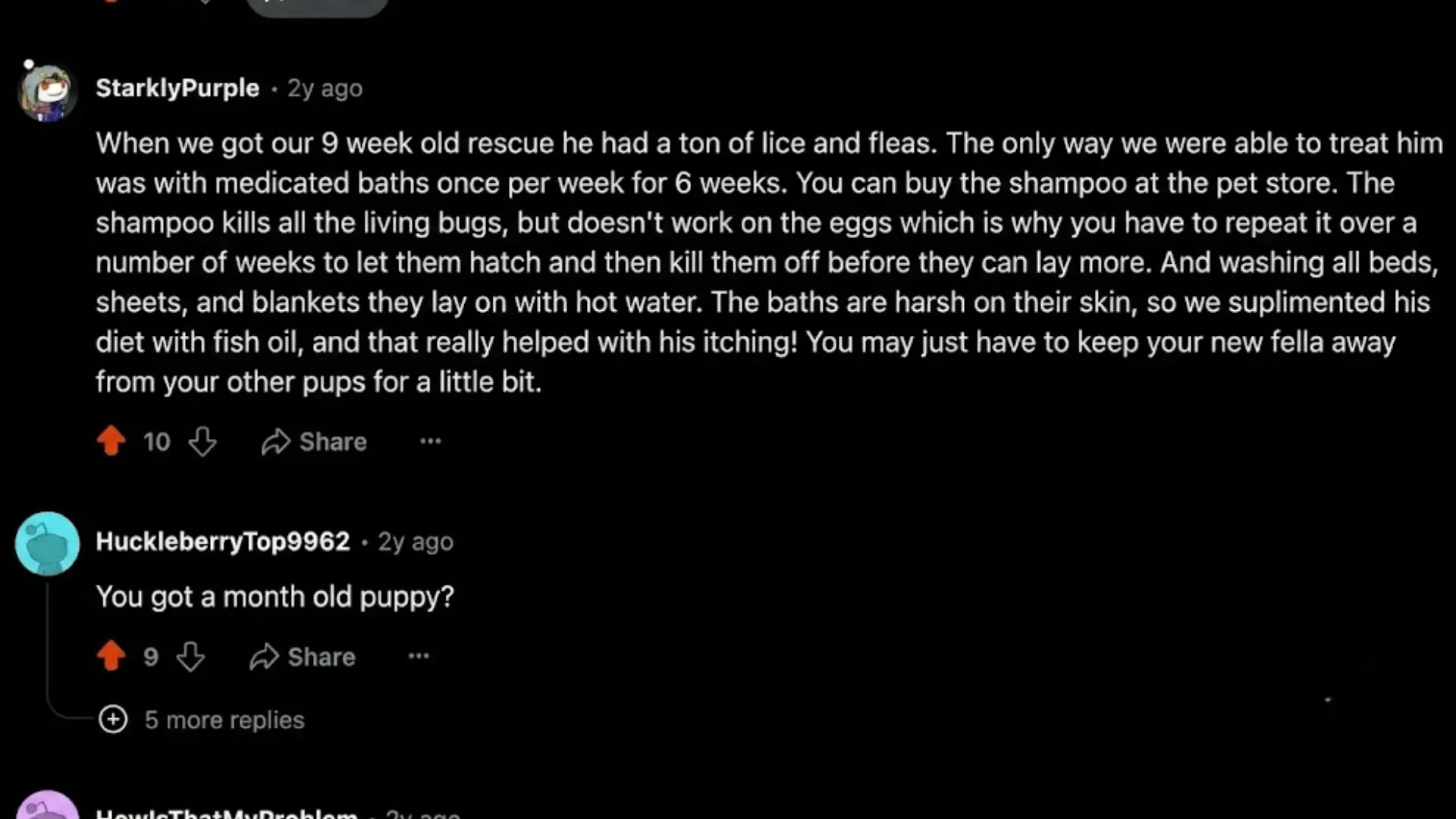
Reddit pet owners often describe licking as something that feels cute at first but becomes worrying when it turns constant or unusual.
In one discussion, many users stressed that sudden changes in pet behavior should not be brushed aside, especially when licking appears alongside discomfort, parasites, itching, or skin problems.
The strongest advice from the thread was simple: home fixes may help temporarily, but a vet gives the clearest answer.
Some users also mentioned cleaning bedding, checking the pet’s skin, and watching for signs that the issue is spreading or getting worse.
Reddit’s common message is practical: observe the pattern, clean the environment, and call a vet when licking seems excessive.
Dog Lice Treatment: How to Get Rid of Them
Lice treatment is effective, but it requires patience. No single treatment kills the eggs, so every protocol needs to be repeated to catch the nymphs that hatch after the first application.
Here are the vet-recommended options:
- Medicated shampoos: Products containing pyrethrins or permethrin kill adult lice and nymphs on contact. Repeat applications are always necessary.
- Topical spot-on treatments: Fipronil (Frontline) and selamectin are effective against lice and are already part of many standard flea and tick prevention routines.
- Oral antiparasitics: Afoxolaner works against chewing lice, and fluralaner is effective against sucking lice. Some are used off-label for lice, so vet guidance matters here.
- Flea combs: Combing through the coat removes live and dead lice after treatment. Soak the comb in insecticidal shampoo solution for ten minutes between uses.
- Clipping matted fur: Always clip matted areas before treating. Lice and nits attached to matted hair are nearly impossible to reach otherwise.
Treat every seven to ten days for at least four weeks to catch all newly hatched nymphs.
Disclaimer: Always consult your veterinarian before starting any lice treatment, especially for puppies, senior dogs, or breeds with known sensitivities.
When to Call Your Vet?
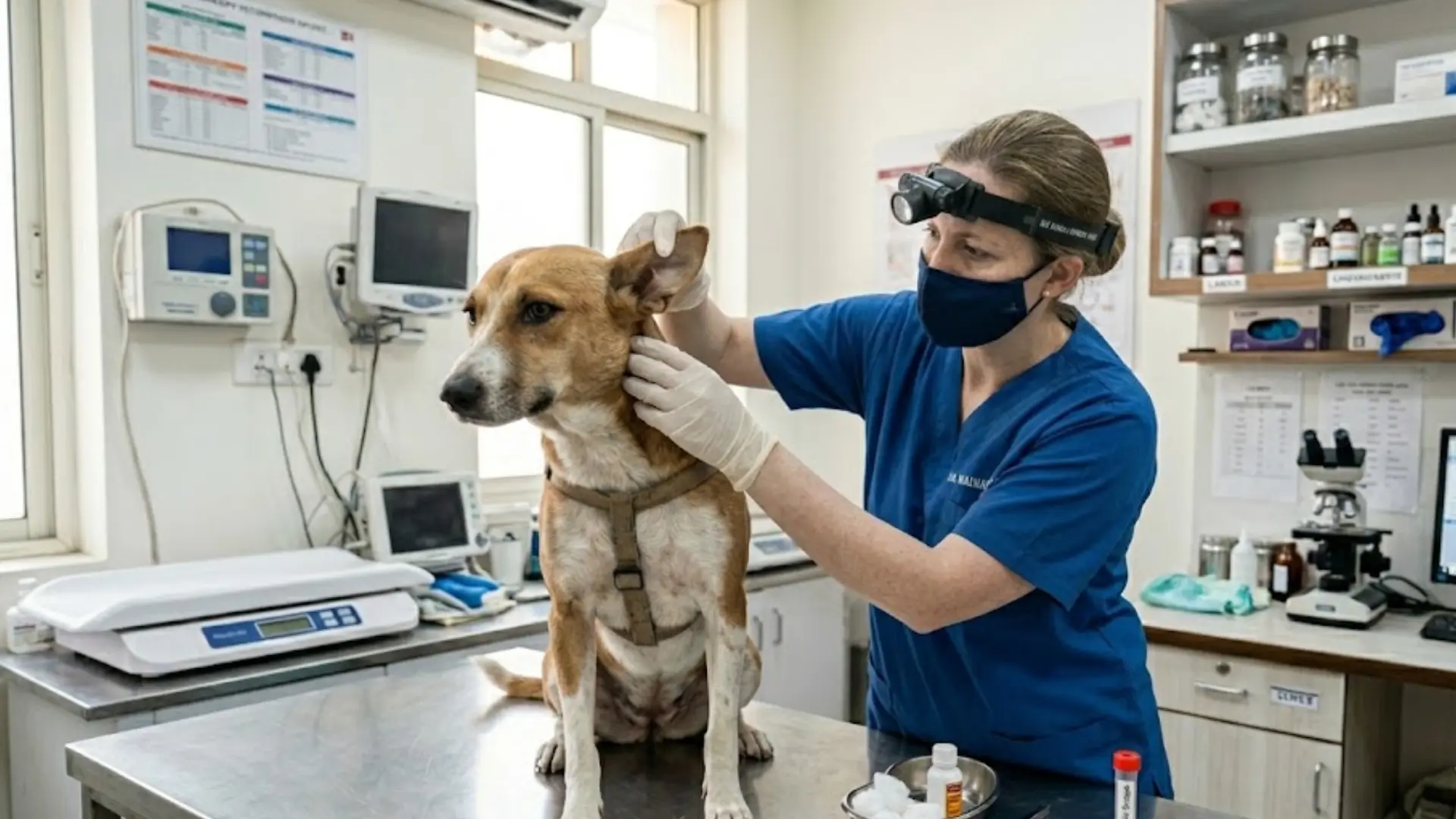
Most mild lice infestations can be managed at home with the right treatment protocol. But there are situations where a vet visit is not optional.
Call your vet if you notice:
- Pale gums or unusual weakness
- Open sores or broken skin from scratching
- No improvement after two full rounds of treatment
- A puppy, senior dog, or pregnant dog is affected
These are signs the infestation has gone further than a standard home protocol can handle. Pale gums in particular point to anemia from sucking lice, which needs immediate veterinary attention.
When in doubt, call. A quick vet visit early saves a much harder conversation later.
Conclusion
Dog lice sound alarming, but they are manageable, treatable, and nowhere near as complicated as the panic they tend to cause.
The most important thing to remember is that your dog cannot give lice to you or your children, and your family cannot give lice to your dog.
These are two completely separate problems. If your dog is scratching more than usual, take a close look at the coat around the ears, neck, and tail base.
Or even if you spot slow-moving insects or pale dots stuck to hair shafts, get your vet involved.
With the right treatment repeated on schedule, most infestations clear up within four to six weeks.
Have you dealt with dog lice before? Drop your question or experience in the comments below.
Frequently Asked Questions
Can Dog Lice Live on Furniture or Bedding?
Yes, but not for long. Lice that fall off a dog survive only three to seven days without a canine host to feed on. They are not capable of setting up a lasting infestation in your home. Hot-washing bedding and vacuuming soft surfaces during treatment is enough to break the environmental cycle.
Can I Use Human Lice Shampoo on My Dog?
No. Human lice treatments are formulated for human scalp chemistry and may contain ingredients that are toxic to dogs. Never use a product on your dog that is not specifically labeled as safe for canine use. Your vet can recommend a dog-safe medicated shampoo that will actually work.
Will My Dog’s Fur Grow Back After a Lice Infestation?
In most cases, yes. Hair loss from lice is caused by scratching and skin irritation rather than permanent follicle damage. Once the lice are gone and the skin settles, the coat typically regrows over several weeks. If hair loss is severe or the skin looks raw, a vet visit is the right call.