Carrots and rabbits seem like a perfect match, thanks to cartoons and common belief. But in reality, this popular snack is not as harmless as it looks.
Many rabbit owners unknowingly offer carrots too often, assuming they are a healthy daily food. The truth is, rabbits have a very specific diet, and even natural foods can cause issues when given in excess.
Understanding how carrots fit into a rabbit’s diet can help avoid digestive problems, weight gain, and other health concerns.
This guide explains how much is safe, what happens when limits are exceeded, and how to feed treats without affecting overall health.
Are Carrots Safe for Rabbits?
Yes, but only in small amounts and only as a treat. Carrots are not toxic to rabbits, but they are far from the ideal food that popular culture has made them out to be.
The reality is that carrots are root vegetables loaded with natural sugars and carbohydrates.
Compared to leafy greens, which should make up a big chunk of a rabbit’s fresh food intake, carrots rank much higher on the sugar scale.
The mistake most rabbit owners make is treating carrots as a daily vegetable rather than an occasional reward.
When given too frequently, carrots can quietly disrupt a rabbit’s digestive system, lead to weight gain, and reduce their motivation to eat the hay they actually need.
Nutritional Value of Carrots for Rabbits
Carrots are often touted as a healthy snack for rabbits, but their nutritional profile paints a more balanced picture. While they offer some benefits, they also raise a few concerns. Understanding what each nutrient does helps in making smarter feeding choices.
| Nutrient | Potential Benefit | Why It’s a Concern |
|---|---|---|
| Vitamin A | Supports eye health and immune function | Rabbits get enough from leafy greens; excess accumulates |
| Fiber | Mild digestive support | Much lower fiber content than hay or grass |
| Natural Sugar | Quick energy source | Too high for daily feeding; disrupts gut bacteria |
| Calcium | Bone support in small amounts | Excess calcium can cause urinary and kidney issues |
| Carbohydrates | Short-term energy | Can overgrow harmful gut bacteria if fed in excess |
What Happens If Rabbits Eat Too Many Carrots
Feeding carrots too often may seem harmless, but it can slowly lead to serious health problems for rabbits. Since their digestive system relies heavily on fiber from hay, excess sugar and carbohydrates in carrots can upset that balance.
- Weight gain and obesity: The excess sugar converts to fat, especially in less active house rabbits.
- Digestive upset: Loose stools, diarrhea, bloating, or what rabbit owners call “poopy butt syndrome”, sticky cecotropes that clump to the fur around the tail.
- Disrupted gut bacteria: Too many carbs encourage the overgrowth of harmful bacteria in the GI tract, which can escalate into a life-threatening condition called GI stasis.
- Tooth problems: The sugar in carrots feeds bacteria in the mouth, which can contribute to dental decay over time.
- Reduced hay intake: When rabbits fill up on tasty treats, they eat less hay, and hay is the single most important part of their diet for both digestion and dental health.
- Calcium buildup risk: Excess calcium from overfeeding can contribute to urinary sludge or bladder stones over time.
Feeding Limits Guide: by Rabbit Size
The safe amount is smaller than most people think. General guidance from rabbit vets and animal welfare organizations puts it at a thin slice or two, offered two to three times per week at most, never daily.
Think of carrots the same way you’d think of dessert for yourself: enjoyable occasionally, not a daily staple.
| Rabbit Size | Weight Range | Safe Carrot Portion | Frequency |
|---|---|---|---|
| Small | Under 2 kg (4.4 lbs) | 1 thin slice (coin-sized) | 2x per week max |
| Medium | 2–4 kg (4.4–8.8 lbs) | 1–2 thin slices | 2–3x per week max |
| Large | 4 kg+ (8.8 lbs+) | 2 slices max | 2–3x per week max |
What Should Rabbits Eat Instead of Carrots?
A well-fed rabbit’s diet looks nothing like what you see in cartoons. According to veterinary guidance, hay should make up 80–90% of a rabbit’s daily diet.
It provides the long-strand fiber rabbits need to keep their digestive tract moving and their continuously growing teeth naturally worn down.
Everything else, greens, pellets, treats, fills in around that hay foundation.
Best Daily Foods for Rabbits
A rabbit’s daily diet should focus on high fiber and variety rather than sugary treats. Building meals around the right staples keeps digestion stable, teeth healthy, and energy levels consistent. Getting this foundation right makes occasional treats like carrots much safer.
- Timothy hay (or orchard/brome grass hay): The single most important food. Unlimited access, always fresh.
- Leafy greens: Romaine lettuce, cilantro, parsley, arugula, dandelion greens, and wheatgrass. Aim for a variety, not the same one or two every day. About ¼ to ½ cup of mixed greens per 5 lbs of body weight daily.
- Pellets (limited): High-fiber timothy pellets only, roughly ⅛ cup per 5 lbs of body weight per day for adults. Avoid muesli-style mixed feeds.
- Fresh water: Change it daily.
Healthy Treat Alternatives to Carrots
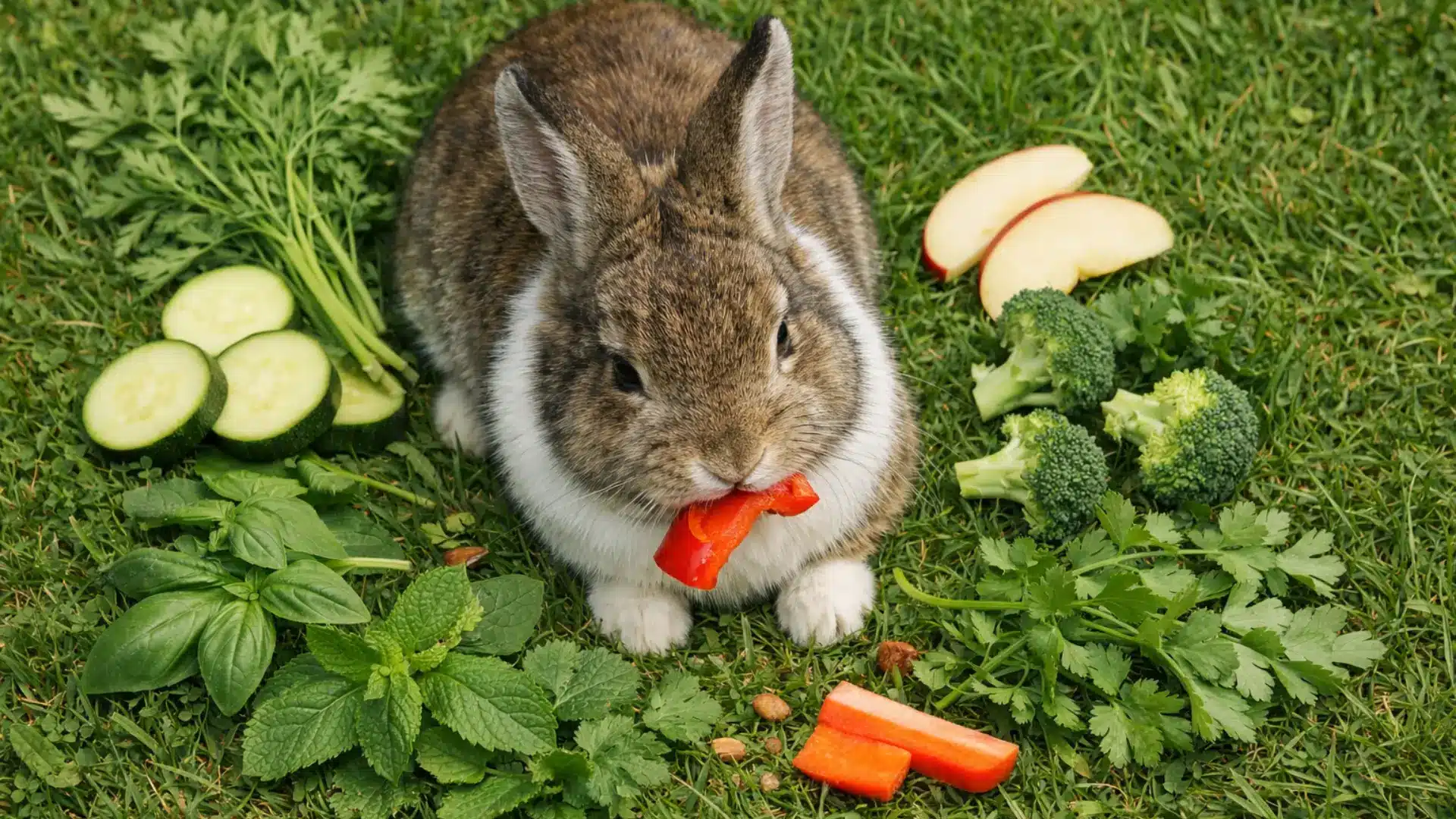
Treats can still be part of a rabbit’s diet, but choosing low-sugar, nutrient-rich options makes a big difference. Swapping carrots for healthier alternatives helps maintain digestive balance while still giving variety and enjoyment. The goal is to keep treats light, fresh, and occasional.
- Bell pepper strips (any color): Low in sugar, high in vitamin C, and most rabbits love them.
- Zucchini slices: Mild, low-sugar, and a great texture for chewing.
- Carrot tops (the green leafy part): Ironically, the green part of the carrot is far better for rabbits than the orange root. High in nutrients, low in sugar, treat these as a leafy green, not a sugar-heavy snack.
- Fresh herbs: Basil, dill, mint, and cilantro make excellent occasional additions.
- Small apple slices (rare): Remove the seeds and core. Apple is high in sugar, so keep it to very infrequent treats.
- Fresh Radish: A low-sugar, crunchy option worth considering, but understanding safe portions and preparation is important before adding them to the rotation.
- Broccoli florets (small amounts): Nutritious but can cause gas if overfed. Introduce slowly and watch for bloating.
- Leafy herbs like parsley and dill: These double as both a treat and a nutritional supplement. They’re aromatic, which most rabbits find irresistible, and they’re low in sugar compared to root vegetables.
Common Mistakes Rabbit Owners Make
One of the most common issues is giving carrots too often. Even small daily portions can slowly increase sugar intake beyond what a rabbit’s system can handle.
Another mistake is relying too much on vegetables while reducing hay. Hay is the foundation of a rabbit’s diet, and nothing else can replace its role in digestion and dental health.
Portion size also gets overlooked. Offering large chunks rather than thin slices can easily push intake beyond safe limits during a single feeding.
Many owners also assume all vegetables serve the same purpose. In reality, carrots are very different from leafy greens and should be treated as occasional snacks rather than daily food.
Changes in droppings are often ignored. This is usually the first sign that something in the diet is off, yet it goes unnoticed until symptoms worsen.
Lastly, introducing multiple new foods at once can create confusion . When digestion reacts, it becomes difficult to identify which food caused the issue.
Rabbits are also far more reactive to their surroundings than most owners realize; their environment, not just their food, shapes daily stress levels. Understanding which household scents stress rabbits out can help you build a calmer, healthier space for them and improve their feeding habits.
Tips for Feeding Carrots Safely
Even when fed in small amounts, carrots should be handled carefully to avoid upsetting a rabbit’s sensitive digestive system. Simple adjustments in preparation, timing, and portion control can make a big difference in keeping treats safe.
- Wash thoroughly before serving to remove dirt and pesticide residue
- Cut into thin, coin-sized slices to keep portions controlled
- Offer after hay so rabbits don’t replace fiber with sugary treats
- Avoid cooked or dried carrots due to higher sugar concentration and reduced benefits
- Monitor droppings for 24 hours after first introduction for any changes
- Rotate treats instead of offering carrots every time
Conclusion
Carrots can be part of a rabbit’s diet, but only when handled with care and proper portion control. Treating them as occasional snacks rather than daily food helps protect digestion, maintain a healthy weight, and support long-term well-being.
Small choices, like focusing on hay first and rotating treats, make a noticeable difference over time.
A balanced diet is what keeps rabbits active, comfortable, and free from avoidable health issues. If feeding habits are adjusted early, many common problems can be prevented altogether.
Take a moment to review your rabbit’s current diet and make simple changes where needed. A few small improvements today can lead to a healthier and happier rabbit in the long run.
Frequently Asked Questions
Are Baby Carrots Safe for Rabbits?
Baby carrots follow the same rules as regular carrots; they’re just smaller in shape, not lower in sugar. A single baby carrot can be split into 2–3 thin rounds for a medium rabbit. Don’t be fooled by the name; the sugar content is the same.
My Rabbit Ate a Lot of Carrots. What Should I Do?
Don’t panic. Remove any remaining carrots and make sure fresh hay and water are available. Watch your rabbit’s droppings for the next 12–24 hours. If you notice no droppings, bloating, or lethargy, contact your vet right away.
Are Organic Carrots Safer for Rabbits?
Organic carrots may reduce exposure to pesticides, but portion control is still necessary since sugar content remains the same
Can Rabbits Eat Carrots with The Skin on?
Yes, rabbits can eat carrot skin, but it should be washed properly to remove dirt and chemicals before feeding.