A fresh-smelling home should never come at the cost of your cat’s health. Essential oils may seem gentle because they come from plants, but cats can react to them in ways many owners do not expect.
Their bodies process certain oil compounds differently, and exposure can happen through breathing, licking fur, walking on treated surfaces, or direct skin contact.
That is why the question of essential oils safe for cats needs a careful answer, not a quick yes or no. Some oils can be highly toxic, while others may still carry risks if used the wrong way.
This blog post explains which oils raise the most concern, and how to keep your home pleasant without putting your pet in danger.
Are Essential Oils Safe for Cats?
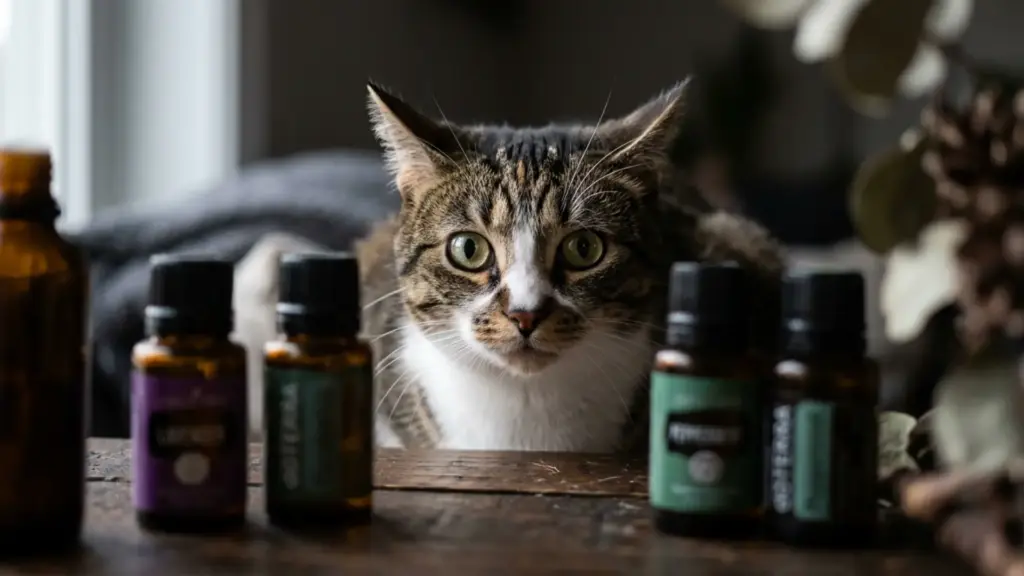
No essential oil should be treated as fully safe for cats. Cats can be harmed when oils touch their skin, settle on their fur, get licked from paws, or are spread through the air from a diffuser.
The biggest concern is that many oils contain concentrated compounds that a cat’s liver cannot break down well.
This can lead to poisoning, breathing trouble, stomach upset, weakness, or liver damage. Direct use on a cat’s coat, collar, bedding, or litter box should be avoided.
Diffusing oils is also risky in small rooms or spaces without airflow. The safest choice is to avoid essential oils around cats unless a veterinarian recommends a specific product and method of use.
How Essential Oil Toxicity Happens in Cats
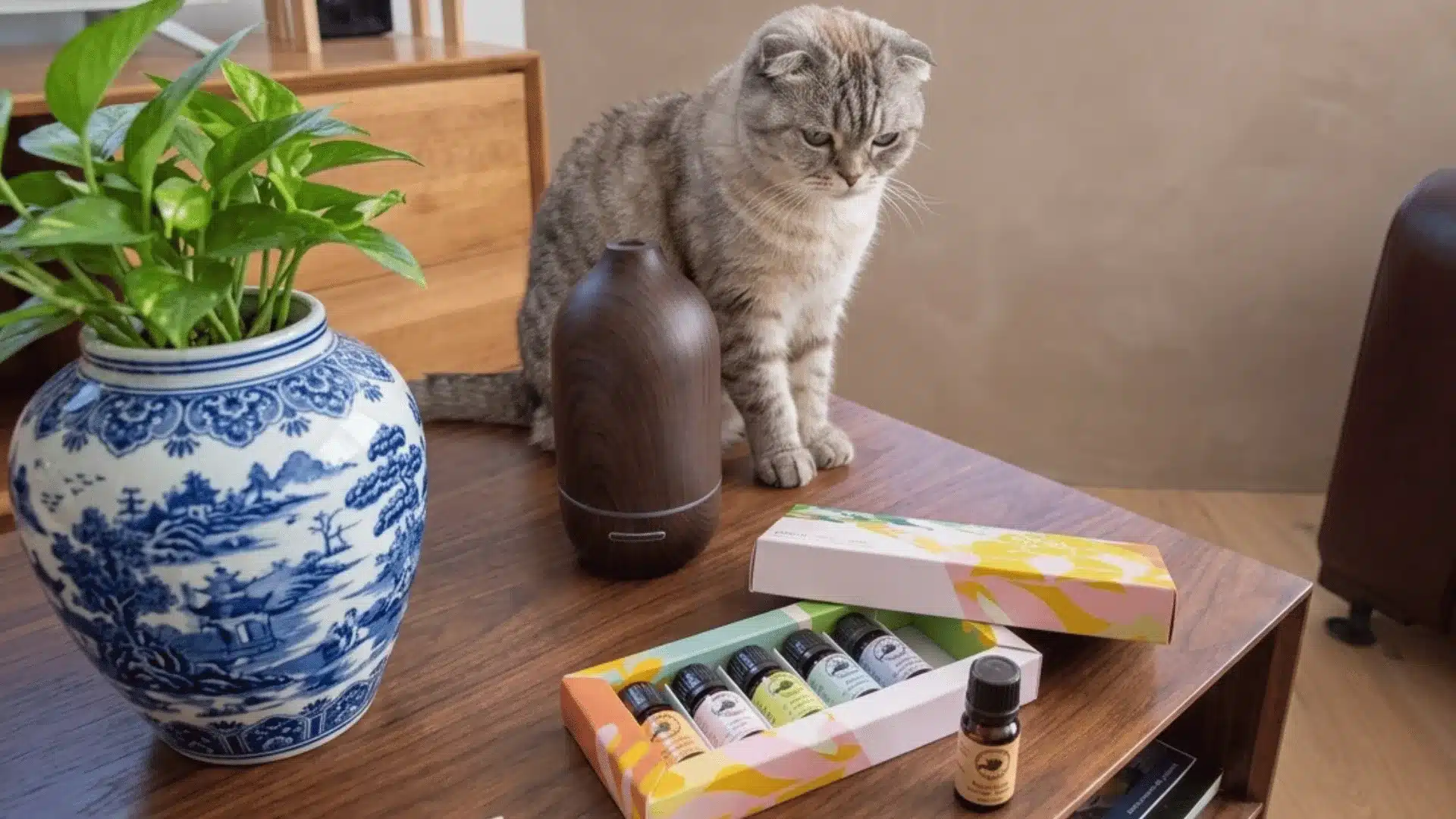
Essential oil toxicity in cats can happen through everyday contact, not just swallowing oil directly, which makes careful home use very important.
- Skin contact: Oils can absorb through a cat’s skin, especially if applied to the coat, paws, collar, bedding, or irritated areas.
- Ingestion: Cats may swallow oil by licking treated surfaces, chewing scented items, or drinking from spills left on floors or counters.
- Inhalation from diffusers: Diffusers release tiny oil particles into the air, which cats can inhale and respond to quickly.
- Grooming residue: Oil droplets can settle on fur, then enter the body when a cat grooms and swallows the residue.
- Accidental spills or paws: Cats may step in spilled oil, then lick their paws later, causing direct ingestion without the owners noticing.
Essential Oils Known to Be Toxic to Cats
Many essential oils can harm cats through skin contact, inhalation, or by licking residue, so these oils should be kept out of areas where cats are present.
| Essential oil | Why is it dangerous for cats |
|---|---|
| Tea tree oil | Highly hazardous and never safe to use on cats. Even small amounts may cause tremors, weakness, or nervous system depression. |
| Eucalyptus oil | Toxic through skin contact, inhalation, or accidental ingestion. Diffused eucalyptus can also irritate breathing. |
| Peppermint oil | Contains menthol, a phenol-related compound that cats cannot process safely. No safe exposure level is known. |
| Citrus oils | Lemon, orange, grapefruit, and similar oils are toxic to cats in all forms. |
| Cinnamon, clove, and oregano | These phenol-based oils can build up in a cat’s body because cats cannot metabolize them well. |
| Wintergreen and pine | Both carry serious toxicity risks and may cause severe reactions after contact or ingestion. |
| Pennyroyal | Especially dangerous if swallowed, and may cause serious liver damage in cats. |
Is Peppermint Oil Safe for Cats?
Peppermint oil is not safe for cats. Its primary active compound, menthol, belongs to the phenol family, which cats cannot metabolize safely.
The risk isn’t limited to direct contact. Airborne exposure from a diffuser can also cause problems. Some peppermint products contain aspirin-related compounds, which adds another layer of toxicity for cats specifically.
Signs of peppermint oil poisoning in cats
- Nausea and vomiting
- Drooling or excessive salivation
- Lethargy and weakness
- Altered mental status or disorientation
- Difficulty breathing
- Liver damage in severe cases
Symptoms may appear hours after exposure, making peppermint oil toxicity easy to miss.
Avoid using peppermint oil as a pest repellent where cats can walk, as they may ingest it by licking their paws.
If exposure occurs, move your cat to fresh air and contact your veterinarian or the Pet Poison Helpline immediately.
Note: This section is for informational purposes only and does not constitute medical advice. Consult a veterinarian before use.
Is Neem Oil Safe for Cats?
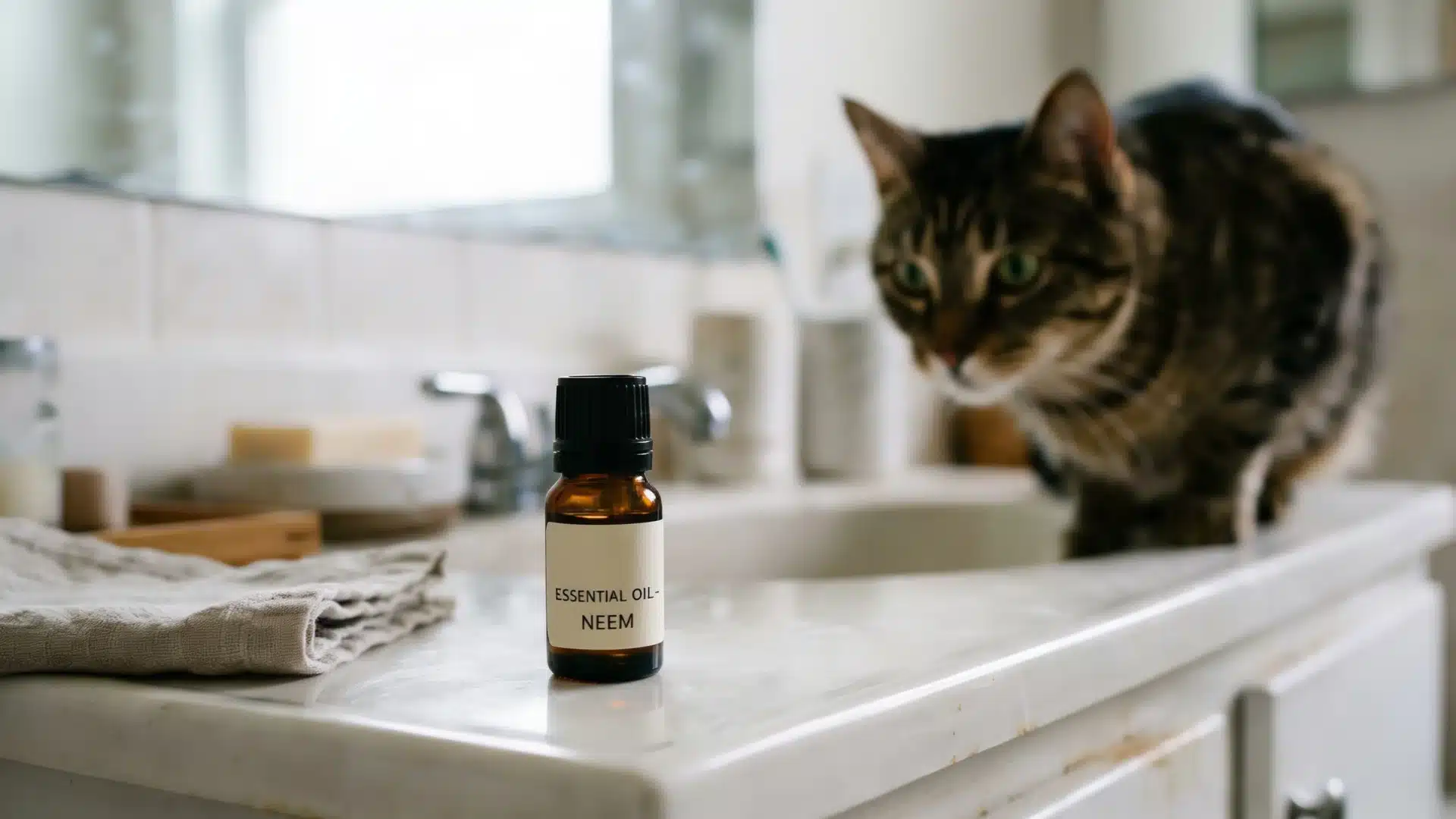
Neem oil is not a true essential oil. It is a pressed seed oil, but it still needs caution around cats.
It should not be used on a cat without veterinary guidance, because cats may lick it from their fur during grooming.
Undiluted neem oil can irritate the skin and may cause vomiting, drooling, weakness, or stomach upset if swallowed.
Avoid applying it near the face, neck, paws, or any area your cat can easily lick. Cats with liver disease, kidney disease, thyroid problems, or ongoing medication may face a higher risk.
If flea or skin treatment is needed, use a product approved for cats by your veterinarian.
Which Essential Oils are Considered Lower-Risk Around Cats?

Some essential oils are considered lower-risk when diffused carefully, but none have been proven safe for direct use on cats or their belongings.
- Lavender: Sometimes used in well-ventilated spaces for its calming scent, but it should only be diffused in small amounts. Never apply it to your cat, and stop use if your cat shows signs of discomfort.
- Chamomile: Often viewed as a gentler option for occasional diffusion. Keep sessions short, ensure good airflow, and always allow your cat to leave the room freely.
- Phenol-free cedarwood: Certain phenol-free cedarwood oils appear on lower-risk lists because they lack compounds linked to higher toxicity. Always check the product label before use.
- Frankincense: Occasionally mentioned as a lower risk choice when diluted and diffused sparingly. Even so, it should never be applied directly to a cat’s skin, fur, or paws.
Note: Diffuse oils only in open, well-ventilated rooms for no longer than 30 to 60 minutes, and never confine your cat with an active diffuse
Signs of Essential Oil Poisoning in Cats
Essential oil poisoning can develop quickly or several hours after exposure, so recognizing early warning signs can help your cat receive prompt veterinary care.
- Digestive problems: Vomiting, drooling, nausea, or diarrhea are common early signs after a cat licks or swallows essential oils.
- Weakness and unusual behavior: Lethargy, confusion, hiding, or a sudden lack of coordination may indicate the nervous system has been affected.
- Breathing difficulties: Rapid breathing, wheezing, coughing, or open-mouth breathing can occur after inhaling toxic oil vapors.
- Tremors or trouble walking: Muscle tremors, shaking, stumbling, or difficulty standing may signal more serious poisoning.
- Skin and eye irritation: Redness, swelling, excessive scratching, or watery eyes can develop after direct contact with essential oils.
When to Call a Vet
Call a veterinarian right away if your cat has touched, inhaled, or swallowed essential oil, even if symptoms are not obvious yet.
Some reactions can appear hours after exposure, and early advice can prevent the condition from getting worse.
Seek urgent help if your cat is drooling, vomiting, coughing, breathing with an open mouth, trembling, stumbling, hiding, acting weak, or showing unusual behavior.
You should also call if oil is spilled on your cat’s fur, paws, bedding, or collar. Do not wait to see if symptoms pass, and do not try home treatment first.
Keep the product bottle or label nearby so the vet can check the oil type, ingredients, and concentration.
Safer Ways to Fragrance Your Home with a Cat Around
Essential oils are not the only way to make your home smell good. If you want to keep using aromatherapy, some practical adjustments can reduce exposure significantly:
- Use a cold air diffuser rather than heat-based options, which concentrate particles more aggressively
- Diffuse only in rooms your cat does not regularly occupy, with the door closed
- Run sessions no longer than 30 to 60 minutes, then ventilate before letting your cat back in
- Store all essential oil bottles tightly sealed and out of reach, including the caps
- Avoid scented candles, potpourri, and room sprays in cat-heavy spaces, as these carry the same risks
To set up a safe home environment from the start, the kitten care guide covers many of the foundational decisions that matter in the long term.
Conclusion
Choosing scents for a home with cats takes more care than simply checking whether a product is plant-based.
The safest approach is to avoid direct use on your cat and treat diffusers, sprays, candles, and oil blends with caution.
Always keep bottles sealed, clean spills immediately, ventilate rooms well, and watch for signs such as drooling, vomiting, weakness, or breathing trouble. When in doubt, ask a veterinarian before using any scented product near your pet.
Understanding which essential oils are safe for cats helps owners make better choices and avoid unnecessary exposure.
Have you used a diffuser or pet-safe fragrance around your cat? Share your experience in the comment section to help other cat parents.
Frequently Asked Questions
Can I Diffuse Essential Oils in a Different Room from My Cat?
Diffusing in a separate closed room greatly reduces exposure. Keep the room closed, ventilate well before your cat re-enters, and note that oil residue can still transfer via clothing or bedding.
Can Essential Oils Harm Kittens More Than Adult Cats?
Yes. Kittens are smaller and still developing, so even minor exposure may affect them faster. Keep all scented oils away from kitten areas.
Can Cats Recover from Essential Oil Poisoning?
Many cats recover with fast veterinary care, but severe exposure can damage the liver or lungs. Quick action gives the best chance of recovery.