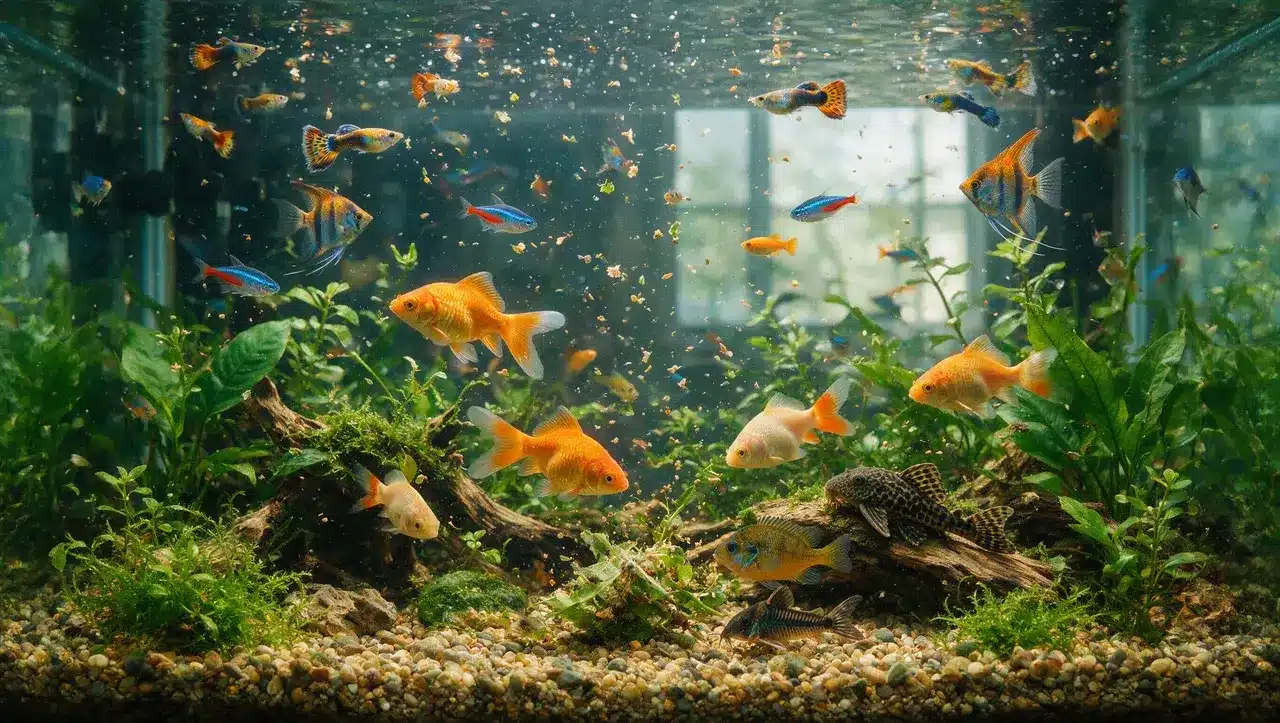
Most aquarium owners grow up believing that crystal-clear water is the goal. The clearer the better, right?
That belief is not wrong in many situations, but it does leave out an entire category of fish that never get to live the way nature intended.
If you have ever noticed that your tetras look a little washed out, that your betta seems restless, or that your discus refuse to spawn no matter what you try, the answer might not be a new filter or a different food.
It might be the water itself. A blackwater aquarium changes that.
It changes the chemistry, the light, the smell, and the behavior of fish in ways that feel almost immediate once you get it right. This blog post walks you through every step.
What is a Blackwater Aquarium?
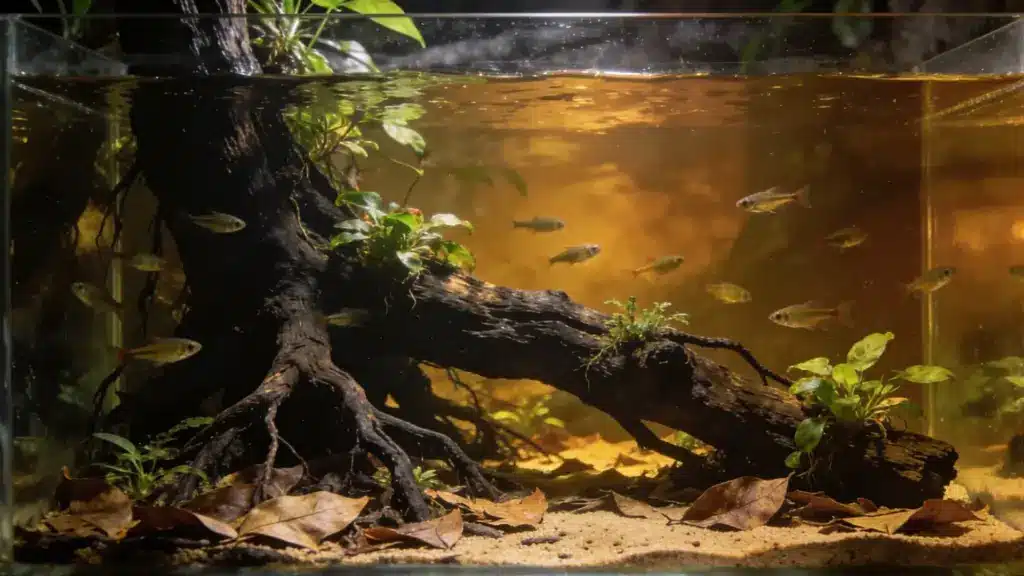
A blackwater aquarium is a freshwater tank that recreates the water chemistry of tropical river systems where organic matter constantly breaks down in the water.
As plant material decomposes, it releases tannins, fulvic acids, and humic acids into the water.
These compounds stain it amber to deep brown and push the pH well below neutral. The water becomes soft, meaning it holds very little calcium or magnesium.
In some Amazonian blackwater rivers, pH can drop as low as 3.5 to 5.5 and still support roughly 8% of the world’s freshwater fish species, a fact that surprises most aquarists who assume acidic water means inhospitable water.
The dark color is not a sign of a dirty tank. It’s chemistry. And for hundreds of freshwater species that spent millions of years adapting to these exact conditions, anything else feels foreign to them.
Blackwater vs. Clearwater: What’s the Difference?
This quick comparison helps show why blackwater tanks feel more natural, softer, and moodier than regular clearwater aquariums.
| Feature | Blackwater aquarium | Standard Clearwater Aquarium |
|---|---|---|
| Water color | Amber to dark brown | Clear |
| pH range | 4.5–6.8 (soft, acidic) | 6.8–7.8 (neutral to slightly alkaline) |
| Hardness (GH/KH) | Very soft (0–4 dGH) | Moderate (4–12 dGH) |
| Main water conditioners | Tannins, humic acids, botanicals | Dechlorinator, buffer additives |
| Algae growth | Slower (dark water limits light) | Faster without intervention |
| Best for | Tetras, wild bettas, discus, dwarf cichlids | Livebearers, goldfish, most community fish |
Blackwater Aquarium Benefits Beyond the Look
A blackwater setup supports fish health, comfort, color, and breeding while helping control algae through darker, tannin-rich water.
- Natural pH support: Tannins help keep soft, acidic water more stable between water changes, which suits many fish from blackwater habitats.
- Cleaner fish conditions: Humic acids may reduce some bacteria and fungi in the water, helping protect delicate fins, skin, and stressed fish.
- Less algae growth: Darker water blocks some light from reaching the tank, making it harder for nuisance algae to spread fast.
- Lower fish stress: Tea-colored water mimics shaded forest streams, helping shy, small, and light-sensitive fish feel safer in open swimming areas.
- Better breeding behavior: Tannin-rich water can mimic natural seasonal changes, which may encourage spawning in many tropical fish species.
- Stronger fish colors: Fish from dark-water habitats often show deeper colors when kept in soft, stained water close to their natural setting.
- Easier tank care: Slower algae growth and steadier water conditions can make the tank easier to manage once the setup becomes stable.
What You Need Before Setting Up
A good blackwater setup starts with the right materials before adding fish. The goal is to create soft, stained, slow-moving water with natural cover and gentle lighting.
Here’s what every blackwater aquarium needs:
- Tank size for steady water conditions
- Fine sand or dark gravel for a natural riverbed look
- Driftwood for tannins, shade, and hiding places
- Indian almond leaves for water tint, biofilm, and comfort
- Alder cones for slow tannin release and gentle color control
- Seed pods and botanicals for cover and natural texture
- Gentle filtration for calm water movement
- Soft lighting for a shaded forest-stream effect
- RO or soft-treated water for better pH and hardness control
Many fish commonly categorized as aquarium fish for beginners thrive in stable, easy-to-maintain environments, making them a useful starting point for learning essential aquarium skills.
Step-by-Step: How to Build a Blackwater Aquarium
This step-by-step guide shows how to build a blackwater-style aquarium using natural rocks, driftwood, plants, and a hidden filtration system.
Step 1: Prepare the Tank and Add a Black Background

Start by cleaning the aquarium glass properly before adding the black background foil.
Spray glass cleaner on the back panel so the foil sticks smoothly. Use a window cleaner tool or a credit card to push out air bubbles.
Trim the extra foil with a utility knife. This black background adds depth to the blackwater aquarium and makes the stained water, wood, and fish stand out clearly.
Many species commonly considered among the best fish for small tank setups also adapt well to carefully maintained blackwater environments.
Step 2: Add Support, Sand, and Mangrove Wood
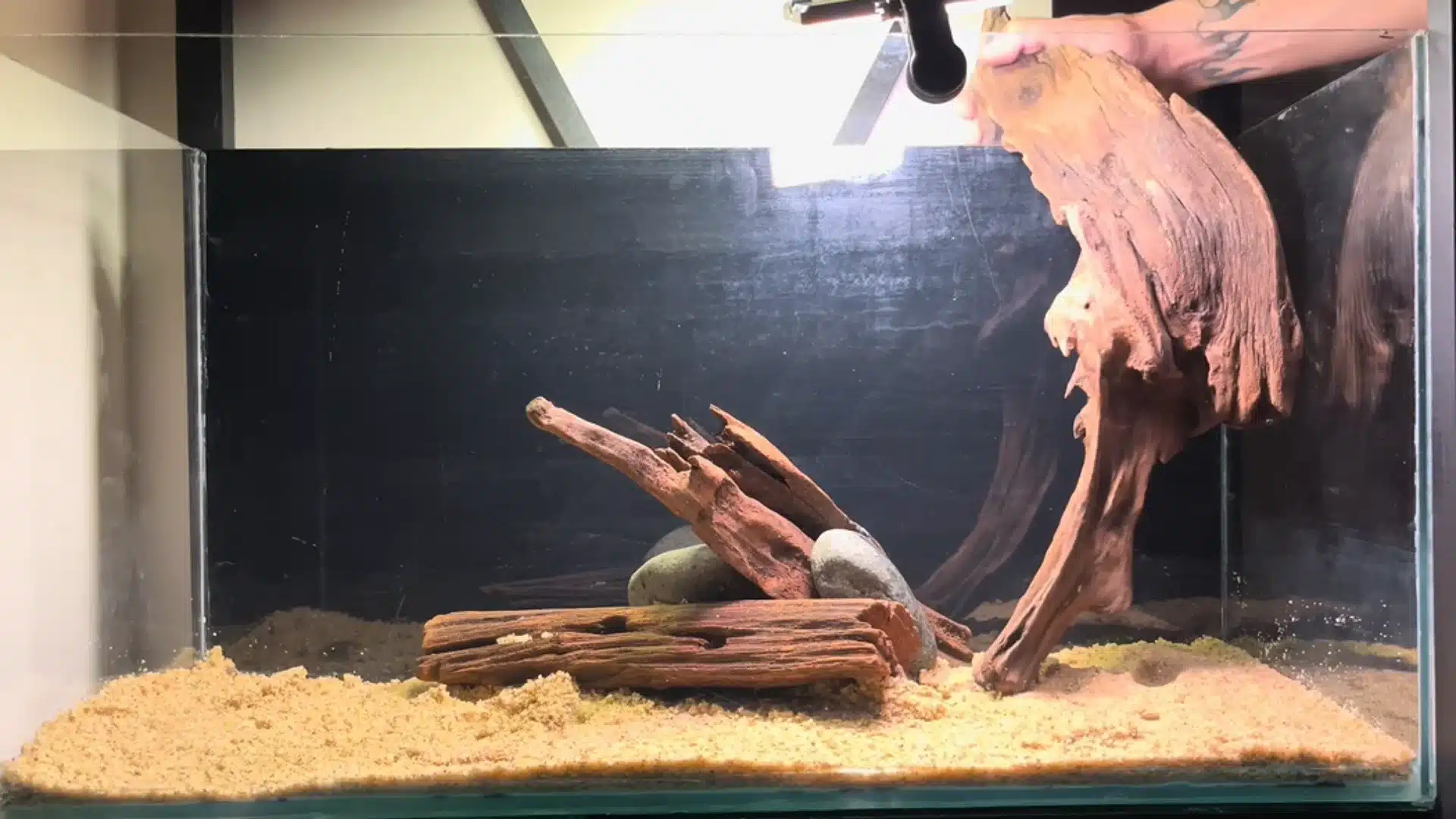
Place Styrofoam under the aquarium before setting it on the shelf. This gives the tank better base support once it becomes heavy.
Add play sand to the bottom because it is affordable and looks natural. Then place mangrove wood inside the tank.
Mangrove wood is useful in a blackwater aquarium because it releases tannins and helps create the dark, tea colored water effect.
Step 3: Collect Natural Leaves and Branches
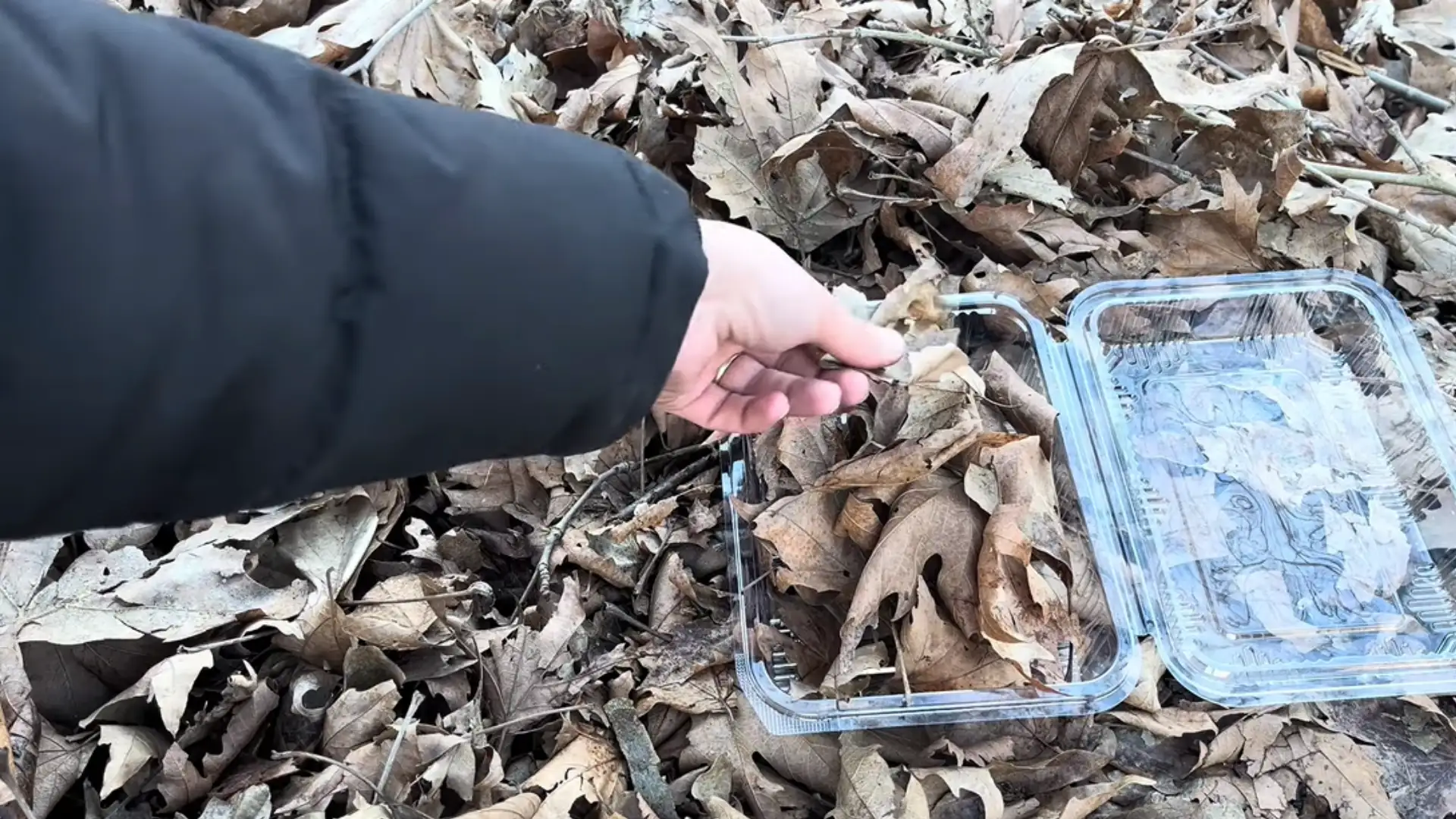
The next step is collecting dry leaves and fallen branches from a clean outdoor area.
Only use materials that have naturally fallen from trees. Avoid anything from roadsides, sprayed gardens, or dirty locations.
In the video, dry plane tree leaves and branches are collected.
These natural materials create the forest stream look and help release tannins once they are placed inside the aquarium.
Step 4: Soak, Rinse, and Arrange the Botanicals
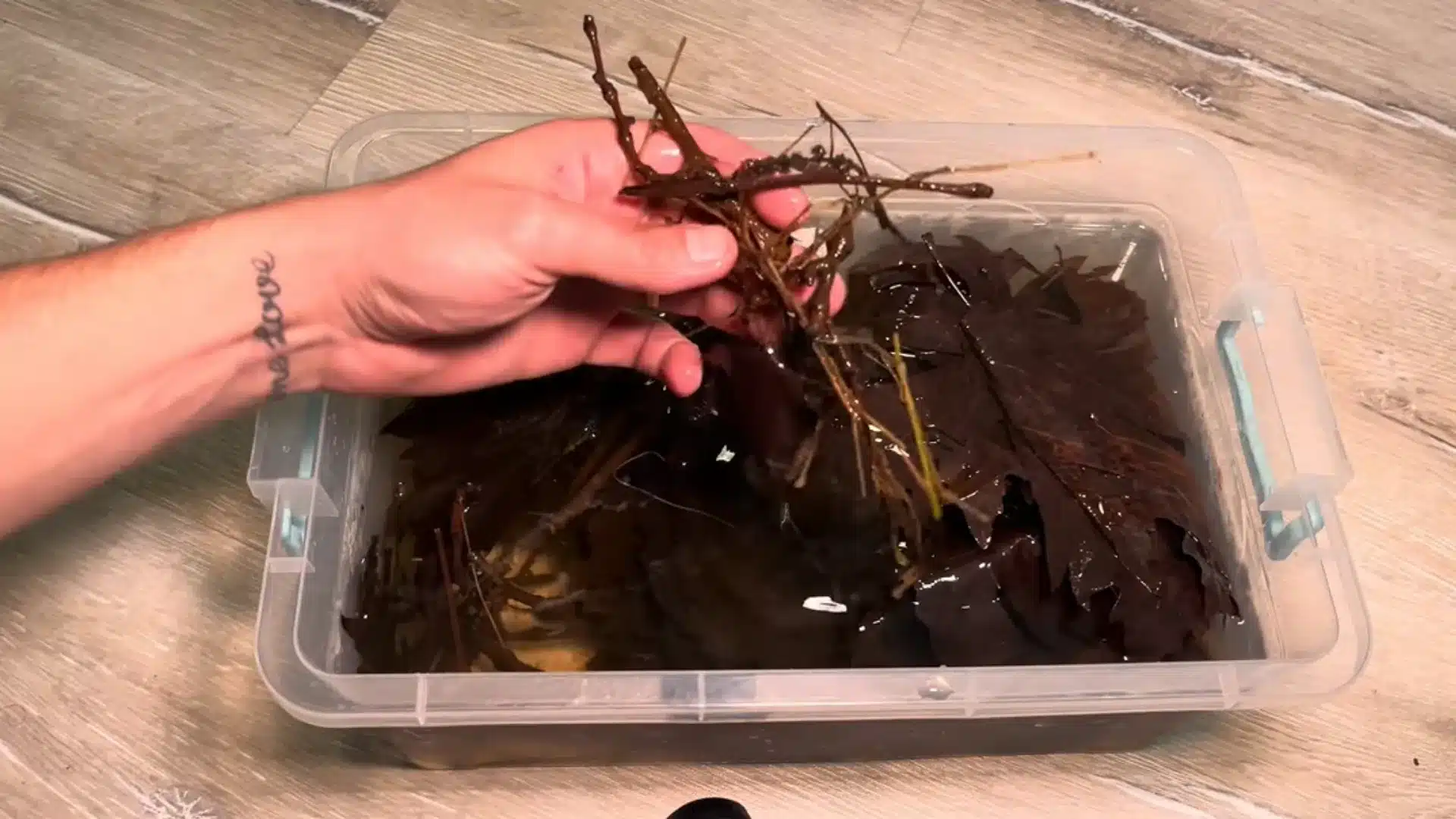
Soak the leaves in water for a few days so they sink more easily in the aquarium. Rinse the branches several times with tap water to remove dust and dirt.
Do not boil them if the goal is dark blackwater because boiling can remove tannins.
Arrange the branches and leaves irregularly in the tank.
Add alder cones and sprinkle river sand for a natural stream bed look.
Step 5: Add the Emersed Plant Section
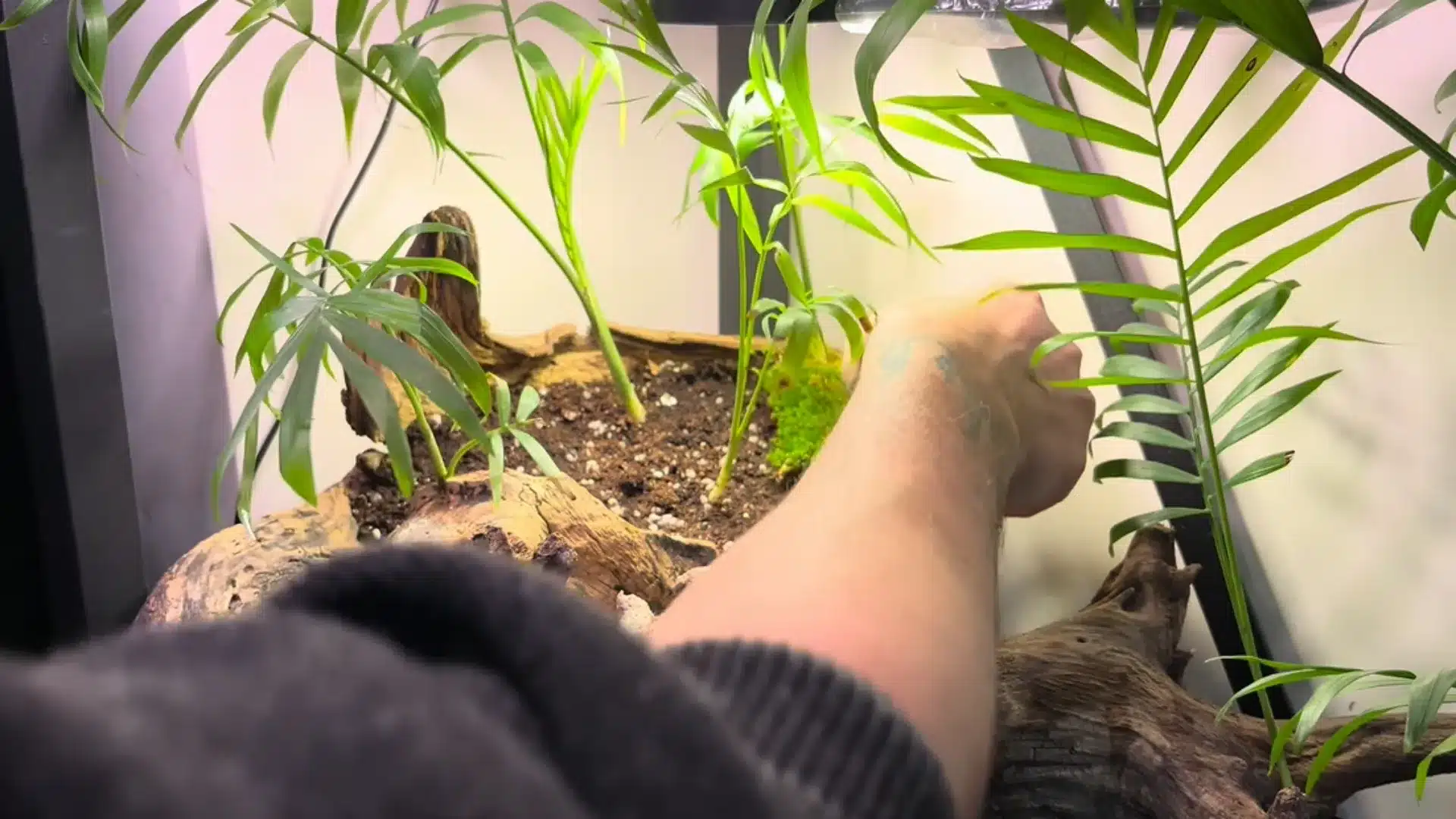
Use a hollow piece of driftwood as a plant holder above the aquarium. Cover the sides and drainage holes with weed barrier fabric so soil does not fall into the water.
Add soil mix inside the driftwood, then place the Areca palm so only the roots reach the water.
Add terrestrial moss on top and keep it moist. This gives the setup a land and water ecosystem style.
Step 6: Install the Filter, Fill the Tank, and Wait
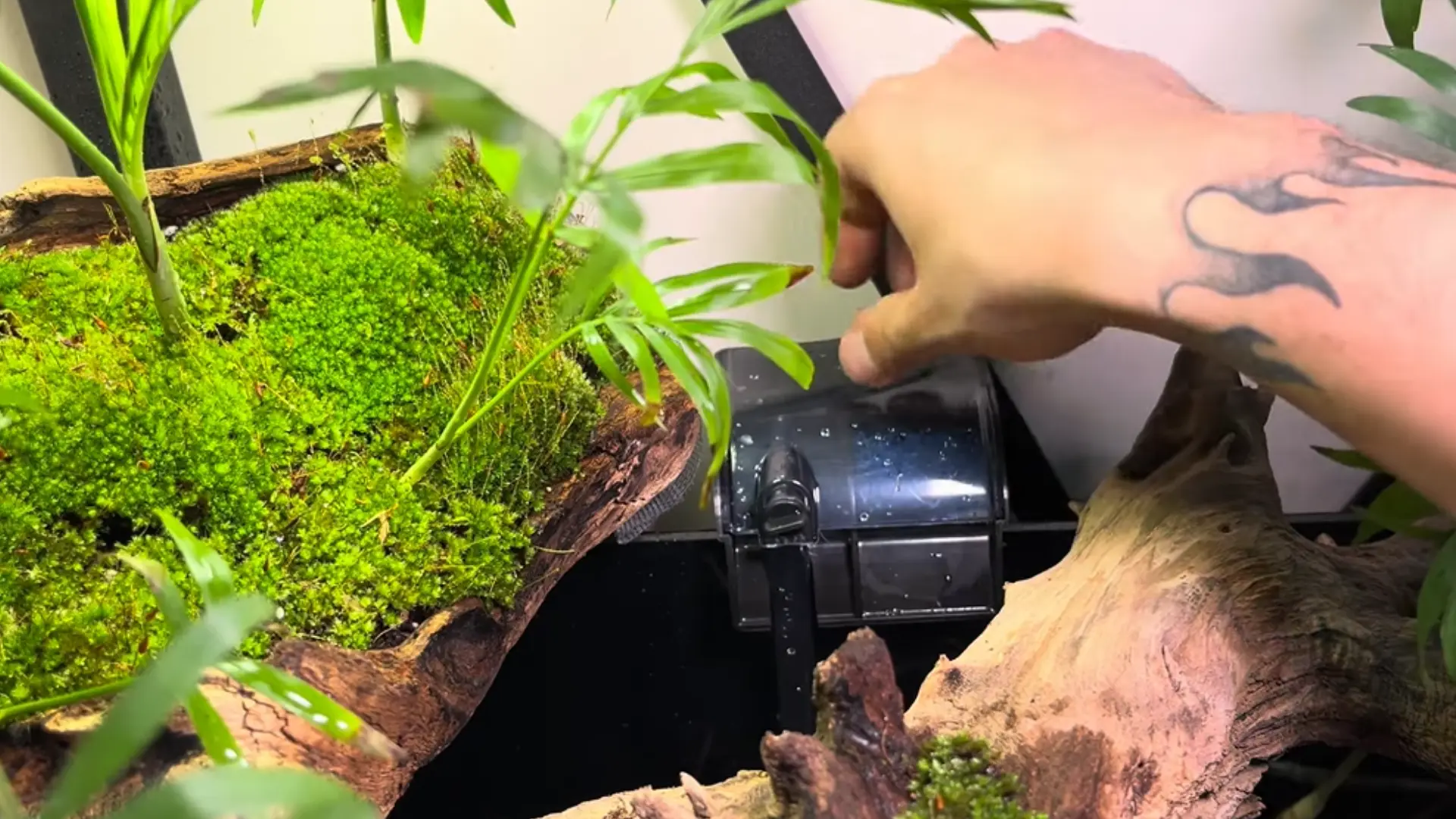
Install a small mechanical filter with a sponge inside. This is enough for a calm blackwater aquarium because the setup does not need strong flow.
Fill the tank with tap water and start the filter. Let it run for about one week.
During this time, tannins from the leaves, branches, alder cones, and mangrove wood begin mixing with the water. By day seven, the water starts turning yellow.
Step 7: Add Plants, Snails, Shrimp, and Fish
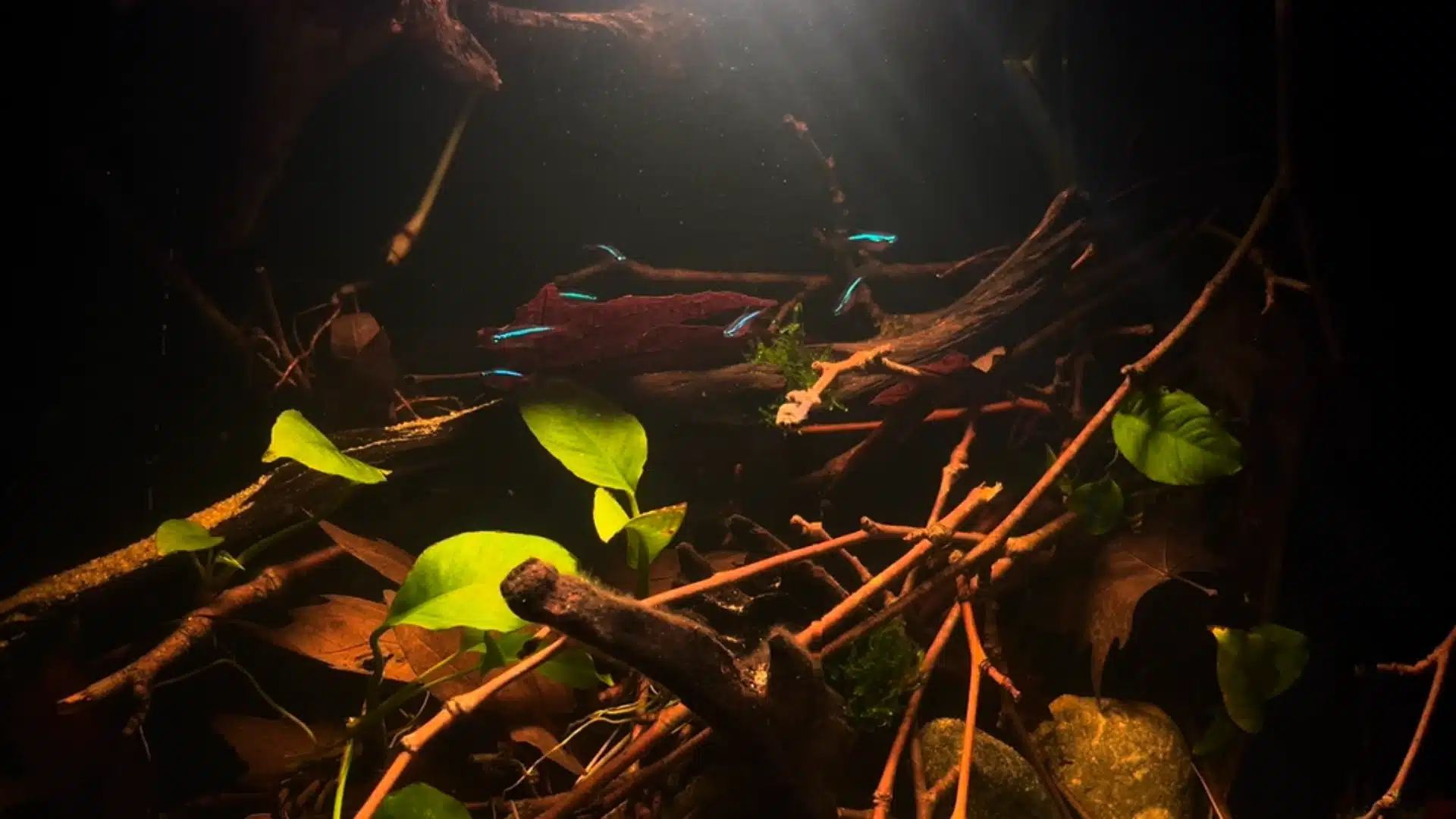
Add Java moss and Anubias once the tank starts settling. On day twelve, add Nerite snails and Bloody Mary shrimp.
Watch them closely and help any upside-down snails. On day fifteen, add Cardinal tetras once the water has darkened and the ecosystem looks stable.
This tutorial is based on a helpful video by Peace Of Nature. You can check out the original video on their YouTube channel here or watch it below.
Best Fish for a Blackwater Aquarium
Blackwater fish should match both water chemistry and behavior. Start with peaceful regional species, then check tank size, temperature, pH, and aggression before mixing them.
- Cardinal tetras: Iconic schooling fish with bright red and blue stripes. Keep at least 8 in 75 to 82°F water with pH below 7.
- Wild bettas: Calm, colorful fish suited to dim, slow, tannin-rich Southeast Asian setups.
- Apistogramma: Small Amazon dwarf cichlids that breed well in blackwater but need space and hiding spots.
- Corydoras catfish: Peaceful bottom dwellers. Pygmy corydoras suit smaller tanks and help around leaf litter.
- Angelfish: Great for larger, tall tanks with slow current and soft blackwater conditions.
- Harlequin rasboras and licorice gouramis: Southeast Asian blackwater fish. Rasboras are active swimmers, while licorice gouramis are shy and delicate.
Blackwater Aquarium Maintenance Tips
Good maintenance keeps the chemistry stable and the fish healthy. These are the habits worth building from the start:
- Change 10 to 15% of the water weekly with pre-treated water matching the tank temperature and pH.
- Replace Indian almond leaves every 3 to 4 weeks to prevent excess decay.
- Test pH, GH, and KH weekly at first, then every 2 weeks once stable.
- Clean filters gently and avoid replacing all media at once.
- Trim floating plants when they cover over 30 to 40% of the surface.
- Keep some biofilm, refresh botanicals every 6 to 8 weeks, and avoid carbon media.
If you keep non-fish aquarium pets like shrimp or snails alongside your blackwater fish, check their specific needs regularly since water that suits tetras perfectly can be challenging for invertebrates over time.
Common Blackwater Aquarium Mistakes to Avoid
These common mistakes can weaken a blackwater aquarium, stress fish, and reduce tannins, so check water, cycling, filtration, livestock, and botanicals carefully before stocking anything.
- Using hard water: Hard tap water can stop a blackwater tank from reaching the soft, acidic conditions it needs. Botanicals alone may not fix this. If tap water has high minerals, use RO water or a proper softening method before adding fish.
- Adding fish too early: A new tank needs time to cycle before livestock is added. Rushing this step can stress fish and damage water quality. Let the filter bacteria build for about two to four weeks before stocking the aquarium.
- Using carbon filtration: Activated carbon removes tannins from the water. That means it can clear the dark color you are trying to create. Use a simple sponge or mechanical filter instead, unless tannin removal is the goal.
- Choosing the wrong livestock: Not every tropical fish suits blackwater conditions. Guppies, mollies, and many livebearers prefer harder, more alkaline water.
- Boiling botanicals: Boiling leaves, cones, and branches can remove the tannins needed for dark water. Instead, rinse them well and soak them in cool water for 24 to 48 hours before placing them in the tank.
Conclusion
A blackwater aquarium offers more than a different appearance.
It creates an environment that closely reflects the natural habitats of many tropical fish, helping them display healthier behavior, richer coloration, and greater comfort.
Success comes from focusing on stability rather than chasing perfect numbers.
Consistent water parameters, gradual tannin replenishment, thoughtful stocking, and regular maintenance all contribute to a thriving ecosystem.
Whether the goal is keeping a peaceful school of tetras, breeding sensitive species, or building a nature-inspired display, a well-maintained blackwater aquarium can become one of the most rewarding freshwater setups.
What has been the biggest challenge or success in your aquarium journey? Share your experience in the comments below.
Frequently Asked Questions
Will Tannins Harm My Tank’s Biological Filter?
Tannins will not harm your biological filter, but low pH slows bacteria. Let filters mature, avoid full media changes, and skip carbon.
Can I Keep a Blackwater Aquarium in a Small or Nano Tank?
Yes, nano blackwater tanks under 10 gallons work, but stocking matters. Choose tiny tetras or one wild betta, not larger species like discus or angelfish.
Can I Mix Blackwater Fish with Regular Community Fish?
Yes, some blackwater fish can live with regular community species in slightly softer, near-neutral water. However, discus, wild bettas, and Apistogramma need true soft, acidic conditions for long-term health and success.