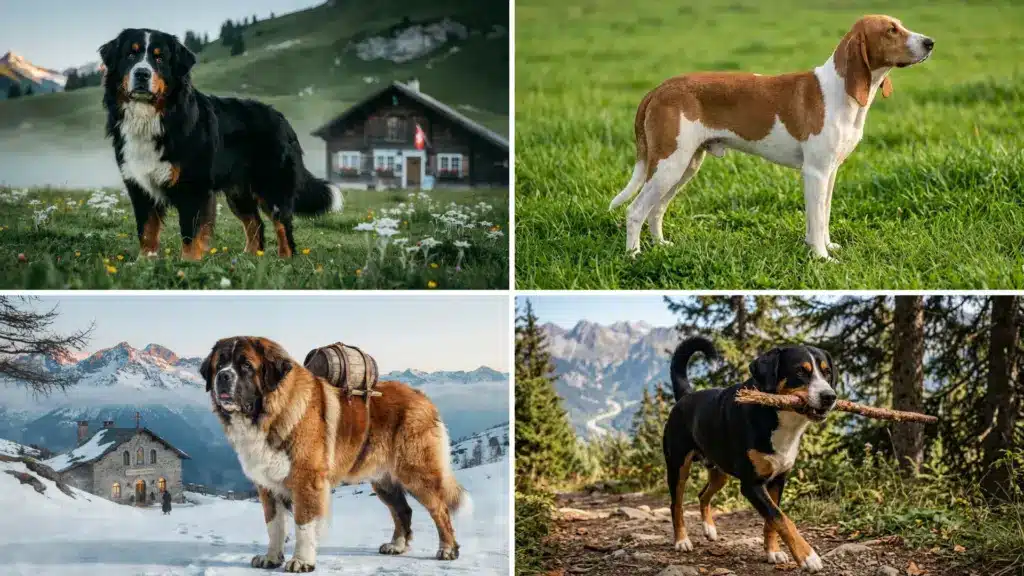
Winters in the Swiss Alps helped shape dogs that could guard farms, move livestock, pull carts, and work across difficult mountain terrain.
After more than a decade researching breeds and volunteering with rescues, I have learned that a dog’s original job often explains what families experience at home.
That is especially true of Swiss dog breeds. The group ranges from the towering Saint Bernard and familiar Bernese Mountain Dog to agile scent hounds rarely seen outside Europe.
Some are affectionate family companions, while others retain the energy, independence, and training needs of serious working dogs.
I have examined all eleven breeds associated with Switzerland, including their size, temperament, history, care needs, and the practical realities you should consider before bringing one home.
What Makes a Dog Breed Officially Swiss?
Not every dog labeled a “mountain dog” actually comes from Switzerland. Here’s how breed origin actually works before the list begins.
A breed earns “Swiss” status through documented origin, not just a similar look or a snowy job description.
The Fédération Cynologique Internationale recognizes each Swiss breed under its own country-of-origin standard, and Switzerland’s national kennel club maintains breeding records that trace back generations.
This distinction matters because several popular lists group Swiss dogs with unrelated breeds like the Great Pyrenees or Newfoundland simply because they all work in cold, mountainous regions.
Those dogs are wonderful, but they trace back to France, Spain, or Canada, not Switzerland.
The eleven breeds covered here are the ones with a genuine, documented Swiss birthplace, ranging from giant farm dogs to lesser-known scent hounds still bred almost exclusively within Swiss borders.
Quick Comparison of Swiss Dog Breeds
A side-by-side view makes it easier to compare size, lifespan, and energy before reading each breed profile in full.
| Serial No. | Breed | Weight | Lifespan | Energy Level |
|---|---|---|---|---|
| Bernese Mountain Dog | 70–115 lbs | 7–10 years | Moderate | |
| Greater Swiss Mountain Dog | 85–140 lbs | 8–11 years | Moderate | |
| Appenzeller Sennenhund | 48–70 lbs | 12–15 years | High | |
| Entlebucher Mountain Dog | 40–65 lbs | 11–13 years | High | |
| Saint Bernard | 120–180 lbs | 8–10 years | Low to Moderate | |
| White Swiss Shepherd Dog | 50–75 lbs | 12–14 years | High | |
| Continental Bulldog | 55–70 lbs | 10–12 years | Moderate | |
| Swiss Hound | 33–44 lbs | 10–13 years | High | |
| Schweizerischer Niederlaufhund | 26–40 lbs | 11–13 years | High | |
| Bruno Jura Hound | 33–44 lbs | 11–13 years | High | |
| St. Hubert Jura Hound | 40–55 lbs | 11–13 years | High |
Numbers vary slightly by breeder and bloodline, so treat this table as a starting reference rather than a fixed rule.
The Four Sennenhund: Switzerland’s Native Farm Dogs
“Sennenhund” translates roughly to alpine herdsman’s dog, and these four tri-colored breeds form the backbone of Switzerland’s dog history.
1. Bernese Mountain Dog
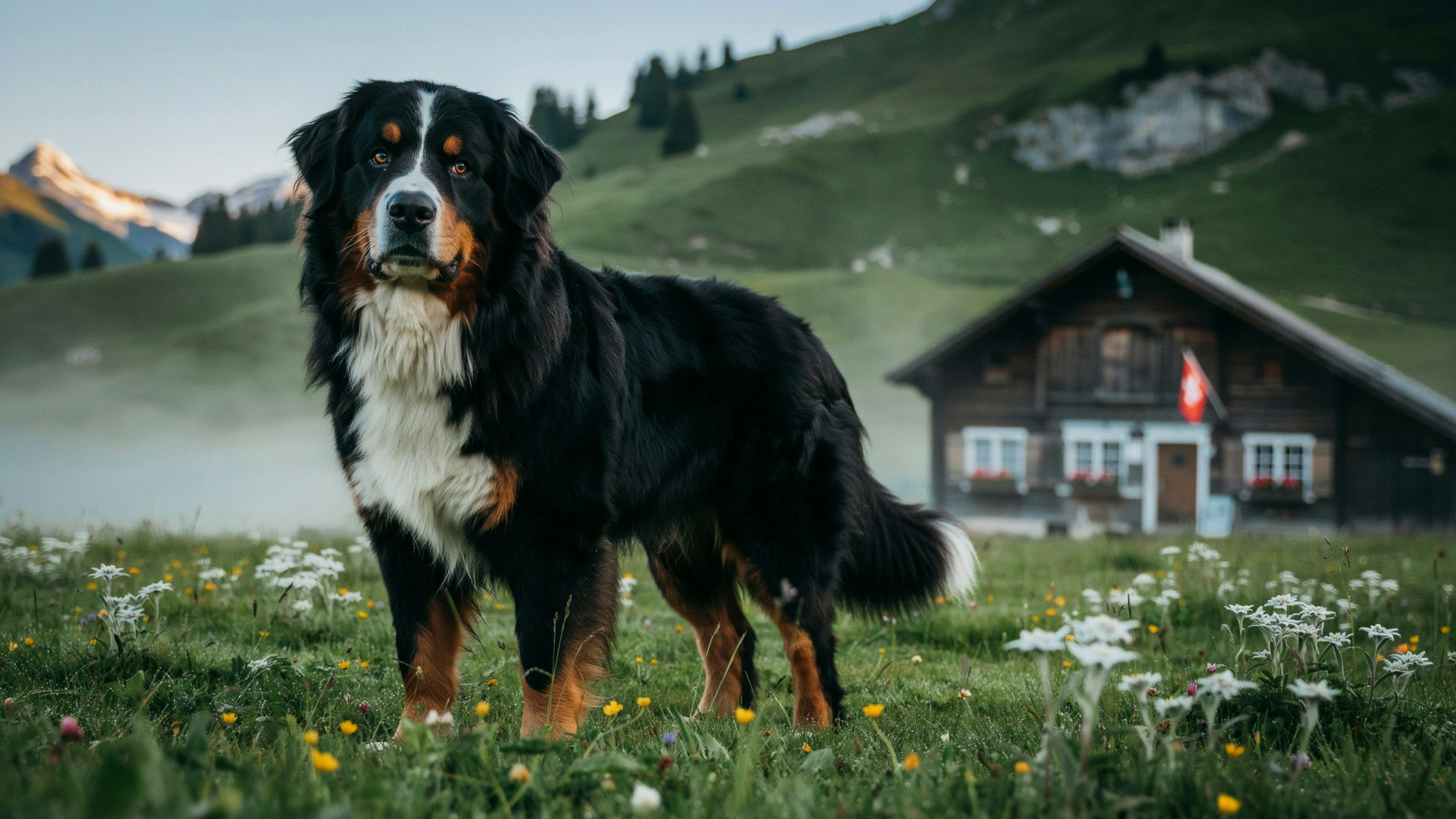
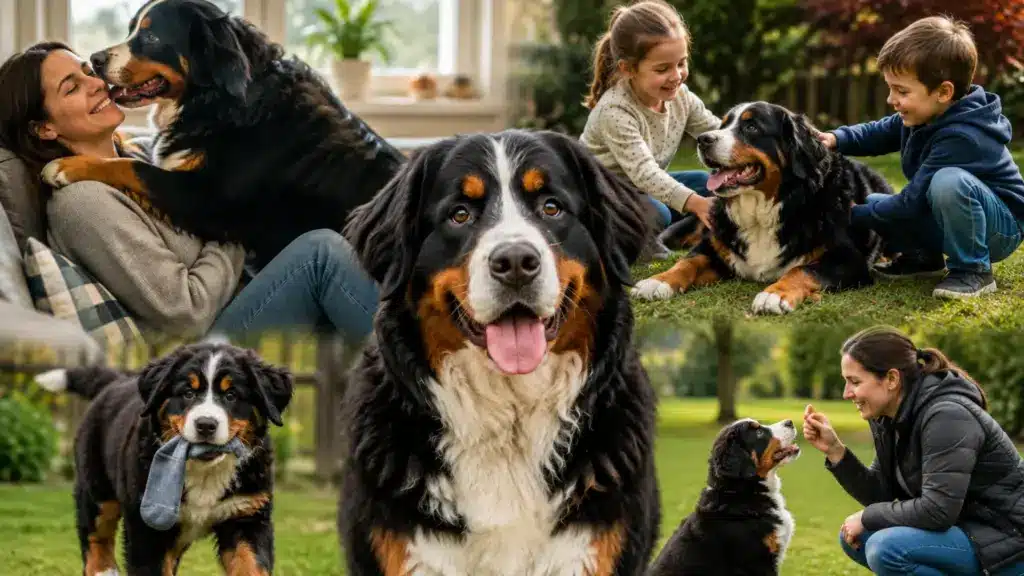
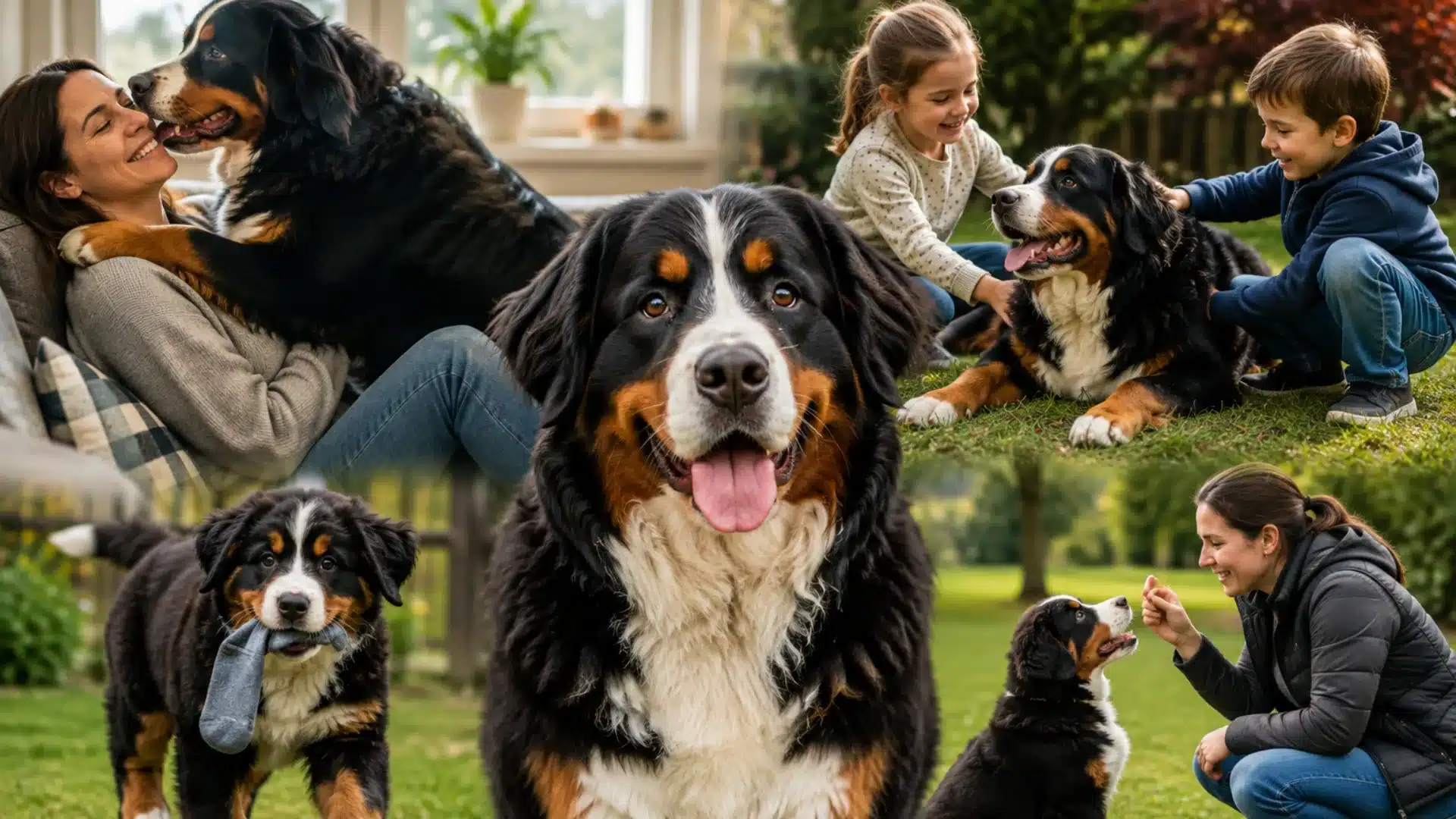
The Bernese Mountain Dog is the breed most people picture first when they hear “Swiss dog.” Its long, tricolor coat and calm manner made it a favorite family companion long after its original job pulling carts and guarding farms in Bern faded away.
Berners bond closely with children, though their size means early training matters, and their shorter lifespan calls for a breeder who health-tests both parents.
Height: 23–27.5 inches
Personality Traits: Affectionate, Loyal, Calm
2. Greater Swiss Mountain Dog
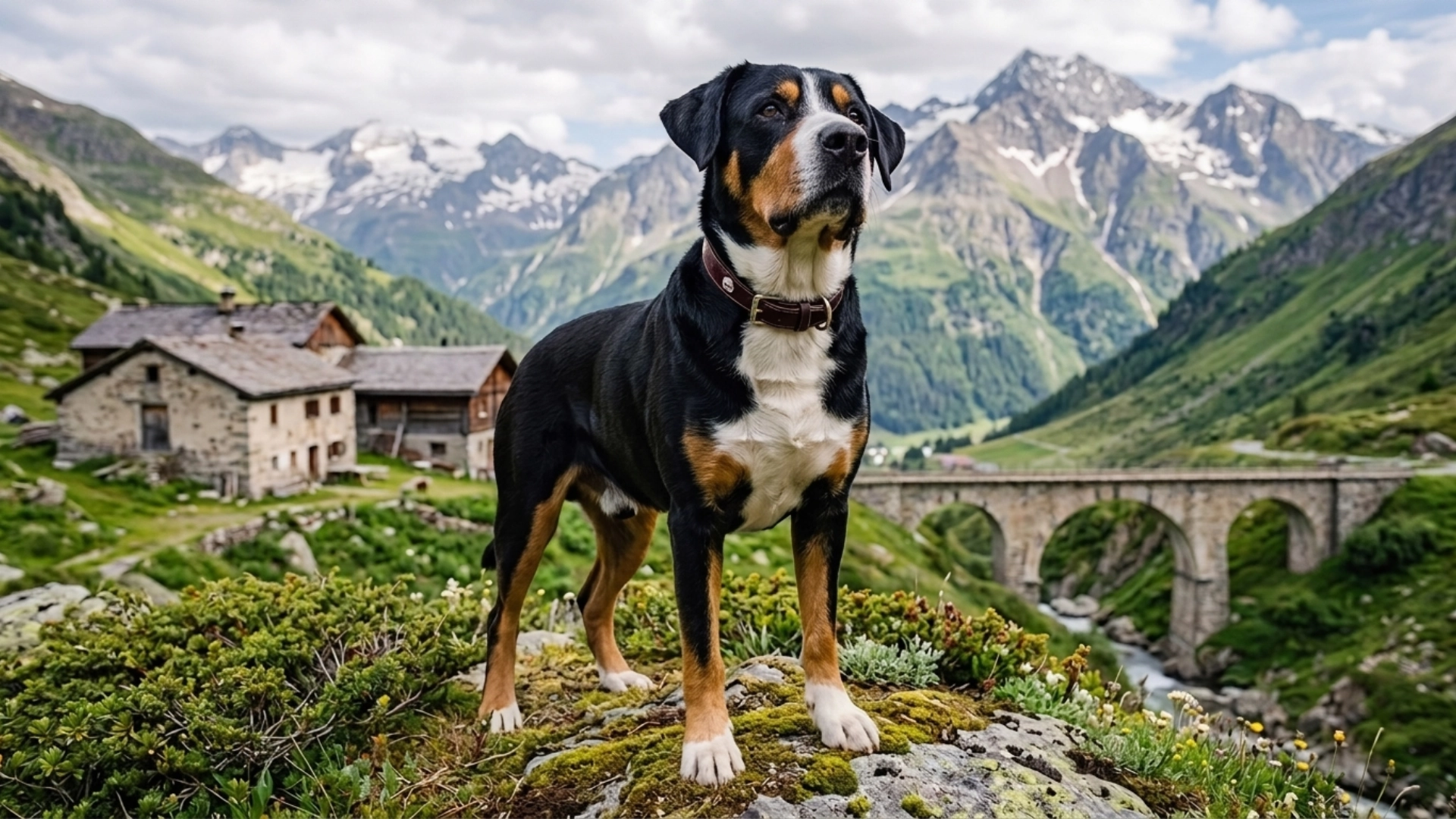
Often mistaken for a short-haired Berner, the Greater Swiss Mountain Dog is the oldest and largest of the four Sennenhund breeds. Farmers once relied on it for hauling milk carts across steep terrain, and that history still shows in its heavy build and watchful temperament.
It needs space to roam, and the breed nearly went extinct in the early 1900s before being rebuilt from a few surviving farm dogs.
Height: 23.5–28.5 inches
Personality Traits: Confident, Watchful, Steady
3. Appenzeller Sennenhund
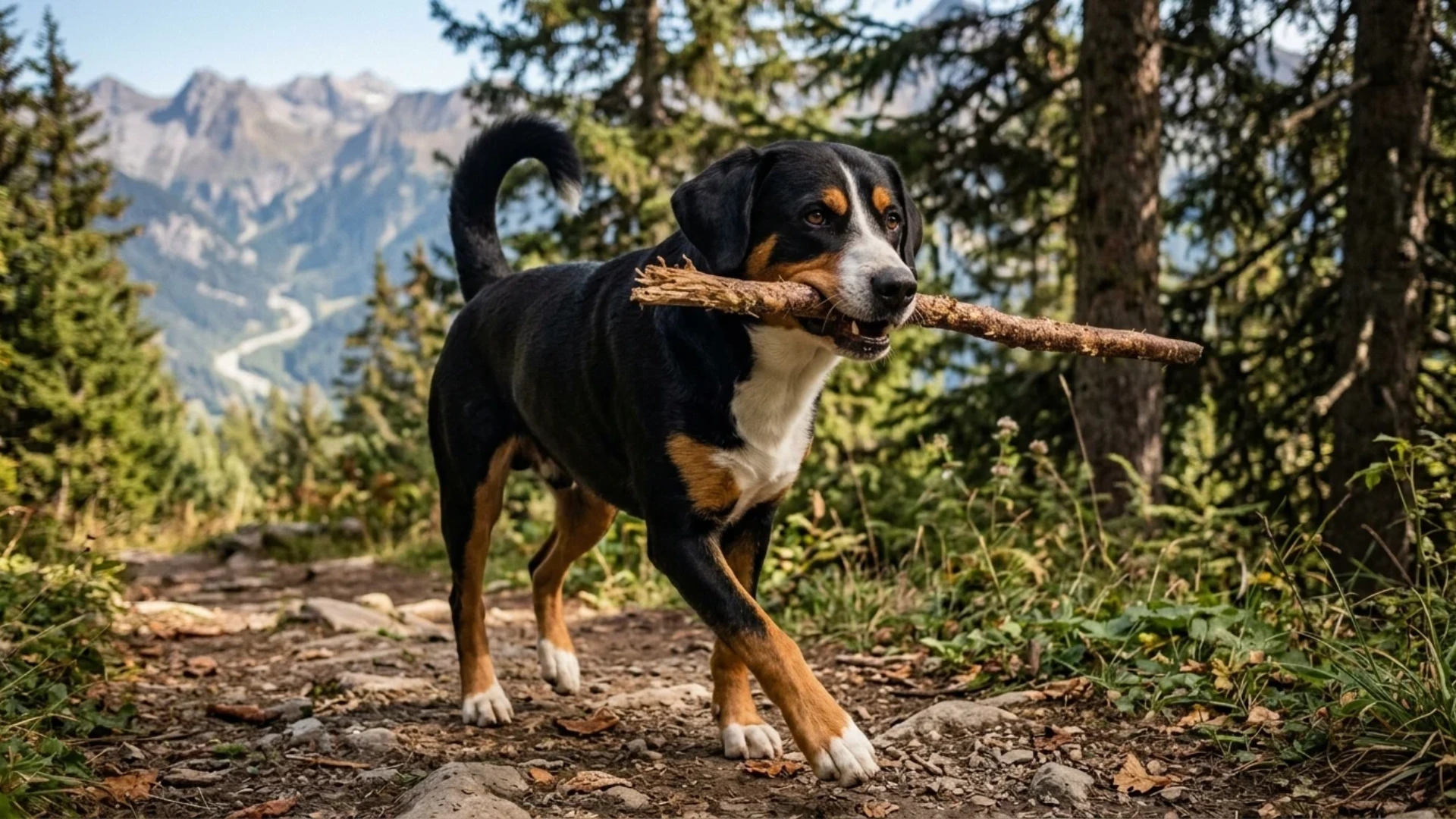
The Appenzeller Sennenhund is the most athletic of the group, bred to herd cattle across the steep Appenzell region with speed rather than brute strength.
Owners describe it as alert, vocal, and happiest with a job to do. Without daily exercise, that herding drive turns into restlessness at home, and its tightly curled tail, a signature trait of the breed, is thought to have made it easier for farmers to spot in a crowded herd.
Height: 19–23 inches
Personality Traits: Alert, Energetic, Vocal
4. Entlebucher Mountain Dog
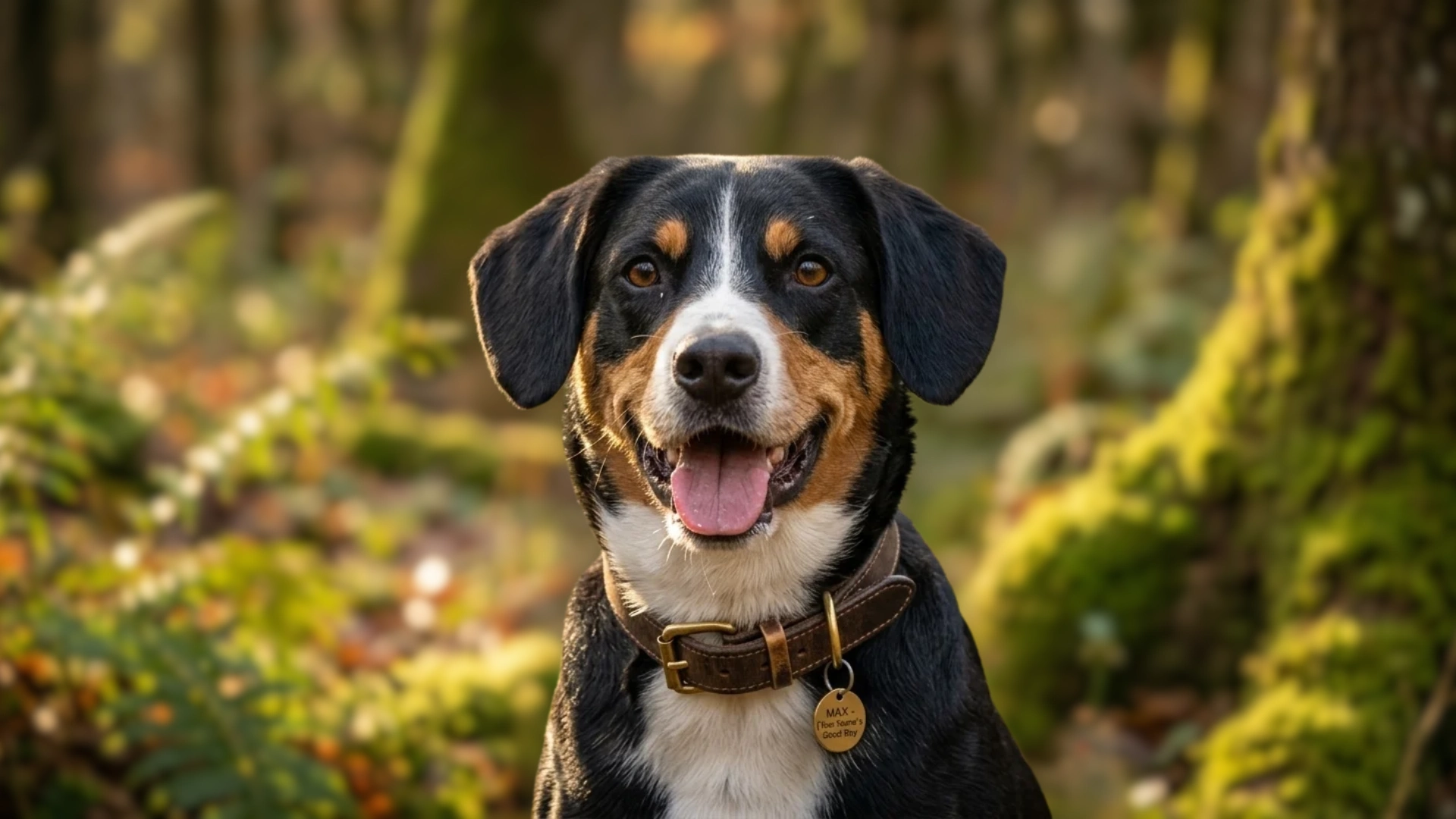
The smallest member of the Sennenhund group, the Entlebucher Mountain Dog packs a big working-dog drive into a compact frame. Bred to herd and drive cattle rather than guard them, it moves fast, thinks independently, and bonds tightly with one household.
Early inbreeding raised rates of hip dysplasia, so ask any breeder about health screening before bringing one home.
Height: 16–21 inches
Personality Traits: Independent, Agile, Loyal
Saint Bernard and Other Recognized Swiss Breeds
Beyond the four Sennenhunds, Switzerland produced a handful of breeds that took very different paths, from mountain rescue to modern companion dog.
5. Saint Bernard
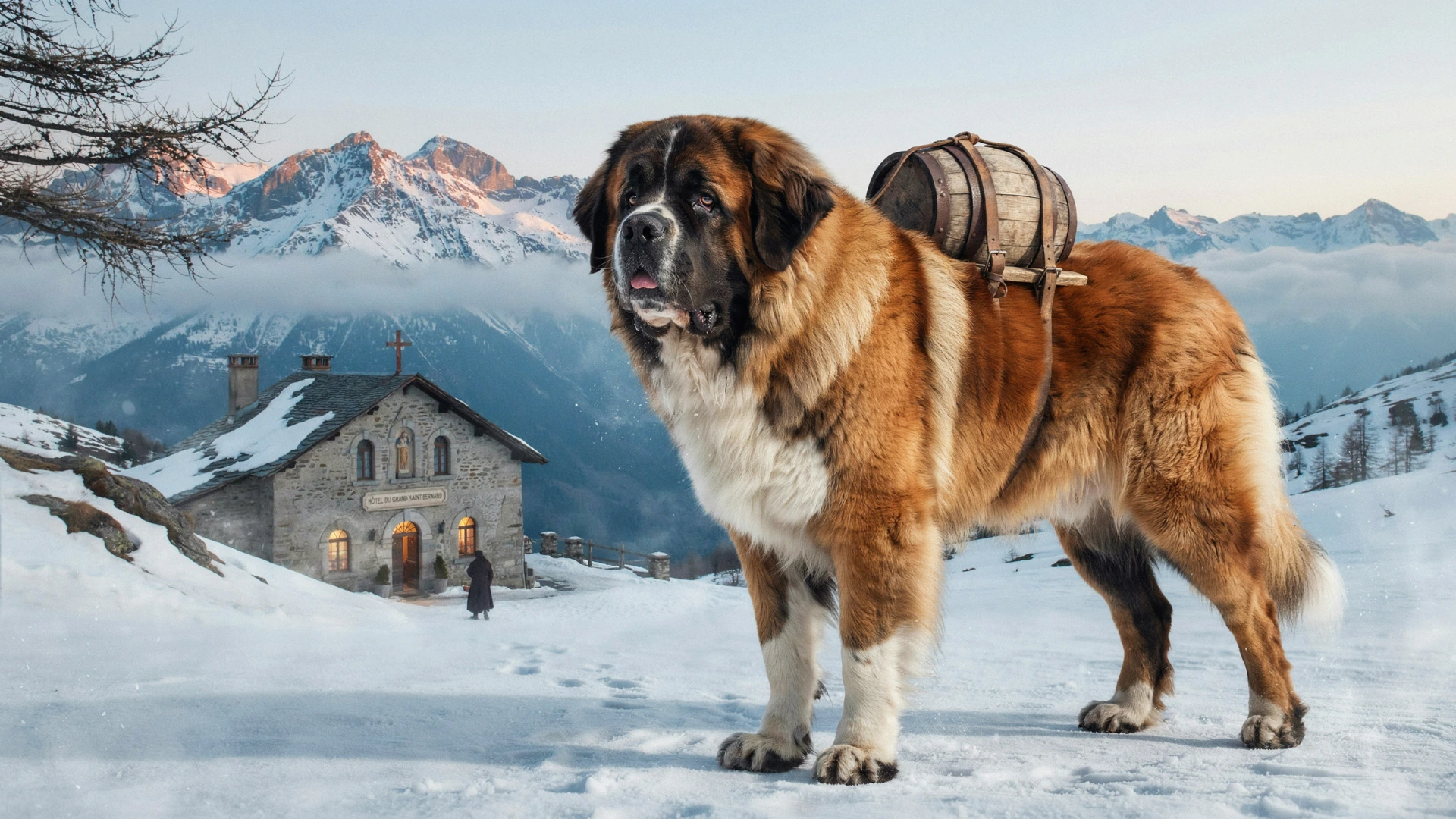
Bred by monks at the Great St Bernard Hospice along the Italian-Swiss border, the Saint Bernard earned its reputation for locating travelers lost in alpine snowstorms.
Its size, thick coat, and calm disposition carried over into its modern role as a gentle family dog. Drooling and joint strain if a puppy grows too fast come with the territory, so controlled feeding in year one matters.
Height: 26–30 inches
Personality Traits: Gentle, Patient, Calm
6. White Swiss Shepherd Dog
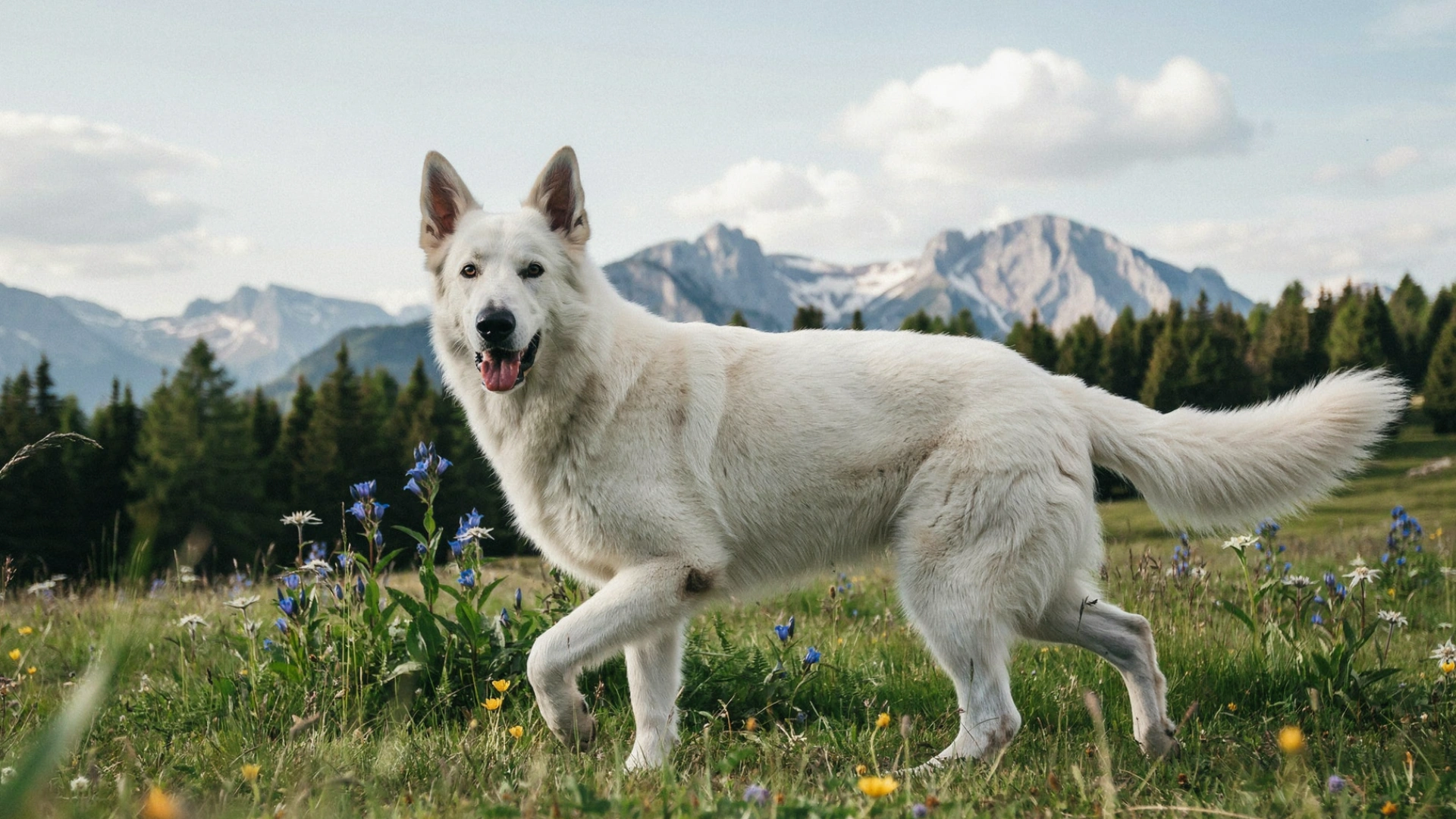
A close cousin of the German Shepherd, the White Swiss Shepherd Dog descends from white-coated shepherd lines imported to Switzerland, where breeders developed its own recognized standard.
It shares the herding intelligence and trainability of its German relative, and is often reported to have fewer of the hip and joint problems seen in some German Shepherd lines. Its striking white coat sheds heavily twice a year, so plan for regular brushing.
Height: 21–26 inches
Personality Traits: Intelligent, Trainable, Alert
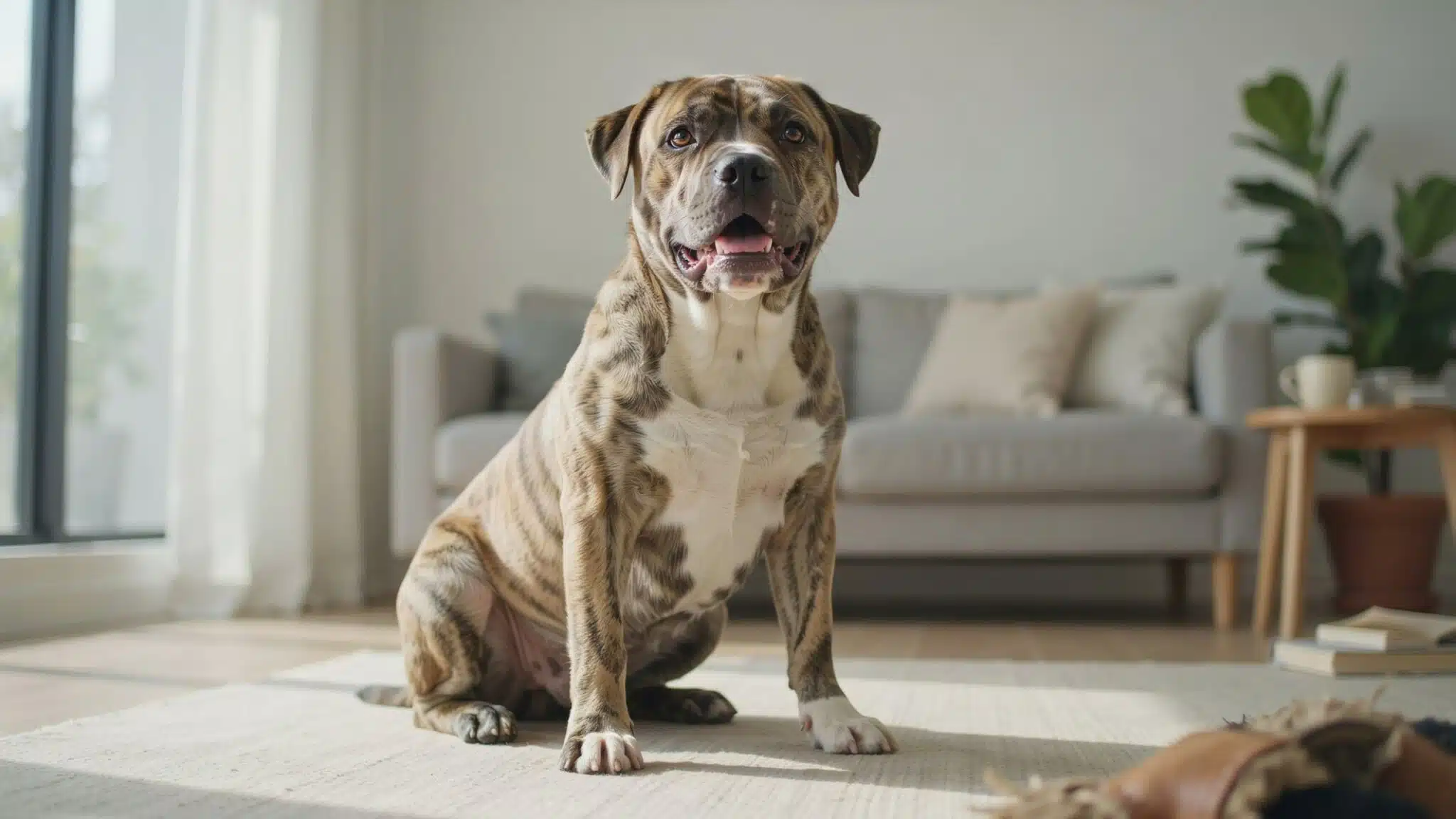
7. Continental Bulldog
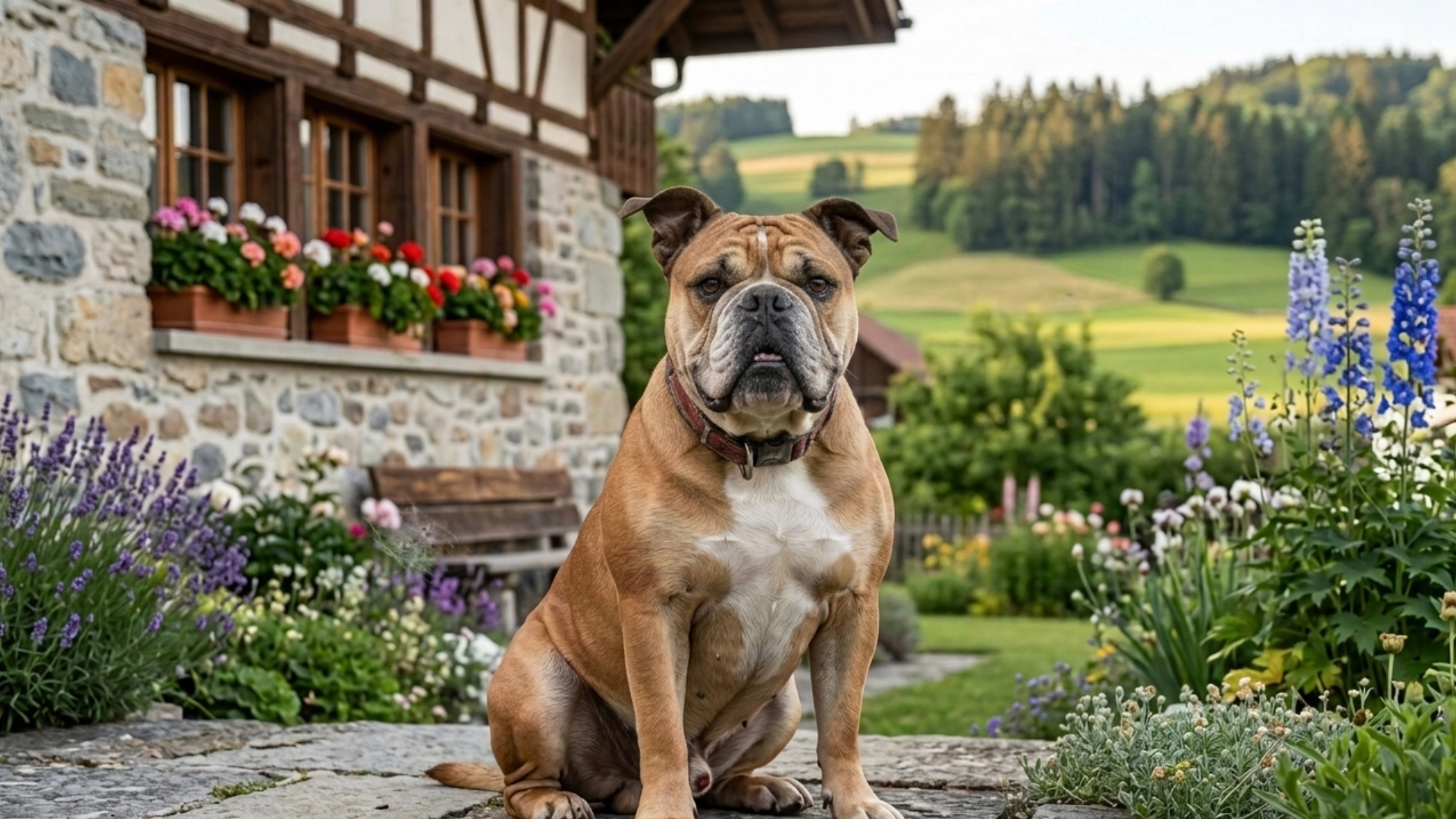
Developed in the early 2000s as a healthier alternative to the English Bulldog, the Continental Bulldog combines a muscular build with a longer muzzle, which reduces the breathing problems common in flatter-faced breeds.
Its temperament runs friendly and steady rather than stubborn, making it an easier fit for households wanting bulldog looks without the same medical bills. Its lifespan is an early estimate, since the breed was only standardized in 2004 and lacks long-term health data, and availability outside Europe stays confined to a small breeder network.
Height: 17–20 inches
Personality Traits: Friendly, Steady, Sociable
Switzerland’s Lesser-Known Scent Hounds
Long before mountain rescue dogs made headlines, Swiss hunters relied on a separate group of scent hounds that rarely get covered outside specialist circles.
8. Swiss Hound
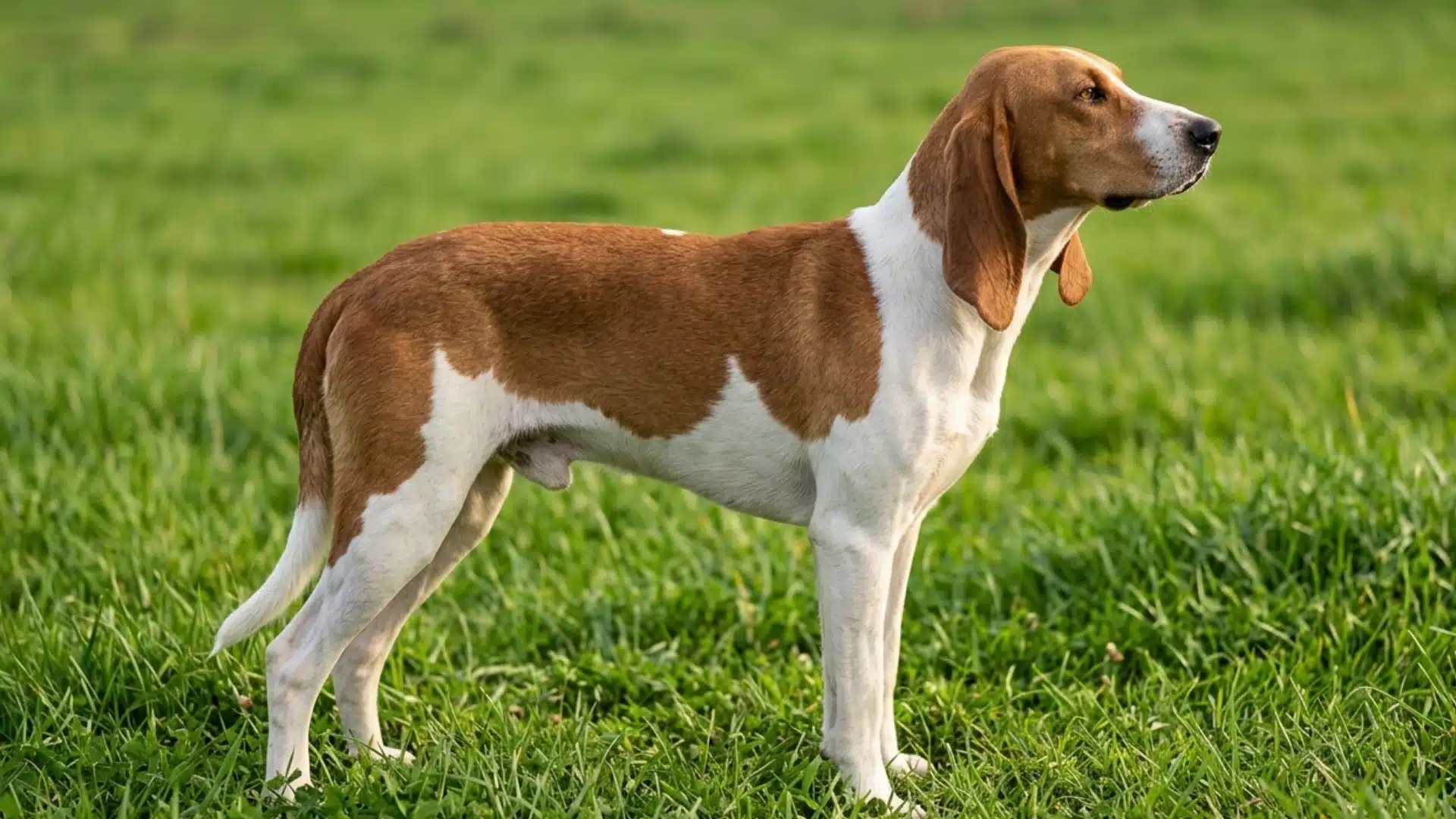
The Swiss Hound, or Schweizer Laufhund, is actually a family of four regional varieties named after the areas where they developed: Bern, Jura, Lucerne, and Schwyz.
Bred to track foxes, hares, and deer across difficult terrain, these hounds move with a steady, focused gait. They make loyal, alert household dogs, but that hunting instinct means off-leash time near wildlife rarely ends well.
Height: 18.5–23 inches
Personality Traits: Focused, Loyal, Alert
9. Schweizerischer Niederlaufhund
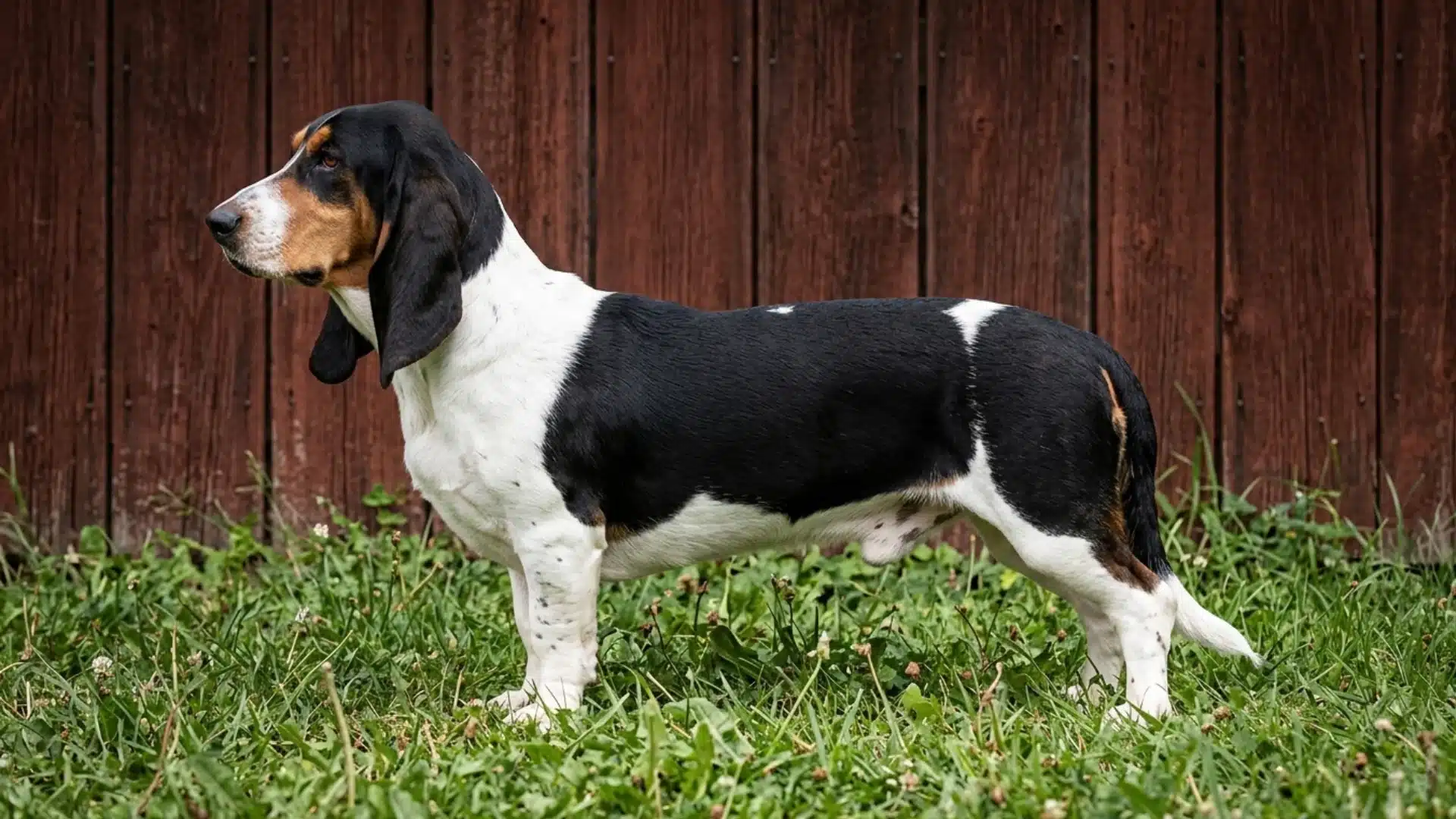
A shorter-legged relative of the Swiss Hound, the Schweizerischer Niederlaufhund was bred for hunters on foot rather than horseback, tracking scent at a slower, deliberate pace over rough ground.
Its smaller size makes it more manageable at home than its taller cousin, though it shares the same relentless nose and independent streak. Few breeders outside Switzerland work with this variety.
Height: 13–15 inches
Personality Traits: Determined, Independent, Steady
10. Bruno Jura Hound
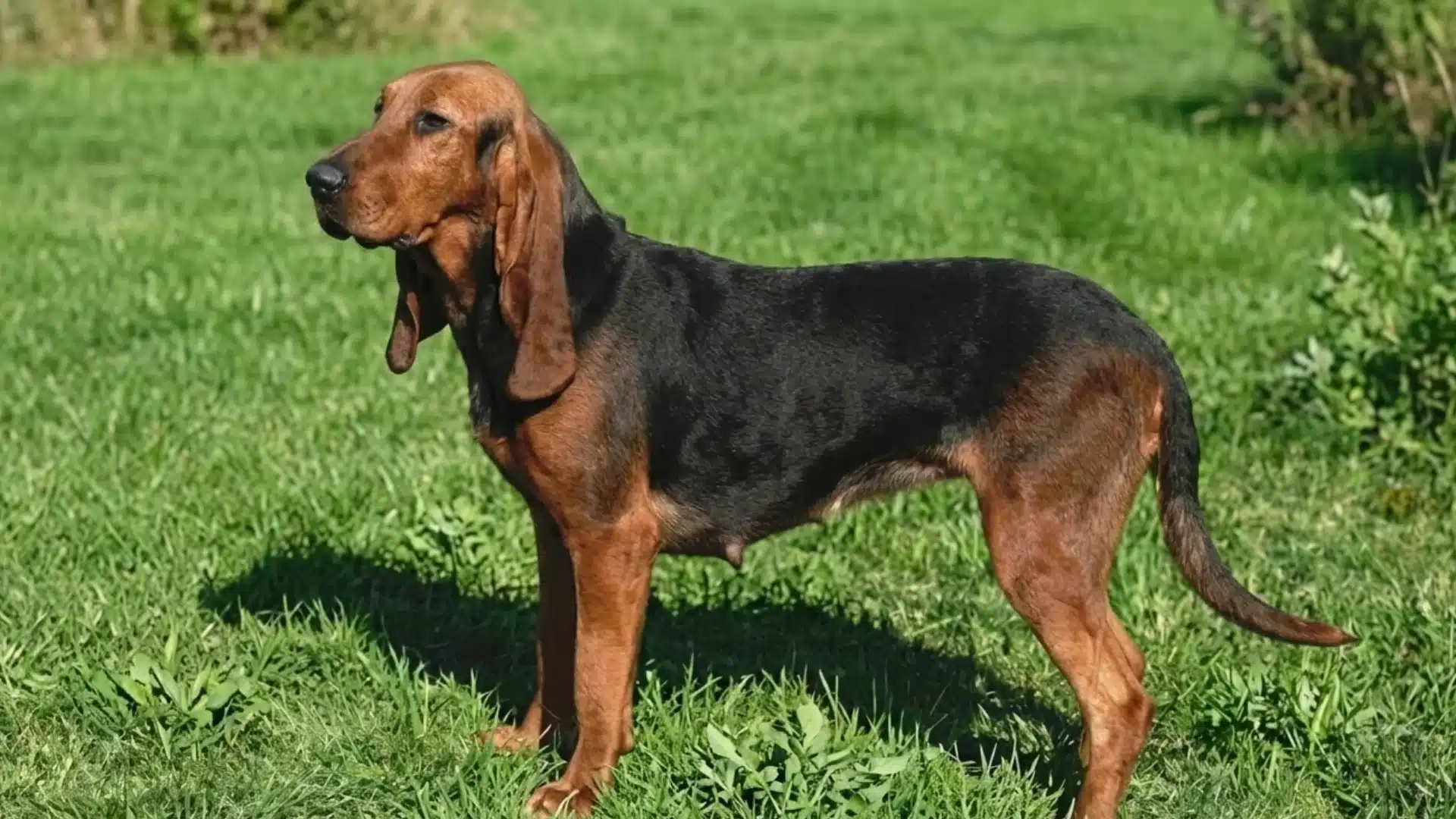
Named for the Jura Mountains along the French-Swiss border, the Bruno Jura Hound built its reputation tracking faint scent trails left by fox and small deer across demanding terrain.
Local hunters still value the breed for exactly that reason. Its calm, steady temperament at home contrasts with an almost singular focus once it picks up a scent outdoors.
Height: 18–23 inches
Personality Traits: Calm, Focused, Loyal
11. St. Hubert Jura Hound
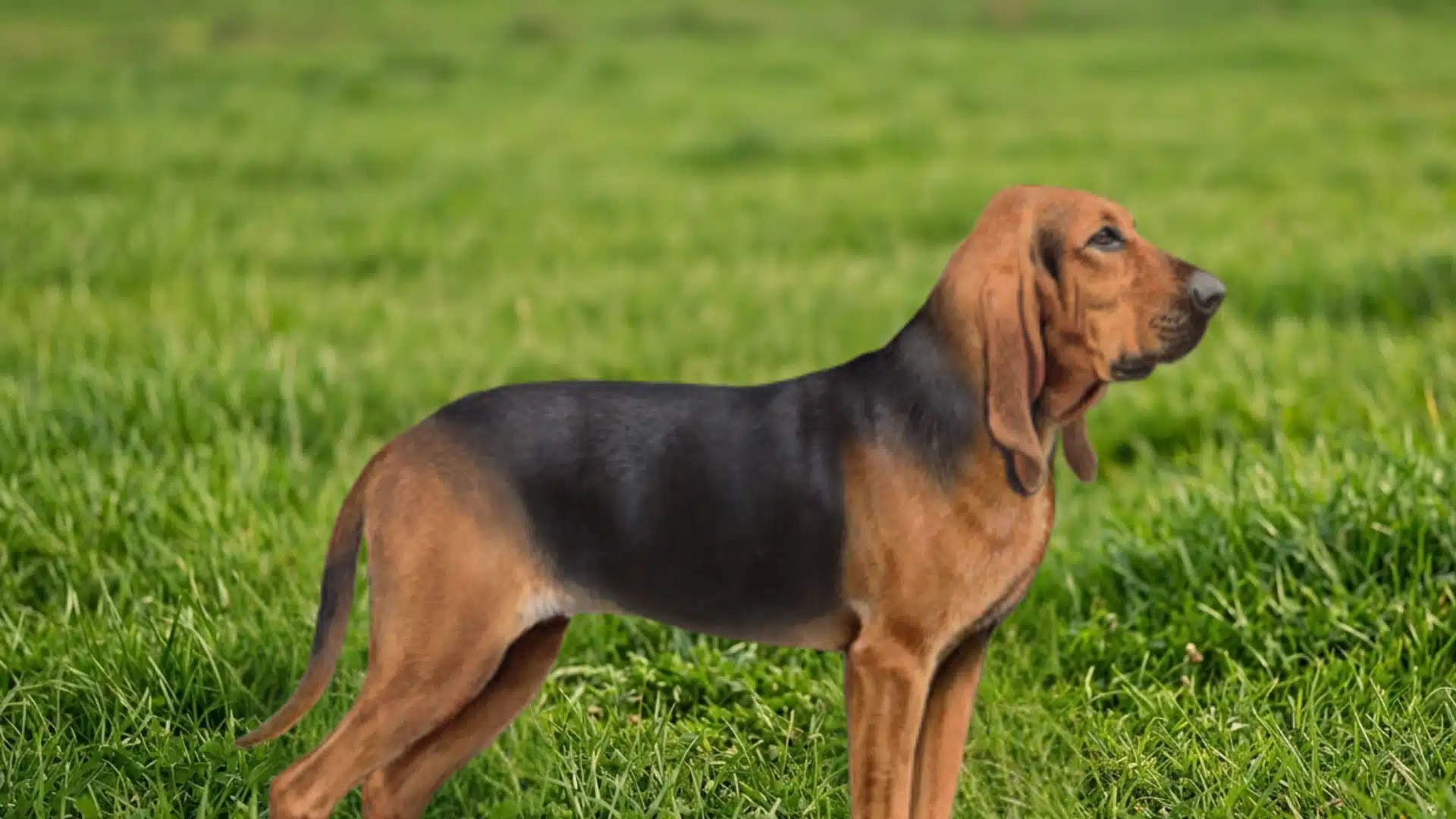
Closely related to the Bruno Jura Hound, the St. Hubert Jura Hound is prized among Swiss hunters for combining strong scenting ability with surprising speed and agility over rocky ground.
Outside hunting circles, the breed remains almost entirely unknown, and sourcing one usually means going through a specialist breeder in Switzerland or a neighboring region of France.
Height: 20–23 inches
Personality Traits: Agile, Focused, Reserved
How Rare Are These Breeds Outside Switzerland?
Some of these dogs show up regularly at shows and shelters across the United States, while others practically never leave Europe. Here’s a rough breakdown.
- Widely available: Bernese Mountain Dog and Saint Bernard are AKC-recognized and reasonably easy to find through breeders or breed-specific rescues.
- Available with patience: Greater Swiss Mountain Dog and Entlebucher Mountain Dog have small but active breeder networks in North America.
- Uncommon: Appenzeller Sennenhund and White Swiss Shepherd Dog require a longer search and often a waitlist.
- Rare outside Europe: Continental Bulldog and all four scent hound breeds are still bred almost exclusively in Switzerland, France, and Germany, making import the realistic path to ownership.
Rarity isn’t a downside on its own, but it does mean longer waits, higher costs, and fewer nearby vets familiar with breed-specific health quirks.
Choosing a Swiss Breed That Fits Your Home
Size and working history matter more with these breeds than with most companion dogs, since nearly all of them were bred for a specific alpine job.
A first-time owner in a city apartment will have a very different experience with an Entlebucher Mountain Dog, which tolerates smaller spaces if exercised daily, than with a Greater Swiss Mountain Dog, which genuinely needs a yard.
Households with young children tend to do best with the calmer Sennenhund breeds or the Saint Bernard, while anyone drawn to the scent hounds should expect a dog that thinks for itself outdoors and needs a securely fenced space rather than an open yard.
Climate is worth a second thought too, since nearly every breed on this list carries a double coat built for cold winters, which means they handle snow far better than extreme summer heat.
Conclusion
Switzerland’s alpine terrain produced dogs built for real jobs, and that working history still shapes how each breed behaves at home today.
Gentle giants like the Bernese Mountain Dog and Saint Bernard suit families looking for a loyal, easygoing companion, while the Appenzeller Sennenhund and scent hound breeds reward owners ready to keep up with a working dog’s drive.
Before choosing any of these eleven Swiss dog breeds, weigh living space, climate, and daily exercise time honestly against what the breed actually needs.
Found a Swiss breed that matches your lifestyle? Share your favorite in the comments and pass this guide along to someone planning to welcome one of these dogs home.
Frequently Asked Questions
What is The National Dog Breed Of Switzerland?
Switzerland has no legally designated national dog breed. The Saint Bernard functions as the country’s unofficial mascot thanks to its rescue history and its association with the Great St Bernard Pass. Still, no government body has ever made that status official.
How Much Does a Bernese Mountain Dog Puppy Cost?
Prices from health-tested breeders in the United States typically range from $1,800 to $3,500, depending on lineage and location. Puppies priced well below that range often come from breeders skipping hip, elbow, or cardiac screening.
Are Swiss Dog Breeds Hypoallergenic?
No Swiss breed qualifies as hypoallergenic. All eleven have double coats that shed at least seasonally, and several, including the Bernese Mountain Dog and White Swiss Shepherd Dog, shed heavily enough to require year-round grooming.