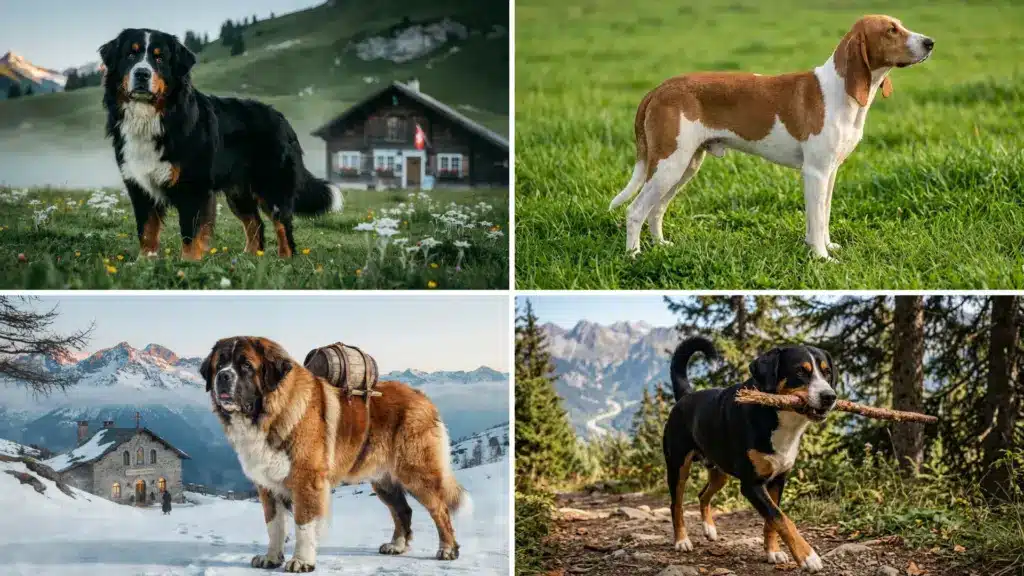


That compact tricolor dog may look like a smaller Bernese, but living with one can feel very different. The surprise is not its size. It is how much drive, vigilance, and voice can fit into a medium frame.
After more than a decade researching breeds and volunteering with rescues, I have learned that good matches begin with honest expectations.
The Entlebucher Mountain Dog is devoted and highly active, with a working history that still shapes daily life. Before choosing one, you need more than a charming photograph.
You need facts about size, temperament, exercise, training, grooming, health screening, barking, cost, and household fit. Those practical details can help you decide if this rare Swiss cattle dog belongs in your family.
Entlebucher Mountain Dog at a Glance
A quick look at the numbers helps before considering temperament and daily care. Sex-specific measurements are more useful than one combined range because males and females have different limits under the official standard.
| Trait | Range |
|---|---|
| Height | Males: 17.5–20.5 inches; females: 16.5–19.5 inches |
| Weight | Males: 50–65 pounds; females: 40–55 pounds |
| Lifespan | 11–13 years |
| Coat | Short, dense, tricolor double coat |
| Energy level | High |
| Low-shedding | No |
| Origin | Switzerland |
| AKC group | Herding |
These measurements and the 11-to-13-year lifespan come from the American Kennel Club profile. Other registries may publish slightly different figures, so identify the organization behind a range before comparing sources.
These numbers describe the typical breed profile, but they cannot predict an individual dog’s adult size, health, or behavior.
Where This Breed Comes From
The breed’s working history explains many of the qualities owners still see today. Its energy, confidence, and alert behavior developed for practical reasons rather than companionship alone.
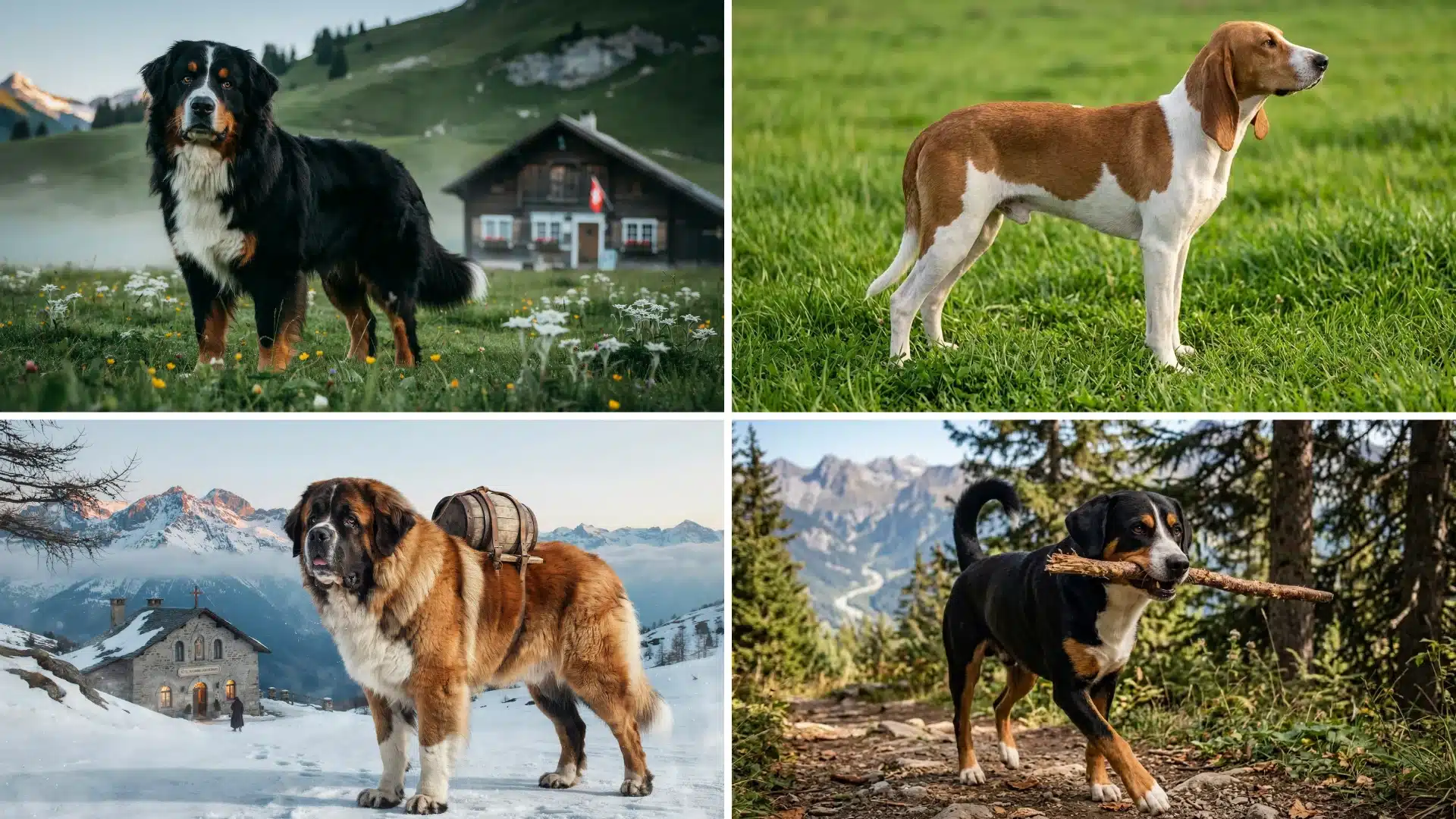
The Entlebucher is the smallest of Switzerland’s four Sennenhund breeds. The American Kennel Club recognized it as a member of the Herding Group in 2011.
Swiss farmers used these dogs to move cattle between pastures, work that demanded stamina, agility, and independent judgment. The breed takes its name from Switzerland’s Entlebuch region.
That history helps explain why modern Entlebuchers remain energetic, watchful, and happiest when given regular physical and mental work, a trait it shares with the other Swiss farm dogs bred for similar jobs.
Entlebucher Mountain Dog Breed Profile
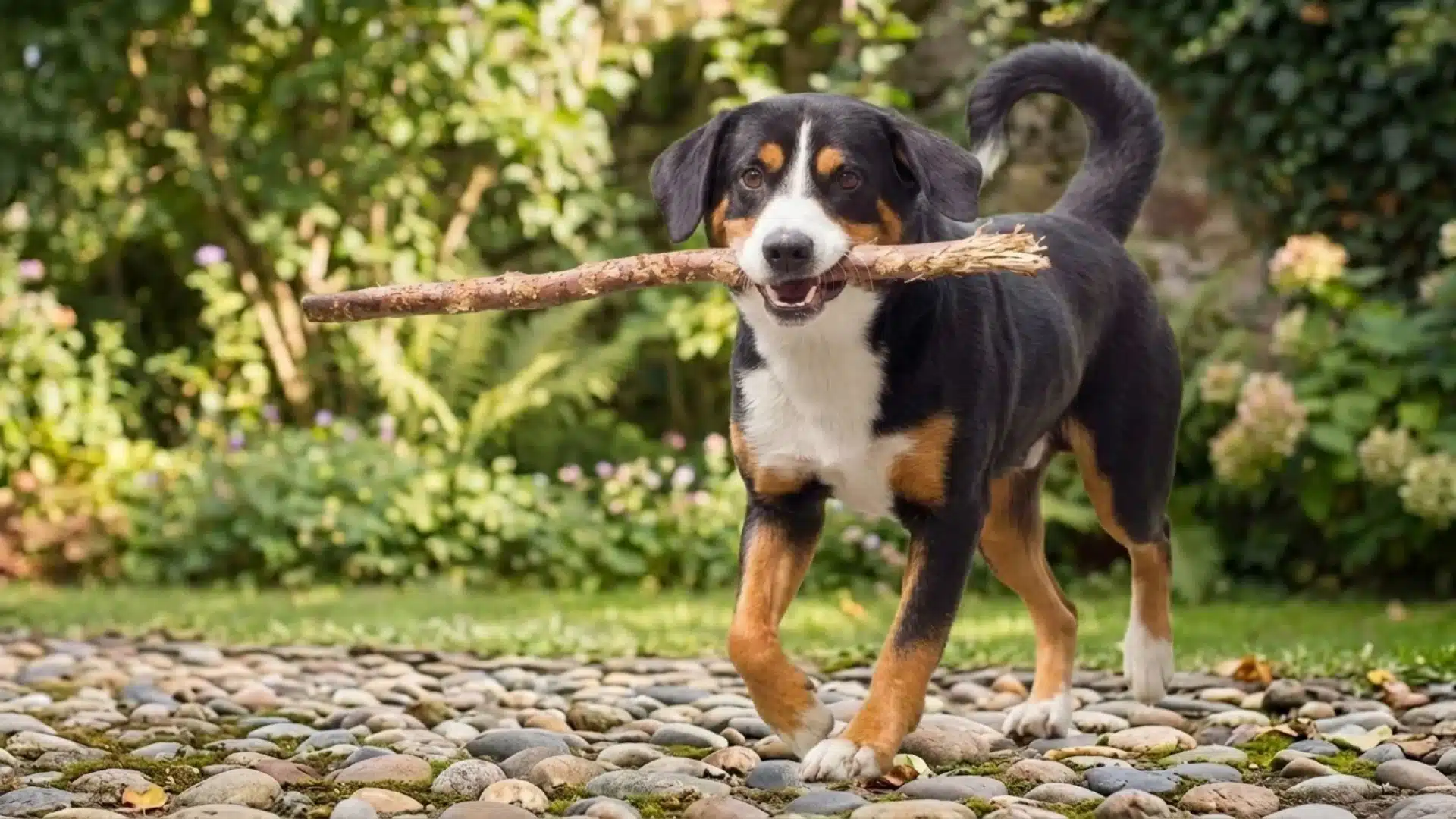
The Entlebucher combines a medium build with the energy and confidence of a working cattle dog. Its appearance may attract attention first, but temperament, care needs, and daily compatibility matter more when deciding if the breed suits your home.
1. Breed Characteristics
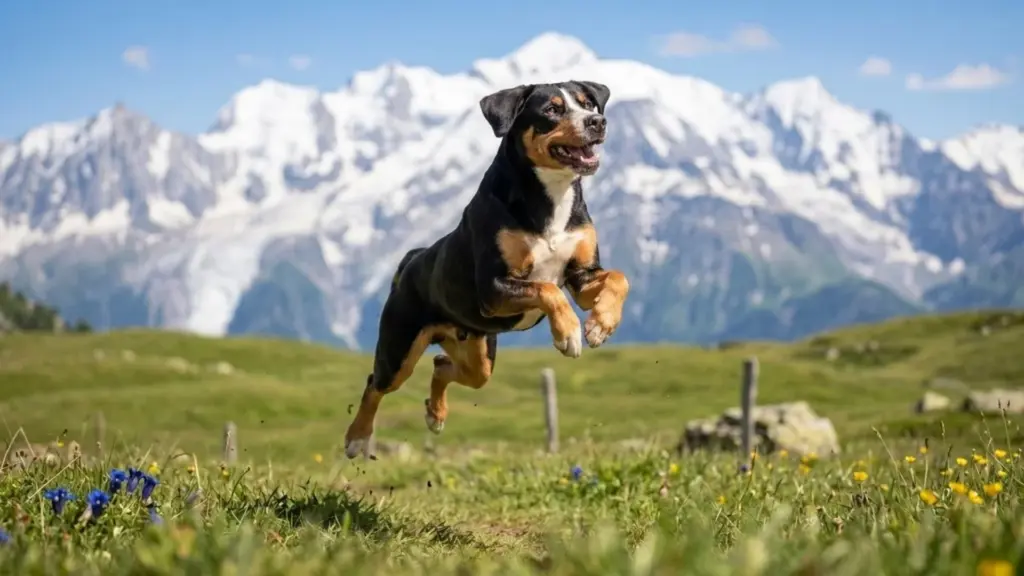
The Entlebucher is a compact, muscular Swiss farm dog with a short tricolor coat, sturdy legs, and an alert expression. It was developed for cattle work, which helps explain its stamina, quick reactions, watchfulness, and preference for having a regular task.
2. Temperament
Entlebuchers are typically loyal, intelligent, confident, and closely attached to their families. Many remain reserved around strangers and may alert-bark at unfamiliar activity.
Early socialization and reward-based training can support calmer behavior, but individual temperament still varies, and giving that confidence a job to do tends to work better than trying to train the drive away entirely.
3. Size
Most Entlebuchers stand about 16.5 to 20.5 inches tall and weigh approximately 40 to 65 pounds. Males are generally larger than females. Although medium-sized, these dogs require more activity and training than their compact build might initially suggest.
4. Care Needs
Many healthy adults need at least an hour of daily activity, including walks, games, training, or dog sports. The short double coat benefits from weekly brushing, and choosing a brush suited to double coats makes that routine faster, while measured meals, dental care, nail trimming, and routine veterinary examinations support overall health.
5. Common Breed Standards
Common breed descriptions call for a compact body that is slightly longer than tall, a short double coat, and black, tan, and white coloring. Exact markings, tail length, and coat texture can vary, and appearance does not determine health or suitability.
These traits describe the breed generally rather than predicting every Entlebucher. Before choosing one, consider the individual dog’s health history, behavior, socialization, exercise needs, and response to children, visitors, and other animals.
Standards note: Physical standards describe commonly expected breed features. Markings, coat texture, tail length, or minor physical differences do not determine a dog’s health, temperament, or value as a companion. |
Is an Entlebucher Mountain Dog Right for Your Home?
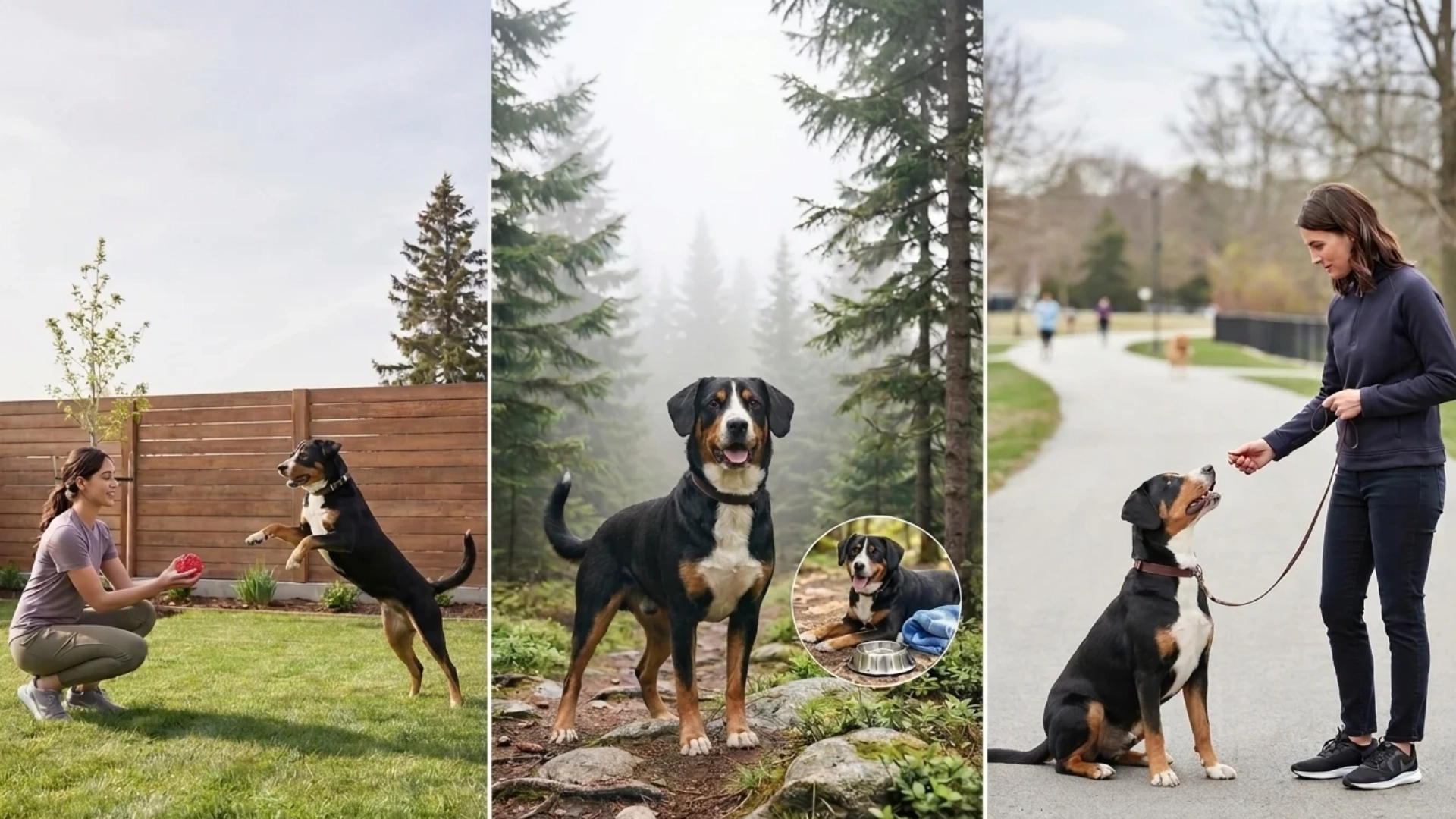
Space matters, but the amount of daily involvement matters more. A medium-sized dog with strong working drive can still be difficult in a large home when exercise, training, and companionship are inconsistent.
A securely fenced yard can provide useful space, although it does not replace walks, training, or time with the household. Some Entlebuchers may patrol boundaries or alert-bark at nearby movement.
The double coat handles cool conditions well, while activity should be reduced or rescheduled during hot, humid weather. Apartment living may be possible for an individual dog, but noise sensitivity and access to daily exercise deserve careful consideration.
Judge the match by your routine, training capacity, neighbors, children, other pets, and tolerance for an alert dog, not yard size alone.
Living With Children and Other Pets
Household compatibility deserves more than a simple yes or no. Breed tendencies matter, but the individual dog’s temperament, history, socialization, and training matter too.
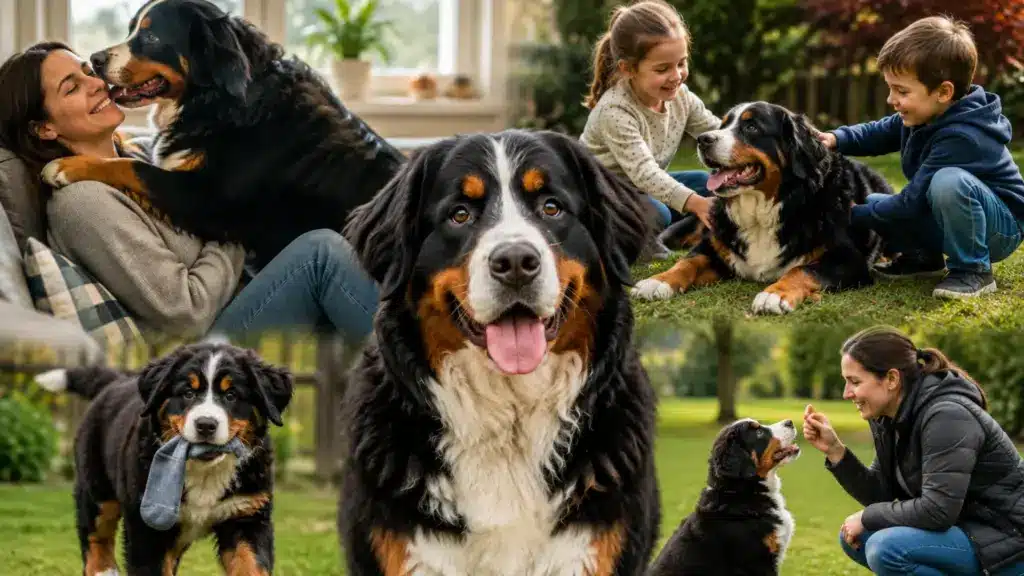
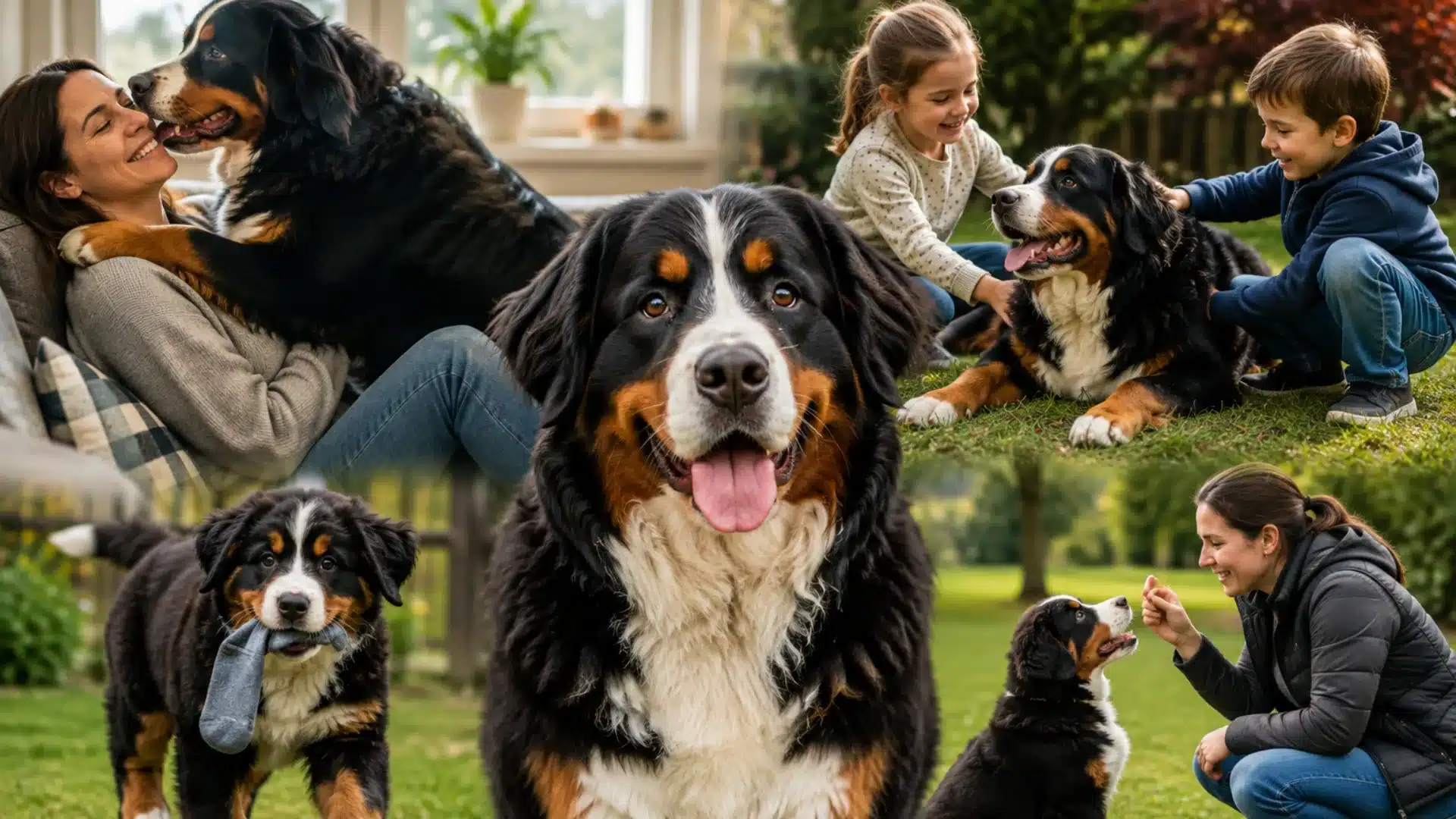
Entlebuchers can live successfully with children, but their strength, energy, and possible herding behavior require supervision around young children. Adults should prevent chasing, body-slamming, heel-nipping, or rough play rather than expecting children to manage the behavior.
Early, positive introductions may help with other dogs and household pets. Compatibility is not guaranteed, especially when a dog has limited social experience or shows a strong desire to chase.
Ask a breeder or rescue how the specific dog behaves around children, dogs, cats, and visitors. No breed label can replace direct information about the individual animal.
Do Entlebucher Mountain Dogs Bark a Lot?
Barking is an important consideration, especially in apartments or closely spaced neighborhoods. Entlebuchers are alert working dogs, and many readily vocalize when they notice visitors, unfamiliar sounds, or changes around the home.
Frequency varies among individuals, so the breed should not be described as either constantly noisy or reliably quiet. Exercise, early socialization, reward-based training, and visual barriers can help reduce unnecessary barking without guaranteeing silence.
Avoid shouting or punishing alert barking because that may increase anxiety or excitement. Instead, teach a quiet cue, reward calm behavior, and limit repeated access to predictable triggers.
If barking begins suddenly or appears alongside distress, pain, confusion, or other behavioral changes, discuss it with a veterinarian.
Entlebucher vs. Bernese vs. Appenzeller
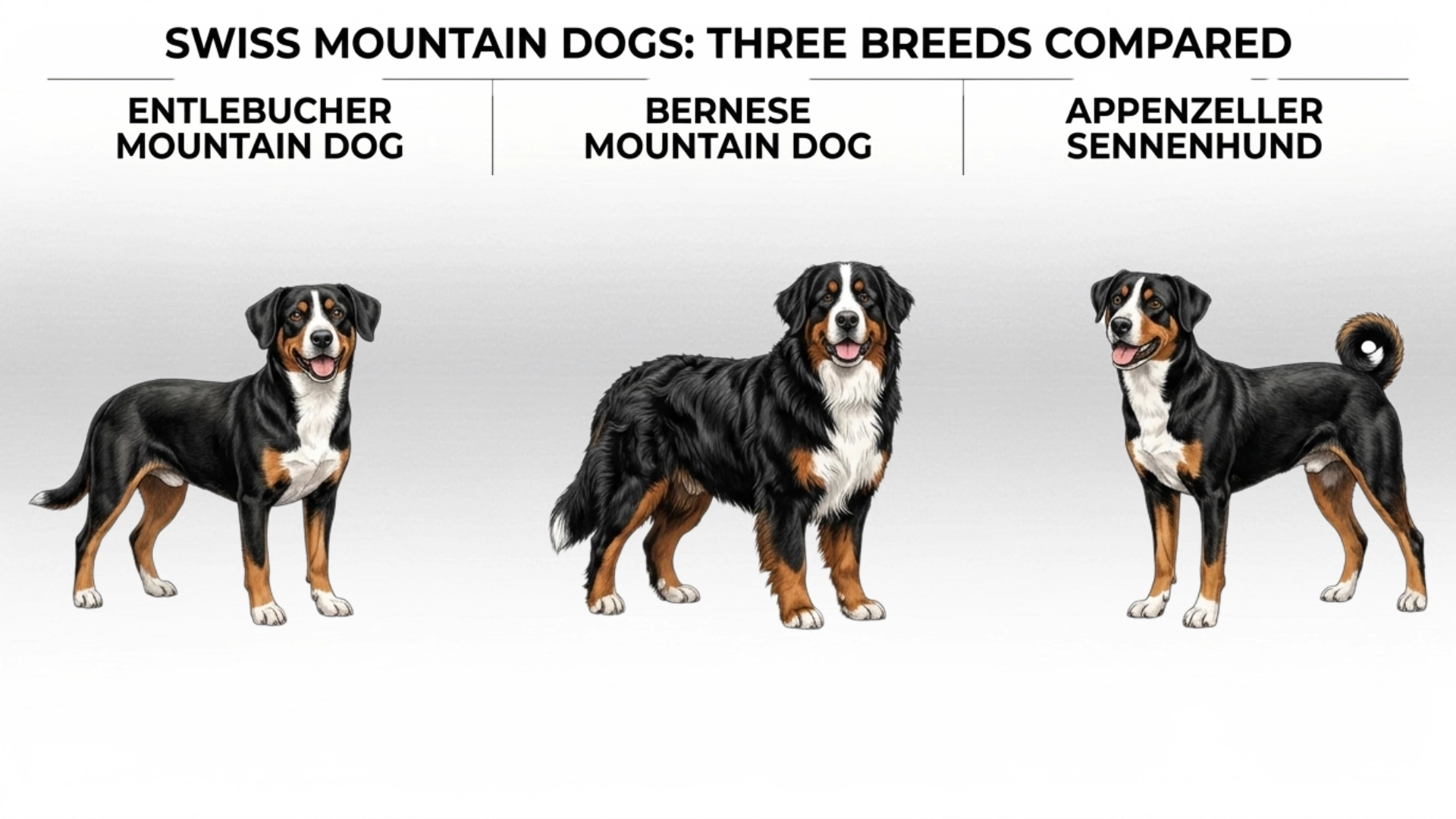
These three dogs share Swiss farm-dog ancestry, but their size, coat, and working intensity differ. Those differences can affect exercise, grooming, housing, training, and daily family life.
| Trait | Entlebucher | Bernese | Appenzeller |
| Relative size | Smallest | Largest | Medium-sized |
| Coat | Short, dense double coat | Longer double coat | Short, dense double coat |
| Typical activity | High | Moderate to high | High |
| General working style | Active cattle drover | Farm and draft dog | Active farm and cattle dog |
| Grooming | Moderate | More frequent | Moderate |
The Bernese is generally larger and less intense, while the Entlebucher and Appenzeller are typically more active working dogs. No breed is automatically suitable for every family.
Consider the individual dog, children’s ages, grooming needs, exercise requirements, training experience, and available space instead of choosing according to appearance alone.
Rarity, Breeder Selection, and Cost
The breed remains uncommon in the United States, so finding a suitable puppy or adult may take time. Limited availability should not pressure you into accepting missing health records or unclear breeding practices.
No authoritative national price range exists. Ask each breeder for a written price, contract, health-testing documentation, and an explanation of what the fee includes, and confirm whether a breeder holds an active USDA license is one more way to check their standing before committing.
Request information about temperament, previous litters, return policies, and the health and longevity of close relatives. Confirm the registered names of both parents so you can review their published screening results yourself.
Screening cannot eliminate every inherited risk, but documented results provide more useful information than verbal assurances. A responsible breeder should also ask questions about your household and remain available after placement.
Buyer note: Prices and availability vary. Licensing, registration, or health screening does not guarantee responsible breeding or a puppy free from future health and behavior problems. |
Final Take
The Entlebucher Mountain Dog is loyal, driven, vocal, and happiest when given meaningful work. That combination can be deeply rewarding for the right household and difficult for the wrong one. Before deciding, look honestly at your schedule, activity level, training experience, and tolerance for noise.
A yard helps, but regular exercise and family involvement matter more than outdoor space alone. Health screening, early socialization, and realistic expectations support a better match, although no checklist guarantees a dog’s future health or behavior.
If the breed still feels right, contact a responsible breeder or rescue, request documented health results, and spend time with adult dogs when possible. Save these questions for your first conversation and start researching breed-club resources today.
| Breed and health disclaimer: This information describes general breed tendencies and does not predict an individual dog’s temperament, health, exercise tolerance, or household compatibility. Discuss health, diet, activity, and behavioral concerns with a veterinarian or qualified professional. |
Frequently Asked Questions
Can This Breed Be Left Alone?
No fixed number of hours suits every dog. Build alone time gradually, provide exercise beforehand, and watch for barking, destruction, pacing, accidents, or distress. Persistent signs deserve prompt help from a veterinarian or qualified behavior professional.
Why Do Some Dogs Have Long Tails?
The breed standard permits a natural tail of any length or a docked tail. Tail appearance therefore varies by individual and country. A long tail is normal and does not indicate mixed ancestry or poor health.
How Much Food Does an Adult Need?
Portions depend on age, body condition, activity, and the food’s calorie density. Start with the feeding label, measure meals, limit treats, and ask your veterinarian to adjust intake if weight or activity changes noticeably over time.