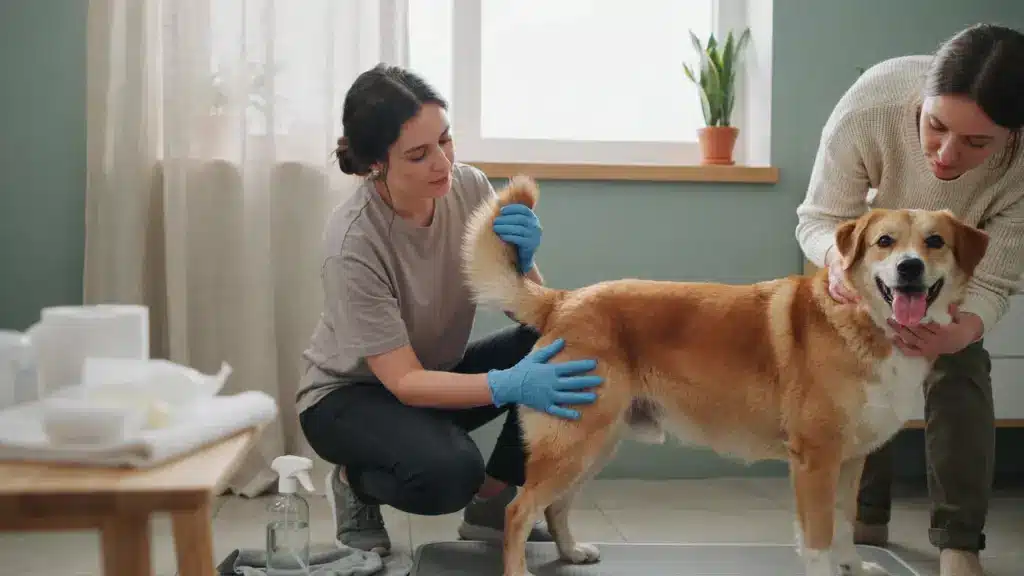
Your dog won’t stop scooting across the living room floor, and you’ve caught them chewing near their tail more than usual tonight. Now you’re here, phone in hand, asking if this is something you should handle yourself.
It’s a fair question. I never treat scooting as proof that a dog’s anal glands need expressing because irritation, allergies, parasites, infection, or pain can cause similar behavior. Most dogs empty their anal sacs naturally, while others occasionally need help from a veterinarian or trained groomer.
I’ll explain how to express dog anal glands safely, what normal fluid may look like, and when you should stop. Swelling, bleeding, severe pain, difficulty passing stool, or recurring problems need veterinary attention rather than another attempt at home.
How to Express Dog Anal Glands
Here’s the short version. Two small anal sacs sit under the skin on either side of your dog’s anus and fill with a smelly fluid that normally empties on its own during a bowel movement, especially when the diet includes adequate dietary fiber for dogs.
When they don’t empty naturally, some owners learn to express dog anal glands at home using gentle external pressure.
Not every dog needs this, and not every owner should try it without guidance. If your dog has never had this done before, book a vet visit first rather than experimenting on your own.
The exact location and technique are covered further down, once you know whether home expression even applies to your situation.
Signs Your Dog Needs Expressing
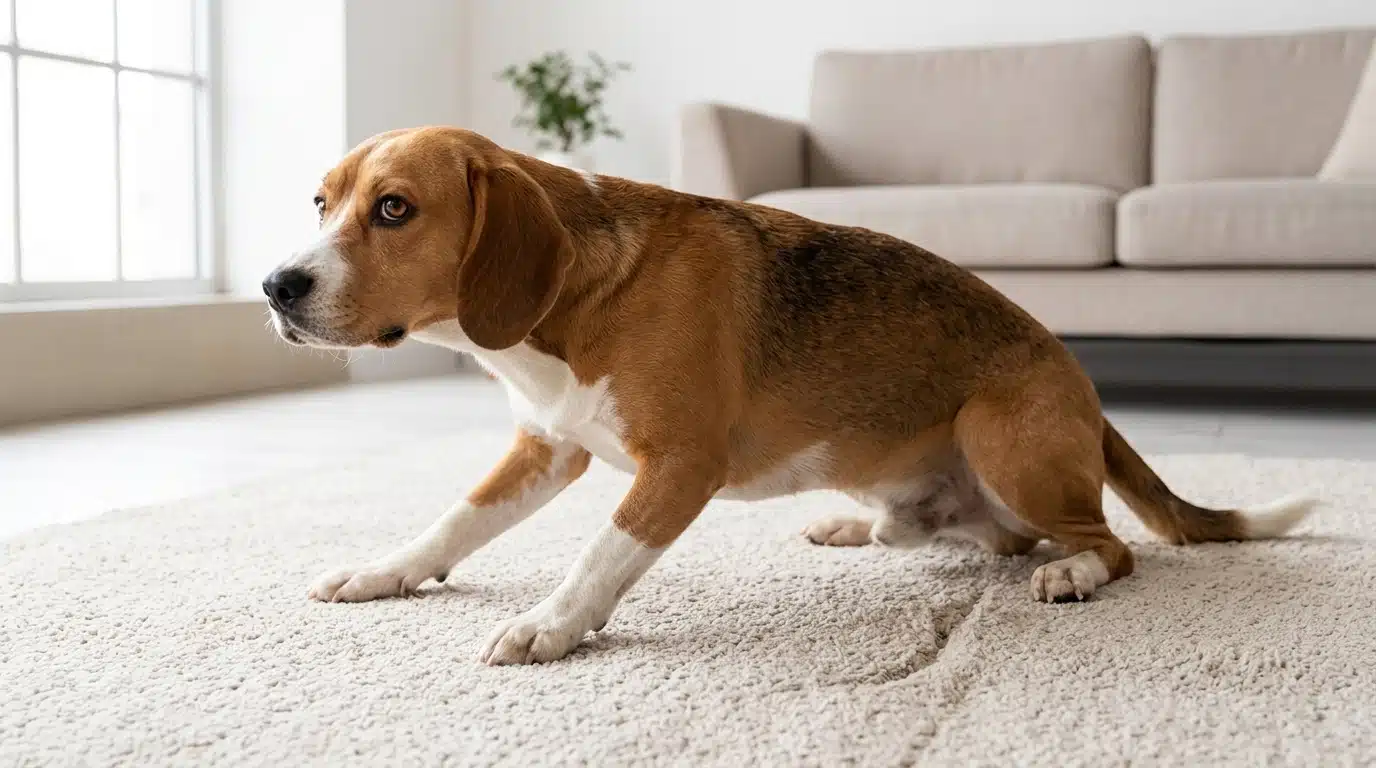
You’ll usually notice something’s off before you know why. Watch for these:
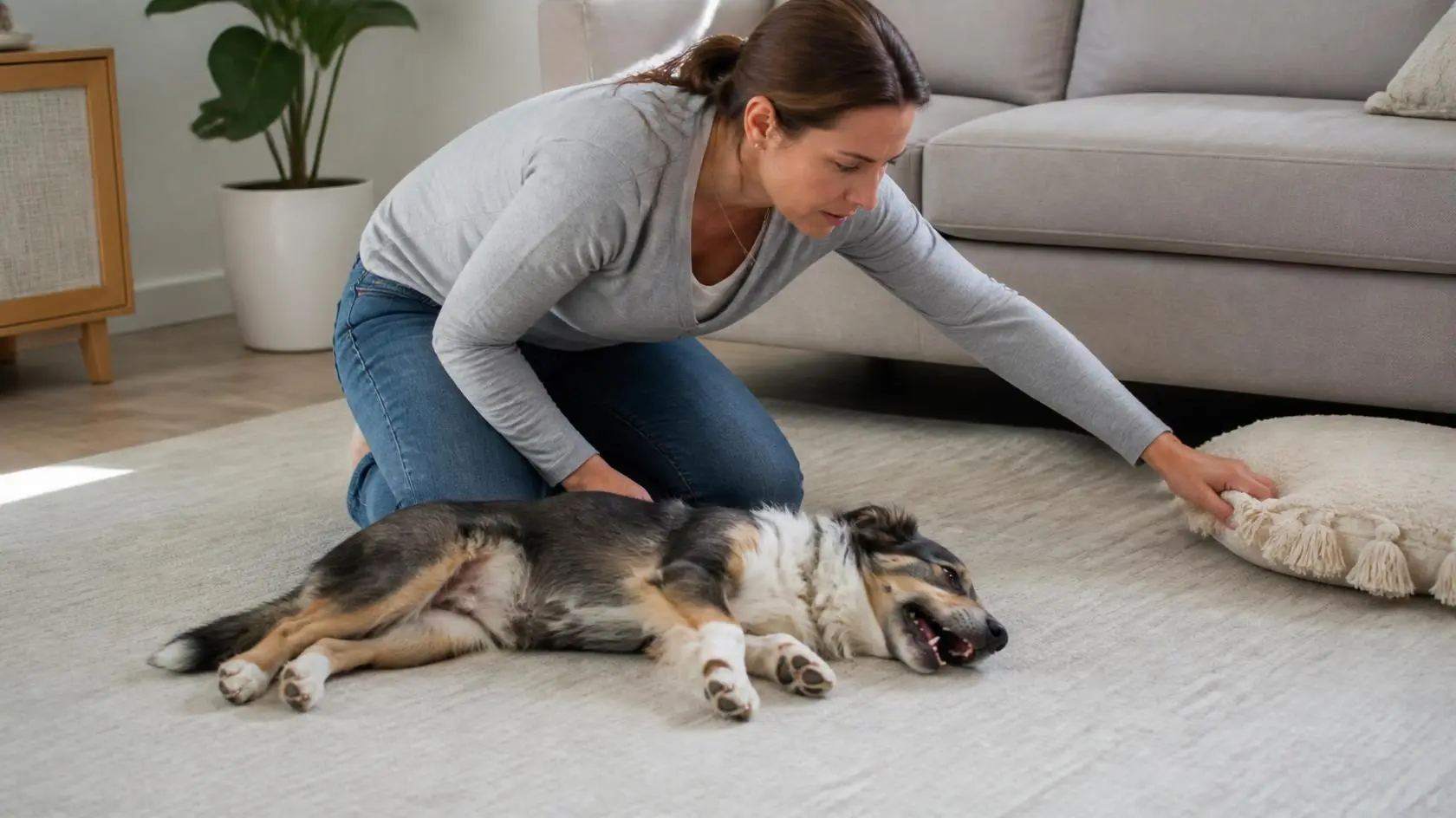
- Scooting the rear end across the floor or carpet
- Excessive licking or biting at the base of the tail
- A sharp, fishy smell that wasn’t there yesterday
- Visible fullness or swelling near the anus
- Discomfort when sitting down or being petted near the tail
Here’s the part people skip: none of these signs prove it’s the glands. Skin allergies, worms, and even certain foods are among the other reasons dogs scoot, and they can look just like a gland problem. If your dog is scooting but the glands feel normal when checked, the answer probably lies elsewhere; a vet visit will get you there faster than guessing.
| Diagnosis note: Scooting, licking, odor, or tail chewing does not confirm full anal sacs. Allergies, parasites, skin irritation, infection, pain, or a mass can cause similar signs. |
Supplies You’ll Need First
Gather everything before you start. Stopping halfway to hunt for gloves stresses the dog more than the procedure itself.
| Item | Why You Need It |
|---|---|
| Disposable gloves | Keeps hands clean; fluid has a strong odor |
| Paper towels or gauze | Covers the area and catches discharge |
| Wipes or a damp washcloth | Cleanup after expression |
| A second person | Holds and calms the dog so you can focus |
| Water-based lubricant | Only if shown to use it by a vet |
Skip anything not on this list. Extra tools tend to slow you down, not help you.
Step-by-Step External Expression Technique
This is the method most vets teach owners, since it carries far less risk than reaching internally. Each step below includes a precaution; read those as closely as the instructions themselves.
Step 1: Position and Steady the Dog
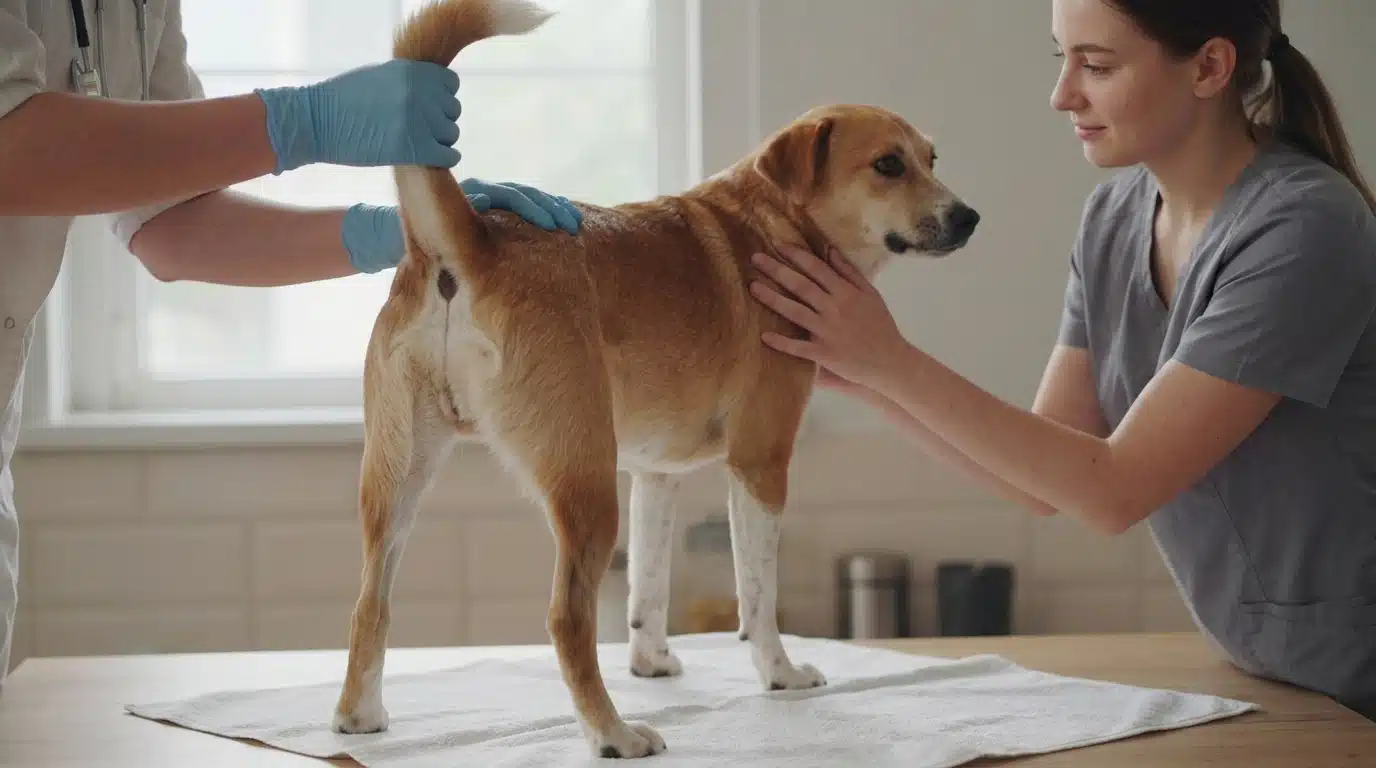
A calm setup makes everything after this easier, much like any stress-free at-home dog care routine. Get your dog and your helper settled before you touch anything.
- Have your helper hold the dog standing, or gently support them in a comfortable stance
- Lift the tail out of the way.
- Choose a stable surface with a towel down; a kitchen counter beats a slippery bathroom floor.r
- Talk in a normal, steady voice; keep your movements calm and controlled while your helper keeps the dog steady.
Precaution: A startled or squirming dog is far more likely to get scratched, bitten, or injured mid-procedure than one who feels secure. If your dog won’t settle after a minute or two, stop and try again later, or let a professional handle it instead.
Step 2: Locate the Glands (4 and 8 O’Clock)
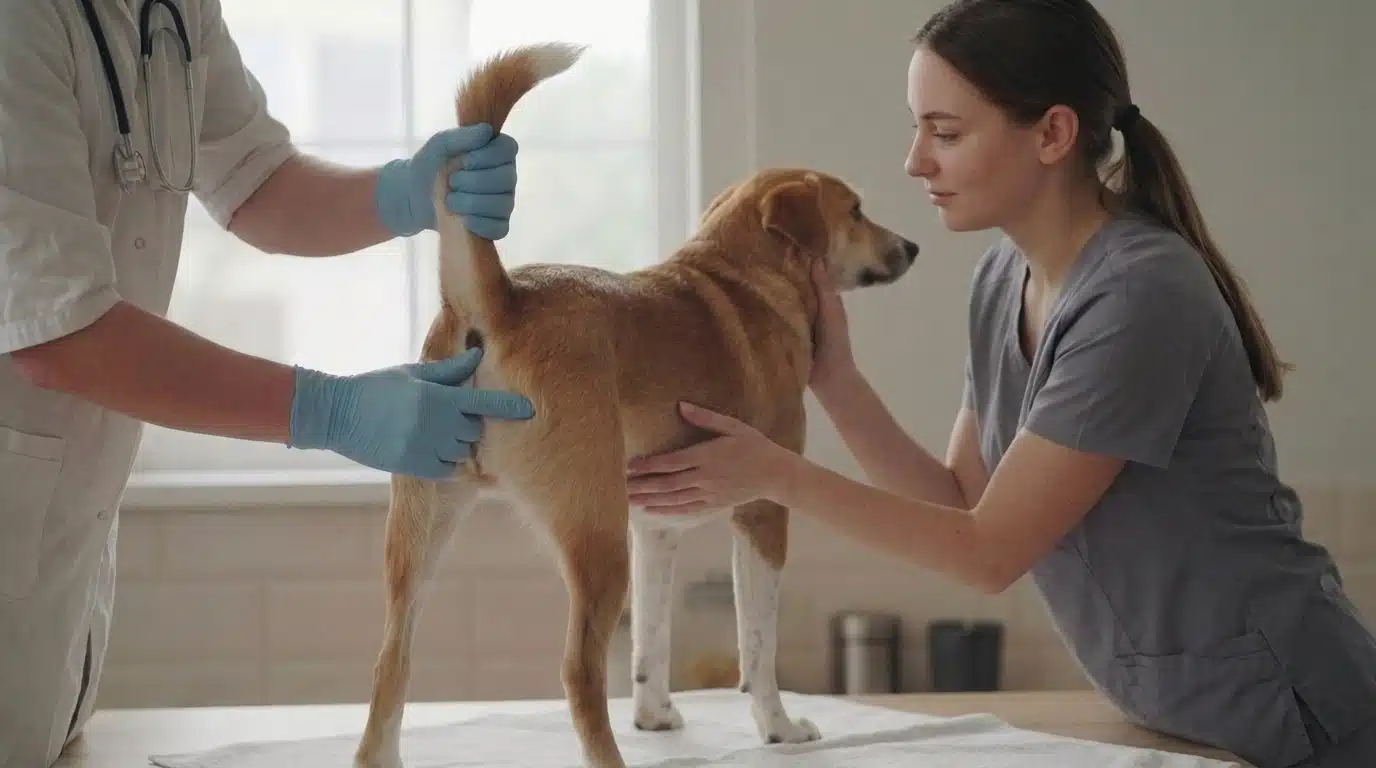
Before pressing anything, check whether there’s actually fullness to release.
- With a gloved hand, gently feel around the anus at roughly the 4 and 8 o’clock positions.
- A full gland usually feels like a small, firm grape under the skin
- You’re checking for fullness here, not attempting to empty anything yet
Precaution: Press gently to locate, never dig in with force. If a gland feels rock-hard, unusually large, or the dog yelps at light contact, stop and call a vet rather than keep searching by feel.
Step 3: Apply Gentle Inward Pressure
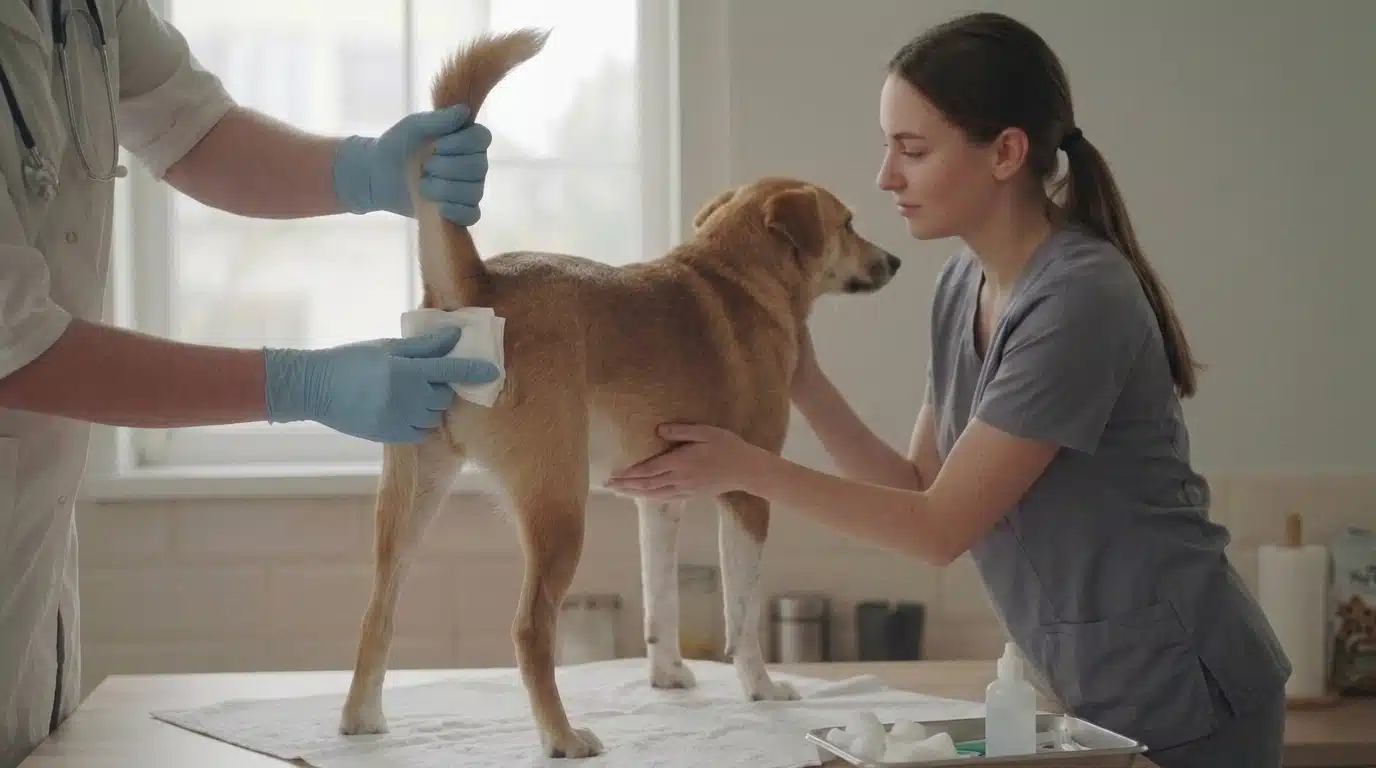
This is the actual expression step; light pressure is all it should take.
- Cover the area with a paper towel or gauze.
- Apply light, steady inward and slightly upward pressure with your thumb and finger on either side of the gland.
- Fluid may release with gentle pressure. If the gland does not empty easily, stop rather than squeezing harder.
Precaution: Use only gentle, sustained pressure, never a hard squeeze, and never repeat forceful attempts if nothing comes out. Repeated force on a gland that won’t release is one of the more common ways home attempts cause injury.
Step 4: Know When to Stop and Clean Up
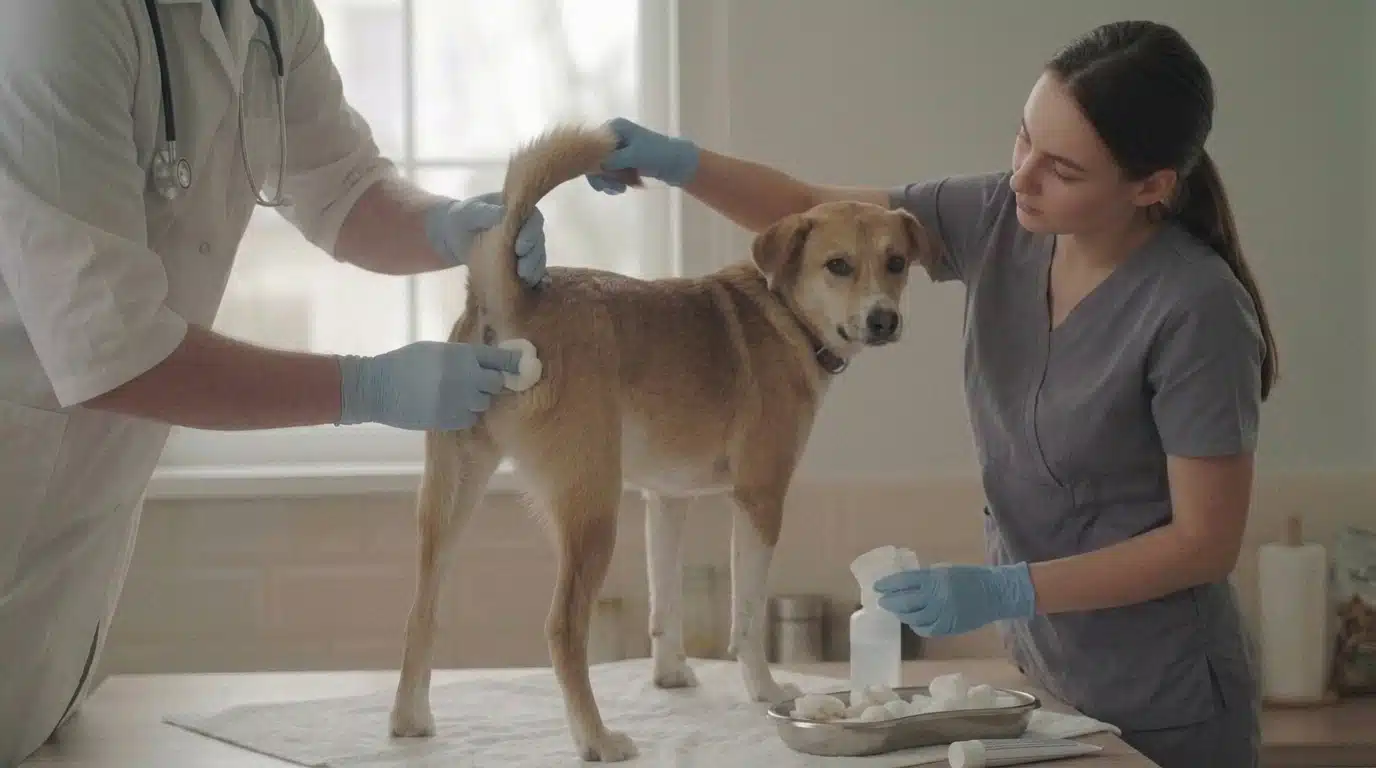
Once fluid releases, the job is basically done; finish it off properly.
- Once fluid releases from both sides, wipe the area clean with a damp cloth
- Dispose of gloves and used towels right away
- That’s the full job for a healthy gland; nothing more to do
Precaution: If something looks off at any point, unusual color, texture, or the dog’s reaction, stop immediately and check the safety section further down rather than continuing on your own judgment.
Aftercare, Frequency, and Recurrence
What happens after the procedure tells you almost as much as the procedure itself.
| Stage | What to Expect or Do |
|---|---|
| Right after | Gently clean the area and monitor your dog for continued pain, swelling, licking, or abnormal discharge. |
| Normal discharge | Tan to brown in color, thin to slightly thick, and strong-smelling but not chunky or discolored. |
| Watch for | Any sign that lingers past a day or two, rather than fading; that’s when the safety checklist below applies |
| Frequency | No fixed schedule works for every dog; most healthy dogs never need manual expression at all. |
| Recurrence | Repeated fullness often traces back to soft stool, low-fiber intake, extra weight, or nearby skin inflammation. |
If your dog needs this every few weeks without fail, that pattern itself is worth mentioning to your vet, since it usually points to something fixable underneath.
When Home Expression Isn’t Safe
Some situations call for a vet, full stop, no home attempt, no waiting it out.
- Visible pain or yelping when the area is touched
- Blood in the discharge, however small the amount
- Pus, or a foul smell that’s different from the usual odor
- Swelling, redness, or heat around the anus
- A gland that feels rock-hard rather than firm
- Nothing releases despite two or three gentle attempts
Any one of these on its own is reason enough to stop and call. Together, they usually point to impaction, infection, or an abscess, conditions that need medication or drainage a home attempt can’t provide.
Vet vs. Groomer: Who Should Do This?
Not every situation calls for the same person to do the job; here’s how to tell which one you need.
- Choose a groomer when your dog has been expressed before without issue, there’s no pain, swelling, or unusual discharge, and you want the routine task handled as part of a regular grooming visit.
- Choose a vet when it’s your dog’s first time being expressed, anything from the safety checklist above applies, or the problem keeps recurring. You want the underlying cause investigated, not just the symptom managed.
A groomer can perform the mechanical task well, but diagnosing infection or figuring out why the glands keep filling up isn’t part of the job; that stays with your vet.
| Care note: A groomer may perform routine external expression on a comfortable dog. Pain, swelling, bleeding, suspected infection, recurrence, or difficulty expressing the sacs requires a veterinarian. |
Final Thoughts
You now know how to express dog anal glands and, more importantly, how to decide if expression is appropriate. I always place that judgment ahead of the procedure itself because scooting does not confirm an anal-sac problem, and unnecessary pressure can cause pain or irritation.
If the area looks normal and your dog remains comfortable, follow the steps gently and stop if nothing releases easily. Swelling, blood, pus, a firm lump, severe discomfort, difficulty passing stool, or repeated scooting calls for veterinary care instead.
Pay attention to what your dog is showing you. If you are uncertain or the problem keeps returning, schedule a veterinary examination rather than attempting another expression at home.
Frequently Asked Questions
How Long Does It Take For Anal Glands To Refill?
There is no standard refill time. Some dogs rarely need manual expression, while dogs with recurring problems may need veterinary monitoring or more frequent expression.
Do Small Dog Breeds Need This More Than Large Breeds?
Small dogs appear to be more prone to anal gland problems than large or giant breeds, although dogs of any size can develop impaction or infection. Individual health, weight, stool consistency, and other factors also matter.
Can Neutering Or Spaying Affect Anal Gland Function?
There’s no strong evidence linking neutering or spaying directly to anal gland problems. Genetics, weight, and stool quality play a much bigger role.
Can Stress Trigger Anal Gland Problems In Dogs?
Stress rarely causes gland issues on its own, but it can worsen loose stool or licking habits, which can indirectly make existing gland fullness more noticeable.