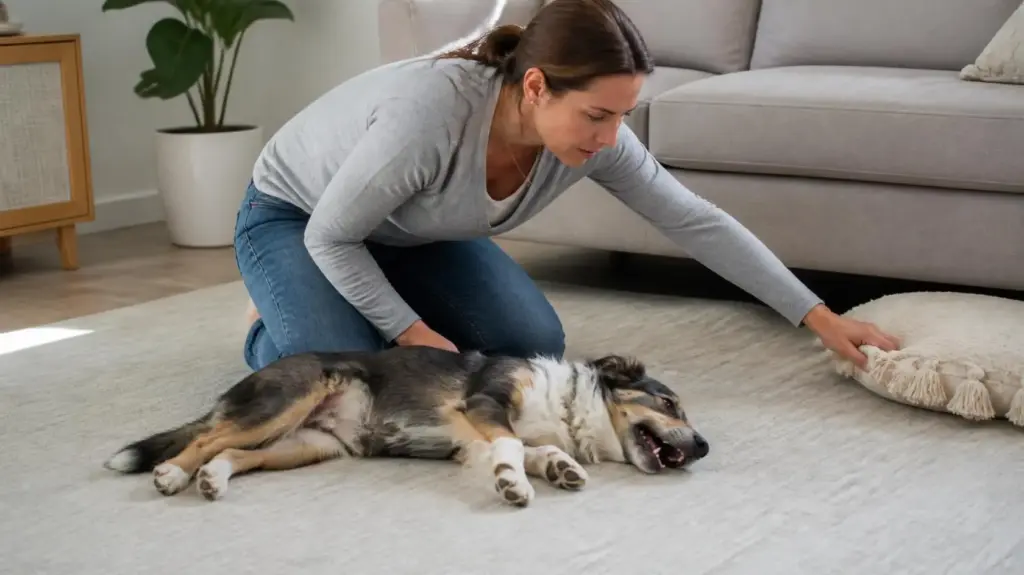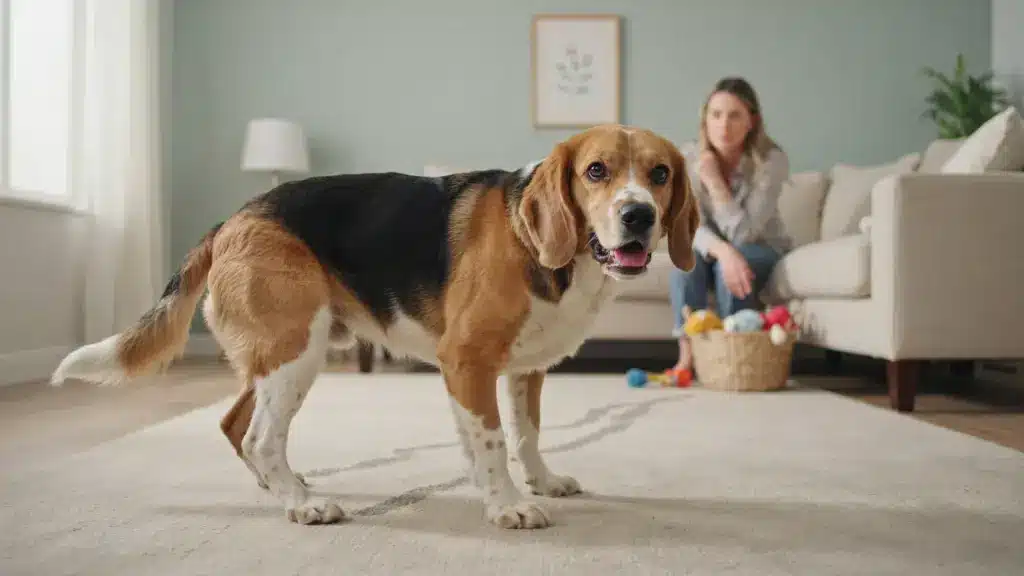
Your dog just did the scoot-across-the-floor move again, perhaps in front of guests or seconds before you were heading out the door. Somehow, the timing is never convenient.
It looks like a strange, specific behavior, and it is easy to assume the anal glands are responsible. I do not make that assumption from scooting alone. Anal-sac trouble is common, but allergies, parasites, skin irritation, infection, pain, or something caught around the rear may produce similar behavior.
Dog scooting is a clue, not a diagnosis. I’ll help you compare the likely causes, notice the differences that matter, and choose a sensible next step. You’ll also learn which signs need veterinary attention instead of another home remedy.
Why Is My Dog Scooting?
Dog scooting is your dog’s way of trying to relieve an itch, pressure, or irritation they can’t reach any other way. Anal sac problems are one of the common reasons dogs scoot, but they aren’t the only cause. Treating every scoot as a gland problem means you might miss something else, like parasites, allergies, or simple leftover mess in the fur.
Owners often assume this is the cause, but it should be confirmed rather than guessed, since other conditions can look very similar, especially in dogs, and learning the safe way to express glands at home starts with getting that diagnosis right first.
The goal here isn’t to memorize one cause and stop looking. It’s to notice the pattern, check a few details, and match what you’re actually seeing to the right next step, which is exactly what the rest of this guide is built to help with.
| Diagnosis note: Scooting is a symptom, not a diagnosis. Its appearance alone cannot distinguish anal-sac disease from parasites, allergies, skin irritation, pain, or other medical causes. |
One-Time Scoot or Repeated Pattern?
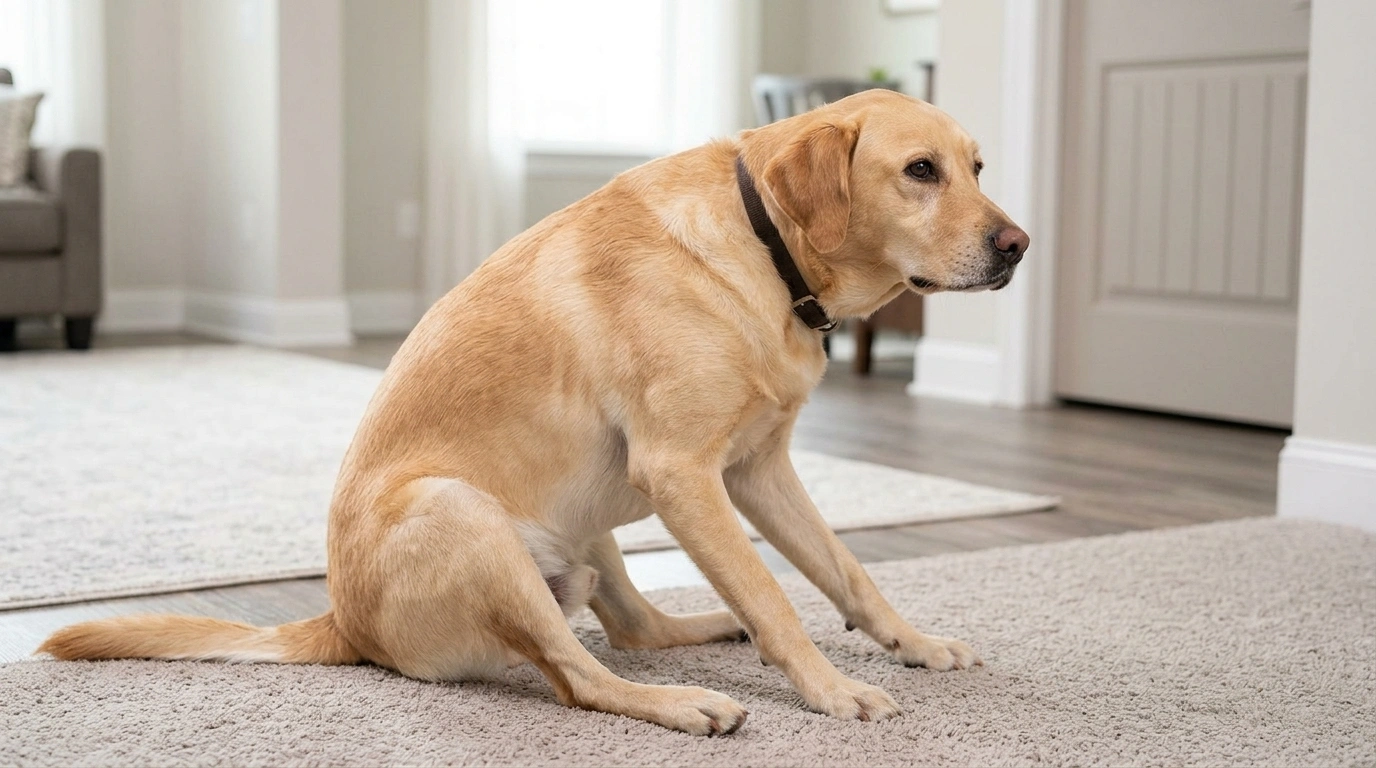
Before focusing on a cause, consider whether your dog scooted once or is repeating the behavior.
A single scoot after a bowel movement may come from loose stool, moisture, or debris caught in the fur, while several episodes in one day suggest continuing discomfort, and knowing how to settle an upset stomach can help if loose stool turns out to be the root cause. Scooting accompanied by licking, chewing, or a strong odor points more directly to irritation around the rear.
Also notice when the behavior occurs and whether your dog’s stool, appetite, energy, or bathroom habits have changed. Gently check for redness, matting, swelling, discharge, or visible tapeworm segments, but do not squeeze the area.
Frequency provides useful context but cannot identify the cause on its own. Pain, blood, pus, a lump, or difficulty passing stool requires veterinary attention.
How to Safely Check the Area
A quick visual check can tell you a lot before deciding on next steps, and it’s reasonable to do any time dog scooting shows up more than once in a day.
- Have your dog stand or lie on their side somewhere well-lit.
- Gently lift the tail and look; don’t press or squeeze anything yet.
- Check for redness, swelling, visible discharge, or matted fur.
- Note any smell, and whether it’s different from your dog’s usual scent.
- Compare what you’re seeing against how the area normally looks, since a baseline makes changes easier to spot.
- Stop and call a vet if anything looks swollen, broken, or clearly painful to touch.
This is purely an inspection step, not a treatment step; the goal is information, not fixing anything on the spot, much like checking a wound for infection signs starts with careful observation before any treatment begins.
Common Medical Causes Explained
Dog scooting can come from a few different medical issues, not just one. Understanding the main causes helps you narrow down what’s actually going on.
1. Full or Blocked Anal Glands
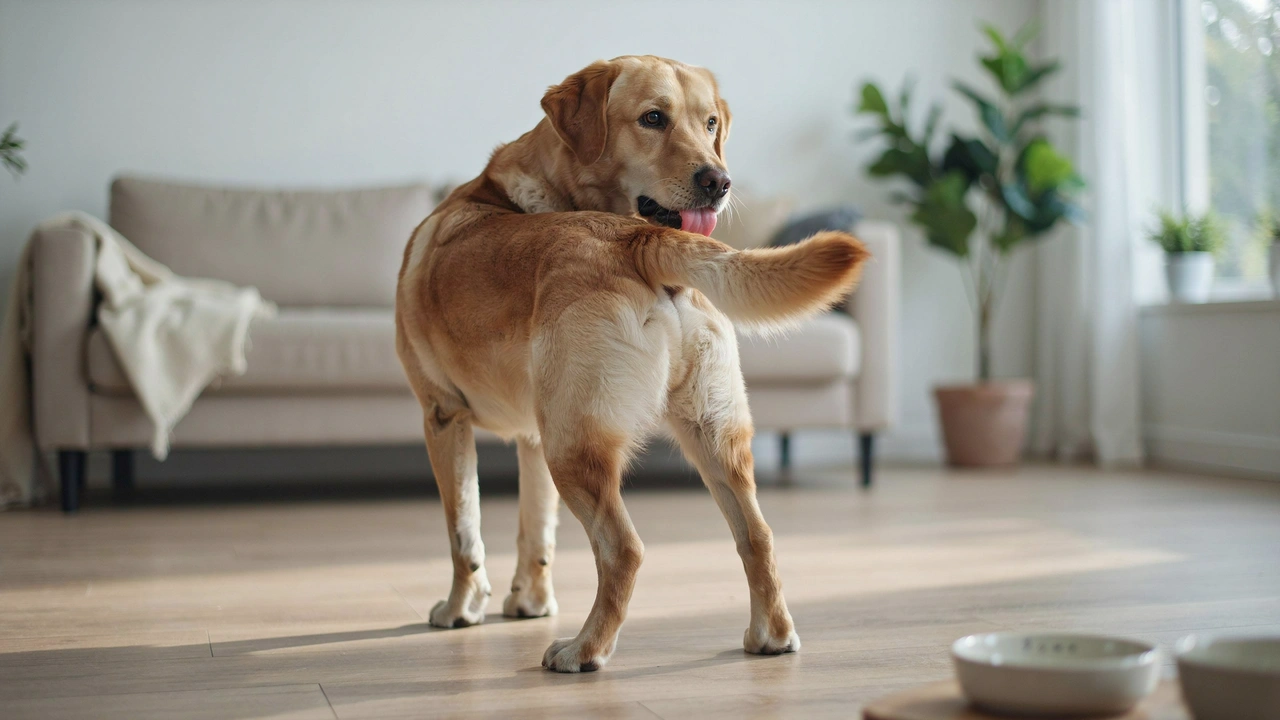
This is the most common medical cause of scooting, explained in simple steps:
- Happens when anal sacs beside the anus fail to empty during bowel movements and normal digestion and stool movement.
- Normally, glands release fluid during stool passage, but thick fluid or narrow ducts cause buildup, leading to gradual accumulation inside the sacs.
- Over time, this buildup creates pressure and discomfort, leading dogs to scoot for relief, which is often mistaken for other issues.
- Owners often assume this is the cause, but it should be confirmed rather than guessed, since other conditions can look very similar, especially in dogs.
What it looks like: Scooting paired with a strong, fishy smell, occasional licking at the base of the tail, and sometimes visible fullness near the anus when you look closely.
2. Parasites Like Tapeworms
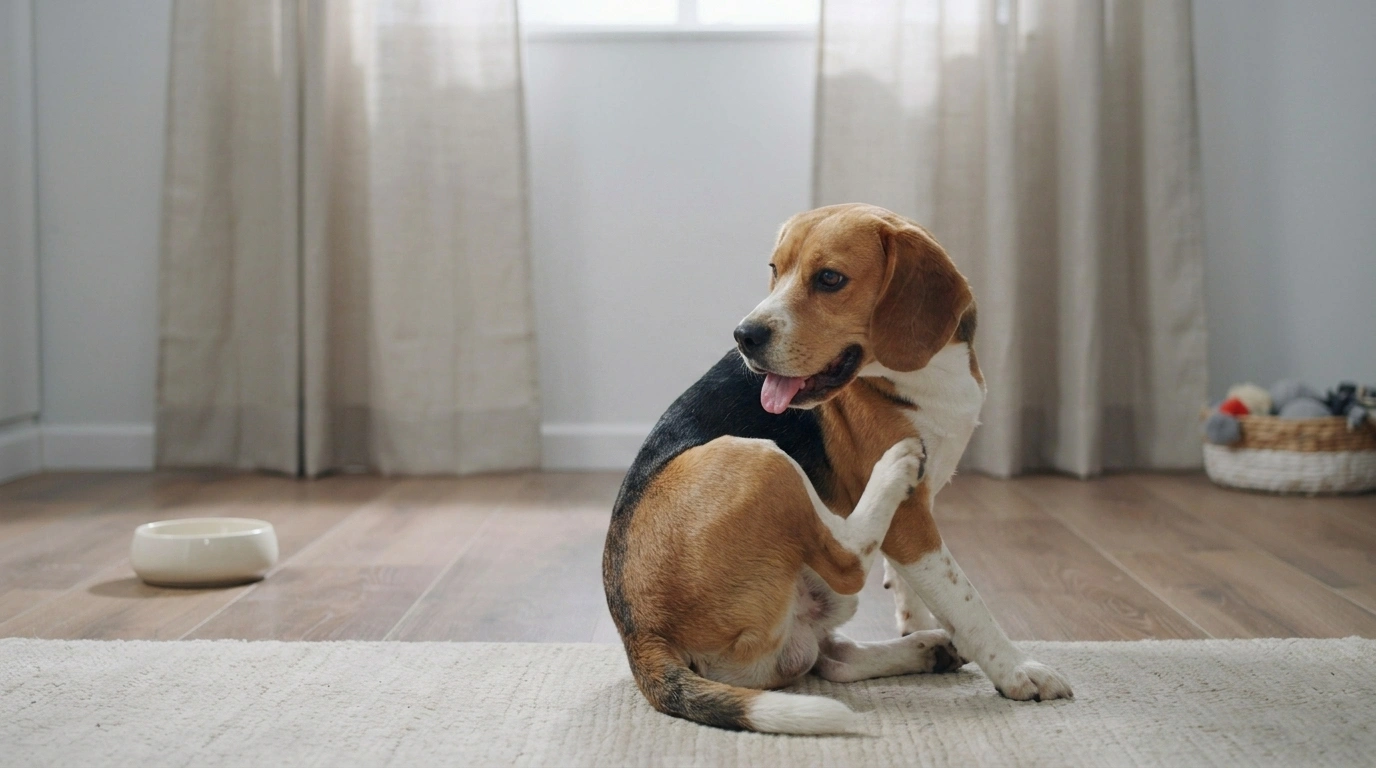
Tapeworms and other intestinal parasites can trigger intense rear itching in dogs.
- This is a separate mechanism from gland fullness. Passing tapeworm segments can irritate the area around the anus and lead to scooting.
- Tapeworm segments are small and easy to miss unless you know what to look for, which is why this cause is overlooked in favor of the more familiar gland explanation.
- Dogs who spend time around fleas, other infected animals, or unclean environments are somewhat more likely to pick up parasites this way, increasing overall exposure and risk of infection over time.
What it looks like: Small, rice-like segments near the anus or in stool, along with itching that seems disconnected from anything gland-related.
3. Allergies and Skin Irritation
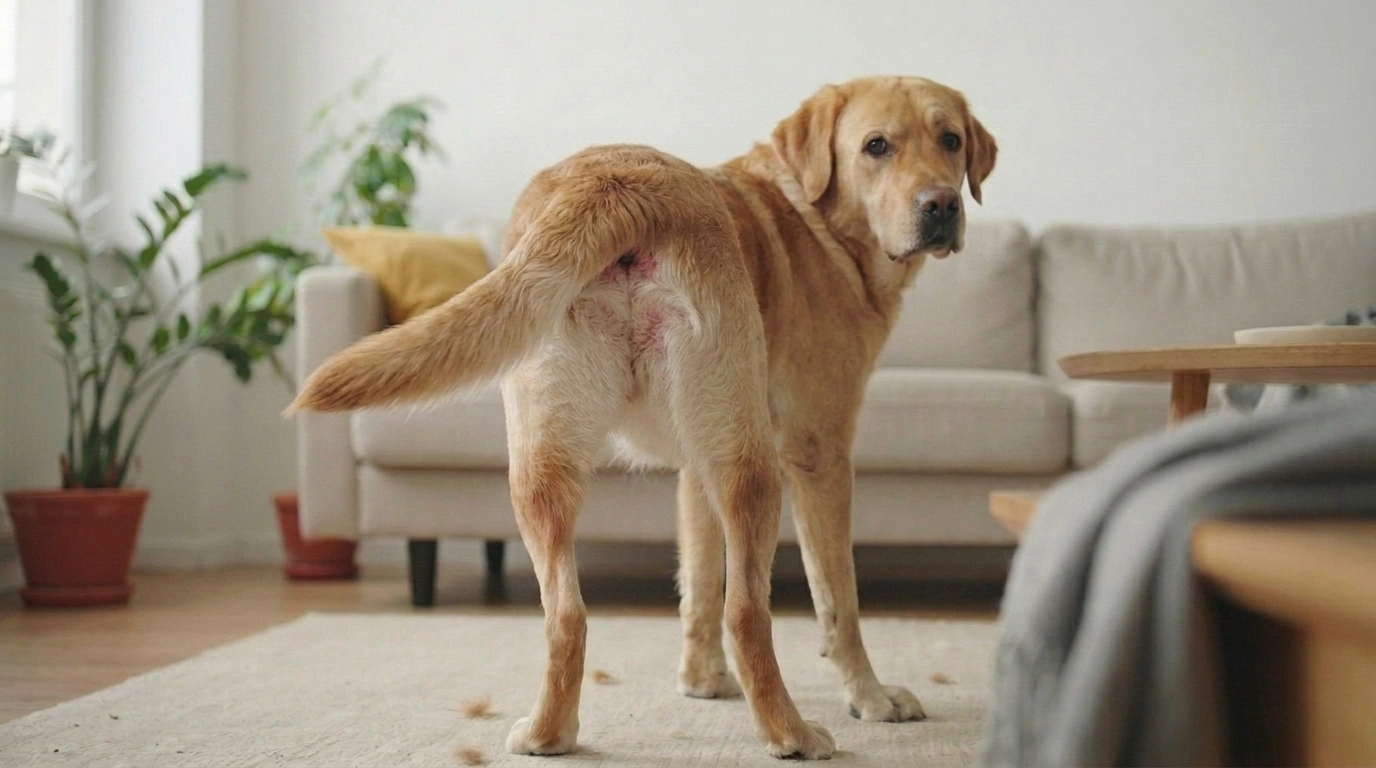
Allergies can cause persistent rear-end irritation in dogs:
- Food sensitivities or environmental allergies can inflame skin around the tail and rear, making the whole area itchy rather than painful.
- Dogs with allergies elsewhere on their body, paws, or ears are more likely to show this pattern since allergic reactions rarely stay confined to one spot.
- Unlike gland fullness, which tends to come and go, allergy-driven irritation builds gradually. It sticks around until the underlying trigger, whether it’s a food ingredient or something seasonal, gets identified and addressed.
What it looks like: Redness or irritated skin extending beyond just the anus, often alongside other allergy signs like paw licking or ear scratching.
4. Matted Fur or Leftover Stool
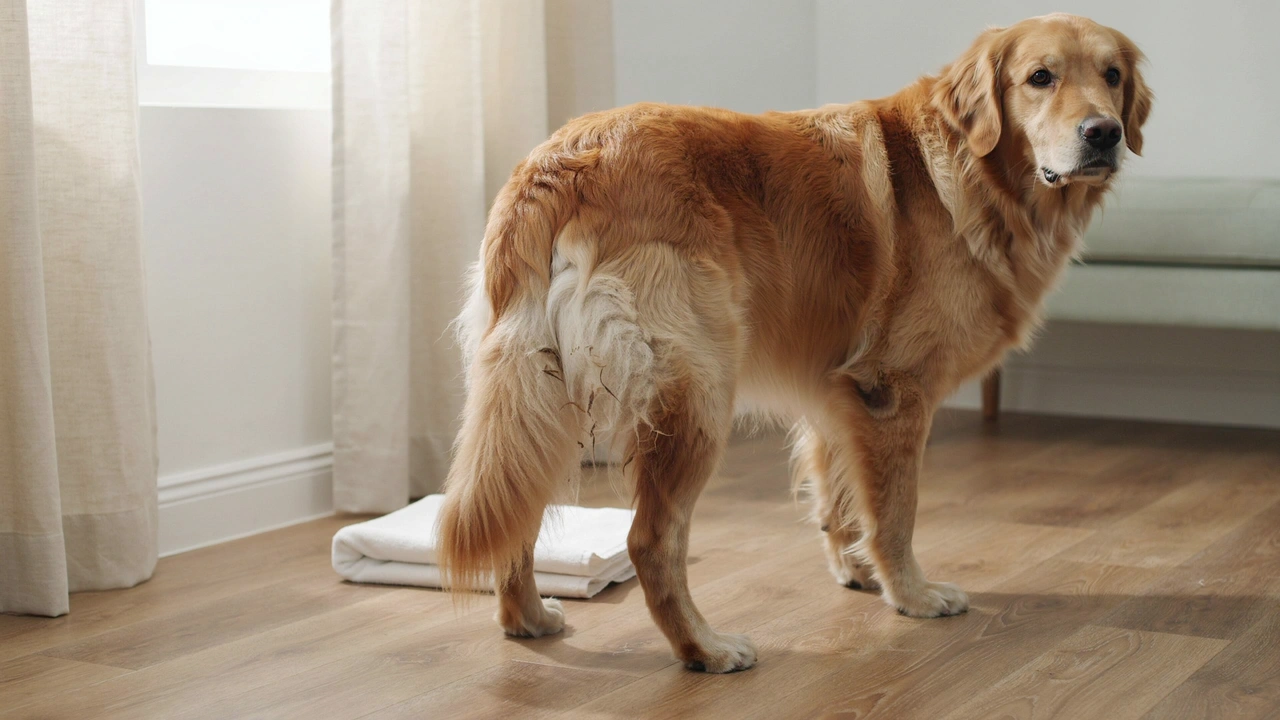
Long-haired or double-coated dogs can develop irritation from trapped debris in their fur.
- This is more common in humid conditions or after a messy bowel movement when moisture and residue get caught in the coat.
- Dogs with moisture-retaining coats are more prone to this buildup over tim.e
- It’s usually easy to identify visually since matting or stuck debris is clearly visible on inspection.on
What it looks like: Visible matting, stuck debris, or fur that looks noticeably different in texture near the tail base.
Breeds More Prone to Scooting
Anatomy plays a bigger role in this than most owners expect, and it explains why some dogs seem to deal with this far more than others.
| Breed Type | Why They’re More Prone |
|---|---|
| Small breeds (Chihuahuas, Dachshunds) | Smaller gland ducts are more easily blocked |
| Short-tailed or docked-tail breeds | Less natural muscle movement to help glands empty |
| Overweight dogs of any breed | Extra weight puts pressure on the gland area |
| Dogs with chronic soft stool | Firm stool helps empty glands naturally; soft stool doesn’t |
None of this means a predisposed dog will definitely have problems; it just means these dogs are worth watching a little more closely and checking sooner rather than later if scooting does show up.
Home Steps That Actually Help
Once you’ve ruled out anything urgent, a few supportive habits can make a real difference over time.
- Add plain canned pumpkin or fiber: firms up stool, which helps glands empty naturally.
- Keep the area clean and trimmed: reduces matting and trapped debris in longer coats.s
- Maintain a healthy weight: less pressure on the gland area overall
- Consider a probiotic: supports stool consistency for dogs with a sensitive gut
None of these are guaranteed fixes on their own; think of them as reducing the odds rather than eliminating the problem outright, especially for dogs who’ve dealt with this more than once already.
| Diet note: Do not add fiber, pumpkin, probiotics, or other supplements without confirming the appropriate product and amount with your veterinarian. Dietary changes can worsen digestive problems in some dogs. |
When Scooting Needs a Vet Visit
Some signs mean it’s time to stop guessing and book a veterinary appointment rather than waiting for dog scooting to resolve on its own.
You should seek help if scooting is paired with visible blood or pus, clear pain when the area is touched or when sitting down, or noticeable swelling, heat, or a hard lump near the anus.
It is also concerning if scooting continues daily for more than two or three days, worsens over time, or is accompanied by low energy or general discomfort.
While a single scoot after a loose stool is usually not urgent, persistent or worsening symptoms should always be checked by a vet promptly.
The Final Check
Dog scooting may look like a small behavior, but the right response depends on what is causing the irritation. I do not recommend jumping straight to anal-gland expression because allergies, parasites, infection, skin problems, debris, or pain may require different care.
You can now check for visible irritation, consider accompanying symptoms, and recognize when a simple cleanup may be reasonable.
You also know that swelling, blood, pus, severe discomfort, difficulty passing stool, or repeated scooting needs veterinary attention.
Trust the pattern you observe, but do not rely on guesswork when signs persist. If your dog keeps scooting or appears uncomfortable, schedule a veterinary examination to identify the cause and choose appropriate treatment.
Medical disclaimer: This information is educational and cannot identify the cause of scooting in an individual dog. Consult a licensed veterinarian for persistent symptoms, diagnosis, treatment, dietary changes, or suspected anal-sac disease. |
Frequently Asked Questions
Do Puppies Scoot For Different Reasons Than Adult Dogs?
Puppies scoot less often for gland issues and more for worms, mild irritation, or simple curiosity about a new sensation; true gland problems usually develop later.
Can Ignored Scooting Lead To An Anal Gland Abscess?
Yes. Chronically full glands that aren’t addressed can become impacted, then infected, and eventually form a painful abscess that needs veterinary drainage.
Is Dog Scooting More Common During Allergy Season?
It can be, since seasonal allergies often inflame the skin around the tail and rear, making scooting more common during high-pollen months.
Does Scooting Itself Hurt, Or Feel Uncomfortable?
It depends. Mild fullness usually feels like pressure or itching, while infection or impaction can make the scooting motion itself genuinely painful for the dog.