A possible pregnancy can make every change feel important. You may notice that your dog seems different after her heat cycle, but signs observed at home cannot provide a definite answer.
If you are searching for how to tell if a dog is pregnant, I recommend starting with observation rather than assumption. In my veterinary work, I consider timing, mating opportunities, physical changes, and behavior together because several conditions can cause similar signs.
I will help you recognize early signs, understand why false pregnancy can cause confusion, and know when a change requires veterinary attention.
You will also learn how veterinarians confirm pregnancy and how to keep your dog comfortable while you wait for an appointment.
How to Tell If a Dog is Pregnant
There’s no single test you can run at home that gives a certain yes or no, so the honest answer is that you’re looking for a pattern rather than one obvious clue.
Real pregnancy tends to show up as a mix of physical changes and behavioral shifts, usually starting between two and four weeks after mating.
Keeping track of the exact mating date matters here, since almost every sign is described in terms of days or weeks from that point.
Without it, you’re guessing at timing on top of guessing at the signs themselves. A simple note on your phone or calendar is really all it takes.
Physical Signs of Pregnancy in Dogs
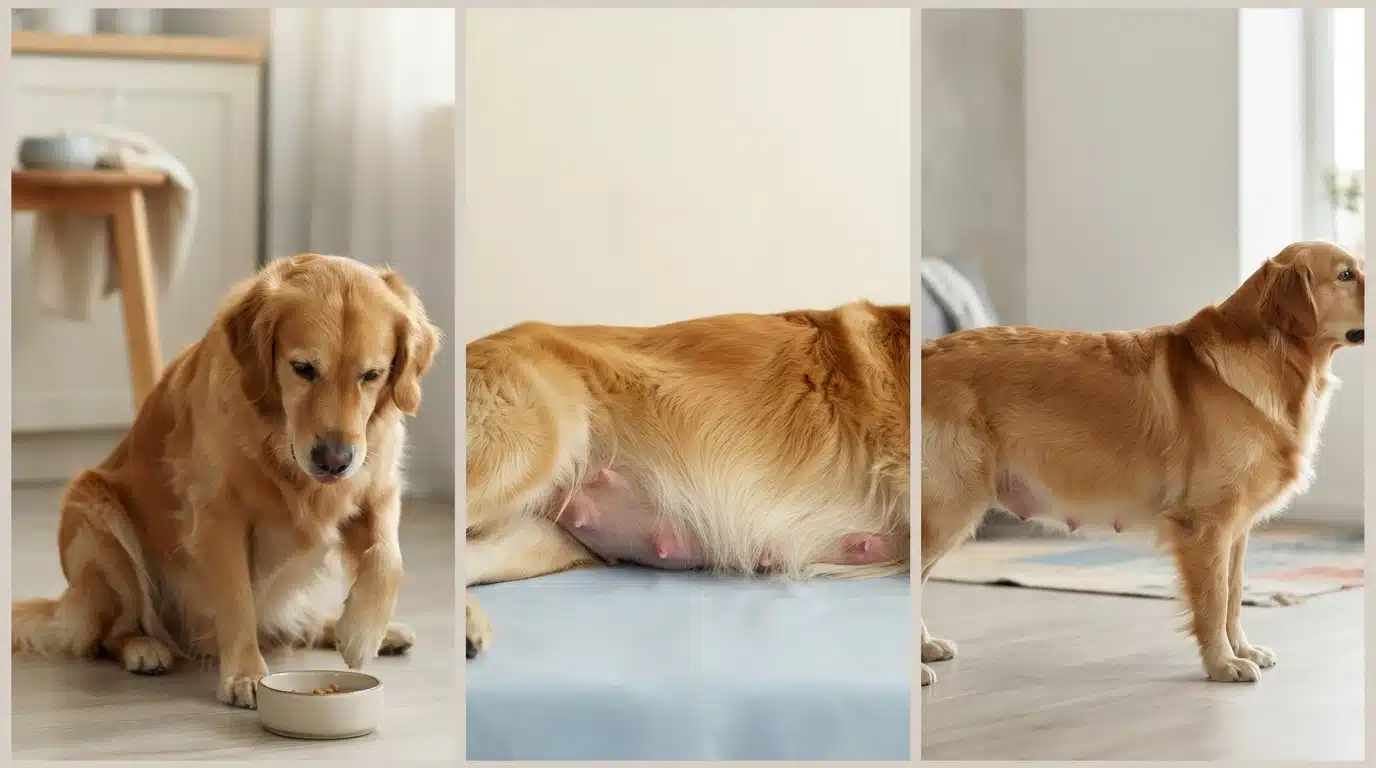
Physical signs tend to appear in a rough order, starting small and becoming harder to miss as the weeks go on. Knowing what’s normal for her beforehand makes even small shifts easier to catch.
1. Appetite Changes and Mild Nausea
Appetite shifts tend to go in two directions rather than one, which throws many owners off. An early dip is often followed by a noticeable increase later, as her body demands more energy.
What to look for:
- A short-term drop in appetite around week three
- Occasional vomiting or lip-licking, similar to morning sickness
- Increased hunger picking back up by week five
- A preference for smaller, more frequent meals
None of this needs to be dramatic to count; even a subtle day or two of picking at food is worth noting alongside other signs, especially since the overall timeline of gestation can help you know what to expect week by week.
2. Nipple Changes
Nipple changes are usually the earliest physical clue, often appearing before anything else. Around two to three weeks in, they start to look noticeably different from her baseline.
What to look for:
- Nipples appearing larger and more raised than usual
- A darker pink or reddish color change
- Slight puffiness around the base
- The change being more obvious on the lower pairs first
Not every dog shows this clearly, especially in darker-skinned or heavily coated breeds, where having the right grooming tool can at least make it easier to part the coat and check, so treat it as one data point rather than proof on its own.
3. Weight Gain and Belly Swelling
Weight gain becomes noticeable later than nipple changes, usually settling in around week five as the puppies start taking up real space. It’s a slower, steadier shift rather than a sudden change overnight.
What to look for:
- A visibly rounder or firmer belly shape
- Gradual weight gain rather than a sudden jump
- Her waistline becoming less defined from above
- The change being easier to feel than to see at first
If the swelling shows up much earlier than five weeks, it’s worth mentioning to your vet, since that timing can sometimes point to something else, and a bigger belly doesn’t necessarily mean more puppies.
Behavioral Signs That May Occur
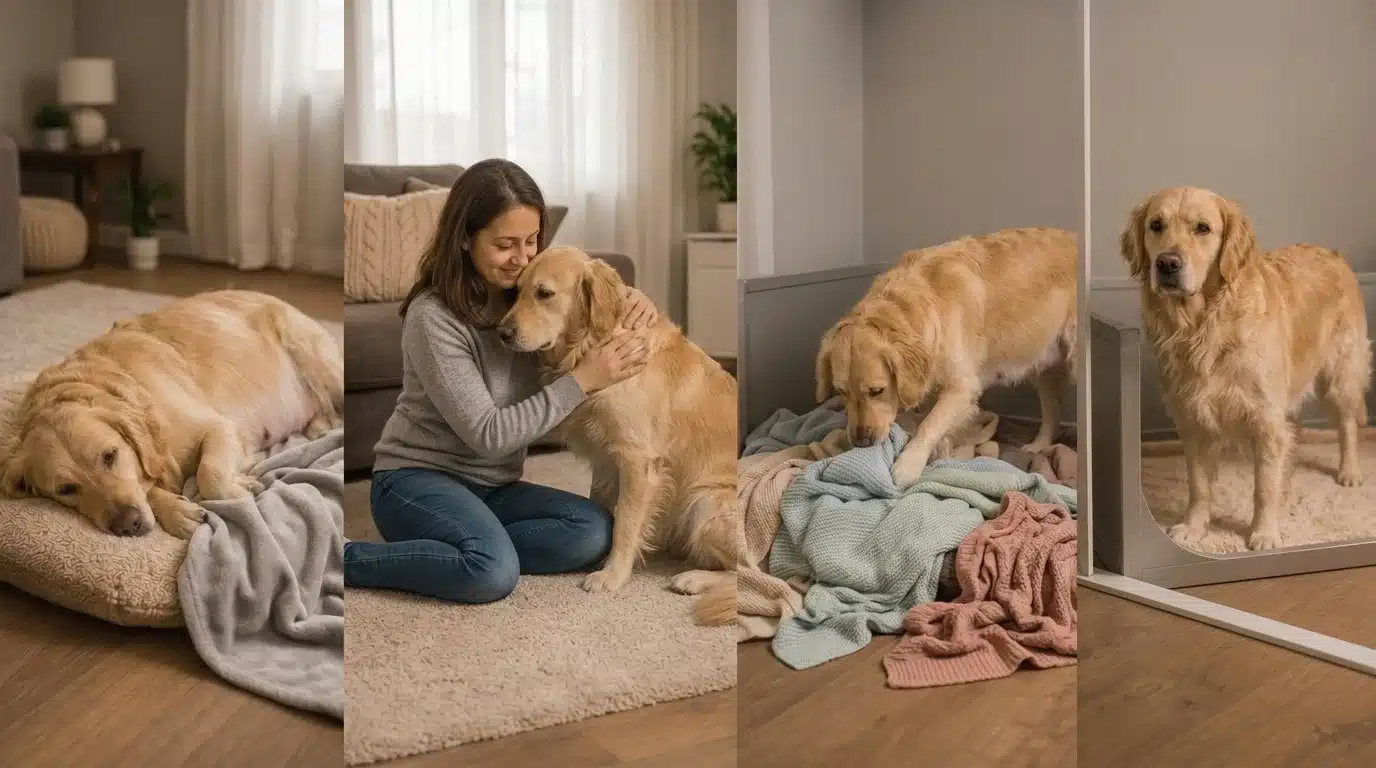
Pregnancy hormones may affect behavior, but the changes are inconsistent. The same behaviors can also result from stress, pain, illness, a recent heat cycle, or false pregnancy.
| Behavior | What You May Notice |
| Lower energy | More rest or less interest in usual activity |
| Mood changes | Greater affection, irritability, or a preference for space |
| Nesting | Moving bedding or seeking a quiet area later in pregnancy |
| Restlessness | Difficulty settling as delivery approaches |
Behavior is useful only as part of a wider pattern. Do not treat clinginess, tiredness, or nesting as proof that puppies are present.
Could It Be a False Pregnancy?
False pregnancy can develop after a heat cycle even when no mating occurred. Normal reproductive hormone changes can produce mammary enlargement, milk production, nesting, appetite changes, reduced activity, weight gain, and mothering behavior.
A veterinarian must rule out actual pregnancy and medical conditions before confirming false pregnancy.
Many cases settle without treatment, but persistent milk production, discomfort, swollen mammary glands, or marked behavioral changes need veterinary advice. Do not squeeze or express milk, as stimulation may prolong milk production.
An unspayed dog with abdominal enlargement, vaginal discharge, poor appetite, vomiting, lethargy, or increased thirst and urination may have pyometra warning signs. Pyometra is a potentially fatal uterine infection that requires prompt veterinary care.
How Veterinarians Confirm Pregnancy
Home observations cannot show whether embryos are present or developing normally. Your veterinarian will choose a method based on the known mating dates, your dog’s health, and the information needed.
| Method | Useful Timing | Main Purpose |
| Palpation | About three to five weeks | May detect uterine swellings when performed by a veterinarian |
| Relaxin blood test | After approximately 22 to 27 days | Detects a hormone produced by placental tissue |
| Ultrasound | Best around 25 to 35 days | Confirms pregnancy and evaluates fetal viability |
| Radiograph | After day 55 for counting | Provides the best estimate of litter size |
An early negative relaxin result may need to be repeated. Ultrasound is not dependable for an exact puppy count, and abdominal palpation should never be attempted at home. These testing windows help your veterinarian select the most useful method.
Caring for a Dog Who May Be Pregnant
Keep your dog’s routine steady while waiting for confirmation. Discuss changes to food, supplements, medications, vaccines, and parasite products with your veterinarian first.
Continue feeding measured portions of a complete and balanced diet while monitoring appetite and body condition. Once pregnancy is confirmed, ask whether food formulated for growth or reproduction is suitable.
Gestational feeding should reflect the pregnancy stage, expected litter size, and your dog’s current condition. Do not provide calcium or other supplements unless prescribed.
Comfortable daily activity can continue unless your veterinarian advises otherwise. Avoid exhausting exercise, rough play, and situations that could cause injury, but do not impose complete rest on a healthy dog.
Provide a quiet resting area and note any meaningful changes while you wait. A stable routine can keep your dog comfortable and give your veterinarian clearer information at the appointment.
Final Thoughts
You do not need to solve this uncertainty by studying every small change in your dog. Your role is to notice what is different, record when it began, and share that information with the veterinarian who examines her.
In my veterinary work, a clear history often provides valuable context before testing begins. Dates, recent behavior, appetite, medication use, and access to an unneutered male can help shape the next decision without turning an observation into a diagnosis.
That is the most reliable way to tell if a dog is pregnant. Keep your notes together, avoid making any unapproved changes to her care, and schedule a veterinary appointment so your dog receives advice based on her condition and timing.
Frequently Asked Questions
Can a Dog Be Pregnant Without a Large Belly?
Yes. A small litter, early pregnancy, body shape, coat length, or excess body weight can make abdominal enlargement difficult to notice. A normal-looking belly cannot rule pregnancy in or out, so veterinary testing is still needed.
Does a Mating Tie Confirm Pregnancy?
No. A tie shows that mating occurred, but it does not prove fertilization or pregnancy. Conception depends on timing, fertility, semen quality, and reproductive health. Record the mating date and ask your veterinarian when confirmation testing is appropriate.
What Should You Do After an Accidental Mating?
Contact your veterinarian as soon as possible and provide the mating dates. Do not give hormones, medications, or home remedies. Your veterinarian can discuss pregnancy testing, health risks, and available options based on timing, local practice, and your dog’s condition.
Can Gum Color Confirm Pregnancy?
No. Gum color is not a validated method for diagnosing canine pregnancy. Pale, blue, yellow, or unusually red gums can indicate a health problem instead, so contact your veterinarian rather than interpreting the change as a sign of pregnancy.