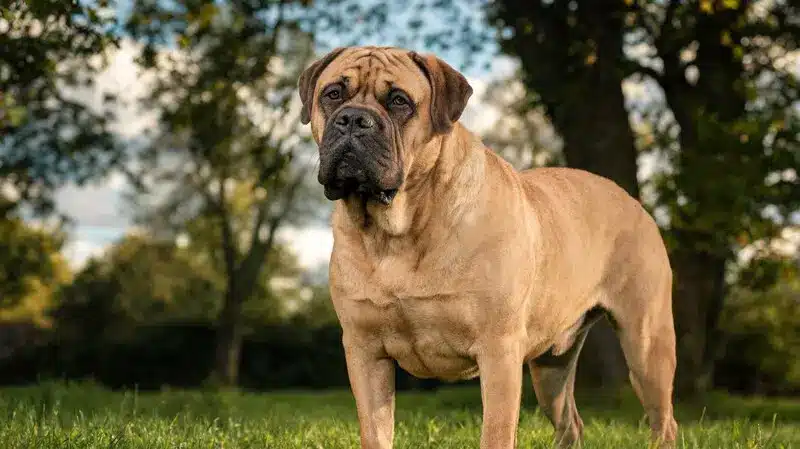
I once dog-sat a Great Dane for a weekend, and I still remember watching him rest his chin on my kitchen counter without even stretching. That’s when it clicked for me: “big dog” isn’t really one category. Some giant breeds are tall and lean, while others carry serious weight through broad chests and heavy bone.
That’s why “what’s the biggest dog in the world?” doesn’t have one simple answer. It depends on whether you mean an individual record holder or a breed that’s consistently large, and the tallest dog isn’t automatically the heaviest.
If a giant breed is on your radar, size affects training, food, exercise, grooming, space, healthcare, and cost. Let’s compare these breeds using real standards and verified records.
How the Largest Dog Breeds Are Compared
No single measurement tells the whole story here. Height shows how tall a dog stands at the shoulder, while weight reflects total body mass, and those two numbers don’t always point to the same breed.
This list uses published adult height and weight ranges from established breed standards, not one unusually large individual standing in for an entire breed.
Because height and weight rankings don’t align neatly, we’re presenting these breeds as comparisons rather than a single strict ranking.
Breeds with overlapping measurements should be considered close size matches rather than competitors.
Who Holds the Tallest Dog Records?
Dog records separate living males, living females, and all-time achievements. That distinction prevents a former record holder from being presented as the current titleholder.
- Tallest dog ever: Zeus, a Great Dane from Michigan, measured 44 inches at the shoulders in 2011, according to Guinness World Records.
- Tallest living male: Reginald “Reggie” Johnson Reiss, a Great Dane from Idaho, measured 1.007 meters, or about 39.6 inches, in January 2025. Guinness lists him as the current male record.
- Tallest living female: Minnie Nogacek, a Great Dane from Connecticut, measured 97.50 centimeters, or about 38.4 inches, in June 2025. She holds the current female record.
- Longest and former heaviest record: Zorba, an Old English Mastiff, measured more than eight feet from nose to tail and weighed 343 pounds. Guinness no longer monitors heaviest-dog records because of animal-welfare concerns.
These dogs were unusually large even for their breeds. Standard adult measurements provide a more useful comparison when you are researching which breed may suit your household.
Biggest Dog in the World: Breed Comparisons
Giant breeds differ in more than total size. Some combine great height with a lean frame, while others carry much more weight through heavy bone and muscle.
1. Great Dane
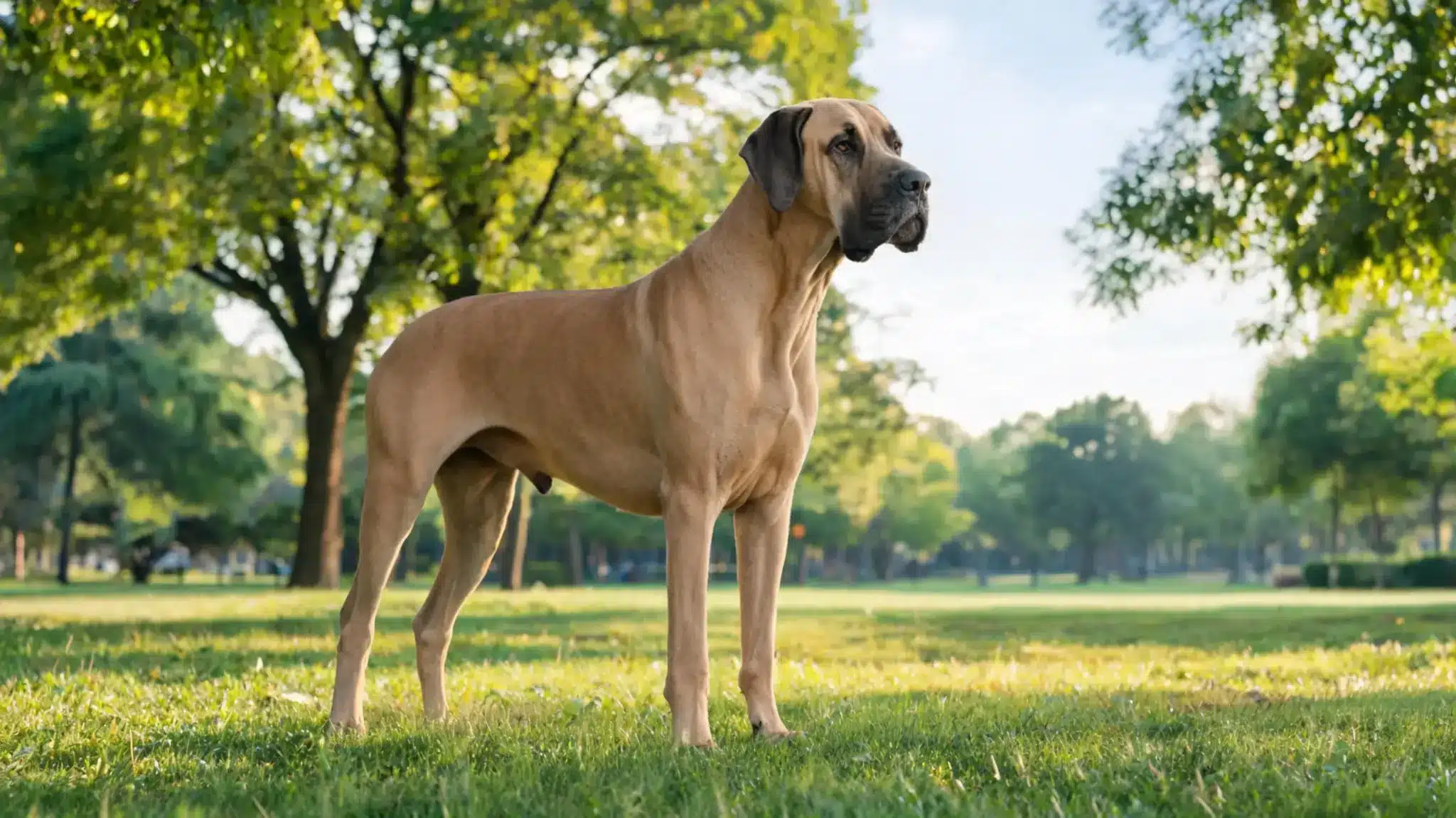
Great Danes combine exceptional height with a comparatively lean, athletic frame. The breed has also produced several individual height record holders, including Zeus, the tallest dog ever officially measured.
Many Great Danes are social and affectionate with familiar people. Their height and strength make early leash training, calm greetings, secure transportation, and safe food storage particularly important. Tracking a puppy’s weight by life stage can help confirm healthy development during this breed’s rapid growth period.
- Height: 28 to 32 inches | Weight: 110 to 175 pounds
- Personality: Social, friendly, watchful, and affectionate
2. English Mastiff
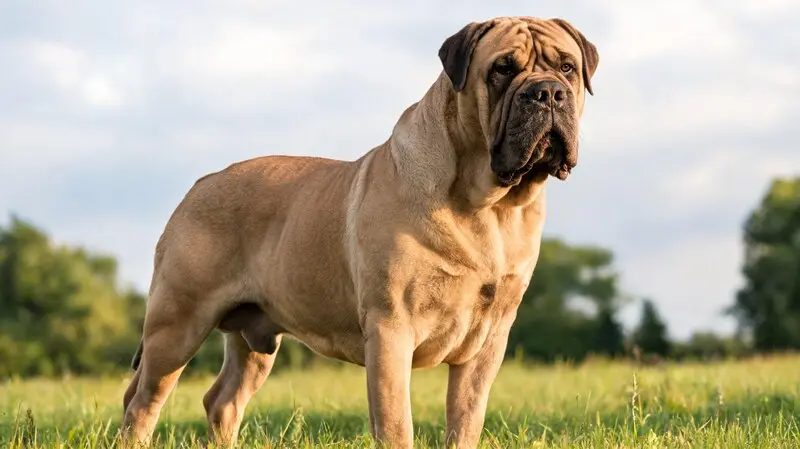
The Mastiff, also called the English Mastiff, is one of the heaviest recognized dog breeds. Its broad chest, heavy bone, and muscular body create far more overall mass than many taller breeds carry.
Mastiffs are often calm around familiar people, but their size requires reliable training and careful weight management. Owners should also prepare for drooling, large food portions, heavy equipment, and costly veterinary treatment.
- Height: 27.5 inches and taller | Weight: 120 to 230 pounds
- Personality: Calm, loyal, watchful, and protective
3. Saint Bernard
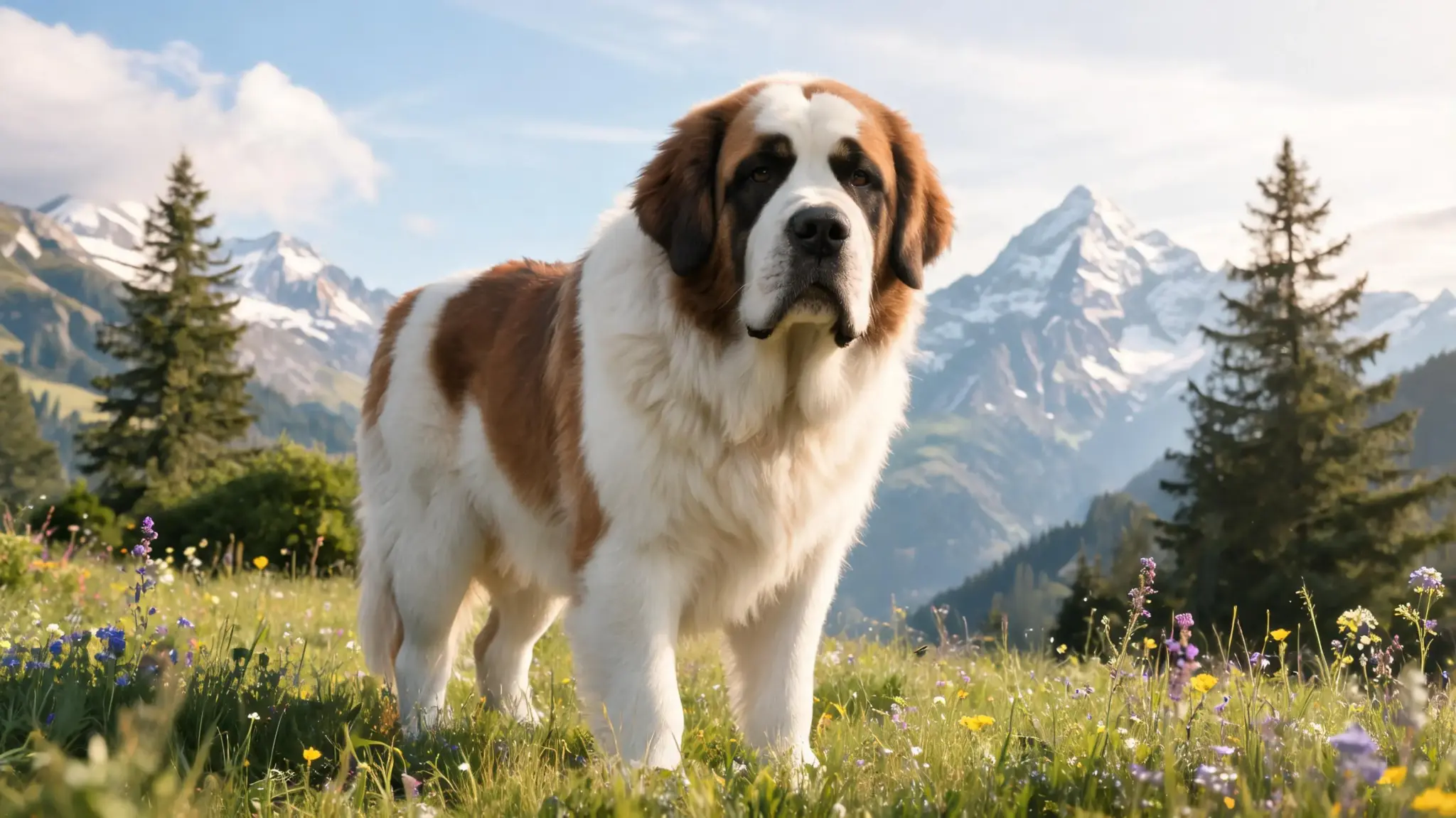
Saint Bernards were developed for work in the western Alps and became associated with mountain rescue. Their broad bodies, great strength, and dense coats suited cold conditions and demanding terrain.
They are often patient and friendly, but their weight can make jumping, pulling, and rough play difficult to manage. Coat care, heat protection, early training, and weight monitoring are important throughout life. Comparing typical size and growth patterns against other giant breeds can help set realistic expectations early on.
- Height: 26 to 30 inches | Weight: 120 to 180 pounds
- Personality: Friendly, patient, watchful, and devoted
4. Irish Wolfhound
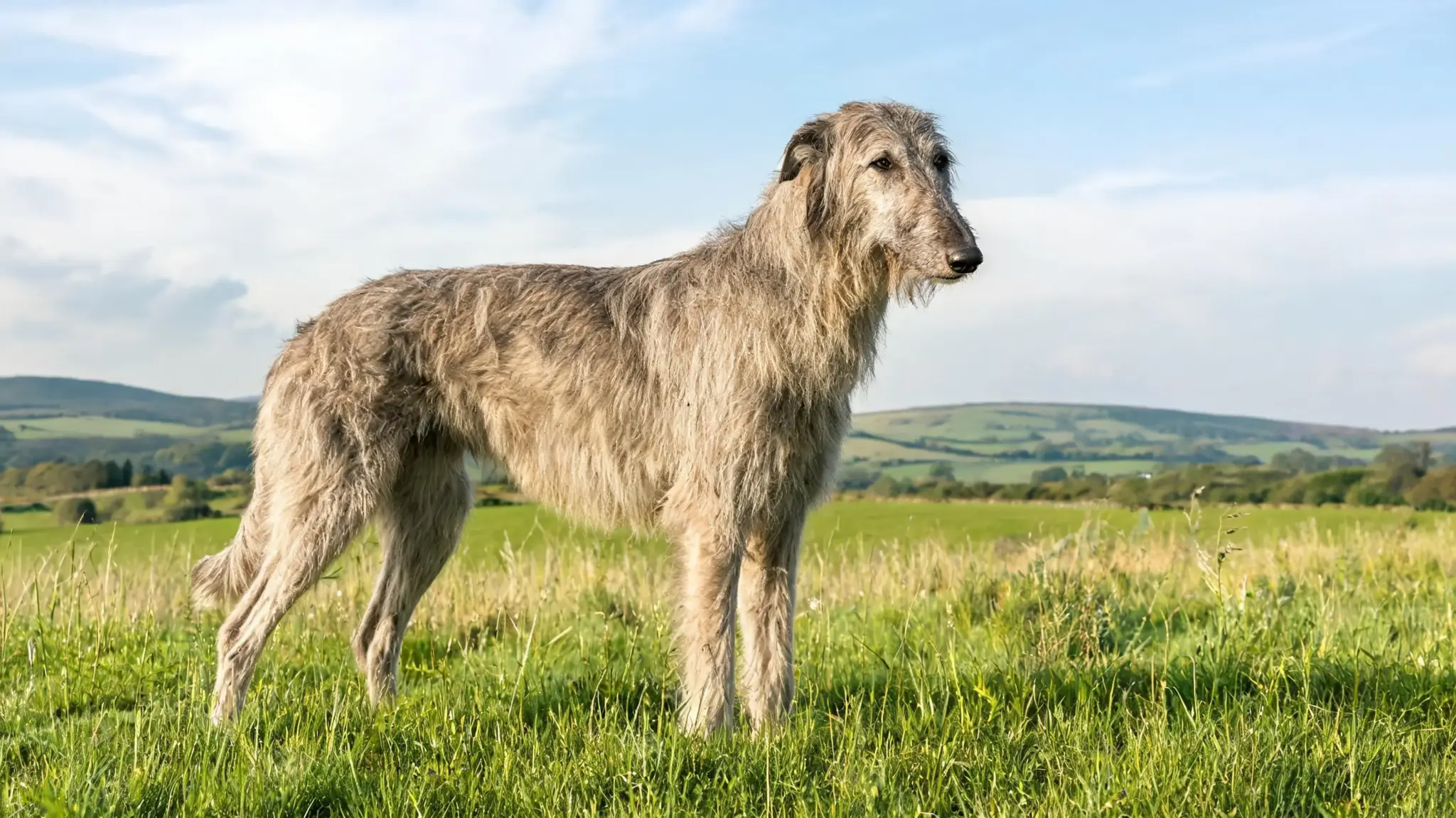
The Irish Wolfhound is recognized for its great typical breed height rather than extreme weight. Its long legs, deep chest, and lean hound structure create a tall outline without the heavy build of a Mastiff.
Irish Wolfhounds are often quiet and affectionate, though their hunting background may produce a strong urge to chase. Secure fencing, safe opportunities for running, and careful introductions to smaller animals deserve attention.
- Height: 30 inches and taller | Weight: 105 pounds and heavier
- Personality: Gentle, quiet, friendly, and independent
5. Newfoundland
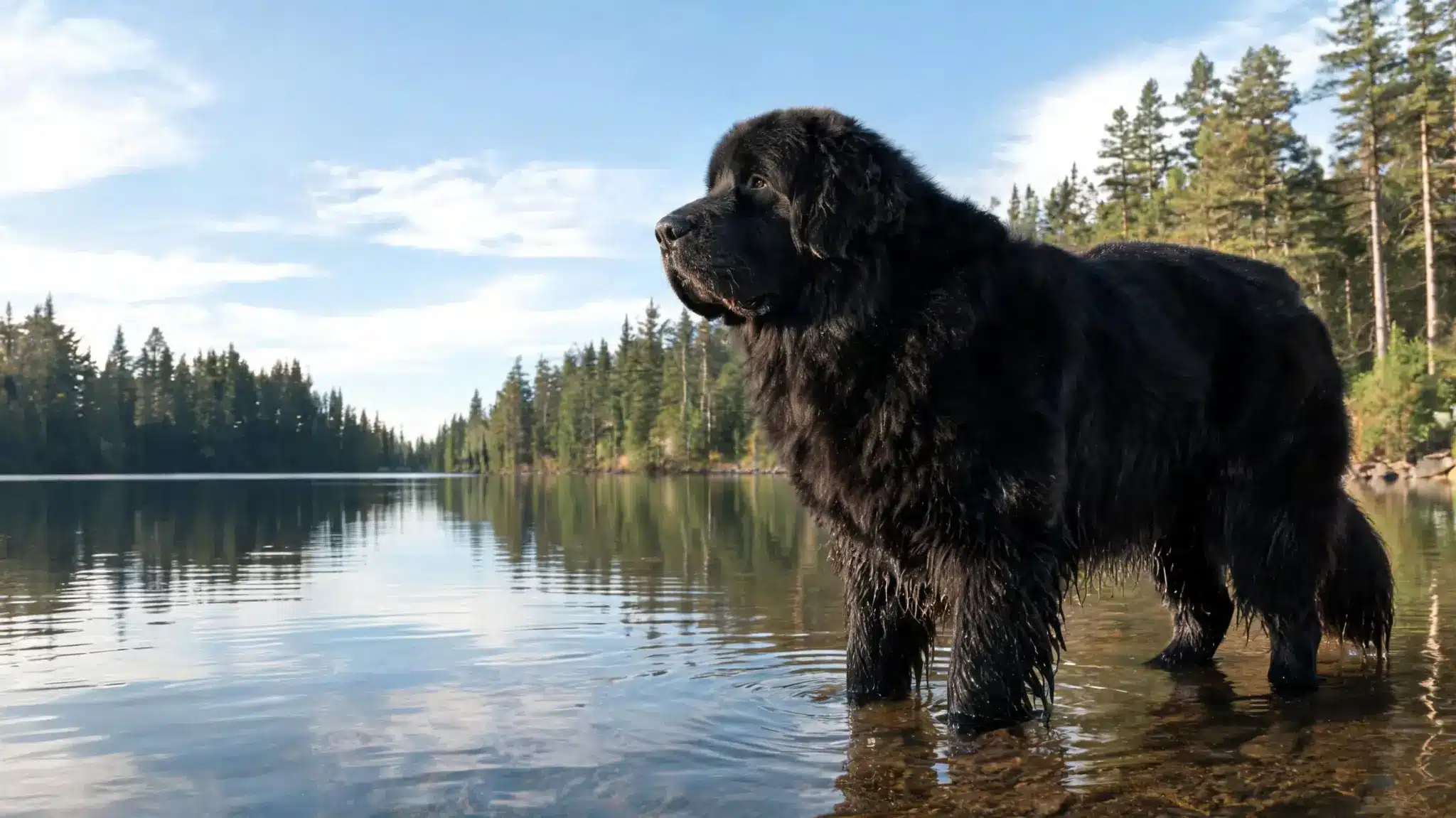
Newfoundlands are large working dogs developed around water and fishing communities. Their strong bodies, webbed feet, dense coats, and swimming ability supported water work and rescue tasks.
Many are patient with familiar people, but their coats shed heavily and require regular care. Owners must also plan for drooling, wet fur, heat sensitivity, water safety, and enough room for comfortable movement.
- Height: 26 to 28 inches | Weight: 100 to 150 pounds
- Personality: Patient, responsive, social, and affectionate
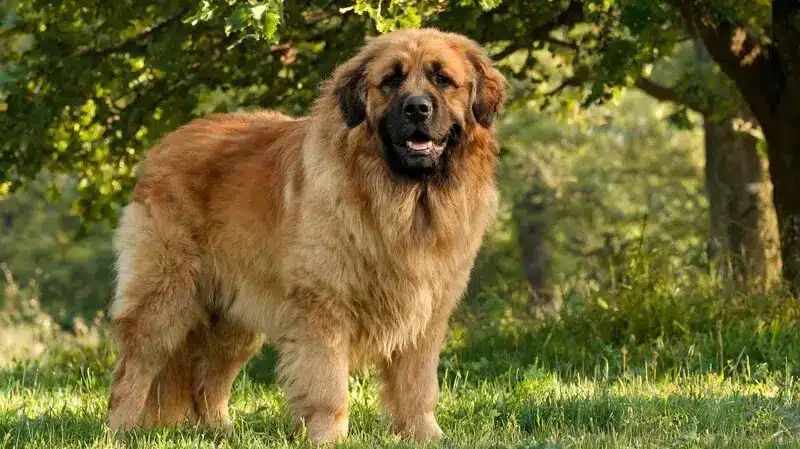
6. Leonberger
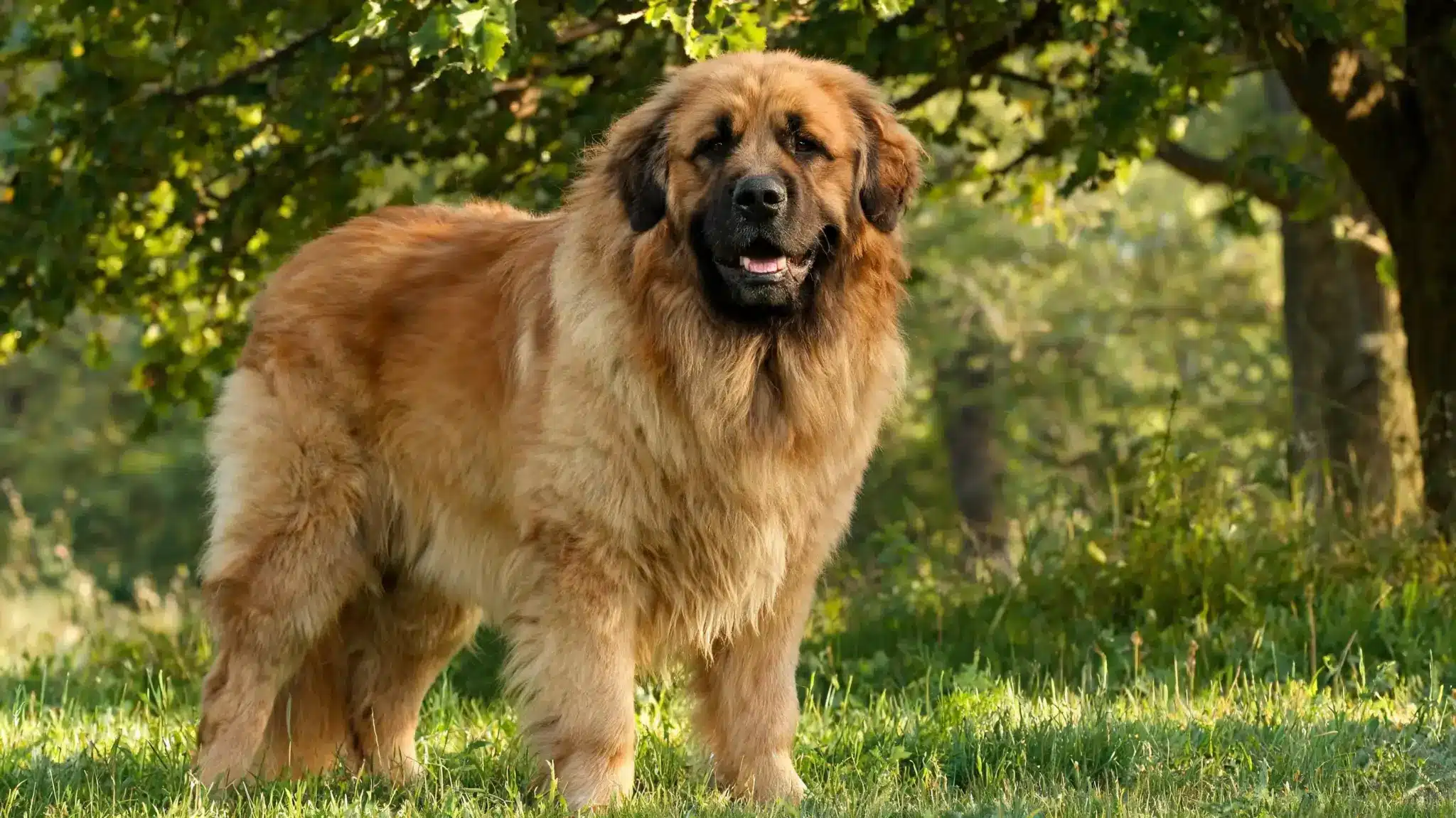
Leonbergers combine substantial height and weight with a long double coat. They were developed in Germany as large companion and working dogs capable of tasks involving strength, movement, and close cooperation with people.
They commonly seek family interaction and may struggle without enough activity or company. Regular brushing, heat management, training, and room for controlled exercise should be planned before bringing one home.
- Height: 25.5 to 31.5 inches | Weight: 90 to 170 pounds
- Personality: Friendly, responsive, social, and steady
7. Tibetan Mastiff
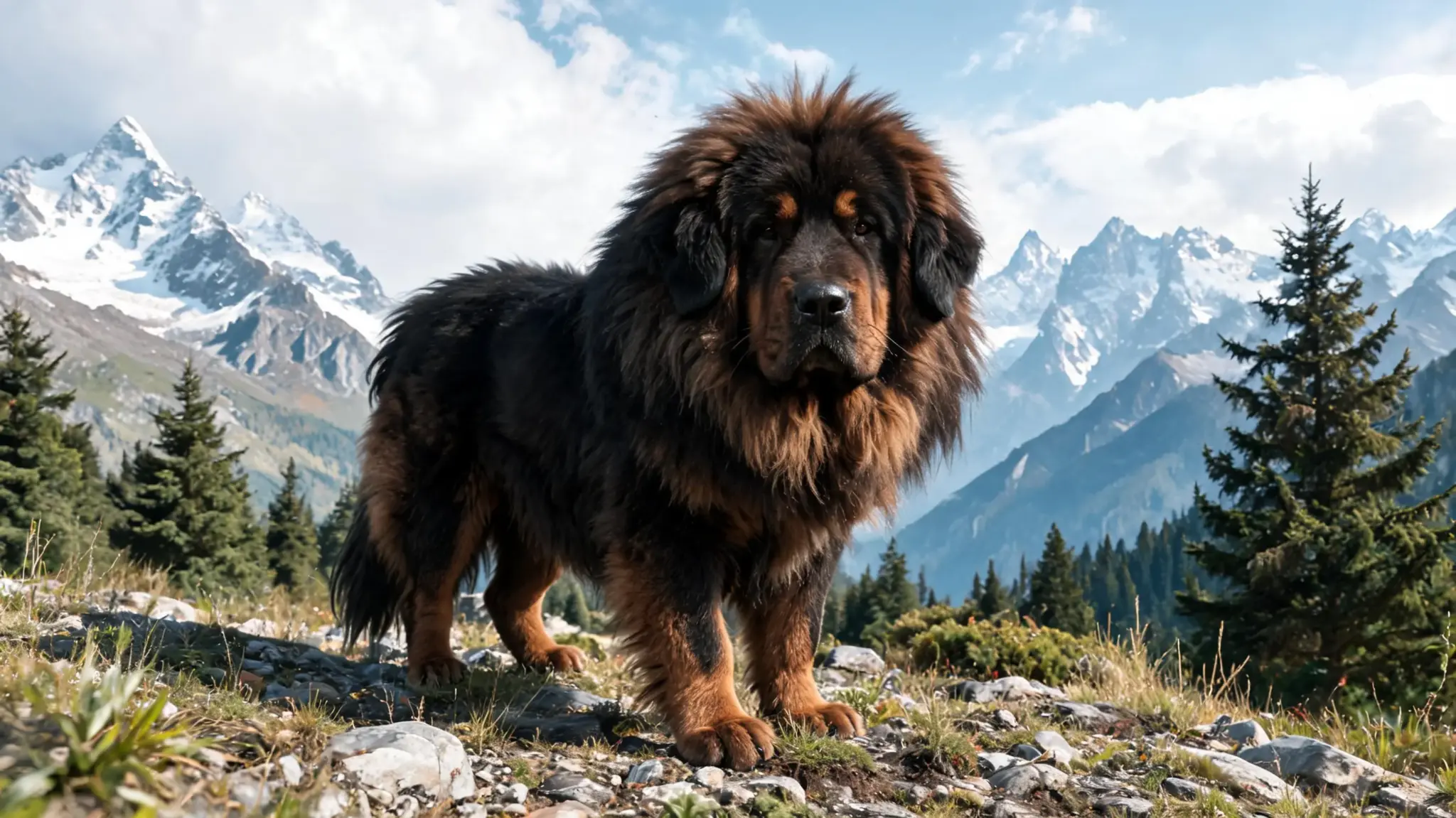
Tibetan Mastiffs are heavily coated livestock guardians developed to watch property and animals. Their size appears even greater because of the dense coat around the neck, shoulders, and body.
They tend to be independent, territorial, and reserved around unfamiliar people. Secure fencing, controlled introductions, early training, and an owner experienced with guardian behavior are more important than constant high-intensity exercise.
Reviewing typical height and weight growth by age can also help you recognize whether a puppy is developing on track.
- Height: 24 to 26 inches and taller | Weight: 70 to 150 pounds
- Personality: Independent, reserved, alert, and protective
8. Neapolitan Mastiff
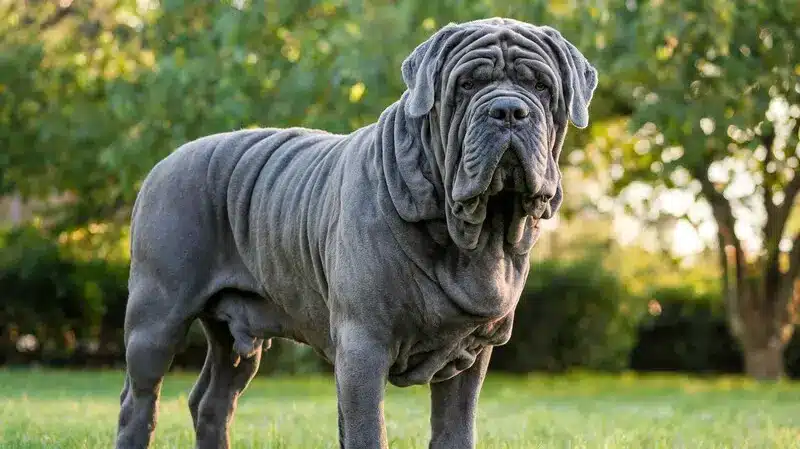
Neapolitan Mastiffs are heavy Italian guardian dogs with broad heads, loose skin, deep wrinkles, and muscular frames. Their substantial build places them among the heavier breeds despite their moderate height.
They often form close bonds with their household but may remain cautious around strangers. Skin-fold care, early socialization, controlled exercise, and firm household boundaries are important for safe ownership.
- Height: 24 to 31 inches | Weight: 110 to 150 pounds
- Personality: Loyal, watchful, reserved, and protective
9. Great Pyrenees
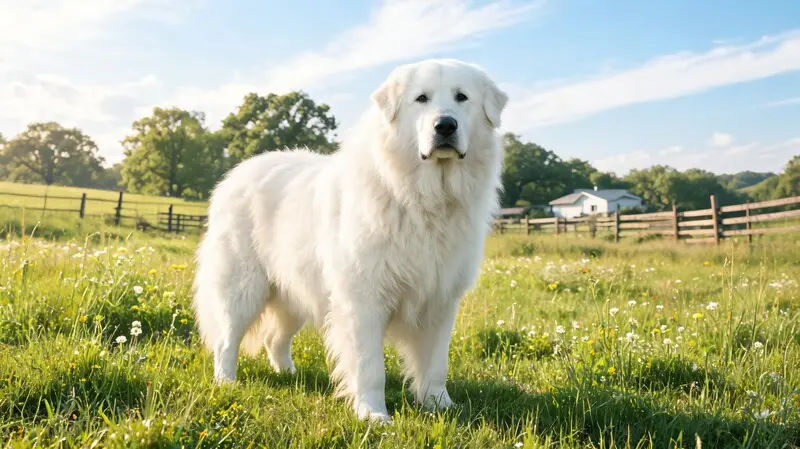
Great Pyrenees were developed to guard livestock in mountainous areas. Their thick white coats, substantial frames, strong voices, and independent decision-making supported long periods of work without constant human direction.
They may be affectionate at home while remaining alert to outdoor sounds and movement. Barking, roaming, shedding, secure fencing, and resistance to repetitive training should be considered before adoption.
- Height: 25 to 32 inches | Weight: 85 pounds and heavier
- Personality: Calm, independent, watchful, and protective
10. Dogue de Bordeaux
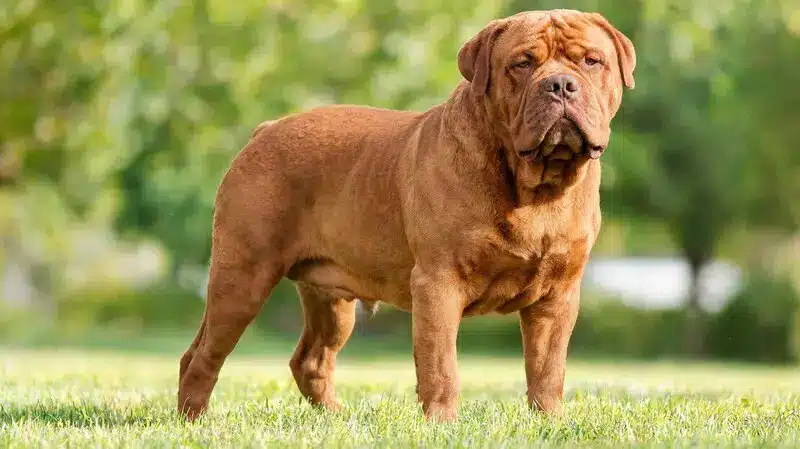
The Dogue de Bordeaux is a powerful French mastiff with a broad head, deep chest, and heavy muscular build. Its history includes guarding, hauling, and other work requiring strength.
These dogs often bond closely with their caregivers but require early training due to their strength and protective tendencies. Heat management, drooling, skin care, weight control, and veterinary planning are also important.
- Height: 23 to 27 inches | Weight: 99 pounds and heavier
- Personality: Affectionate, confident, watchful, and loyal
11. Anatolian Shepherd
Anatolian Shepherd Dogs are tall, athletic livestock guardians developed to work across large areas. They carry less bulk than many mastiffs but combine substantial height with strength, endurance, and quick movement.
Their independent judgment and territorial behavior can be difficult for inexperienced owners. Secure fencing, careful visitor management, early socialization, and respect for their guarding instincts are necessary.
- Height: 27 to 29 inches | Weight: 80 to 150 pounds
- Personality: Independent, alert, reserved, and protective
12. Cane Corso
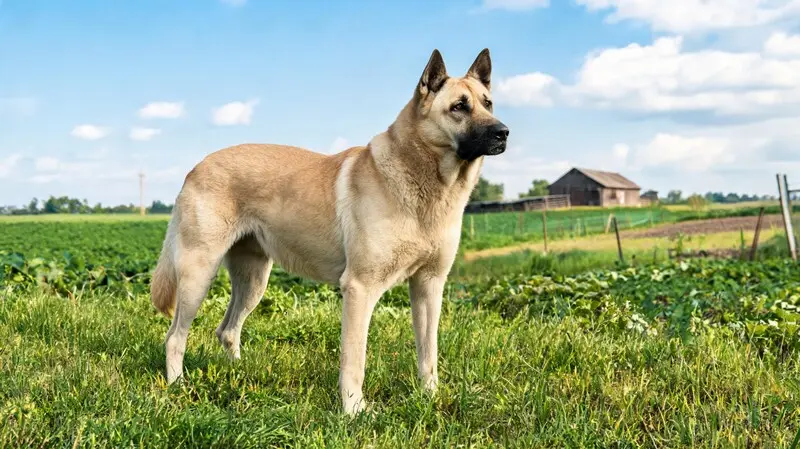
The Cane Corso is a muscular Italian working breed with a powerful body and strong guarding background. Official standards emphasize proper proportion and athletic ability rather than a single fixed weight range.
Cane Corsos require early training, structured social contact, and an owner able to manage a strong dog. Their exercise needs, visitor behavior, prey drive, and responses around unfamiliar dogs should be assessed individually.
- Height: 23.5 to 27.5 inches | Weight: Proportionate to height and build
- Personality: Confident, intelligent, alert, and protective
13. Scottish Deerhound
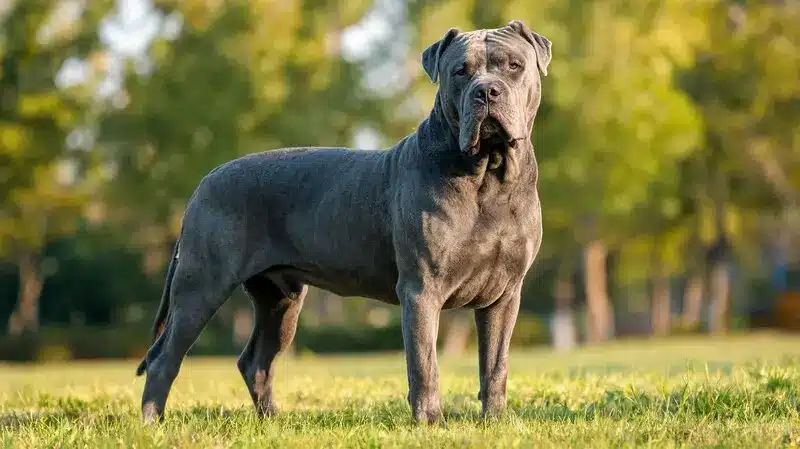
Scottish Deerhounds are tall sighthounds developed to pursue deer across open ground. Their long legs, deep chests, narrow bodies, and rough coats create height without the mass associated with guardian breeds.
They are often quiet indoors but still need safe opportunities to run. Their chase instinct makes secure fencing and careful management around small animals important parts of ownership.
- Height: 28 inches and taller | Weight: 75 to 110 pounds
- Personality: Quiet, friendly, sensitive, and independent
14. Boerboel
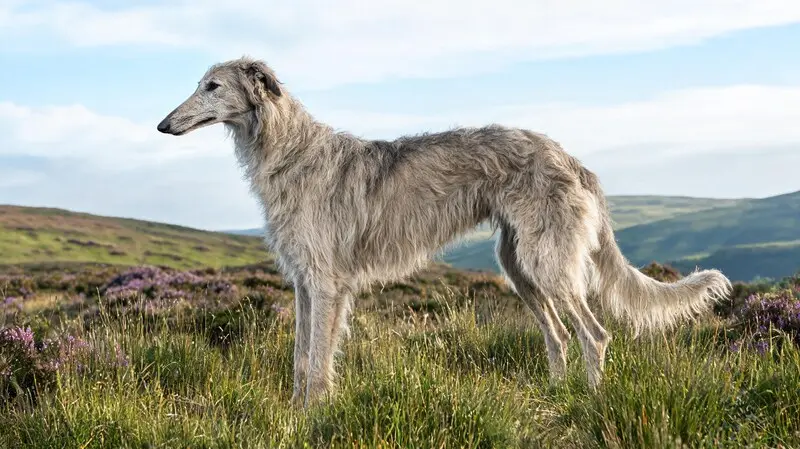
Boerboels are heavily built South African farm guardians. Their broad bodies, strong bones, and muscular frames place them among the heaviest breeds in this comparison.
They tend to be confident and protective, requiring experienced handling and reliable control. Early training, visitor management, secure boundaries, weight monitoring, and careful assessment around unfamiliar animals are necessary.
- Height: 22 to 27 inches | Weight: 150 to 200 pounds
- Personality: Confident, intelligent, watchful, and protective
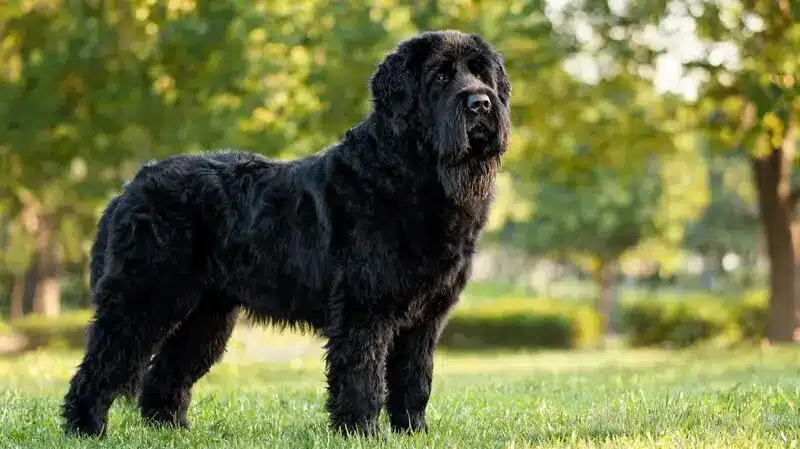
15. Black Russian Terrier
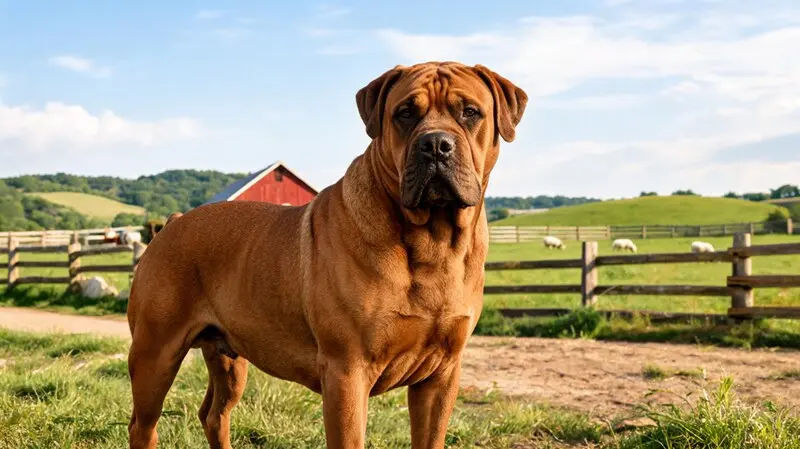
Black Russian Terriers are large working dogs developed in the former Soviet Union for military and security work. Their heavy bones, strong muscles, dark coats, and working ability create a powerful physical presence.
They need regular coat care, structured training, social contact, and useful daily activity. Their size and guarding background make it important to establish consistent household rules and to provide controlled introductions from puppyhood.
- Height: 26 to 30 inches | Weight: 80 to 130 pounds
- Personality: Confident, trainable, alert, and loyal
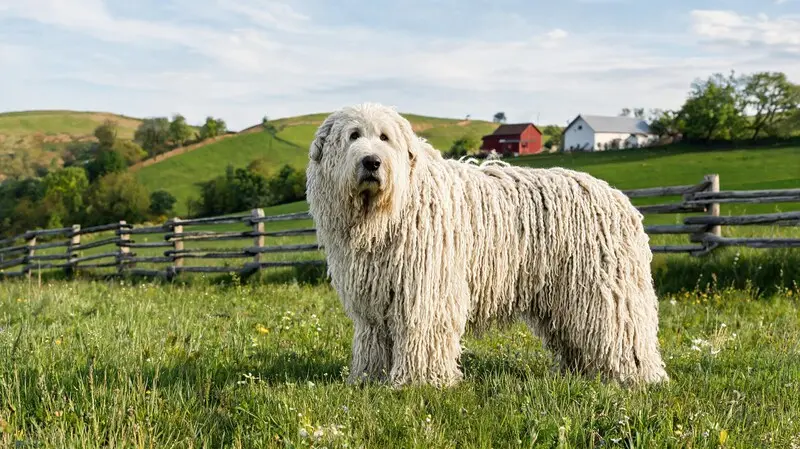
16. Komondor
Komondors are Hungarian livestock guardians recognized by their long corded coats. The coat helped protect working dogs from weather and physical injury, but it requires specialized separation, cleaning, and drying.
Their independent guarding behavior may not suit an inexperienced household. Secure property, controlled introductions, coat maintenance, and respect for their territorial instincts are necessary throughout adulthood.
- Height: 25.5 inches and taller | Weight: 80 pounds and heavier
- Personality: Independent, watchful, reserved, and courageous
17. Greater Swiss Mountain Dog
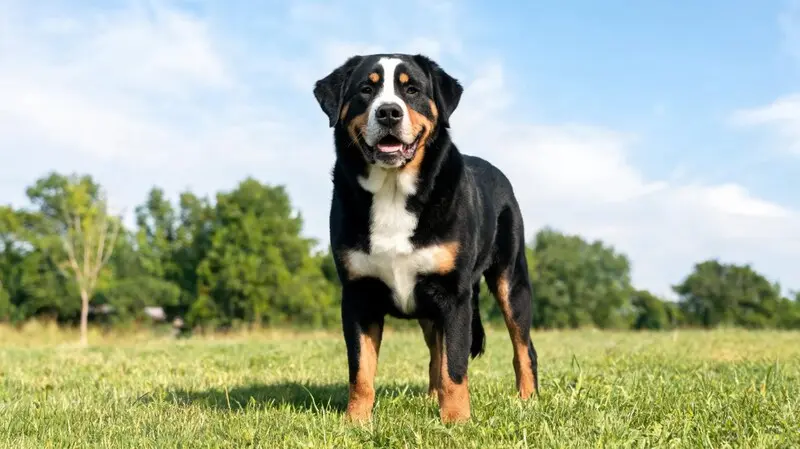
Greater Swiss Mountain Dogs are sturdy working dogs developed for farm work, guarding, and pulling carts. Their broad chests, heavy bones, and muscular bodies create considerable strength without the extreme height of a Great Dane.
They often enjoy working with their families but need early leash training and controlled activity during growth. Owners should prepare for shedding, pulling strength, and substantial food and equipment costs.
- Height: 23.7 to 28.5 inches | Weight: 85 to 140 pounds
- Personality: Social, confident, alert, and dependable
18. Rottweiler
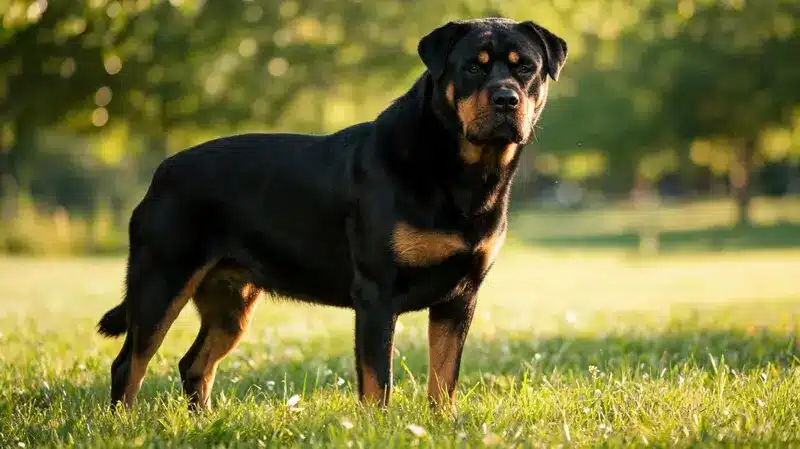
Rottweilers are powerful working dogs with compact, muscular frames. They are shorter than many giant breeds but carry substantial weight and strength relative to their height.
They need structured training, regular activity, and careful social exposure from an early age. Individual behavior toward strangers, children, and other animals should be assessed rather than relying on general breed labels.
- Height: 22 to 27 inches | Weight: 80 to 135 pounds
- Personality: Confident, responsive, alert, and loyal
19. Bullmastiff
Bullmastiffs were developed in England to help estate gamekeepers deter trespassers. Their Mastiff and Bulldog ancestry produced a heavy, muscular guardian with substantial strength in a comparatively compact frame.
They may be calm at home but still require early training and firm safety rules. Drooling, heat sensitivity, visitor management, weight control, and enough room for comfortable rest should be considered.
- Height: 24 to 27 inches | Weight: 100 to 130 pounds
- Personality: Calm, affectionate, watchful, and protective
How are the Biggest Dogs Measured?
Dog size is measured using more than appearance. Height, weight, length, and body structure help compare giant breeds and explain why some dogs become record holders.
| Measurement Type | How It Is Determined | Examples |
|---|---|---|
| Height | Measured from the ground to the highest point of the shoulder | Great Danes and Irish Wolfhounds are known for exceptional height |
| Weight | Based on body mass and typical breed ranges | English Mastiffs are recognized for their heavy builds |
| Body Length | Measured from the chest area to the back of the body | Some large breeds have longer body structures |
| Overall Build | Considers frame size, muscle, and physical structure | Mastiff breeds are known for powerful builds |
Understanding different size measurements helps explain why some breeds are called the tallest or heaviest. Genetics, nutrition, and health also influence how large individual dogs become.
Real Dog Owner Experiences with Giant Breeds

Living with a giant dog can be rewarding, but owners often mention that these breeds require thoughtful planning. Discussions in dog communities frequently highlight the challenges and benefits of sharing a home with large breeds, including space requirements, food expenses, training needs, and grooming responsibilities.
Owner experiences often show that giant dogs are not defined only by their size. Many people describe them as affectionate, loyal, and gentle companions when they receive proper training, exercise, and socialization.
Personal experiences can offer useful perspectives on daily life with large dogs, but breed research and professional guidance are important when deciding whether a giant dog suits your lifestyle.
Caring for Giant Dog Breeds
Giant dogs need care suited to their growth rate, adult weight, strength, and expected health risks. Food, equipment, medication, boarding, and veterinary treatment may also cost more than they would for a smaller dog.
| Care Area | What You Should Plan For |
|---|---|
| Puppy nutrition | Feed a complete diet formulated for the dog’s age and expected adult size |
| Weight control | Keep the dog lean and ask your veterinarian to assess body condition |
| Exercise | Use age-appropriate activity and avoid forced distance running with growing puppies |
| Training | Begin leash skills, handling, recall, and calm greetings while the dog is manageable |
| Living space | Provide enough room to turn, rest, enter vehicles, and move without slipping |
| Equipment | Use beds, crates, harnesses, barriers, and vehicles suited to the dog’s adult size |
| Veterinary planning | Budget for larger medication doses, imaging, surgery, and emergency transportation |
The World Small Animal Veterinary Association recommends a nutritional assessment based on the individual animal rather than on general feeding assumptions. Ask your veterinarian to review food portions, weight, and exercise throughout puppy growth.
Are Giant Dogs Good Family Pets?
Some giant breeds may suit family life, but a breed’s reputation cannot predict how every individual will behave. Temperament is also shaped by genetics, early experiences, health, training, and household management.
Their weight and strength create practical risks even when they are friendly. A large dog can knock over a child, pull an adult off balance, or injure another pet during rough play.
Supervise every interaction with children. Teach family members not to climb on, corner, disturb, hug, or take food from the dog.
You should also consider prey drive, guarding tendencies, noise, shedding, drooling, exercise, visitor tolerance, and the ability to separate pets when needed.
Meeting calm adult dogs from the breed can give you a more realistic sense of daily life than judging suitability from puppy behavior alone.
Final Thoughts
The biggest dog in the world depends on the measurement you choose. Great Danes dominate individual height records, Irish Wolfhounds are known for great breed height, and Mastiffs lead many weight comparisons.
The tallest dog in the world is therefore not automatically the heaviest or longest. If you want a giant dog, look beyond the measurements.
Compare temperament, training needs, exercise, grooming, transportation, expected health risks, lifespan, and ongoing costs with your household.
Speak with responsible breeders, rescue organizations, and your veterinarian, then spend time around adult dogs from the breed when possible. Take those steps before committing so you can choose a large companion whose daily needs fit your home, experience, and budget.
Frequently Asked Questions
Do Giant Dogs Cost More to Own?
Usually, yes. Large dogs may require more food, larger beds and crates, higher medication doses, stronger equipment, and costlier transportation. Veterinary procedures may also cost more, although expenses vary by breed, location, age, and health.
Can a Giant Dog Live in an Apartment?
Some can, provided the building allows the breed and the dog receives suitable exercise. Consider elevators, stairs, narrow hallways, outdoor access, noise, emergency transport, and enough indoor space for the dog to move and rest comfortably.
When Do Large Dogs Stop Growing?
Growth time varies by breed and individual. Many large and giant dogs continue developing beyond their first birthday. Ask your veterinarian when to change food, increase exercise, or begin repetitive running, jumping, and other demanding activities.
Do Larger Breeds Usually Have Shorter Lives?
Larger breeds generally have shorter average lifespans than smaller breeds, but size is not the only factor. Genetics, body shape, inherited disease, weight, breeding practices, preventive care, and access to treatment also affect longevity in individual dogs.