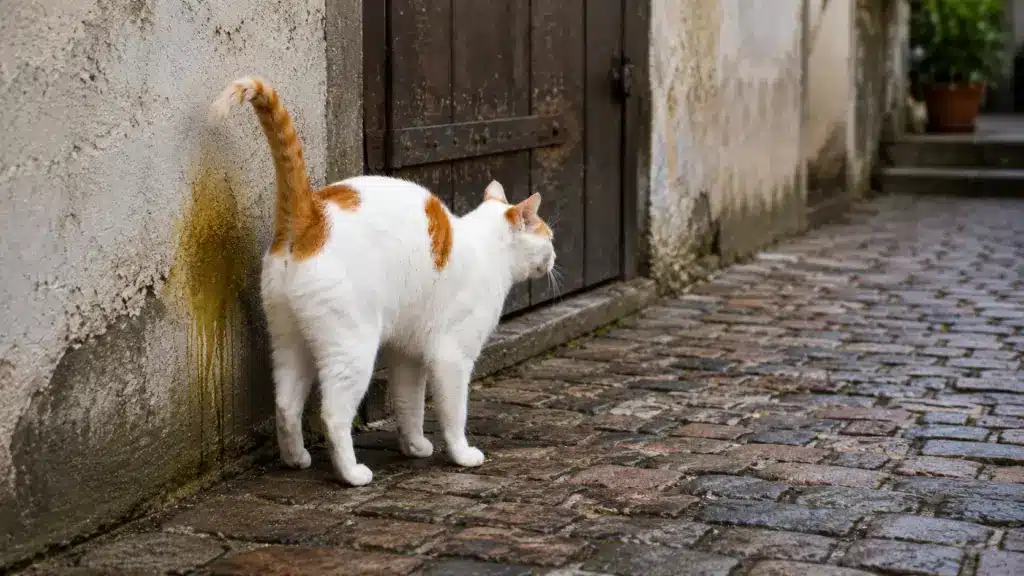
Finding a fresh urine mark after your cat has been neutered can feel like the surgery changed nothing. In my Minnesota clinic, I often meet owners who are frustrated, confused, and worried that their cat is misbehaving on purpose.
Neutering can reduce testosterone-driven marking, but it does not remove every possible cause. Stress, household changes, outdoor cats, medical problems, or an established habit may keep the behavior going.
I’ll help you identify why your neutered cat may still be spraying, what you can change at home, and which signs need veterinary attention.
Once you understand the trigger, you can choose a response that addresses the cause instead of simply cleaning the same spot again.
Why Is My Neutered Cat Still Spraying?
Neutering can reduce hormone-driven marking behaviors, but it does not always stop spraying completely. Some cats continue this behavior because they learned it before surgery, while others may begin spraying due to changes in their environment or emotional stress.
Spraying is a way cats communicate through scent marking. A neutered cat may spray to establish territory, respond to unfamiliar smells, or feel insecure after changes in the home.
As one county animal care guide notes, sprayed urine differs chemically from normal urination since it also carries scent from the anal glands. Common triggers include moving to a new house, introducing another pet, seeing outdoor cats nearby, or changes in daily routines.
A sudden increase in spraying can also point to a medical concern. Urinary problems or discomfort may cause changes in bathroom behavior, so a veterinary check is recommended when spraying starts unexpectedly or appears alongside other symptoms.
If your cat hasn’t been neutered yet, reviewing when to neuter a cat can help you understand the recommended age and timing before spraying habits develop.
Difference Between Spraying and Normal Urination
Identifying whether your cat is spraying or having normal urination issues helps you choose the right solution. Spraying is usually a communication behavior, while normal urination is related to eliminating waste.
| Spraying | Normal Urination |
|---|---|
| Small amounts of urine are usually released | Larger amounts of urine are usually released |
| Often happens on vertical surfaces like walls or furniture | Usually occurs in a litter box or horizontal areas |
| Cat may stand with tail raised or quivering | Cat usually squats while urinating |
| Used for marking territory or communication | Used for normal bathroom needs |
Knowing the difference between these behaviors helps you address the actual cause instead of treating every urine issue as spraying.
Common Reasons a Neutered Cat Sprays
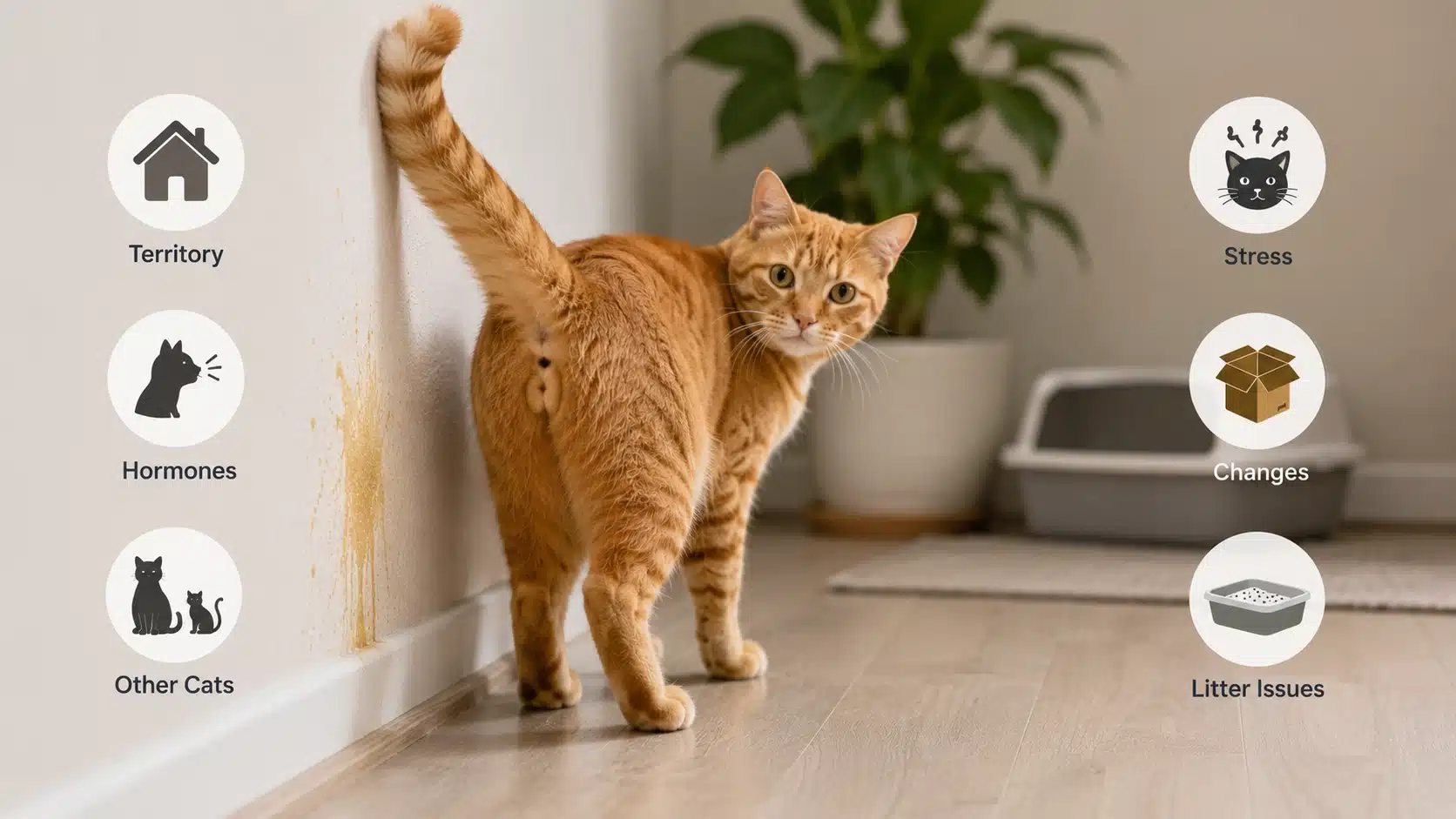
Neutering reduces reproductive behaviors, but other factors can still encourage a cat to spray. Identifying the trigger can make it easier to manage and reduce the behavior.
1. Territorial Marking
Cats use scent marking to communicate ownership and create a sense of security in their environment. Even after neutering, some cats may spray when they feel their territory is challenged. As the ASPCA describes it, a spraying cat backs up to a vertical surface, stands with its tail erect, and releases urine onto it.
Common triggers include:
- A new pet entering the household.
- Outdoor cats appearing near windows or doors.
- Changes to furniture or living spaces.
- Moving to a different home.
Reducing territorial stress and helping your cat feel secure can lower the need to mark areas. Providing familiar spaces, maintaining routines, and limiting exposure to territorial triggers can help your cat feel more comfortable in its environment.
2. Stress and Anxiety
Stress is a common reason neutered cats may continue spraying. Cats can react to changes that may seem minor to people but feel significant to them.
Possible stress triggers include:
- Changes in household members.
- New schedules or routines.
- Loud noises or unfamiliar visitors.
- Lack of private resting spaces.
Creating a stable environment with predictable routines can help reduce anxiety-related marking. Providing safe areas, regular interaction, and time to adjust can gradually reduce stress-related behaviors.
3. Medical Problems
Not all urine-related behaviors are caused by marking. Some cats may urinate outside the litter box because of discomfort or health problems.
Possible concerns include:
- Urinary tract issues.
- Pain during urination.
- Increased frequency of urination.
- Changes in litter box habits.
A veterinary evaluation can help rule out medical causes before focusing only on behavioral solutions. Identifying health issues early allows your cat to receive appropriate treatment and prevents discomfort from being mistaken for spraying behavior.
If your cat still needs the procedure, this guide on how much it costs to neuter a cat and ways to save can help you plan ahead.
Urgent-care note: Straining without producing urine, repeated litter box visits, crying, vomiting, or a painful abdomen may indicate a urinary blockage. This is an emergency, especially in male cats. |
How to Stop a Neutered Cat From Spraying
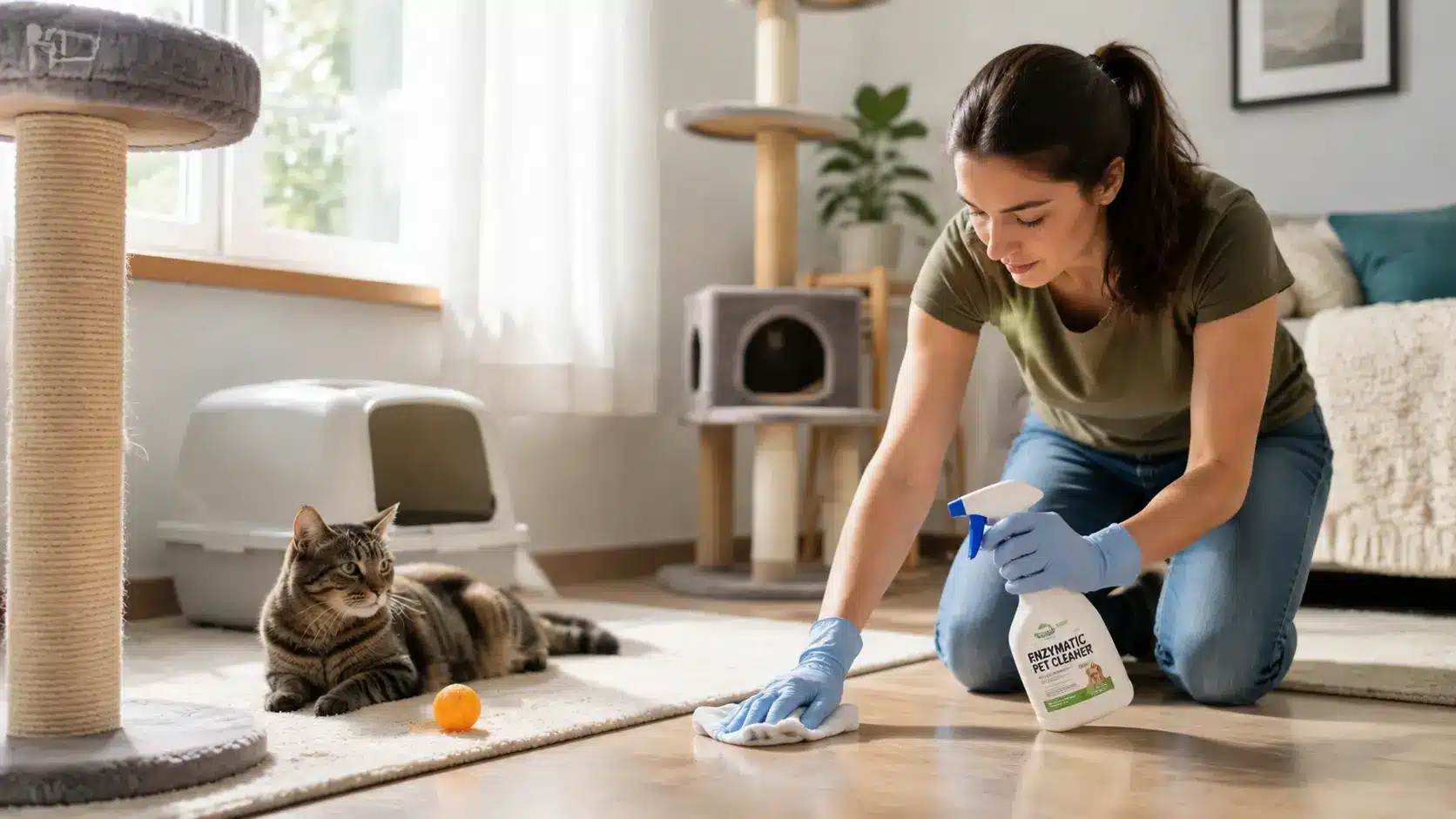
Reducing spraying starts with identifying the trigger behind the behavior. Avoid punishment and focus on cleaning, environmental changes, and stress reduction based on your cat’s specific needs.
Steps that may help reduce spraying include:
- Clean sprayed areas properly: Use an enzymatic cleaner designed for pet urine to remove lingering odors. Regular cleaners may not completely remove scent markers, which can encourage cats to spray the same area again.
- Identify and reduce stress triggers: Look for changes that may be causing anxiety, such as new pets, visitors, furniture changes, or outdoor cats near windows. Reducing these triggers can help your cat feel more secure.
- Improve litter box management: Keep litter boxes clean and provide suitable locations where your cat feels comfortable. In multi-cat homes, providing enough litter boxes can help reduce competition and stress.
- Provide enrichment and safe spaces: Regular play, scratching areas, hiding spots, and elevated resting places can help cats feel more confident in their environment.
- Discuss veterinary solutions when needed: If spraying continues despite environmental changes, a veterinarian can help identify underlying causes and suggest appropriate options.
Consistent changes usually work better than quick fixes because spraying often develops from ongoing environmental or emotional triggers.
Treatment note: No single method stops spraying in every cat. Avoid using medication, supplements, essential oils, or calming products unless your veterinarian confirms they are safe. |
How Long After Neutering Will a Cat Stop Spraying?
Neutering may not stop spraying immediately because hormone levels decrease gradually. Some cats improve within weeks, while others take longer due to habits, age, and behavior patterns.
The timeline can vary based on:
- How long the cat has been spraying.
- The cause behind the behavior.
- Environmental stress levels.
- Individual personality and temperament.
If spraying continues for an extended period after neutering, reviewing possible triggers with a veterinarian or cat behavior professional can help identify the next steps. For a fuller picture of what to expect, see this overview of male cat neutering before and after changes.
Real Cat Owner Experiences With Neutered Cat Spraying
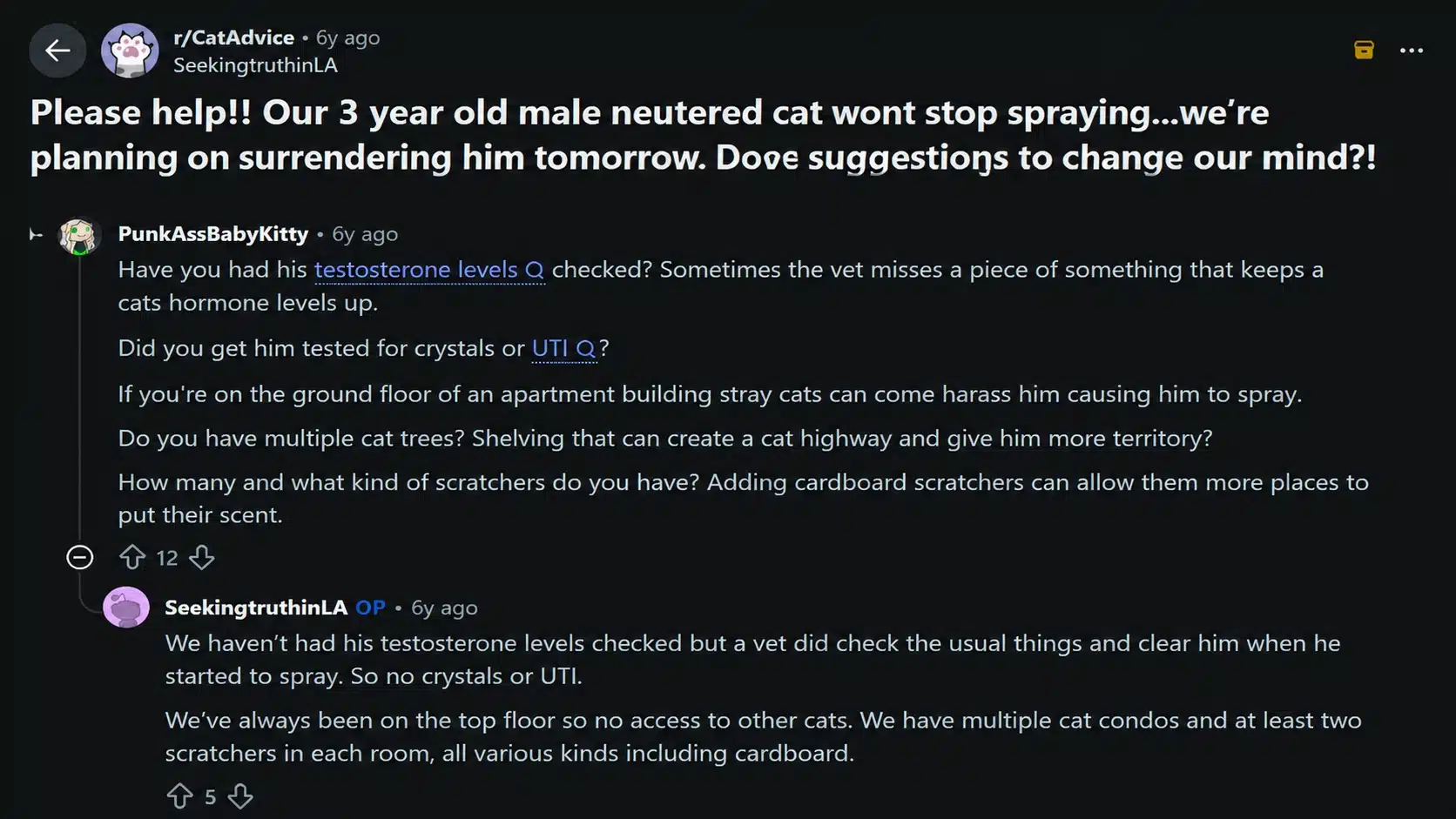
Real-life discussions about spraying after neutering often include questions about why a neutered male cat continues marking, which changes helped reduce the behavior, and how long improvement took.
These experiences show that spraying can continue for different reasons, and the most effective solution may vary between cats. Some cats improve after environmental changes, stress reduction, or addressing specific triggers.
Personal experiences can offer useful perspectives, but they should not replace veterinary advice. Sudden changes in urination habits or ongoing spraying may require professional evaluation to rule out underlying medical concerns.
Should You Punish a Neutered Cat for Spraying?
Punishing a cat for spraying is unlikely to solve the problem and may increase fear or stress. Since spraying is a communication behavior, punishment does not address the reason behind the marking.
Instead of punishment, focus on:
- Identifying possible triggers.
- Cleaning affected areas thoroughly.
- Improving your cat’s environment.
- Providing a stable routine.
Punishment does not stop spraying and may increase stress. Focus on triggers, proper cleaning, environmental changes, and supportive care to reduce marking behavior.
Final Thoughts
I know how frustrating it can feel when spraying continues after neutering, but the behavior usually has a reason. Stress, territorial changes, established habits, litter box problems, or medical concerns may all play a part.
I recommend starting with the cause instead of punishing the behavior. Clean marked areas thoroughly, improve litter box access, reduce household stress, and block outdoor triggers where possible. Consistent changes often work better than trying several quick fixes at once.
Every cat responds differently, so progress may take time. If spraying begins suddenly, continues despite home changes, or appears with urinary symptoms, schedule a veterinary appointment to identify the cause and create a suitable treatment plan.
Medical disclaimer: This information is educational and does not replace veterinary diagnosis or treatment. Contact a licensed veterinarian about sudden spraying, urinary symptoms, medication, behavior changes, or ongoing litter box problems. |
Frequently Asked Questions
Can a Neutered Cat Start Spraying Years Later?
Yes, a neutered cat can start spraying years later. Changes such as a new pet, moving homes, stress, or health problems can trigger marking behavior even after a long period without spraying.
Do Female Cats Spray After Being Spayed?
Yes, female cats can spray after being spayed, although it is less common. Spraying may occur because of stress, territorial concerns, environmental changes, or medical issues rather than reproductive hormones alone.
How Do I Clean Cat Spray Smell Permanently?
Use an enzymatic cleaner designed for pet urine because it breaks down odor-causing compounds. Regular cleaners may leave scents behind that encourage cats to mark the same area again.
Can a Neutered Cat Spray Because of Stress?
Stress can cause a neutered cat to spray by triggering territorial or anxiety-related behaviors. Changes such as new pets, moving homes, unfamiliar visitors, or routine disruptions may make some cats feel insecure and lead to marking behavior.