“When should I neuter my cat?” is one of the most common questions owners ask me in the exam room. Behind it is usually the same concern: choosing a time that supports their cat’s health without acting too early or waiting too long.
As a veterinarian in Minnesota, I generally discuss neutering by five months of age for healthy male cats. However, I never treat age as the only deciding factor. Growth, medical history, lifestyle, and overall health can all affect the recommended timing.
I’ll explain why timing matters, what your cat may need before surgery, and how to support recovery afterward so you can have a more informed conversation with your veterinarian.
When to Neuter a Cat: The Right Time to Schedule Surgery
Many owners ask me about the perfect age to neuter their cat, but the answer depends on more than a birthday. Veterinary guidance commonly supports neutering cats by five months of age when they are healthy and not intended for breeding.
Neutering before sexual maturity can help prevent accidental breeding and may reduce some behaviors linked to reproductive hormones. Male cats can become reproductively active around this stage, even if obvious signs are not always present.
Before scheduling surgery, your veterinarian will consider factors such as:
- Your cat’s weight and body condition
- Overall health
- Medical history
- Development and growth
- Any concerns that may affect anesthesia
Every cat deserves an individual care plan. A healthy kitten may be ready around the recommended age, while another cat may need a different schedule based on health needs.
What Is the Best Age to Neuter a Male Cat?
For many male cats, the recommended timing is around five months of age. This allows owners to address reproductive health before mating-related behaviors become established.
I encourage owners to think of neutering as part of routine preventive care, not a decision that needs to wait until a problem appears. A cat does not need to start spraying, roaming, or showing mating behaviors before surgery becomes worthwhile.
Neutering a male cat may provide several benefits, including:
- Preventing reproduction
- Removing the risk of testicular cancer
- Reducing some hormone-related behaviors such as roaming and urine marking
The effect on behavior is different for every cat. Some behaviors may improve after neutering, while long-established habits may take longer to change.
Timing note: Five months is a general recommendation, not a fixed deadline for every cat. Your veterinarian should determine timing based on your cat’s health, development, and individual needs. |
Can Older Cats Still Be Neutered?
If your cat was not neutered as a kitten, that does not mean the opportunity has passed. Adult male cats can often still benefit from neutering after a veterinary health evaluation.
When I discuss later neutering with owners, I focus on the cat’s current health rather than age alone. Older cats may need additional checks before anesthesia, especially if they have medical concerns.
A veterinary assessment can help determine:
- Whether your cat is healthy enough for surgery
- Whether additional testing is needed
- What recovery support may be required
Neutering later in life can still benefit many cats when planned carefully. Your veterinarian may recommend health checks before surgery to assess anesthesia risks and recovery needs.
Factors That May Change Neutering Timing

Age is an important part of the decision, but it is not the only factor. Your veterinarian will look at your cat as an individual and consider what timing makes the most sense for their health.
1. Health and Weight
A cat’s physical condition plays an important role before surgery. Your veterinarian may check weight, overall wellness, and medical history before recommending neutering.
Cats with health concerns may need extra attention before anesthesia. Addressing these concerns first can help create a safer surgery plan.
2. Indoor or Outdoor Lifestyle
Some owners think indoor cats do not need neutering, but reproductive behaviors and health concerns can affect cats regardless of where they live.
Outdoor cats may have a greater chance of mating, while indoor cats may still develop behaviors such as spraying or territorial marking.
Neutering can support responsible care for both indoor and outdoor cats.
3. Growth and Individual Development
Cats do not all mature at the same pace. Some may reach developmental milestones sooner, while others may need more time.
Your veterinarian can consider your cat’s growth, health, and overall condition when recommending the safest timing.
Benefits of Neutering Your Male Cat
Many owners first think about neutering to prevent unwanted kittens, but the procedure can also support other areas of preventive care.
Neutering prevents reproduction and removes the risk of testicular cancer. It may also reduce some behaviors linked to reproductive hormones, such as roaming, urine marking, and certain mating behaviors. However, every cat responds differently, and behaviors that have become habits may not disappear completely after surgery.
Some potential benefits include:
- Preventing accidental breeding
- Removing the risk of testicular cancer
- Reducing some hormone-related behaviors
- Supporting safer indoor and outdoor management
I remind owners that neutering is not meant to change their cat’s personality. Most cats keep their same playful, affectionate nature after recovery. For a closer look at what actually changes, see this breakdown of male cat neutering before and after changes.
Signs Your Male Cat May Be Ready for Neutering
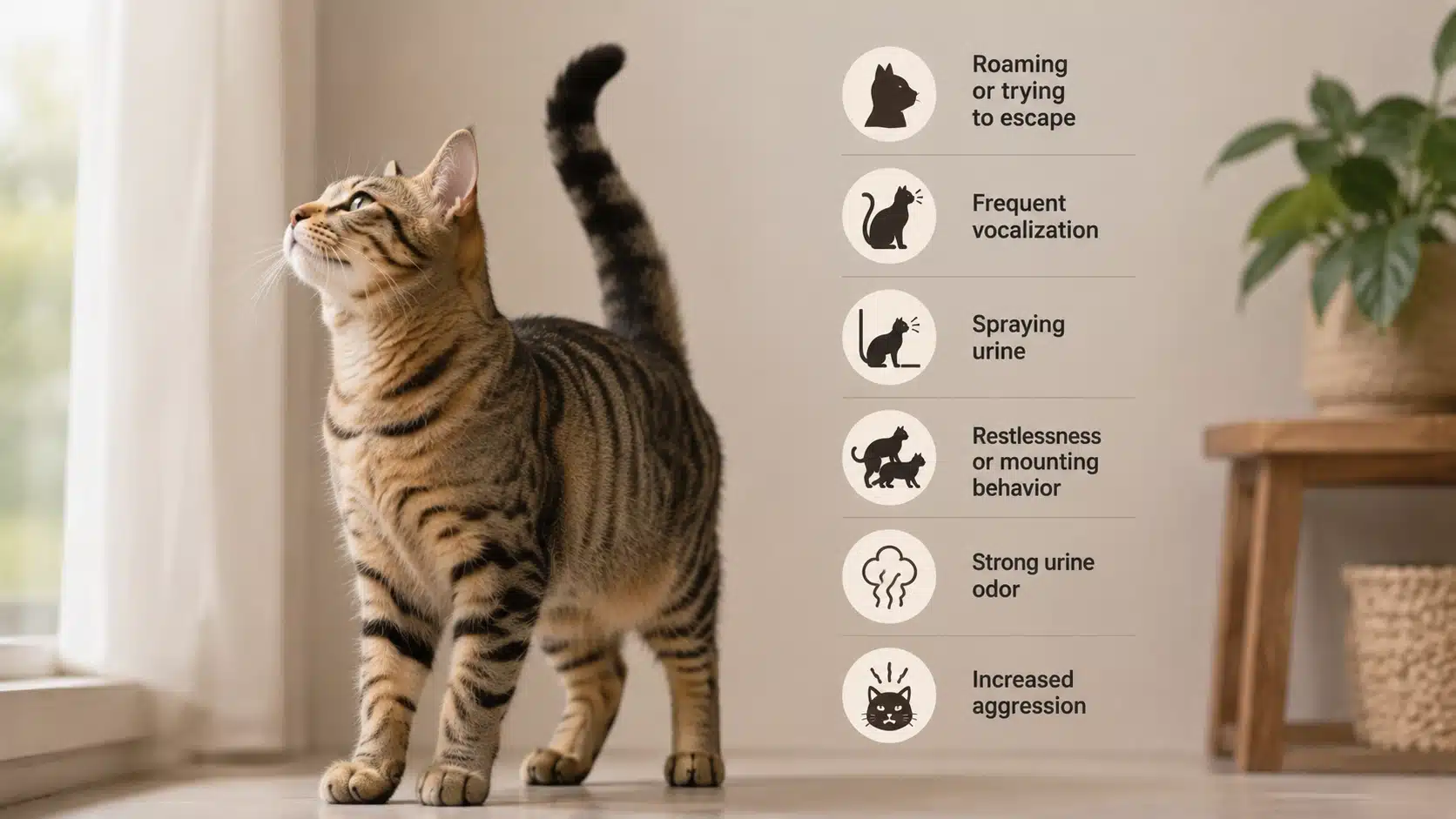
Some owners wait until they notice behavioral changes before considering neutering. While these signs can be helpful to notice, your cat does not need to show them before discussing surgery with your veterinarian.
Common signs of sexual maturity may include:
- Urine spraying around the home
- Increased interest in female cats
- Attempts to escape outdoors
- More territorial behavior
- Increased attention toward mating
These behaviors are influenced by hormones, but they can also have other causes. If you notice changes in your cat’s behavior, a veterinary discussion can help identify the best next step.
If your cat is already neutered but is still spraying, this article on why neutered cats spray and how to stop it can help you understand what else may be going on.
| Behavior note: Spraying, roaming, or territorial behavior does not confirm that a cat is medically ready for surgery. A veterinary examination is still required. |
Real Cat Owner Discussions About the Best Age to Neuter
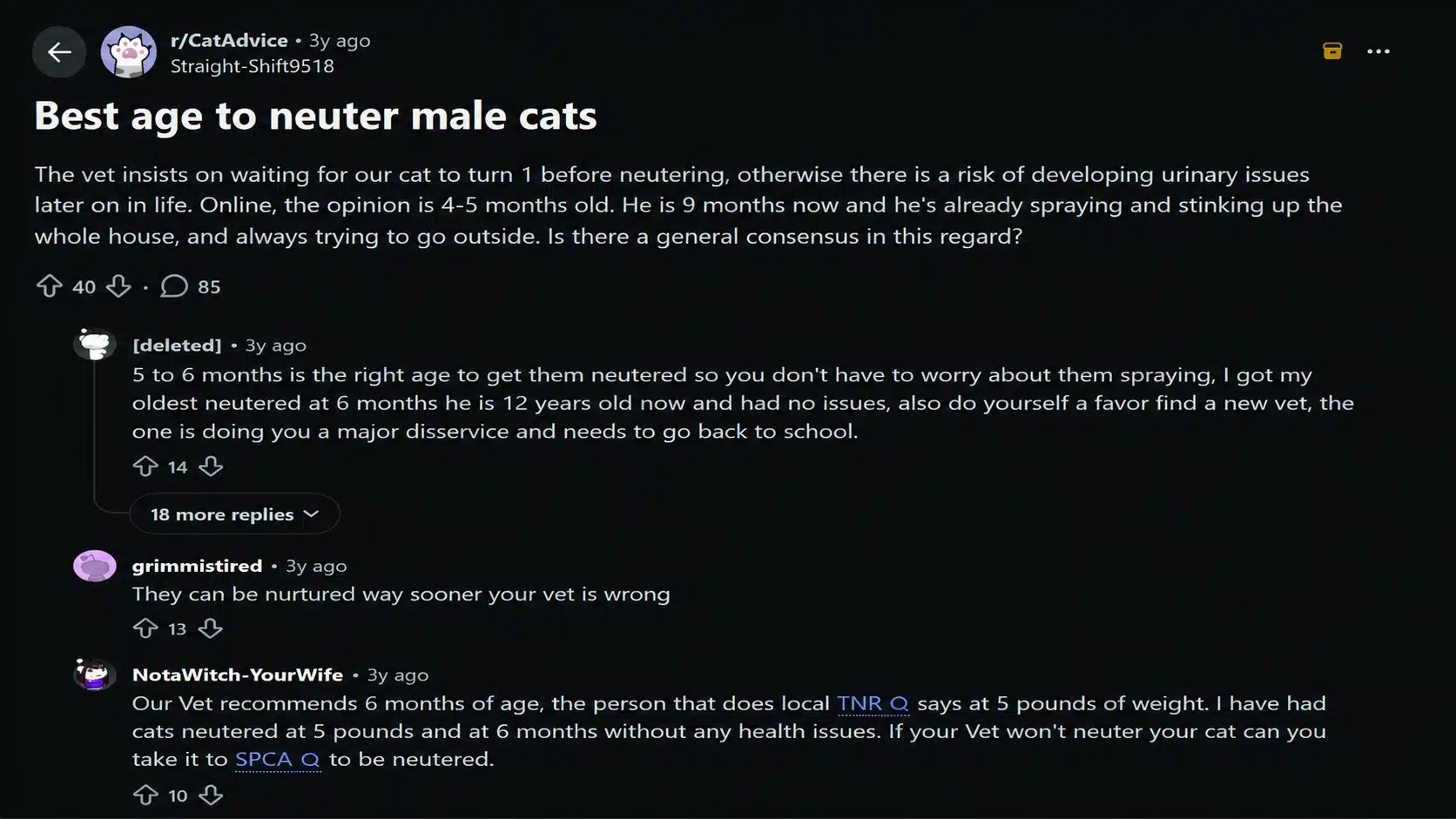
Discussions among cat owners often focus on choosing the right time to neuter male cats, including questions about early procedures, waiting until kittens mature, and how cats respond after surgery.
These conversations show that timing decisions can depend on several factors, such as a cat’s age, health condition, behavior, and veterinary recommendations.
Personal experiences may offer helpful perspectives, but they should not replace professional advice.
The most suitable timing varies for each cat. A veterinarian can evaluate your cat’s development and overall health to recommend an appropriate time for the procedure.
Preparing Your Cat for Neutering
A little preparation can make surgery day easier for both you and your cat. I encourage owners to request written instructions so they don’t forget important details.
It’s also a good idea to look into how much it costs to neuter a cat and ways to save so you can budget for the procedure ahead of time.
| Before Surgery | What to Confirm |
|---|---|
| Food and water | Ask when to stop feeding and drinking. |
| Medication | Confirm which medicines should be given or withheld. |
| Clinic arrival | Check the arrival time and expected pickup time. |
| Transportation | Use a secure carrier for the trip home. |
| Home recovery | Prepare supplies and review activity restrictions. |
Follow every clinic instruction carefully and ask questions if anything is unclear. Proper preparation supports a safer procedure and smoother return home.
Creating A Comfortable Recovery Space
Before surgery day arrives, prepare a quiet area where your cat can rest. A familiar space with easy access to food, water, and a litter box can help your cat settle after coming home.
Helpful steps include:
- Keeping your cat indoors
- Limiting jumping and rough play during recovery
- Providing a clean resting area
- Following your veterinarian’s instructions about activity
Preparing this space before surgery can make the first hours at home calmer and easier to manage. Follow your veterinarian’s recovery instructions and monitor your cat closely.
Recovery After Neutering
Most cats recover well after neutering, but monitor progress throughout the healing period.
| Recovery Stage | What You May Notice | What You Should Do |
| First day | Sleepiness, reduced appetite, or mild unsteadiness | Provide quiet rest and follow feeding instructions |
| First few days | Energy may improve while the surgical area continues healing | Check the area and restrict running or jumping |
| Around one week | Many cats begin returning to their usual routine | Continue restrictions until your veterinarian approves |
| After recovery | Normal activity can gradually resume | Follow any remaining care instructions |
Contact your veterinarian if you notice increasing swelling, bleeding, discharge, repeated vomiting, trouble urinating, refusal to eat, severe pain, or unusual weakness.
Questions To Ask Your Veterinarian Before Surgery
Feeling prepared can make the decision much easier. Before scheduling neutering, consider asking your veterinarian:
- Is my cat ready for this procedure?
- Does my cat need any health checks before surgery?
- What should I expect on the day of surgery?
- How can I make recovery more comfortable at home?
- When can my cat return to normal activities?
Bring these questions to your appointment and write down the answers for later reference. Clear instructions will help you prepare properly and support your cat throughout recovery.
Final Thoughts
Choosing when to neuter your cat deserves careful thought, but it does not need to feel overwhelming. I find that owners feel more confident once they understand the timing, preparation, and recovery process.
Most healthy male cats are considered for neutering by five months of age, although no single schedule suits every cat. Health, development, lifestyle, and medical history can all affect the safest timing.
My advice is to treat the recommended age as a starting point, not a fixed deadline. Schedule a veterinary appointment today to review your cat’s individual needs and create a safe plan for his procedure and recovery.
| Medical disclaimer: This information is educational and does not replace veterinary diagnosis or treatment. Consult a licensed veterinarian about neutering age, anesthesia, preparation, medication, and recovery care for your cat. |
Frequently Asked Questions
What Age Should A Male Cat Be Neutered?
Many male cats are considered for neutering by five months of age, but the timing depends on health, growth, and veterinary advice. Your veterinarian can recommend the most suitable schedule after evaluating your cat.
Can A Cat Be Neutered Later In Life?
Yes, many adult male cats can still be neutered. Your veterinarian may recommend health checks before surgery to make sure the procedure is appropriate based on your cat’s current condition.
Will Neutering Change My Cat’s Personality?
Neutering does not usually change a cat’s basic personality. Your cat’s playful habits, affection, and individual traits typically remain the same after recovery from surgery.
How Long Does Recovery Take After Neutering?
Recovery varies between cats, but many begin feeling better within a few days. Follow your veterinarian’s instructions about activity, incision care, and when your cat can return to normal routines.