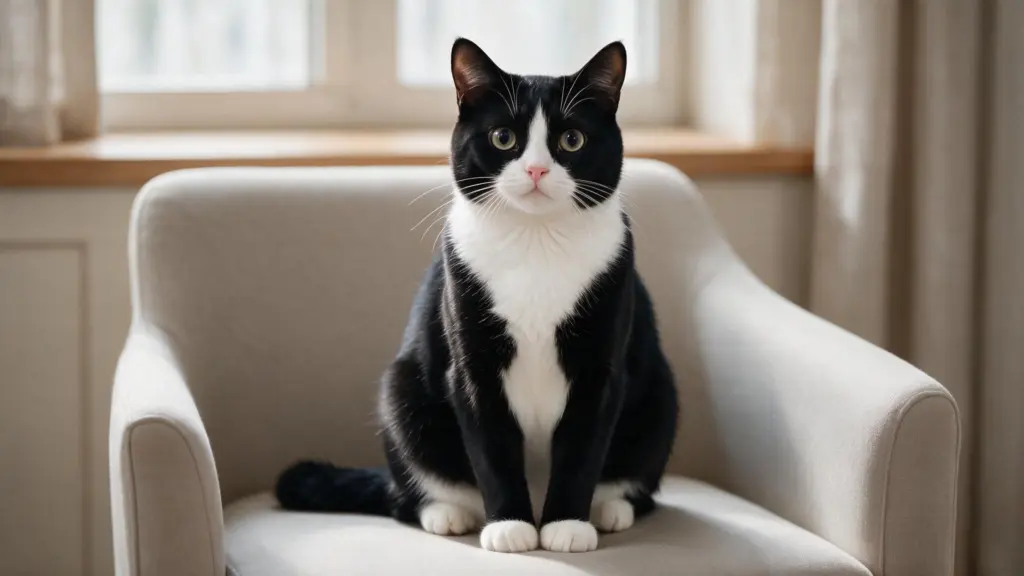
A black-and-white coat can make your cat look as though it belongs to one unmistakable breed. The markings are memorable, but they do not reveal ancestry on their own.
When readers ask me what breed a tuxedo cat is, I begin with the key distinction: tuxedo describes a coat pattern, not a breed. It can appear in non-pedigreed cats and in several recognized breeds that permit black-and-white coats.
As a breed researcher, I compare body shape, head structure, ears, coat length, and size, but I treat those details as clues rather than proof.
You will learn what the pattern means, which breeds may have it, and which records can provide a dependable answer about your cat’s background.
Is a Tuxedo Cat a Real Breed?
A tuxedo cat is not a separate breed. The name informally refers to a bicolor coat with dark fur and white markings that may resemble a shirt front, socks, or formal attire.
Research has linked white spotting in domestic cats to variation involving the KIT locus, which the UC Davis Veterinary Genetics Laboratory traces to a retrovirus insertion in that gene. This influences the distribution of pigmented and unpigmented areas during development, but it does not create one required tuxedo arrangement.
The amount and placement of white can vary widely. One cat may have a small chest patch, while another has a white face, belly, legs, and paws.
Cat registries classify cats by breed, coat color, and recognized pattern terminology. They do not recognize “tuxedo” as a breed, so the markings alone cannot confirm ancestry. That distinction matters when comparing your cat with the recognized breeds below.
What Breed is a Tuxedo Cat?
Black-and-white bicolor coats occur in non-pedigreed cats and in several recognized breeds. The entries below are suitable examples, not a ranking of the breeds most likely to have tuxedo markings.
1. Domestic Shorthair
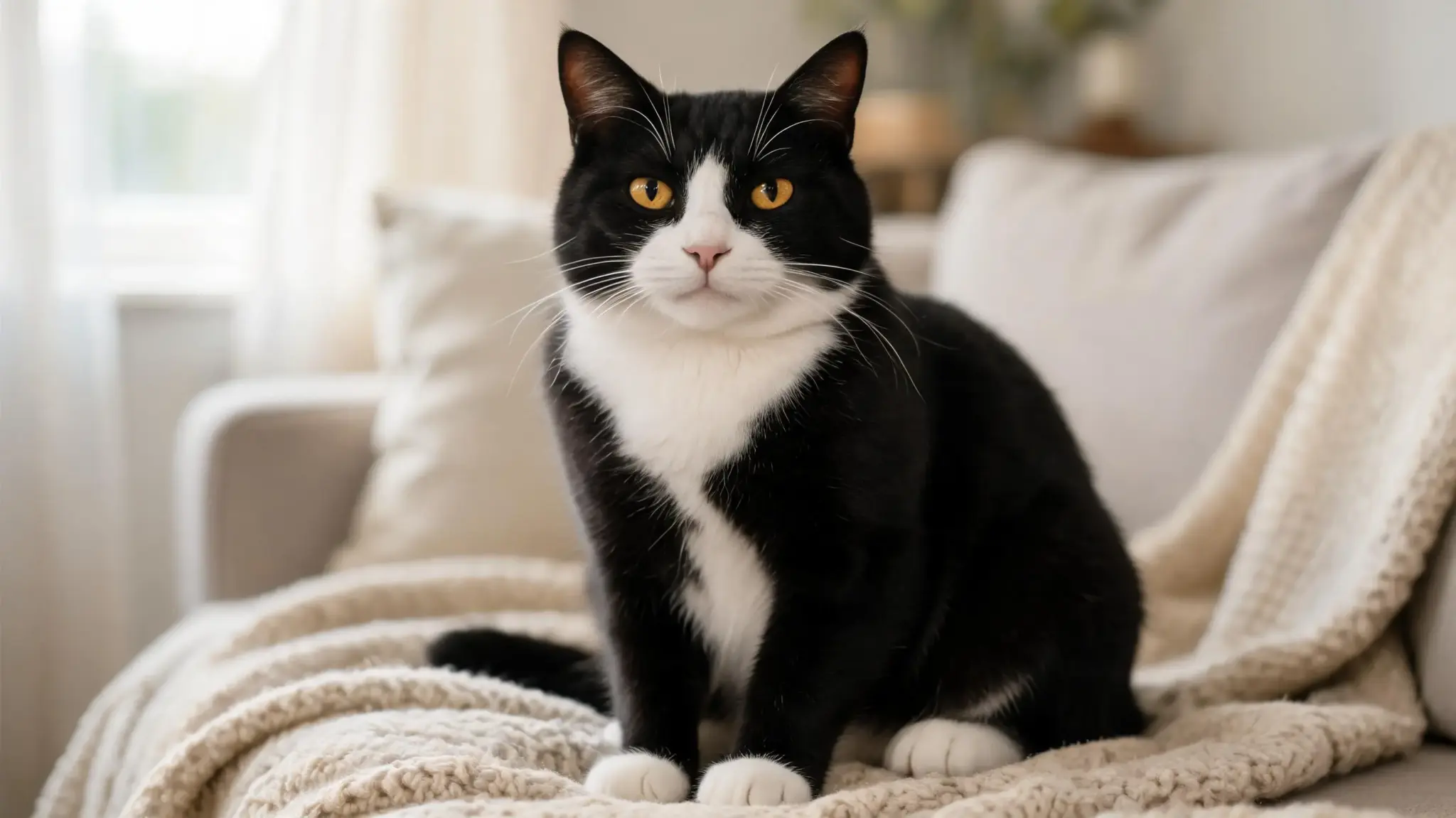
Domestic Shorthair is a descriptive category for a non-pedigreed cat with a short coat, not a standardized breed or proof of mixed-breed ancestry.
These cats vary widely in size, build, head shape, coat texture, and temperament. If your shorthair tuxedo cat has no pedigree records, “Domestic Shorthair” is usually the most accurate description.
2. Maine Coon
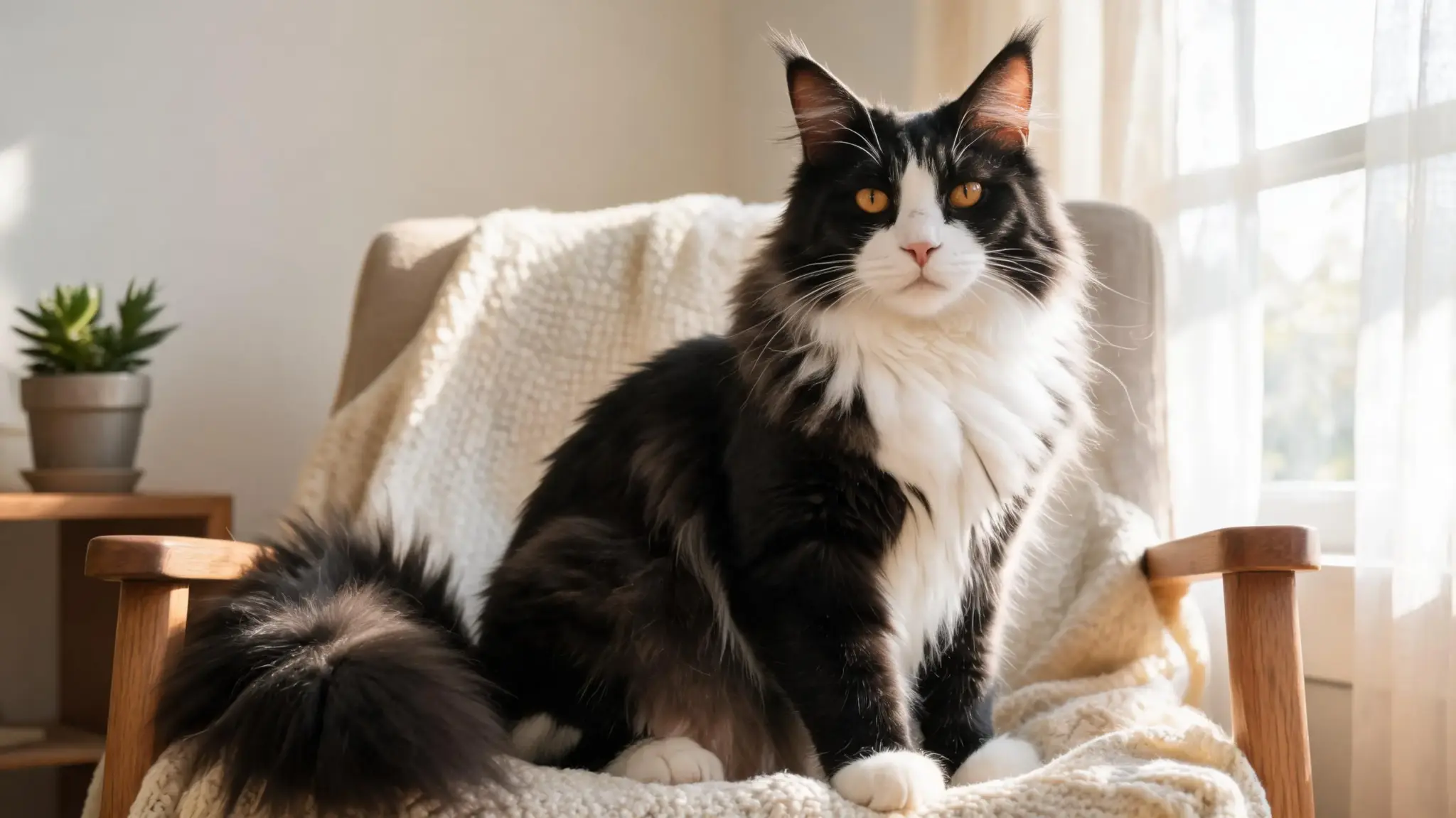
Maine Coons are large cats with rectangular bodies, broad chests, tufted ears, long tails, and shaggy coats. Black-and-white bicolor coats are permitted by the Maine Coon standard.
The breed develops slowly, so younger cats may not yet show the full size and coat of a mature Maine Coon.
3. British Shorthair
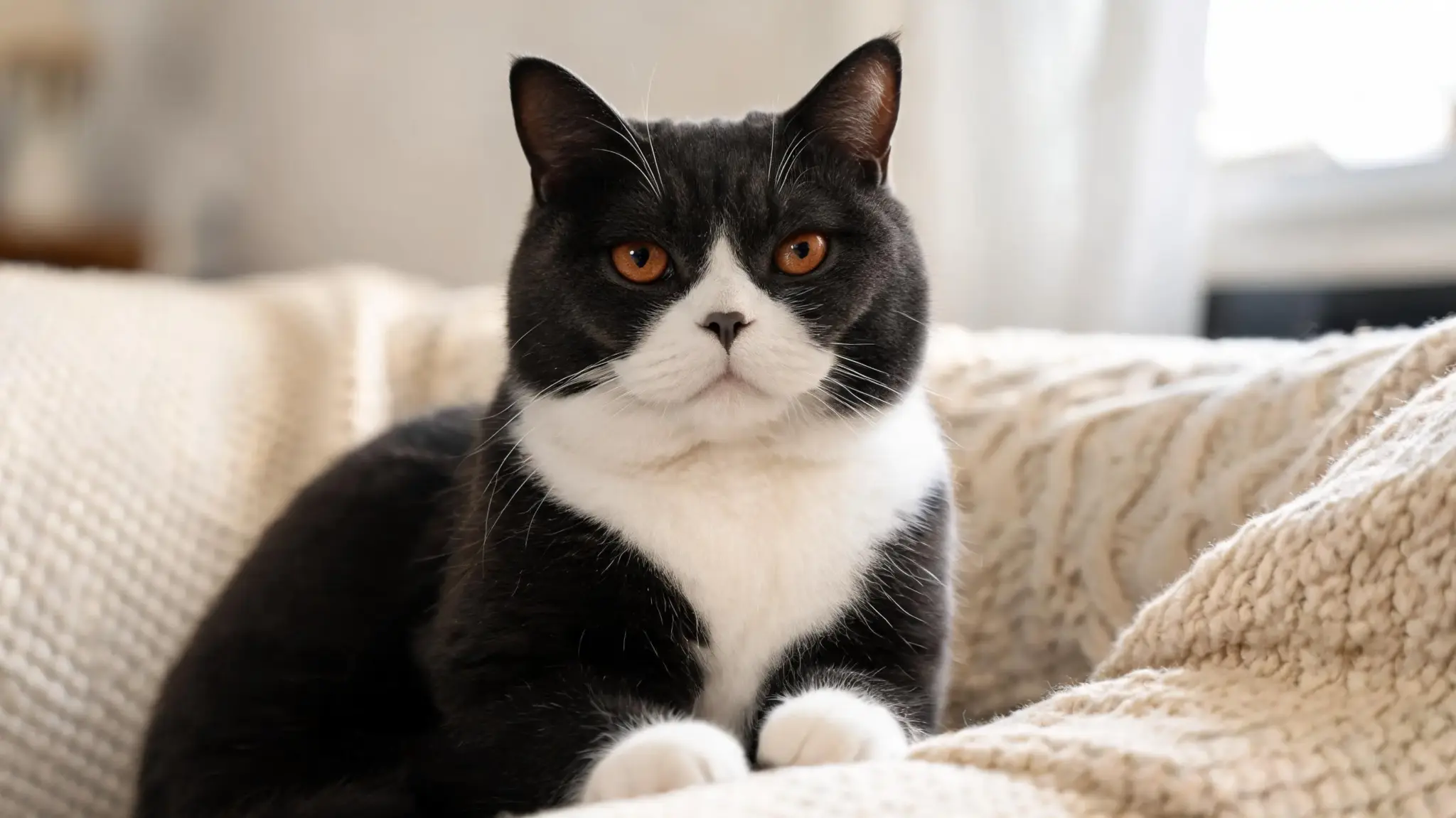
British Shorthairs have rounded heads, full cheeks, sturdy bodies, and dense coats. Their broad build and plush fur differ from the lighter frame of many non-pedigreed shorthaired cats.
Black-and-white bicolor coats can occur, but these physical similarities do not establish British Shorthair ancestry, and that sturdy, cobby build is also a reason to keep an eye on maintaining a healthy weight as the cat ages.
4. American Shorthair
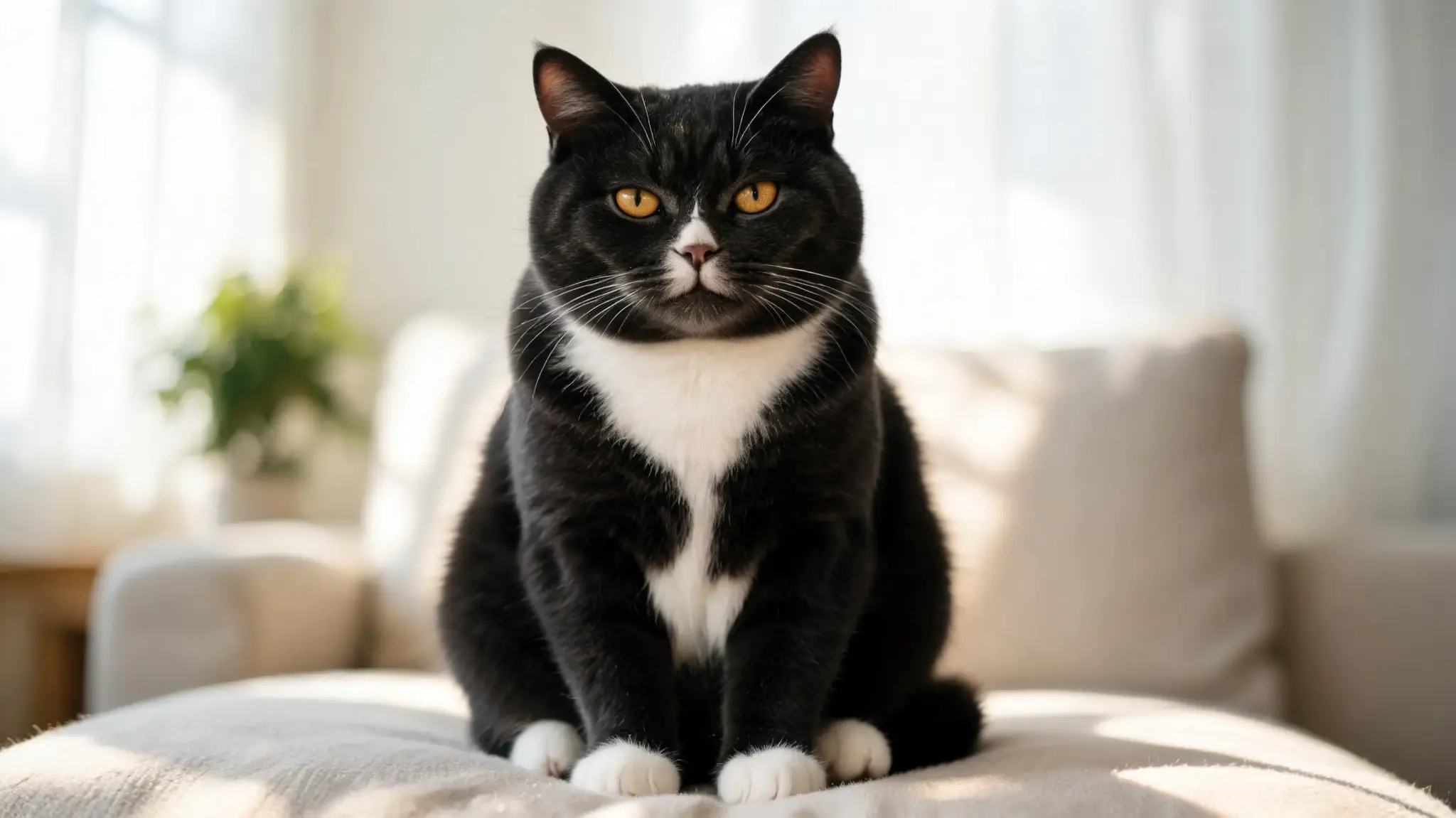
American Shorthairs are medium-to-large cats with muscular bodies, broad chests, strong legs, and short, dense coats. Black-and-white is among the accepted color combinations.
A non-pedigreed cat can have a similar working-cat build, so appearance cannot separate it from a registered American Shorthair, though a muscular, active cat like this usually does best with regular play and mental stimulation built into its routine.
5. Persian
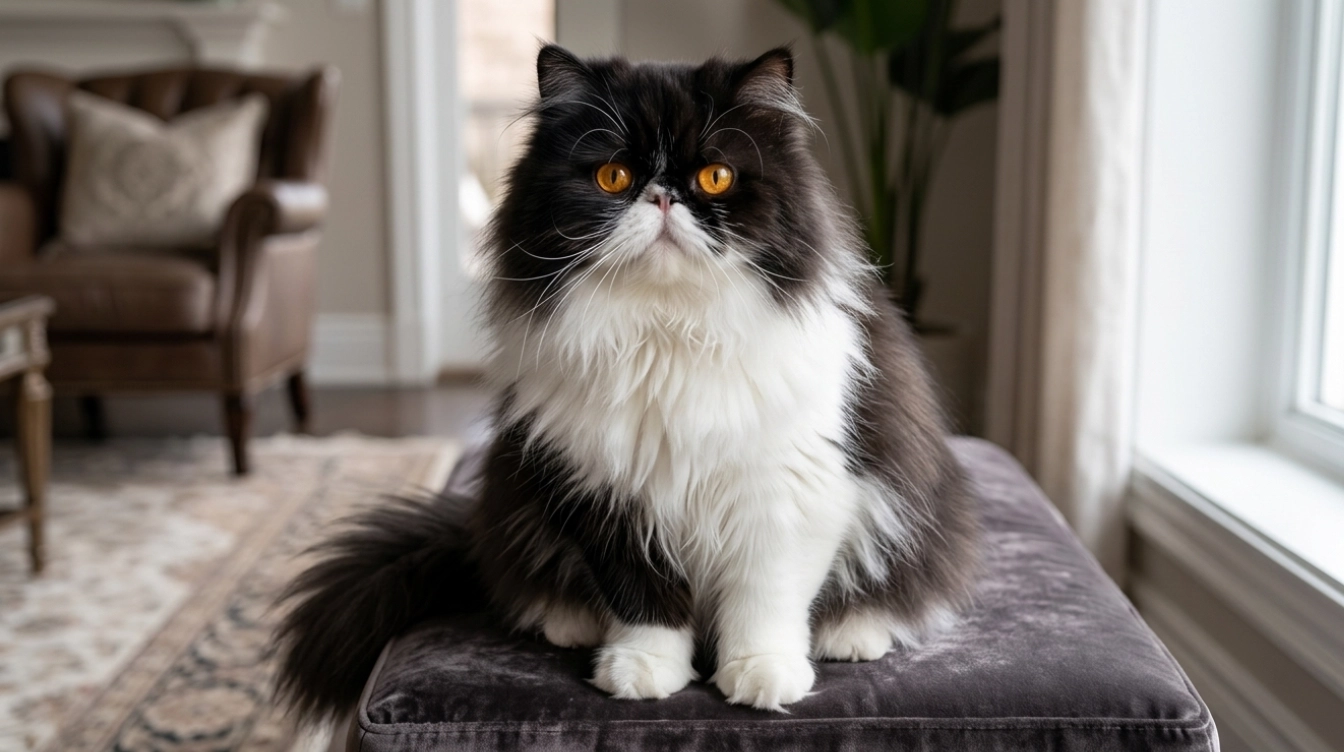
Persians have round heads, shortened muzzles, compact bodies, and long, dense coats. Bicolor Persians can have black-and-white markings resembling a tuxedo.
A long coat and shortened muzzle may resemble a Persian, but similar traits can appear without documented Persian ancestry, and any cat carrying that much fur benefits from a consistent brushing routine regardless of its background.
6. Scottish Fold
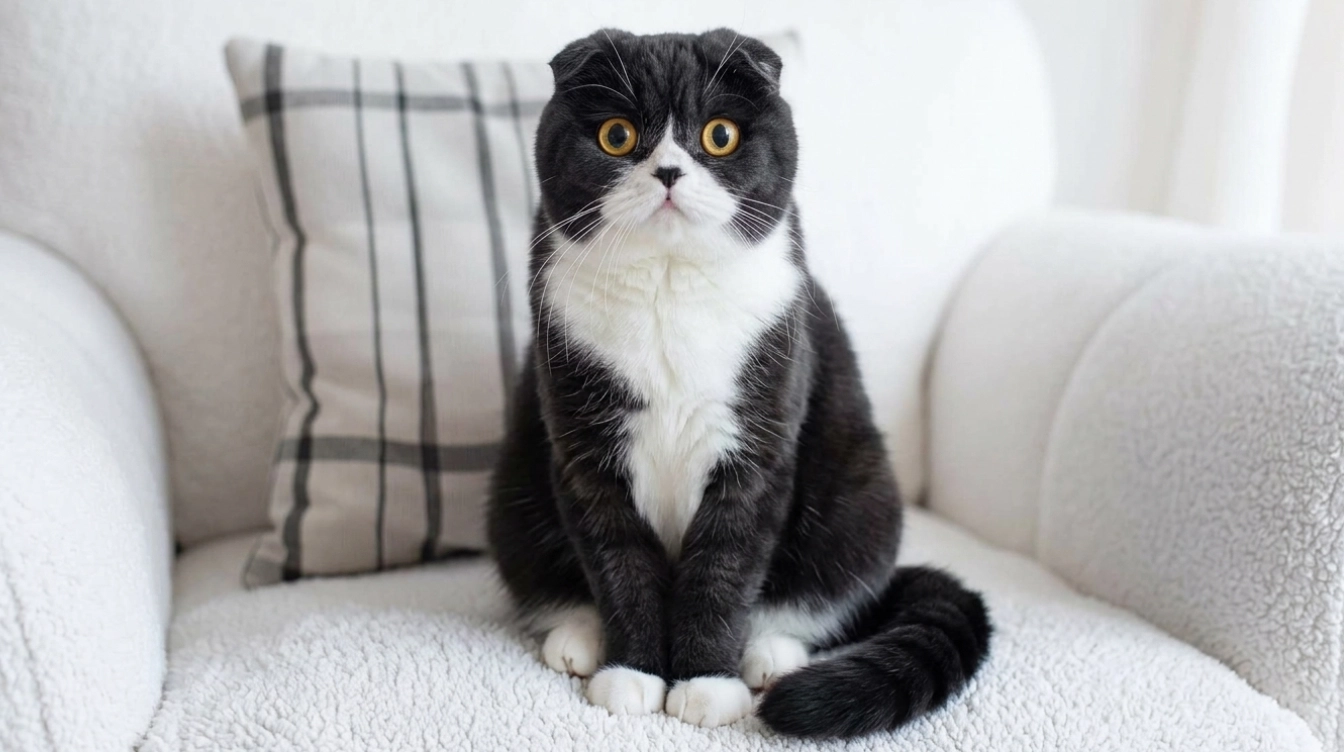
Scottish Folds are known for ears that fold forward and downward, although straight-eared cats can occur in the same breed. Folded ears can also appear in crosses and do not confirm pedigree.
The fold-causing genetic variant is associated with osteochondrodysplasia, a disorder affecting cartilage and bone that the Merck Veterinary Manual describes as generally having a poor long-term outlook. If a folded-ear cat develops stiffness, lameness, reluctance to jump, or a painful tail, arrange veterinary care.
7. Japanese Bobtail
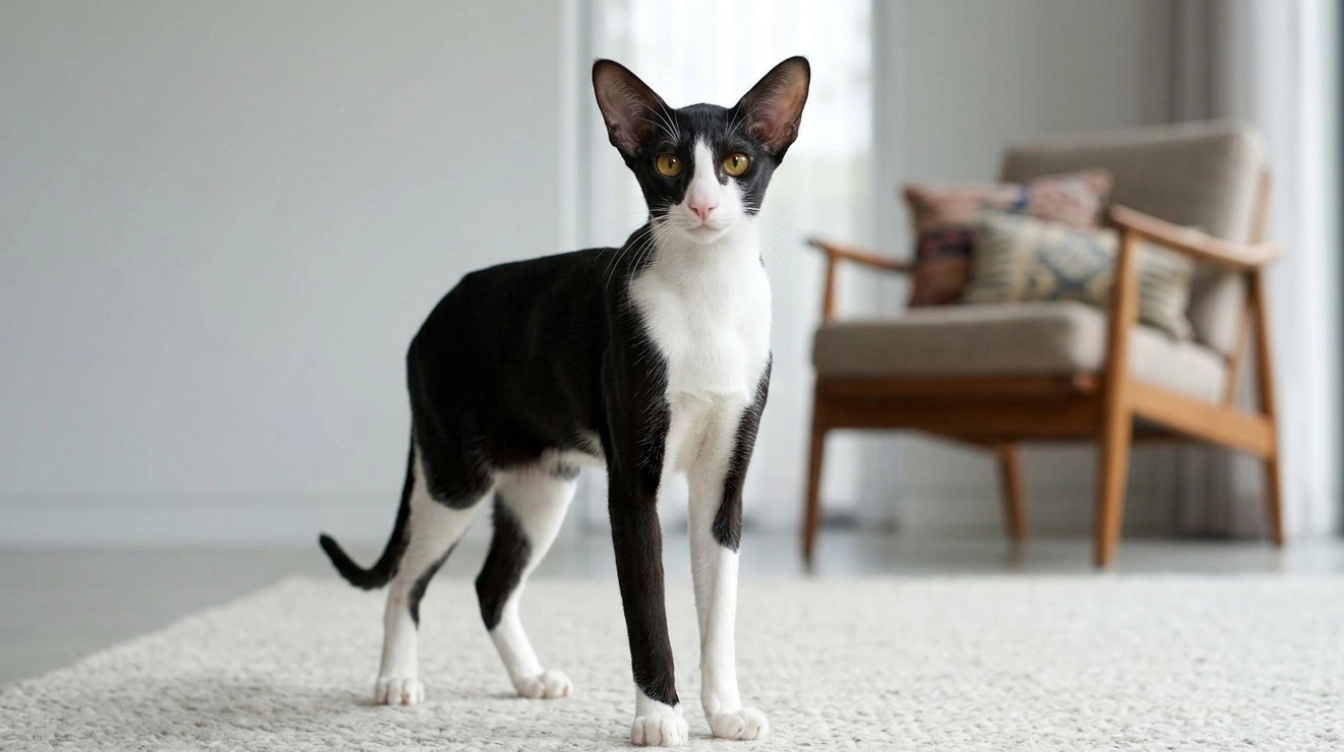
Japanese Bobtails have short, flexible tails that may form curves, angles, or kinks. They usually have long, slender bodies, high cheekbones, and alert ears.
Black-and-white bicolor coats occur in the breed. However, short tails can also occur in non-pedigreed cats, so the tail alone does not confirm ancestry.
These breeds provide useful comparisons, but visual resemblance should remain a clue. Registration documents and pedigree records are needed to establish that a cat belongs to a recognized breed.
Narrowing Down Your Cat’s Background
Physical traits can help you describe your cat and compare possible breeds, but they cannot verify ancestry. Begin with any records supplied by the breeder, shelter, rescue, or previous owner.
- Check the paperwork: Look for registration details, pedigree records, parent information, or the original breeder’s name.
- Describe the coat: Record whether it is short, medium, or long and note the amount and location of white.
- Assess the structure: Compare body size, head shape, ears, tail, and coat texture with official breed standards.
- Use behavior cautiously: Activity and sociability vary between individual cats and should not be treated as proof of breed.
- Treat DNA reports carefully: Commercial tests may report traits or genetic similarities, but they do not replace registration and pedigree records.
If documented ancestry is unavailable, describing your cat as a domestic shorthair, mediumhair, or longhair with tuxedo markings is more accurate than assigning an unsupported breed.
Tuxedo vs. Similar Coat Patterns
Tuxedo is an informal description rather than a standardized registry term. Bicolor is the broader category for coats that contain white and another color, while additional labels describe specific arrangements.
| Pattern | General Description |
|---|---|
| Tuxedo | An informal term for black-and-white markings that resemble formal clothing |
| Bicolor | White combined with another coat color in several possible arrangements |
| Van | A mostly white coat with color concentrated mainly on the head and tail |
| Harlequin | A mostly white coat with separate colored patches |
| Mitted | White concentrated on the paws and sometimes the chin, chest, or belly |
| Cow Pattern | An informal term for larger dark patches scattered across a white coat |
Pattern labels may vary between registries, breeders, and pet owners. Symmetry is not required for a cat to be described informally as tuxedo, and none of these patterns identifies a breed.
Does the Pattern Affect Personality?
Some owners use the word “tuxitude” for a confident, social, or mischievous black-and-white cat. It is an affectionate nickname rather than a recognized behavioral category.
A tuxedo coat is not a dependable predictor of personality. Behavior is influenced by genetics, early handling, socialization, age, health, learning, and the home environment.
Temperament descriptions associated with recognized breeds can provide context when ancestry is documented. They should not be applied to every cat sharing the same coat markings.
Focus on how your cat responds to people, handling, play, unfamiliar surroundings, and other animals. Those observations tell you more about the individual cat than color placement does.
Final Thoughts
When I assess breed connections, I give more weight to pedigree and registration records than to markings. A white chest, dark back, or matching paws describes appearance, but none proves ancestry.
The answer to what breed is a tuxedo cat remains simple: no single breed owns the pattern. Your cat may be a domestic shorthair, domestic longhair, or a pedigreed cat from a breed that accepts black-and-white coats. Without reliable records, physical traits should remain possibilities rather than conclusions.
Gather any adoption papers, breeder information, parent records, or registration documents you have. If the background remains unknown, describe your cat by coat length and pattern and ask your veterinarian to record that description in the medical file.
Frequently Asked Questions
Are Tuxedo Cats Always Black and White?
The term usually refers to a black-and-white bicolor cat whose markings resemble formal attire. People sometimes use it for other dark-and-white combinations, but registries classify colors and white spotting more precisely instead of treating tuxedo as a breed label.
Do Tuxedo Cats Shed More than Other Cats?
Shedding depends on coat length, density, health, season, and grooming rather than tuxedo markings. A shorthaired cat may still shed heavily, while a longhaired cat usually needs more frequent brushing to remove loose fur and prevent tangles.
Do Tuxedo Cats Cost More?
Cost depends on whether the cat comes from a shelter or has a documented pedigree. Tuxedo markings do not establish a separate market value, so compare adoption or breeder fees using the cat’s actual background and available records.