Your puppy is asleep, but their chest is moving so quickly that rest no longer looks restful. I understand why that can feel frightening, especially when you do not know what a normal breathing pattern looks like.
Puppy breathing fast while sleeping can happen during dreaming, after active play, or when your puppy is warm. A brief increase may be normal, but difficult breathing needs immediate attention.
As a veterinarian, I recommend counting breaths during quiet sleep, when your puppy is not twitching, panting, or recovering from exercise. You should also note how much effort each breath takes.
Here is how to measure the rate, recognize respiratory distress, and decide when to call your veterinarian or seek emergency care.
What is Normal Breathing for a Sleeping Puppy?
Your puppy’s breathing rate is useful, but the number is only part of the assessment. I also want you to watch how easily your puppy breathes and how they behave after waking.
A healthy dog’s normal respiratory rate is generally about 10 to 30 breaths per minute. Measure the rate during quiet sleep rather than while your puppy is twitching, panting, or recovering from play.
Normal breathing should look quiet and comfortable. The chest or belly should move without strong effort. Your puppy should not stretch their neck, flare their nostrils, or breathe with an open mouth while resting.
One unusual reading does not provide a diagnosis. Repeat the count when your puppy is settled and contact your veterinarian if the rate remains above their usual pattern.
How to Check Your Puppy’s Breathing Rate at Home

A calm, accurate count gives your veterinarian more useful information than a quick estimate. I recommend checking when your puppy is sleeping soundly in a comfortable room.
- Wait for quiet sleep. Do not count during active dreaming, as twitching paws, moving eyes, small sounds, or uneven breathing can affect the result. Avoid measuring immediately after play, eating, excitement, training, or heat exposure.
- Count each breath. Watch the chest or belly and count one complete rise and fall as one breath. Count for 30 seconds, then multiply the total by two. You can count for 60 seconds if the rhythm is uneven.
- Record what you notice. Write down the rate, time, recent activity, room temperature, and any coughing, panting, weakness, or unusual sounds. A short video may help your veterinarian assess the breathing pattern.
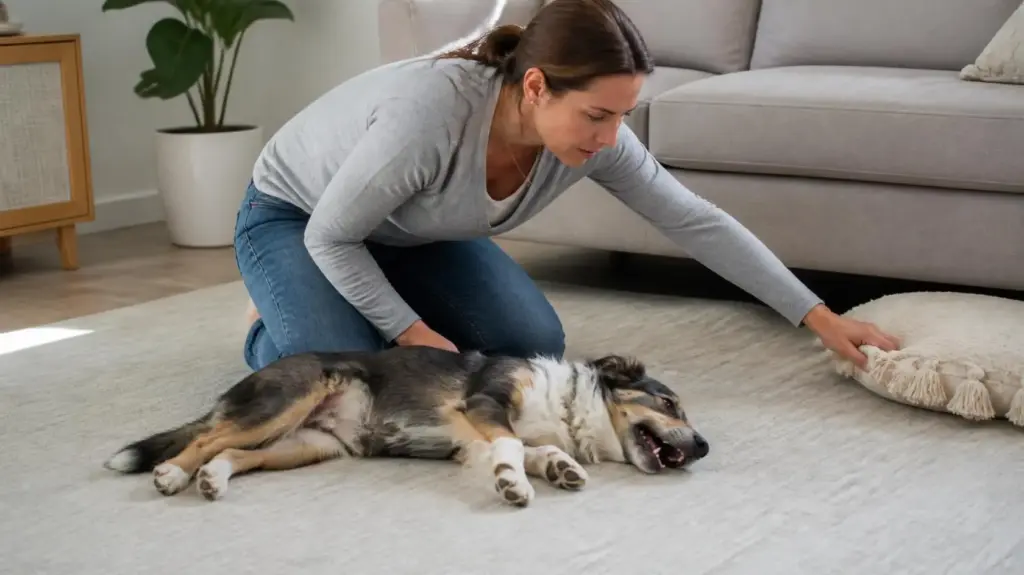
Do not touch or reposition your puppy while counting. Never delay urgent care to make a recording. If breathing requires visible effort or your puppy’s gums turn a bluish color, go to an emergency veterinary hospital.
Why is Your Puppy Breathing Fast While Sleeping?
Brief changes in breathing can occur during dreaming, after activity, or when a puppy feels warm. I recommend checking again during quiet sleep before deciding that the rate is truly elevated.
1. Dreaming During REM Sleep
During a dream, your puppy may twitch, move their eyes beneath closed lids, make small sounds, or breathe unevenly. Wait until these movements stop before measuring a resting respiratory rate.
If breathing becomes calm and effortless after the dream ends, continue observing. Contact your veterinarian if rapid breathing persists during quiet sleep.
2. Recent Play or Excitement
A puppy may fall asleep before their breathing has returned to its resting rate. Play, training, visitors, travel, and excitement can temporarily increase breathing.
Allow time for your puppy to settle before counting. A rate measured immediately after activity does not reflect a true resting rate, and regular, structured playtime throughout the day can help a puppy wind down more predictably before naps.
3. Warmth or Heavy Bedding
A warm room or heavy bedding can lead to panting or rapid breathing. Move your puppy to a comfortably cool area and remove extra covers. If naps often happen in a crate, how warm a crate can get is worth considering alongside the bedding itself.
Rapid breathing with heavy panting, weakness, vomiting, confusion, excessive drooling, or abnormal gums can be a sign of heatstroke. Seek prompt veterinary care if these signs occur.
4. A Hard-to-See Sleeping Position
A curled or belly-down position can make chest movement difficult to see. If you cannot count clearly, wait until your puppy changes position naturally. A properly sized sleeping space can also make it easier to stretch out into a more visible position.
Do not reposition a puppy who appears uncomfortable or is struggling for air. Visible breathing effort matters more than sleeping position.
These explanations apply only when your puppy looks comfortable and returns to effortless breathing. Persistent rapid breathing needs veterinary advice.
When Fast Breathing Needs Veterinary Care
Fast breathing and difficult breathing are not the same. A puppy may breathe quickly during a dream without struggling, but visible effort can signal a medical emergency.
Rapid breathing can occur with pain, fever, overheating, anemia, respiratory disease, heart disease, and other health problems. A home breathing count cannot identify the cause.
Watch for these respiratory distress signs:
- Open-mouth breathing at rest
- Strong belly movement
- An extended head or neck
- Blue or gray gums
- Wheezing or unusual breathing sounds
- Weakness or collapse
If any of these signs appear, go to the nearest emergency veterinary hospital. Call ahead when possible, keep the car comfortably cool, and handle your puppy as little as necessary.
For a high reading without distress, wait until your puppy is sleeping quietly and count again. I recommend calling your veterinarian if repeated quiet-sleep readings remain above 30 breaths per minute or show a consistent increase from your puppy’s usual rate.
Breathing effort, gum color, and behavioral changes can be more urgent than the number alone.
What Pet Owners are Saying

A Reddit thread in r/DogAdvice includes owners describing dogs that twitch, move their paws, and make small sounds while asleep.
Many commenters describe “dream running,” in which dogs move their legs as if chasing something. Some also mention soft barks, facial movements, and brief changes in breathing during sleep.
Other owners say these behaviors seem more noticeable after active days, long walks, or exciting play sessions. Several report that their dogs wake calmly and behave normally afterward.
These accounts reflect personal observations, not medical evidence. They cannot confirm that rapid breathing is caused by dreaming or rule out a health problem. Contact a veterinarian if your puppy’s breathing remains rapid during quiet sleep or requires visible effort.
What to Do When the Rate Seems Too Fast

Start by checking whether your puppy is dreaming, recovering from play, panting, or sleeping in a warm room. Remove heavy covers and wait for quiet sleep before repeating the count.
Look at breathing effort, gum color, energy, appetite, coughing, and unusual sounds. Contact your veterinarian if the rapid rate continues or your puppy seems unwell.
If it is safe, record a short video showing the chest and belly. Note the breathing rate and the duration of the episode. This information may help your veterinarian assess the situation.
Do not wait for another reading if breathing looks difficult. Blue or gray gums, collapse, severe weakness, or an inability to get enough air require emergency veterinary care.
When you are unsure, call your veterinarian or an emergency clinic and describe what you see. Early professional advice is safer than relying on repeated home checks when your puppy appears unwell.
Final Thoughts
Fast breathing during a dream or shortly after play may settle once your puppy reaches quiet sleep. When checking if a puppy is breathing fast while sleeping, I recommend counting for 30 seconds and multiplying by 2.
Repeat the check when your puppy is still and comfortable. Pay attention to effort as well as speed. Open-mouth breathing at rest, strong belly movement, blue or gray gums, weakness, or collapse can signal an emergency.
Call your veterinarian if the rate remains above your puppy’s usual pattern during calm sleep. If breathing looks difficult or your puppy’s gum color changes, go to the nearest emergency veterinary hospital.
Save your veterinarian’s daytime and emergency numbers now so you can act quickly if needed.
Frequently Asked Questions
Is Fast Breathing the Same as Panting?
No. Panting usually involves an open mouth and helps a dog release heat. Fast breathing may occur through the nose with the mouth closed. Either pattern needs veterinary attention when it continues at rest or requires effort.
Should I Wake a Puppy Who is Breathing Quickly?
Let a dreaming puppy sleep if breathing looks effortless and gum color is normal. Count again when twitching stops. If your puppy is hard to wake, weak, or struggling for air, seek emergency veterinary care immediately.
What Gum Color is Normal for a Puppy?
Healthy puppy gums are usually pink and moist, although natural pigmentation can create dark areas. Learn your puppy’s normal color so changes are easier to spot. Pale, blue, or gray gums need urgent veterinary attention.
Are Short-Nosed Puppies at Higher Risk?
Short-nosed puppies can have greater airway resistance and a higher risk of breathing trouble, especially in heat. Noisy or effortful breathing at rest should not be dismissed as a breed trait. Ask your veterinarian for advice.