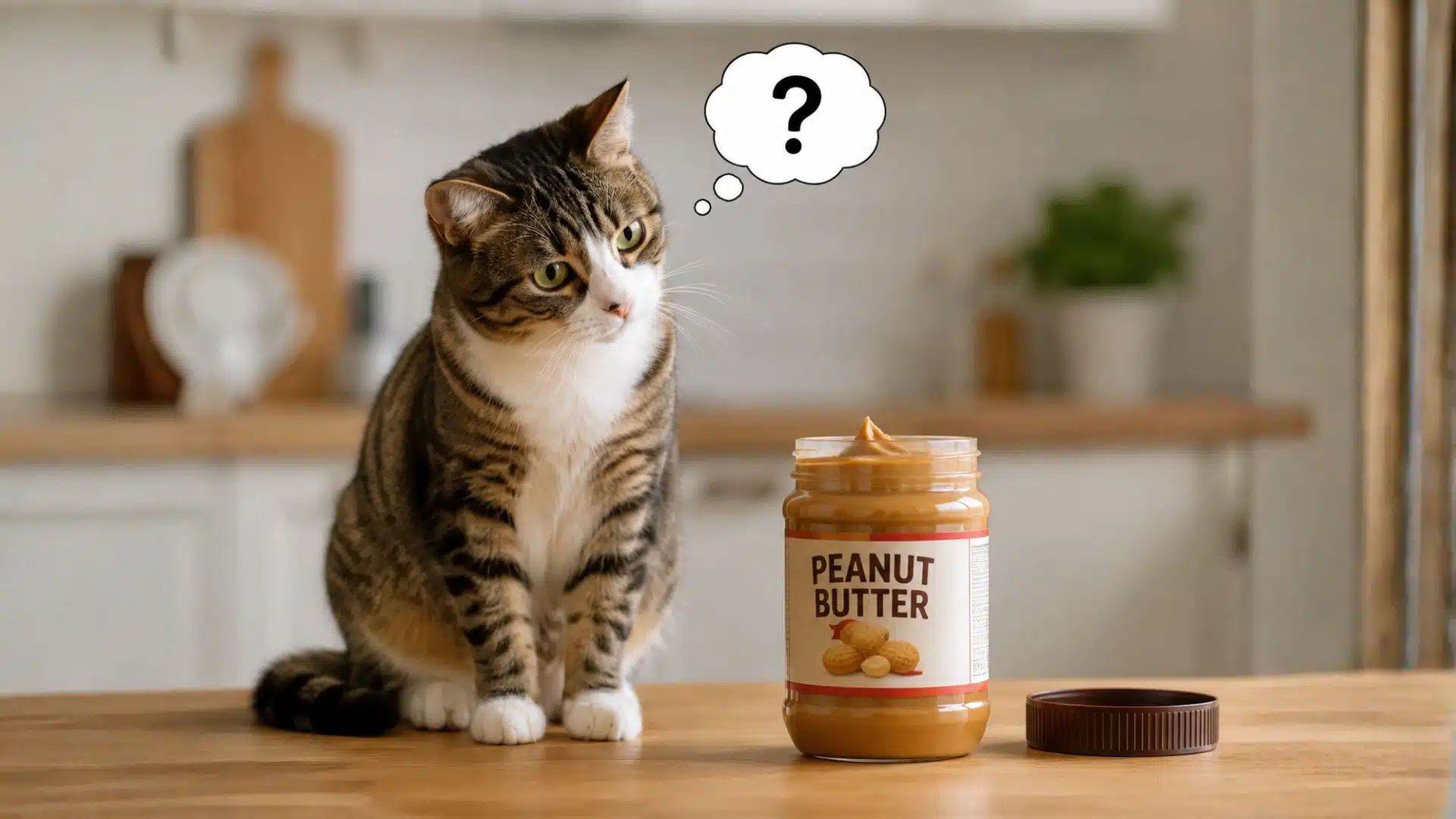
Cats may show interest in peanut butter, but in my experience as a veterinarian, curiosity should never be mistaken for a sign that a food is safe or appropriate.
A small lick of plain peanut butter is unlikely to harm a healthy cat, yet it offers no nutritional benefit and can add unnecessary fat and calories.
The ingredients, portion size, and your cat’s overall health all influence the level of risk. Questions about peanuts raise many of the same concerns.
I’ll also explain which ingredients deserve immediate attention after accidental ingestion and when veterinary care is the safest next step.
Can Cats Have Peanut Butter?
A tiny lick of plain peanut butter is unlikely to harm most healthy cats, but it is not recommended as a regular treat. Peanut butter is rich in fat and calories and does not supply the balanced nutrition cats require.
Products containing chocolate, cocoa, coffee, alcohol, raisins, onion, garlic, or unknown flavoring mixtures should not be given. Sugar-free products also require careful label checking because they may contain xylitol.
Cats with diabetes, obesity, digestive problems, food allergies, kidney disease, or a veterinary prescription diet should not receive peanut butter without approval from their veterinary care team.
The safest option is to skip peanut butter and use a small portion of the cat’s regular food or a feline treat instead.
Which Peanut Butter Ingredients Should Cats Avoid?
Peanut butter recipes vary, so the full ingredient list matters more than the product name. Plain peanuts may be the main ingredient, but sweeteners, flavorings, and coatings can change the risk.
| Ingredient | Why It Is a Concern |
|---|---|
| Chocolate or cocoa | Contains methylxanthines that can cause poisoning in cats |
| Coffee or caffeine | Can affect the nervous system and heart |
| Onion or garlic | Can damage feline red blood cells |
| Raisins | Their effects in cats are uncertain, so avoidance is safest |
| Alcohol | Can cause serious nervous-system and breathing problems |
| Excess salt | Adds unnecessary sodium and may be unsuitable for certain medical conditions |
| Xylitol | Does not appear to affect cats like dogs, but feline evidence is limited |
| Unknown flavorings | May contain ingredients that cannot be assessed from the product name alone |
The American Society for the Prevention of Cruelty to Animals reports that xylitol does not cause the same severe effects in cats that it causes in dogs. Still, avoid intentionally feeding xylitol-containing products and contact a veterinarian after an uncertain exposure.
Possible Risks of Giving Peanut Butter to Cats
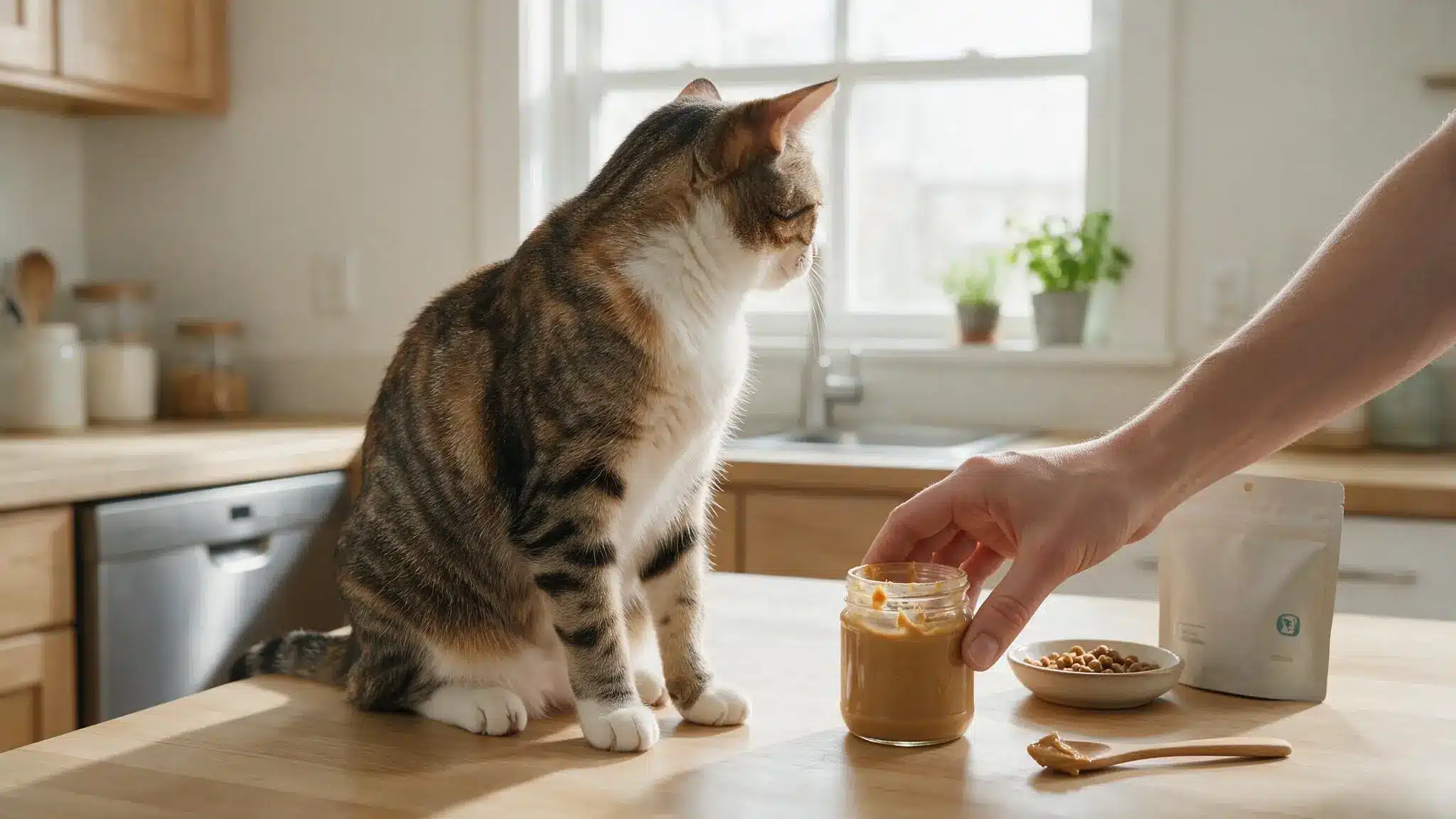
Peanut butter is not an ideal feline treat, even when it contains no known toxic ingredients. Its fat, calories, texture, and unfamiliar ingredients may cause problems for some cats.
1. Digestive Upset
Peanut butter is high in fat and may cause stomach upset in some cats. Possible signs include vomiting, diarrhea, or changes in appetite after eating an unfamiliar food, and bringing up food after meals can stem from several everyday causes beyond treats. Stop offering it and contact a veterinarian if symptoms are severe, persist, or recur.
2. Excess Calories
Peanut butter contains concentrated calories in a small serving. Giving it often can add unnecessary calories to a cat’s diet and may contribute to weight concerns, and owners managing a cat’s gradual weight gain often look closely at treat portions first.
3. Difficulty Swallowing
The thick, sticky texture of peanut butter can make swallowing difficult for some cats, and residue left behind can cling to the teeth, similar to the buildup addressed during routine brushing. This is especially a concern if a large amount is offered.
4. Adverse Food Reactions
Peanut allergy is not commonly reported in cats, but an adverse reaction to any new food is possible. Stop feeding the product and contact a veterinarian if vomiting, facial swelling, itching, hives, drooling, or breathing difficulty develops.
Because peanut butter offers no necessary nutritional benefit, feline treats or part of the cat’s usual food are more practical rewards.
How Much Peanut Butter Can a Cat Have?
There is no scientifically established peanut butter serving size that is safe for every cat. Body weight, calorie needs, medical conditions, regular food, and the product’s ingredients all affect what may be tolerated.
If a veterinarian approves peanut butter for a healthy cat, offer only a small lick and use it rarely. Do not give a spoonful or place a thick lump inside the cat’s mouth.
According to VCA Animal Hospitals, treats and snacks combined should provide no more than 10% of a cat’s daily calories. The remaining calories should come from complete and balanced cat food.
Cats following a prescription, elimination, urinary, kidney, diabetes, or weight-control diet may need to avoid all unapproved treats. Ask the veterinary care team before adding any human food.
What Should You Do If a Cat Eats Peanut Butter?
The correct response depends on the product, amount eaten, symptoms, and whether any packaging was swallowed. Check the container immediately and keep it available in case veterinary advice is needed.
- Read the ingredients: Look for chocolate, cocoa, coffee, alcohol, raisins, onion, garlic, xylitol, and unfamiliar flavorings.
- Estimate the amount: A small lick of plain peanut butter is less concerning than a large or unknown quantity.
- Check for missing packaging: Contact a veterinarian if the cat may have swallowed foil, plastic, a wrapper, a utensil, peanut shells, or another object.
- Watch for symptoms: Monitor for vomiting, diarrhea, drooling, reduced appetite, unusual tiredness, facial swelling, gagging, or behavior changes.
- Seek professional advice: Contact a veterinarian or ASPCA Poison Control after ingestion of a concerning ingredient, a large amount, or any packaging.
Difficulty breathing, repeated gagging, collapse, seizures, blue gums, or facial swelling require emergency veterinary care. Do not induce vomiting or give home remedies unless a veterinary professional instructs you to do so.
Can Cats Eat Peanuts?
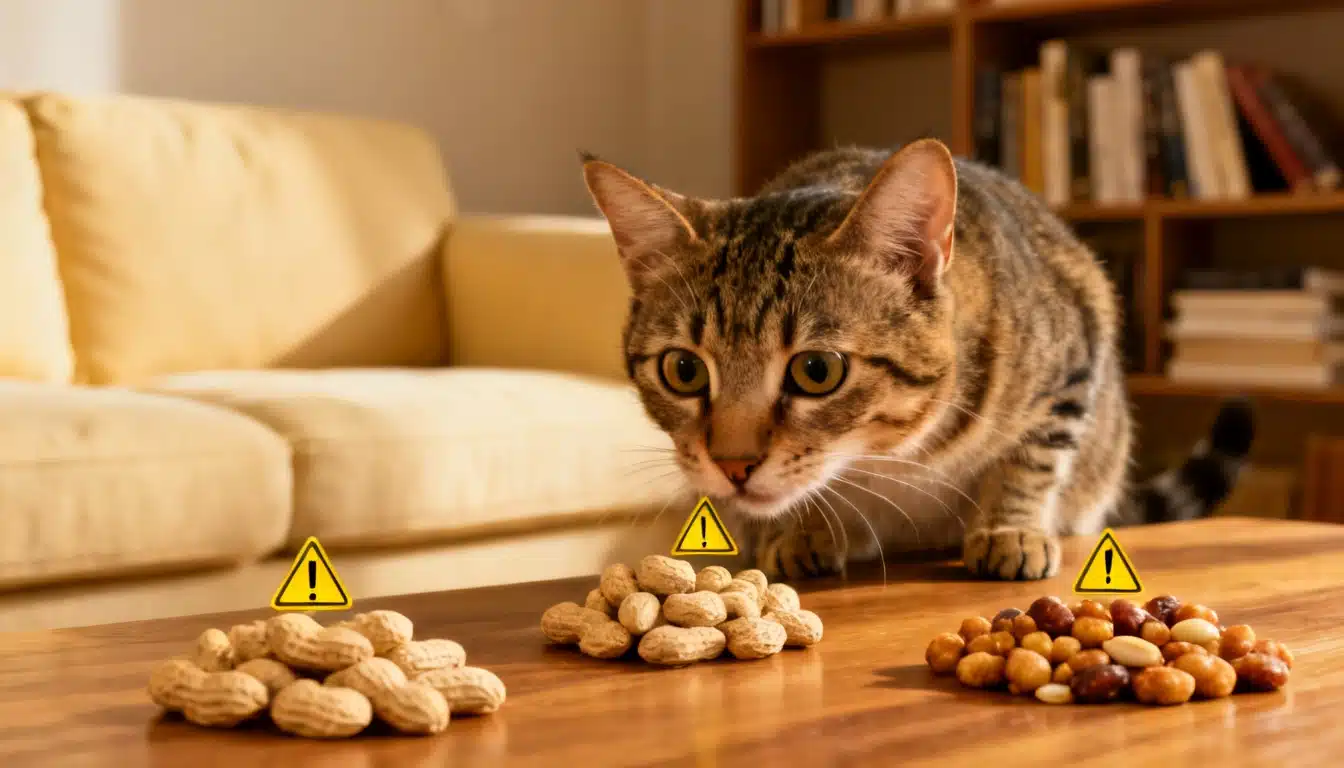
A small piece of a fresh, plain, unsalted, shelled peanut is unlikely to poison a healthy cat. However, peanuts are calorie-dense and do not provide nutrients that need to be added to complete cat food.
Do not offer whole peanuts or shells because they may be difficult to chew, swallow, or digest. Salted, spicy, honey-roasted, chocolate-coated, candy-coated, or flavored peanuts may contain unsuitable or toxic ingredients.
Cats with obesity, digestive disease, food sensitivities, or a prescription diet should not receive peanuts without veterinary approval.
Although the answer to “Can cats eat peanuts?” is a qualified yes for a tiny plain piece, feline treats or part of the cat’s normal food remain safer and more practical choices.
Better Treat Options for Cats
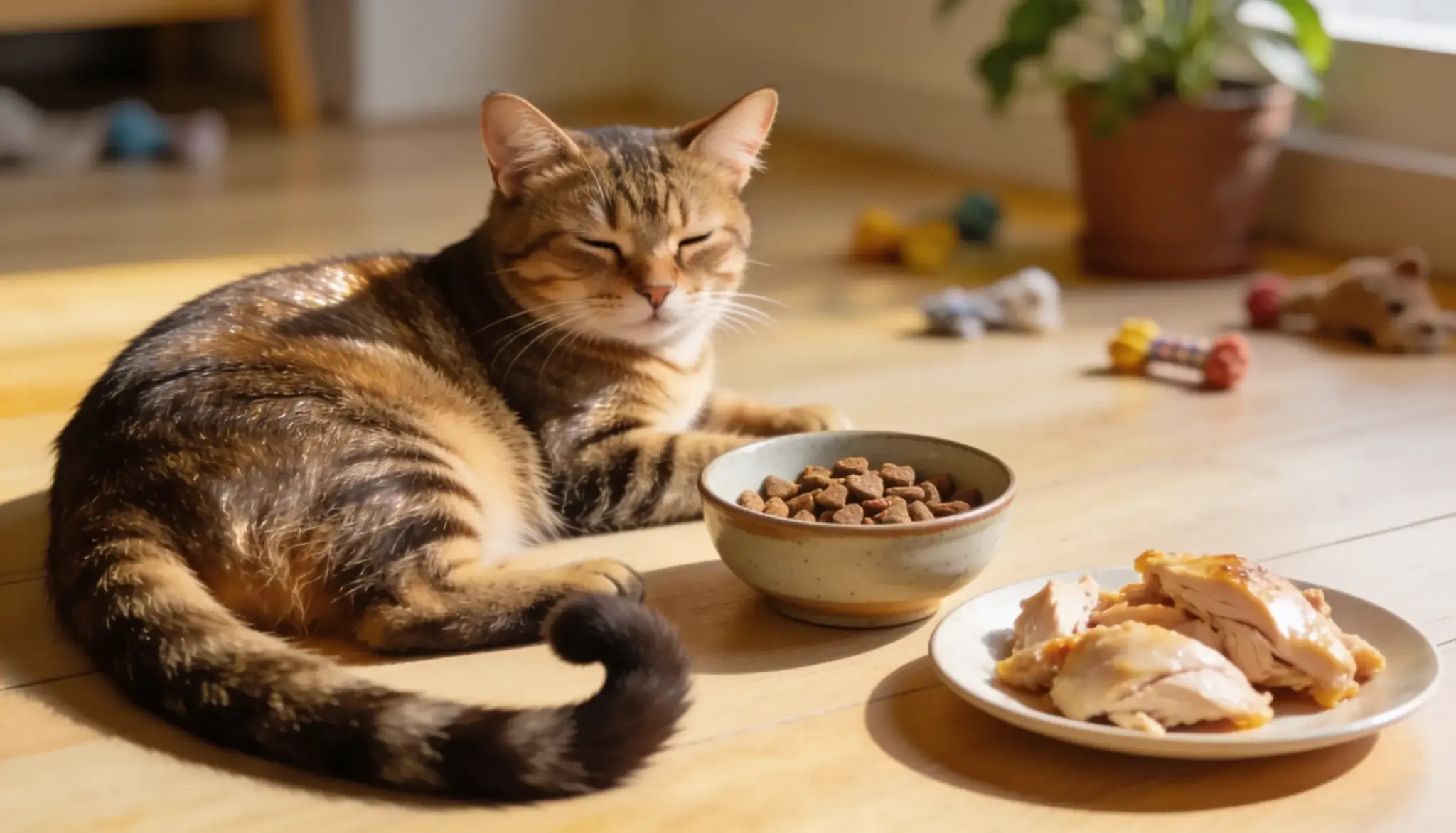
Peanut butter is easy to replace because cats do not need it as part of a healthy diet. The best alternative depends on your cat’s health, daily calorie needs, and any medical conditions that require a special diet.
| Alternative | Why It Works | Important Notes |
|---|---|---|
| Cat-specific treats | Formulated for cats with appropriate ingredients and portion sizes. | Choose treats suitable for your cat’s age and health, and include them in the daily calorie allowance. |
| Regular cat food | Familiar and nutritionally balanced, making it a simple reward. | Offer a few pieces of kibble or a small spoonful of wet food, especially for cats on controlled or prescription diets. |
| Plain cooked chicken or turkey | High in protein and appealing to many cats. | Serve fully cooked, boneless meat without skin, salt, sauces, onion, garlic, or other seasonings. Avoid raw meat because it may carry harmful bacteria or parasites. |
Cats with diabetes, kidney disease, food allergies, obesity, digestive disorders, or prescription diets should only receive treats approved by their veterinarian.
What Real Cat Owners Say About Peanut Butter
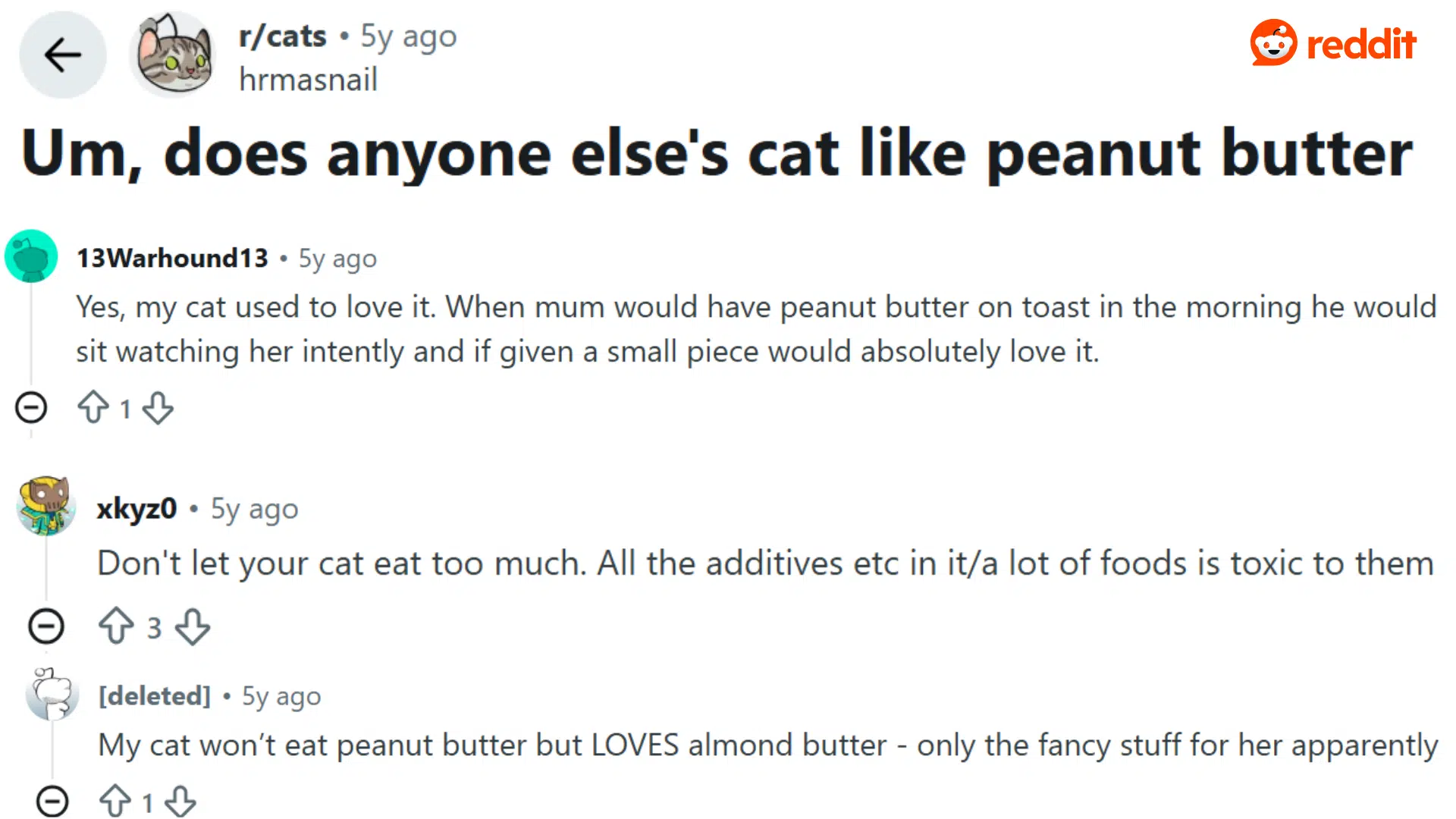
Experiences shared by cat owners show that curiosity about peanut butter is fairly common, but regular feeding is not.
In one Reddit discussion, several owners said their cats were eager to sniff or lick peanut butter, while others showed no interest at all.
A few mentioned using a tiny amount only to hide medication, but many agreed they would not offer it as a routine treat because it provides little nutritional value and is high in fat and calories.
These experiences highlight an important point: a cat’s interest in a food does not mean it is a healthy choice.
Before adding any human food to your cat’s diet, it’s worth considering whether it offers a real nutritional benefit or if a cat-specific treat would be the safer option.
Final Thoughts
When considering can cats have peanut butter, the safest answer is to avoid making it a regular treat.
A tiny lick of plain peanut butter is unlikely to poison most healthy cats, but the food adds fat and calories without providing balanced feline nutrition. Chocolate, cocoa, coffee, alcohol, onion, garlic, and unknown flavorings can make certain products unsafe.
The answer to can cats eat peanuts is similar. A tiny piece of a plain, unsalted, shelled peanut may be tolerated, but whole, coated, salted, or flavored peanuts should be avoided.
Use feline treats or part of your cat’s usual food instead. Check the product label and contact your veterinarian if an accidental ingestion causes symptoms.
Frequently Asked Questions
Can It Be Used to Hide Medicine?
Only with veterinary approval. Peanut butter’s sticky texture may make some tablets harder to swallow, and certain medicines have food restrictions. A feline pill pocket or an approved portion of wet food is usually more practical.
Are Cookies or Flavored Products Safe?
No. Cookies and flavored products may contain chocolate, cocoa, excess sugar, salt, dairy, or other unsuitable ingredients. They also provide unnecessary calories and should not be offered when plain feline treats are available.
What Should I Do If My Cat is Choking?
Seek emergency veterinary care for open-mouth breathing, repeated gagging, pawing at the mouth, blue gums, collapse, or severe distress. Do not blindly place fingers in the mouth because the object may move deeper.
Can Kittens Have It?
Peanut butter is not recommended for kittens. Young cats need complete food formulated for growth, and calorie-dense human treats can replace essential nutrition. The sticky texture may also be harder for a small kitten to swallow.