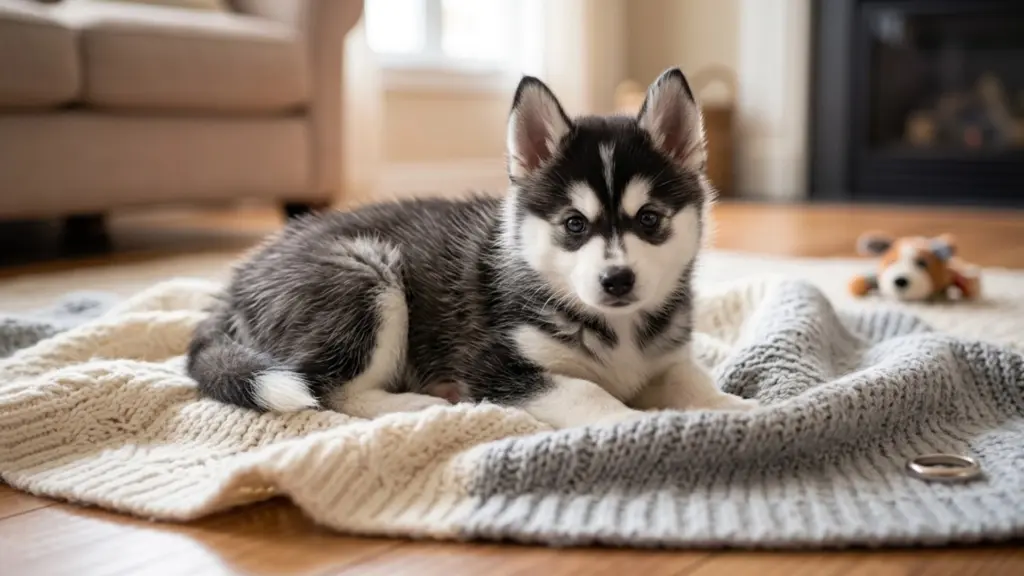
A mini husky often catches attention because it looks like a smaller version of the Siberian Husky, but that name can be confusing. It does not identify one official breed, and dogs sold under the label may have very different backgrounds.
Understanding what people mean by a mini husky breed can help you avoid misleading advertisements and choose a dog whose needs fit your home.
The term commonly refers to an Alaskan Klee Kai, though it may also describe a Pomsky, a naturally small Siberian Husky, or another Husky-like mix.
The differences affect adult size, temperament, coat, health history, training, and daily care. Knowing which dog sits behind the nickname matters far more than its resemblance to a Siberian Husky.
What is a Mini Husky Breed?
A “mini husky” is an informal label rather than one officially recognized breed. Sellers may use it for several smaller dogs with pointed ears, northern-type coats, facial markings, and other Husky-like features.
The name most often refers to an Alaskan Klee Kai, but it may also describe a Pomsky, a naturally small Siberian Husky, or another mix. These dogs can differ greatly in adult size, temperament, coat, and health background.
The Alaskan Klee Kai is an established companion breed fully recognized by the United Kennel Club. It entered the American Kennel Club Miscellaneous Class in June 2025 but has not yet received full American Kennel Club recognition.
A “miniature Siberian Husky” has no separate official standard. Before committing to a puppy, ask for the registered breed name, parent information, expected adult size, and health-screening results. Those records tell you far more than the wording in an advertisement.
Mini Husky Appearance and Temperament
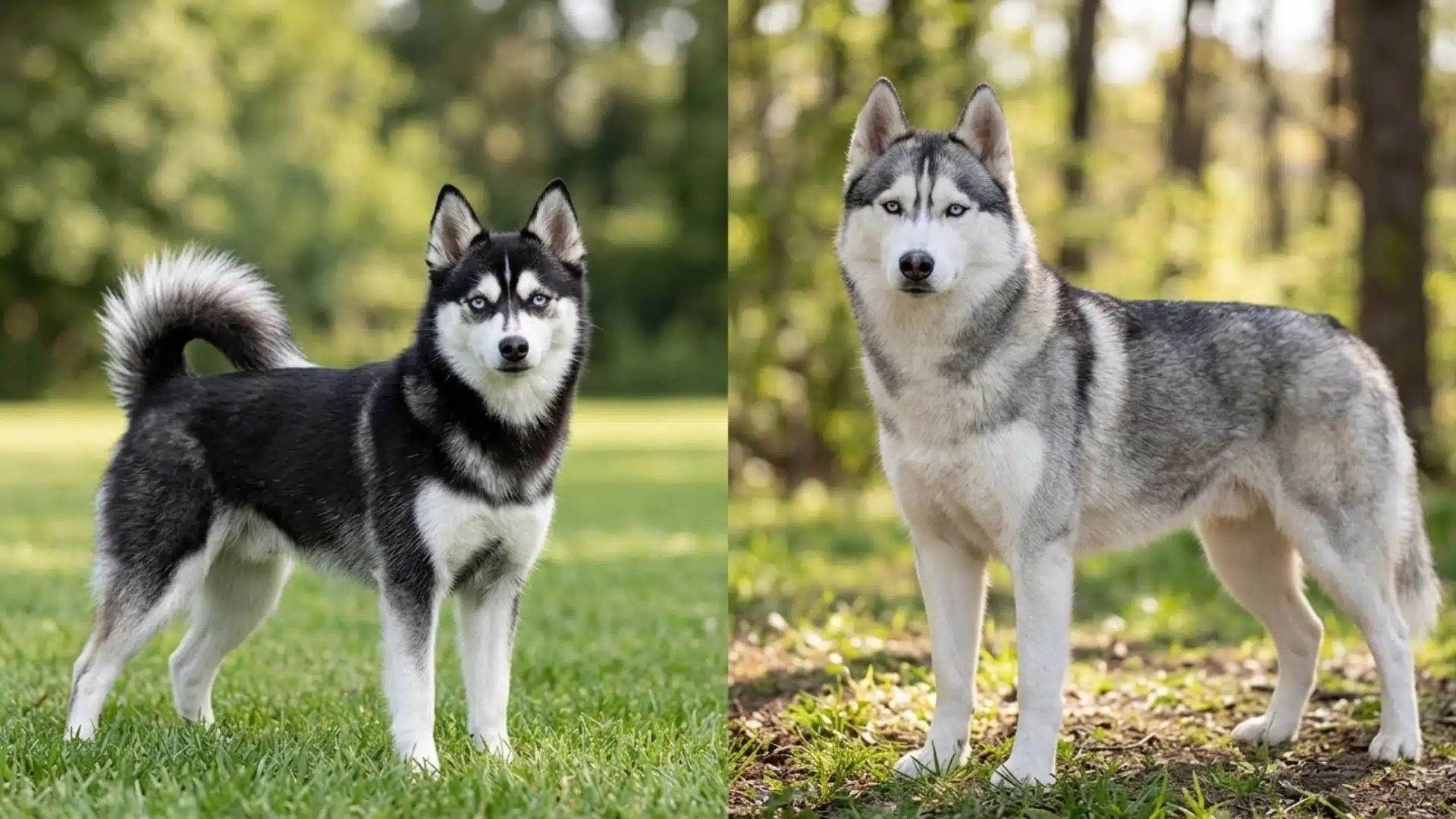
A dog sold as a mini husky may be an Alaskan Klee Kai, Pomsky, small Siberian Husky, or another mix. Its breed and parentage affect its adult size, coat, markings, and behavior. The sections below describe the Alaskan Klee Kai while noting where Husky-like mixes may differ.
1. Size and Weight
The Alaskan Klee Kai is available in three size varieties based on height. Weight should remain proportionate to the dog’s height, bone structure, and overall body condition.
- Toy: Up to 13 inches tall
- Miniature: Over 13 to 15 inches tall
- Standard: Over 15 to 17 inches tall
For comparison, Siberian Huskies are much larger, with females typically standing 20 to 22 inches and weighing 35 to 50 pounds, while males usually measure 21 to 23.5 inches and weigh 45 to 60 pounds.
A breeder can estimate a puppy’s adult size by looking at the parents and growth pattern, but no responsible seller should promise one exact adult weight. Whatever the adult size turns out to be, matching gear to your dog’s measurements becomes easier once you know it.
2. Coat and Physical Features
The Alaskan Klee Kai has a distinctive appearance that reflects its northern breed background. Its physical traits include a thick double coat, upright triangular ears, almond-shaped eyes, a facial mask, and a tail that is usually carried in a loose curl over the back.
Common coat colors include:
- Black and white
- Gray and white
- Red and white
The breed’s undercoat sheds throughout the year, with heavier shedding during seasonal coat changes. Regular brushing helps manage loose hair and keeps the coat in good condition.
Mixed breeds such as Pomskies may inherit different coat textures, colors, markings, and tail styles. Appearance can provide clues about ancestry, but parent information and breeder records offer a more reliable understanding of a dog’s background.
Regardless of exact coat type, choosing the right grooming tool makes shedding season easier to manage.
3. Temperament and Social Behavior
The Alaskan Klee Kai is an intelligent and alert breed that often enjoys learning, problem-solving activities, and spending time with its family. Their personality can make them engaging companions, but they need regular physical and mental activity to stay content.
Common temperament traits include:
- Intelligent and quick to learn
- Alert and observant
- Closely bonded with family members
- Sometimes reserved with unfamiliar people
- Often vocal and expressive
Without enough activity or attention, some Alaskan Klee Kai may develop behaviors such as barking, chewing, digging, or excessive vocalization, and giving them structured play and puzzle activities can help channel that energy in a better direction.
Short reward-based training sessions usually work better than repetitive drills or harsh corrections.
Early socialization and calm introductions can help them become more comfortable around new people, animals, sounds, and environments. Since mixed dogs can vary widely, meeting the individual dog and learning about the parents can provide a clearer idea of expected behavior.
Mini Husky Care Requirements
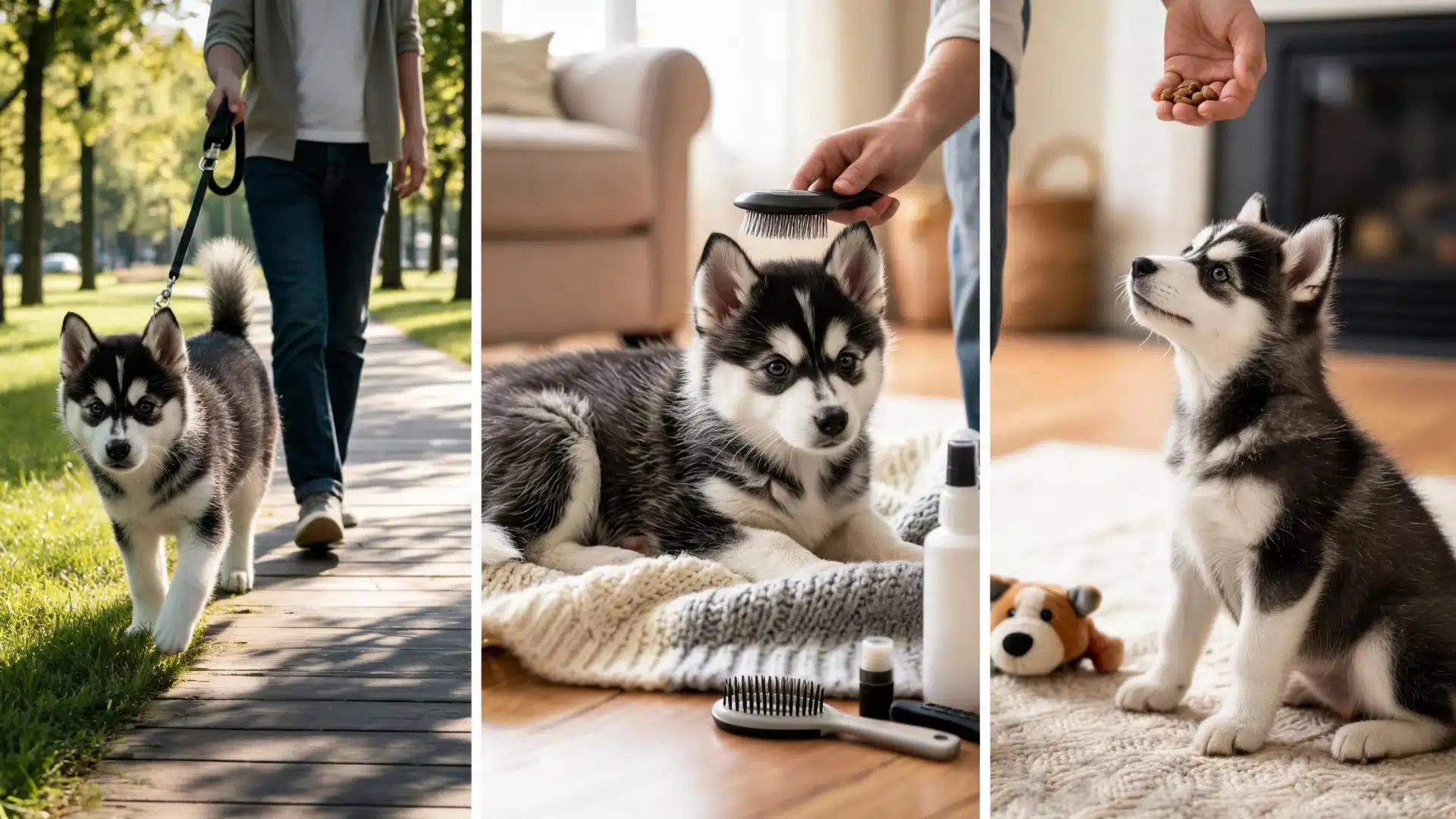
Daily care depends on the dog’s breed, health, age, and energy level. Most small Husky-like dogs require regular activity, coat maintenance, and training despite their smaller size.
- Exercise and Mental Activity: Provide daily walks, play, scent games, food puzzles, and short training sessions. Avoid repetitive distance running with growing puppies, and adjust adult exercise according to fitness, joint health, weather, and veterinary advice.
- Coat and Routine Grooming: Brush regularly and more often during seasonal shedding. Bathe with dog-safe shampoo, dry the undercoat fully, and avoid shaving unless medically necessary. Maintain the nails and teeth while checking the ears, skin, paws, and coat for changes.
- Training and Socialization: Practice name response, recall, leash walking, handling, and calm settling. Introduce people, animals, sounds, surfaces, travel, grooming, and veterinary handling gradually without forcing interaction.
- Safety and Supervision: Use secure fencing and dependable leash control because some small Husky-type dogs may chase moving animals. Provide safe activities when the dog is left at home to reduce boredom and unwanted behavior.
A smaller dog may be easier to carry, but it still needs daily attention and a reliable routine. Consider the complete care commitment before deciding whether this type of dog suits your household.
Mini Husky Health and Lifespan
Health risks depend on the dog behind the label. An Alaskan Klee Kai, Pomsky, and small Husky mix do not share one predictable medical background, so parent information and test results matter.
The national breed club recommends thyroid, patella, eye, cardiac, and Factor VII testing for Alaskan Klee Kai used in breeding. Factor VII deficiency affects normal blood clotting, but DNA screening allows breeders to identify clear, carrier, and affected dogs before planning a litter.
Published lifespan estimates for the Alaskan Klee Kai commonly fall around 13 to 16 years. Genetics, body condition, dental care, preventive treatment, daily activity, and access to veterinary care affect each dog differently.
Ask to see the parents’ actual screening results rather than accepting a statement that they were “vet checked.” Registration confirms identity and ancestry, but it does not replace health testing.
Alaskan Klee Kai vs. Siberian Husky
The Alaskan Klee Kai and Siberian Husky share northern-type features, but they are separate breeds developed for different purposes.
Their size, social tendencies, registry status, and exercise demands should be considered before choosing between them. The table shows the practical differences most likely to affect daily ownership.
| Feature | Alaskan Klee Kai | Siberian Husky |
| Height | Up to 17 inches | 20 to 23.5 inches |
| Weight | Proportionate to size, often about 6 to 25 pounds | 35 to 60 pounds |
| Original purpose | Companion breed | Sled and working breed |
| Stranger response | Often reserved | Commonly friendly and outgoing |
| Activity level | Active and alert | Highly active with working stamina |
| Coat | Double coat with seasonal shedding | Double coat with seasonal shedding |
| U.S. recognition | UKC recognized; AKC Miscellaneous Class | Fully AKC recognized |
A smaller Alaskan Klee Kai may be easier to handle physically, but it still needs daily activity, training, coat care, and secure outdoor management. Choose according to temperament and routine rather than size alone.
Is a Mini Husky Right for You?
A smaller Husky-like dog may fit your home, but appearance should not make the decision for you. The dog’s actual breed, energy level, social behavior, coat care, and training needs matter far more.
This type of companion may suit you if you can provide daily activity, short training sessions, regular brushing, and secure outdoor handling. An Alaskan Klee Kai may be reserved with unfamiliar people, so patient socialization also matters.
Think carefully if your schedule leaves a dog alone for long periods, you prefer very low grooming needs, or you want reliable off-leash freedom. Ask the breeder or rescue about the individual dog rather than assuming every small Husky-like dog behaves the same way.
Choosing by daily needs gives you a better chance of finding a dog that still fits your household after the novelty of its appearance wears off.
Real Owner Experiences with Alaskan Klee Kai
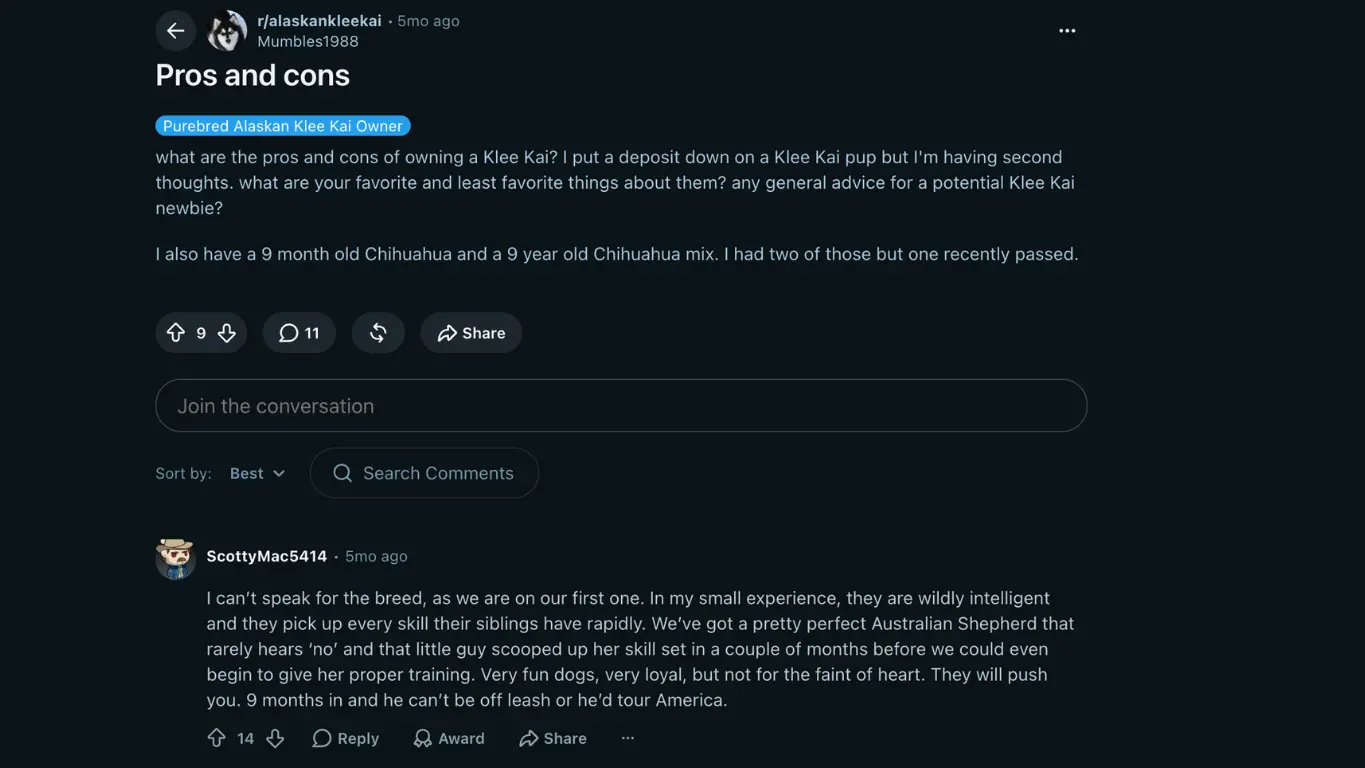
Owner discussions can show what daily life may feel like, but they cannot predict how every dog will behave. Temperament, upbringing, health, training, and household routine still shape the individual dog.
In one Reddit discussion, Alaskan Klee Kai owners described close family bonds, heavy shedding, vocal behavior, prey drive, and difficulty being left alone.
Some participants also said regular activity and mental work helped reduce destructive behavior.
These are personal accounts rather than breed-wide proof. Use them to form questions about shedding, time alone, secure fencing, other pets, and training when speaking with a breeder, rescue, or current owner.
Final Thoughts
The mini husky breed is an informal label, so the dog behind the name matters more than the advertisement.
An Alaskan Klee Kai is an established breed with a written standard, while a Pomsky is a mixed dog and a miniature Siberian Husky has no recognized standard.
Before committing, confirm the dog’s actual ancestry, expected adult size, registration, and parental health results. A smaller body does not remove the need for exercise, training, coat care, secure handling, and regular veterinary visits.
Choose based on temperament and daily needs rather than appearance alone. If the breed fits your routine, speak with a responsible breeder or rescue and review the records before bringing your dog home.
Frequently Asked Questions
Can an Alaskan Klee Kai Live with Cats?
An Alaskan Klee Kai can live safely with cats after careful introductions, but its prey drive varies by individual. Supervise early interactions, provide escape spaces for the cat, and do not assume every Alaskan Klee Kai will be comfortable around smaller animals.
Does an Alaskan Klee Kai Need a Fenced Yard?
A secure fence is strongly recommended because an Alaskan Klee Kai can be quick, alert, and willing to chase. Check for gaps and digging points, and keep the Alaskan Klee Kai on a leash in unfenced areas, even with reliable recall training.
Can an Alaskan Klee Kai Compete in Dog Sports?
An Alaskan Klee Kai can participate in activities such as agility, obedience, rally, tracking, and scent work when eligible under the organizer’s rules. Choose activities that match the Alaskan Klee Kai’s age, health, confidence, and physical condition.
Can an Alaskan Klee Kai Live in a Warm Climate?
An Alaskan Klee Kai can live in warmer climates with proper management, but its double coat and activity level require extra care during hot weather. Exercise the Alaskan Klee Kai during cooler hours, provide plenty of water and shade, and stop activity if it shows signs of overheating, such as heavy panting or weakness.