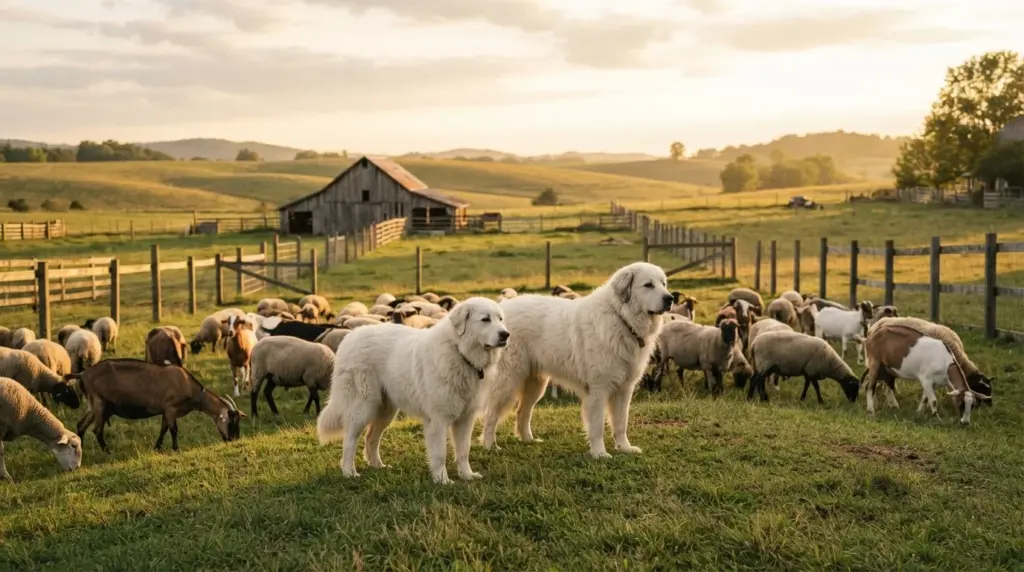
Do you own sheep, goats, or chickens and worry about predators at night? Picking the right guard dog takes more than choosing the biggest breed you can find.
The best livestock guardian dog breeds match your land, fencing, weather, and the predators near your farm.
The Spruce Pets describes livestock guardian breeds as large, loyal dogs bred to protect sheep, cattle, and other animals from predators. These breeds tend to be protective, steady, brave, and territorial by nature.
Ahead, you’ll get a walk-through of livestock guardian dog breeds, with best-fit notes, a quick farm-need match table, real owner notes from Reddit, and a final recommendation guide. By the end, you’ll know exactly which breed belongs on your homestead.
Traits That Define a Guardian Dog
Not every big, protective dog qualifies as a true livestock guardian. Here’s what actually makes a dog fit the role.
- Bonds closely with the animals it protects, not only with people.
- Uses its large size to scare off predators before a fight starts.
- Patrols and makes decisions without constant human direction.
- Handles outdoor nights with a thick, weather-ready coat.
- Protects its animals and territory by barking, patrolling, and being cautious around strangers.
These traits are also what separate guardian breeds from herding dogs like Border Collies. Herders move livestock; guardians bond with and defend it. Family guard dogs work differently again, protecting the home and its people rather than a flock.
Livestock Guardian Dog Breeds to Know
Here’s a closer look at livestock guardian dog breeds farms and homesteads often use for protection. Each breed has different strengths, so use these notes to match the right dog with your animals, land, and predator risk.
1. Great Pyrenees
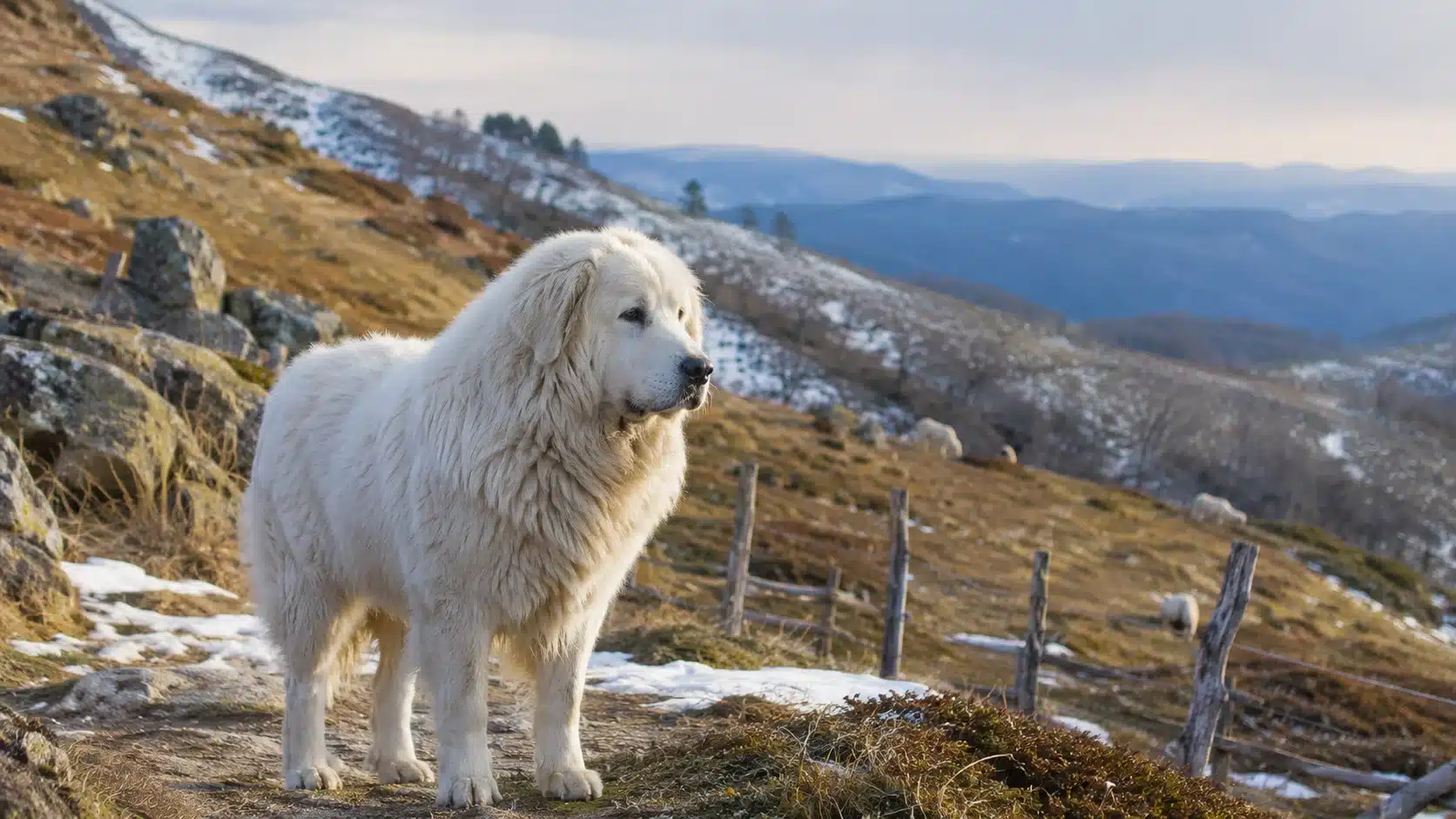
The Great Pyrenees, often called the Pyr, is well-suited to sheep, goats, small homesteads, and cooler climates. Named after the Pyrenees Mountains, this AKC Working Group breed once guarded sheep against wolves and is now valued as both a family dog and a livestock guardian.
- Size: 25 to 32 inches tall
- Weight: Males weigh 100 to 150 pounds, and females weigh 85 to 110 pounds.
- Temperament: Gentle, affectionate, patient, confident, strong-willed, and fearless.
- Life span: 10 to 12 years.
Farm note: Barking, patrolling, and roaming are common, so secure fencing matters.
2. Anatolian Shepherd
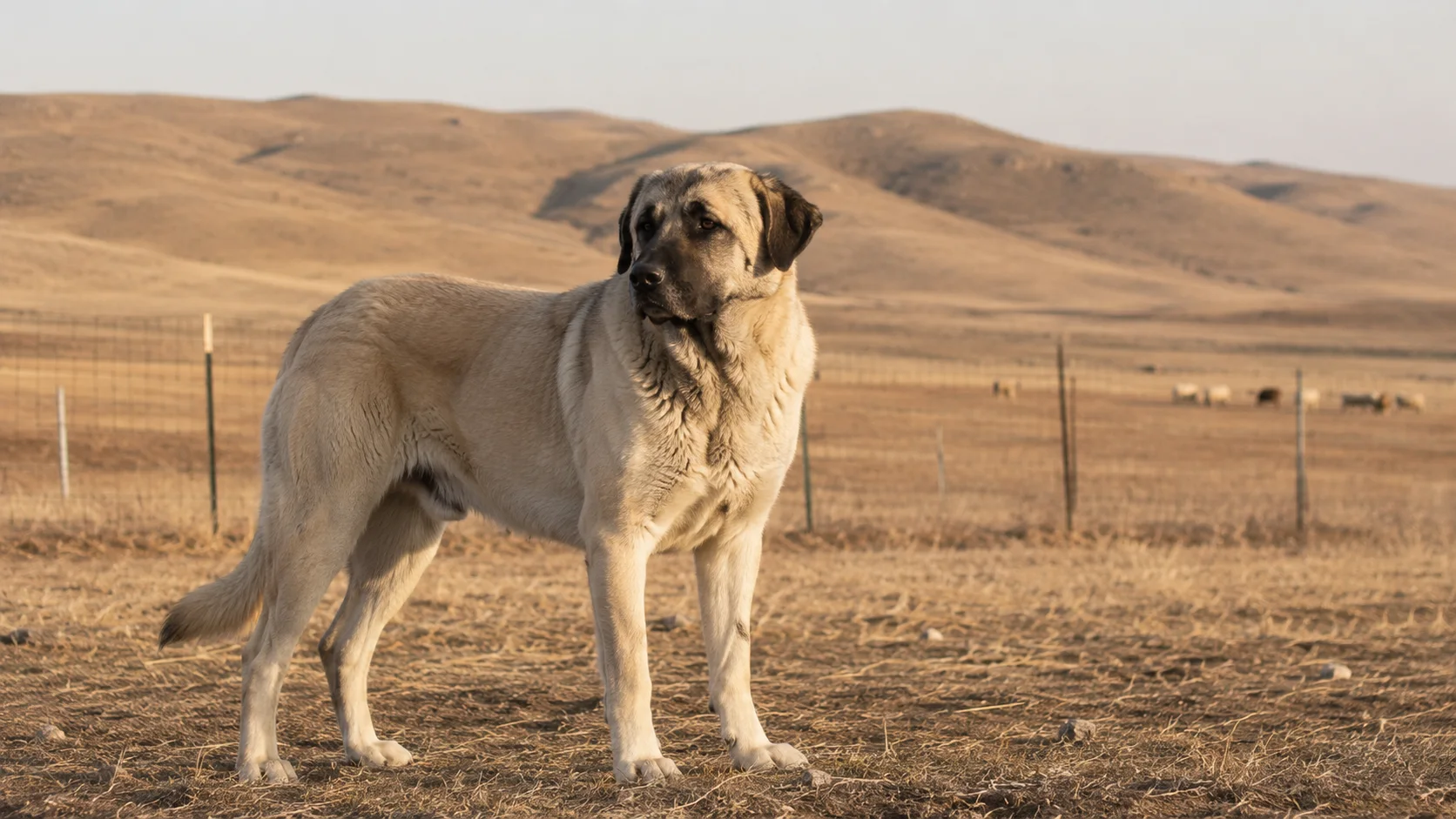
The Anatolian Shepherd suits sheep, goats, large acreage, and farms with higher predator pressure. This Turkish guardian was bred for rough land, where it had to protect livestock with little human direction.
It is serious, watchful, and better suited to owners who understand how to work with independent dogs. This breed does best when it has clear boundaries and enough space to work.
- Size: 25 to 29 inches tall
- Weight: Males can weigh up to 150 pounds and females up to 120 pounds.
- Temperament: Calm, loyal, territorial, independent, and reserved with strangers.
- Life span: 11 to 13 years.
Farm note: This breed needs space, early socialization, and a confident handler.
3. Kuvasz
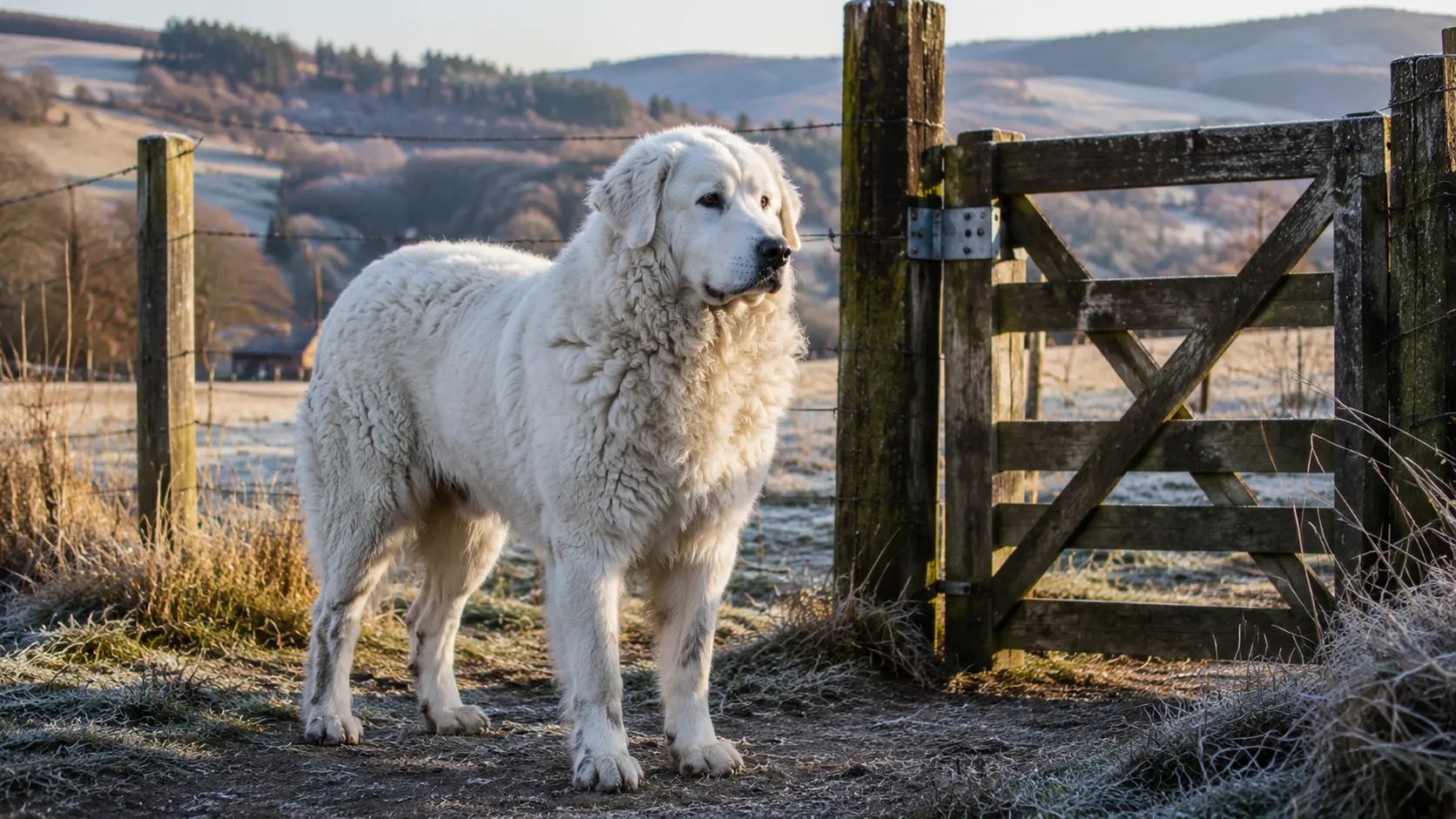
The Kuvasz works well with sheep and goats, in rural homes, and in cooler regions. This Hungarian white guardian has a rich history and is known for its strong loyalty in protecting both livestock and property.
It is brave without being overly busy, which can make it useful on farms that need a steady watchdog. Early handling helps shape its protective nature in the right direction.
- Size: 26 to 30 inches tall
- Weight: Males weigh 100 to 115 pounds, and females weigh 70 to 90 pounds.
- Temperament: Courageous, loyal, intelligent, independent, and protective.
- Life span: 10 to 12 years.
Farm note: Early socialization helps manage stranger wariness.
4. Tibetan Mastiff
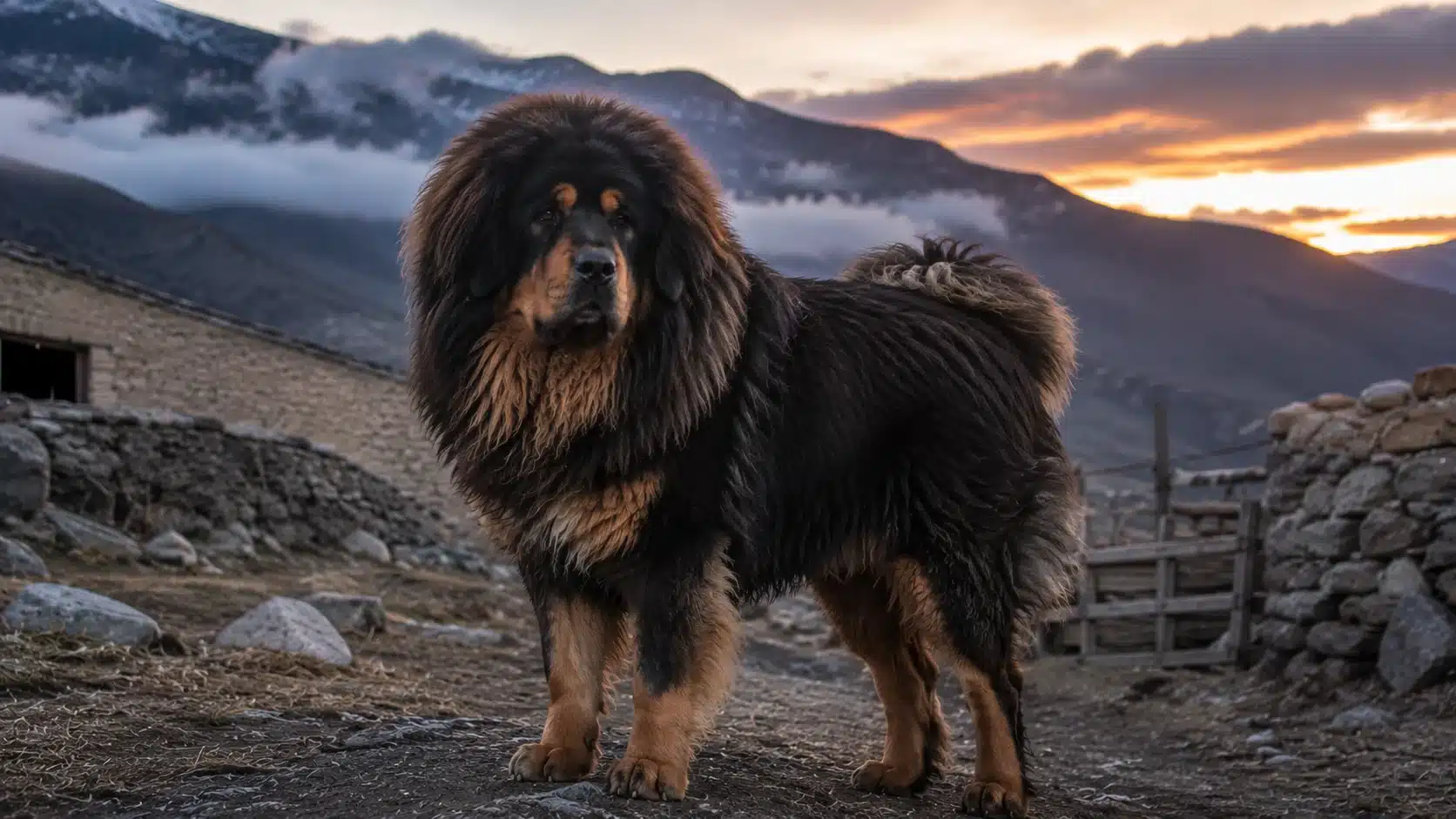
The Tibetan Mastiff fits cold climates, large rural properties, and experienced owners. This ancient mountain guardian was used around camps, homes, and livestock, often staying most alert after dark.
It has a strong guarding instinct and a powerful presence that can be too much for smaller setups. Owners should be ready for an independent dog that does not need constant direction. Its imposing build also places it among the large black dog breeds people recognize at a sight.
- Size: 24 inches and up
- Weight: Males weigh 90 to 150 pounds, and females weigh 75 to 120 pounds.
- Temperament: Aloof, watchful, independent, and deeply loyal to family.
- Life span: 10 to 12 years.
Farm note: Night barking and strong independence can be hard on small farms.
5. Bernese Mountain Dog
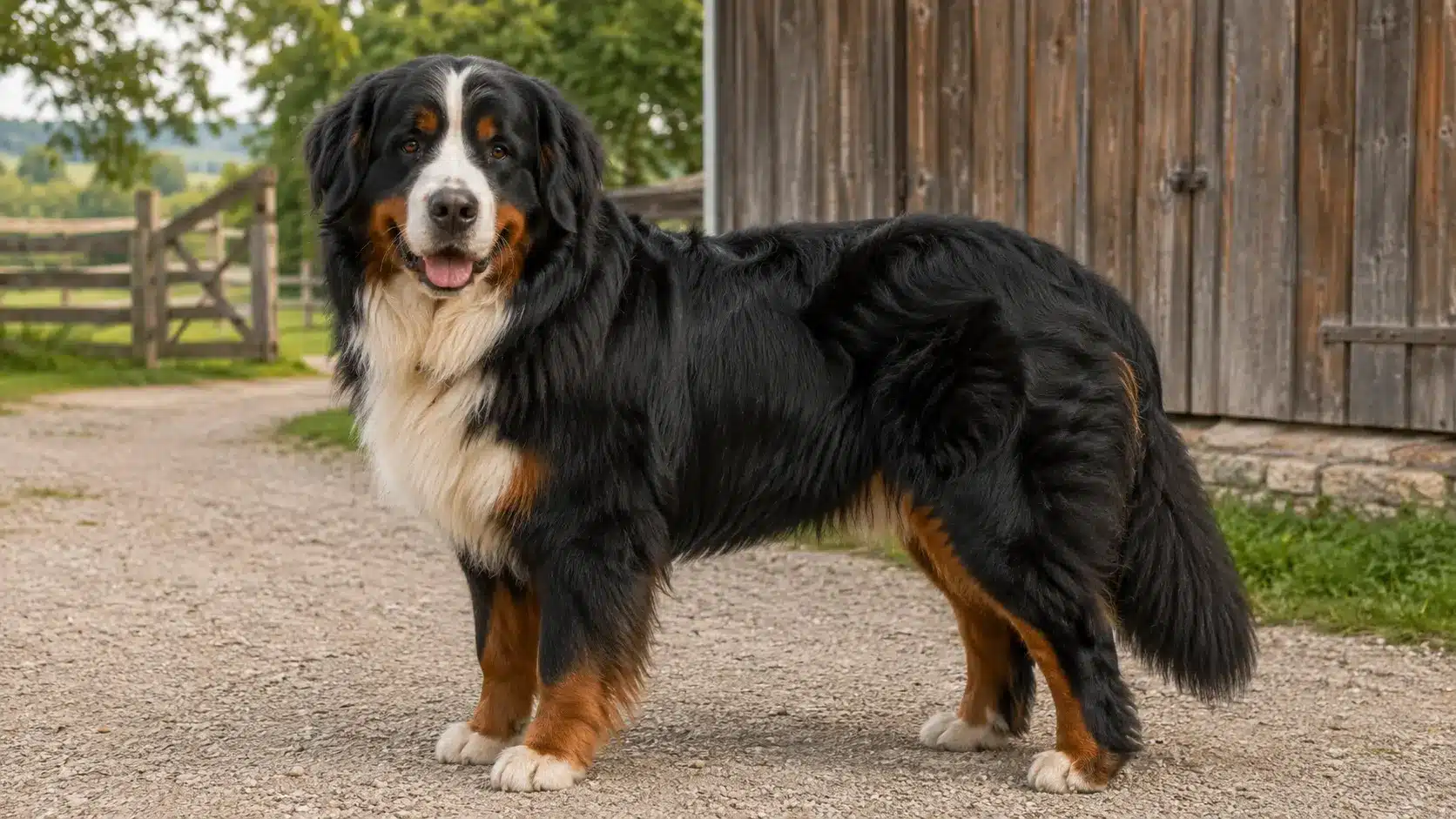
The Bernese Mountain Dog fits family farms, light farm work, and lower predator pressure. This Swiss working breed helped with chores and property watching, but it is not the strongest choice for full-time flock protection.
It is gentle and people-friendly, making it easier to live with than some harder-guarding breeds. For serious predator control, though, many farmers choose more traditional LGDs.
- Size: 23 to 27.5 inches tall
- Weight: Males weigh 80 to 115 pounds, and females weigh 70 to 95 pounds.
- Temperament: Gentle, affectionate, loyal, calm, and good-natured.
- Life span: 7 to 10 years.
Farm note: Traditional LGDs may be better for serious predator control.
6. Akbash
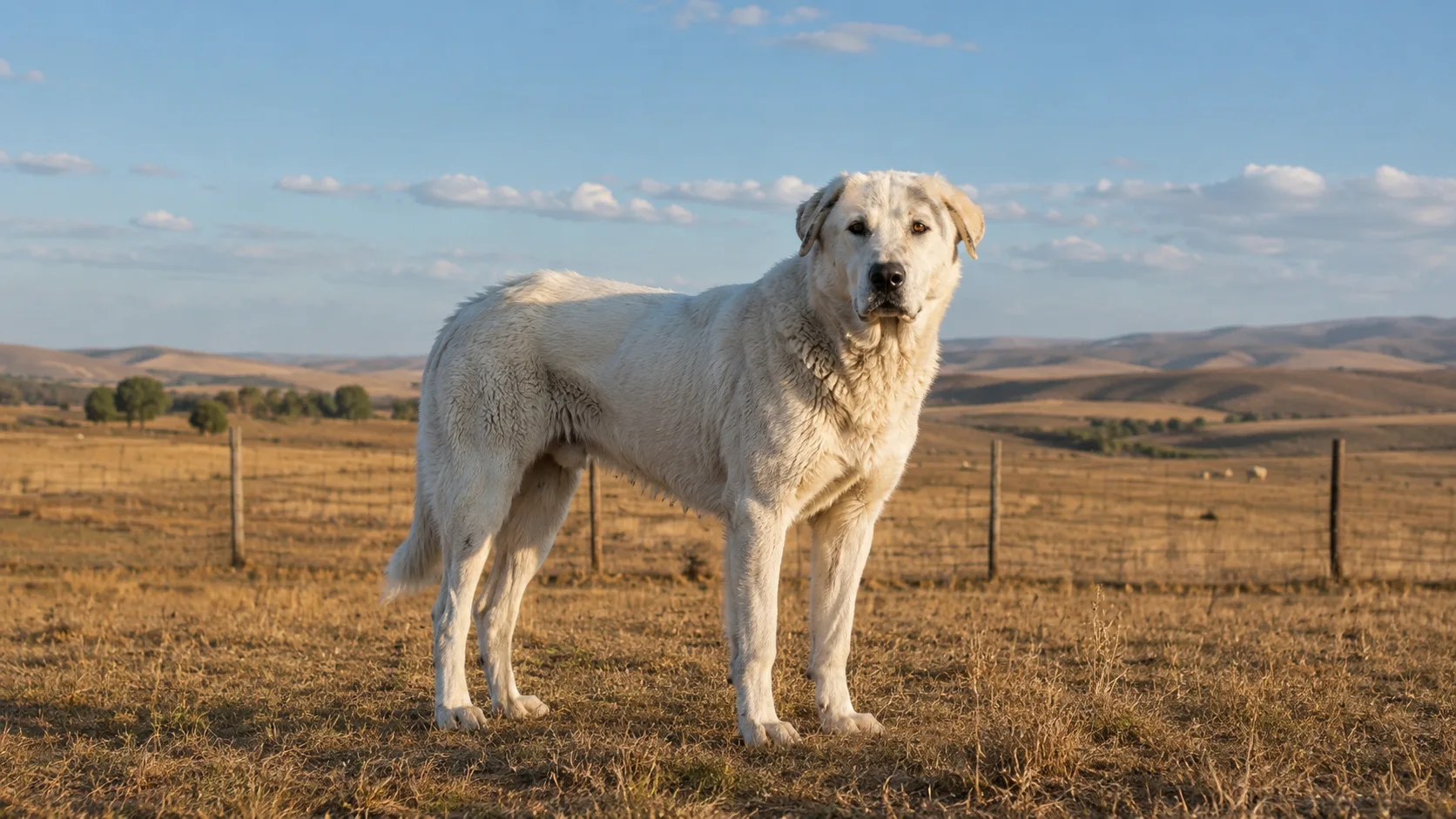
The Akbash suits sheep, goats, open land, and farms that need a calm yet alert guardian. This Turkish white breed is known for watching quietly and making its own decisions on the job.
It can be fast and agile for its size, which helps on open farms. Because it thinks independently, it needs steady handling instead of harsh control.
- Size: 27 to 31 inches tall
- Weight: Males weigh 90 to 130 pounds, and females weigh 75 to 100 pounds.
- Temperament: Devoted, courageous, independent, calm, and watchful.
- Life span: 10 to 12 years.
Farm note: Use secure fencing early because this breed may patrol wide areas.
7. Pyrenean Mastiff
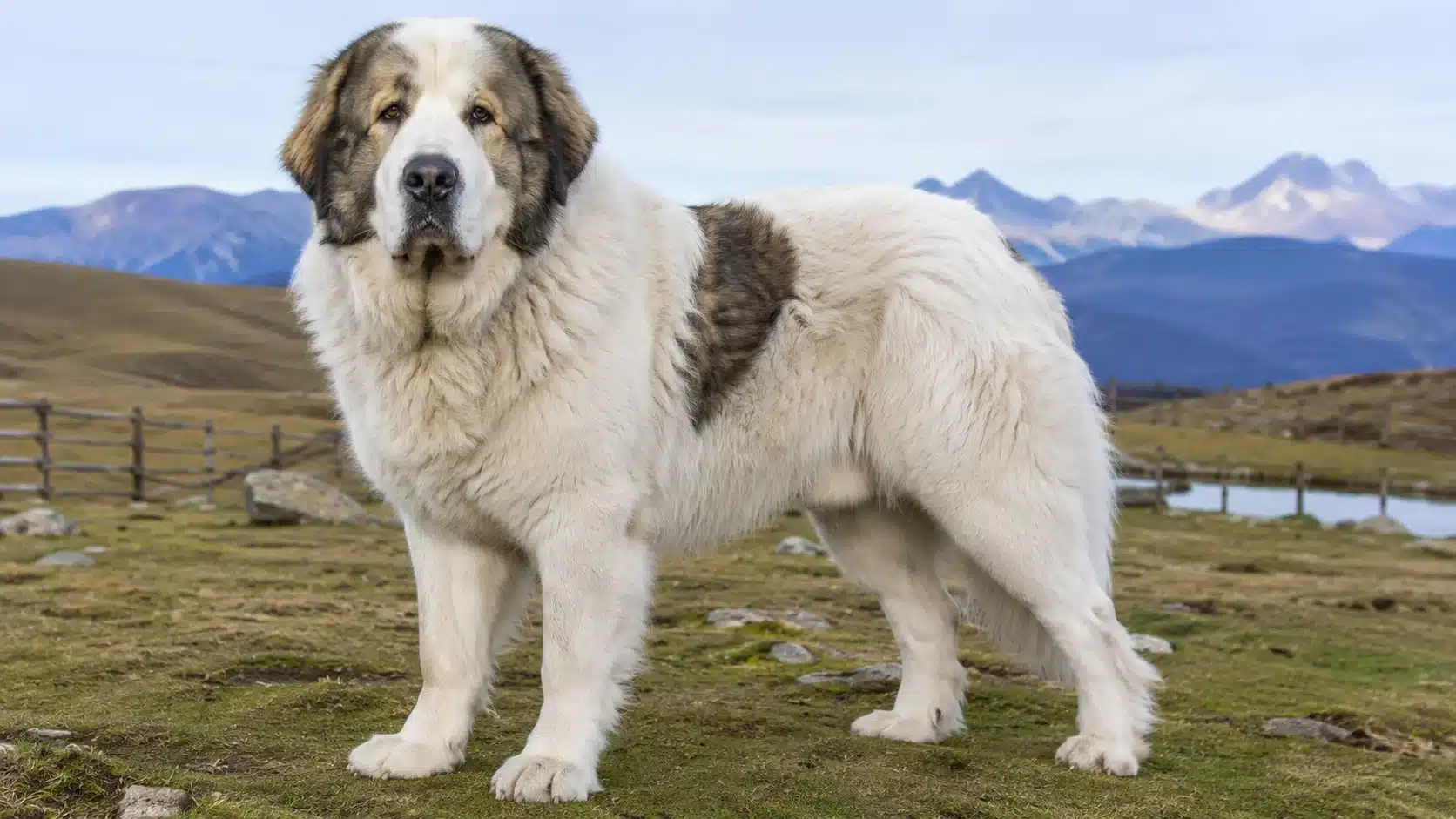
The Pyrenean Mastiff fits sheep, large rural homes, cold climates, and open land. This giant Spanish guardian protected flocks during mountain pasture moves, where size and calm courage were both useful.
It is often valued for its steadiness rather than its high energy. Its size can be helpful on large farms, but it also means more food, space, and daily care.
- Size: 28 to 32 inches tall
- Weight: Males weigh 140 to 200 pounds, and females weigh 120 to 160 pounds.
- Temperament: Calm, noble, courageous, affectionate, and proud.
- Life span: 10 to 12 years.
Farm note: Expect higher food needs, more space, and some drooling.
8. Romanian Carpathian Shepherd
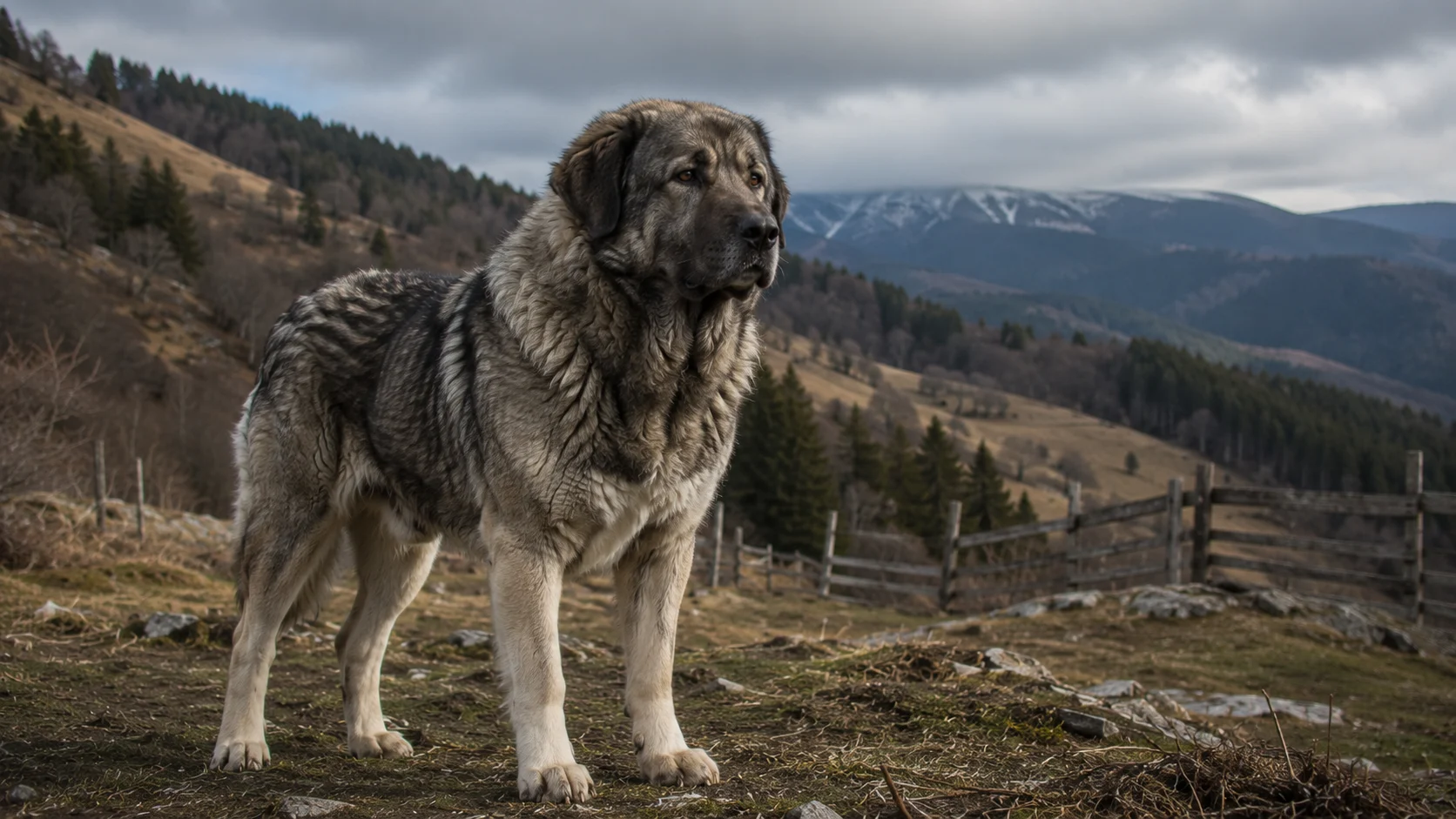
The Romanian Carpathian Shepherd suits rugged farms, heavy predator pressure, and experienced rural owners. This mountain breed was selected for real working ability in areas where livestock faced serious threats.
It is balanced, brave, and built for demanding outdoor work. This breed fits best where it has a real job and room to stay active.
- Size: 23 to 29 inches tall, with a strong medium-to-large build.
- Temperament: Calm, dignified, courageous, loyal, and well-balanced.
- Life span: 12 to 14 years.
Farm note: This dog needs regular work and mental activity to stay manageable.
9. Komondor
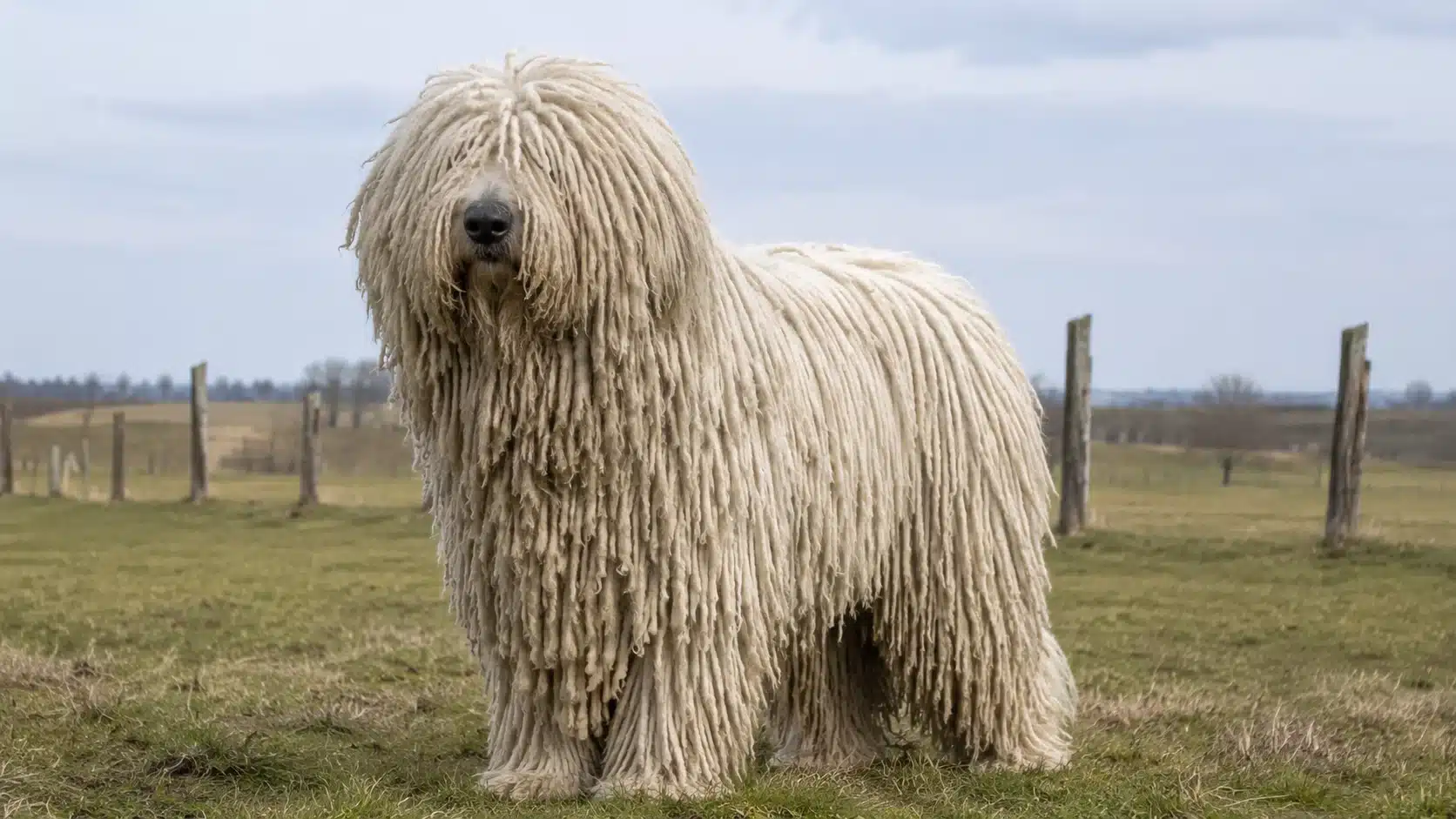
The Komondor is well-suited to sheep, flock guarding, cooler regions, and experienced owners. This Hungarian livestock guardian is known for its white, corded coat, which helps it blend in with sheep and withstand rough weather.
It is a serious guardian with a strong bond to its flock. The coat makes it stand out, but it also makes this breed harder to maintain than many others.
- Size: 25.5 inches and up
- Weight: Males weigh 100 pounds or more, and females weigh 80 pounds or more.
- Temperament: Devoted, protective, courageous, and reserved with strangers.
- Life span: 10 to 12 years.
Farm note: The corded coat takes serious upkeep and should not be ignored.
10. Slovak Cuvac
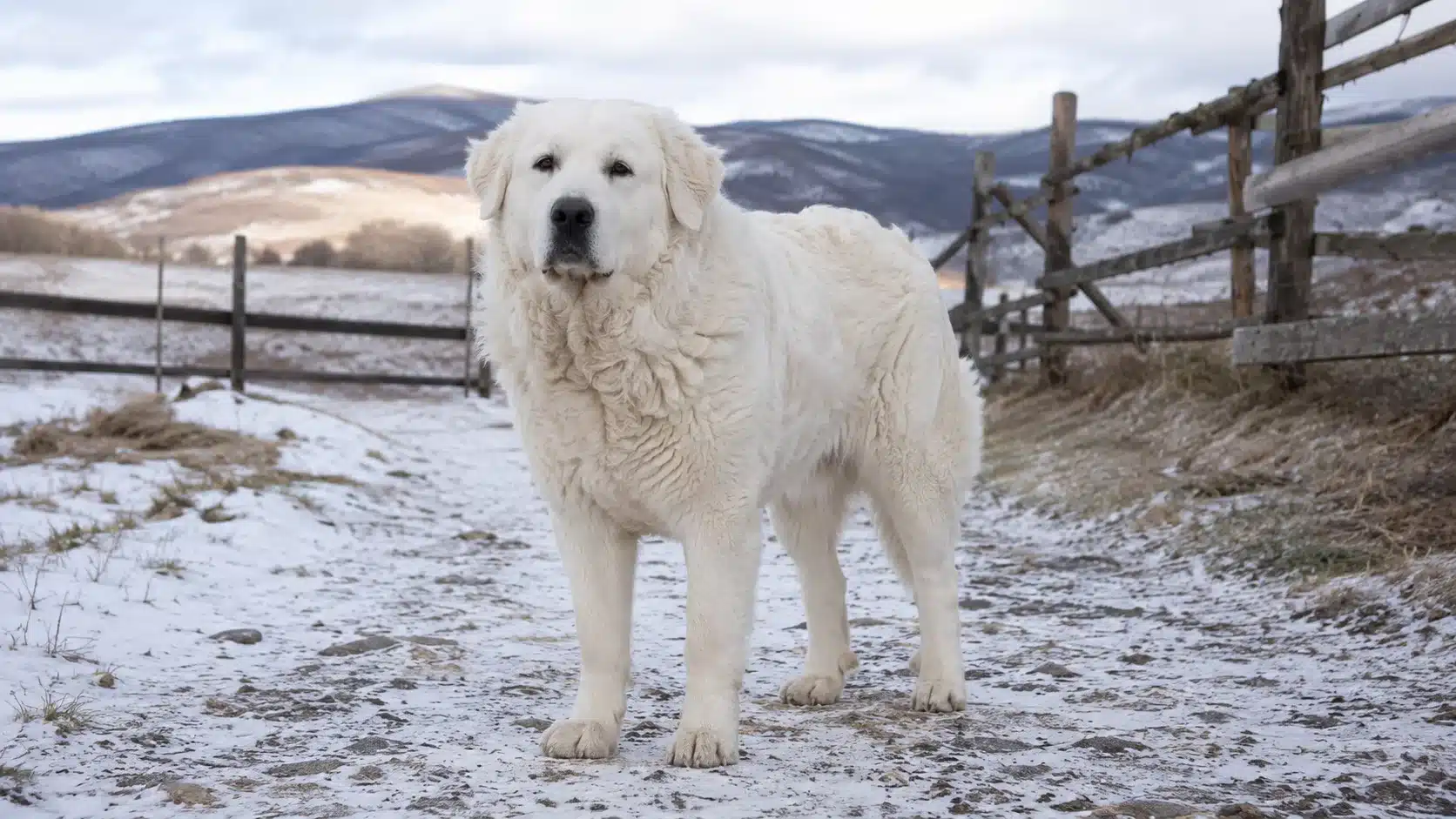
The Slovak Cuvac works well for sheep, goats, cold farms, and rural homes. This alert white guardian is known for listening, watching, and staying protective around both family and livestock.
It has a strong guarding instinct but can still be affectionate with the people it knows. Since it is less common, finding the right breeder may take more planning.
- Size: 23 to 27.5 inches tall
- Weight: Males weigh 80 to 97 pounds, and females weigh 68 to 82 pounds.
- Temperament: Alert, fearless, watchful, affectionate with family, and wary of strangers.
- Life span: 10 to 12 years.
Farm note: This breed is less common, so finding a good breeder may take time.
11. Maremma Sheepdog
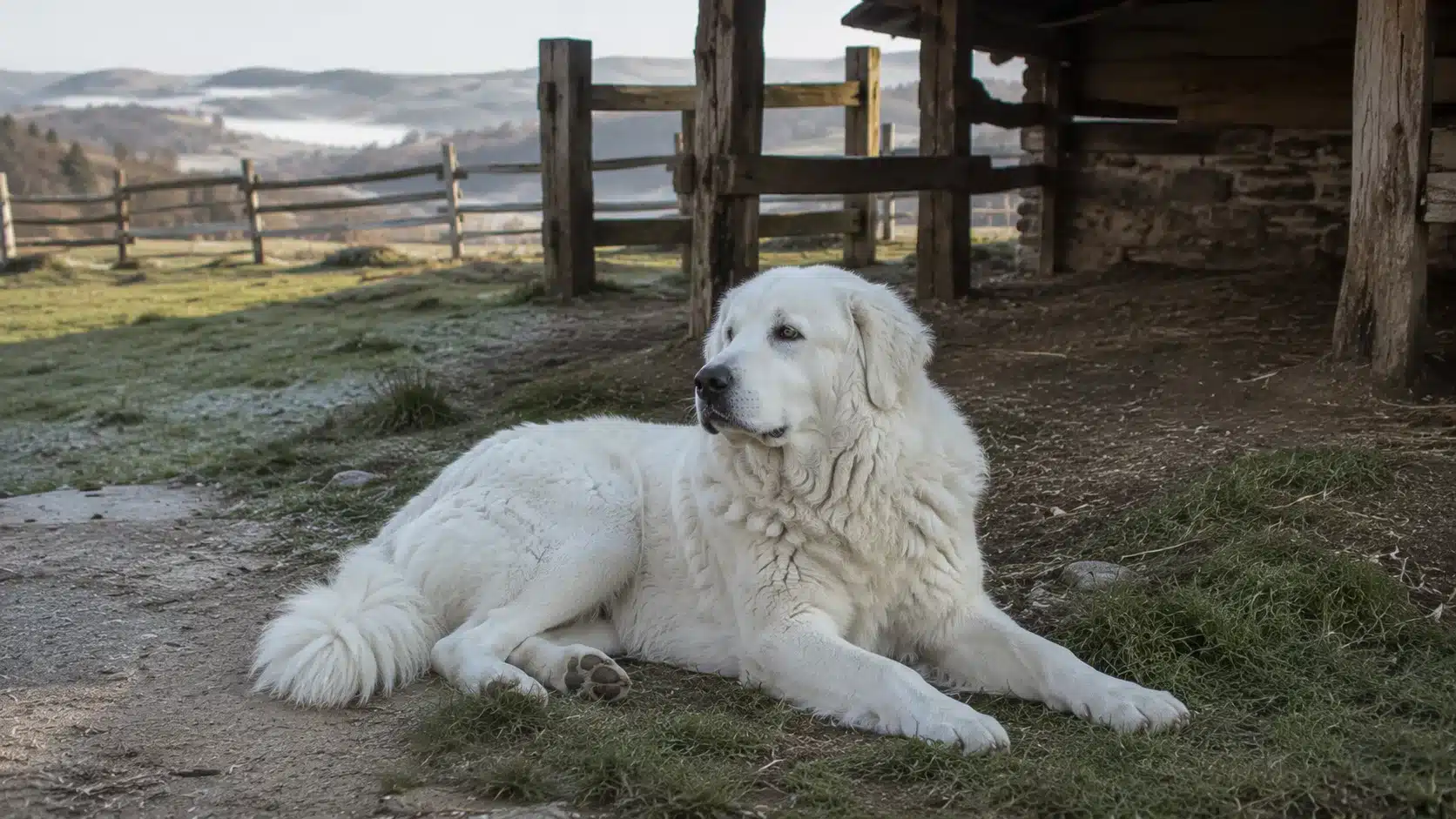
The Maremma Sheepdog is well-suited to sheep, goats, homesteads, and mixed livestock with training. This Italian flock guardian has deep roots and is known for staying close to the animals it protects.
It is calm and steady when properly raised, making it a strong option for many smaller farms. Like any LGD, it needs early bonding and careful supervision while young.
- Size: 23.5 to 28.75 inches tall
- Weight: Males weigh 77 to 100 pounds, and females weigh 66 to 88 pounds.
- Temperament: Calm, brave, independent, loyal, and wary of strangers.
- Life span: 11 to 13 years.
Farm note: Supervise young dogs around poultry until they mature and learn boundaries.
Each livestock guardian dog breed has distinct strengths, so choose based on your animals, land, fencing, climate, and predator risk. The right dog should fit your farm setup, not just look strong on paper.
Quick Breed Match by Farm Need
Use this table as a fast starting point before diving into breed details.
| Decision Area | Best Breed Matches | Reason |
| Small homestead | Great Pyrenees, Maremma Sheepdog | Steady and beginner-friendly. |
| Large acreage | Anatolian Shepherd, Akbash, Pyrenean Mastiff | Independent and suited for open land. |
| Heavy predator pressure | Anatolian Shepherd, Romanian Carpathian Shepherd, Tibetan Mastiff | Stronger guardians for serious threats. |
| Poultry or mixed animals | Maremma Sheepdog, Great Pyrenees, Akbash | Better fit with careful training. |
| Cold climate farms | Great Pyrenees, Slovak Cuvac, Komondor, Tibetan Mastiff | Heavy coats suit cooler regions. |
This table is a starting point. Your final choice should also depend on fencing, breeder lines, livestock type, and your own experience with large working dogs.
Field Advice Before Choosing a Livestock Guardian Dog
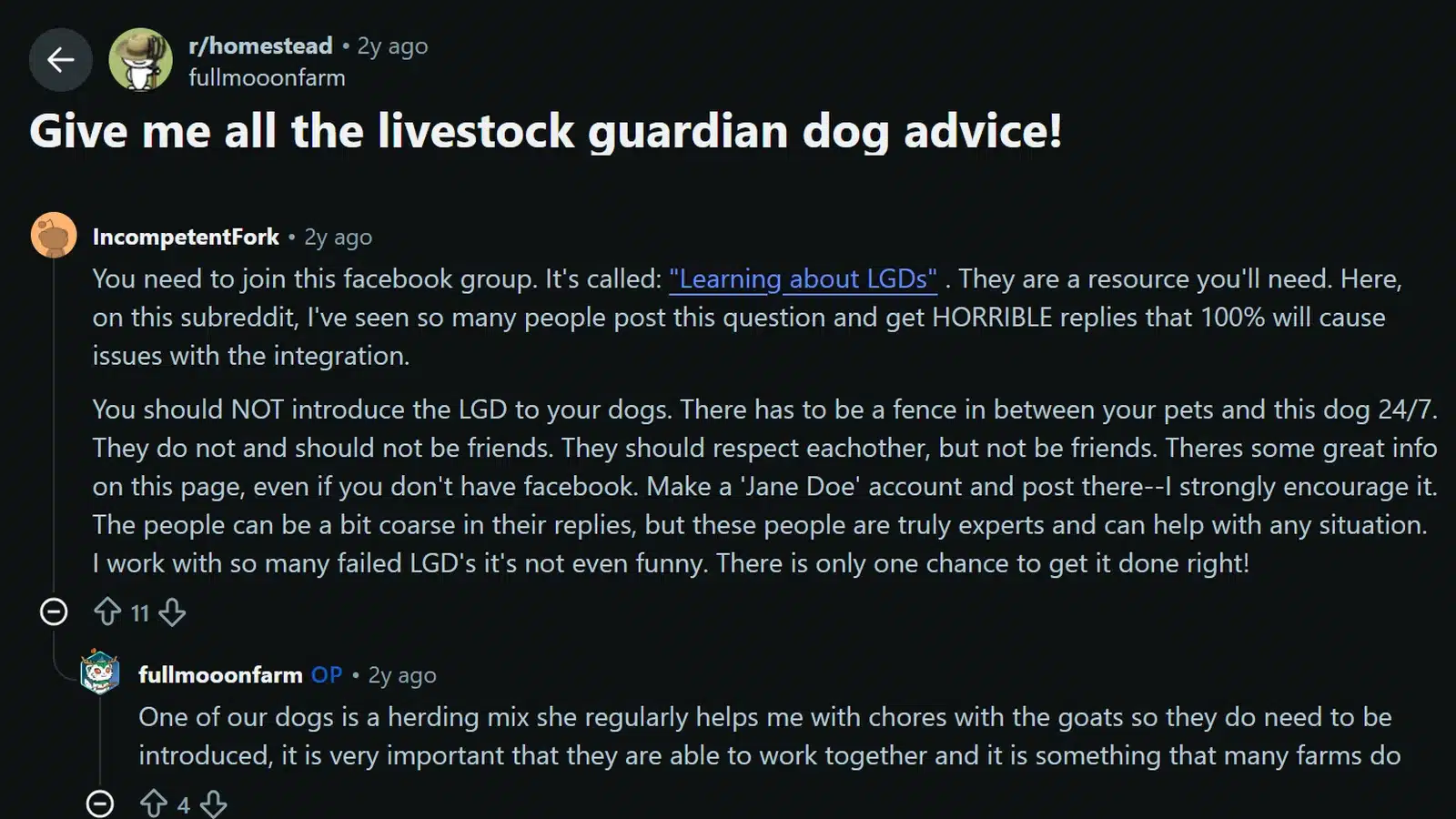
A Reddit discussion on livestock guardian dog advice shows how much real farm setup can vary. Owners talk about bonding with livestock, safe introductions, strong fencing, and giving young dogs time before expecting full guardian behavior. Use this as owner experience, not professional training advice.
- Start livestock bonding early.
- Supervise young dogs around animals.
- Use strong fencing before patrol habits begin.
- Do not expect a puppy to guard like an adult.
Breed choice matters, but daily setup matters just as much. Your fencing, livestock type, predator risk, and training plan all affect how well a guardian dog works.
Official U.S. Guidance on Livestock Protection Dogs
USDA guidance explains that livestock protection dogs can be part of nonlethal predator management, especially for sheep producers facing coyotes, wolves, or bears. This makes LGDs helpful, but not a complete protection plan on their own.
- Match the dog to your land, livestock, and predator risk.
- Use LGDs with fencing and other farm-safety measures.
- Check local rules on roaming dogs, barking, and liability.
- Ask a local Extension office, vet, or experienced LGD breeder for setup-specific advice.
Together, these two sources provide readers with a clearer view of LGD ownership. Reddit adds real owner lessons, while USDA guidance helps ground the decision in safer farm planning.
Common Mistakes to Avoid
Raising a livestock guardian dog requires patience and proper preparation. Young dogs need time, guidance, and supervision before they can handle farm responsibilities safely and confidently.
- Leaving a puppy alone with livestock too soon: Young guardian dogs are still learning boundaries and may not understand how to interact with animals correctly. Supervised introductions help build safe habits.
- Skipping socialization with people and other animals: A guardian dog needs exposure to a variety of situations, sounds, and animals as it grows. Proper socialization helps create a balanced adult dog.
- Expecting adult-level judgment during the puppy stage: Puppies lack the experience and maturity of working adults. They need gradual training before taking on full guarding duties.
- Underestimating first-year supervision needs: The early months require regular monitoring, training, and correction. Watching their behavior helps prevent unwanted habits and supports better working skills.
Avoiding these common mistakes helps create a stronger relationship between the dog, livestock, and owner. A well-raised guardian dog becomes more reliable when given the right support during its early development.
Final Recommendation
Choosing among livestock guardian dog breeds depends on your farm setup, livestock type, fencing, climate, and predator risks.
Great Pyrenees and Maremma Sheepdogs can be good options for first-time owners, while Anatolian Shepherds, Akbash dogs, and Pyrenean Mastiffs may suit larger properties with more space.
Romanian Carpathian Shepherds and Tibetan Mastiffs may require more experienced handling due to their strong guarding instincts.
Before bringing a guardian dog home, research breeders, meet working dogs when possible, and prepare for early training and supervision. The right breed should match your daily needs and farm environment. Share your experience in the comment section.
Frequently Asked Questions
Is a Male or Female Livestock Guardian Dog Better?
Both can work well. Males are often larger and may cover more ground, while females can be steady and attentive. Temperament, training, health, and working background matter more than sex when choosing a livestock guardian dog.
Is It Better to Get a Puppy or an Adult LGD?
A puppy can bond early with your animals, but it needs months of supervision. An adult working LGD may be more settled, but you need to know its history, habits, and behavior around your livestock before trusting it.
Do Livestock Guardian Dogs Need a Lot of Exercise?
They do not usually need fast, high-energy exercise like sporting breeds. Their work is mostly patrolling, watching, and moving around the property. They still need space, daily checks, and enough activity to prevent boredom.
Can Livestock Guardian Dogs Live in Hot Climates?
Some can, but heavy-coated breeds need shade, clean water, airflow, and heat breaks. Hot climates may suit shorter-coated breeds better. Never assume a mountain breed can handle summer heat without extra care and cooling support.
Do Livestock Guardian Dogs Need Grooming?
Yes, most need regular coat care, especially thick-coated or corded breeds. Brushing helps reduce mats, burrs, and shedding. Working dogs should also be checked often for ticks, wounds, foxtails, paw issues, and skin irritation.