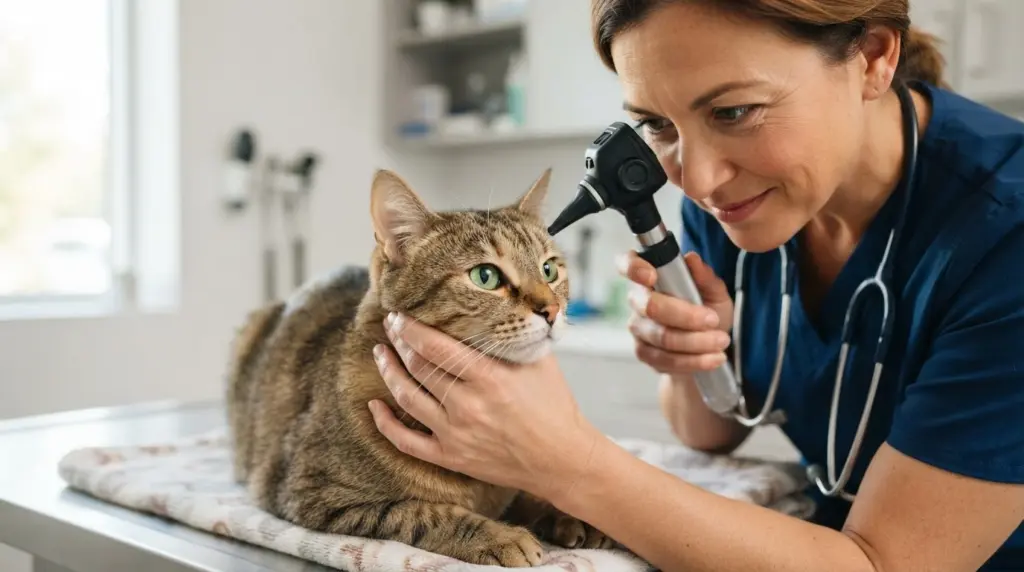
Why do cats, from house cats to powerful wild predators, have eyes that look so different from human eyes?
Their vertical pupils, sharp focus, and light-reflecting ability are not just unique features but survival tools shaped by nature.
Cat eyes help these animals judge distance, track movement, and see in low light while also playing an important role in communication. Changes in pupil size, blinking patterns, and eye expressions can reveal emotions, attention levels, and possible health concerns.
Read below to know what cat eyes mean, how cats see the world, and simple care tips for better eye health.
Why Do Cats Have Unique Eyes?
Cats have some of the most specialized eyes in the animal world, designed to track movement, judge distance, and see clearly in changing light.
These features help cats hunt, stay alert, and understand their surroundings, whether they are indoors or in the wild.
One of the most unique features of cat eyes is their vertical slit pupils. These pupils can quickly change size, becoming narrow in bright light and wider in darkness.
This helps cats control light intake, improve night vision, and accurately judge distances before jumping or chasing prey.
What Do Cat Eyes Mean: Understanding Their Signals
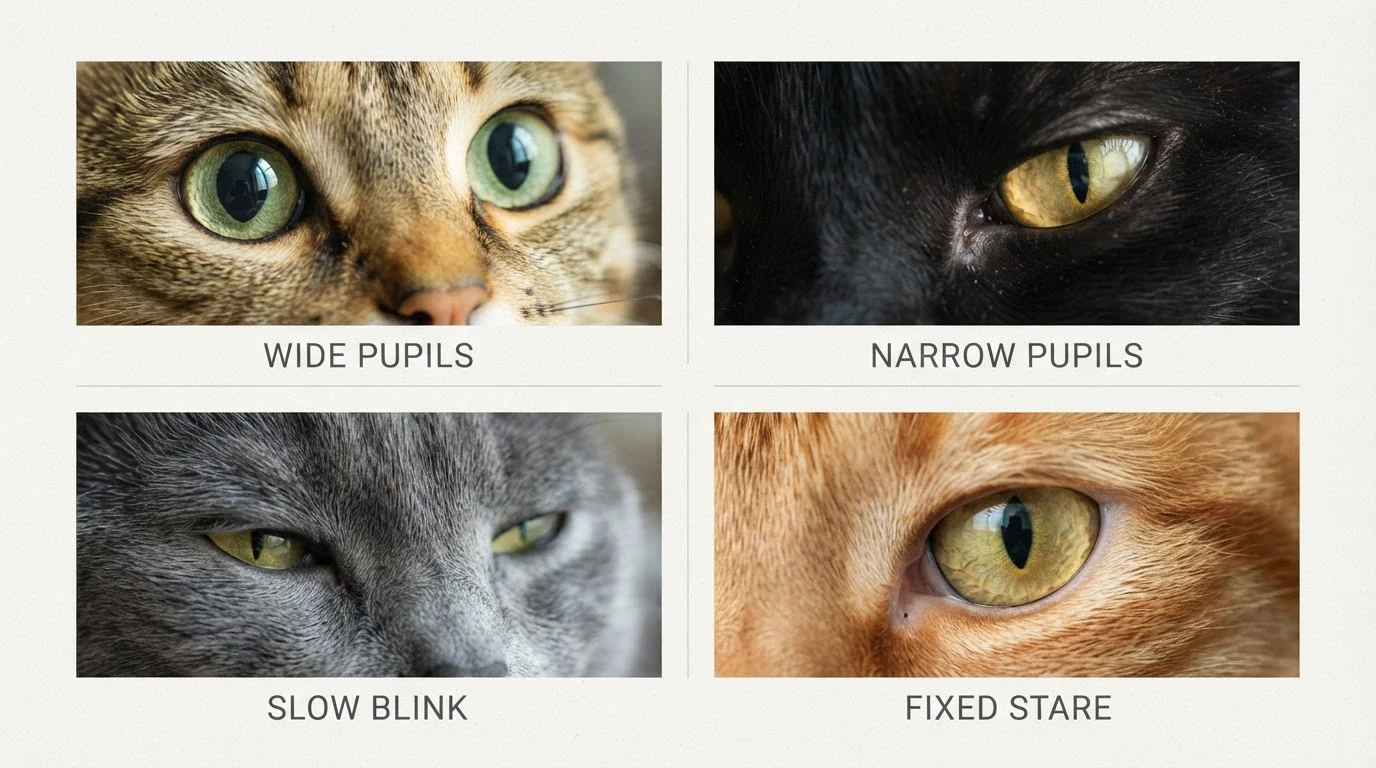
A cat’s eyes can reveal a lot about what they are feeling, but they should always be read along with body language and the situation around them.
Changes in pupil size, blinking, and eye contact can indicate emotions such as excitement, comfort, stress, or alertness. Understanding these signals can make it easier to recognize what a cat may be trying to communicate.
| Eye Appearance | What It May Mean |
|---|---|
| Wide pupils | Large, round pupils may appear when a cat feels excited, playful, curious, or frightened. The surroundings and body language help determine the reason. |
| Narrow pupils | Thin, slit-like pupils can show strong focus during play or hunting. They may also appear when a cat feels irritated or uncomfortable. |
| Slow blink | A slow blink is often a sign of trust and relaxation. Cats may use this gentle expression when they feel safe around people or other animals. |
| Fixed stare | A direct, unbroken stare can mean attention, curiosity, or a warning. In some situations, staring may signal that a cat feels tense or defensive. |
Cat eyes do not have a single meaning on their own. Looking at pupil changes, blinking patterns, and the cat’s overall behavior together gives a clearer picture of their mood and needs.
How Cats Communicate Through Their Eyes
Cats communicate through eye contact, blinking, and gaze direction. Combined with body language and sounds, these signals help show their comfort, trust, and intentions toward people and other animals.
Slow Blinking and Trust
A slow blink is one of the most recognizable signs of comfort in cats. Many cat owners call it a “cat kiss” because it is often seen as a friendly gesture.
- Shows relaxation: A cat that slowly closes and opens its eyes is usually feeling calm and safe.
- Builds trust: Returning a slow blink can be a gentle way to show that you are not a threat.
- Used between cats and humans: Cats may slow-blink at familiar people as a sign of comfort and connection.
Eye Contact and Cat Behavior
The way a cat uses eye contact can reveal how it feels in a situation. A relaxed gaze and a tense stare can have very different meanings.
- Friendly staring: soft eyes, relaxed facial muscles, and occasional blinking usually show curiosity, comfort, or interest.
- Threatening stare: A fixed stare without blinking may be a warning, especially when accompanied by a stiff posture, flattened ears, or a tense body.
- Looking away: Turning the eyes away or breaking eye contact can be a calming signal. Cats may do this to show they are relaxed and not looking for conflict.
Paying attention to these eye signals can help you better understand a cat’s emotions and create more positive interactions with them.
What Different Cat Eye Colors Mean
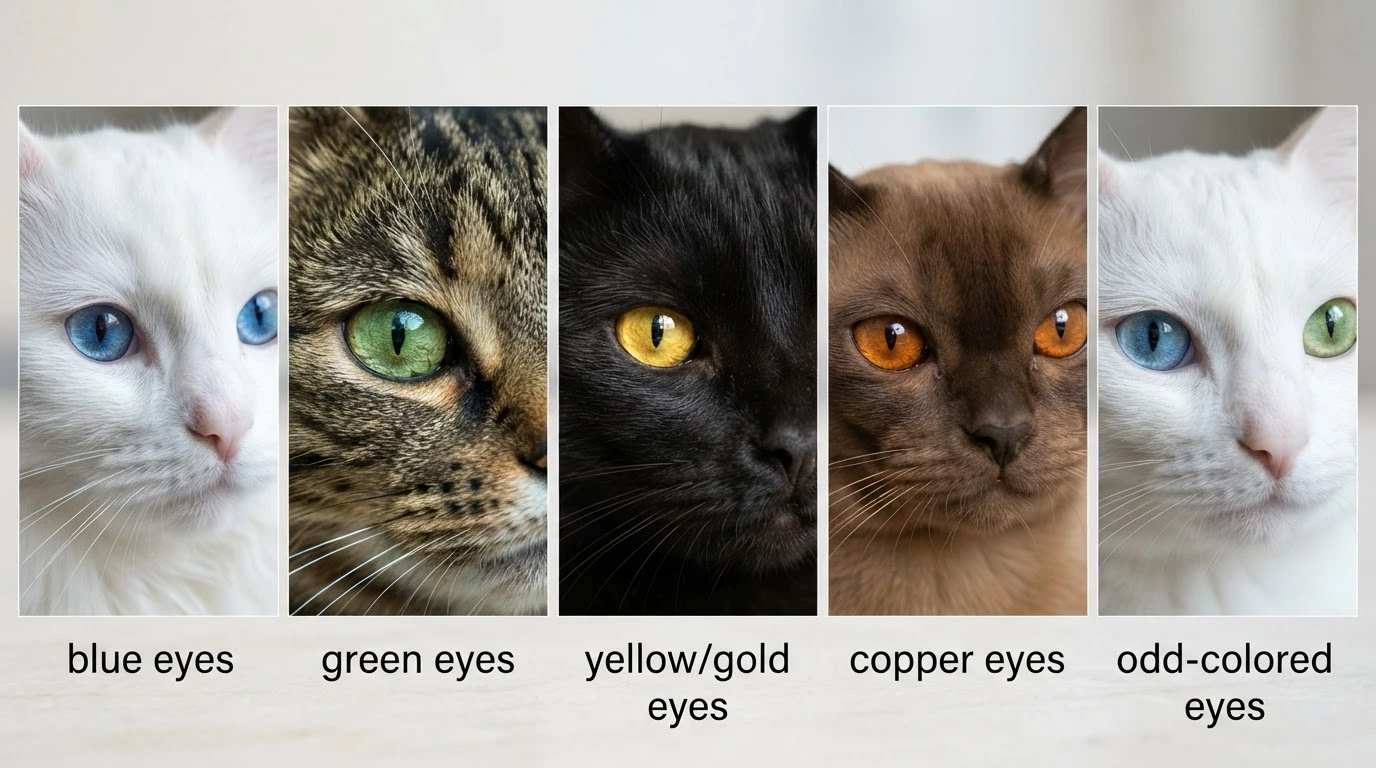
Cat eye colors range from bright blue to deep copper and are mainly shaped by genetics, especially melanin levels in the iris.
These colors can vary between breeds and coat patterns. While eye color does not define a cat’s personality, it adds to their unique appearance and may reflect inherited traits passed through generations.
- Blue eyes: Blue eyes appear when the iris has very little pigment. They are common in cats with white coats, color point patterns, and certain breeds. Kittens are often born with blue eyes, which may change as they mature.
- Green eyes: Green eyes result from lower levels of pigment in the iris. They can appear in shades from light green to deep emerald and are found in several cat breeds.
- Yellow or gold eyes: Yellow and gold eyes contain more pigment than green eyes, creating warm shades that can look bright and glowing under different lighting conditions.
- Copper eyes: Copper eyes are among the darkest cat eye colors and result from higher pigment levels. They are often seen in breeds such as Persians and British Shorthairs.
- Odd-colored eyes: Some cats have two different eye colors, a condition known as heterochromia. This happens when pigment develops differently in each eye and is more common in cats with white coats
Cat eye colors add to their unique appearance and are shaped by genetics, breed, and coat patterns. However, changes like cloudiness, redness, or discharge are more important signs of eye health.
Cat Eye Problems You Should Not Ignore
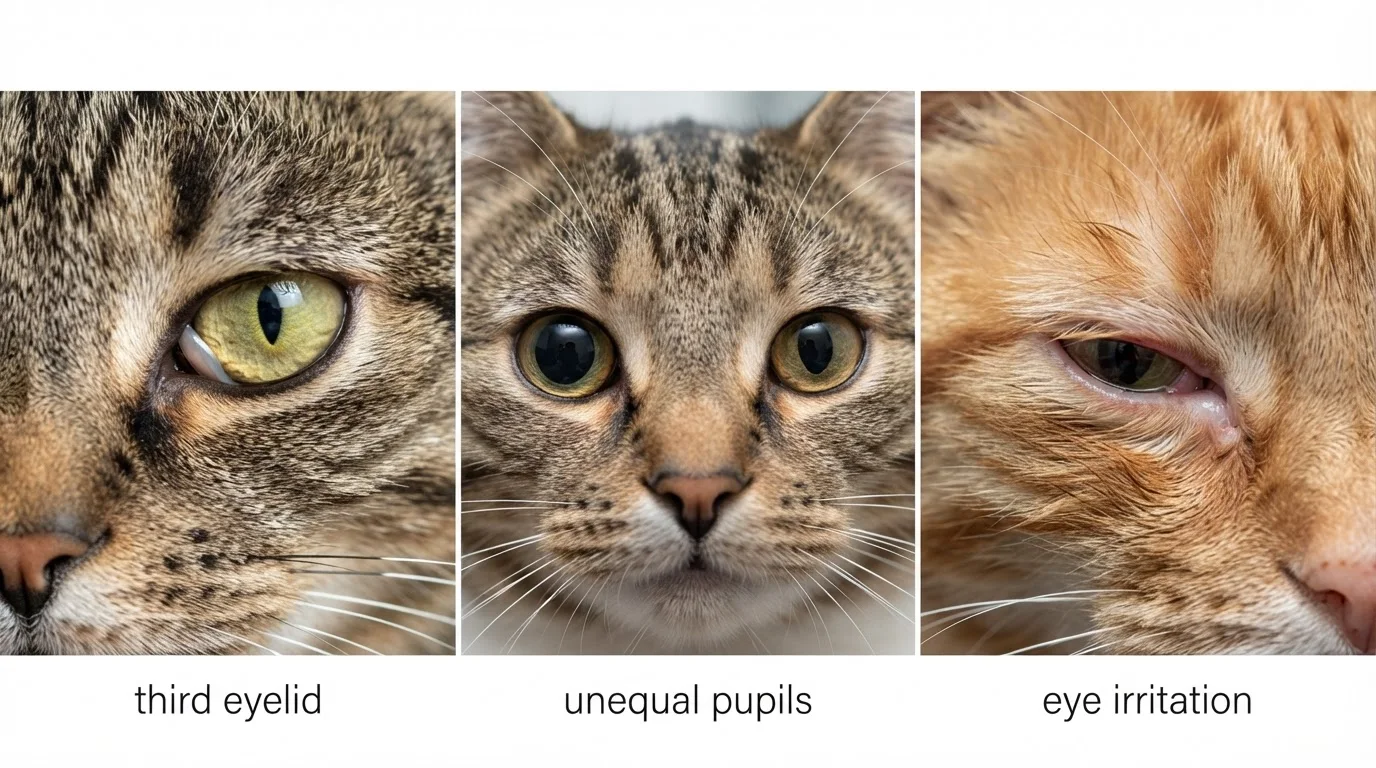
A cat’s eyes are usually clear and bright, but sudden changes can sometimes signal a health concern. Watching for signs like unusual pupils, visible third eyelids, discharge, or squinting can help spot problems early and support better eye care.
1. Third Eyelid Showing
Cats have a third eyelid, also called the nictitating membrane, which helps protect and lubricate the eye. It is normally hidden, but it may become visible in certain situations.
Common reasons include:
- Sleepiness: The third eyelid may briefly appear when a cat is relaxed or waking up.
- Illness: A visible third eyelid in an alert cat can sometimes indicate an underlying health issue.
- Dehydration: A lack of fluids may affect the appearance of the eyes, making the third eyelid more noticeable.
If the third eyelid remains visible for an extended period or appears alongside other symptoms, a veterinary check may be necessary.
2. Unequal Pupils
When a cat has pupils of different sizes, it is known as anisocoria. A slight difference may sometimes occur temporarily, but sudden or constant uneven pupils should not be ignored.
Possible causes include:
- Eye injuries or inflammation
- Problems affecting the nerves that control the eye
- Neurological conditions
- Certain eye diseases
A cat with unequal pupils may also show signs such as discomfort, reduced vision, or changes in behavior.
3. Discharge, Redness, or Squinting
Eye discharge and irritation are common signs that a cat’s eyes may need attention. Mild watery discharge can happen occasionally, but ongoing changes may indicate a problem.
Watch for:
- Infections: Bacterial or viral infections can cause discharge, swelling, and redness.
- Injuries: Scratches or foreign objects can irritate the eye and lead to squinting.
- Irritation: Dust, allergies, or environmental factors may cause watery eyes or discomfort.
Watery eyes can sometimes show up alongside other physical changes, so pairing eye checks with a wider look at your cat’s overall condition, including shifts in shedding or coat quality, gives a fuller sense of how they are doing.
Cat Eye Warning Signs at a Glance:
| Warning Sign | What It Could Point To | Suggested Response |
|---|---|---|
| Cloudy or hazy eye | Injury, cataracts, or internal pressure changes | Book a vet visit soon |
| Thick yellow or green discharge | Bacterial or viral infection | Schedule a veterinary check |
| Squinting or frequent pawing | Scratch, foreign object, or irritation | Have the eye examined |
| Uneven pupil sizes (anisocoria) | Nerve injury or neurological concern | Get prompt veterinary advice |
| Visible third eyelid in an alert cat | Illness or dehydration | Watch closely and consult a vet if it lingers |
| Redness or swelling | Infection or environmental irritation | Seek veterinary guidance |
Catching any of these early gives a cat the best chance at a quick, comfortable recovery, which leads directly into the simple habits that keep eyes healthy day to day.
How to Care for Your Cat’s Eyes
Keeping a cat’s eyes healthy does not require complicated routines. Simple habits like regular checks, gentle cleaning, and maintaining a clean environment can help identify problems early and support good eye health.
Firstly, check your cat’s eyes regularly for clear, bright eyes without signs such as redness, swelling, cloudiness, or unusual discharge. Regular checks make it easier to notice small changes before they develop into bigger concerns.
Secondly, clean the eyes safely using a soft, clean cloth or cotton pad slightly dampened with warm water to remove dirt or discharge around the eyes. Use a separate pad for each eye to reduce the chance of spreading irritation.
Third, avoid using human eye drops unless they are specifically recommended by a veterinarian. Some ingredients in human medications may not be safe for cats and could worsen eye issues.
Good nutrition also plays a part in bright, clear eyes, and fresh, balanced meals such as these homemade cat food recipes can supply the taurine and vitamins that support healthy vision.
Lastly, keep the environment clean by reducing dust, smoke, and other irritants around your cat’s living area. Regularly cleaning bedding, toys, and resting spaces can help protect your cat’s eyes from unnecessary irritation.
Following these simple eye care habits can help maintain clear, comfortable eyes and make it easier to notice when your cat may need professional attention.
When Should You Call a Vet?
Most minor eye changes in cats are harmless, but some signs may indicate an injury, infection, or other health concern that requires veterinary attention.
A sudden change in eye shape, swelling, or an unusual eye position should be checked quickly.
Frequent rubbing or pawing at the eye may indicate irritation, pain, or a possible injury. Unequal pupil sizes can sometimes be linked to eye conditions or neurological concerns.
A cloudy or hazy appearance in the eye may affect vision and should not be ignored. Thick yellow, green, or heavy discharge can be a sign of infection. If a cat has trouble finding objects, bumps into things, or shows sudden confusion, it may indicate vision problems.
Regularly checking your cat’s eyes can help you notice warning signs early and support better eye health.
Final Thoughts
Cat eyes reveal much more than appearance. Their vertical slit pupils, low-light vision, and ability to detect movement help both wild and domestic cats survive, while changes in blinking, pupil size, and eye expression can provide clues about their mood and health.
Understanding cat-eye signals makes it easier to recognize normal behaviors and notice potential concerns early.
Paying attention to your cat’s eyes and following simple care habits, such as regular checks and safe cleaning, can help maintain clear and healthy vision. These small steps support better understanding and overall well-being throughout your cat’s life.
Drop a comment below and let me know if you found this helpful.
Frequently Asked Questions
Why Do Cat’s Eyes Look Different in Photos?
Cat’s eyes may appear bright or glowing in photos because the tapetum lucidum reflects light from camera flashes or other light sources.
Do Kittens Have the Same Eye Color as Adult Cats?
Most kittens are born with blue eyes, but their final eye color usually develops as they grow and their iris pigment changes.
Can Cats Recognize People by Their Eyes?
Cats use a combination of vision, scent, and sound to recognize people. Their eyesight helps identify familiar shapes and movements.
Why Do Cats Stare Without Blinking?
Cats may stare to observe something interesting, focus on movement, or communicate attention. The meaning depends on their body language and situation.