Hearing your cat yowl at midnight can make any owner panic. Then, if you notice a small spot of blood, worry sets in fast.
Many cat owners start searching do cats bleed when in heat because they are unsure what is normal and what needs a vet’s attention.
Cats do not follow the same cycle as dogs or humans, so the signs can be easy to misread.
You may also wonder how often cats go into heat, especially if the behavior keeps coming back every few weeks.
The tricky part is knowing the difference between normal heat behavior and a possible health problem.
This blog helps you understand those signs clearly, so you can feel more confident, act sooner when needed, and care for your cat safely.
Do Cats Bleed When in Heat?
No, cats usually do not bleed when they are in heat. Unlike dogs, female cats do not normally shed blood during their heat cycle.
A cat in heat may become louder, more affectionate, restless, or raise her back end, but visible bleeding is not a normal sign.
Some owners may notice a tiny spot of pink discharge, but regular or bright red bleeding should not be ignored. Blood can come from a urinary tract infection, an injury, a bladder problem, or a reproductive issue.
It may also be mistaken for bleeding from the heat cycle when it is actually coming from urine, the anus, or irritated skin.
If your cat is bleeding, acting sick, not eating, vomiting, or seems in pain, contact a veterinarian as soon as possible.
How Often Do Cats Go into Heat?
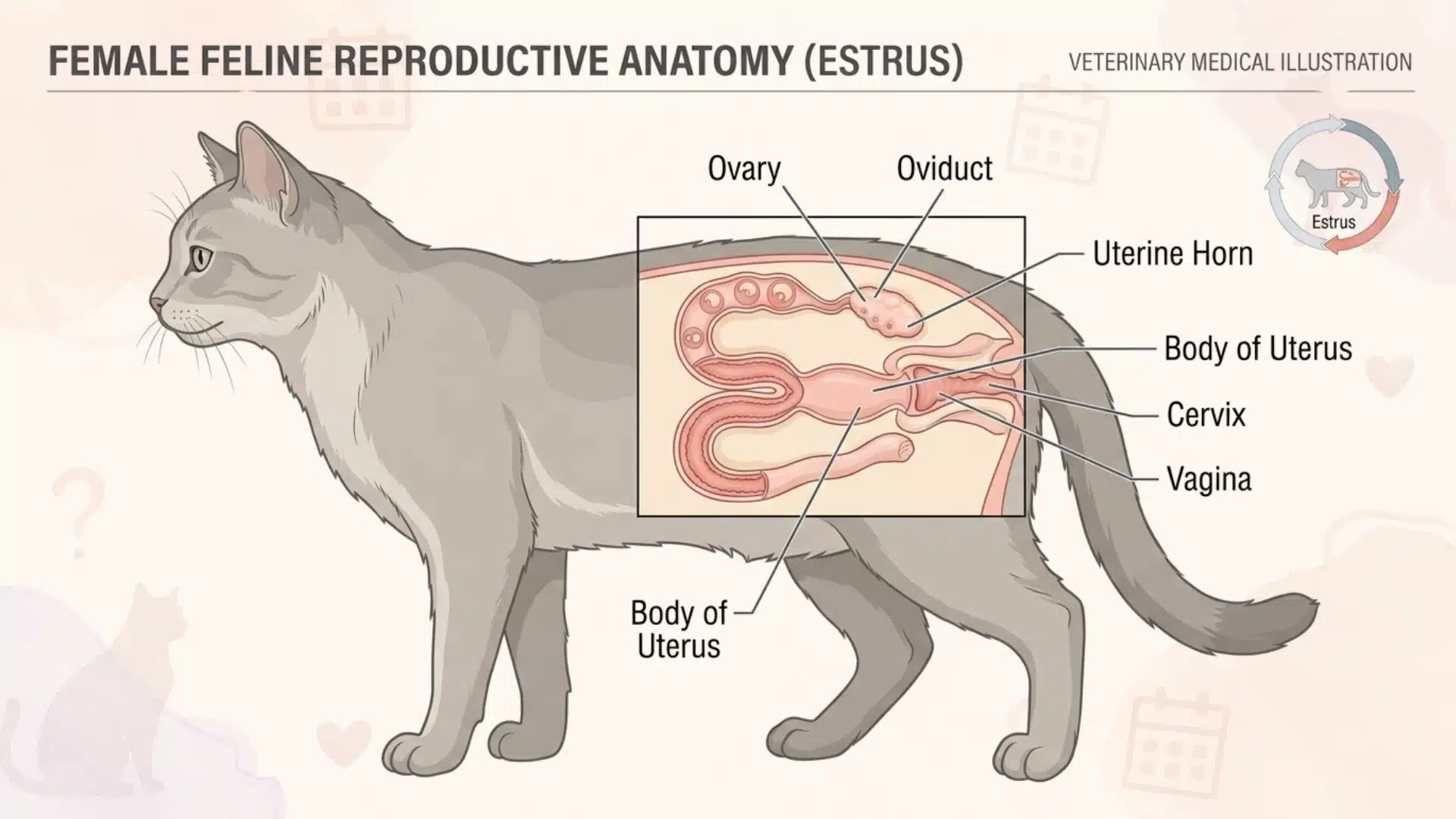
Unspayed female cats can go into heat repeatedly; veterinarians call them seasonally polyestrous.
This means they can have repeated heat cycles during the breeding season. In many areas of the Northern Hemisphere, this season can run from late January through October.
Indoor cats may cycle even more often because artificial lighting can affect their hormones.
A heat cycle often lasts around seven days, but it can be shorter or longer. Some cats stay in heat for only three days. Others may show signs for up to two weeks.
If mating does not occur, the cycle ends briefly. Then it can start again within two to three weeks. This means an unspayed cat may go through heat many times in a year.
For many owners, the repeated crying, restlessness, and escape attempts are what make spaying feel more urgent.
Behavior Changes During a Cat’s Heat Cycle
A cat in heat may act louder, needier, and more restless than usual. These signs are linked to mating behavior and can last several days.
If your cat is showing new or unusual behaviors and you’re unsure whether it’s heat or something else, it’s worth checking out signs of anxiety in cats, since the two can sometimes look similar.
- Loud yowling: Your cat may cry, wail, or yowl more than usual, especially at night. This sound is often a mating call meant to attract male cats.
- Restlessness: A cat in heat may pace around the house, seem unable to settle, or move from room to room looking for attention or escape routes.
- Rubbing: She may rub her face and body against people, furniture, walls, or doors. This spreads scent and signals that she is ready to mate.
- Rolling: Your cat may twist, stretch, and act unusually playful or dramatic while seeking attention from nearby people.
- Raised hindquarters: When touched near the lower back, she may lift her rear, lower her front body, and move her tail aside as a mating posture.
- Urine spraying: Some cats spray small amounts of urine on walls, furniture, or doors. This scent marking can attract males and advertise reproductive readiness.
- Escape attempts: She may sit near doors, scratch windows, or try to run outside. Indoor cats often become more determined to find a mate.
- Extra affection: Your cat may become clingier, follow people around, demand petting, or rub constantly.
If your cat has not been spayed and repeatedly goes into heat, discuss long-term management with your veterinarian. Spaying not only prevents heat cycles but also reduces the risk of several reproductive diseases.
Real Cat Owner Experiences: Is Bleeding During Heat Normal?
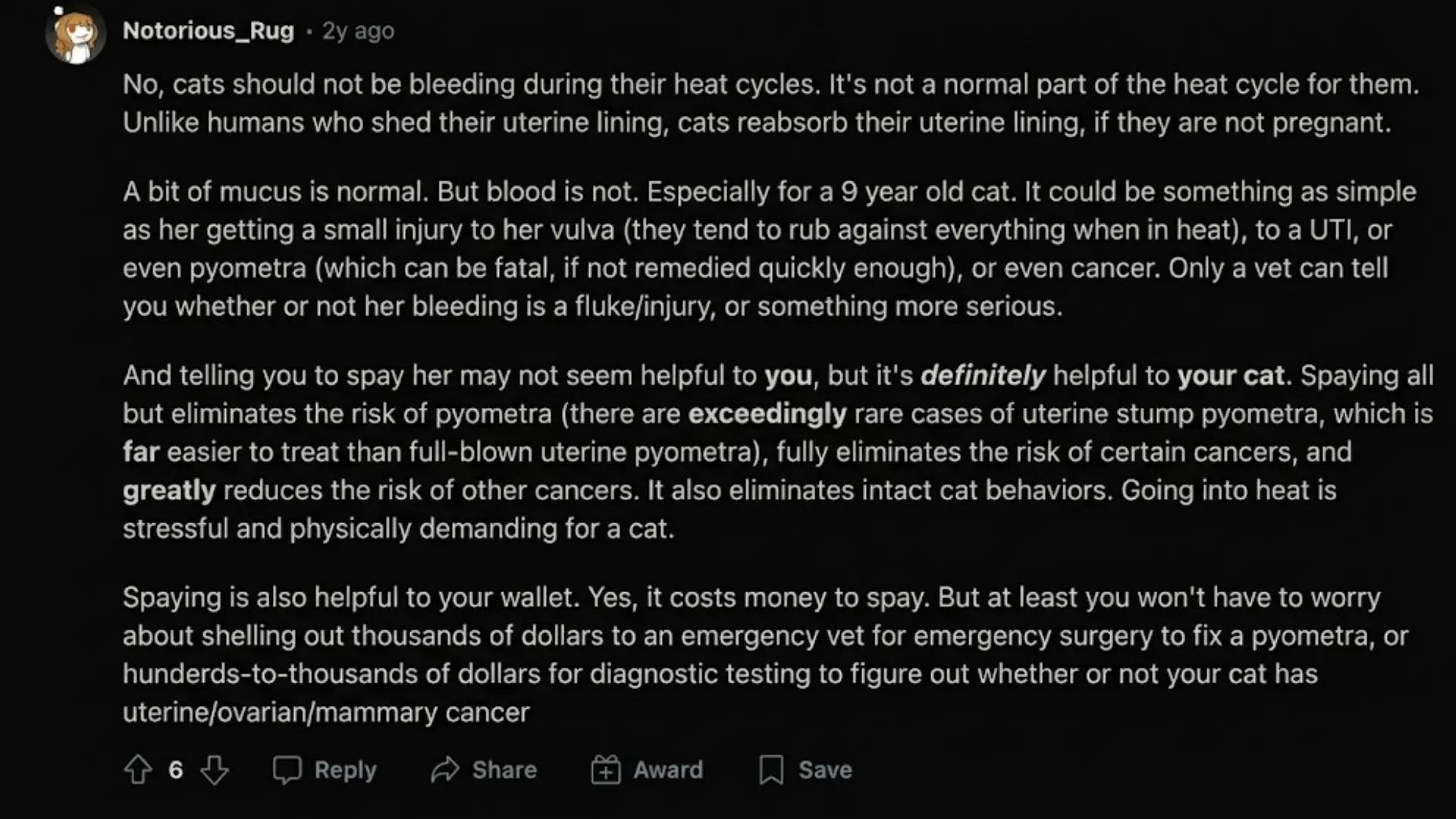
Reddit discussions show that many cat owners agree on one point: bleeding is not a normal sign of heat in cats.
Commenters often explain that cats do not shed the uterine lining the same way humans or dogs do.
Instead, their bodies usually reabsorb it, which is why visible blood is uncommon during estrus.
Some owners report that a small amount of mucus or very light discharge may occur, but actual bleeding should be taken seriously.
Common concerns shared in these discussions include urinary tract infections, minor injuries from rubbing, pyometra, and other health problems that require a vet’s opinion.
Many users also recommend spaying because it stops heat cycles and lowers the risk of serious reproductive conditions.
The main takeaway is simple: if a cat in heat is bleeding, do not assume it is normal.
When Bleeding Could Mean a Health Problem?
Bleeding during heat should not be treated as normal in cats. If blood appears in the urine, around the vulva, or on bedding, it may indicate an infection, injury, or another health issue that needs a vet check.
1. Urinary Tract Infection (UTI)
A UTI can cause blood to appear in your cat’s urine, which may look like vaginal bleeding.
Cats with a UTI may visit the litter box often, strain to pee, cry while urinating, or lick the genital area more than usual. Some cats may also pee outside the litter box.
A vet can test the urine and prescribe treatment if an infection is present.
2. Pyometra
Pyometra is a serious infection of the uterus that can happen in unspayed female cats. It may cause bloody or pus-like discharge, fever, low energy, vomiting, or a swollen belly.
Some cats become very sick quickly. This condition is an emergency because the infection can spread through the body.
Any unspayed cat with unusual discharge or sudden illness needs urgent veterinary care.
3. Vaginitis
Vaginitis means inflammation or infection in the vagina. It can cause redness, swelling, licking, discomfort, and abnormal discharge that may look pink or bloody.
Your cat may seem irritated or avoid being touched near her back end. Vaginitis can happen from bacteria, injury, or other irritation.
4. Trauma or Injury
Bleeding may come from a small cut, scratch, bite, or injury near the tail, vulva, anus, or inner thighs.
Cats can get hurt while escaping, fighting, overgrooming, or rubbing against rough surfaces. The blood may be mistaken for heat-related bleeding.
Check gently, but do not poke or clean deep wounds at home.
5. Bladder Stones
Bladder stones can irritate the bladder and urinary tract, causing blood in the urine.
Your cat may strain to urinate, urinate small amounts, cry in the litter box, or keep returning without passing much urine. This can become dangerous, especially if urine flow is blocked.
A vet may need urine tests, imaging, medication, or diet changes to treat the problem.
Why Cats Do Not Bleed Like Dogs?
Dogs and humans shed the uterine lining during their cycles, which can result in visible bleeding. Cats usually do not do this. During estrus, also called heat, a cat’s body reabsorbs the lining instead.
That is why cat heat signs are mostly behavioral. Owners usually notice loud crying, pacing, affection, and escape attempts rather than physical discharge.
A few cats may show a tiny amount of clear or lightly tinted discharge before full heat begins. This short stage is called proestrus. It usually lasts one to two days. Even then, the discharge is minimal and easy to miss.
Here are the main things to know:
- Cats usually do not have visible periods.
- Blood spotting is not a normal sign of heat.
- Most heat signs are behavioral.
- Light, clear discharge can happen, but it is uncommon.
- A vet should always check visible bleeding.
Can Spaying Prevent Heat Cycles and Related Problems?
Yes, spaying can prevent heat cycles and many related problems in female cats. Spaying removes the ovaries and usually the uterus, so the cat no longer goes into heat.
This means no repeated yowling, mating behavior, urine marking, or escape attempts linked to the heat cycle.
It also prevents unwanted pregnancy, which is important if a cat lives indoors but may slip outside.
Spaying can lower the risk of serious reproductive problems, including pyometra, a dangerous uterine infection.
It may also reduce the risk of mammary tumors, especially when done at a younger age.
Most cats recover well after spaying surgery with rest, pain control, and a recovery cone or suit. The right timing depends on the cat’s age, health, and vet advice.
How to Care for a Cat During Heat Cycle?
A cat in heat may become restless, vocal, and more demanding than usual. While you cannot stop the heat cycle at home, a few simple steps can help keep your cat calm, comfortable, and safe until it ends.
- Keep your cat indoors: Close doors and windows, and watch entry points carefully. Cats in heat often try to escape to find a mate, increasing the risk of injury or getting lost.
- Provide extra playtime: Physical and mental stimulation can help reduce restlessness and keep your cat focused on something other than mating.
- Create a quiet space: Set up a calm, comfortable area with a soft bed, away from loud noises and busy rooms, which may help reduce stress during the heat cycle.
- Give attention if wanted: Gentle petting, brushing, or sitting nearby can provide comfort, but let your cat decide how much interaction she wants.
- Keep the litter box clean: Scoop the litter box more often, especially if your cat is urinating frequently or spraying. A clean box encourages normal bathroom habits and makes changes easier to notice.
- Avoid hormone medications: Do not give hormone products or home remedies unless a veterinarian specifically recommends them. These treatments can have serious side effects and are not a safe long-term solution.
Conclusion
Cats in heat can act loudly, restlessly, and unusually affectionate, but bleeding should never be ignored.
If you notice blood, the safest step is to check where it is coming from and contact a vet, especially if your cat seems sick or uncomfortable.
Heat cycles are normal for unspayed cats, but repeated cycles can be stressful for both cats and owners.
Spaying is the best long-term answer. It stops heat cycles, prevents uterine infection, and helps protect your cat’s health.
Knowing what is normal makes it easier to respond quickly when something feels wrong.
Have you ever noticed unusual signs during your cat’s heat cycle? Share your experience in the comments below.
Frequently Asked Questions
Can Cats Have a Little Discharge Before Heat?
Yes, some cats may have a tiny amount of clear or lightly cloudy discharge before full heat begins. This stage is called proestrus and may last one to two days. A vet should check bloody, pus-like, or ongoing discharge.
How Long Does a Cat Stay in Heat?
A cat may stay in heat for about seven days on average. Some cats show signs for only a few days, while others may continue for up to two weeks.
Do Cats Stop Going into Heat with Age?
Cats do not go through menopause like humans. An unspayed female cat can continue cycling throughout adult life, although cycles may become less frequent with age.
Can a Cat Go into Heat While She’s Nursing Kittens?
Yes, it’s possible. Cats can return to heat relatively quickly after giving birth, sometimes within a few weeks, even while still nursing a litter.