


We all know that moment. You go to meet one puppy and come home with two. They were tumbling over each other, completely inseparable, and the breeder said it would be easier. How could you possibly split them up?
Two puppies at once sounds like double the love. In reality, it can quietly become one of the most frustrating situations a dog owner faces, sometimes for years.
Littermate syndrome doesn’t show up right away. It sneaks in during adolescence, building slowly until the problems feel overwhelming.
Understanding what it is, how to spot it early, and what you can actually do about it can make the difference between two thriving dogs and a household stuck in survival mode.
What is Littermate Syndrome in Dogs?
Littermate syndrome is a term used to describe behavioral issues that arise when two puppies from the same litter or from different litters of similar age grow up together in the same home.
The core problem is that the puppies bond so intensely with each other that they miss out on the normal developmental milestones every dog needs to go through on its own.
During a puppy’s early growth stages, they’re supposed to form deep individual bonds with their human family, learn to handle new situations, and build confidence as independent creatures.
When two puppies go through this window side by side, they often end up using each other as a crutch instead. One sibling becomes the emotional anchor for the other.
Why Does Littermate Syndrome Develop?

Littermate syndrome develops when two puppies grow up closely bonded, making it harder for each dog to build confidence, independence, and trust on their own.
- Critical socialization overlap: Puppies raised together during the 3 to 16-week socialization window may rely on each other instead of learning confidence separately.
- Over attachment: Each puppy may bond more deeply with its sibling than with the owner, which can weaken training, trust, and human connection.
- Limited individual experiences: When puppies meet new people, sounds, places, and routines only as a pair, they may struggle to handle situations alone.
- Shared emotional reactions: One puppy’s fear, stress, or excitement can quickly influence the other, making nervous or reactive behavior stronger over time.
- Dependency loop: Constant companionship can make both puppies depend on each other for comfort, instead of building calm, independent behavior as individuals.
Signs of Littermate Syndrome to Watch for
Signs of littermate syndrome may appear early, but they often become more noticeable as puppies grow into adolescence and become harder to manage. Here are the ones to look out for:
1. Extreme Distress When Separated
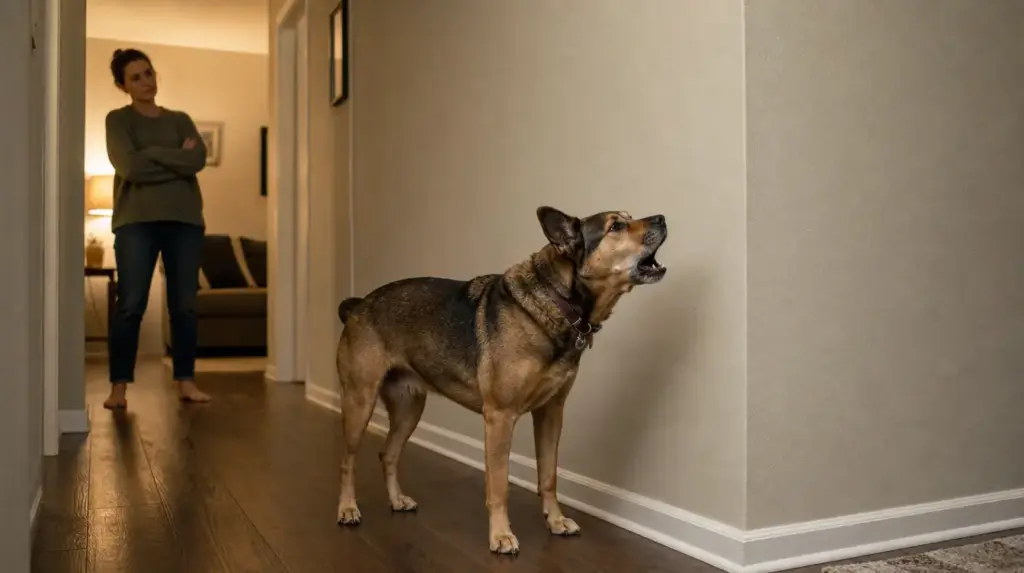
One of the clearest signs is strong distress when the puppies are apart. A puppy may whine, bark, howl, scratch doors, refuse food, or panic when its sibling leaves the room.
Some upset is normal with young puppies, but littermate syndrome goes beyond mild adjustment. The reaction feels intense, repeated, and hard to calm.
Over time, this can turn into serious separation anxiety if both dogs never learn to feel safe alone.
2. Hyper Focus on the Sibling
Puppies with littermate syndrome may focus almost completely on each other when they are together. They may ignore people, toys, treats, sounds, or basic commands because their attention stays locked on the sibling.
This can make bonding with humans much harder. Instead of looking to the owner for guidance, comfort, or direction, each puppy depends on the other.
This strong pair focus can slow emotional growth and make daily training more difficult.
3. Fear of Unfamiliar Things
Puppies need individual experiences to build confidence in the world around them. When two puppies always face new people, places, noises, and routines together, they may never learn how to handle these moments alone.
As they grow, both dogs may become nervous around strangers, other dogs, traffic, grooming, vet visits, or new homes.
Their fear can also spread between them, making both puppies more anxious in situations that should feel manageable.
4. Training Difficulties
Training can become harder when both puppies are always present. One puppy may copy the other, wait for the other to move, or lose focus completely.
Commands may seem to work one day and fail the next because neither dog is learning as an individual. Owners may feel like the puppies are listening to each other more than to them.
Separate training is often needed so each dog can build focus, confidence, and trust.
5. Sibling Aggression
As puppies mature, tension between them can become more serious. What starts as rough play may turn into guarding toys, food, beds, attention, or space.
One dog may become pushier while the other becomes nervous or defensive. Fights can happen suddenly, especially during feeding, excitement, or stressful moments.
Not every pair develops aggression, but when it appears, it should be taken seriously and handled with professional support.
6. Uneven Development
Littermate syndrome can affect each puppy differently. One dog may become shy, anxious, and dependent, while the other becomes bold, controlling, or demanding.
This imbalance can create stress in the relationship and make behavior problems worse over time. The quieter puppy may struggle to gain confidence, while the stronger personality may take over most interactions.
Without separate routines, both dogs can miss the chance to grow into balanced individuals.
Do Dogs Remember Their Siblings?
Dogs can remember siblings they lived with, but recognition depends mostly on scent and shared time.
Puppies learn their littermates’ smell early, so recognition is strongest when they stay together or meet again after a short separation.
If siblings are separated young and spend years apart, that familiar bond can fade. Some dogs may still react with interest, but it does not mean they understand family the way humans do.
For littermate syndrome, the bigger issue is daily life together. Two puppies that sleep, play, train, and face stress together can become overly dependent.
Risks of Littermate Syndrome in Dogs
These risks can affect daily routines, long-term behavior, and the relationship between the dogs, making early management important for a stable home over time.
- Chronic anxiety issues: Ongoing stress, fear-based reactions, and separation distress when apart from the sibling over time in daily life
- Poor impulse control: Difficulty staying calm, focused, or responsive in new environments, distractions, and unfamiliar real-world situations
- Weak human bonding: Reduced attachment, delayed trust building, and slower relationship development with owners in everyday interactions
- Reactive behavior: Overreaction, fear responses, or heightened sensitivity toward strangers, noises, and unfamiliar surroundings in most situations
- Escalating dominance issues: Increasing competition, tension, resource guarding, or aggression between the two dogs as they continue to mature
- Inconsistent training progress: Commands and routines learned unevenly, with poor transfer of skills across different environments and training settings
- High owner burnout: Significant emotional strain, physical effort, and ongoing time pressure on owners managing both puppies together daily
How to Prevent Littermate Syndrome in Dogs?

If you’ve already brought home two puppies and want to give them the best shot, the work starts immediately. Waiting until problems appear is much harder than building good habits from day one.
1. Separate Training Sessions
Train each puppy alone, in a different room, with no distractions from the sibling. This is non-negotiable. Puppies trained only together never develop the individual focus they need.
Keep sessions short (5 to 10 minutes), use positive reinforcement, and repeat daily. Once each puppy can perform basic commands reliably on their own, you can begin practicing together.
2. Individual Walks and Outings
Take each puppy out alone. Yes, this means twice the walks, twice the errands. It’s a real-time commitment. But these solo outings are where confidence gets built.
A puppy that only ever experiences the world next to its sibling never learns that it can handle anything on its own. Solo trips to the park, quiet streets, or a friend’s yard do more for long-term behavior than almost anything else.
3. Separate Crates and Sleeping Areas
Understanding how to crate-train your puppy is very important here. Each dog should have its own crate, ideally in a separate room or at least out of sight of the others.
This teaches them to self-soothe rather than look sideways at their sibling for emotional reassurance. Puppies that share a crate or sleep in a pile every night are building exactly the kind of dependency that causes problems later.
4. Feed Separately
Shared mealtimes can lead to competition and resource guarding among littermates. Feed them in separate spaces, supervise closely, and pick up the bowls when done.
Food-related tension between siblings can accelerate aggression faster than almost any other trigger in multi-puppy households over time
5. Solo Socialization
Each puppy needs its own experiences with new people, dogs, sounds, and environments. Arrange separate playdates, take them to different places on different days, and build each one’s social confidence separately.
Two puppies experiencing the same new thing together don’t build individual resilience. They borrow courage from each other in the moment and never develop their own.
Common Mistakes That Make Littermate Syndrome Worse
Many owners unintentionally reinforce dependency behaviors, which can increase the risk and severity of littermate syndrome over time.
- Keeping puppies together constantly: Allowing them to stay together all day without separation prevents independence and strengthens emotional over-dependence on each other over time
- Training both puppies together: Conducting joint training sessions reduces attention span, weakens focus on the handler, and slows down individual learning progress significantly
- Skipping solo socialization: Not taking each puppy out separately limits exposure to new people, sounds, and environments, reducing confidence-building experiences in real-world situations
- Allowing shared sleeping spaces: Letting puppies sleep together in the same crate or bed increases emotional reliance and reinforces dependency instead of calm, independent rest
- Feeding without separation: Feeding both puppies together in the same space can create competition, tension, and early signs of food-related guarding behavior between them
- Avoiding individual attention: Failing to spend one-on-one time with each puppy prevents strong human bonding and slows down emotional development as independent, confident dogs
Does Littermate Syndrome Apply to Non-Sibling Puppies?
Yes. Littermate syndrome can apply to non-sibling puppies as well.
It is not about genetics or being from the same litter, but about age and development. When two puppies of a similar age are raised together during the critical socialization period, they can form the same kind of over-dependent bond.
This is especially likely when both puppies:
- Arrive at the home at the same time or close together in age
- Spend most of their time together without separation
- Rely on each other for comfort in new situations instead of engaging with humans
- Are trained, walked, and socialized as a pair rather than as individuals
Is It Ever Okay to Adopt Two Puppies Together?
The honest answer from most trainers is: it depends on you. Not on the dogs.
If you have the time to provide individual training, walks, socialization, and crate time every single day for months, then two puppies can be raised without serious issues.
If you want two dogs, the safer and kinder route is to adopt one puppy, let that puppy complete the socialization window and have a solid foundation in basic training, then add a second dog at least six months later.
It allows proper spacing so each dog develops as an individual first, building confidence and independence before becoming a balanced household companion.
Conclusion
Littermate syndrome is a real risk, not a parenting failure and not a foregone conclusion. Two adorable puppies aren’t guaranteed to develop it.
If you’re already raising siblings, consistent effort starting now makes a real difference. Treat them as two dogs with two separate lives that happen to share a home.
The shift, applied early and daily, is what gives both of them a real shot at growing into confident, happy adults who enjoy each other’s company without depending on each other.
Have you raised littermates or sibling puppies close in age? We’d love to hear what worked for you. Share your experience in the comments below.
Frequently Asked Questions
Are Certain Dog Breeds More Prone to Littermate Syndrome?
No breed has been specifically shown to be at higher risk. However, working and high-energy breeds are often mentioned by trainers. The main factor is management, not genetics.
Does Littermate Syndrome Affect Cats the Same Way as Dogs?
No. Cats generally do not develop the same level of co-dependency. Kittens raised together usually adapt well and are often recommended for adoption in pairs.
Is Littermate Syndrome the Same as Separation Anxiety?
No, they are different. Separation anxiety can involve distress when away from people, while littermate syndrome centers on unhealthy dependence between two puppies.