The Whoodle dog breed is one of those sweet surprises, a fluffy, bright-eyed companion that feels like joy on four paws.
Maybe you have seen one bouncing through a park, looking part teddy bear and part best friend, and wondered what kind of dog could be that charming.
The Wheaten Poodle mix brings together the playful spirit of the Soft Coated Wheaten Terrier and the clever nature of the Poodle, creating a dog that many families quickly fall in love with.
But behind that cute face is a breed with real needs, big feelings, and plenty of energy.
Before bringing one home, it helps to know what life with a Whoodle may actually feel like day to day, from cuddles to care.
What is a Whoodle Dog Breed?

A Whoodle is a cross between a Soft Coated Wheaten Terrier and a Poodle.
You may also see names like Wheatendoodle, Wheatenpoo, Sweatenpoo, or wheaten poodle mix, but they all point to the same hybrid.
The breed became more popular as families began seeking low-shedding, smart, people-focused dogs with strong companion traits.
The goal was to combine the Wheaten Terrier’s friendly, playful nature with the Poodle’s intelligence and curly coat. Both parent breeds have working backgrounds.
The Wheaten began as an Irish farm dog used for herding, guarding, and vermin control. The Poodle was originally bred as a water retriever.
That history matters because Whoodles often inherit energy, alertness, trainability, and a strong need for daily activity and human connection. They are usually best for homes that enjoy training and routine.
Key Facts About the Whoodle Breed
A Whoodle suits owners who can manage grooming, training, exercise, and close companionship.
| Category | Details |
|---|---|
| Physical features | Soft Coated Wheaten Terrier and Poodle cross with a wavy or curly low shedding coat, floppy ears, round eyes, and teddy bear face |
| Size and weight | Miniature: 15 to 30 lbs. Medium: 20 to 45 lbs. Standard: 45 to 65 lbs |
| Diet needs | Quality food matched to size, age, activity, and body condition, with measured portions |
| Temperament | Affectionate, smart, energetic, social, curious, people-focused, and sometimes stubborn |
| Lifespan | Usually 12 to 15 years, with smaller Whoodles often reaching the higher end |
| Exercise | Daily walks, play, training, fetch, swimming, and puzzle work |
| Grooming | Brush often and book professional grooming every four to eight weeks |
| Vet care | Watch for hip dysplasia, eye disease, Addison’s disease, allergies, ear infections, and inherited parent breed risks |
What Does a Whoodle Look Like?
Whoodles vary in size; they can be toy, miniature, or standard. This means one Whoodle may suit an apartment, while another needs the space and handling of a larger dog.
Their coat is usually soft, wavy to curly, and low shedding, but not completely shed-free. Colors can include cream, tan, red, chocolate, black, silver, or parti patterns.
Coat texture tends to be silkier than wiry, reflecting the Wheaten influence with added Poodle curl.
- Miniature Whoodle: Usually 15 to 30 pounds and 12 to 15 inches tall.
- Medium Whoodle: Often 20 to 45 pounds, depending on the Poodle parent.
- Standard Whoodle: Can reach 65 pounds and is about 20 inches tall.
Most Whoodles have round eyes, a rounded muzzle, and curly facial hair that gives them the teddy bear look people notice first.
Whoodle Dog Breed Temperament and Personality
Whoodles are highly attached family dogs. They often follow their people from room to room, lean close during daily routines, and greet short absences with big excitement.
The Wheaten Terrier side brings confidence, curiosity, and a touch of stubbornness. If something catches their attention during training, they may investigate first and listen second.
The Poodle side adds sharp intelligence and a stronger desire to please.
The AKC recognizes Poodles as one of the most intelligent dog breeds, and that shows in how quickly many Whoodles learn. The challenge is consistency.
A Whoodle can be clever, loving, and frustrating in the same hour. Many greet people with jumping, wiggling, and intense enthusiasm, especially standard-sized dogs.
They are not quiet couch companions. They suit active families who can handle energy, training, and a dog with opinions.
How Easy is a Whoodle to Train?
Whoodles are smart enough to learn quickly and bored enough to cause trouble when their brains have nothing to do.
Training, puzzle toys, scent games, and interactive play should be part of daily care, not occasional extras.
Positive reinforcement works best because this mix responds well to treats, praise, and play.
Harsh corrections can make them shut down or push back. Keep sessions short, around 10 to 15 minutes, and change the task before repetition makes them lose interest.
The Poodle side usually enjoys learning, while the Wheaten side may question the rules before cooperating. Early socialization matters too.
Puppies exposed to people, sounds, places, and other pets between 8 and 16 weeks often become steadier adults.
With patient training, many Whoodles can do well in therapy, service, or advanced obedience work.
Grooming a Whoodle: What to Expect
A Whoodle’s coat is low-shedding, but it is not low-maintenance.
It can mat fast if brushing is skipped, especially behind the ears, under the collar, in the armpits, along the belly, and near the tail base.
Daily brushing helps prevent painful knots, while professional grooming every four to eight weeks keeps the coat easier to manage.
- Ears: Check the ears weekly for redness, bad odor, moisture, or wax buildup because floppy ears can trap dirt and lead to irritation.
- Nails: Trim the nails every two to three weeks, or sooner if they click on the floor, to keep walking comfortable.
- Bathing: Bathe your Whoodle every four to six weeks, or sooner after mud, odor, outdoor play, or anything messy.
- Teeth: Brush the teeth several times a week to help reduce tartar, freshen breath, and support better long-term dental health.
Professional groomer services should come from someone experienced with doodle coats who can prevent mats, trim safely, and suggest a cut that fits your Whoodle’s coat type and brushing routine
How Much Exercise Does a Whoodle Need?
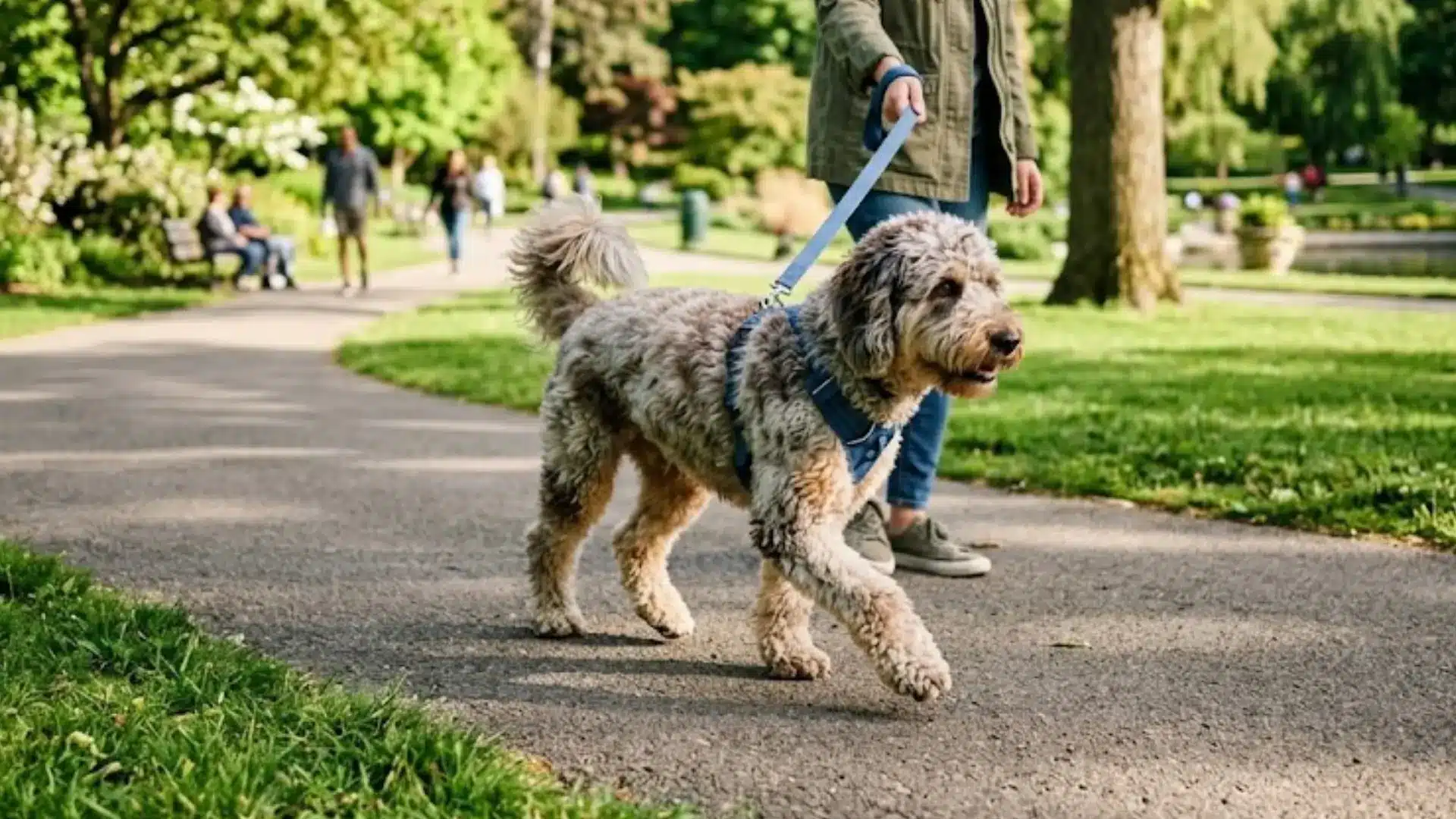
A standard Whoodle usually needs 60 to 90 minutes of exercise each day, while miniature Whoodles often do well with 45 to 60 minutes.
Whoodles need daily movement and mental work to stay calm. A slow walk alone is usually not enough, especially for young or high-energy dogs. Under-exercised Whoodles may bark, chew, scratch doors, jump more, or struggle to settle at night.
- Daily walks: Plan two steady walks each day, one in the morning and one in the evening, to help your Whoodle release energy and stay balanced.
- Swimming: Many Whoodles enjoy water because of the Poodle’s background, but swimming should be introduced slowly, safely, and always with close supervision.
- Fetch and chase games: Games like fetch, chase, or tug can help burn energy quickly while also giving your Whoodle fun bonding time with family.
- Puzzle feeders: Puzzle feeders turn mealtime into a brain workout, helping reduce boredom, slow eating, and keep your Whoodle mentally satisfied on busy days.
- Training sessions: Short training sessions work best for Whoodles because they keep learning fun, prevent frustration, and help improve focus, manners, and confidence.
How Long Do Whoodles Live?
Whoodles usually live 12 to 15 years. Hybrid breeding may reduce certain inherited risks, but it does not automatically make the breed healthy.
A Whoodle can still inherit conditions from the Soft Coated Wheaten Terrier and Poodle, so health testing and routine vet care matter due to the following health concerns:
- Hip dysplasia: It can cause stiffness, pain, limping, and mobility trouble, especially in larger Whoodles as they age or gain weight.
- Protein-losing nephropathy: It is linked to Wheaten Terriers, so responsible breeders should screen parent dogs before breeding Whoodle puppies
- Progressive retinal atrophy: This may cause gradual vision loss, making regular eye checks important if a Whoodle shows cloudy eyes or night blindness.
- Addison’s disease: It can affect hormone balance, energy, appetite, and stress response, and some dogs may need lifelong veterinary treatment.
- Von Willebrand’s disease: It may affect normal blood clotting, which may lead to unusual bleeding after injury, surgery, or nail trimming.
- Allergies and skin sensitivity: Allergies may appear as itching, redness, ear infections, paw licking, hot spots, or recurring skin irritation that needs vet attention.
This is general breed information, not veterinary advice. Ask a licensed veterinarian about your dog’s health needs.
Feeding and Nutrition Requirements for a Whoodle
A Whoodle’s diet should match size, age, activity level, and body condition, not a generic breed formula.
A standard Whoodle that runs daily will need more calories than a miniature Whoodle with lighter walks, so portions should be adjusted with your vet’s guidance.
Puppies usually need three to four small meals a day; adults do well with two meals; and seniors may need fewer calories with added joint support.
Most Whoodles do well on high-quality commercial food made for active small, medium, or large dogs, depending on their size.
Look for named proteins such as chicken, salmon, or beef as the first ingredient.
Since Whoodles can have allergies, itchy skin, ear infections, or stomach upset, they may require a limited-ingredient or hydrolyzed diet.
Keep treats under ten percent of daily calories, and use puzzle feeders for mental work.
Are Whoodles Good Family Dogs?
Whoodles can be excellent family dogs when the home matches their energy and training needs. They are usually affectionate, playful, social, and tolerant of normal household noise.
Many enjoy children and do well with families who want an involved companion rather than a quiet background dog. The main challenge is excitement.
A standard Whoodle can knock over toddlers while jumping or greeting, so supervision and early manners training matter.
Mini Whoodles may be easier around younger kids because of their smaller size.
With other pets, Whoodles often do well when socialized early, though small animals need careful introductions because of the terrier’s prey drive.
When comparing the best dog breeds for the family, focus on temperament, size, energy level, and the amount of daily attention the dog needs.
Pros and Cons of Owning a Whoodle
Every Whoodle comes with a big upside and a real workload.
This breed can be loving, clever, low-shedding, and hilarious to live with, but it also needs grooming, training, daily exercise, and owners who can handle a needy shadow.
Pros | Cons |
Low shedding, allergy-friendlier coat | Daily brushing is needed, and mats form easily |
Very affectionate and people-focused | Can get anxious when left alone often |
Smart and quick to learn | Terrier’s stubbornness needs steady training |
Mini to standard size options | Larger Whoodles need more space and exercise |
Great for active homes | Not ideal for owners wanting an easy, mellow dog |
12 to 15-year lifespan | Puppy price can reach $1,500 to $3,000+ |
The happiest Whoodle homes understand both sides before committing, because the charm is real, but so is the responsibility.
Whoodle Puppy: What to Know Before You Buy
A Whoodle puppy from a responsible breeder usually costs $1,500 to $3,000 or more, depending on location, breeder reputation, size, and coat color.
That price should include proof of responsible breeding, not just the puppy. Ask for parent health testing for PLN, PRA, hip dysplasia, and von Willebrand’s disease.
A good breeder should also show vet records, explain early socialization, answer questions clearly, allow a facility visit, and provide a contract with a health guarantee and return clause.
Avoid breeders who refuse visits, always have many litters available, lack health documents, or pressure you to decide quickly. Rescue is also worth considering.
Whoodles appear in doodle rescues and general shelters, often because owners underestimated grooming, exercise, or training needs.
An older rescue may need patience, but the lower cost and known adult temperament can help.
How to Spot a Well-Bred Whoodle Puppy?
A well-bred Whoodle puppy should be curious, alert, and steady around people. Look for engagement, quick recovery after mild startles, and normal interest in toys, sounds, and handling. Avoid puppies that hide, freeze, shake, or seem detached.
- Meet the parents if possible: Calm, friendly parents are a better sign than anxious or reactive ones.
- Ask for health testing records: Look for PLN, PRA, hip dysplasia, and von Willebrand’s disease screening.
- Discuss coat changes: Puppy fluff can change between six and twelve months.
- Ask about adult size: This matters most when choosing between mini, medium, and standard Whoodles.
- Review temperament notes: Puppy aptitude testing can help match the right puppy to the right home.
- Watch body posture: A steady puppy moves forward, sniffs, explores, and checks back without panic.
Conclusion
A Whoodle can turn an ordinary house into a louder, busier, happier place. They are not effortless dogs, and that is exactly why choosing one should be intentional.
The brushing, training, exercise, and clingy devotion all come as part of the package. But for the right owner, those same demands become part of the bond.
A well-matched Whoodle is the dog waiting by the door, making you laugh when you are tired, and turning daily routines into shared rituals.
Before bringing one home, be honest about your time, patience, and energy.
Are you already a Whoodle parent, or are you still deciding? Share your thoughts below.
Frequently Asked Questions
Do Whoodles Bark a Lot?
Whoodles are not usually excessive barkers, but they are alert and may bark at strangers, at doorbells, at unfamiliar noises, or at movement outside. Barking often gets worse when they are bored, under-exercised, or left alone too long.
Are Whoodles Hypoallergenic?
No dog is fully hypoallergenic, including Whoodles. Their low-shedding coat may shed less loose hair and dander than many breeds, which can help some allergy-sensitive homes. Still, reactions vary from person to person and from dog to dog.
Can Whoodles Be Left Alone During the Day?
Whoodles bond closely with their families and do not handle long hours alone very well. Many adults can manage four to six hours if they get exercise, potty time, and mental stimulation first. Longer absences may lead to barking, anxiety, chewing, pacing, or scratching at the door. A dog walker, midday visit, daycare, or trusted neighbor can make the routine easier.
What Generation Whoodle is Best?
An F1 Whoodle is a first-generation cross (one Wheaten Terrier parent, one Poodle parent). F1B means one parent was an F1 Whoodle and the other was a Poodle, which tends to increase coat curl and reduce shedding further. Most breeders work with F1 or F1B generations.