


One small corn cob can turn a relaxed dinner into a vet call faster than most pet parents expect.
Many dogs can enjoy plain corn kernels in small amounts, but the cob is the real danger because it does not digest or pass easily.
That is why the question can dogs eat corn needs a clear answer, not a guess. As a certified pet nutritionist, I always remind pet parents that safe foods can become risky when served the wrong way.
This blog post explains which parts of corn are safe, why corn on the cob can cause blockage, what warning signs to watch for, and how to serve corn in a simple, safer way so meals stay calm and your dog stays protected.
Can Dogs Eat Corn?
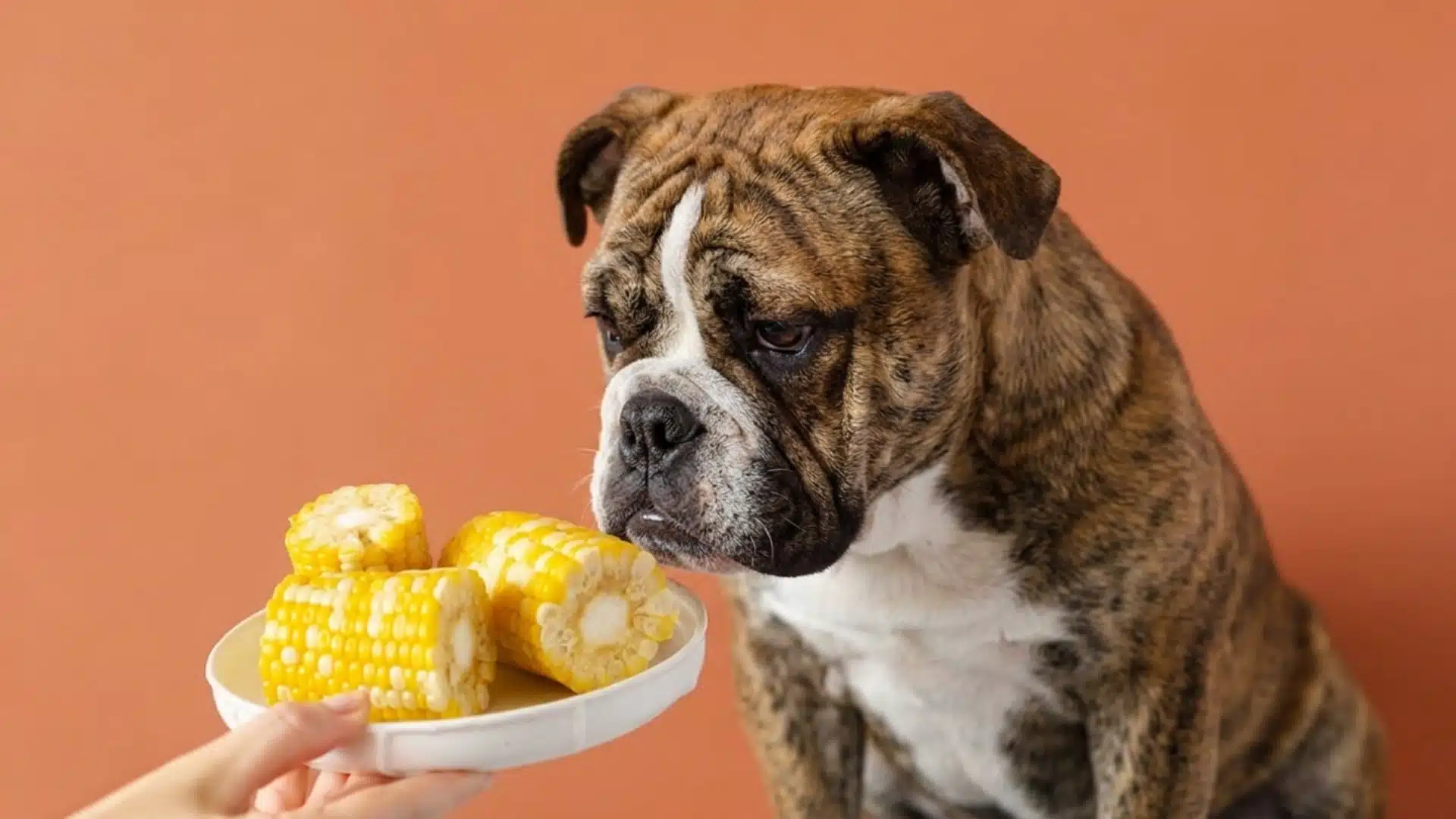
Yes, dogs can eat corn, but only when it is served the right way. Plain cooked corn kernels are safe for healthy dogs in small portions.
They should be removed from the cob and served without butter, salt, garlic, onion powder, chili, or other seasonings.
Corn can add carbohydrates, fiber, and small amounts of vitamins and minerals, but it should stay as a treat or meal topper, not replace balanced dog food.
Corn cobs are unsafe because dogs cannot digest them. Swallowed pieces can get stuck in the stomach or intestines and may require emergency treatment. Corn husks should also be avoided because they can cause choking or digestive blockage.
Corn can be included alongside other dog-safe vegetables as an occasional addition to a balanced diet.
Nutritional Breakdown of Corn for Dogs
Corn is mostly carbohydrate, but it carries a useful mix of vitamins, minerals, and plant compounds that make it more than just a filler. The linoleic acid content, in particular, is worth noting for dogs with dry skin or a dull coat.
| Nutrient | Amount per 100 g |
|---|---|
| Calories | 86 |
| Water | 76 g |
| Carbohydrates | 19 g |
| Fiber | 2.7 g |
| Protein | 3.2 g |
| Fat | 1.2 g |
| Key vitamins | B1, B3, B5, B6, C, E, K |
| Minerals | Magnesium, phosphorus, potassium, manganese |
| Notable compounds | Linoleic acid, beta-carotene, lutein, zeaxanthin |
Their regular complete dog food should always carry the bulk of their nutrition. If you want to compare how corn stacks up against other fruits or vegetables, our can dogs eat blueberries guide breaks down a very different but equally useful option.
Risks of Feeding Corn to Dogs
Corn is safe for most dogs, but a few risks are worth knowing before it becomes a regular part of the bowl. The kernels themselves are generally well-tolerated, but how corn is prepared and how much is given can quickly change the picture.
1. Weight Gain From Extra Carbohydrates
Corn contains more carbohydrates than many low-calorie vegetables, so it can add extra calories quickly when served often.
This matters most for dogs that are overweight, older, less active, or already eating a calorie-dense diet. A few plain kernels as a topper are different from adding corn every day in large amounts.
Too much corn can slowly push a dog past its daily calorie needs. Keep portions small and count corn as a treat, not a main food.
2. Blood Sugar Concerns for Diabetic Dogs
Dogs with diabetes need careful control of carbohydrates because food can affect blood glucose levels.
Corn is not toxic, but it contains starch, which breaks down into sugar during digestion. That can make it a poor choice for some diabetic dogs unless a veterinarian approves it.
Corn should not be added casually to a diabetic dog’s meals, even in plain cooked form. Safer snack choices may depend on the dog’s insulin plan, weight, activity level, and daily diet.
3. Added Salt to Canned Corn
Canned corn often contains added sodium, which can make it a poor choice for dogs when served straight from the can.
Dogs do need sodium in their diet, but balanced dog food already supplies the right amount for most pets. Extra salty foods can increase thirst and may be risky for dogs with heart, kidney, or blood pressure concerns.
Use low-sodium canned corn when possible. Rinse the kernels under water before serving to reduce surface salt.
4. Digestive Upset or Food Sensitivity
Some dogs may get loose stool, gas, vomiting, or stomach discomfort after eating corn, especially if they are not used to it.
This reaction does not always mean an allergy. It can happen when a new food is introduced too quickly or served in a larger portion than the dog can handle.
Start with a few plain cooked kernels and watch the next bowel movement. Stop feeding corn if itching, repeated vomiting, diarrhea, or appetite loss appears.
5. Corn Cob Blockage Risk
The corn cob is the most serious risk. Dogs cannot digest the cob, and swallowed pieces can get stuck in the stomach or intestines.
This can block food and fluid from moving normally through the digestive tract. Warning signs may include vomiting, belly pain, bloating, tiredness, loss of appetite, diarrhea, or straining to poop.
A dog may still look normal at first, so do not wait for symptoms. Call a veterinarian right away if any cob was swallowed.
Can Dogs Eat Corn on the Cob?
No. Corn on the cob is not safe for dogs, as the cob itself is not digestible.
A dog can chew it, swallow pieces, and appear fine for hours, but inside the body, those fragments don’t break down.
Instead, they can lodge in the stomach or intestine, expand as they absorb moisture, and create a blockage that can’t move on its own. An intestinal blockage is a medical emergency.
It stops food and fluids from passing through the digestive tract, causes progressive pain and tissue damage, and in many cases requires surgery to resolve.
Smaller dogs face the highest risk from smaller cob fragments, but there’s no size of dog for which a corn cob is safe.
Note: If you suspect your dog has eaten any part of a corn cob, treat it as urgent. Contact your veterinarian immediately, even if your dog appears well. Do not wait for symptoms.
What to Do If Your Dog Eats a Corn Cob
A swallowed corn cob can become an emergency, so quick notes, a vet call, and close symptom checks matter more than waiting at home alone.
- Stay calm and act fast: Do not wait for symptoms to appear. A corn cob can cause a blockage before a dog shows clear outward signs, so quick action matters.
- Check how much was eaten: Note whether your dog chewed a small piece, swallowed a chunk, or ate most of the cob. Also, write down when it happened.
- Call your vet immediately: Give your dog’s weight, the amount of cob eaten, and the time of ingestion. Use an emergency animal clinic if your regular vet is closed.
- Do not induce vomiting at home: Only make your dog vomit if a veterinarian tells you to. Cob pieces can create more danger when coming back up.
- Watch for warning signs: Look for vomiting, repeated retching, loss of appetite, tiredness, bloating, belly pain, whining, or straining to poop while speaking with the vet.
How to Serve Corn to Your Dog Safely
Serving corn the right way takes almost no effort. The safety decisions happen before the corn reaches the bowl.
- Cook it first: Raw corn is harder for dogs to digest. Cooked kernels are softer, safer, and more accessible nutritionally. Plain boiled or steamed is the best preparation.
- Cut off the cob: Never hand your dog an ear of corn, even briefly. The cob is the hazard, and once a dog has it, redirecting them is harder than you’d think.
- Keep it plain: Butter, salt, garlic, and other seasonings typically used on corn are harmful to dogs. Plain is the only version worth serving.
- Watch the portion: Corn is high in carbohydrates. A tablespoon or two of kernels mixed into a meal or served as a treat is appropriate.
- Canned corn with caution: Canned corn often contains added sodium. Check the label and opt for low-sodium varieties, or rinse the kernels under water before serving.
- Frozen corn: Plain frozen kernels are completely safe, and many dogs enjoy the texture. Check the ingredient list to confirm there are no added salt or seasonings before buying.
Can Dogs Eat Corn Every Day?
Corn can be given regularly in small amounts without causing harm to most healthy dogs.
There’s nothing in plain cooked corn kernels that makes daily feeding problematic, as long as the portion stays small and fits within the overall treat allowance.
The practical considerations are the calorie and carbohydrate loads.
Corn is higher in carbs than most vegetables, so a dog that already eats a carb-heavy diet doesn’t need corn on top of it every day.
For dogs managing diabetes or weight issues, it’s worth a conversation with a vet before adding corn to the regular rotation.
For most dogs, the smarter long-term approach is rotation.
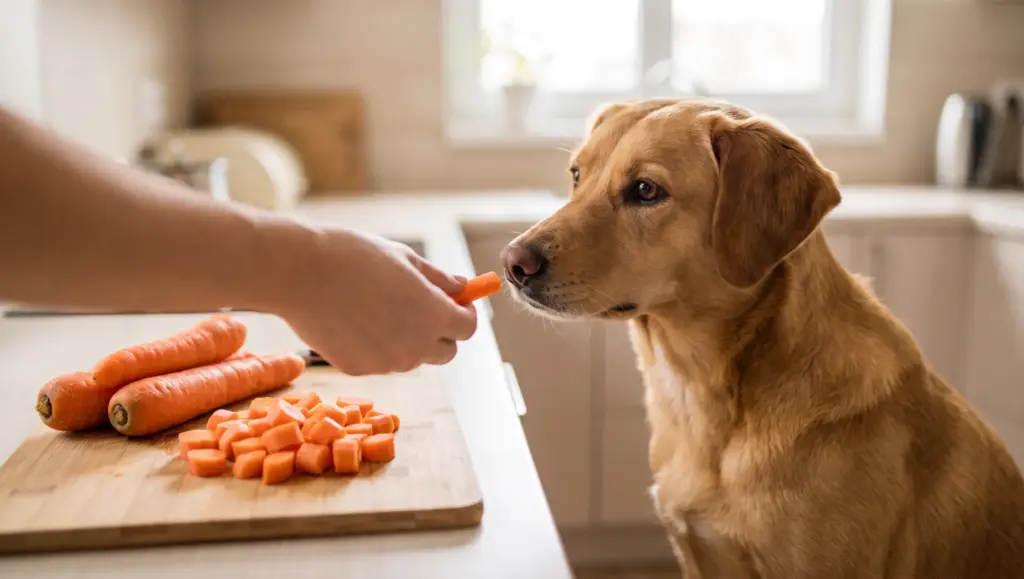
A few days a week with corn kernels, other days with other nutritious snack ideas for dogs like blueberries, carrots, or cucumber.
Can Puppies Eat Corn?
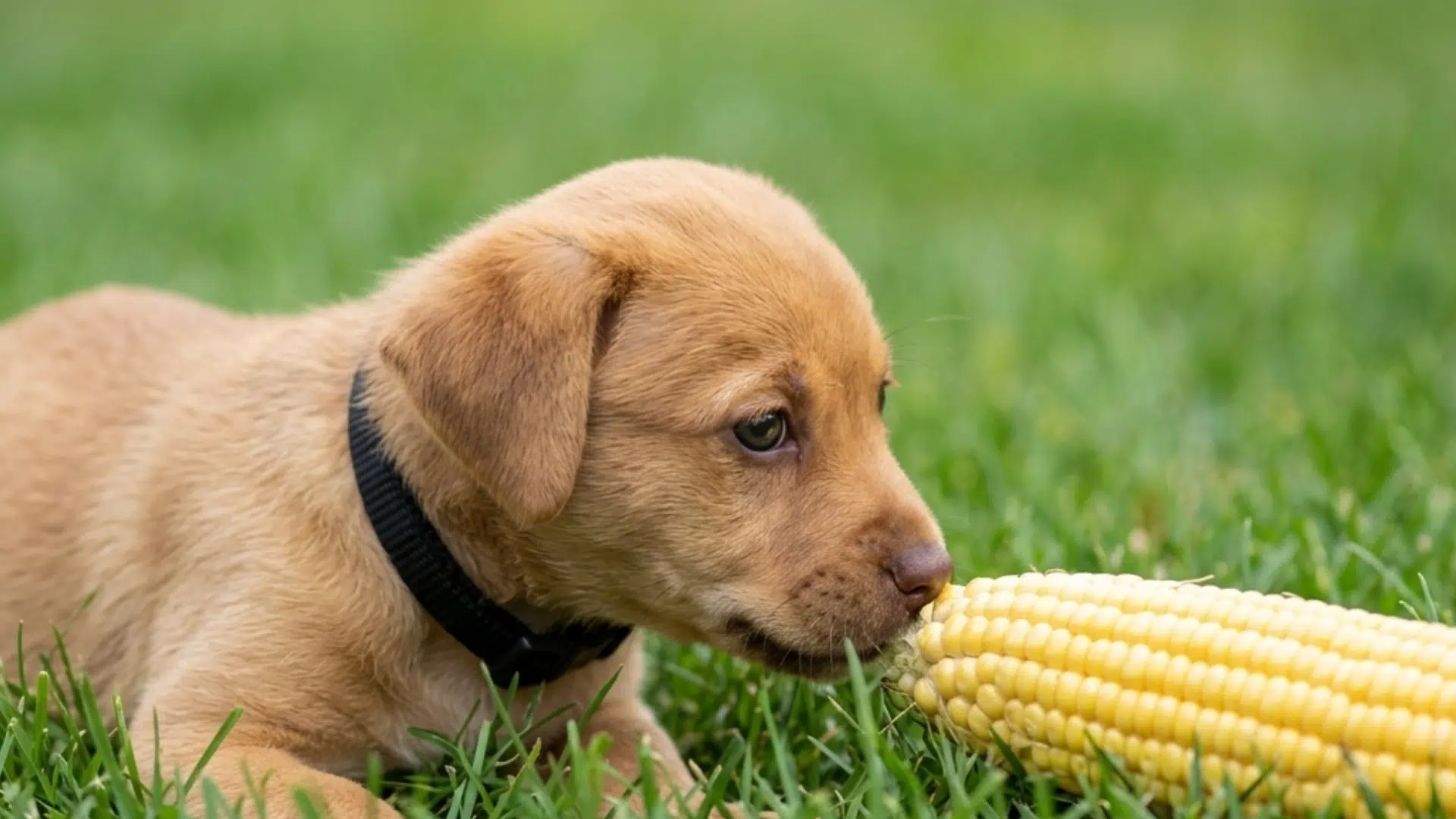
Puppies can eat a small amount of plain cooked corn kernels once they are settled on solid food, but the risk calculus is different from that for adult dogs.
A puppy’s digestive tract is smaller and more sensitive, which means even a fragment of corn cob that a large adult dog might partially pass becomes a much higher-stakes situation for a young pup.
- Under 8 weeks: No solid food or treats
- 8 to 12 weeks: Puppy food only, no extras
- 3 to 6 months: A few plain cooked kernels can be tested once settled on solid food
- 6 months and older: Follow small dog portion guidelines
Corn cobs are off limits regardless of age. For puppies, the risk is higher, not lower, and there’s no version of “just a little chew on the cob” that’s safe.
Is Boiled Corn Good for Dogs?
Yes, boiled corn is one of the best ways to serve corn to your dog.
The cooking process softens the kernels, making them easier to digest than raw corn, and it requires no oil, butter, or seasoning.
Plain boiling keeps the nutritional profile intact while reducing the digestive load on your dog’s stomach.
The key is keeping it plain. Corn boiled with salt, butter, or herbs, the way most people prepare it for themselves, is not suitable for dogs.
Boil the corn in plain water, let it cool fully, then cut the kernels off the cob before serving.
A tablespoon or two mixed into your dog’s meal or served as a standalone snack is a perfectly reasonable portion for most dogs.
Conclusion
Corn is one of those foods where knowing the split makes all the difference.
Kernels off the cob, plain and in the right amount, are a snack your dog can genuinely enjoy. The cob is where that story turns, and it turns fast.
The best thing you can do after reading this is move the corn cob straight to a bin your dog can’t reach.
That one habit prevents the most common corn-related emergency vets see every summer. If something has already happened, call your vet now, not after dinner.
Had a corn moment with your dog, good or bad? Drop it in the comments.
Frequently Asked Questions
Can Dogs Eat Corn Husks?
No. Corn husks are indigestible and pose a choking risk, particularly for small or fast-eating dogs. They offer no nutritional value and should be removed completely before any corn comes near your dog.
Can Dogs Eat Popcorn?
Plain air-popped popcorn is safe for dogs in very small amounts. The problem is that most popcorn served to humans contains butter, salt, or flavoring, none of which is safe for dogs.
Can Dogs Eat Baby Corn?
Yes, baby corn is safe for dogs. It’s harvested before the cob hardens, which means the entire thing, including the small central core, is soft enough to chew and digest. Plain baby corn, raw or cooked, can be given in small amounts without the blockage risk associated with full-size corn cobs.