A calm cat can turn into a twisting, clawing blur the moment a pill, nail clipper, or vet carrier appears.
That is when many owners hear the same advice: hold the loose skin behind the neck. But is scruffing a cat actually safe, or just an old habit that needs a second look?
As a veterinarian with years of clinical experience, I have seen how much handling style can change a cat’s stress, trust, and behavior.
This blog explains what scruffing means, why people still use it, when it can be risky, and which gentler methods can help owners handle routine care with less fear and less struggle.
What Does Scruffing a Cat Mean?
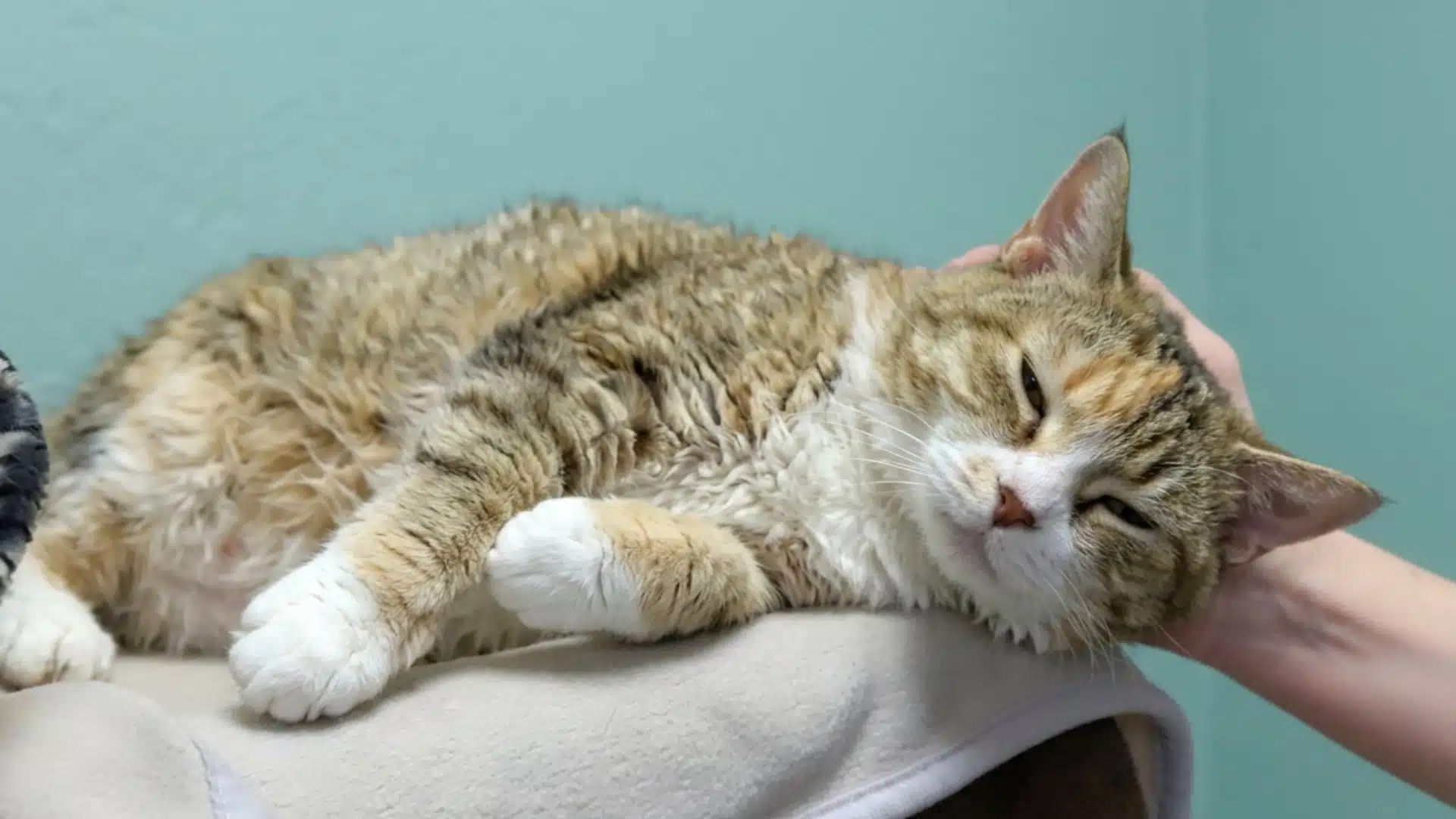
Scruffing is the act of gripping the loose skin at the back of a cat’s neck to hold them still or move them.
That patch of skin is called the “scruff,” and the technique gets its name from it. Many people assume it’s a natural, harmless method because mother cats carry their kittens this way.
The difference matters more than most owners realize, though.
Young kittens have a natural freezing reflex triggered by scruffing that causes their bodies to go completely limp.
That reflex disappears by adolescence and does not return. In adult cats, what appears to be stillness during scruffing is often a fear response.
Why Do People Scruff Cats?
Scruffing became a go-to because it appears to work quickly. Cat owners and older veterinary practices reached for it in situations where speed felt necessary:
- Grooming and nail trimming: Keeping a wriggly cat still long enough to finish the job.
- Giving medication: Controlling the head while administering pills or eye drops.
- Preventing bites and scratches: Gaining fast physical control during handling.
- Legacy veterinary handling: Many techniques passed down in clinics predate current research on feline behavior.
The appeal makes sense. It’s fast, it’s hands-on, and it often stops the movement immediately. The problem is what it does to your cat’s stress levels in the process.
Is Scruffing a Cat Safe?
No, scruffing a cat is not considered safe as a routine handling method. It can cause fear, stress, pain, or injury, especially when an adult cat’s body weight is not fully supported.
Physical Risks of Scruffing
- Neck strain and skin pain: Adult cats carry significant body weight. Gripping the scruff without supporting the body places direct pressure on the neck.
- Injury risk from improper lifting: Lifting an adult cat by the scruff alone can cause serious internal damage. The AAFP’s Cat-Friendly Handling Guidelines are explicit: always support the cat’s full body weight with the other hand.
- Increased injury risk in vulnerable cats: Senior and overweight cats face a higher risk of soft tissue damage during scruffing.
Emotional and Behavioral Effects
- Fear-based shutdown: What looks like calm is often behavioral shutdown, a stress response, not relaxation.
- Long-term trust erosion: Repeated scruffing damages the bond between cat and owner, making future handling harder.
- Increased aggression: Some cats become more reactive and defensive after scruffing experiences.
- Long-lasting handling anxiety: Cats can develop a fear of being touched or restrained that carries over to vet visits and grooming sessions.
Owners who want a gentler approach to routine care often find that patience matters far more than physical control, whether that means cleaning your cat’s teeth at home or simply learning to read their body language before picking them up.
This section is for informational purposes only and does not constitute medical advice. Consult your veterinarian before making changes to how you handle your cat.
What the Community Says About Scruffing a Cat
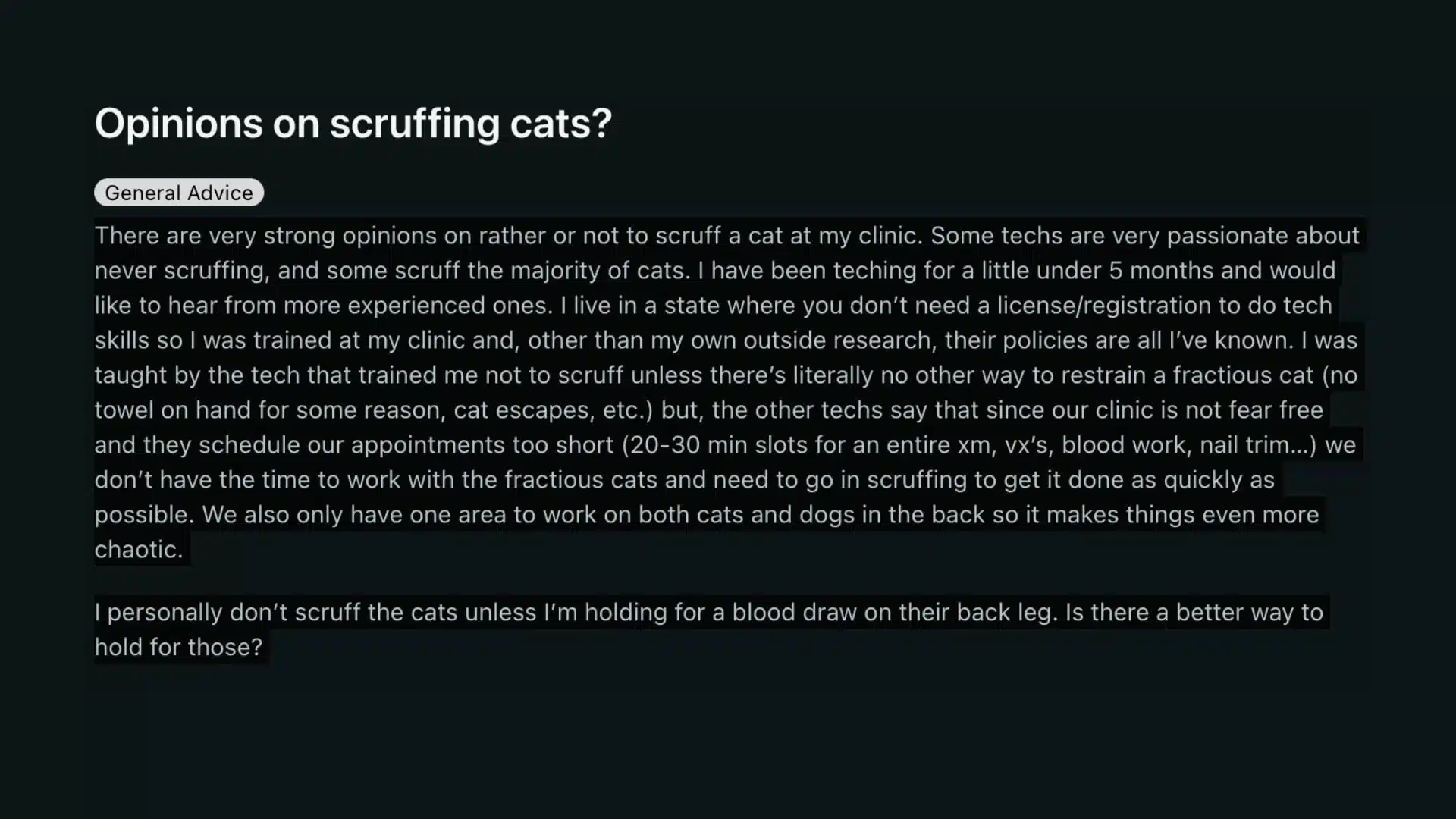
In a Reddit thread, a newer tech described her clinic as split.
Some users scruff nearly every cat; others refuse entirely, often citing tight 20- to 30-minute appointment slots as the pressure point that pushes staff toward faster, more forceful handling.
Many experienced professionals in the conversation argued against routine scruffing.
One explained that switching to towel wraps and learning to recognize stress signals early made even highly reactive cats easier to handle.
Another contributor, after spending two years practicing fear-free techniques, said the experience completely changed her view and showed that scruffing was rarely necessary.
The strongest consensus centered on low-stress alternatives.
When Scruffing May Be Harmful
Some cats are more likely to experience pain, stress, or injury during scruffing, especially when their bodies are weak, heavy, sore, or fearful.
- Senior cats: Older cats may have weaker muscles, thinner skin, or joint pain, which can make scruffing uncomfortable and risky.
- Overweight cats: Extra body weight puts more pressure on the neck when the scruff is used for control.
- Injured cats: Cats with wounds, sprains, or hidden pain may react strongly when scruffed.
- Cats with medical conditions: Arthritis, skin problems, or muscle issues can make scruffing painful or unsafe.
- Highly anxious cats: Fearful cats may panic, freeze, scratch, bite, or become harder to handle after scruffing.
Better Alternatives to Scruffing a Cat
The good news is that gentler methods work better for most cats, and they’re not hard to learn. The ASPCA Pro’s handling resources outline several techniques that keep both the handler and the cat safe.
1. Towel Wrapping
A towel wrap, sometimes called a burrito wrap, involves gently bundling the cat in a soft towel so the body is supported and movement is limited, with no pressure on the neck.
It works well for nail trims, ear cleaning, and administering medication. The cat feels contained rather than grabbed, which makes a real difference in how they respond.
Most cats tolerate a good towel wrap far better than scruffing, and it keeps your hands safer in the process.
2. Positive Reinforcement
Rewarding calm behavior with treats during handling teaches your cat that being held or touched is a good thing.
This takes time to build, but it pays off during cat grooming at home and vet visits alike.
Starting with short, low-pressure sessions and pairing every touch with a reward creates a positive association that sticks.
3. Gentle Body Support
The C-hold or football hold keeps the cat’s body secure without gripping the neck at all. You support their full weight with both hands, which significantly reduces the urge to struggle.
Cats that feel physically grounded tend to stay far calmer than those lifted or restrained from the scruff alone.
It takes a little practice to get comfortable with the positioning, but most owners find their cat responds noticeably better from the very first attempt.
4. Distraction Techniques
High-value food like meat-based baby food spread on a lick mat can redirect a cat’s attention during short procedures.
A cat focused on food isn’t focused on escaping or reacting.
Pairing this with calm, slow movements gives you a short window to complete nail trims, check ears, or apply topical treatments without a struggle.
5. Slow Desensitization Training
Gradually exposing your cat to handling through consistent short sessions builds real tolerance over time.
Start with brief, gentle touches in calm moments when your cat is relaxed and in a good mood. Reward every single time, even when the session lasts only thirty seconds.
Over several weeks, most cats become noticeably easier to handle during grooming, medication, and vet prep.
When to See a Vet
If your cat becomes extremely aggressive, freezes completely, or shows signs of pain during routine handling, a vet visit is worth prioritizing.
These reactions can sometimes point to an underlying health issue that makes being touched uncomfortable, not just a personality quirk.
Cats with a history of trauma or severe handling anxiety may also benefit from a gabapentin prescription before vet visits, something many fear-free clinics now offer as standard.
If your cat has reached a point where basic grooming or nail trims feel impossible, your vet can assess whether cat behavior concerns warrant a referral to a feline behaviorist.
Conclusion
Scruffing a cat made sense when it was all anyone knew. It isn’t anymore.
If your cat is hard to handle, the answer usually isn’t a firmer grip; it’s a different approach entirely.
Towel wraps, treat distraction, body support, and patient desensitization all get you where you need to go without the fear response that scruffing tends to trigger.
Every cat is different, and some situations are genuinely difficult.
But most cats, given the right environment and a little patience, can be handled without ever needing to be scruffed.
Have you tried any of the alternatives above? Share your experience in the comments.
Frequently Asked Questions
Does Scruffing Hurt a Cat?
It can, especially when done incorrectly. Lifting an adult cat by the scruff without supporting the body puts direct strain on the neck and can cause pain or internal injury.
Why Do Some Vets Still Scruff Cats?
Some veterinarians were trained with scruffing as a standard technique and have not updated their practice. Others reserve it for rare situations in which a cat is fractious and poses a real risk of injury to staff.
Can Kittens Be Scruffed Safely?
Very young kittens have a natural reflex that causes them to go limp when scruffed, which is why mother cats use this method. That reflex fades by adolescence. Scruffing kittens is still best avoided by owners, as it can make them more fearful of handling as they grow older.