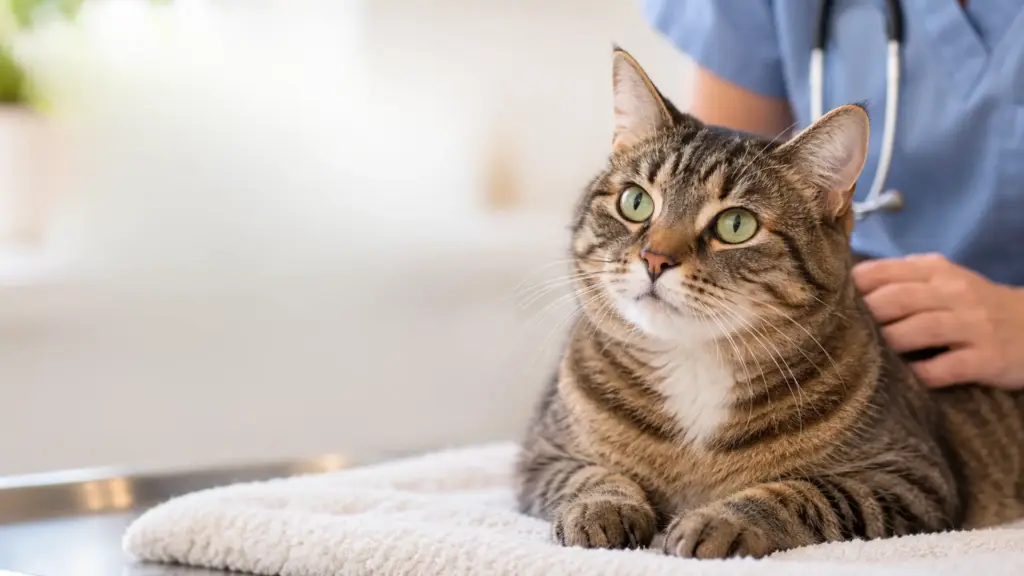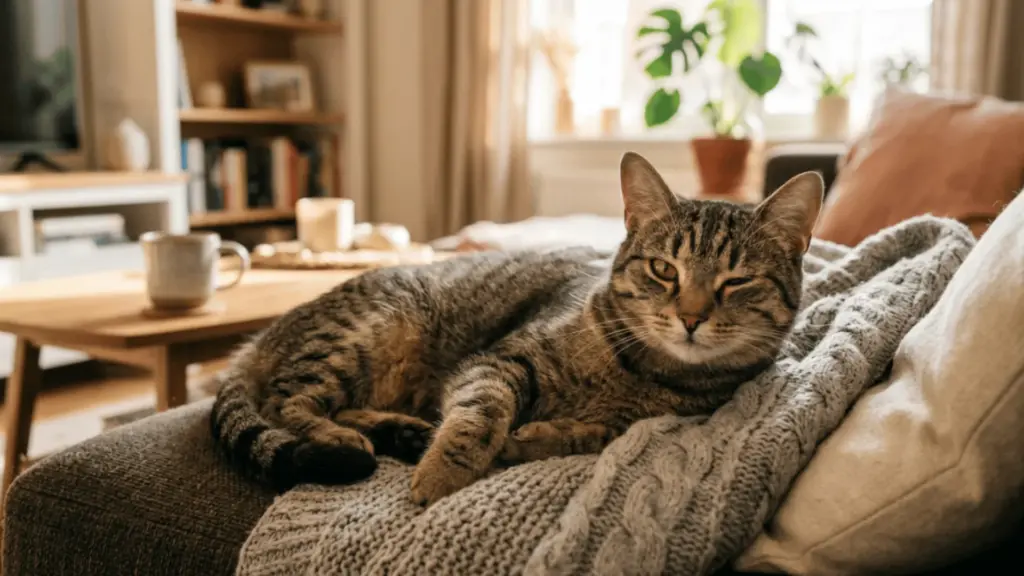
Your cat is lounging nearby, pretending they have never cared about you in their life. Then you look over, and suddenly one eye closes in a tiny, dramatic wink.
For a second, it feels personal. Was that affection? Sass? A secret cat message? Maybe a little of all three.
Cats do not waste eye contact the way humans do, so a slow wink can say a lot about trust, comfort, and the mood in the room.
Still, not every wink is a love note. Sometimes, repeated blinking, squinting, redness, or discharge may mean the eye needs attention.
Before you wink back like you are fluent in cat, it helps to know what your cat may be saying and when that wink deserves a closer look.
What Does It Mean When a Cat Winks at You?
When a cat winks at you, it usually means the cat feels calm, safe, and comfortable around you.
Cats often use soft eye movements to show trust because closing one eye, even briefly, lowers their guard.
A relaxed wink during quiet eye contact may be similar to a slow blink, which many cat owners see as a friendly signal.
However, a wink does not always mean affection. If your cat keeps winking the same eye, squints, rubs the eye, or has redness, swelling, or discharge, it may be eye irritation or infection.
In that case, a vet check is the safest choice.
Winking vs. Slow Blinking in Cats
Cat winks and slow blinks look similar, but they are not the same gesture. Both can appear during relaxed moments, yet the eye movements and meanings differ.
A wink involves one eye, while a slow blink involves both eyes and is more strongly linked to trust in feline communication.
- Wink: One eye closes while the other stays open. It may be slow, quick, deliberate, or caused by minor irritation.
- Slow blink: Both eyes close slowly and reopen in a relaxed way. This is the better-known trust signal in cat behavior.
- Rapid blink: Fast repeated blinking in one or both eyes. This usually suggests irritation, discomfort, dryness, or an eye problem.
Why Do Cats Wink at Humans?
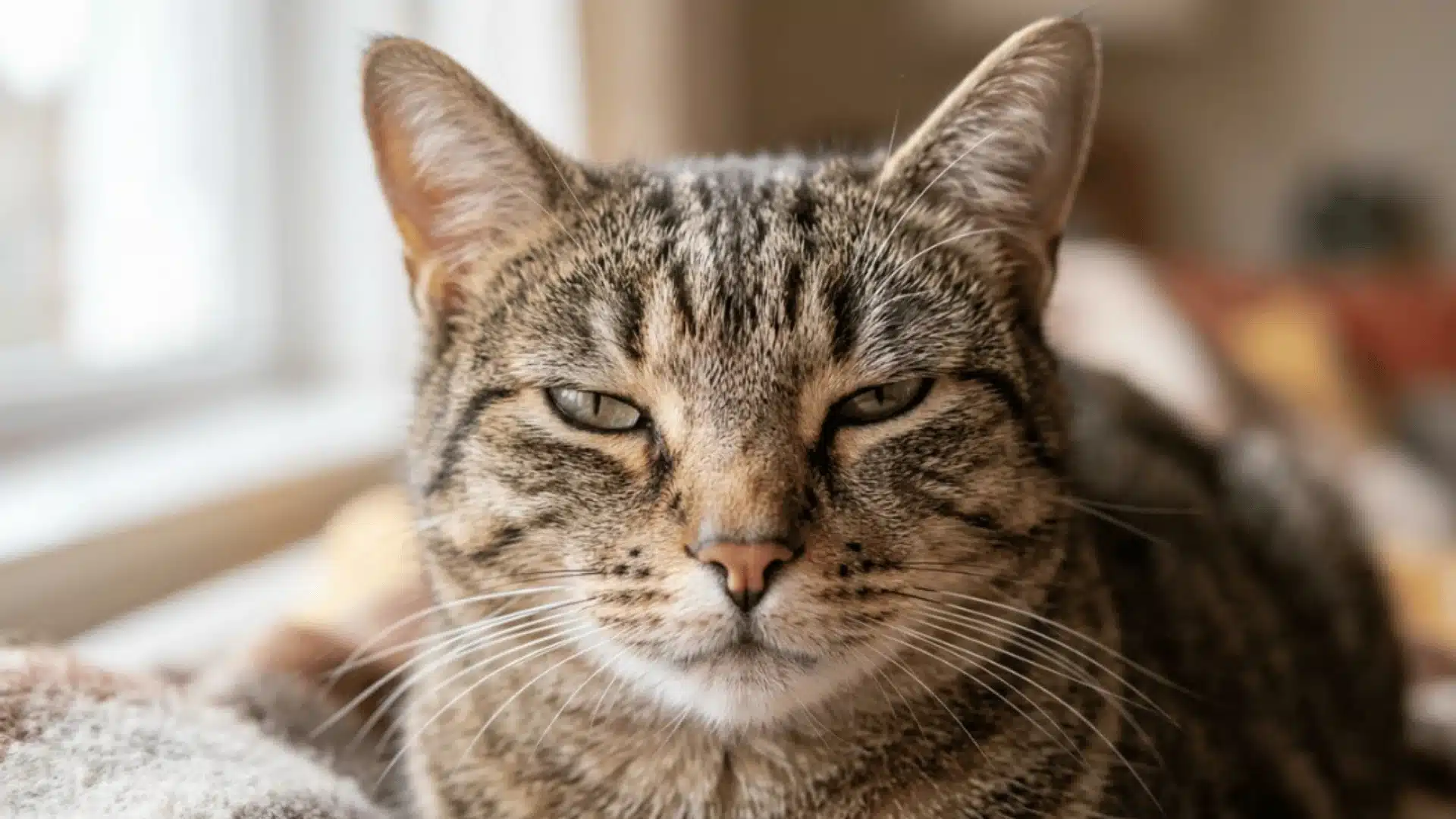
A cat may wink at you because they feel relaxed, safe, and comfortable in your presence. It can also result from dust, dryness, irritation, or an eye issue if the wink is repeated or accompanied by redness, discharge, or squinting.
1. A Sign of Trust and Affection
When a cat closes one eye around you, it can be a small trust signal. Cats are naturally alert, so briefly restricting their view to one side shows they feel safe enough to relax.
A slow, deliberate wink during quiet eye contact often means your cat sees you as safe, familiar, and nonthreatening. It is close to the slow blink many owners call a cat kiss, just with one eye.
2. Your Cat Feels Safe and Relaxed
Sometimes a wink is not aimed at you directly. It may simply happen because your cat is deeply comfortable. Look at the rest of the body.
A relaxed cat usually has soft eyes, loose muscles, a still or gently curled tail, and ears facing forward or slightly sideways.
If the wink appears while your cat is resting, sunbathing, or lying down after a meal, it likely indicates calm contentment rather than a specific message.
3. A Reflex or Involuntary Blink
Not every wink is emotional. Cats blink one eye for practical reasons too, especially if dust, a loose hair, bright light, or a nearby hand triggers the eye reflex.
If your cat winks once and immediately returns to normal behavior, it may mean nothing more than a quick reaction.
The key is pattern. A single wink is usually harmless, but repeated squinting, rubbing, redness, or discharge needs attention from a vet.
4. Mirroring Your Behavior
If you often slow-blink at your cat, they may learn that soft eye closing is part of your communication. A one-eyed blink can become their calm way of responding.
This does not mean every wink is copied behavior, but repeated quiet exchanges can help your cat recognize the signal.
Use it when your cat is relaxed; keep your face soft; avoid staring; and let them respond without pressure when they are ready.
5. Winking During Play or Social Interaction
A wink during play usually means your cat feels comfortable and engaged, not that they are sending a serious message.
Check the rest of the body: ears forward, soft eyes, relaxed whiskers, and a tail that is not puffed or lashing.
If ears flatten or the tail stiffens, stop and give space. Cats who stay mentally stimulated through play and attention often show more relaxed social signals with you in daily life.
The Science Behind Cat Winking and Slow Blinking
A 2020 Scientific Reports study gave cat owners something they had long suspected: slow blinking can be a real form of communication between cats and humans.
The team tested whether slow blinking actually works as a form of communication. It did.
Cats were more likely to slow blink back when their owners used the gesture, and they were also more likely to approach a stranger’s hand after that stranger slow blinked at them.
The study focused on slow blinking, not winking directly, but the connection is easy to understand. A relaxed wink uses the same soft eye language, just with one eye instead of two.
When it happens during calm eye contact, it often carries the same message: your cat feels safe, relaxed, and comfortable with you.
How to Wink Back at Your Cat
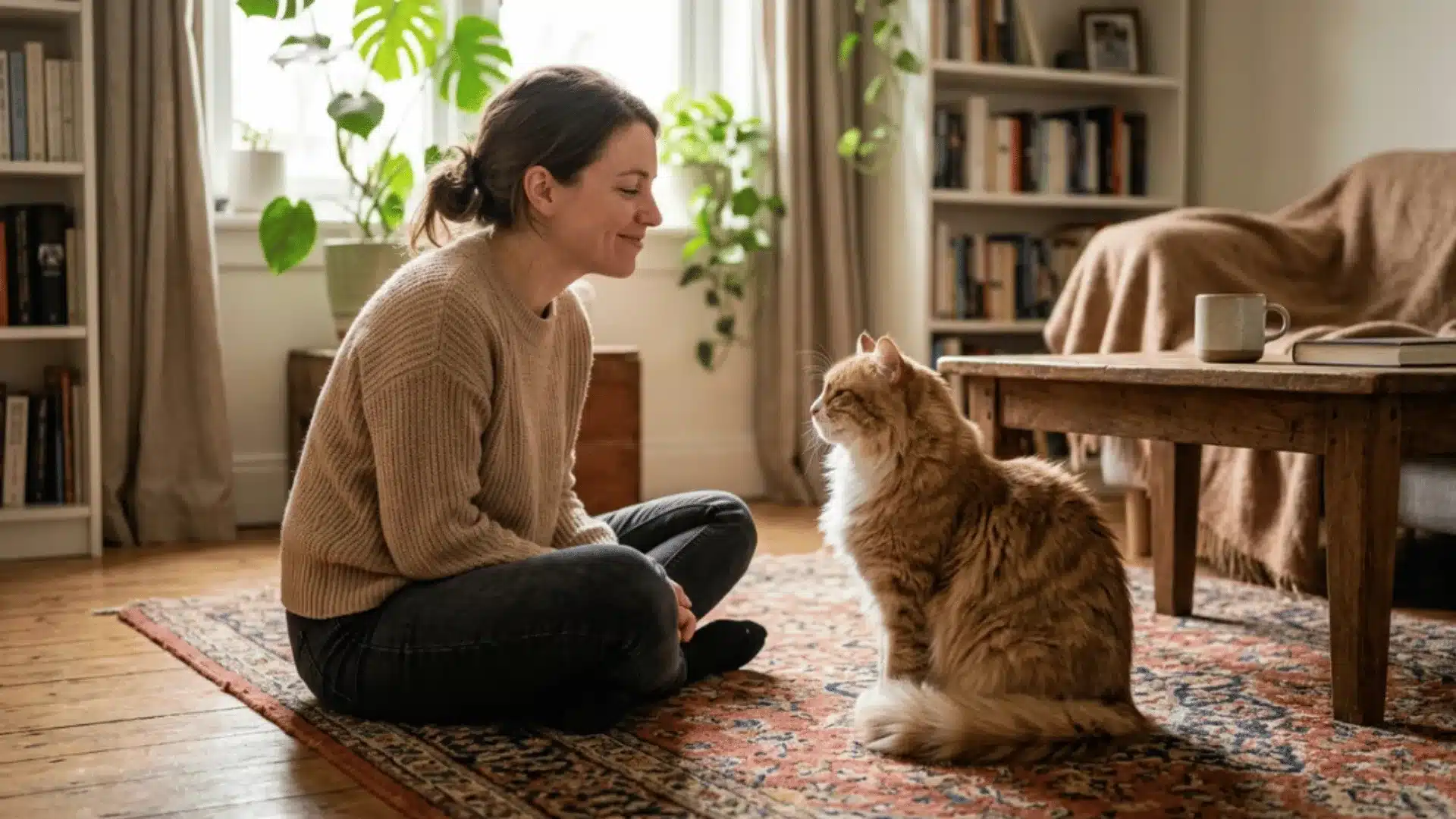
A slow blink is the easiest way to answer a cat’s wink and show calm, friendly intent. It works because cats read relaxed eye closing as nonthreatening, while a hard stare can feel like pressure.
- Wait until your cat is calm and already looking at you.
- Sit or crouch near their level without crowding them.
- Soften your eyes and relax your face.
- Slowly close both eyes for one to two seconds.
- Open them gently and avoid staring afterward.
- Watch for a slow blink back, a relaxed look away, or a quiet approach.
This works because closing your eyes signals trust and peace. If your cat responds, keep the moment calm.
Do not force eye contact, reach suddenly, or repeat it if your cat looks tense. Over time, it can become a simple greeting your cat recognizes.
What Cat Winking Means Around Other Cats and Pets
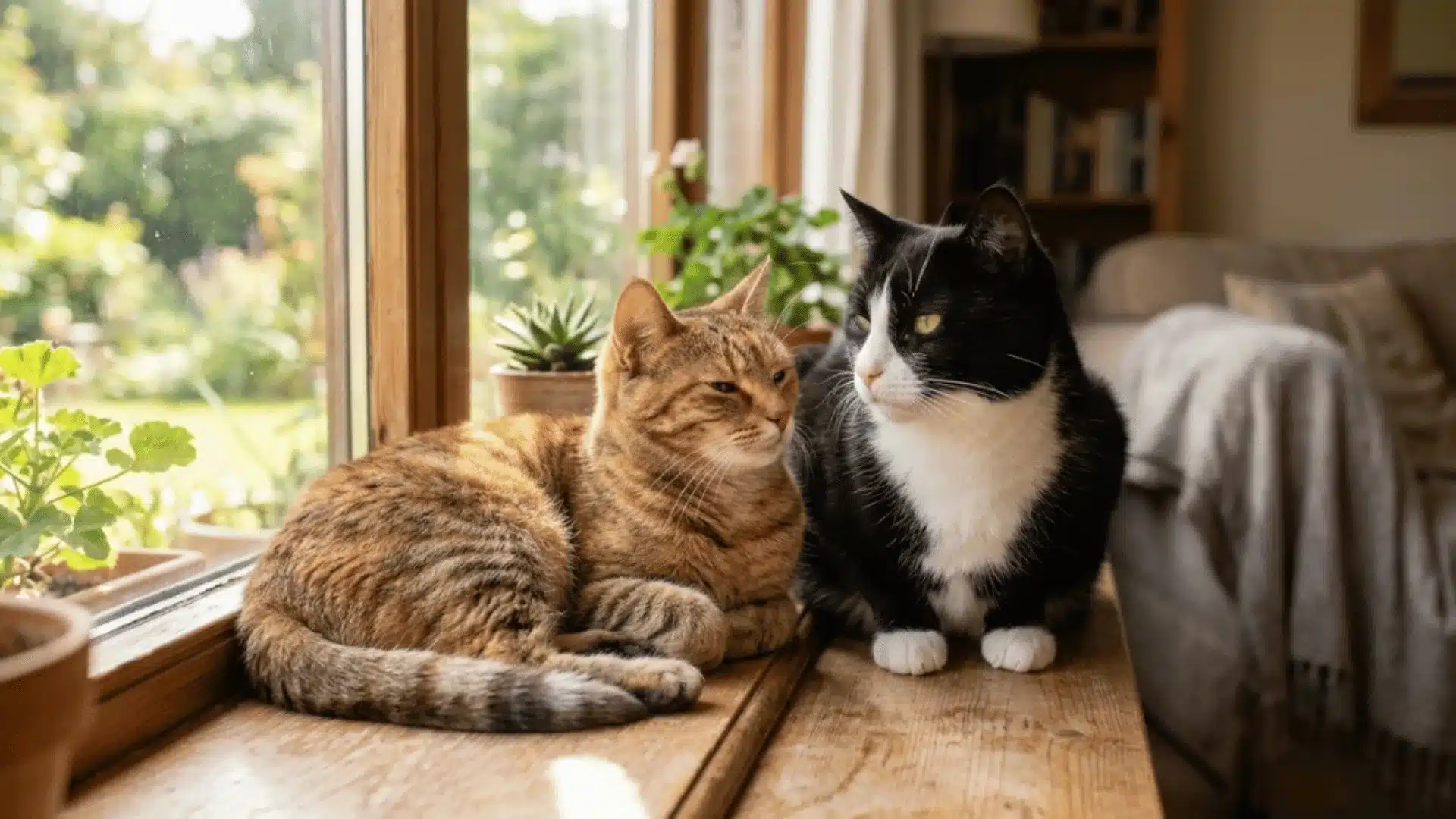
Winking and slow blinking are part of cat communication, not just human cat bonding. In a multi-cat home, soft eye closing can show that one cat is calm and not seeking conflict.
A hard, fixed stare means the opposite and may come before chasing, swatting, or fighting.
A wink or slow blink is positive only when the rest of the body also looks relaxed. Watch for loose posture, neutral ears, still tails, and no stalking, blocking, hissing, or tense movement.
Around dogs, a cat may use the same signal when it feels safe, though the dog may not read it clearly.
To support calm interactions, keep exits open, avoid forced contact, and use slow blinks during quiet moments with them.
Other Cat Eye Signals You Should Know
Your cat’s eyes are constantly communicating. Here is a quick reference table beyond the wink. Read these signals with the whole body, light, play, fear, and illness can change the same signal depending on context.
| Eye signal | What it usually means | When to watch closely |
|---|---|---|
| Dilated (round) pupils | Excitement, play drive, fear, or aggression | If paired with tense body or hissing |
| Constricted (slit) pupils | Bright light, calm alertness, or mild irritation | If one pupil is smaller than the other |
| Half-closed lids | Relaxation, comfort, sleepiness | Normal — one of the best signs you will see |
| Hard, wide stare | Threat, challenge, or fixation | If directed at another animal — redirect attention |
| Narrowed eyes with flat ears | Fear, stress, or defensive behavior | Look for what triggered the shift |
| Visible third eyelid | Brief showing after waking is often normal | If it stays visible, call a vet |
| Unequal pupils (one large, one small) | Possible neurological issue or eye injury | Same-day vet contact recommended |
Cat Winking Warning Signs You Should Not Ignore
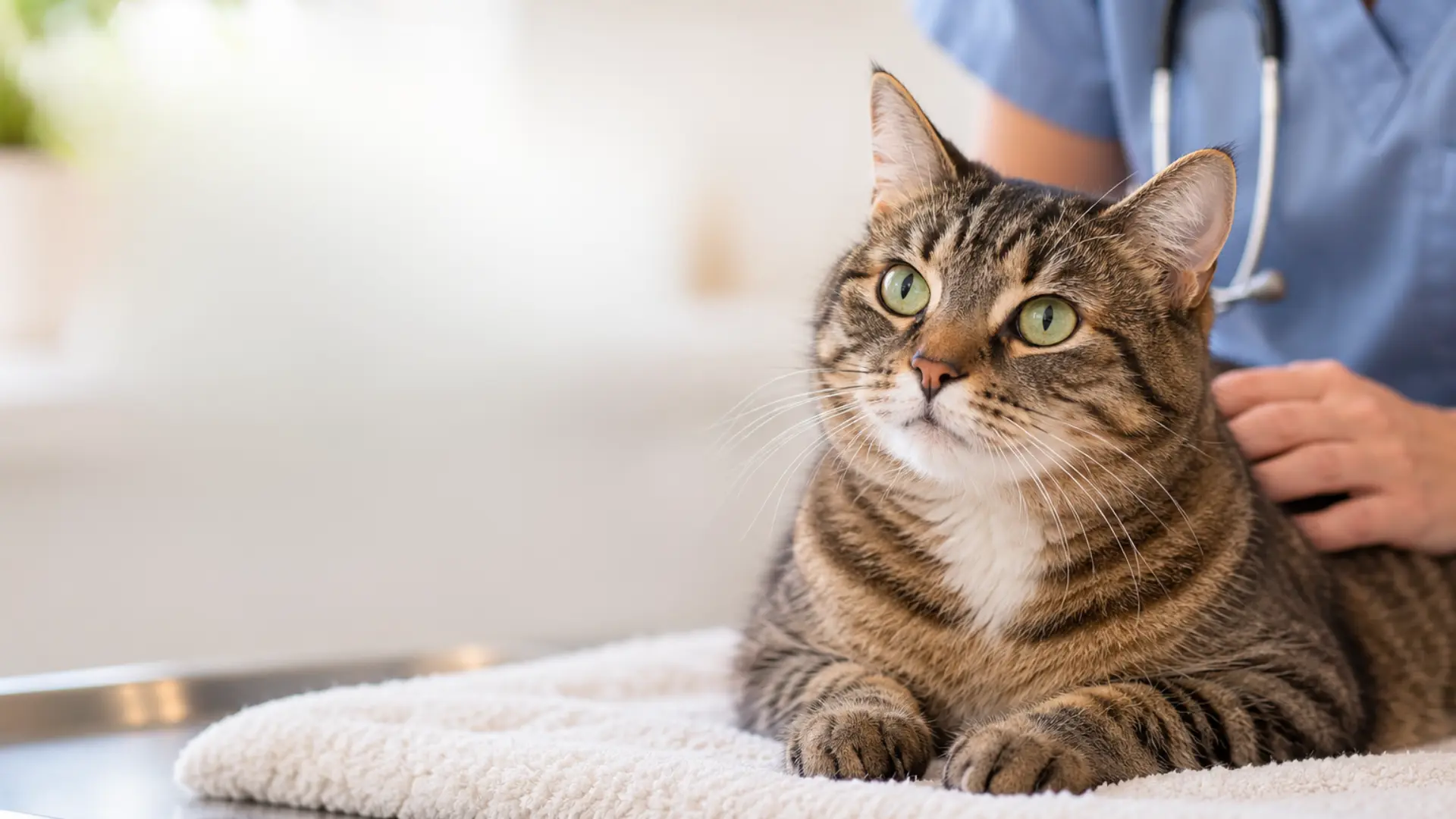
A cat’s wink can be harmless, but repeated blinking of one eye with visible eye changes may signal pain, irritation, or infection.
- Redness or swelling: Pinkness around the eye, swollen lids, or an inflamed inner eyelid can mean irritation, allergy, or infection.
- Discharge from the eye: Watery, cloudy, yellow, or green discharge may point to infection, injury, or another eye problem.
- Pawing or rubbing: If your cat keeps rubbing the eye, the eye may feel painful, itchy, or irritated.
- Squinting or trouble opening the eye: Frequent squinting can be a sign of discomfort, corneal injury, dry eye, or inflammation.
- Cloudiness or third eyelid showing: A cloudy eye surface or visible third eyelid can signal a more serious issue that needs a vet check.
Conclusion
That tiny wink can feel almost accidental, but in a calm moment, it is one of the clearest ways your cat says, “I trust you.”
Cats do not hand out vulnerability easily. When they soften one eye, stay relaxed, and keep you in their space, they are choosing comfort instead of caution.
The only rule is to read the whole picture. A peaceful wink is sweet. Repeated squinting, redness, discharge, or pawing at the eye needs a vet.
The next time your cat gives you that little blink, do not overthink it. Soften your eyes, slow blink back, and let the conversation stay quiet. Tell us in the comments how your cat responded.
Frequently Asked Questions
Can Cats Wink at Other Cats?
Yes. Cats can wink or slow-blink at other cats as a calm, nonthreatening signal. In a multi-cat home, this usually means the cats feel relaxed in each other’s space, especially when their ears, tails, and posture also look loose.
Why Does My Cat Only Wink with One Eye?
Some cats may naturally wink more with one eye, but repeated one-sided blinking should be watched. If the same eye also looks red, watery, cloudy, swollen, or your cat keeps rubbing it, call a vet.
Do Cats Wink at Strangers?
Most cats are more guarded around strangers, so they may not wink or slow blink right away. Still, some cats respond well to calm eye contact and slow blinking, especially if the person stays still, relaxed, and nonthreatening.