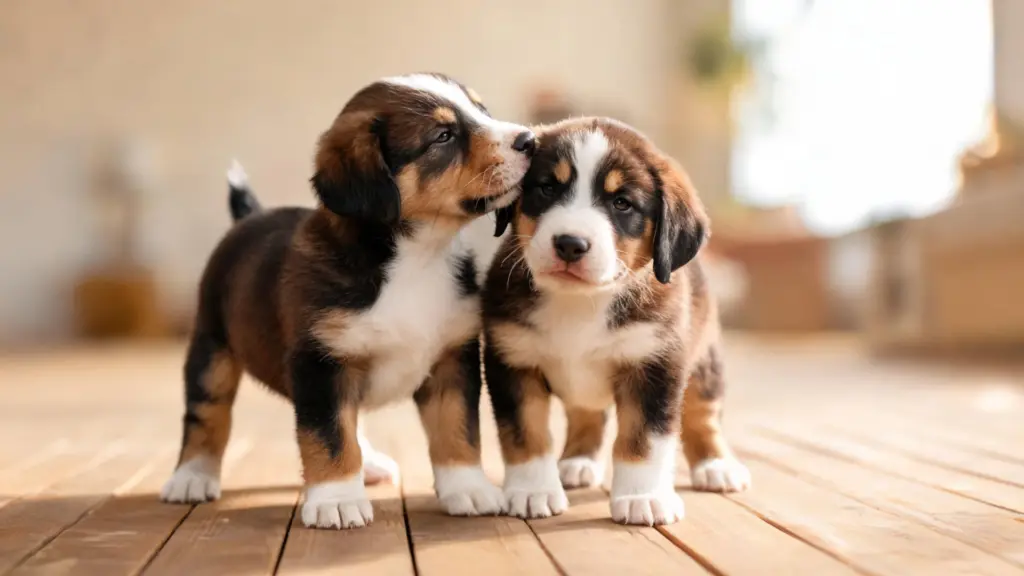
One minute, a puppy is small enough to scoop up with one hand. Then, almost out of nowhere, that same puppy is taking over the couch, outgrowing collars, and looking less like a baby every week.
That rapid change leaves many pet parents asking, “When do puppies stop growing?” The answer is not the same for every dog. Size, genetics, food, health, and daily care all play a role.
Some puppies finish growing before their first birthday. Others keep changing for close to two years.
This blog breaks down the puppy growth timeline, what happens at each stage, how size affects growth, and the signs that show a puppy is finally reaching full size.
When Do Puppies Stop Growing?
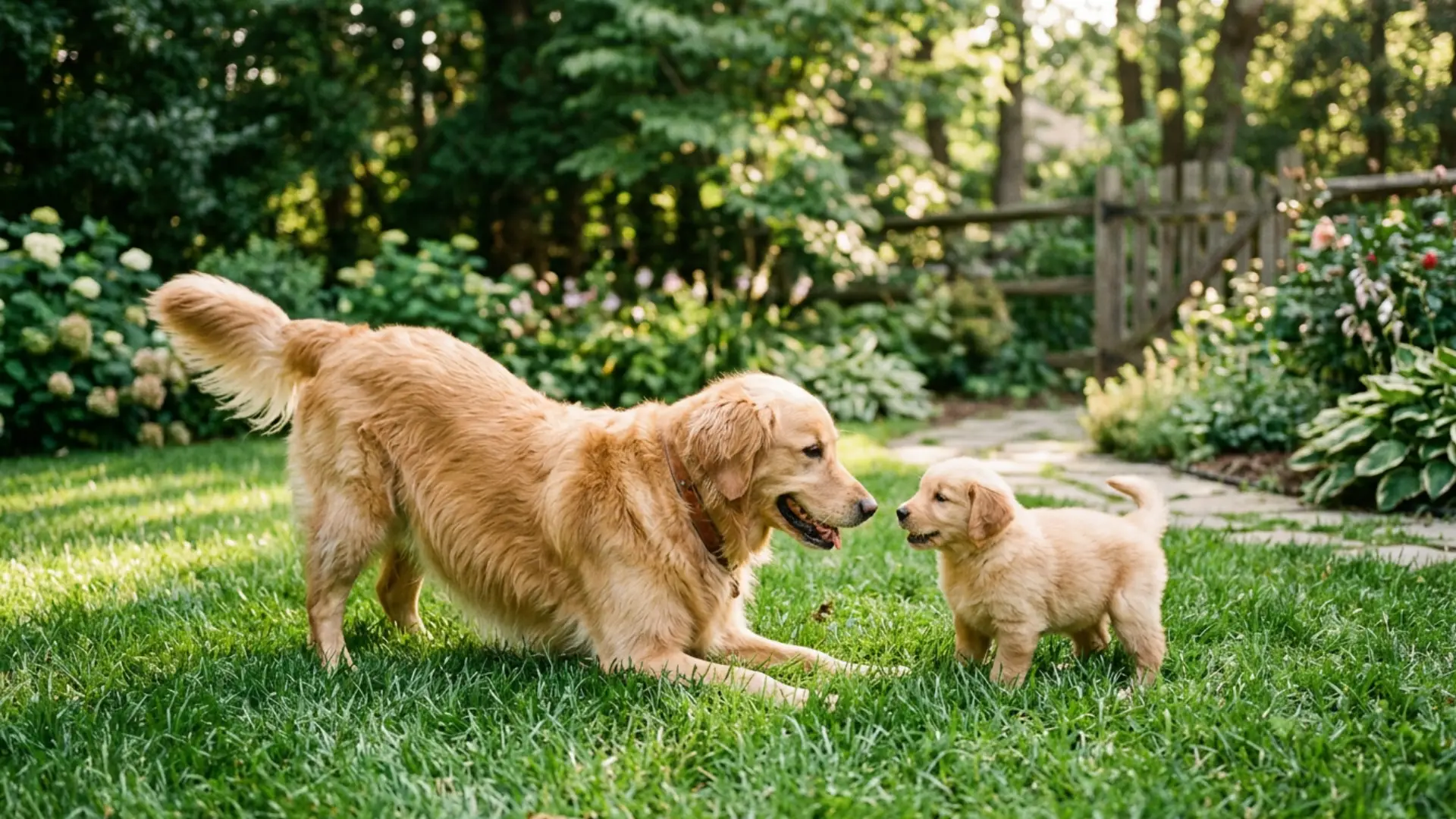
Most puppies stop growing somewhere between 6 and 24 months, but the finish line is not the same for every dog.
Smaller dogs usually reach adult size sooner, while bigger dogs take more time to finish growing.
Height often stops first. After that, the body may still gain weight, muscle, chest width, and a more adult shape.
This is why a puppy can look almost fully grown but still keep changing for months. Some dogs also mature more slowly in behavior, even after their bodies look adult.
The best way to judge growth is to look at size, weight changes, body shape, and vet feedback together instead of relying only on age.
Puppy Growth Chart by Breed Size
This table gives you a fast reference for what to expect at each size category. More detail on each follows below.
| Breed size | Examples | When growth usually stops | What may still change after that |
|---|---|---|---|
| Toy breeds | Chihuahua, Yorkie, Pomeranian | 6 to 8 months | The body may still fill out slightly through 12 months |
| Small breeds | Shih Tzu, Pug, Miniature Poodle | 9 to 12 months | Muscle tone and coat may keep changing |
| Medium breeds | Beagle, Cocker Spaniel, Border Collie | 12 to 15 months | Body shape may settle after height stops |
| Large breeds | Labrador, Golden Retriever, German Shepherd | 15 to 18 months | Chest, muscle, and weight may keep developing |
| Giant breeds | Great Dane, Mastiff, Saint Bernard | 18 to 24 months | Full body mass may take up to age 3 in some breeds |
What Affects How Long Puppies Grow?
Puppy growth is shaped by several things working together, not age alone. These factors can affect how fast a puppy grows, how long the growth phase lasts, and when the body finally reaches adult size.
- Genetics: A puppy’s parents and breed background strongly influence adult size, body shape, and growth speed.
- Adult Size: Toy and small breeds usually stop growing sooner, while large and giant breeds need more time to mature.
- Nutrition: A balanced puppy diet supports healthy bone, muscle, joint, and weight development during each growth stage.
- Health Conditions: Intestinal parasites, poor nutrient absorption, or untreated illness can slow normal puppy growth.
- Hormones: Sex hormones signal the growth plates to close. Early spay or neuter may slightly delay that process in some dogs.
- Exercise: Gentle play and controlled activity help build strength without putting too much pressure on growing joints.
- Sleep: Rest gives the puppy’s body time to recover, grow, and support healthy development.
Puppy Growth Stages from Birth to Adulthood
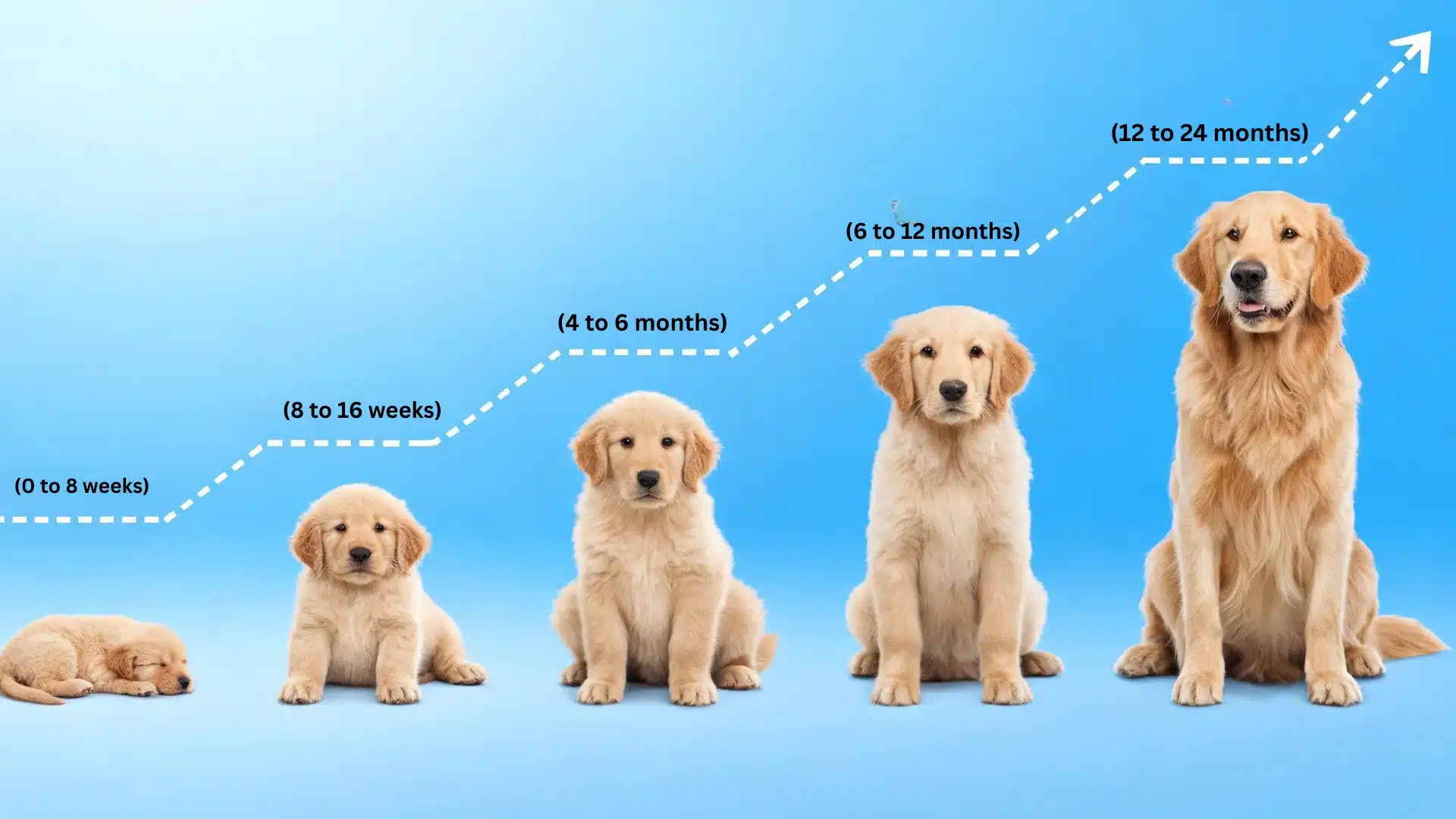
Puppy growth happens in stages, not all at once. Each phase brings distinct physical changes and different care needs.
1. Early Puppy Stage (0 to 8 weeks)
During the first weeks, puppies grow fast and depend fully on their mother. They are born with closed eyes, sealed ears, and little body temperature control.
They nurse often, gain weight quickly, and then begin to open their eyes and ears. Soon, they start walking, playing, and reacting to littermates.
This stage also builds early comfort with touch, sound, and movement.
Puppies can grow many times their birth weight, with larger breeds gaining more overall but at a slower pace.
2. New Home Stage (8 to 16 weeks)
Many puppies settle into a new home during this stage. Growth is still quick, and coordination improves each week.
Bones and muscles keep building, so the quality of food matters. Teething may begin as baby teeth loosen and adult teeth come in.
Chewing gets stronger, so safe chew toys help. Early training also works well because puppies learn fast.
Simple routines, calm handling, short lessons, and the right puppy food support healthy bone and muscle development.
3. Growth Spurt Stage (4 to 6 months)
By four months, most puppies have entered a visible growth spurt. Legs get noticeably longer.
The body stretches out. Energy climbs. Adult teeth are finishing their arrival, usually completing around 6 months of age.
This stage can look a little awkward, and that’s completely normal. Some puppies grow unevenly, one part of the body racing ahead before everything catches up.
The gangly phase is real, and it passes. By the end of this window, most breeds, excluding giant ones, will have reached around 80 percent of their adult weight.
4. Teenage Puppy Stage (6 to 12 months)
Growth slows during this stage, but it does not always stop.
Many puppies start to look more like adult dogs while their bones, muscles, and body shape are still changing.
Sexual maturity may also begin during this time. Some puppies act more stubborn, distracted, or restless as hormones shift.
Vet-approved puppy nutrition guidance consistently recommends staying on a puppy-specific formula through this phase rather than switching to adult food early, particularly for medium and large breeds.
5. Young Adult Stage (12 to 24 months)
Many small and medium dogs are close to done growing by this stage. Bigger dogs may still be developing.
Chest width, muscle, weight, and body depth can continue to fill out after height stops changing.
Some very large dogs take much longer to finish bone growth and reach full body mass.
Emotional maturity can also take time. A dog may look grown but still act playful, restless, or puppy-like for several more months.
What are Growth Plates and Why Do They Matter?
Growth plates are soft areas of cartilage at the ends of a puppy’s long bones. They contain rapidly dividing cells that allow bones to grow longer throughout puppyhood.
As your puppy approaches maturity, hormonal changes signal those plates to close and calcify into hard bone, and that’s when bone growth stops.
Once growth plates have fully calcified, the bones have reached their final adult size.
Your puppy will still continue to develop fat and muscle after that, much the way adult humans do, but the skeleton itself is set.
Until the plates close, they’re softer and more vulnerable to injury than adult bone.
This is one reason vets advise against high-impact exercise (like long runs or repeated jumping) for puppies still in active growth.
Small breed growth plates generally close earlier; giant breed plates may not close until 18 months or beyond.
Signs Your Puppy is Almost Done Growing
A puppy may still change after looking adult, but a few signs can show that growth is slowing. These clues are helpful, though a vet can confirm growth plate closure.
- Weight becomes steady: Weight stays about the same for several weeks with the same food, treats, exercise, and daily routine.
- Height stops changing: Shoulder height stays stable for a month or more when measured from the same spot each time.
- Body looks balanced: Legs, chest, paws, and trunk start looking even instead of long, lanky, or awkward.
- Paws look proportional: Oversized paws begin to match the body, which often means height growth is slowing.
- Adult teeth are in: Permanent teeth are fully in, showing that the puppy is moving closer to physical maturity.
- Coat starts changing: Soft puppy fuzz begins turning into a thicker adult coat as the body continues maturing.
Real Owner Experiences on When Do Puppies Stop Growing

Real owner experience shows that puppies do not all stop growing at the same age.
In one Reddit discussion, several owners shared that their puppies slowed down around 6 to 10 months, but still gained weight and body shape after that.
One owner said a 7-month-old puppy had already plateaued, while another felt their dog was still filling out at 10 months.
This matches what many puppy parents notice at home. A puppy may look tall and almost adult-sized, yet the chest, legs, and muscles may keep developing for several more months.
Small dogs usually finish sooner, while large breeds take longer. Parents’ size, breed, food, and vet feedback can all help estimate adult growth.
So, when do puppies stop growing? For most dogs, height comes first, then the body slowly matures into its final adult shape.
How to Support Healthy Puppy Growth?
Healthy puppy growth comes from steady daily care. A simple growth log can also help spot sudden changes early.
- Feed Puppy Food: Choose food made for puppies because growing dogs need more protein, calories, calcium, and key nutrients than adult dogs.
- Pick the Right Formula: Large-breed puppies may need large-breed puppy food to support slower bone growth and reduce joint stress.
- Watch Portion Sizes: Follow the package feeding guide, limit treats, and adjust portions with your vet’s advice as your puppy grows.
- Choose Safe Exercise: Use short walks, gentle play, and easy movement. Avoid long runs, repeated jumping, or hard impact during active growth.
- Track Vet Checkups: Keep regular vet visits and a simple growth log to monitor weight, height, joints, appetite, and sudden changes.
When to Talk to a Vet About Puppy Growth?
Some puppies grow faster or slower, but sudden changes should not be ignored. Early guidance can help spot health, nutrition, or joint problems before they become serious.
Reach out to your vet if you notice:
- Sudden weight loss or no weight gain over several weeks
- Limping, stiffness, or favoring one leg during or after play
- Poor appetite that persists for more than a day or two
- A visibly swollen or distended belly without obvious explanation
- Weak or shaky legs, especially when standing or walking
- Growth that seems dramatically faster or slower than expected for the breed
These signs can point to intestinal parasites, nutritional deficiencies, or other underlying health issues, all of which are easier to address when caught early.
If something feels off, trust that instinct. You know your dog better than anyone.
This section is for informational purposes only. Always consult a licensed veterinarian if you have concerns about your puppy’s health or development.
Conclusion
Puppies do not follow one neat finish line. Some reach adult size early, while others keep changing long after they look grown.
The best way to judge when puppies stop growing is to watch steady body changes, feed them the right food, keep exercise safe, and stay close to your vet’s advice.
A growth chart can guide expectations, but every puppy has its own pace.
With patient care, regular checks, and the right daily routine, that tiny ball of energy can grow into a healthy adult dog with fewer problems along the way.
Small daily choices, from measured meals to gentle play, can make growth feel less confusing and more manageable.
What stage is your puppy in right now? Share it in the comments.
Frequently Asked Questions
How Can I Tell How Big My Puppy Will Get?
Parent size, breed mix, current weight, paw size, and vet checks can give a rough idea, but no method is exact.
Can a Puppy Growth Calculator Predict Adult Size?
A puppy growth calculator can give a rough guess, but parent size, breed history, and a vet check are usually more reliable.
Do Puppies Keep Growing After Being Spayed or Neutered?
Early spaying or neutering may slightly extend growth in some dogs, but the difference is usually small. Ask a vet about the best timing.