


One day, your tank is bursting with color, movement, and tiny personalities. Then, seemingly overnight, one of your guppies is gone.
It’s a moment every fish keeper dreads, and it often comes with the same question: Did I do something wrong? The truth is that guppy lifespan depends on a mix of age, genetics, and care.
While these popular freshwater fish are known for being hardy, many owners are surprised by how much factors such as water quality, diet, and breeding history can affect their lifespan.
Understanding what’s normal and what isn’t can help you make better decisions for your tank and avoid unnecessary guilt when a fish passes away.
In this blog, we’ll explore the average guppy lifespan, the biggest factors that affect longevity, and practical ways to help your guppies thrive for as long as possible.
What are Guppies?
Guppies (Poecilia reticulata) are small freshwater fish native to the rivers and streams of northeastern South America. They’re one of the most popular aquarium fish in the world, and for good reason.
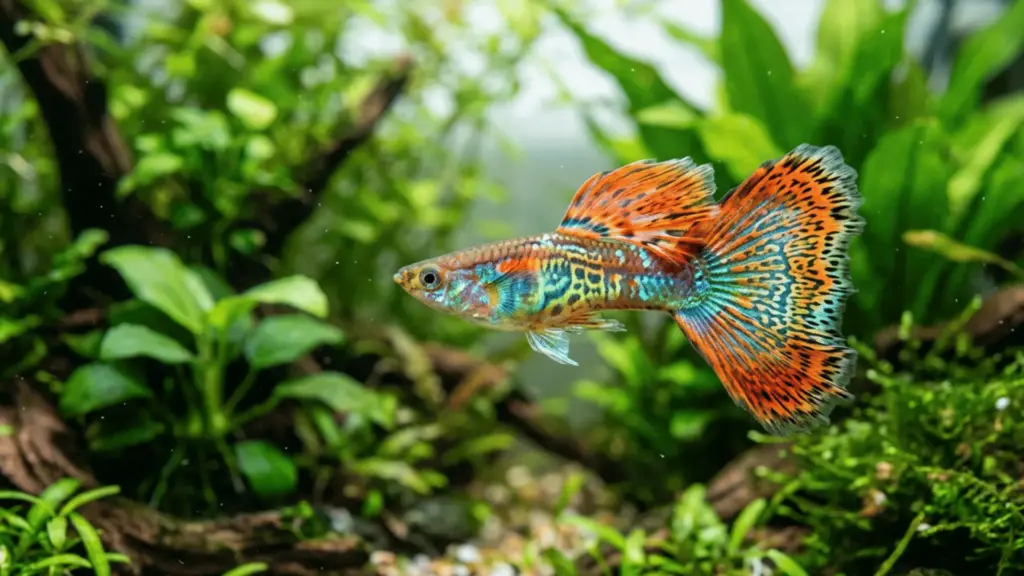
Males are tiny, usually under 1.5 inches, and come in dozens of color patterns. Females are slightly larger and more subdued in color.
Guppies are livebearers, meaning they give birth to free-swimming young instead of laying eggs. That also means a single female can produce fry repeatedly without needing to mate again.
They’re omnivores, peaceful by nature, and hardy enough that beginners succeed with them regularly. They adapt to a wide range of water temperatures and do well in community tanks with other calm fish.
Average Guppy Lifespan in a Home Tank
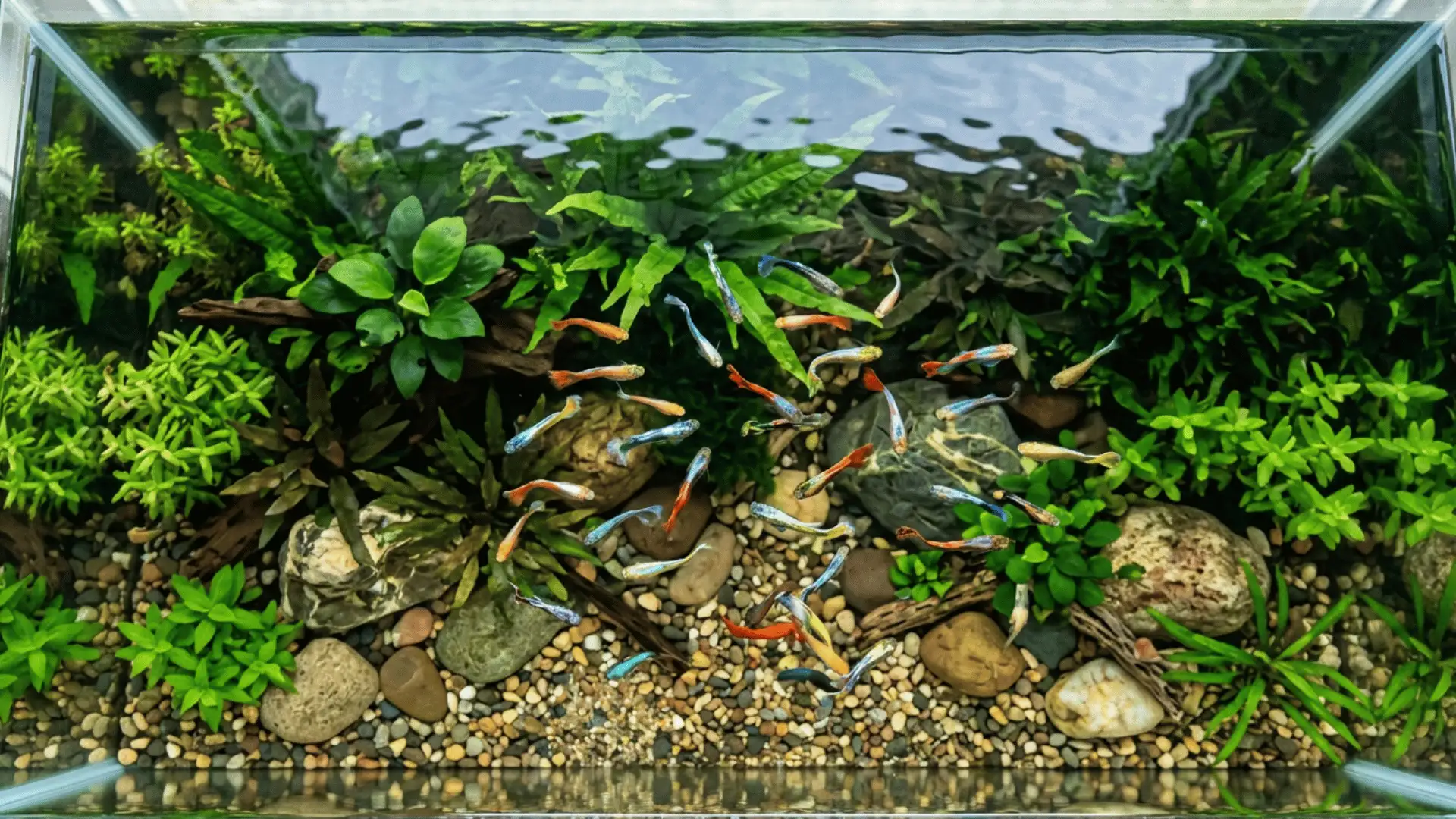
Most guppies have a total lifespan of approximately 2–3 years, though some may live longer under excellent conditions.
Because pet store guppies are often several months old when purchased, the time they live in your tank may be shorter than their actual lifespan.
The 3-to 5-year range exists, but it’s not the norm. It typically applies to fish from reputable breeders with known genetics, not the grab-bag stock at a chain pet store.
There’s an important detail many guides leave out. When you buy a guppy from a store, you usually don’t know how old it already is.
A fish that looks young and healthy might be several months old. So a guppy that dies at home after 14 months didn’t necessarily have a short life. It may have already been 6 to 8 months old when you brought it home.
This gap between “age at sale” and “actual lifespan” is why the numbers online vary so much. Some sources quote 6 months, others say 5 years. Both can be true, for very different fish in very different situations.
Guppy Lifespan in the Wild vs. Aquarium Tanks
A guppy’s lifespan is influenced more by its environment than by whether it lives in the wild or a tank; proper care can help aquarium guppies outlive their wild counterparts.
| Aspect | Wild Guppies | Tank Guppies |
|---|---|---|
| Lifespan | Generally shorter due to natural threats and environmental challenges. | Can be longer if the tank is properly maintained. |
| Predation | Constant risk from predators, which significantly reduces survival rates. | No natural predators, eliminating a major cause of mortality. |
| Environmental Conditions | Exposed to temperature fluctuations, pollution, diseases, and habitat changes. | Protected from most natural environmental stressors. |
| Food Availability | Depends on natural food sources, which may be inconsistent. | Regular feeding provides a stable food supply. |
| Stress Factors | Predators, disease, pollution, and changing habitat conditions. | Poor water quality, overfeeding, incompatible tank mates, and overcrowding. |
| Human Intervention | None; survival depends entirely on natural conditions. | Owners can improve health through proper care and maintenance. |
| Overall Outcome | Most guppies do not reach old age because of harsh conditions. | Lifespan can exceed that of wild guppies when managed well, but poor care can shorten it significantly. |
Research on wild guppy populations from the National Institutes of Health shows that lifespan varies significantly based on predation pressure and food availability. Tank conditions mimic that same trade-off, just in a glass box.
Factors that Affect Guppy Lifespan
Understanding what shortens or extends a guppy’s life helps you make smarter decisions from day one. Most of these factors are within your control.
1. Water Quality
Ammonia and nitrite are the fastest killers in a home tank. Even low levels cause chronic stress that weakens the immune system over time, making fish more vulnerable to disease.
Regular water changes of 10–25% every one to two weeks keep these levels in check.
A properly cycled tank with a reliable filter is the single most impactful investment you can make for your guppies’ long-term health.
2. Water Temperature
Guppies thrive between 72–78°F. Warmer water speeds up their metabolism, which accelerates aging and shortens overall lifespan. Cooler water within that range slows things down without harming their health.
Temperatures above 80°F over extended periods put the fish under constant physiological stress.
A stable temperature matters as much as the number itself, so sudden swings should be avoided even if both endpoints are within range.
3. Tank Size and Stocking Density
Overcrowding is one of the most overlooked causes of early death. More fish means more waste, faster ammonia spikes, and constant social stress.
A minimum 10-gallon tank is the standard recommendation for a small guppy group.
Larger water volumes buffer chemical swings more effectively and give fish enough space to establish natural behavior patterns. Resist the temptation to add more fish than the tank can comfortably support.
4. Genetics
Genetics plays a major role in how long guppies live. Some guppies are bred mainly for bright colors, large tails, or unique patterns, which can sometimes come at the cost of stronger health.
Fish from weaker breeding lines may be more prone to disease, stress, or shorter lives.
Guppies from careful hobbyist breeders usually have better genetic backgrounds, known ages, and a better chance of reaching the normal 2 to 3 year lifespan.
5. Tankmates
Chronic stress shortens lives, and aggressive or fin-nipping species like tiger barbs cause constant low-level stress that compounds over weeks.
Even within guppy groups, an imbalanced sex ratio creates problems. One male chasing multiple females non-stop leads to exhausted, injured fish.
A ratio of one male to two or three females distributes attention, reduces harassment, and keeps the overall stress level low across the entire tank.
Common Guppy Diseases that Shorten Lifespan
Even in a well-maintained tank, guppies are vulnerable to a handful of diseases that can cut their lives short. Catching symptoms early is the difference between a quick fix and losing multiple fish.
- Ich (White Spot Disease): Ich appears as tiny white spots on the body and fins. Fish scratch against surfaces and become lethargic. Treat with raised water temperature (82°F) and aquarium salt or an ich-specific medication.
- Fin Rot: A bacterial infection that eats away fin tissue, leaving ragged, discolored edges. Usually triggered by poor water quality or injury. Treat with partial water changes and antibacterial medications like erythromycin or kanamycin.
- Velvet (Oodinium): Looks like a gold or rust-colored dust coating the fish. Highly contagious and often fatal if not caught early. Dim the tank lights and treat with copper-based medications immediately.
- Columnaris: A bacterial infection that causes white or gray patches, frayed fins, and lesions. Often mistaken for a fungal disease. Stress and poor water conditions are the main triggers. Treat with antibiotics and improve water quality.
- Dropsy: Characterized by a bloated belly and raised, pinecone-like scales. It signals kidney failure, usually from a bacterial infection. Dropsy is difficult to treat; isolate the fish immediately and try Epsom salt baths with antibiotics.
- Internal Parasites: Guppies from pet stores sometimes carry internal worms or protozoa. Signs include a sunken belly despite eating, white, stringy feces, and rapid weight loss. Treat with medicated food containing levamisole or metronidazole.
- Swim Bladder Disorder: Causes guppies to float sideways or sink to the bottom. Can be triggered by overfeeding, constipation, or bacterial infection. Fast the fish for 24–48 hours and feed a shelled, cooked pea to help clear a blockage.
What Do Guppies Eat?
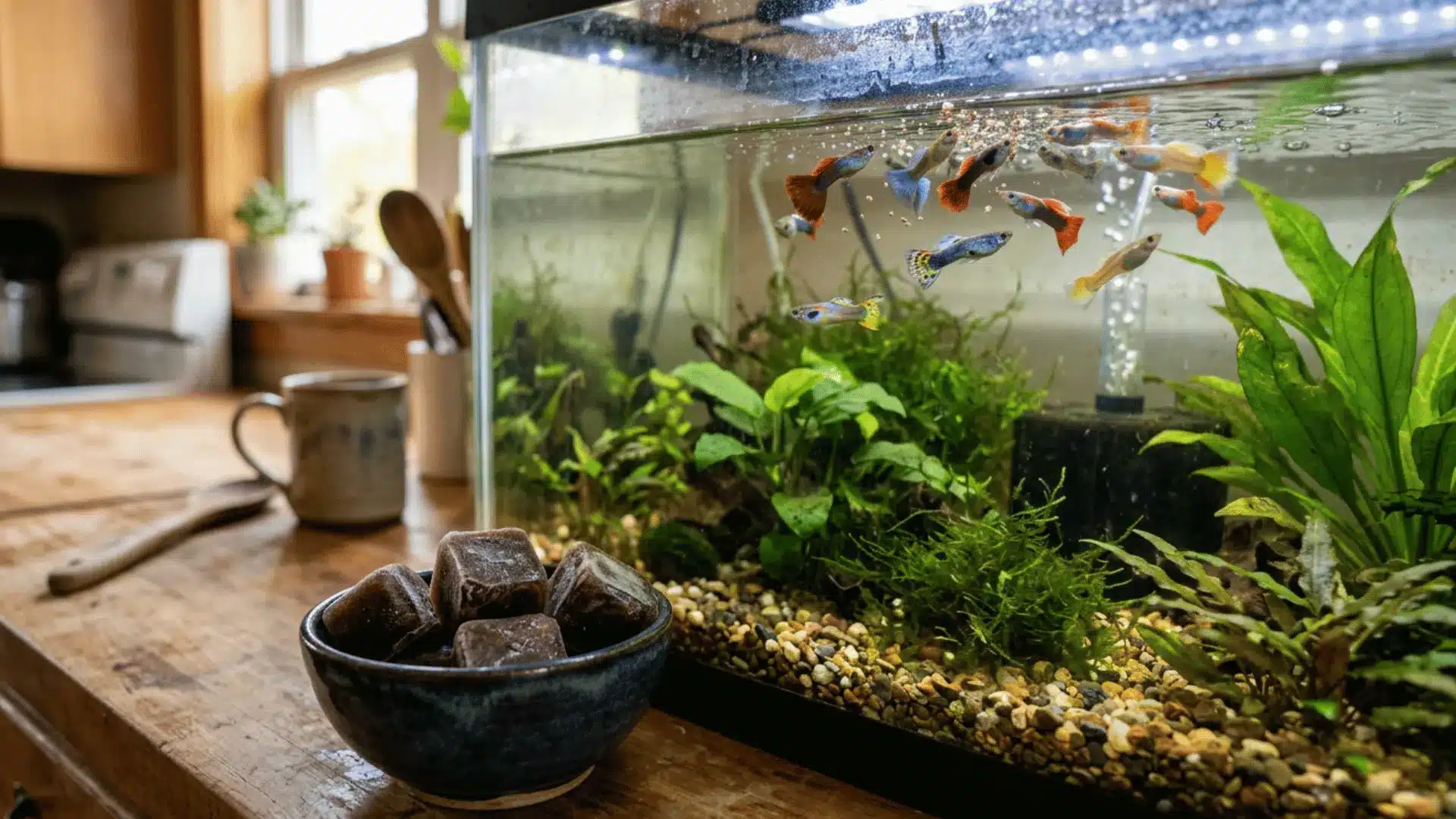
Guppies are omnivores that thrive on a varied diet. Feed a quality flake or micro-pellet daily as the staple food, and supplement with live or frozen foods several times a week.
This balanced approach helps maintain their health, color, and overall condition.
- Brine shrimp: High in protein, close to their natural diet, and guppies go after them actively.
- Daphnia: Tiny crustaceans that add variety and support digestion.
- Bloodworms: A protein-rich treat; use sparingly since they’re rich and can cause digestive issues in excess.
- Blanched vegetables: Small pieces of zucchini, spinach, or peas (skin removed) add plant matter and fiber.
Overfeeding is a common aquarium mistake. Guppies have small stomachs and often overeat. Feed only what they can finish in two minutes, once or twice daily, to prevent waste and ammonia spikes.
A varied, high-quality diet supports brighter colors, stronger immunity, better breeding conditions, and a longer lifespan.
Some aquarists keep mystery snails alongside guppies to help consume leftover food and certain algae, though regular maintenance and water changes remain the primary methods for maintaining water quality.
How to Tell if Your Guppy is Getting Old?
Old guppies look different from sick ones. Learning the difference helps you respond appropriately rather than panic at the wrong time.
Common signs of natural aging include:
- Fading color: Male guppies often lose some of their brightness as they get older. This is normal, not a sign of a disease.
- Slower movement: An older guppy may spend more time resting or moving less actively through the tank.
- Reduced appetite: A guppy approaching the end of its life may eat less or skip feedings entirely.
- Fin changes: The edges of the fins may appear slightly ragged or less defined without any infection present.
What separates aging from illness is the absence of other symptoms. If your guppy is also showing clamped fins, white spots, red streaks, or unusual swimming patterns, that points toward disease rather than old age.
A faded but otherwise calm, normally-behaving fish is often just getting old.
Real Guppy Lifespan Experiences From Pet Owners
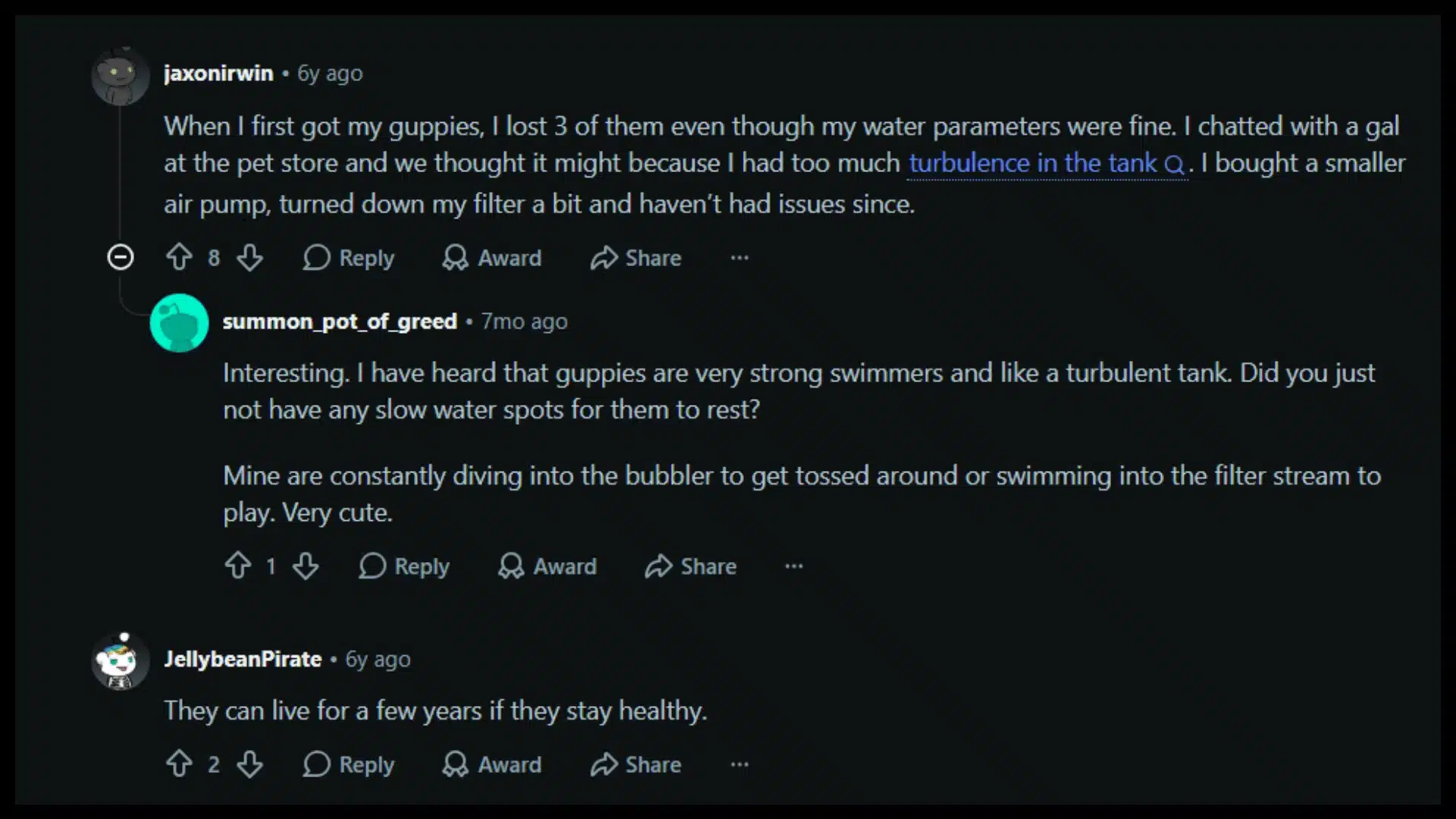
Reddit discussions suggest that guppy lifespan varies widely depending on genetics, care, and where the fish came from.
Many hobbyists reported healthy guppies living around 2–3 years, while others noted that pet-store fish often have shorter lifespans.
A common point was that store-bought guppies are usually several months old before they’re sold, meaning owners rarely know their true age.
Community members also emphasized that six months is not old for a guppy; it’s generally considered a young adult stage. Under good conditions, most healthy guppies should have well over a year of life ahead of them.
The key takeaway is that lifespan shouldn’t be measured from the day you buy the fish. If a guppy dies after only a few months in your tank, it doesn’t automatically mean poor care.
Age, genetics, and pre-purchase stress can all significantly affect longevity.
Ways to Increase Your Guppy’s Lifespan
Good habits make a real difference. These are the ones that show up consistently in both research and community experience:
- Do regular water changes: 10 to 25% every one to two weeks. This is the single most impactful thing you can do.
- Keep temperatures on the cooler side: 72 to 76°F is the sweet spot for longevity without sacrificing their health.
- Feed variety, not just flakes: Rotate between dry food and live or frozen options a few times a week.
- Watch your stocking density: More fish means more waste and more stress. Don’t overstock.
- Buy from breeders when possible: Local aquarium clubs and hobbyist breeders offer fish with better genetics and known ages.
- Quarantine new fish: Two weeks in a separate tank before adding new fish prevents disease spread, which is a common cause of early death.
- Balance your male-to-female ratio: One male for every two or three females reduces constant chasing and stress on the females.
Conclusion
Guppies may be small, but the impact they have on an aquarium is anything but.
While the average guppy lifespan is between 2 and 3 years, their lifespan depends heavily on factors you can control: clean water, a balanced diet, proper stocking levels, and a low-stress environment.
Understanding what influences their longevity helps you make better decisions and gives your fish the best chance at a healthy, vibrant life.
Just as important, remember that lifespan isn’t measured from the day you bring a guppy home. Genetics, age at purchase, and previous care all play a role.
Focus on providing excellent care rather than chasing a specific number of years. Some hobbyists swear genetics matter most, while others believe water quality is everything.
What’s your take? Tell us how long your oldest guppy lived and what you think made the biggest difference.
Frequently Asked Questions
Can Guppies Live Alone, or Do They Need a Group?
Guppies are social fish and do better in groups. A single guppy will survive, but it tends to be less active and can show signs of stress over time. A small group of three or more gives them the social stimulation they naturally seek.
Can Guppies Live Longer than 3 Years?
Yes, some guppies reach 3–5 years under exceptional conditions, though this is uncommon and usually associated with strong genetics and excellent care.
Do Male and Female Guppies Live the Same Amount of Time?
Females generally live slightly longer than males. Frequent breeding puts physical strain on females, but the constant stress of competing and displaying takes a toll on males. In practice, well-managed tanks with a good sex ratio tend to see similar lifespans across both.