

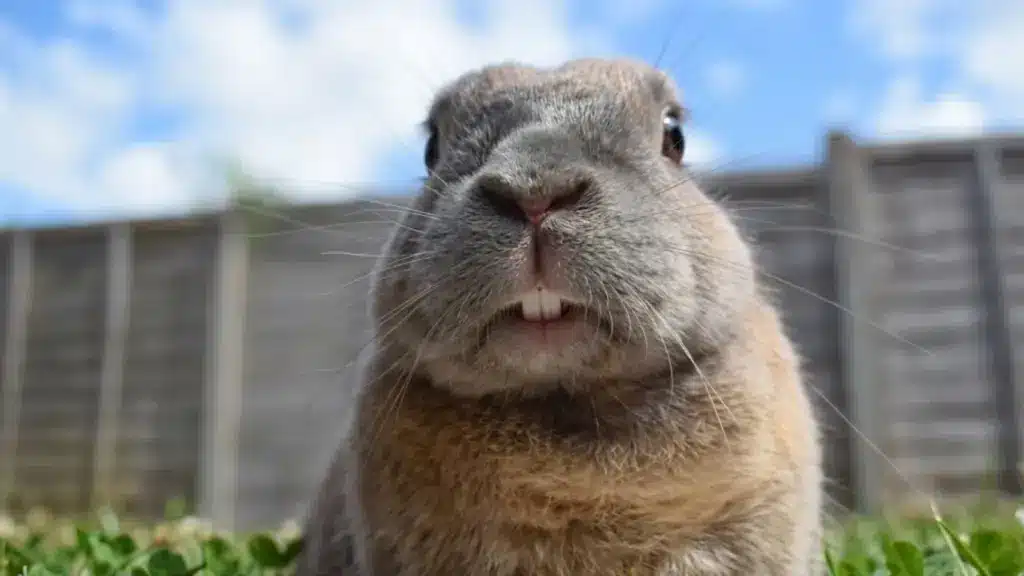
There is something instantly sweet about a rabbit’s little face, especially when its front teeth peek out in a photo, drawing, or playful moment.
That tiny look can make anyone pause and smile. But bunny teeth are more than just cute.
They are one of the most important parts of a rabbit’s body, helping it eat, chew, and stay healthy every day.
Many people search for bunny teeth or a bunny teeth smile because they want to see what real rabbit teeth look like, understand why they stand out, or find cute ideas for drawings and pictures.
Sometimes, that simple search turns into a bigger question. Once you notice those tiny front teeth, it is hard not to wonder what they really say.
Understanding the Structure of Rabbit Teeth
Most people picture two big front teeth when they think of rabbit teeth. There is a lot more going on back there.
| Tooth Type | Count | Main Role | Key Detail |
|---|---|---|---|
| Incisors | 4 | Bite and slice vegetation | The upper pair is wider and more visible; the lower pair sits in front when the mouth closes. |
| Peg teeth | 2 | Help stabilize the bite | Tiny upper incisors behind the main ones, unique to lagomorphs. |
| Premolars | 10 | Move food toward molars | Often grouped with molars as cheek teeth. |
| Molars | 12 | Grind hay and grasses | Use a rotating horizontal motion before swallowing. |
| Canine teeth | 0 | None | Rabbits have no canine teeth, leaving a gap called the diastema. |
If you’re learning rabbit anatomy for the first time alongside setting up your rabbit’s home, our guide on setting up your rabbit’s space covers the essentials in one place.
What Bunny Teeth Actually Look Like?
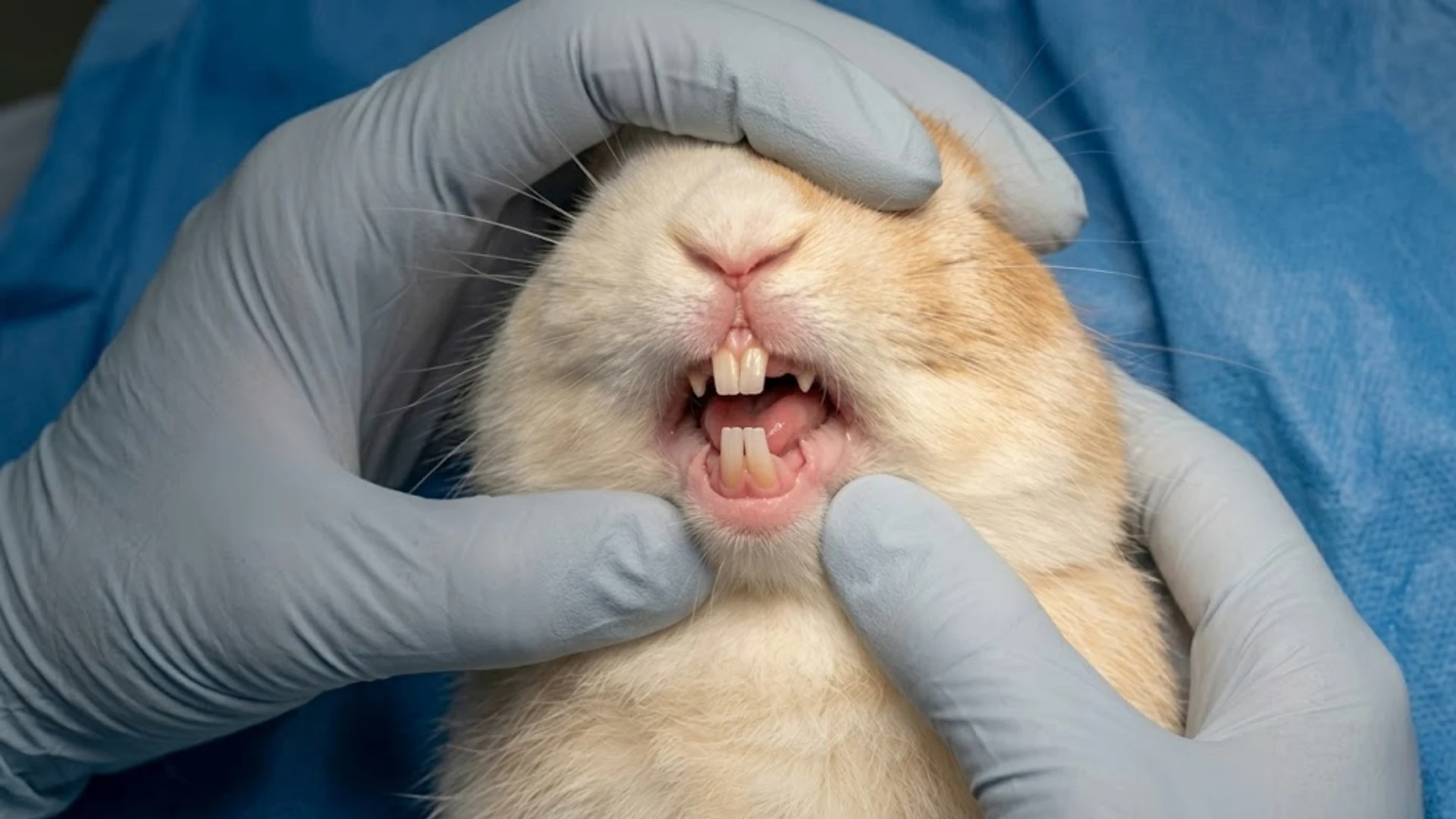
The first thing most people notice about rabbit teeth is those two large upper front incisors, and they do stand out.
They’re flat-faced, slightly curved, and naturally white- not cream, not yellow, but genuinely white.
Directly behind those big upper incisors sits a tiny second pair called peg teeth, which most owners never even notice.
The lower incisors are narrower and sit slightly in front of the upper ones when the mouth is closed.
The overall silhouette of a bunny’s teeth smile, that gentle, slightly gap-toothed grin, is completely by design, shaped by millions of years of herbivore evolution.
Why Do Rabbit Teeth Never Stop Growing?
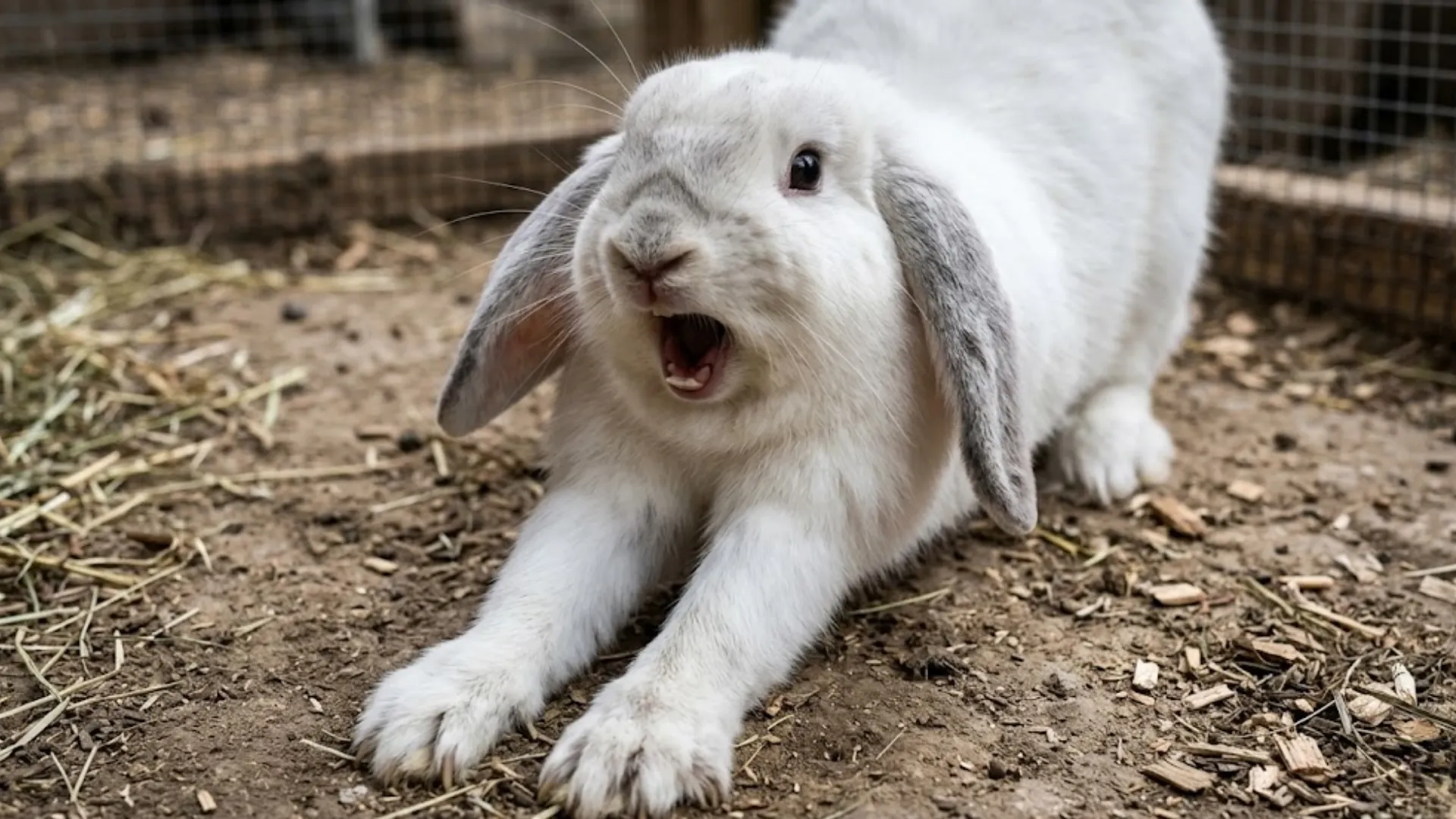
Rabbit teeth grow continuously from birth, which is what makes their diet so critical. Vets use two terms to describe this:
- Elodont means the teeth grow continuously with no anatomical root, so growth never fully stops. Without enough daily wear, overgrowth becomes a real problem.
- Hypsodont means the crowns extend deep below the gum line. What you see above the gums is only the tip of the tooth. Most of it is hidden.
Incisors grow roughly 1 cm per month (about 2 to 3 mm per week). Cheek teeth grow more slowly, but even modest overgrowth can cause sharp points that cut into the cheeks or tongue.
The natural fix is simple: coarse hay, chewed for several hours daily, files the teeth down through friction. No hay means no wear, and that’s where most rabbit dental problems begin.
One other detail worth knowing: because rabbit teeth have no sealed roots, dental abscesses spread differently than in cats or dogs.
They require specialized veterinary treatment, which is why rabbit-savvy vets are so important.
What is a Bunny Teeth Smile?
A bunny-teeth smile usually means a smile where the two front teeth stand out more than the other teeth.
In real rabbits, these front teeth are called incisors, and they help rabbits cut hay, grass, and leafy food.
People may be looking for cute rabbit photos, cartoon bunny drawings, or a human smile with slightly larger front teeth.
Rabbits do not smile like humans, but some photos can make their front teeth look visible, especially when eating, yawning, or grooming.
In cartoons, a bunny’s teeth smile is often drawn with two big front teeth to make the rabbit look sweet, funny, or playful.
This type of smile is popular because it is easy to recognize and gives a soft, cute look. Whether real or drawn, bunny teeth are one of the most familiar features of rabbits.
Breeds Most Likely to Have Bunny Teeth Problems
Certain rabbit breeds are more prone to dental problems due to skull shape and jaw structure. Dwarf and lop-eared rabbits face the highest risk and require frequent vet checks.
- Netherlandish Dwarf (High risk): Compact skull limits proper tooth alignment, increasing the likelihood of malocclusion and the need for careful monitoring.
- Holland Lop (High risk): A flattened facial structure can lead to crowded teeth, making routine dental checks essential to prevent complications.
- Mini Lop (High risk): Shares skull shape challenges with Holland Lop, requiring attentive care and regular observation to maintain healthy teeth.
- Lionhead (Medium-High risk): Genetic predisposition can lead to malocclusion if teeth are not monitored and dietary or chewing habits aren’t managed.
- Rex Rabbit (Medium risk): Generally better skull shape, but dental problems can still occur, so owners should remain vigilant and schedule routine vet visits.
- New Zealand White (Low risk): A longer face allows teeth to align naturally, reducing dental issues, though occasional checks remain important for overall health.
- Continental Giant (Low-Medium risk): Strong jaw structure, but large size may introduce additional dental and health considerations that require monitoring.
If you own or are considering one of the higher-risk breeds, more frequent vet dental checks, at least twice a year, are a smart baseline.
Our overview of large rabbit breeds covers how breed size affects overall health care needs.
Bunny Teeth vs Rodent Teeth: The Difference
This comes up constantly, and the confusion is understandable. Rabbits and rodents both have those prominent front teeth and no canines.
But scientifically, rabbits are not rodents; they belong to a separate order called Lagomorpha, and their teeth are the clearest proof of that distinction.
| Feature | Rabbit (Lagomorph) | Rodent (e.g., rat, hamster) |
|---|---|---|
| Peg teeth | Yes, a second pair of tiny upper incisors | No, only one pair of upper incisors |
| Incisor enamel color | White (pigment-free) | Yellow or orange (iron-pigmented) |
| Jaw movement when chewing | Rotating horizontal stroke | Primarily vertical |
| Mouth opening angle | Only 20-25 degrees | Up to 40 degrees |
| Total teeth count | 28 | Varies (rats have 16) |
Can You Check Your Rabbit’s Teeth at Home?
Yes, checking the incisors regularly gives you an early warning system. Here’s a simple routine that takes about 30 seconds:
- Hold your rabbit calmly on a flat surface: A towel on a table works well. Don’t flip them on their back; it causes unnecessary stress.
- Gently lift the top lip with one finger: You have to see the upper incisors clearly. Look at the length, color, and angle.
- Check that the lower incisors are visible just in front of the uppers: If you can’t see the lower teeth at all, or the bite looks off, note it.
- Look for any cracking, splitting, or asymmetry: One tooth noticeably longer than its pair is a sign the alignment is off.
- Watch how your rabbit eats over the next day: Dropping food, chewing on one side only, or avoiding certain textures are soft signals worth monitoring.
This home check covers only the visible incisors. Cheek teeth (premolars and molars) sit deep in the mouth and cannot be assessed without sedation and proper equipment. Regular vet exams remain essential for a complete dental picture.
Signs Your Rabbit’s Teeth Need Attention
Rabbit dental problems are among the most commonly seen issues in vet practices. The tricky part is that early signs are easy to miss. By the time things are obvious, the problem has usually been building for a while.
- Loss of appetite or selective eating: Dental pain or overgrown roots can stop eating quickly, causing dangerous gut issues without urgent vet care and feeding support.
- Dropping food while chewing: Known medically as ptyalism. Causes a perpetually wet mouth and chin areas that can lead to fur loss and moist dermatitis if untreated.
- Excessive lip-licking or head tossing: Dental irritation from trapped food or objects can cause this behavior, while persistent signs need veterinary assessment for underlying issues.
- Swelling or abscesses: Dental abscesses develop from malocclusion or trauma. They spread differently in rabbits and need immediate professional veterinary treatment.
- Malocclusion of teeth: Occurs when teeth do not meet or align properly. Requires regular professional trims; never trim at home to avoid severe damage.
- Overgrown tooth roots: Can cause weepy eyes, sneezing, and anorexia. Diagnosis needs X-rays or CT scans, as it cannot be seen visually.
- Visibly misaligned incisors: Part of malocclusion where teeth grow unevenly. Continuous issue for some rabbits needing ongoing veterinary care throughout life.
If you are managing rabbit care at home and notice any of these signs alongside changes in litter habits or activity level, bring them all to your vet; the full picture helps with diagnosis.
How to Keep Your Rabbit’s Teeth Healthy?
Most rabbit dental problems can be prevented with steady daily care, and diet is the biggest part of that routine.
Rabbit teeth are built to wear down through long sessions of chewing rough food, so unlimited hay should always come first.
According to VCA Animal Hospitals, timothy, orchard grass, or botanical hay works well for adult rabbits, while alfalfa is better only for young rabbits under six months.
Hay should make up the maximum of the diet because pellets are too soft to provide enough dental wear.
Keep pellets measured, around 1/4 cup per 5 lbs of body weight, so your rabbit does not skip hay.
Add fresh greens for hydration and variety, but not as a hay replacement. Safe chew toys, such as untreated willow, apple wood sticks, or compressed hay chews, also help.
Schedule vet checks yearly, twice for high-risk rabbits, and check front teeth monthly to catch changes early.
Conclusion
Healthy bunny teeth are not just a small detail in rabbit care; they are part of the daily story your pet tells through appetite, mood, grooming, and movement.
The more familiar you become with normal behavior, the faster unusual patterns stand out.
A rabbit that feels safe, eats with ease, and stays curious usually shows it long before a problem becomes obvious.
Good dental awareness is less about worry and more about confidence: knowing when to relax, when to observe, and when to call a vet.
For new owners, this knowledge can make rabbit care feel calmer and more rewarding.
Keep learning your rabbit’s habits, trust small changes, and comment below with your bunny teeth smile questions or experiences today.
Frequently Asked Questions
Can Rabbit Teeth Grow Back After Being Trimmed or Extracted?
Trimmed rabbit teeth grow back continuously. Extracted teeth do not regrow, but many rabbits still eat well using their lips, tongue, and cheek teeth.
Can Dental Problems Make a Rabbit Stop Pooping?
Yes. Dental pain can stop a rabbit from eating, which may slow or stop pooping. That can become an emergency very quickly.
Is Tooth Purring Normal in Rabbits?
Yes, gentle tooth purring is normal when a rabbit feels relaxed. It often happens during petting, resting, or quiet bonding time.