Crate training can feel a bit scary when your puppy cries, scratches, or looks at you like you have betrayed them.
That part is normal and does not mean you are doing anything wrong. The goal is not to force them into a box or make them stay quiet.
It is to help them feel safe, calm, and settled in their own little space. Once you understand how to crate train a puppy the right way, the whole process feels less stressful for both sides.
In this blog, you will learn how to pick the right crate, introduce it slowly, build a simple routine, handle crying, avoid common mistakes, and make crate time feel natural.
You will also get practical tips that puppy owners often learn the hard way, so training feels easier from day one, and your puppy starts seeing the crate as a comfort spot.
What Crate Training Really Means?
Crate training is about giving a puppy a space that feels calm, quiet, and safe. It should feel like a small den where they can relax, not a place that makes them feel trapped.
Many people think crate training means locking a puppy away, but that’s wrong. The crate is meant to support rest, help with routine, and build comfort when used the right way.
Puppies do not understand this from day one, which is why they need time to adjust. Everything is new for them, from the home to the sounds and even the people around them.
A crate becomes useful because it helps them settle during naps, sleep better at night, and feel secure when left alone for short periods.
With patience and the right approach, the crate turns into a familiar and peaceful spot.
How to Crate Train a Puppy: Step-by-Step Process
Crate training works best when you move slowly, keep things calm, and help your puppy see the crate as a safe space.
1. Choose the Right Crate
Pick a crate that gives your puppy enough room to stand, turn around, stretch a little, and lie down without feeling squeezed.
At the same time, it should not be too large. A crate that is too big may make your puppy use one side as a bathroom and sleep on the other.
If your puppy is still growing, a crate with a divider can be very helpful. Start with a smaller space, then adjust it as your puppy gets bigger. The crate should feel snug, clean, and easy to rest in.
2. Set it in the Right Spot
Place the crate in a calm area where your puppy can rest without too much noise, foot traffic, or movement. Still, do not put it in a lonely place or far from the family.
Puppies feel safer when they know people are nearby, especially in a new home. A corner of the living room during the day or your bedroom at night often works well.
This helps your puppy feel included while also having their own quiet place. The goal is comfort, not isolation, so choose a spot that feels peaceful but still connected.
3. Make it Feel Cozy
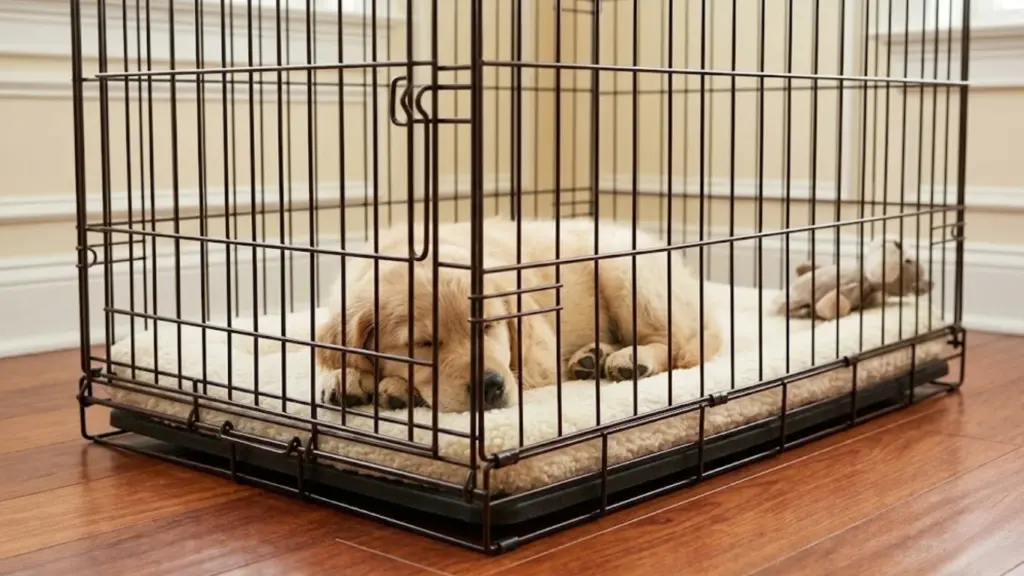
A crate should feel soft, warm, and inviting, not empty or cold. Add a bed, blanket, or safe comfort item that your puppy can relax on. Keep it simple at first.
Do not fill the crate with too many things, as that can make it messy or unsafe. Make sure anything inside is puppy-safe and not easily chewable.
You can also use the same blanket often, so the smell becomes familiar. When the crate feels cozy and known, your puppy is more likely to walk in, settle down, and rest without fear.
4. Let Your Puppy Get Used to it
Do not push your puppy inside the crate or close the door right away. That can make the crate feel scary before training even starts.
Let them sniff it, walk around it, step inside, and come back out on their own. Keep the door open during this stage, so they do not feel trapped. You can place treats near the entrance, then slowly move them deeper inside.
This helps your puppy link the crate with good things. The more relaxed this step feels, the easier the next steps become, especially when you start closing the door.
5. Build Crate Time Slowly
Once your puppy feels fine going inside, start with very short crate sessions. Use treats, praise, or a safe chew toy to make the moment positive.
Close the door for a few seconds first, then open it before your puppy gets upset. Slowly increase the time as they become calmer and more used to the routine.
Try this while you are nearby at first, not only when you leave the house. Do not rush this part, as short, steady practice works better than one long session that leaves your puppy stressed, scared, or unsure about the crate.
What Type of Crate is Best for Puppies?
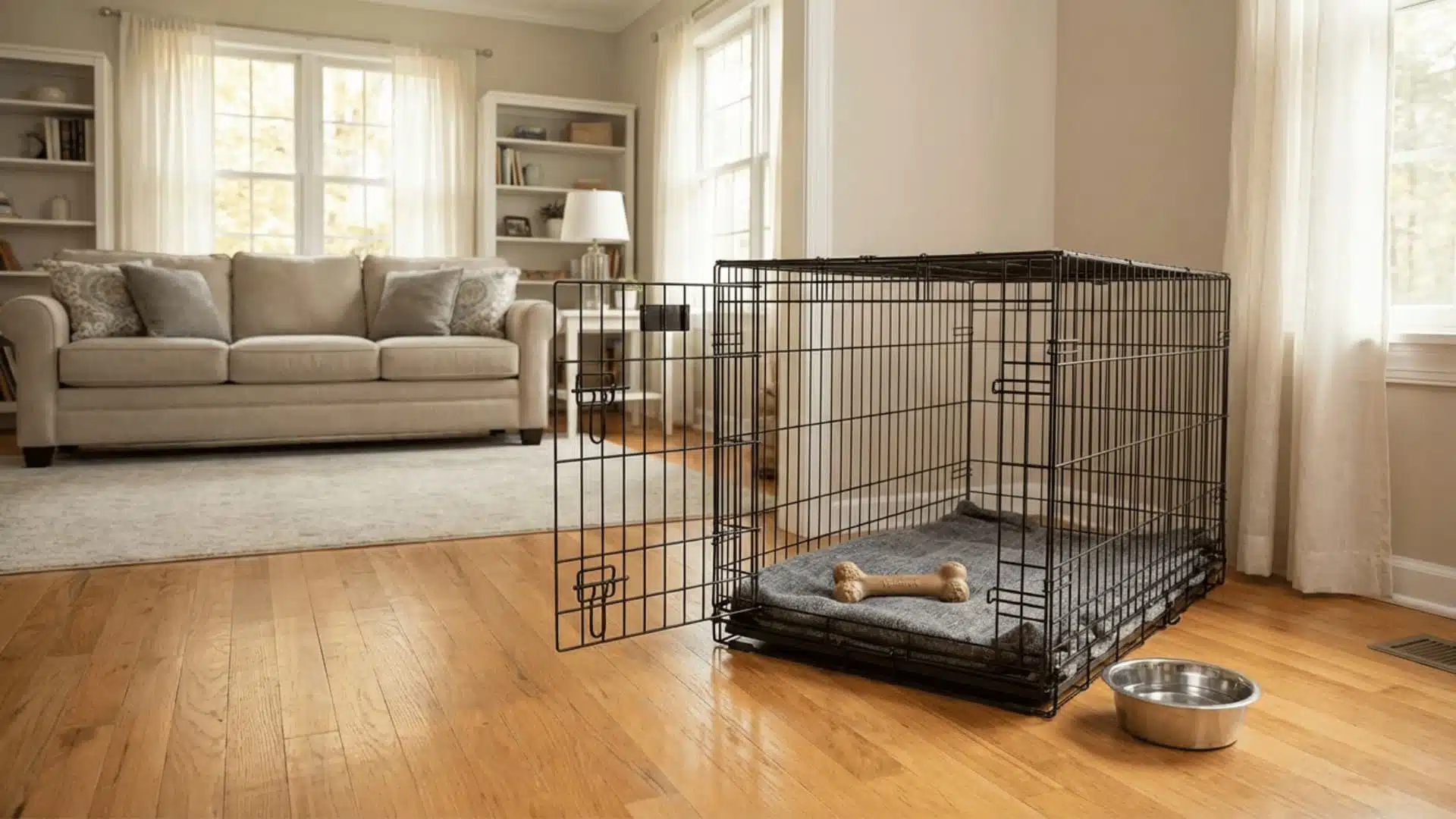
Before you start training, you need the right crate. There are 3 main types, and each has real trade-offs.
- Wire crates are the most popular choice for puppies. They have good airflow, are easy to clean, and most come with a divider panel so you can adjust the interior size as your puppy grows. The open design also helps puppies feel less isolated, which can reduce anxiety.
- Plastic crates (the airline-style crates) feel more den-like, which some puppies prefer. They block more visual stimulation, which can help nervous or easily distracted dogs settle faster. The downside is that they don’t adjust in size.
- Soft-sided crates are lightweight and portable, but they’re not a good fit for most puppies. A determined chewer can get through the fabric quickly, and they offer little structural security. Save these for well-trained adult dogs who travel.
In my experience, a wire crate with a divider is the best starting point for most puppies. It gives you flexibility as they grow, and the open design tends to reduce that claustrophobic reaction you see in the first few days.
Real Puppy Owner Tips On How To Crate Train a Puppy
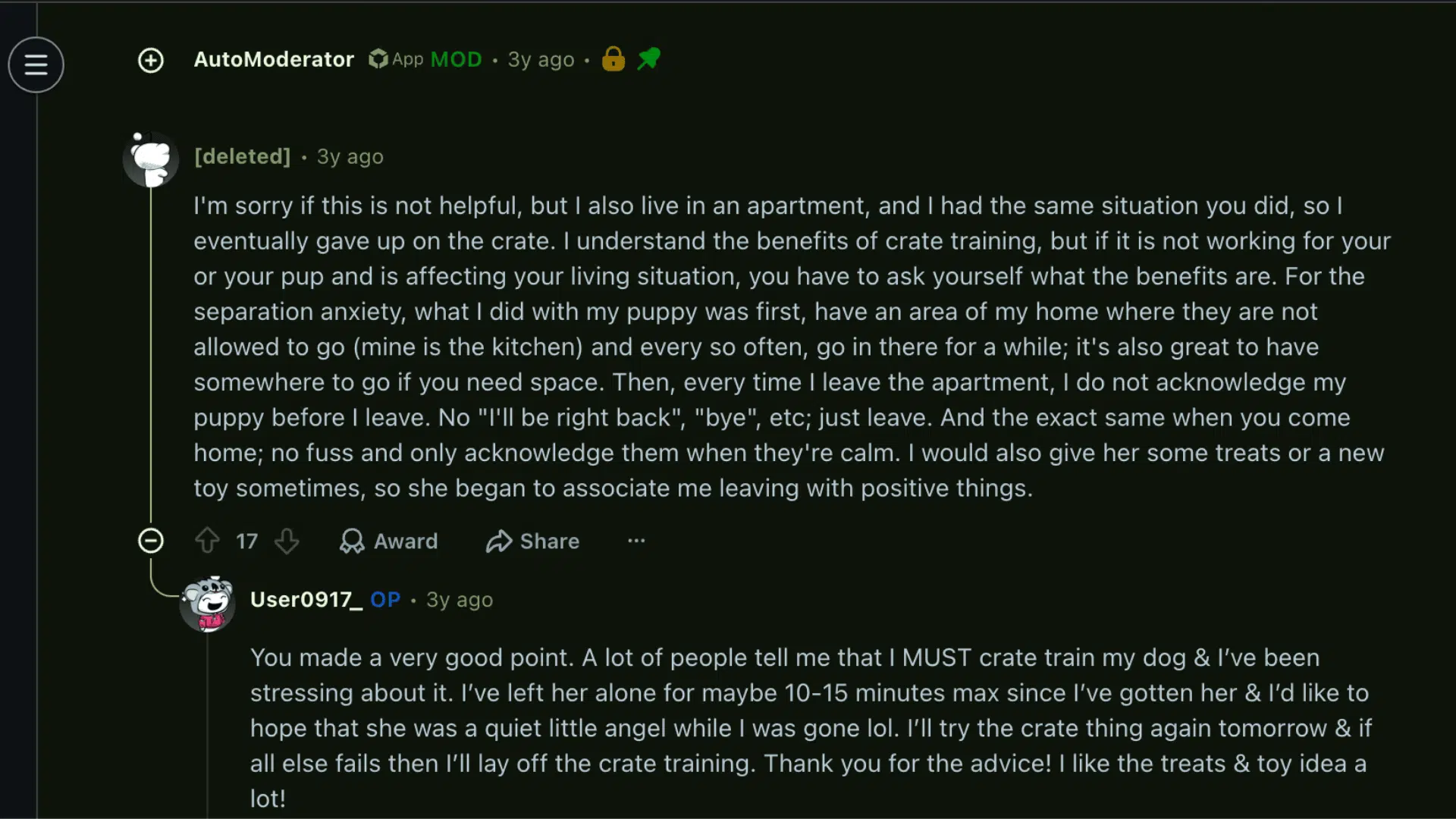
Crate training works better when the crate feels like a good place, not a timeout spot. Many puppy owners say the biggest step is building a positive bond with their puppy.
Feed your puppy inside the crate, give treats there, and try small games like hiding treats in a blanket so they can sniff them out.
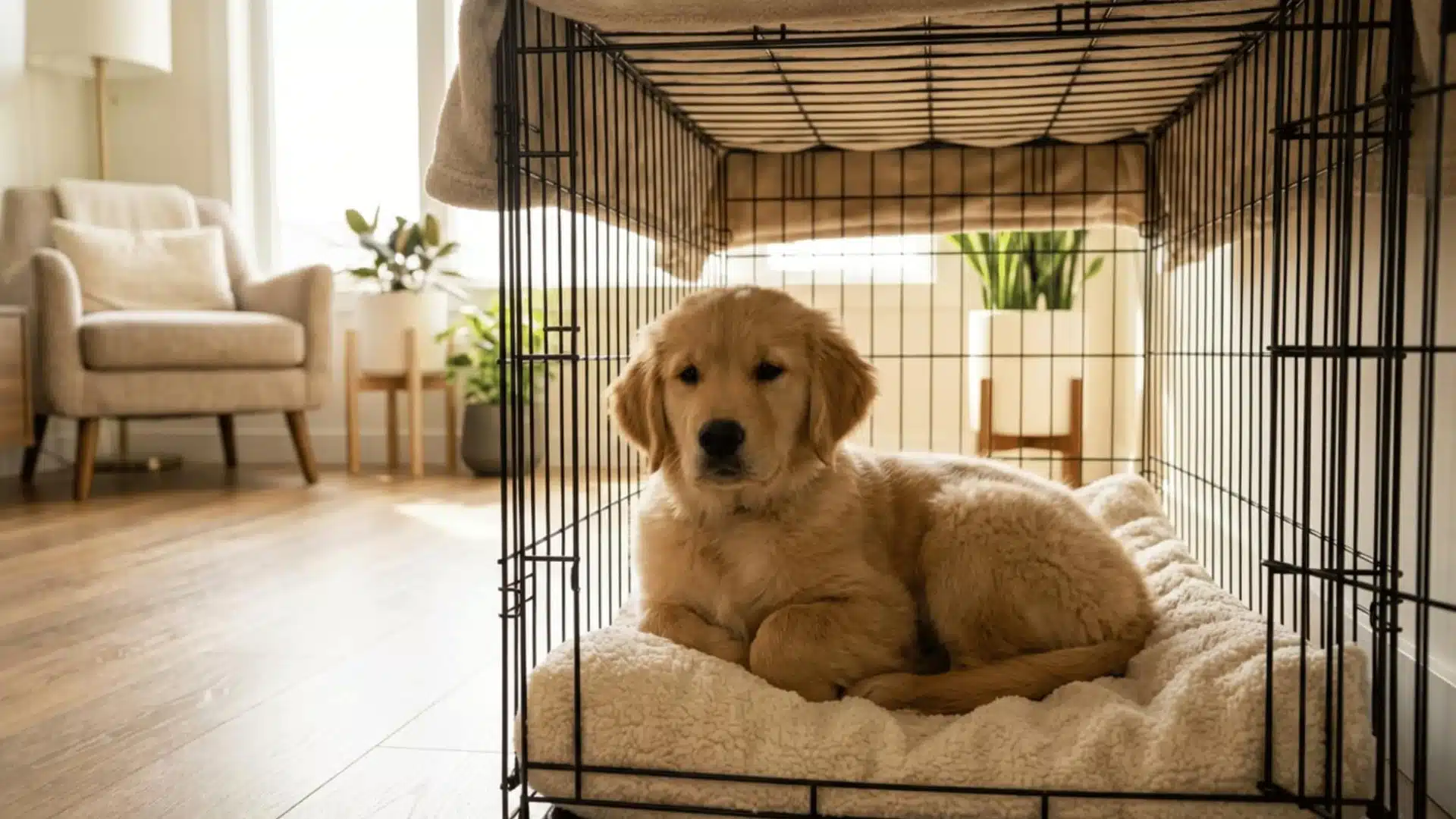
Never use the crate as punishment, and do not leave your puppy inside if they are truly panicking. Some owners also cover the crate with a blanket to make it feel more den-like.
One owner said their puppy hated it at first, but after weeks of practice, she learned the crate command and went in for toys and treats.
Another kept the crate beside the bed, added a blanket and chew toy, and slowly made nights easier.
How Long Should a Puppy Stay in a Crate?
Crate time depends on age. A rough rule is 1 hour per month of age, but puppies also need breaks for water, food, play, and bathroom time, regardless of the clock. Crate time can also vary by age, size, and breed, so this crate time guide can help you set safer limits.
Here’s a practical guide by age:
| Puppy Age | Max Crate Time (Daytime) | Overnight |
|---|---|---|
| 8–10 weeks | 30–60 minutes | 2–3 hour stretches |
| 11–14 weeks | 1–3 hours | 3–4 hour stretches |
| 15–16 weeks | 3–4 hours | 4–5 hour stretches |
| 4–6 months | 4–5 hours | 5–6 hour stretches |
| 6+ months | Up to 6 hours | Most of the night |
These are general guidelines; individual puppies vary. If your puppy is showing signs of distress consistently before these time limits, speak with your vet or a certified trainer to rule out underlying anxiety.
What To Do If Your Puppy Cries In The Crate?
Crying is common during crate training, but how you respond matters. Small, calm actions can help your puppy settle without creating new habits.
- Check for bathroom needs: Puppies often cry when they need to go out. Take them for a quick potty break, then return them calmly.
- Wait for a quiet moment: Do not open the crate while your puppy is crying. Wait for a short pause so they do not link noise with getting out.
- Keep your voice calm: If you speak, use a soft and steady tone. Loud or excited reactions can make your puppy more alert instead of relaxed.
- Avoid turning it into playtime: Do not start playing or giving too much attention right after opening the crate. Keep the moment low energy.
- Build comfort during the day: Practice crate time when your puppy is awake and calm. This helps them feel safe not just at night.
If the crying continues after you have adjusted the routine, a few extra crate whining tips can help you handle it without making the habit worse.
If the panicked tone persists even after adjustments, it may point to deeper separation anxiety and fear in puppies that warrants a closer look at separation-related triggers and, if needed, professional guidance.
Common Crate Training Mistakes To Avoid
Small mistakes can slow down crate training and confuse your puppy, so it helps to know what to avoid before building a steady routine.
- Using the crate as punishment: This makes the crate feel like a bad place. Your puppy may start avoiding it or feel stressed inside.
- Leaving the puppy inside too long: Puppies have small bladders and lots of energy. Long crate times can lead to accidents and frustration.
- Giving attention every time they cry: If you respond right away, your puppy may learn that crying gets them out. This builds a habit that is hard to break.
- Skipping potty breaks: Regular breaks are needed, especially for young puppies. Missing them can lead to mess and discomfort.
- Moving too fast: Rushing the process can overwhelm your puppy. Slow steps help them feel safe and adjust better.
- Buying a crate that is too big: A large crate can confuse your puppy and lead to poor habits, such as using one side as a bathroom.
Making Crate Training Part Of Daily Life
Crate training becomes easier when it fits into your puppy’s daily routine instead of feeling like a separate task.
Start by using the crate during nap times so your puppy learns to rest there naturally. Keep a steady bedtime routine each night, as this helps your puppy know when it is time to settle down.
Practice crate time even when you are home, not just when you leave, so it doesn’t feel like a signal that you are going away.
As your puppy gets more comfortable, slowly prepare them for short periods of alone time in the crate. Increase this time step by step without rushing.
Over time, your puppy starts to see the crate as a normal part of the day. Patience and consistency matter the most, as small daily habits build long-term comfort and trust.
Conclusion
Crate training takes time, and every puppy moves at their own pace. The crate should feel calm, safe, and familiar, not like a place they are forced into.
Start with the right crate size, place it in a good spot, make it cozy, and build comfort through treats, praise, and short sessions.
Avoid using the crate as punishment, leaving your puppy inside too long, or rushing the process. When learning how to crate train a puppy, the small daily steps matter more than forcing fast results.
With patience, steady routines, potty breaks, and gentle practice, your puppy can slowly learn to rest in the crate without fear. It may not happen overnight, but progress will come with time.
What crate training step has worked best for your puppy so far? Share your experience in the comments below.
Frequently Asked Questions
Can I Move the Crate to a Different Room Later?
Yes, once your puppy feels comfortable, you can slowly move the crate to a new spot. Do it step by step so your puppy does not feel confused or anxious.
Should I Cover the Crate Completely or Leave it Open?
It depends on your puppy. Some feel calmer with a cover as it blocks light and distractions, while others prefer it open. Test both and see what works better.
Is it Okay to Have Toys Inside the Crate All the Time?
Yes, but only safe toys. Avoid anything that can break or be swallowed. A simple chew toy is usually enough to keep your puppy relaxed.