You might not think much about your dog’s tail until something goes wrong. Some dogs wag so hard that it can actually lead to injury. That is where happy tail syndrome comes in, and it is more common than it sounds.
It often starts small with a tiny cut or with a bit of blood at the tip. It is easy to ignore at first, but the problem is that the tail keeps moving.
It keeps hitting walls, furniture, and anything nearby. That constant impact stops the wound from healing.
Over time, the injury can reopen repeatedly. What seemed minor can turn into a messy and painful issue. Dogs may keep wagging even when it hurts, which makes things worse.
In this blog, you will learn what happy tail syndrome is, which dogs are most at risk, why it keeps coming back, how to spot it early, and what treatment and prevention actually look like.
What is Happy Tail Syndrome
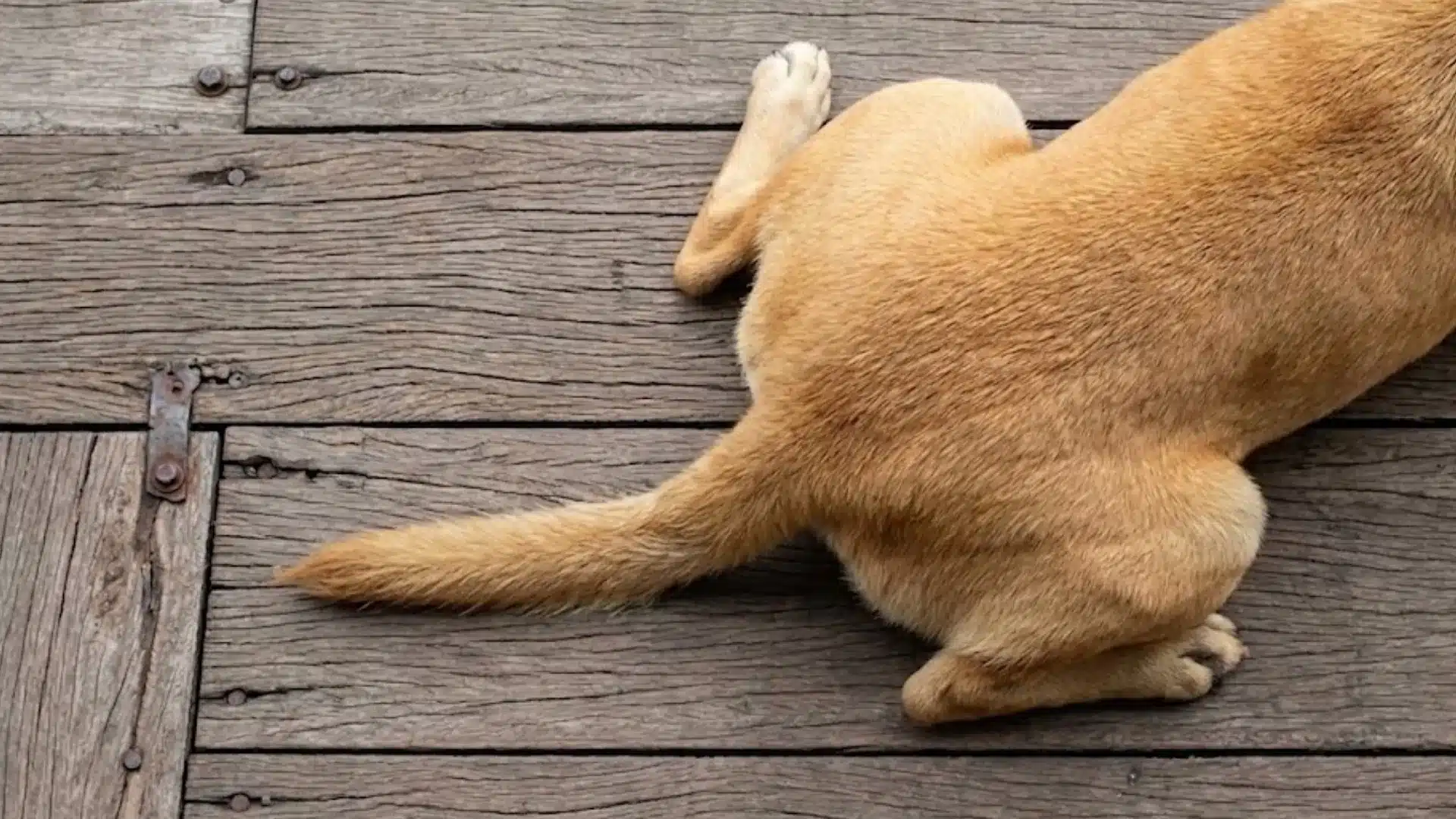
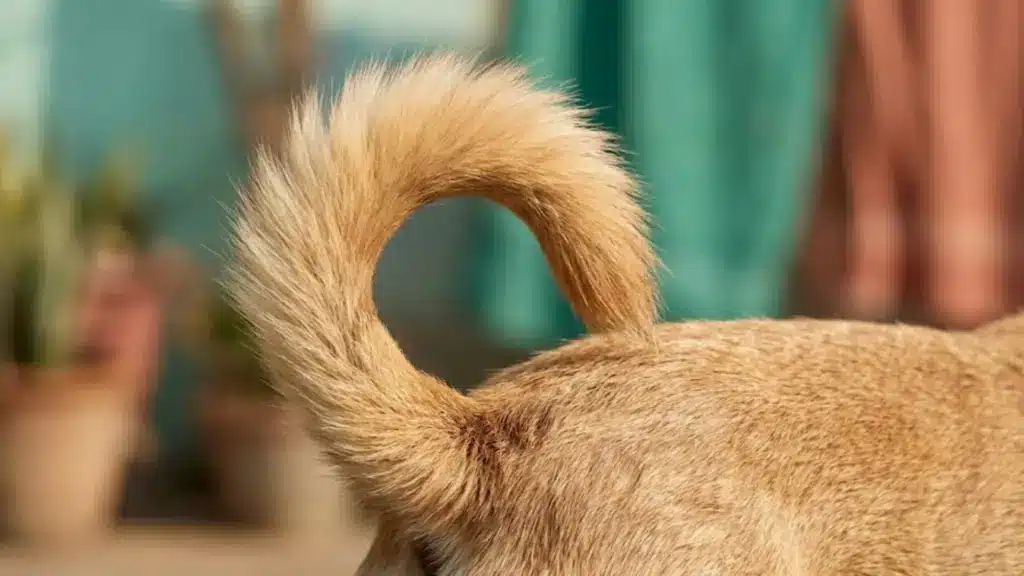
Happy tail syndrome is a tail injury caused by repeated hard wagging that leads to cuts and bleeding at the tip.
Happy tail syndrome is when a dog injures its tail from wagging too hard and too often. The tip keeps hitting hard surfaces, such as walls, furniture, or door frames. Over time, the skin breaks open and begins to bleed.
A dog’s tail is an extension of the spine, containing between 5 and 20 small vertebrae, depending on the breed.
The skin at the tip is thin, has minimal padding, and has a rich blood supply. That combination means even a moderate impact can cause immediate bleeding.
What starts as a small cut can turn into a deeper and more painful injury. In some cases, it can lead to infection and damage beneath the skin.
This is also why tail wounds tend to heal more slowly than other injuries. Veterinary wound care guidelines recommend keeping such wounds clean and protected from the moment they appear.
Causes of Happy Tail Syndrome
This usually comes down to repeated impact, but a few specific factors make some dogs more prone than others.
- Forceful wagging in tight spaces: Dogs that wag with full energy often hit nearby surfaces without slowing down. In smaller homes or narrow spaces, there is less room for movement. This increases the likelihood that the tail will repeatedly hit hard objects, leading to injury over time.
- Crates, kennels, and boarding environments: Limited space in these environments puts dogs at greater risk. Choosing the right crate size gives your dog enough room to move without the tail repeatedly hitting the walls. The tail can hit the sides repeatedly, especially during excitement. After boarding, dogs often wag intensely when reunited, which can quickly cause damage in tight spaces.
- Tail structure and breed tendencies: Long or thin tails have less cushioning, so they take more impact. This makes it easier for the skin to break. Certain breeds and active working dogs are more likely to face this due to their build and energy levels.
- High excitement, stress, and anxiety: Dogs that get overly excited or anxious tend to wag harder and faster. Situations like greetings or separation anxiety can trigger intense wagging, increasing the chances of repeated impact and injury.
- Frequent stimulation and overexcitement: Some dogs remain highly alert and react to everything around them. This leads to frequent wagging throughout the day. More movement means more chances of hitting surfaces, which builds up damage over time.
Which Breeds are Most at Risk?
Not every dog is at risk, but some breeds are almost built for this problem. In my experience, large dogs with long, muscular tails and short fur tend to get hit the hardest.
Strong wagging plus little protection means the tail tip takes a beating.
I see this most in breeds like Labrador Retrievers, Great Danes, Pit Bulls, German Shepherds, Greyhounds, Irish Wolfhounds, Dalmatians, Pointers, and English Springer Spaniels.
These dogs are active and expressive, and they wag with force. Small dogs rarely deal with it, as their tails do not have enough force to break the skin.
Dogs with short tails or thick coats also have a natural advantage. In real cases, it usually shows up as random blood spots around the house.
Owners are confused until the tail gets checked. Labradors are the most common, especially after boarding or high excitement situations.
Signs of Happy Tail Syndrome in Dogs You Should Not Ignore
These signs are often easy to miss at first, but paying close attention to your dog’s tail can help you catch the problem early before it turns into something more serious.
- Small blood marks around the house: You may notice light blood spots on walls, floors, or furniture. It is usually not a lot, but enough to stand out. This is often the first clear sign that something is wrong.
- Raw skin or visible injury at the tail tip: Check the end of the tail closely. You might see a raw patch, slight swelling, or a scab that keeps reopening. These are strong indicators that the tail is being repeatedly injured.
- Hair loss at the tip of the tail: This can show up before any bleeding starts. A small patch with missing hair is an early warning sign. Catching it at this stage makes things much easier to manage.
- Wound that does not heal properly: If the injury keeps reopening or never seems to fully heal, it is a sign of constant impact. The tail keeps hitting surfaces, which delays recovery.
- Sensitivity or discomfort around the tail: Your dog may flinch when you touch the tip or avoid contact. Some dogs may also lick the area more than usual, which signals irritation or pain.
Why it Can Become a Serious Issue
The main problem is not just the injury, but the fact that it keeps happening again and again. The tail is always in motion, and every wag causes the tip to hit hard surfaces.
This repeated impact prevents the wound from healing and keeps it from healing. Because the wound stays open, it becomes easier for bacteria to enter.
Over time, this can lead to infection and deeper tissue damage. What starts as a surface cut can slowly worsen. If left untreated, the constant trauma can affect nerves and, in rare cases, even the small bones inside the tail.
The longer it goes on, the harder it becomes to manage at home. The real concern is the cycle of reinjury, which can turn a minor issue into a serious one.
When to See a Vet
It is not always easy to tell when home care is enough, so knowing when to step in can help prevent bigger problems later.
If the wound is bleeding heavily, looks deep, or shows signs of infection like redness spreading, warmth, discharge, or a bad smell, do not wait.
These are clear signs that the injury needs medical attention. Home care can help in mild cases, but this condition can worsen quickly.
If you have been treating it for about a week and see no improvement, it is time to act. The same goes if your dog seems to be in noticeable pain.
A simple way to judge it is this: if you have rebandaged the tail multiple times and it still looks raw, it likely needs proper treatment. Getting help early is always easier than dealing with serious complications later.
How Vets Diagnose and Treat Happy Tail Syndrome
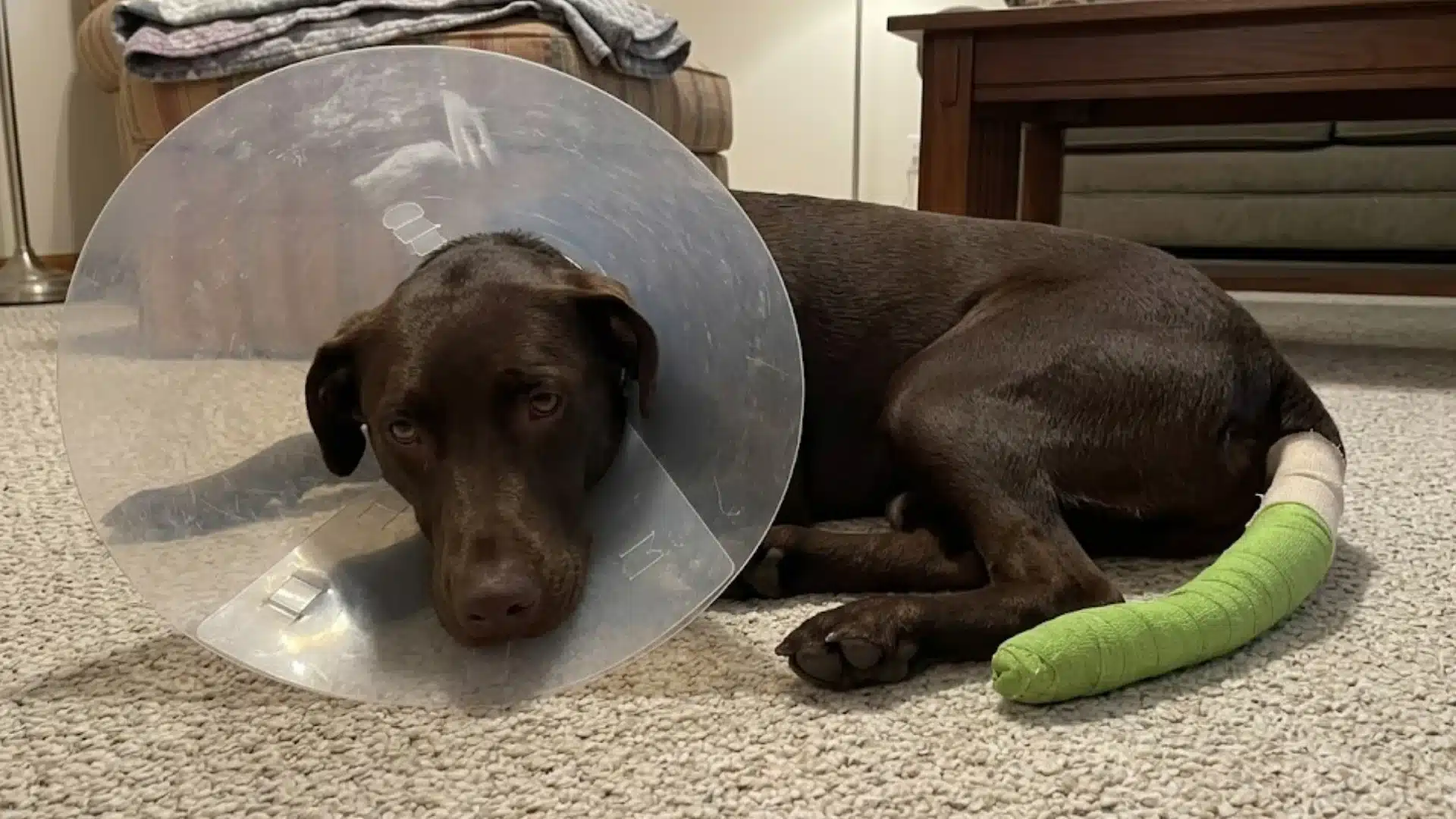
Vets usually identify the issue through a simple physical exam and by looking at the dog’s history and breed.
In ongoing cases, basic blood tests may be done to check for anemia or other concerns, especially before long-term medication.
Treatment often starts with cleaning the wound using saline and keeping it dry. Bandaging helps, but it can slip or get wet, so it needs regular checks and changes.
An e-collar is important to stop chewing. If healing is slow, a vet may step in with proper bandaging, medication, or mild calming support.
In some cases, diet support like Omega-3s or protective sleeves can help. Severe or recurring cases may need minor surgery.
How Long Does Happy Tail Take to Heal?
Healing time varies depending on how severe the wound is and how well further trauma is prevented. Mild cases with proper bandaging and restricted activity may improve within a couple of weeks.
More established injuries can take a month or longer, and some never fully heal without surgical intervention.
The tail tip has relatively poor blood circulation compared to other body parts, which already slows recovery.
Add in the constant motion of wagging, and even a wound that looks healed can split back open within days of normal activity.
Conclusion
By now, you have a clear idea of what this condition is, what causes it, and why it can turn serious if ignored. It may start as a small cut, but repeated impact and constant wagging make it harder to heal.
That is why early signs matter so much. Catching happy tail syndrome early can save you and your dog from a lot of trouble.
Simple steps like regularly checking the tail, managing excitement, and acting quickly can make a big difference. Waiting too long only makes treatment harder.
If something feels off, it is better to act sooner rather than later. Small actions early can prevent bigger problems down the line.
Have you ever noticed your dog injuring its tail from wagging too much? Share your experience in the comments below.
Frequently Asked Questions
Can Happy Tail Syndrome Heal on its Own Without Treatment?
In very mild cases, it might seem like it’s healing, but without protection, the wound usually reopens due to constant wagging. The tail’s movement makes natural healing unreliable, so basic care like cleaning and protecting the area is almost always needed to avoid complications.
Is Happy Tail Syndrome Contagious to Other Dogs?
No, it is not contagious. This is a physical injury caused by repeated impact, not an infection or disease that spreads between animals. However, if the wound becomes infected, hygiene still matters to prevent secondary issues.
Can Tail Docking Prevent Happy Tail Syndrome?
Tail docking may reduce the risk since there is less length to hit surfaces, but it is not a guaranteed solution and comes with ethical and medical concerns. Many vets do not recommend it unless absolutely necessary, especially as a preventive measure rather than treatment.