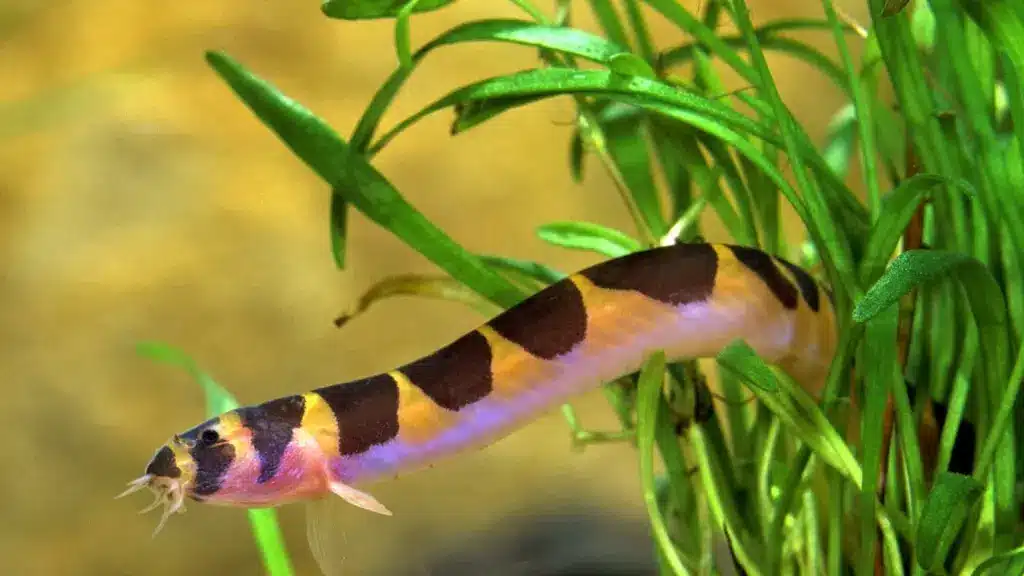
Kuhli loaches are peaceful, eel-shaped bottom dwellers that are well-suited to community freshwater aquariums.
With the right tank setup, clean water, a soft substrate, and a varied diet, these fish are straightforward to care for and can live up to 10 years.
Their small size, low bioload, and non-aggressive temperament make them one of the most beginner-friendly bottom dwellers in the hobby.
This guide covers everything you need to know about kuhli loach care, including tank requirements, feeding, compatible tank mates, and breeding.
Understanding Kuhli Loach Behavior
Kuhli loach originates from the warm rivers and streams of Southeast Asia, where soft sandy riverbeds, dense plants, and natural hiding spaces form their natural habitat.
Also known as the coolie loach, this species (Pangio kuhlii) belongs to the Cobitidae family and is one of several closely related loach varieties kept in the aquarium hobby.
These fish are nocturnal, meaning they remain hidden for most of the day and become more active at night while searching for food.
Kuhli loach often move quietly through the substrate or slip beneath decorations and plants, picking up small leftover food particles that sink to the bottom of the tank.
They feel more secure when kept in groups of five or more. Living in groups encourages natural behavior and helps reduce stress.
One behavior worth knowing about is what experienced keepers often call the “panic response.”
Sticking a hand into the tank, doing a water change, or sudden movement near the glass can cause kuhli loaches to dart frantically around the tank.
This is normal, but it is worth being aware of so you do not mistake it for illness.
When housed together, kuhli loaches add gentle movement to the lower level of the aquarium.
During the day, they tend to stack or huddle together in a single hiding spot, which is completely normal social behavior.
Kuhli Loach Varieties
Several species are sold under the name “kuhli loach” in the aquarium trade, and it helps to know the differences before buying:
- Pangio kuhlii – The most common variety. Features alternating pinkish-yellow and dark brown banded stripes. Grows to about 3 to 4 inches.
- Black kuhli loach (Pangio oblonga) – Solid dark brown or black body, slightly smaller at around 3 inches. Less commonly available but still found in many fish stores.
- Silver kuhli loach (Pangio anguillaris) – A lighter, less-banded variety occasionally available in the trade.
All three share the same care requirements, so the husbandry advice in this guide applies to each of them.
The quick facts below provide a simple overview to help understand their basic care needs and natural traits.
| Quick Facts | Details |
|---|---|
| Scientific Name | Pangio kuhlii |
| Common Names | Kuhli loach, coolie loach, giant coolie loach |
| Lifespan | 7–10 years |
| Adult Size | About 3–4 inches |
| Tank Size | Minimum 20 gallons |
| Temperament | Peaceful, social, and shy |
| Tank Level | Bottom dweller |
| Diet | Omnivorous |
| Water Temperature | 74–86°F (23–30°C) |
| pH Range | 6.0–7.0 |
| Recommended Group Size | 5 or more |
Tank Setup for Kuhli Loaches
Setting up a tank for kuhli loaches requires planning to create a natural, secure environment. Ensure the tank is cycled, as these sensitive fish cannot tolerate ammonia or nitrite spikes.
1. Choose the Right Substrate
Fine sand or smooth gravel works best for a kuhli loach tank. Their thin and delicate bodies can easily be injured by rough or sharp surfaces.
In their natural habitat, these fish spend much of their time digging and burrowing through soft riverbeds.
A gentle substrate allows the kuhli loach to move freely and search for food without risk of injury. They often sift through sand for small food particles, which also helps keep the bottom of the tank cleaner.
Sharp gravel or large stones should be avoided because they can cause scratches or trap waste that may affect water quality. Play sand or pool filter sand works well and is inexpensive.
Avoid blasting sand, which has sharp edges despite its fine texture.
2. Add Hiding Spots and Decorations
Kuhli loach are naturally shy and spend much of the daytime resting in hidden areas. Providing plenty of hiding spots helps them feel safe and reduces stress.
Plants, driftwood, small caves, and smooth stones create a more natural environment that resembles their native habitat. Aquarium decorations such as ceramic tunnels or small PVC pipes can also provide safe resting spaces.
Live plants like Java Fern and Anubias are especially useful because they improve water quality while offering shade and shelter.
Some keepers also add dried Indian almond leaves to the substrate, which replicates the natural leaf litter found in kuhli loach habitats and provides additional shelter while releasing mild tannins that slightly acidify the water.
When kuhli loach feel secure, they tend to explore the tank more frequently and display natural behavior.
3. Maintain Proper Water Conditions
Stable water conditions play a major role in keeping the kuhli loach healthy. These fish prefer warm water between 75 and 86 degrees Fahrenheit and slightly acidic conditions around pH6.0 to 6.5.
A reliable heater and thermometer help maintain a steady temperature. Regular water testing allows early detection of changes in pH, ammonia, or nitrate levels.
A gentle filtration system works best because strong water currents can cause stress. Partial water changes of about 25 percent each week help keep the water clean and maintain safe chemical levels.
Clean and stable water supports healthy skin and reduces the risk of disease.
4. Secure the Tank Lid
Kuhli loach are known for their ability to escape from aquariums if openings are available. Their slender bodies allow them to slip through surprisingly small spaces.
A tight-fitting lid prevents accidents and keeps the fish safely inside the tank. Any gaps around filters, tubing, or equipment should be carefully covered. Cover your filter inlet tube. Kuhli loaches are strongly attracted to filter inlets and will swim up into them.
A sponge prefilter over the intake is inexpensive and prevents a common and often fatal accident. This is especially important for younger or smaller fish.
A secure lid also helps maintain humidity levels and reduces water evaporation. Checking the lid after tank maintenance or cleaning ensures it remains properly sealed.
5. Adjust the Lighting
Kuhli loach naturally live in shaded river environments, so softer lighting works best in their aquarium. Bright lighting often causes them to hide for longer periods.
Dim lighting creates a calmer environment and encourages natural activity. Floating plants such as duckweed or frogbit can help diffuse strong light and create shaded areas.
For those who wish to observe their nighttime activity, a gentle blue LED or moonlight setting provides enough visibility without disturbing their natural routine.
Balanced lighting helps keep the kuhli loach comfortable while maintaining a peaceful aquarium atmosphere.
Using a timer to create a consistent day-night cycle also helps regulate their behavior and reduces stress over time.
What Do Kuhli Loach Eat?
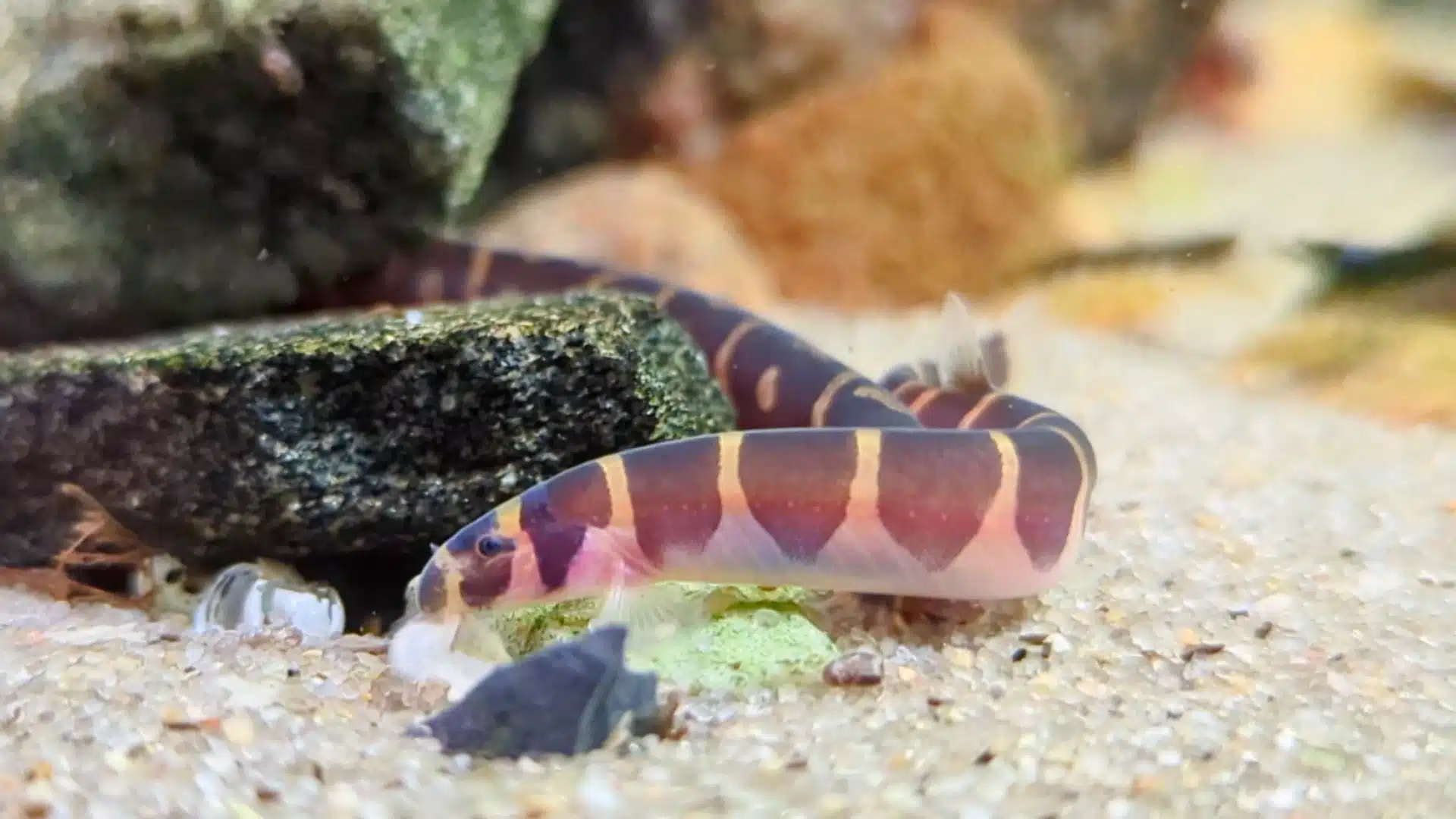
Kuhli loach are omnivorous bottom feeders that prefer foods that sink to the aquarium floor. In a home tank, they commonly eat sinking pellets, algae wafers, bloodworms, brine shrimp, and small frozen or live foods.
These fish naturally search through the substrate for tiny food particles, making them efficient scavengers. A varied diet helps provide balanced nutrition and supports healthy growth.
Feeding small portions once or twice a day is usually enough because kuhli loach have small appetites.
Because they are nocturnal, kuhli loaches often miss out on food when faster fish eat everything before lights go out.
Feeding at night, after the tank lights dim, ensures they actually get to eat. I started doing this with my own loach tank and noticed a clear improvement in their activity and condition within a few weeks.
Leftover food should be removed after feeding to maintain clean water. Offering a mix of protein-rich foods and quality pellets helps keep the kuhli loach active and healthy.
Kuhli Loach Tank Mates
Kuhli loaches are excellent community fish when paired with the right species.
Because they occupy the bottom of the tank and are non-aggressive, they do well with peaceful mid- and upper-level fish that will not outcompete them for food or harass them.
Compatible tank mates include:
- Tetras (neon, ember, cardinal)
- Rasboras (harlequin, chili)
- Corydoras catfish
- Danios
- Peaceful gouramis
- Otocinclus catfish
- Guppies and mollies
- Non-aggressive betta fish (case by case)
Tank mates to avoid:
- Cichlids and other large predatory fish
- Tiger barbs and other fin-nippers
- Red tail sharks, which can bully bottom dwellers
- Snails, which kuhli loaches may eat
Red cherry shrimp and African dwarf frogs are generally safe non-fish companions.
Avoid keeping kuhli loaches with anything large enough to swallow them or aggressive enough to stress them repeatedly.
Common Kuhli Loach Health Problems
Kuhli loach health largely depends on clean water, stable tank conditions, and proper feeding. When these factors remain consistent, these peaceful fish rarely develop serious health problems.
Still, it’s good to know what to look out for and how to prevent common issues.
- Ich (white spot disease): Watch for small white dots on their body or fins. Treat early with warm water and medication. See our full guide on treating ich at home for step-by-step instructions.
- Fin rot: Caused by poor water quality. Keep the tank clean and do regular water changes.
- Skin damage: Avoid rough gravel or sharp decorations that can scratch their bodies.
- Stress-related illnesses: Maintain a steady water temperature and pH to prevent stress.
- Quarantine new fish: Keep newcomers separate for at least two weeks to stop infections.
- Balanced diet: Feed a mix of quality foods to strengthen their immune system.
Kuhli loaches are sensitive to medications due to partial scalelessness; use half doses, monitor closely, and prefer treating sick fish separately to avoid harming them.
Behavior and Temperament of Kuhli Loaches
Kuhli loach are peaceful and gentle fish that fit well in community aquariums. Their calm nature allows them to live comfortably with other non-aggressive species.
These fish feel safer when kept in groups of five or more, which helps encourage natural and relaxed behavior.
During the daytime, kuhli loach usually remain hidden under plants, driftwood, or decorations, staying quiet and inactive.
As nocturnal fish, they become more active after the lights dim. At night, they move along the bottom of the tank, digging through the substrate while searching for food.
Something I find reassuring to tell new kuhli keepers: do not be discouraged if you barely see your loaches for the first few weeks.
They often take time to settle into a new environment, and a seemingly empty tank bottom is not a sign that something is wrong. Once they feel secure, they start making appearances, especially around feeding time at night.
Breeding Kuhli Loaches
Breeding Kuhli Loaches can be a bit challenging, but it’s possible with patience and the right setup. I start by setting up a quiet tank with dim lighting and plenty of plants or hiding spots to help them feel safe.
Slightly raising the water temperature and feeding high-protein foods like bloodworms or brine shrimp often encourages spawning.
When they’re ready, you’ll notice tiny green eggs sticking to plant roots or decorations.
Once the eggs hatch, I separate the fry from the adults to prevent them from being eaten and feed the young fish small, gentle foods until they grow stronger.
Breeding in captivity remains rare and somewhat unpredictable.
Professional breeders sometimes use hormonal injections to reliably induce spawning, but for home aquarists, creating optimal conditions and being patient is the more practical approach.
Do not be discouraged if the first attempt does not result in eggs.
Conclusion
Caring for Kuhli Loaches is simple once you understand what they need. They’re peaceful, low-drama fish that bring quiet activity to your tank when given the right care.
With a soft substrate, clean water, and enough hiding places, they’ll feel comfortable and safe.
At first, they might seem shy, but with time and patience, you’ll see their playful side come out, especially at night when they explore the bottom of the tank.
Keeping their environment stable, feeding them well, and avoiding stress will help them stay healthy for years.
If you enjoy calm, curious fish that quietly keep your tank lively, Kuhli Loaches are a wonderful choice.
Set up the right environment, provide proper care, and enjoy watching these unique fish bring gentle life to your tank.