Your dog may wake up with a red, watery eye, then start rubbing the face or squinting later in the day. That change can make it hard to tell whether irritation, allergies, infection, or another eye problem is involved.
When comparing dog eye allergies vs infection, focus on discharge, itching, pain, timing, and how quickly the eye changes. Allergies often cause watery, itchy irritation linked to triggers such as pollen or dust.
Infection or another eye condition may cause thicker discharge, stronger redness, or more discomfort. No single symptom can confirm the cause.
The sections below help you compare the patterns, recognize other possibilities, understand veterinary testing, and know when home observation should end.
Why Red, Watery Dog Eyes Can Mean Different Things
Redness, tearing, swelling, rubbing, and squinting can occur with several eye problems, which is why the first look may not give a clear answer. Allergic conjunctivitis can make the eyes itchy and watery, while infection may bring thicker discharge and more discomfort.
Conjunctivitis simply means inflammation of the tissue lining the eyelids and covering part of the eye. It does not identify the cause.
Dry eye, a corneal scratch, trapped debris, eyelid trouble, or glaucoma can produce similar signs. The most useful approach is to compare several clues together and watch how symptoms change over time.
That context makes the next comparison more useful because it keeps common patterns from being mistaken for a diagnosis.
Dog Eye Allergies vs. Infection
A short side-by-side check can help you sort the pattern before looking at each symptom in detail. Use these differences as clues, not proof of a specific diagnosis.
Sign | Allergies May Be More Likely | Infection or Another Eye Problem May Be More Likely |
|---|---|---|
Discharge | Often clear and watery | Thick, sticky, or repeatedly returning |
Itching | Often noticeable | Pain may stand out more |
Squinting | Can happen with irritation | More concerning when frequent or severe |
Timing | May return with seasons or triggers | May persist or keep getting worse |
Other signs | Itchy skin, ears, or paws | Crusting, tenderness, or cloudiness |
Allergies often fit a watery, itchy, repeating pattern. Persistent discharge, severe pain, cloudiness, or worsening redness raises more concern for infection or another eye disorder. If your dog seems uncomfortable rather than simply itchy, veterinary care becomes more important.
How to Tell Dog Eye Allergies From an Infection

The clearest differences usually come from three things: what the discharge looks like, whether the eye seems itchy or painful, and how the symptoms behave over time. None of these signs confirms the cause alone, but together they can point to one pattern more than another.
1. Discharge and Eye Appearance
Allergy-related irritation often causes clear, watery tearing with mild redness. Thick, sticky, yellow, or green discharge raises more concern for infection or another eye problem, although color alone cannot confirm the cause.
Cloudiness, marked swelling, crusting, or discharge that quickly returns after cleaning deserves closer attention.
One eye being affected may suggest debris, injury, or another local problem, while environmental irritation may affect both eyes. However, several eye conditions can cause either pattern, so the number of affected eyes is a supporting clue.
2. Itching, Rubbing, and Pain
Itching fits allergies more closely. A dog may paw at the eyes, rub the face against furniture, or scratch around the eyelids. Broader itching involving the paws, skin, or ears can also support an allergic pattern.
Pain is more concerning. Repeated squinting, keeping the eye partly closed, avoiding bright light, or resisting touch around the face may point to infection, corneal injury, or another painful eye condition. These signs deserve veterinary assessment rather than continued home observation.
3. Timing and Symptom Pattern
Allergies often follow a recognizable pattern. Eye irritation may return during pollen season, after time in grass, or around dust, smoke, or another environmental trigger. Symptoms may also settle when exposure decreases.
An eye problem that steadily becomes redder, more swollen, more painful, or produces increasing discharge is less typical of simple allergy irritation.
A sudden change from a familiar seasonal pattern is also worth checking because allergies and another eye problem can occur at the same time.
The key is to compare the whole pattern rather than rely on one symptom. Watery itching may point to allergies, while persistent discharge, pain, cloudiness, or worsening inflammation warrants more caution.
Other Eye Problems That Can Look Similar
Allergy and infection are common possibilities, but they are not the only causes of a red, watery, or uncomfortable eye. A few lookalike conditions matter because their treatment can differ greatly.
Condition | Common Clue |
|---|---|
Dry eye | Thick discharge and recurring redness |
Corneal ulcer | Pain, tearing, and squinting |
Foreign material | Sudden irritation, often worse in one eye |
Eyelid or eyelash problem | Repeated surface irritation |
Glaucoma | Pain, cloudiness, or vision changes |
Discharge color can also mislead. Dry eye may produce thick mucus, while allergies and a secondary problem can occur at the same time.
Repeated rubbing can further irritate the eye surface, so a watery, itchy pattern can later become more painful or produce heavier discharge. That overlap is one reason to have persistent symptoms checked rather than treated based on appearance alone.
How Vets Tell the Difference
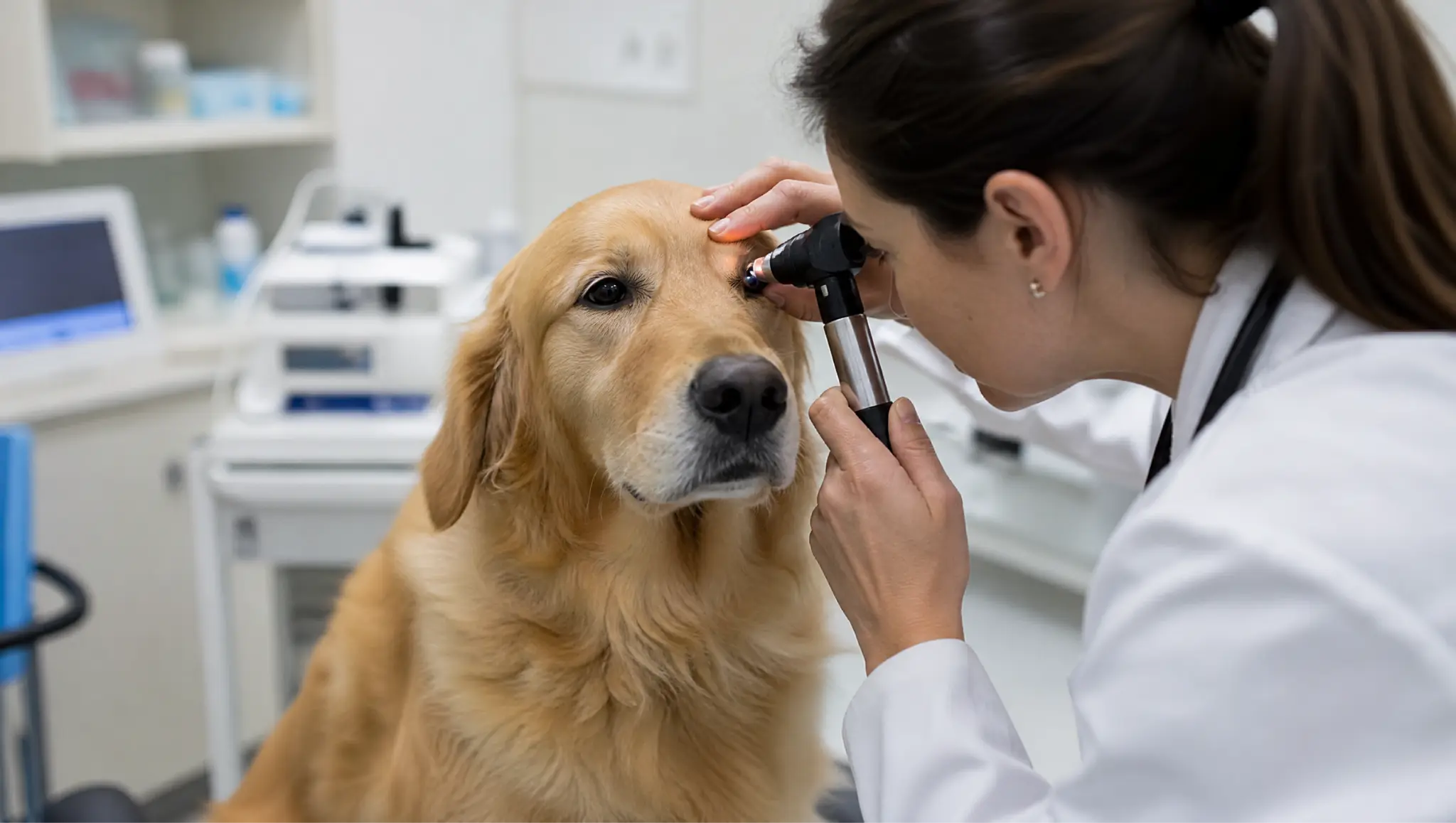
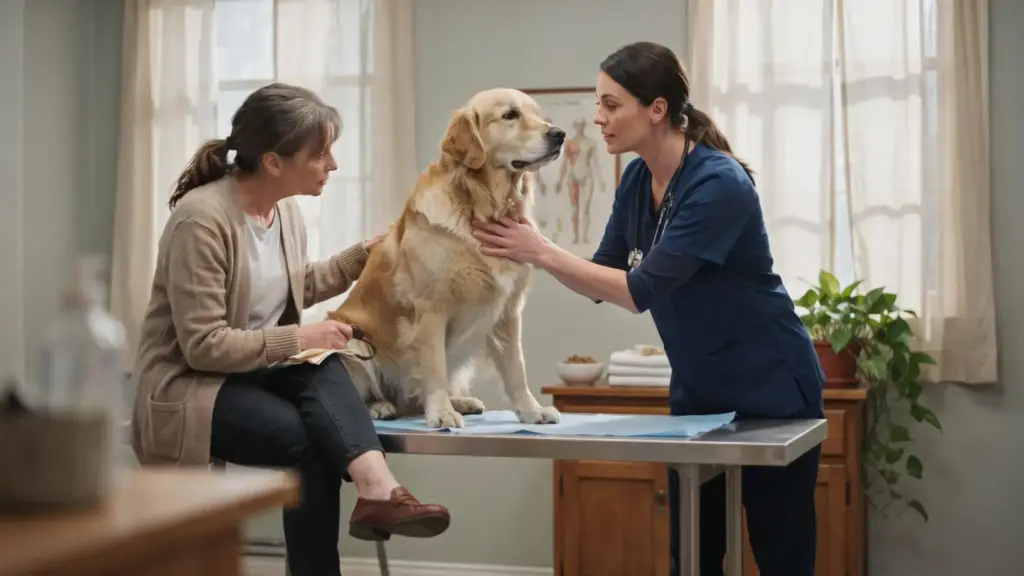
A veterinary eye examination helps separate conditions that can look alike from the outside. The exact tests depend on what the eye looks like, how painful it is, and what the history suggests.
1. Eye and Eyelid Examination
The veterinarian checks the eyelids, lashes, conjunctiva, corneal surface, discharge, swelling, and signs of injury or trapped material. The veterinarian may also check the skin and ears when an allergic pattern is suspected. This first step helps decide which eye tests are most useful next.
2. Fluorescein Stain
Fluorescein dye highlights damaged areas of the cornea and helps identify scratches or ulcers that may not be visible during a basic examination. A University of Georgia study found that fluorescein images may help monitor corneal ulcer healing, but they should not replace a complete eye examination.
3. Schirmer Tear Test
A Schirmer tear test measures tear production and helps identify dry eye, a condition that can cause redness, irritation, and thick discharge that may look similar to infection. The test helps determine whether reduced tear production is contributing to your dog’s eye symptoms.
4. Eye Pressure Test
Tonometry measures pressure inside the eye and helps check for conditions such as glaucoma. Research from The Ohio State University College of Veterinary Medicine compared commonly used tonometers and showed that factors such as corneal thickness can influence pressure readings.
These tests help rule out problems that need very different care. The goal is to identify the cause before choosing treatment.
Safe Home Care for Irritated Dog Eyes
Home care can support comfort while you monitor a mild problem or wait for an appointment. It should not replace veterinary care when pain, cloudiness, or persistent discharge is present.
Safe Steps
- Gently wipe external discharge with a clean, damp cloth.
- Prevent repeated rubbing or scratching when possible.
- Reduce smoke, dust, strong sprays, and known environmental triggers.
- Record when symptoms began and whether they are changing.
- Follow prescribed eye medication exactly as directed.
What to Avoid
- Human redness relief drops unless your veterinarian approves them.
- Leftover antibiotics or old eye medication.
- Herbal rinses, oils, or homemade eye treatments.
- Trying to remove an object that appears stuck in the eye.
Home support should stay simple. If the eye becomes more painful, swollen, cloudy, or discharge-heavy, veterinary care should replace continued home observation.
Treatment for Dog Eye Allergies and Infection
Treatment should match the underlying problem rather than the appearance of the eye alone. Depending on the examination findings, a red eye may need allergy control, antibiotics, tear support, or injury treatment.
Cause | Treatment May Include |
|---|---|
Allergy-related irritation | Trigger reduction and vet-approved allergy treatment |
Bacterial infection | Antibiotic medication when appropriate |
Dry eye | Tear supporting or tear stimulating medication |
Injury or other disease | Care based on examination and test results |
Antibiotics are not automatically needed because discharge is yellow or green. An antihistamine will not correct a corneal ulcer, dry eye, or glaucoma.
Some eye medications may also be unsafe when the cornea is damaged, so do not reuse leftover drops without veterinary approval. The safest treatment plan is the one matched to the cause and adjusted if the eye does not improve as expected.
What Dog Owners on Reddit Say About Eye Redness and Discharge
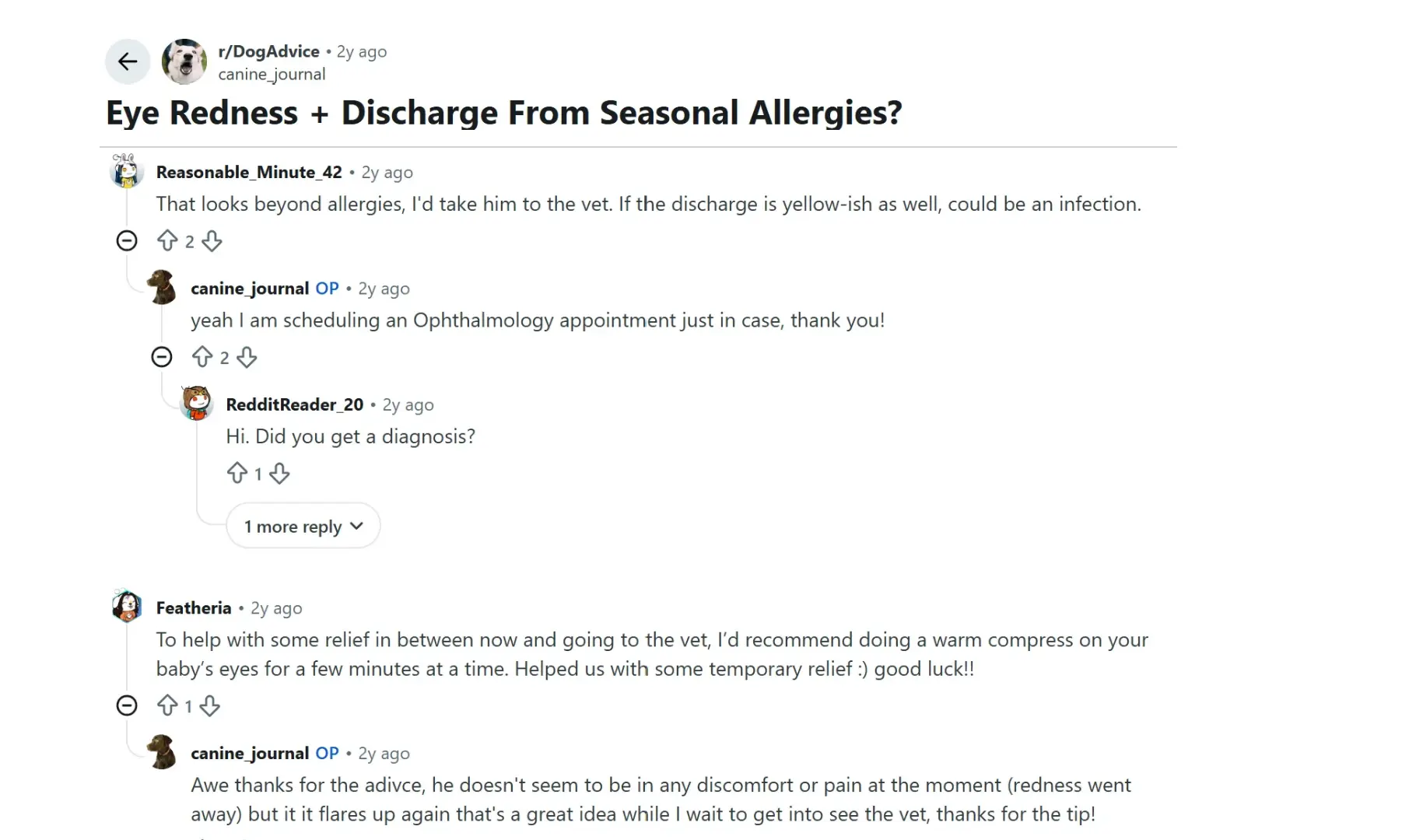
Dog owners on Reddit often point out how difficult it can be to tell allergies from an eye infection based on redness alone. In one r/DogAdvice discussion, a user shared concerns about eye redness and discharge that seemed related to seasonal allergies.
One commenter felt the symptoms looked more serious than allergies and suggested seeing a veterinarian, especially if the discharge appeared yellow, which can indicate infection.
The dog’s owner agreed and planned an ophthalmology appointment for a proper diagnosis. Another commenter suggested using a warm compress for a few minutes to provide temporary comfort while waiting for the vet visit.
The discussion highlights an important point: persistent redness, colored discharge, or recurring flare-ups deserve veterinary attention rather than assuming allergies are the cause.
When Dog Eye Symptoms Need Veterinary Care
Timing matters because some eye conditions can worsen quickly. The more pain, cloudiness, or rapid change you see, the less suitable it is to keep watching the eye at home.
- Persistent discharge: Material keeps returning after gentle cleaning.
- Increasing redness: The eye becomes redder instead of settling.
- Frequent squinting: Your dog keeps blinking or holding the eye partly closed.
- Marked swelling: The eyelids or nearby tissue become enlarged.
- Cloudiness: The eye looks hazy, bluish, gray, or milky.
- Possible injury: Grass, debris, scratching, or another event may have damaged the eye.
- Vision change: Your dog seems unable to see normally.
- Severe pain: The eye stays closed, or your dog resists having the face approached.
Mild, watery irritation that settles after you remove a known trigger may be less urgent. Symptoms that persist, worsen, or cause obvious discomfort still deserve veterinary assessment.
Conclusion
Dog eye allergies vs infection can look similar, so the safest approach is to judge the full symptom pattern rather than rely on one sign.
Clear tearing and itching may fit allergies, while persistent discharge, pain, swelling, cloudiness, or worsening redness can point to infection or another eye problem.
Because dry eye, corneal injuries, and other conditions may cause similar symptoms, avoid using leftover or human eye medication without veterinary guidance. Keep the eye area clean, prevent rubbing, and note any changes in discharge, behavior, or appearance.
If symptoms persist, worsen, or cause obvious discomfort, arrange a veterinary examination. Have you noticed a seasonal pattern in your dog’s eye irritation? Share your experience in the comments.
Frequently Asked Questions
Can Tear Stains Mean Something Is Wrong?
Tear stains can come from normal tear overflow, facial shape, blocked drainage, or ongoing irritation. A sudden increase in staining, especially with odor, redness, discharge, or discomfort, deserves a veterinary check instead of cosmetic cleaning alone.
Can Food Reactions Affect the Eyes?
Food-related allergic disease can sometimes occur with skin, ear, or eye irritation, but environmental triggers are more commonly linked with allergic conjunctivitis. Repeated eye symptoms still need veterinary assessment because another eye condition may be responsible.
Are Seasonal Eye Problems Contagious?
Seasonal irritation itself is not contagious. Some infectious causes of conjunctivitis can spread between animals, depending on the organism involved. If several pets develop redness or discharge at the same time, contact your veterinarian for advice on testing and separation.
Can Eye Problems Return After Treatment?
Yes. Recurrence can happen if an underlying allergy, dry eye, eyelid issue, or environmental trigger remains. Repeated episodes are worth discussing with your veterinarian because long term control depends on identifying the cause rather than repeating short treatments.