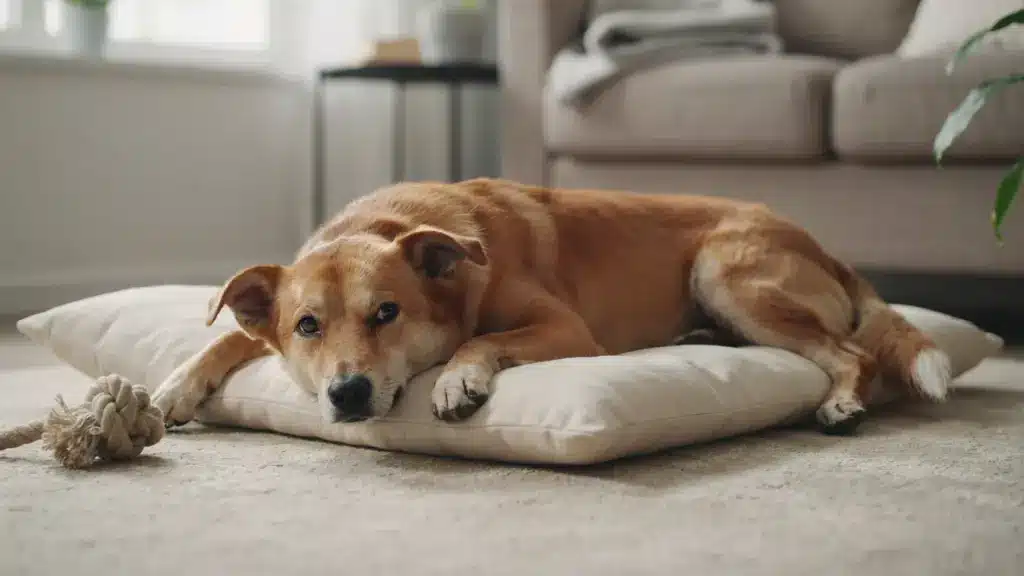
Neutering day often leaves owners with more questions than answers, especially once the anesthesia wears off and your dog acts like a slightly different version of himself.
In my own clinic, this is one of the most common calls I get in the days right after surgery. Still deciding when to schedule the procedure? I’ve covered how to pick the right age for neutering in a separate post you should read first.
Here’s what actually happens during dog neuter recovery, stage by stage, so you’re not left guessing whether grogginess, swelling, or a sudden burst of energy is normal.
Pain management, incision healing, and the small mistakes that turn post-neuter care into a setback get their own space below.
What Happens After Neutering?
Right after surgery, your dog is still working through the effects of anesthesia, so grogginess, wobbly walking, and a lack of interest in food or water are common for the first several hours. Some dogs whine or seem restless as the sedation wears off, while others sleep it off in a quiet corner without much fuss.
I’ve fielded enough post-op calls from worried owners to know both reactions are ordinary; a dog who hides under the bed and a dog who paces the hallway are just processing the same drugs differently in my patients.
Full dog neuter recovery typically takes ten to fourteen days on the outside, though internal tissue keeps knitting together even after visible signs fade.
I tell every client the same thing at discharge: a dog can look back to normal by day five while the muscle layer underneath is still healing, which is exactly why activity rules apply for the full two-week window, not just until your dog seems fine.
Dog Neuter Recovery Timeline
Every dog heals at a slightly different pace, but the general recovery pattern is predictable enough to plan around. Knowing what to expect at each stage helps you tell the difference between normal healing and something that needs a vet’s attention.
First 24–48 Hours After Surgery
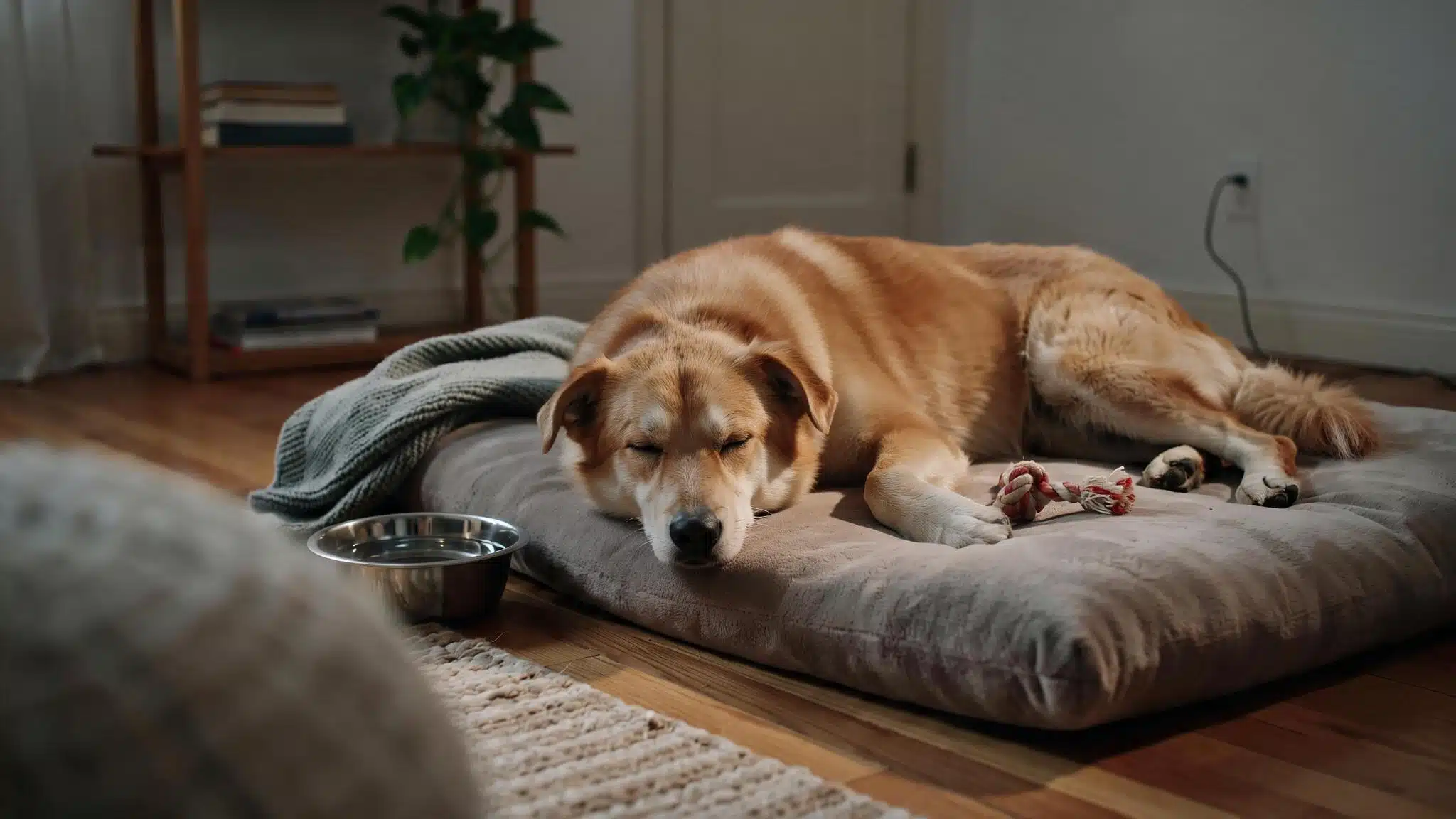
The first couple of days after neutering: focus on keeping your dog comfortable, preventing unnecessary movement, and watching for expected changes after anesthesia.
- Your dog may still be unsteady from anesthesia for the first several hours at home.
- Reduced appetite and low energy are expected on day one.
- Sleeping more than usual is normal as the body recovers from sedation.
- Keep water available at all times, even if food is skipped.
- Watch closely overnight for excessive whining, panting, or restlessness.
- A calm, quiet space away from stairs or other pets works best right now.
This stage sets the tone for the rest of the recovery, so keeping activity at zero and comfort levels high matters more here than at any later point.
Days 3–7 After Neutering
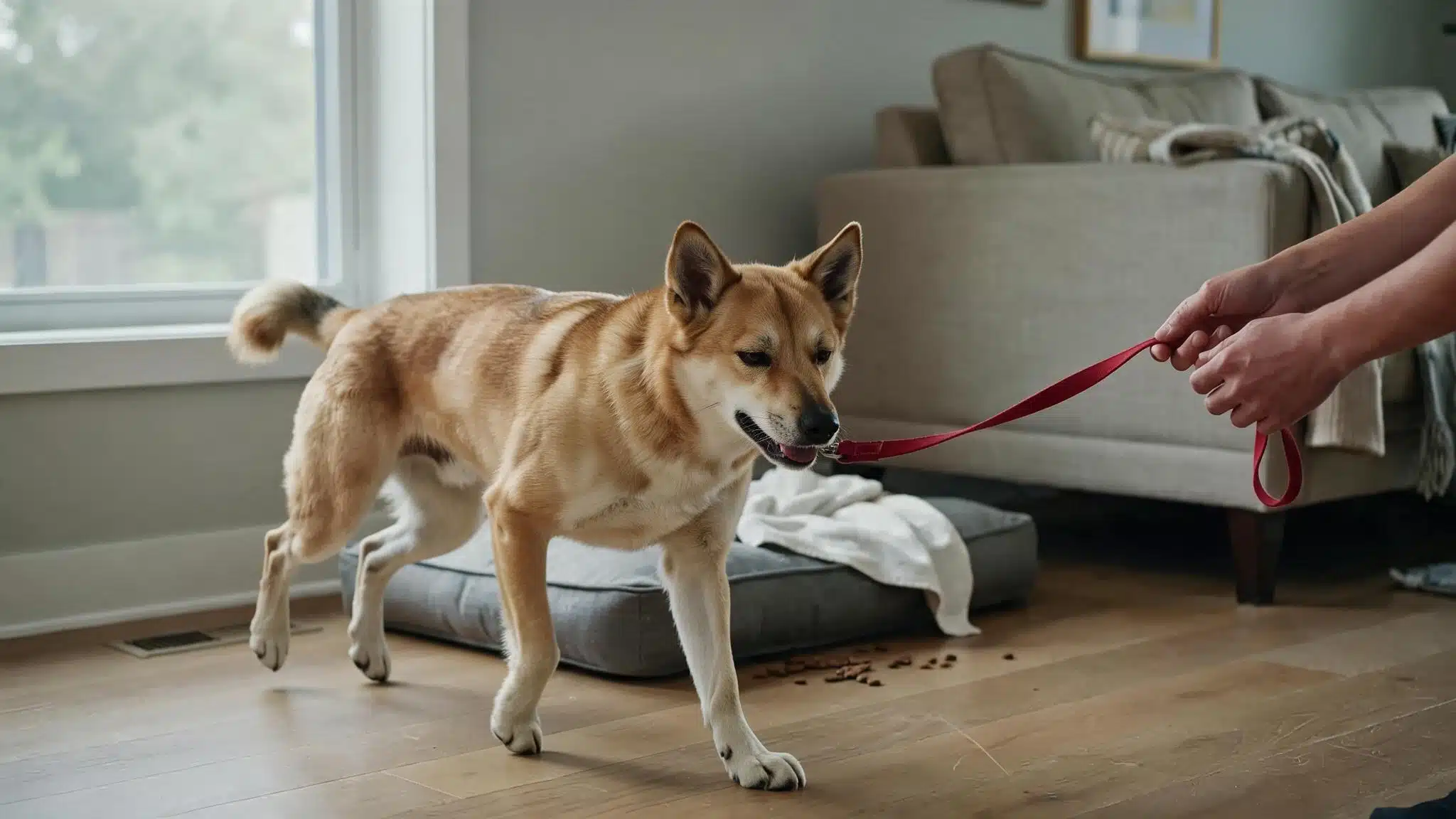
This period is often when dogs start acting like themselves again, but their body still needs protection while the surgical site continues healing.
- Energy levels usually start climbing back up around day three or four.
- Your dog may act like nothing happened, even though healing is still in progress.
- This is the stage where most accidental overexertion injuries happen.
- Appetite typically returns to normal by day four or five.
- Short, calm leash walks are usually fine, and if your dog still tends to pull ahead, this is a good window to work on walking politely beside you, though running or jumping is still off the table.
- Keep monitoring the incision daily even as behavior normalizes.
The gap between how your dog feels and how healed they actually are is widest here, which is why owners often accidentally break the rules at this stage.
Days 8–14 After Surgery
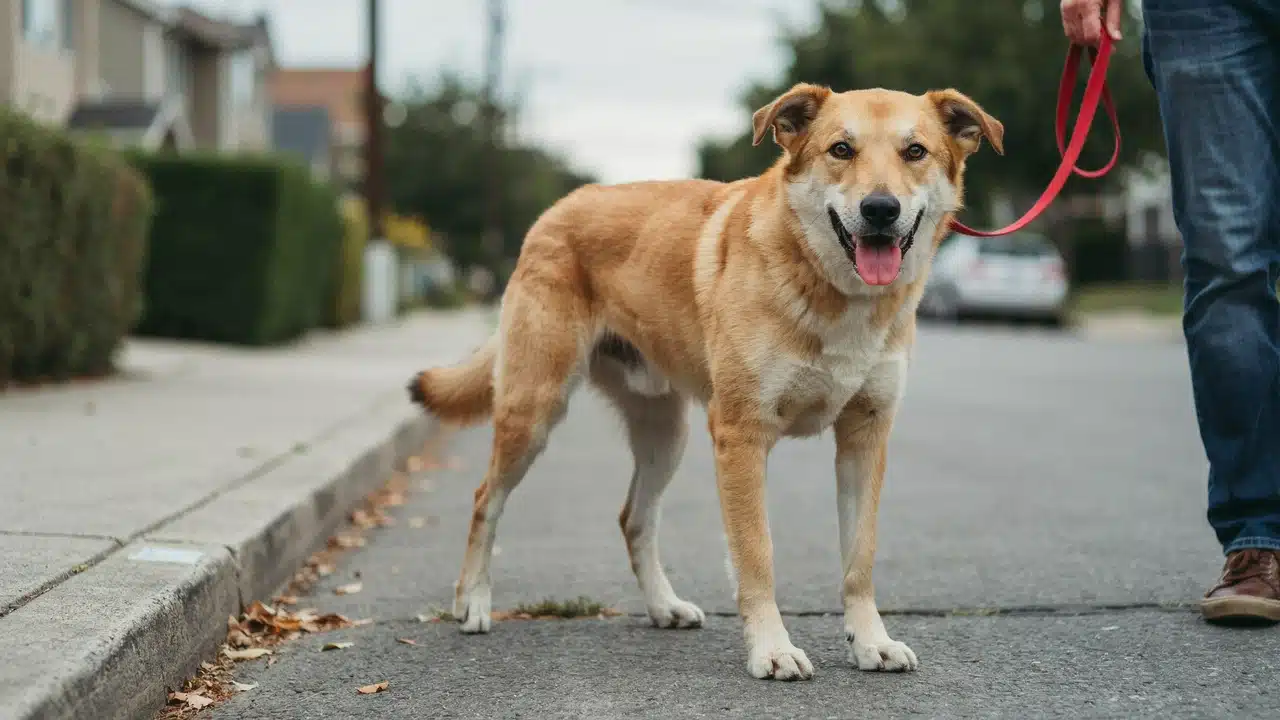
By the second week, most dogs show clear improvement, but activity should still increase gradually until healing is confirmed.
- Swelling and bruising should be fully resolved or nearly gone by now.
- Your dog should be acting close to their normal self.
- The incision is usually closed and dry, though some dogs need the cone longer.
- This is typically when vets clear dogs for a follow-up check.
- Regular activity can often resume once a vet confirms healing is complete.
- Some dogs, especially larger breeds, may need a few extra days, so toys that keep him mentally busy can help take the edge off while he waits out the rest of the restriction.
Precaution: Use this timeline as a general reference, not a strict recovery schedule. Follow your veterinarian’s discharge instructions first, especially if your dog had additional procedures, complications, or specific activity restrictions.
By the two-week mark, most dogs have moved from active healing toward normal routine, though your vet’s advice should guide when your dog can fully return to regular activity.
Caring for The Incision
Make checking the incision site part of your daily routine for the first two weeks, ideally at the same time each day so you notice changes quickly.
Normal Healing Signs
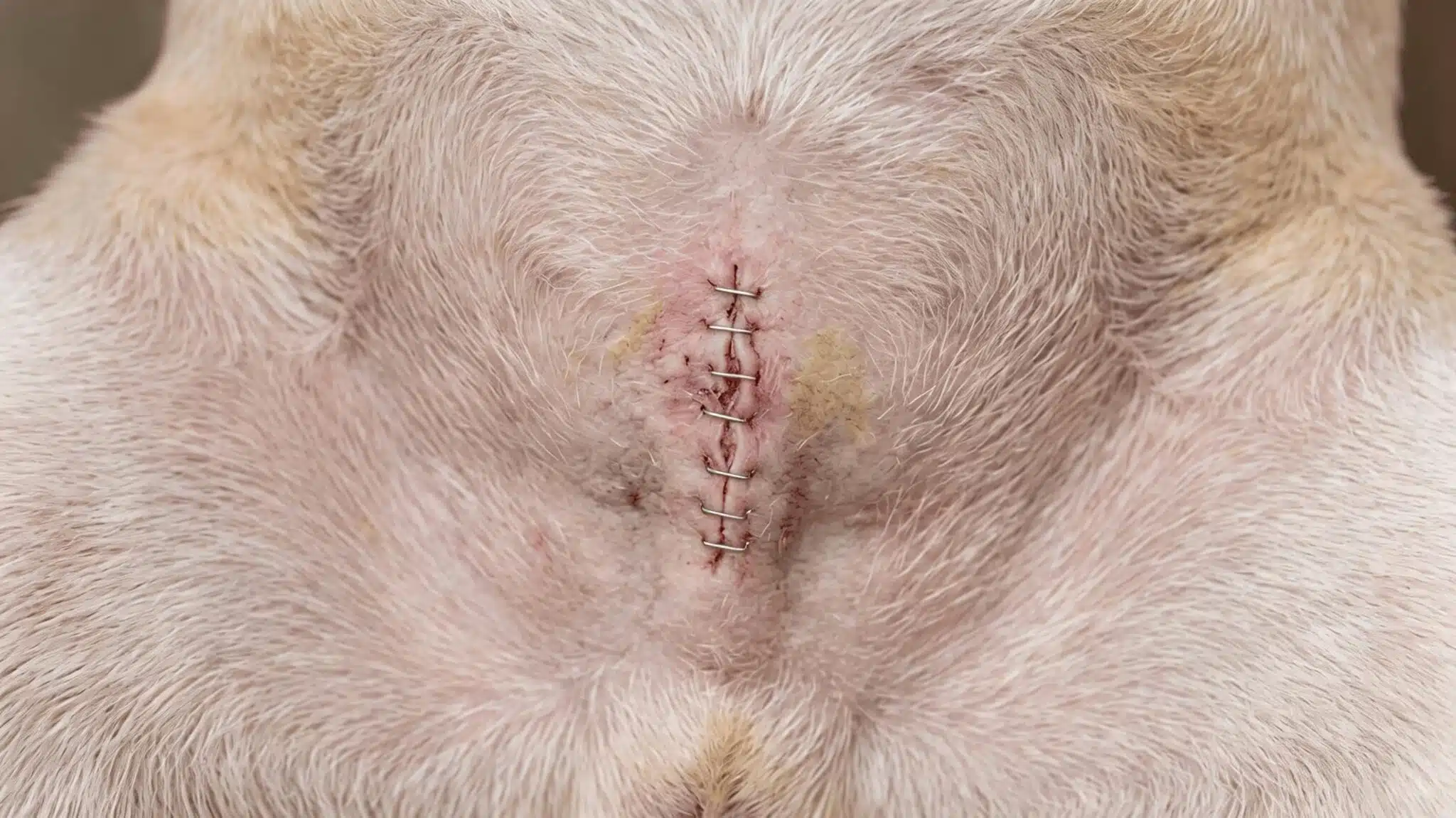
A healthy neuter incision usually improves gradually over the first few days. These common changes can help you understand what healing normally looks like.
Sign | What It Looks Like |
|---|---|
Mild redness | Pink edges right around the cut |
Small swelling | Slight puffiness that doesn’t grow |
Minor bruising | Light discoloration under the skin |
Dry scabbing | Small, dry crust forming over the site |
These signs usually appear within the first three to five days and fade on their own without treatment. None of them should worsen day over day. If the redness spreads or the swelling gets bigger instead of smaller, mention it to your vet, even if it turns out to be nothing.
Incision Problems to Watch
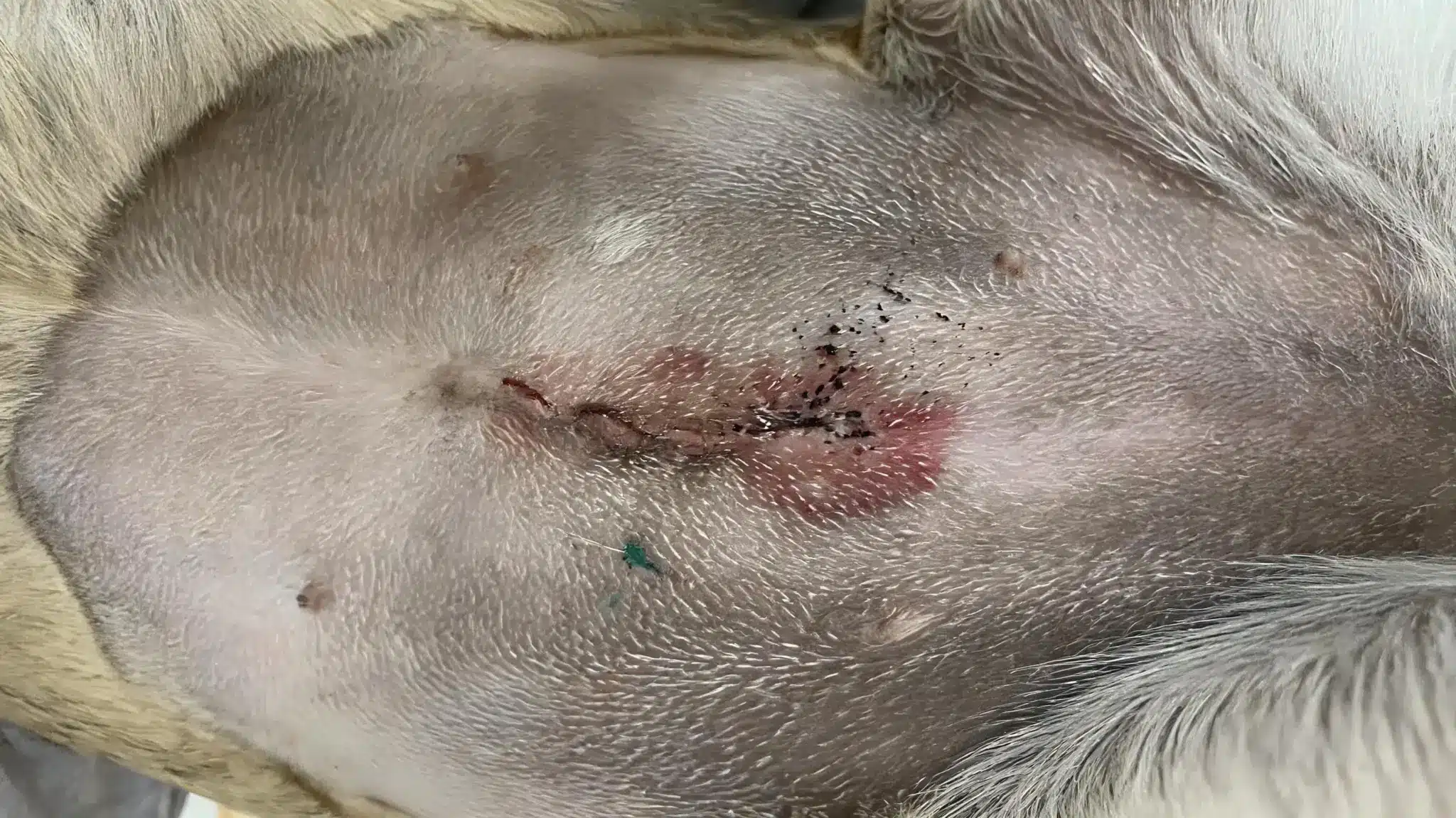
Some changes around the incision can point to a problem rather than normal healing. Knowing these warning signs helps you decide when your dog needs veterinary attention.
Warning Sign | Why It Matters |
|---|---|
Increasing swelling | May indicate infection or fluid buildup |
Discharge or pus | A sign of active infection |
Bad odor | Often paired with infection |
Bleeding | Could mean the site was disturbed |
Opening of the site | A surgical emergency |
Any one of these on its own is worth a call to your vet’s office. Combined with lethargy, appetite loss, or a fever, they move from “call today” to “seek care right away,” since a wound that isn’t healing right can escalate faster than owners expect.
Pain Management After Neutering
In my own practice, I send almost every dog home with a short course of vet-prescribed pain medication, typically an NSAID like carprofen or meloxicam, sometimes alongside a mild sedative for the first few days.
Give these exactly as directed, with food if instructed, and never on an empty stomach unless your vet says otherwise.
If your dog seems painful despite medication, call your vet rather than adjusting the dose yourself; I’d always rather hear from you than have you guess.
In my experience, the dogs who struggle most in the first 48 hours are usually the ones whose pain medication wore off overnight. Staying ahead of the dosing schedule, rather than waiting for signs of discomfort, is advice I repeat to nearly every client.
Caution: Never give your dog human pain medication or change the dose of a prescribed medicine without speaking to your veterinarian. If pain continues despite medication, contact your vet instead of giving an extra dose.
Restricting Activity Safely
Running, jumping, and rough play put direct strain on the healing tissue, which is why activity restriction is one of the most important parts of dog neuter recovery, even more than most owners expect going in.
Creating a Recovery Space
- Pick one quiet room away from stairs and high foot traffic
- Block access to couches, beds, or anything requiring a jump
- Keep other pets separated during unsupervised hours
- Use a crate or playpen if your dog won’t settle on their own
- Remove loose rugs or slippery flooring that could cause a slip
- Add a comfortable bed and fresh water within easy reach
Set this space up before surgery day rather than scrambling afterward; it’s the single piece of advice I give every client at the pre-op appointment, and the first 48 hours go noticeably smoother when the room is already ready.
Cone and Recovery Protection
Licking the incision introduces bacteria and can undo days of healing in minutes, which is exactly why the cone (or an alternative) isn’t optional during recovery.
Among dog cone alternatives, soft fabric cones and recovery suits work for calmer dogs, but a determined licker can often work around them. My rule of thumb: the goal isn’t to win a fight with your dog; it’s to find whatever actually keeps him away from the incision.
If your dog is reaching the incision despite wearing protection, go back to the hard cone rather than risking a licked-open wound. Most dogs come around within 24 to 48 hours once they realize it isn’t going anywhere; I’ve yet to meet one who didn’t eventually give in.
What Real Owners Say
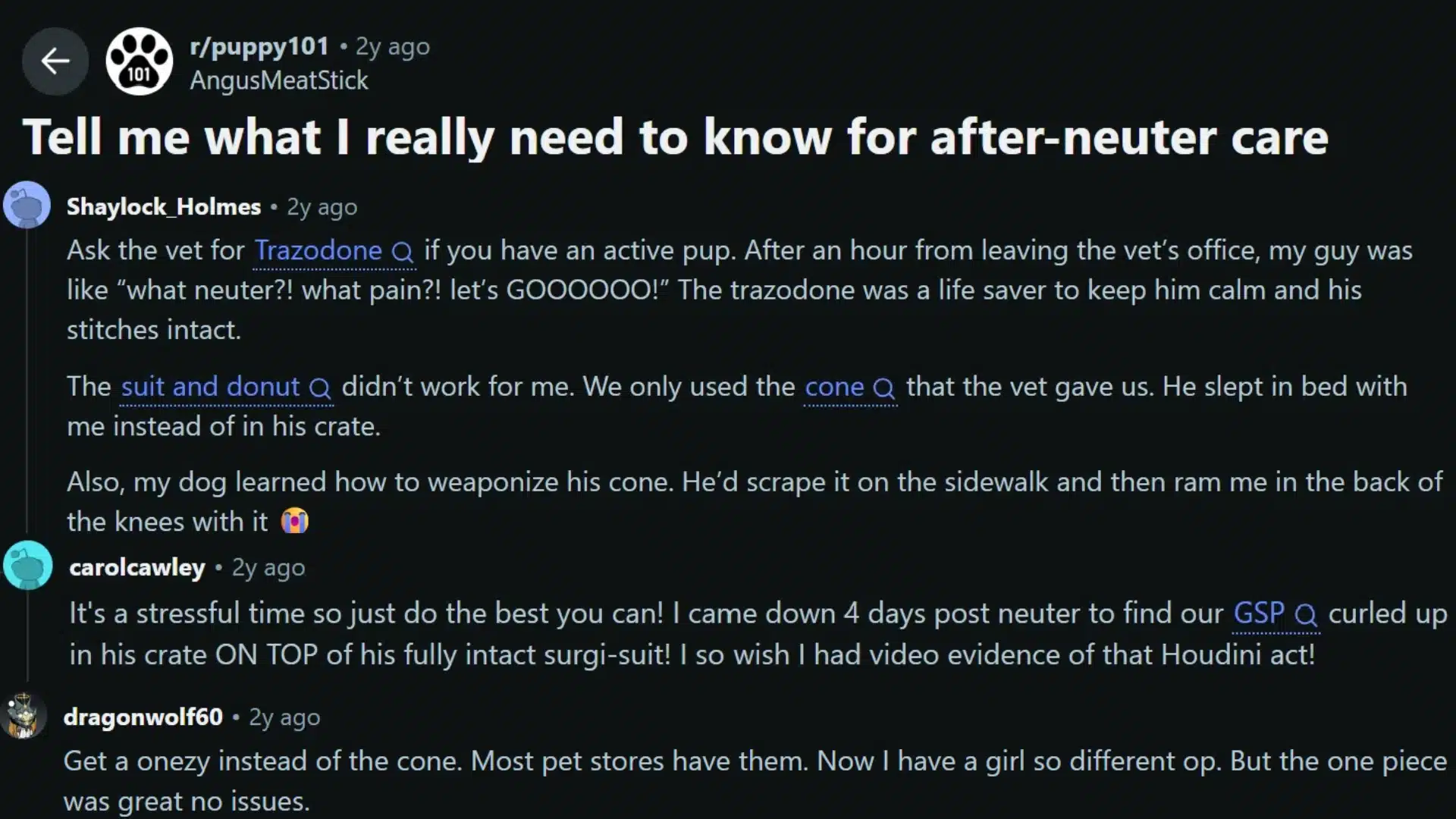
On Reddit, one dog owner asked fellow pet parents what actually matters for after-neuter care, and the replies read like a mix of practical advice and funny mishaps.
One commenter swore by asking the vet for Trazodone to keep an energetic pup calm enough to protect the stitches, while skipping the donut-style collar in favor of a standard cone.
Another shared a story of finding their dog curled up on top of an untouched recovery suit days after surgery, having somehow slipped free of it entirely.
A third suggested trying a onesie-style garment instead of a cone, noting it worked well for their male dog without any problems. Together, the comments show how differently each dog responds to the same recovery gear.
Caution: Recovery tips shared by other dog owners may not suit every dog. Use medications such as Trazodone only when prescribed by your veterinarian, and still prevent access to the incision with recovery gear.
When to Contact Your Vet
Not every odd behavior after surgery is an emergency, but knowing which signs need a phone call versus which need immediate care takes the guesswork out of a stressful moment.
Call your vet if you notice:
- Persistent lack of appetite: may signal pain or infection
- Increasing discomfort: pain medication may need adjusting
- Unusual behavior: could point to an underlying issue
- Vomiting or diarrhea: may be a medication reaction
- Recovery not improving: healing should progress, not stall
These situations generally don’t require an emergency visit but shouldn’t be left unaddressed for more than a day, since small issues left unchecked tend to grow into bigger ones during recovery.
Seek immediate help for:
- Heavy bleeding: could indicate a serious complication
- Open incision: requires immediate medical attention
- Severe weakness: may signal a serious internal issue
- Collapse: a medical emergency
- Serious infection signs: can spread quickly without treatment
Any of these calls for an emergency vet visit right away, even outside normal clinic hours. This is not a wait-and-see situation, and a same-day exam is the safer choice every time.
What to Have on Hand Before Surgery Day
A little prep goes a long way. Most owners find they need: an E-collar or one of the cone alternatives mentioned above,
A washable bed for the recovery room, an easy-clean floor spot or puppy pads, a baby gate or exercise pen if stairs aren’t blockable, and a way to separate other pets for the first two days.
Vet-prescribed pain medication is typically sent home with you, so there’s usually nothing extra to buy there. Total spend on supplies is usually pretty modest; most of what’s genuinely needed, my clients already have lying around the house.
Returning To Normal Activities
Activity | When It’s Usually Safe |
|---|---|
Short leash walks | Day 2–3, once your dog is alert and steady |
Longer walks | End of week one, if healing looks normal |
Running or playing | After the full two-week healing window, with vet approval |
Bathing | Once the incision is fully closed, usually after day 10–14 |
Dog parks or group play | Only after a vet confirms complete healing |
Every dog heals on a slightly different schedule, so these ranges are a general guide, not a fixed rule. A vet check at the two-week mark is the most reliable way to confirm your dog is actually ready, rather than guessing based on how they’re acting.
Jumping back into full activity a few days early is one of the most common ways a healing incision gets reopened.
Final Thoughts
Most of dog neuter recovery comes down to two things: sticking to the two-week activity window even once your dog feels fine, and knowing which incision changes are ordinary versus which call for a same-day vet visit.
Scrotal swelling, appetite dips, and a few groggy hours are all normal; spreading redness, discharge, or an opening incision are not. The cases I see go sideways are almost always the ones where someone waited a day too long to call.
Keep the cone on, keep pain medication on schedule, and treat post-neuter care as a two-week project, not a two-day one. If your dog’s healing doesn’t match what’s described here, call your vet instead of guessing. Questions? Ask below.
Frequently Asked Questions
Can My Dog Sleep with The Cone on After Neutering?
Yes. Dogs can usually sleep while wearing a properly fitted cone. Make sure it allows comfortable breathing and doesn’t press tightly against the neck.
Can I Leave My Dog Alone After Neutering?
Brief periods alone may be possible once your dog is alert and settled. Keep them in a secure area where they cannot disturb the surgical site.
Is It Normal for My Dog Not to Poop After Neutering?
A bowel movement may be delayed for a day or two because of fasting, anesthesia, reduced food intake, and temporary changes in normal bathroom habits.
Does Neutering Change a Dog’s Personality?
Most owners notice a gradual dip in roaming, marking, and mounting behavior over several weeks rather than an overnight personality shift.