If your dog has been sleeping more, eating less, or struggling to move the way they used to, you may already sense that something has changed for good.
These are often the first signs your dog is dying, but they can also point to a treatable illness, which is why one symptom alone rarely gives a clear answer.
In my years of experience as a practicing vet, I’ve sat with more families facing this question than I can count, and the pattern across days always tells me more than any single hard moment
Here, it covers the physical and behavioral changes worth watching, how to tell dying apart from sickness, when a call to your vet becomes urgent, and how to manage end-of-life care for dogs at home with comfort in mind.
What Happens Near the End of a Dog’s Life
Near the end of life, a dog’s body has a harder time bouncing back from illness, age, or an advanced medical condition. This can happen slowly, over weeks or months, or quickly, when health takes a sudden turn.
There’s no fixed order to it, and one hard day doesn’t always mean the end is near; some dogs have good days mixed in with bad ones.
Your veterinarian will usually look at the bigger picture: the diagnosis, how your dog has responded to treatment, day-to-day comfort, and how well they manage normal activities like eating and moving around.
That’s why it helps to track changes over time instead of judging one moment.
Common Signs Your Dog Is Dying
End-of-life changes rarely follow one exact pattern. What matters is how your dog’s eating, breathing, movement, awareness, and comfort shift together, not any single sign on its own, according to AAHA’s end-of-life care guidance.
1. Sleeping More and Showing Less Interest
A dog near the end of life may sleep much more and lose interest in walks, toys, visitors, or routines they once loved. Some dogs pull away; others want to stay glued to their person.
Tiredness on its own doesn’t mean a dog is dying. Pain, infection, low red blood cell count (anemia), medication, and plenty of treatable illnesses can cause the same drop in energy.
2. Eating and Drinking Much Less
Losing interest in food often worsens as a serious illness progresses. Some dogs drink less too, either because they’re too weak, feel sick to their stomach, are in pain, or just don’t want to get up.
This can affect hydration and comfort fast. Because a poor appetite has so many possible causes, tell your vet as soon as your dog stops eating or drinking; don’t assume it’s simply part of dying.
3. Breathing that Looks or Sounds Different
Breathing deserves close attention, since changes can show up during a severe illness as well as near death, including an underlying heart problem making it harder to breathe. Watch for faster breathing, more effort from the belly area, unusual sounds, or trouble getting comfortable.
Blue or gray gums, obvious struggling to breathe, or collapse can signal a medical emergency, not a normal part of dying. Cornell’s veterinary guidance recommends getting emergency help right away if a dog can’t breathe comfortably.
4. Trouble Standing or Walking
Weakness can make it hard to get up, cross a room, use stairs, or reach food and water. Some dogs stumble, need help standing, or spend almost all day lying down.
Mobility loss can happen near the end of life, but arthritis, pain, dehydration, and nerve-related problems can look similar. A sudden change in mobility should always be checked by your vet.
5. Weight and Muscle Loss
Dogs with an advanced long-term illness can grow thinner even when you’re still offering regular meals. You may notice the spine, hips, or ribs becoming easier to feel as muscle wastes away.
Weight loss alone doesn’t tell you how close death might be, but steady loss combined with weakness and poor appetite gives your vet useful information about how the illness is progressing.
6. Confusion and Reduced Awareness
Some dogs grow restless, wander, stare into space, or stop responding the way they used to when you talk or touch them. Others sleep for very long stretches and interact less with the people around them.
These changes can also come from severe illness, pain, medication side effects, or age-related brain changes (canine cognitive decline), so don’t assume confusion by itself confirms the end is near; bring it up with your vet.
In my own exam rooms, the awareness changes are usually what tip families off before anything else: a dog stops greeting them at the door, or stares past them instead of holding eye contact. I always tell my clients that a shift alone isn’t a diagnosis, but it’s worth a call to your own vet or me regardless.
Caution: Severe breathing trouble, collapse, blue or gray gums, uncontrolled pain, or sudden unresponsiveness are medical emergencies, not signs to simply watch and wait on.
Signs Death May Be Hours or Days Away
The signs above can unfold over weeks. A smaller set of changes tends to show up much closer to death, often in the final hours to a couple of days. Veterinary hospice teams commonly describe:
- Cooler paws, ears, or legs as circulation slows
- Pale, gray, or mottled gums instead of healthy pink
- Long pauses between breaths, sometimes followed by a deep breath (this pattern is called agonal breathing)
- No interest in food, water, or surroundings, even favorite people or treats
- Inability to stand, even with help
- Restlessness, low vocalizing, or muscle twitching in the final hours
These signs don’t confirm a timeline on their own, and every dog’s process looks a little different. Sudden weakness paired with pale gums can also come from unrelated causes like bleeding inside the body, If you notice several of them together, it’s reasonable to call your vet or an in-home hospice provider to ask what to expect next and whether your dog is comfortable.
I’ve walked more than a few of my own clients through these final hours over the years, and I’ll say the same thing to you that I say to them in my exam room: comfort is the only goal at this point, and calling me (or your own vet) to ask “is this normal” is never a bother.
Is Your Dog Dying or Sick?
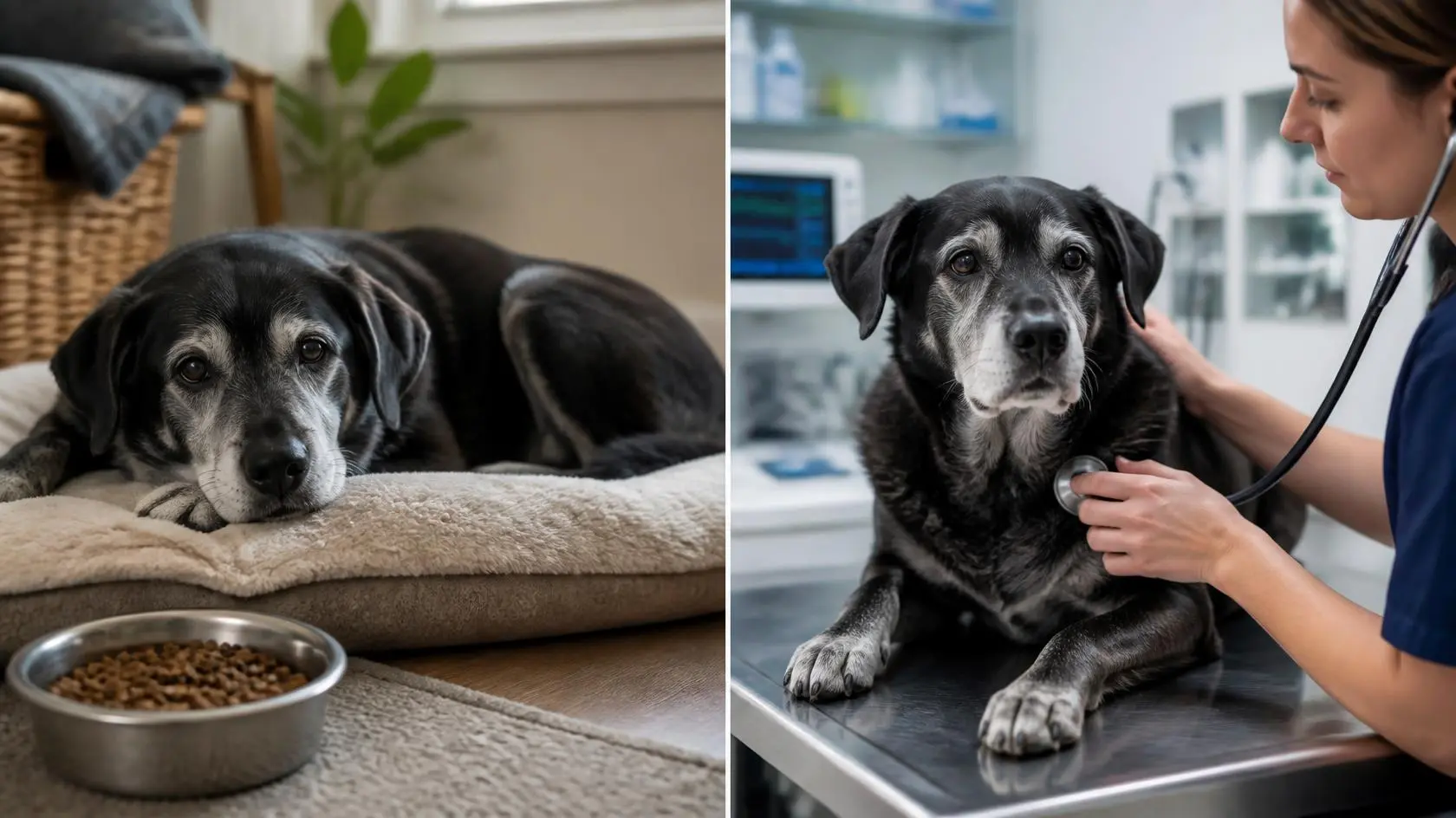
This is often the hardest question to answer at home, because so many end-of-life changes overlap with illnesses that can still be treated. The same symptom can mean very different things depending on its cause and how it’s progressing.
What You Notice | Why It Needs a Closer Look |
|---|---|
Poor appetite | Can happen with advanced decline, nausea, dental pain, stomach illness, or medication side effects |
Weakness | May come from pain, dehydration, low red blood cells, disease, or age-related decline |
Abnormal breathing | Can occur during a serious illness and needs fast assessment when breathing looks difficult |
Incontinence | May relate to mobility problems, urinary disease, weakness, or nerve-related changes |
Confusion | Can come from age-related brain changes, medication effects, pain, or illness |
Weight loss | Often goes along with long-term illness and should be checked rather than blamed on age alone |
No home checklist can reliably tell dying apart from a medical problem that still has treatment options. If you can’t tell which is happening, that uncertainty is itself a good reason to call your vet.
When to Call Your Veterinarian
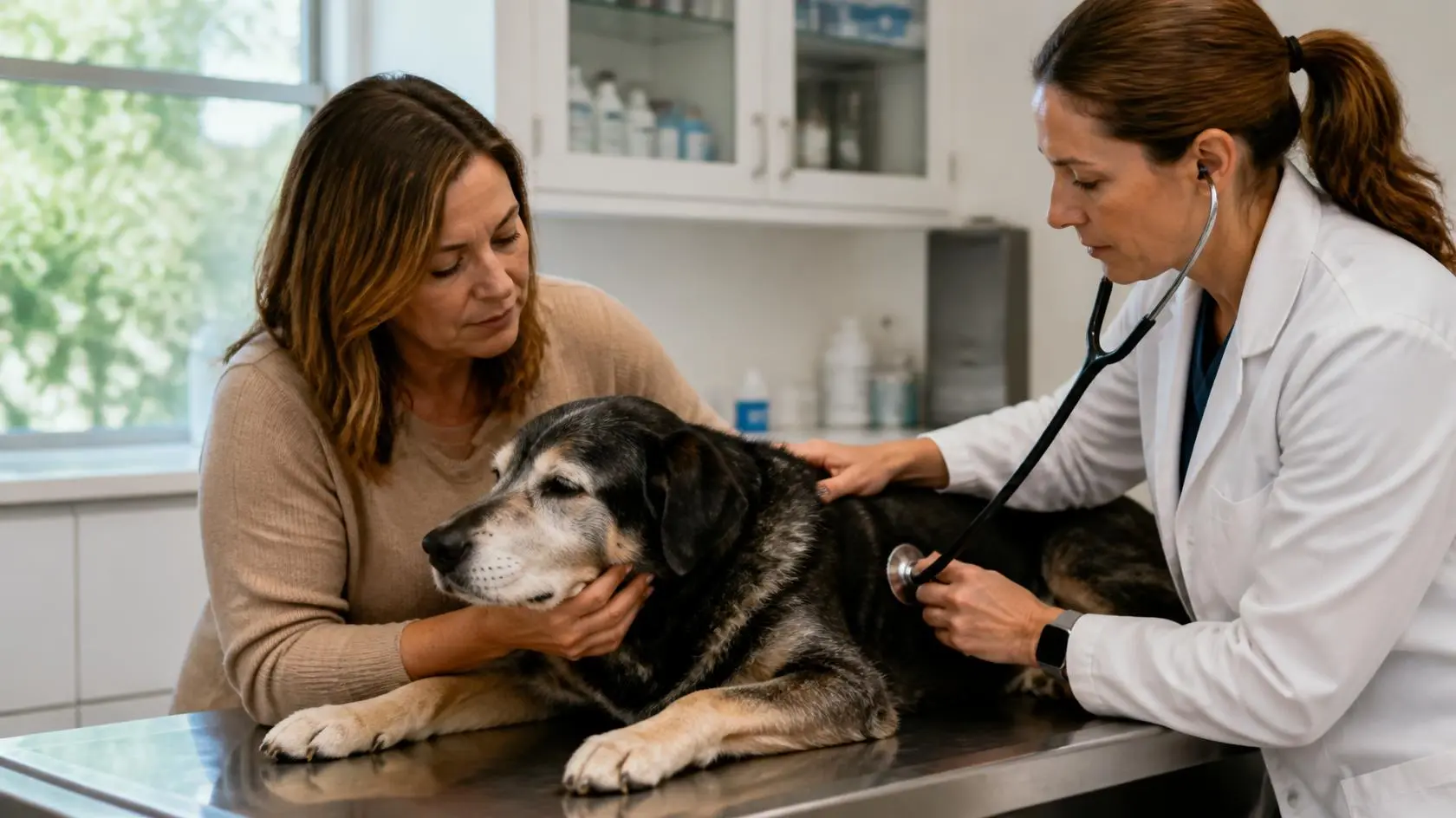
You don’t need to be certain your dog is dying before you ask for help. The right timing depends on how suddenly symptoms showed up and how distressed your dog seems.
1. Get Emergency Help Now
Trouble breathing, collapse, blue or gray gums, severe pain that won’t stop, ongoing seizures, or sudden unresponsiveness need emergency care right away.
These can signal a life-threatening problem that may still be treatable. Call an emergency hospital and head there; don’t wait for your regular clinic to open. Calling ahead lets the team prepare before you arrive.
2. Call Your Vet the Same Day
A big change in eating, drinking, mobility, bathroom habits, alertness, or behavior over a day or two is worth a same-day call, even if your dog still seems responsive.
Your vet can decide whether your dog needs to be seen immediately or soon. Mention when the change started, how fast it happened, current medications, and anything else that seems off.
3. Start an End-of-Life Conversation
If your dog has a terminal or worsening condition and you’re seeing a steady drop in comfort or independence, you don’t have to wait for a crisis to talk about what’s next.
Your vet can tell you about pain control, comfort-focused (palliative) care, in-home hospice support, and euthanasia while your dog is still stable enough for you to think clearly.
Caution: Don’t delay emergency care because you assume a symptom is just part of dying. Breathing trouble, collapse, and sudden severe weakness can also come from conditions that need urgent treatment.
Track Quality of Life Day by Day
When changes happen slowly, memory can make it surprisingly hard to tell how much your dog has actually declined. Tracking a few daily things gives you and your vet a clearer picture, since pain was the top reason owners in a large U.S. study chose euthanasia, more common than a general decline in quality of life.
- Pain: Can your dog rest without obvious distress?
- Eating: Is food still appealing enough for regular meals?
- Drinking: Can your dog stay properly hydrated?
- Mobility: Can they stand, walk, and reach food or water?
- Hygiene: Can they stay reasonably clean and dry?
- Interest: Do familiar people or activities still get a response?
- Good days: Are the comfortable days still outnumbering the hard ones?
How Veterinarians Score Quality of Life
Many vets lean on a structured tool instead of judging from memory alone. One widely used option is the Quality of Life Scale, developed by veterinary oncologist Dr. Alice Villalobos, which scores a dog from 0–10 across seven areas: Hurt, Hunger, Hydration, Hygiene, Happiness, Mobility, and whether there are More good days than bad. Each area is rated on how well it’s being managed, not just how it looks in the moment.
A tool like this doesn’t replace your vet’s judgment, but it turns a hard, emotional question into something you can track consistently across visits, which matters more than any single number on any single day.
I keep a version of this scale in my own exam room and hand it to clients whose dogs are in decline. It gives me a shared language with the family instead of my opinion against their gut feeling, and more often than not, it’s what helps us land on the same page together.
Looking at several days together is usually more useful than judging one rough morning. Bring your notes to appointments so your vet can see how comfort and function have changed over time.
Note: Quality of life is personal. A score can organize what you’re seeing, but your dog’s diagnosis, pain level, personality, and your vet’s assessment still matter most.
Keeping Your Dog Comfortable
Once your vet has explained what’s happening, small changes at home can reduce unnecessary effort and help your dog rest more comfortably.
A good chunk of my practice is preventive and grooming-related care, and that background shapes how I think about comfort at the end of life too; a lot of it comes down to the basics, not anything complicated.
Clean, dry skin, a coat that isn’t matted or pulling, and a bed that doesn’t trap heat or moisture go a long way toward keeping a frail dog comfortable, and I’d rather my clients spend their energy there than chase anything fancier.
- Resting spot: Pick somewhere quiet where your dog doesn’t have to keep moving out of the way.
- Bedding: Use soft, supportive bedding that’s easy to reach without climbing or jumping.
- Food: Place meals nearby if walking across the house has become tiring.
- Water: Keep fresh water within easy reach, and ask your vet what to do if drinking gets difficult.
- Floors: Add rugs or non-slip mats if your dog struggles for traction.
- Cleanliness: Gently clean and dry your dog after accidents to protect sore skin.
- Medication: Give pain or comfort medication only exactly as your vet prescribed it.
- Company: Stay close when your dog seeks you out, and let them rest undisturbed when they’d rather be alone.
Caution: Never give human pain medicine, or leftover medication from another pet, unless your vet has specifically prescribed it for your dog.
What I’ve Learned from Families Facing This Decision
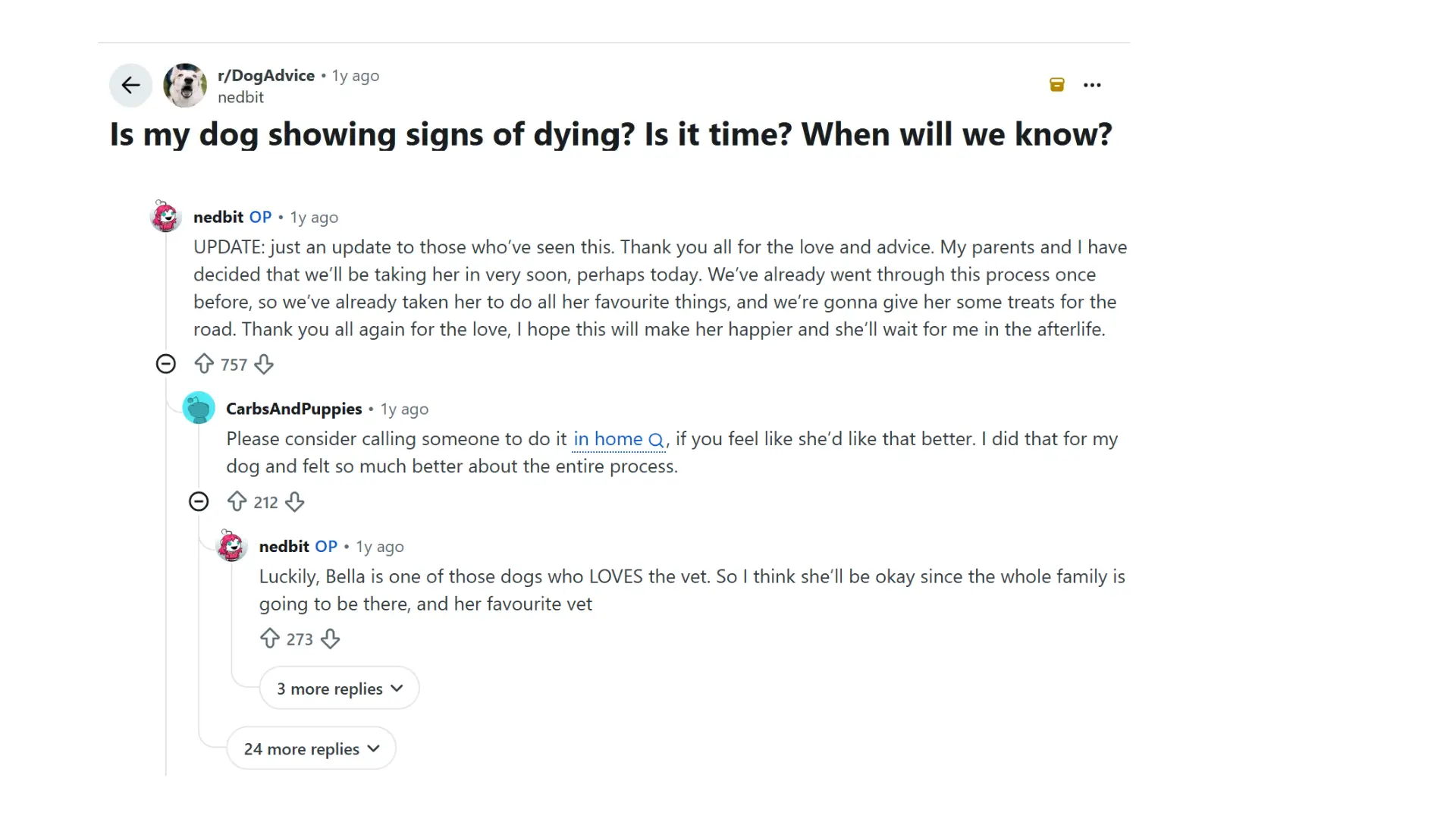
Real owners often describe this stage as less about spotting one final sign and more about deciding when their dog’s comfort has changed enough to act.
In one Reddit discussion, an owner shared that their family had decided it was nearly time to say goodbye after watching their dog decline. Before the appointment, they took her to do some of her favorite things and planned a few special treats.
Another commenter suggested considering an in-home appointment if the dog would feel calmer there. The owner replied that their dog actually loved visiting the vet, so having the whole family and a familiar veterinarian present felt right for them.
These experiences show how personal end-of-life decisions can be, with comfort, familiarity, and family presence shaping what owners choose.
When Comfort Becomes Hard to Maintain
There May Come a Point When Medication, Home Adjustments, and Close Care No Longer Keep Your Dog Comfortable Enough. This doesn’t Always Happen Suddenly, which is why planning ahead of A Crisis Helps.
Look at Your Dog’s Ability to Breathe Comfortably, Eat and Drink, Move without Overwhelming Pain, Stay Clean, Rest, and Still Connect with Their Surroundings in Ways that Matter to Them. Repeated Medical Crises or Pain that Can’t Be Controlled Also Deserve a Serious Conversation.
Your Vet Can Walk You Through Hospice-Supported Care, Changes to Pain Management, and Humane Euthanasia Based on Your Dog’s Diagnosis and Current Condition. Aaha Recommends Keeping Comfort and Relief of Suffering at The Center of These Decisions.
Note: you Don’t Need to Wait for An Obvious Crisis to Ask About End-Of-Life Options. These Conversations Can Start While There’s Still Time to Plan Calmly.
What Matters Most as Your Dog Declines
There’s No Single Moment or Symptom that Confirms What’s Happening; the Signs Your Dog Is Dying Overlap Heavily with Pain, Illness, Medication Effects, and Conditions that May Still Respond to Treatment.
Watch the Overall Direction Instead of Any One Hard Day. Notice Whether Your Dog Can Still Breathe Comfortably, Eat, Drink, Move, Rest, and Engage with You without Ongoing Distress, and Share Those Notes with Your Veterinary Team Rather than Deciding Alone.
If Something Changes Suddenly, Call Promptly. If the Decline Is Gradual, Ask About Quality of Life and Comfort Care Before a Crisis Arrives. Your Vet Is the Best Partner for Deciding What Your Dog Needs Next.
Final Thoughts
Watching a Dog Slow Down Is Never Easy, and The Signs Your Dog Is Dying Rarely Arrive as One Clear Moment; They Show up As a Pattern Across Breathing, Eating, Movement, and Awareness.
What Helps Most Is Tracking Those Changes Together Instead of Judging a Single Hard Day, and Leaning on Your Veterinary Team Rather than Guessing Alone.
Good End-Of-Life Care for Dogs Isn’t About Predicting an Exact Timeline; It’s About Protecting Comfort at Every Stage, Whether that Means Treating a Reversible Illness or Planning a Peaceful Goodbye.
After Years of Doing This Work Myself, I Can Tell You the Families Who Fare Best Are the Ones Who Ask Questions Early Rather than Waiting. if You’re Facing This with Your Dog, Save This List, Bring Your Notes to Your Next Vet Visit, and Share Your Dog’s Story in The Comments Below.
Frequently Asked Questions
Should I Wake a Very Sick Dog to Eat?
Usually, comfort matters more than forcing a sleeping dog awake for food. Ask your vet how often your dog should eat and whether appetite support, like a syringe-fed liquid diet, makes sense for your dog’s condition.
Do Dogs Hide when They’re Very Sick?
Some dogs withdraw and look for quiet places, while others become more clingy and want to be near their owner constantly. Either behavior can happen with illness, and neither one confirms that death is close.
Is a Burst of Energy Before Death Normal?
Yes, some dying dogs experience a short period of increased alertness, appetite, or activity in their final days, sometimes called a “rally.” it’s a real, fairly well-documented phenomenon in hospice care, but it’s usually temporary and isn’t a sign of recovery.
How Long Does the Dying Process Usually Take?
There’s no fixed timeline. Some dogs decline gradually over weeks or months with a long-term illness; others decline within days once organ function starts failing. Your vet can give you a more specific estimate based on your dog’s diagnosis and current condition.