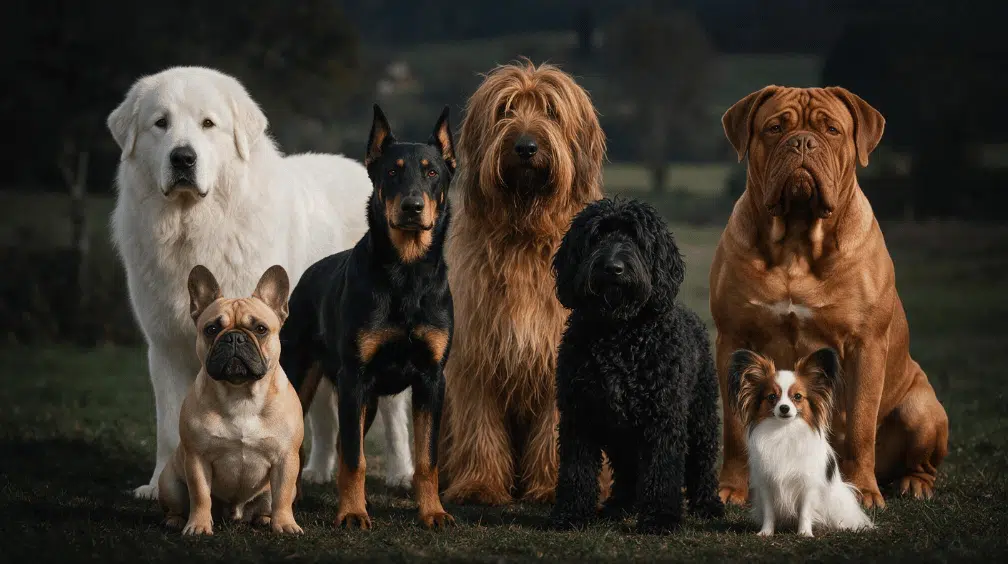
I’ve spent a long stretch working with rescue shelters in Vermont and talking with breeders, vets, and trainers across the country.
One thing keeps coming up: people love asking about French dog breeds without realizing how many actually exist. Some, like the French Bulldog, are easy to spot. Others, like the Barbet or the Berger Picard, rarely come up outside breed circles.
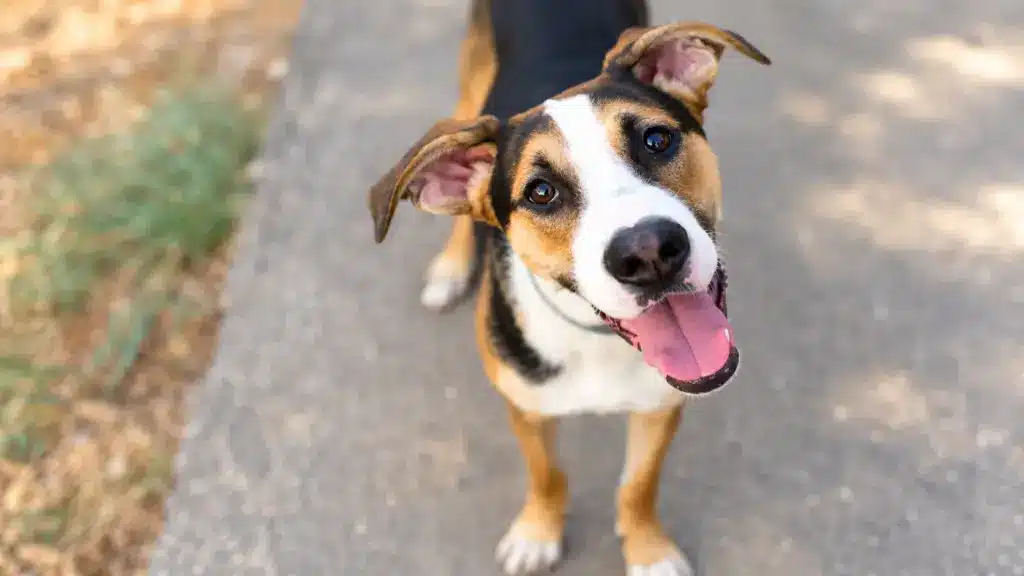
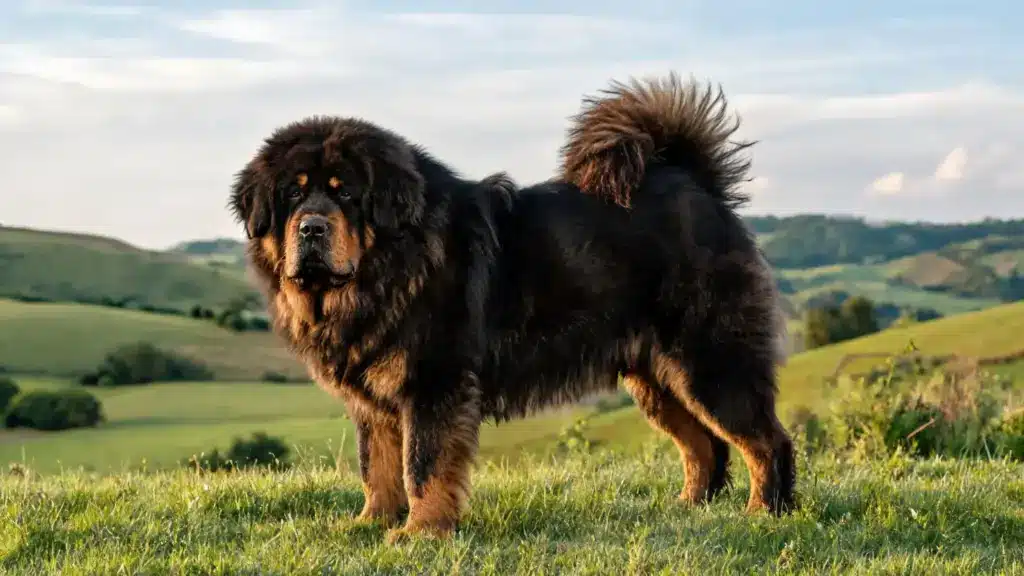
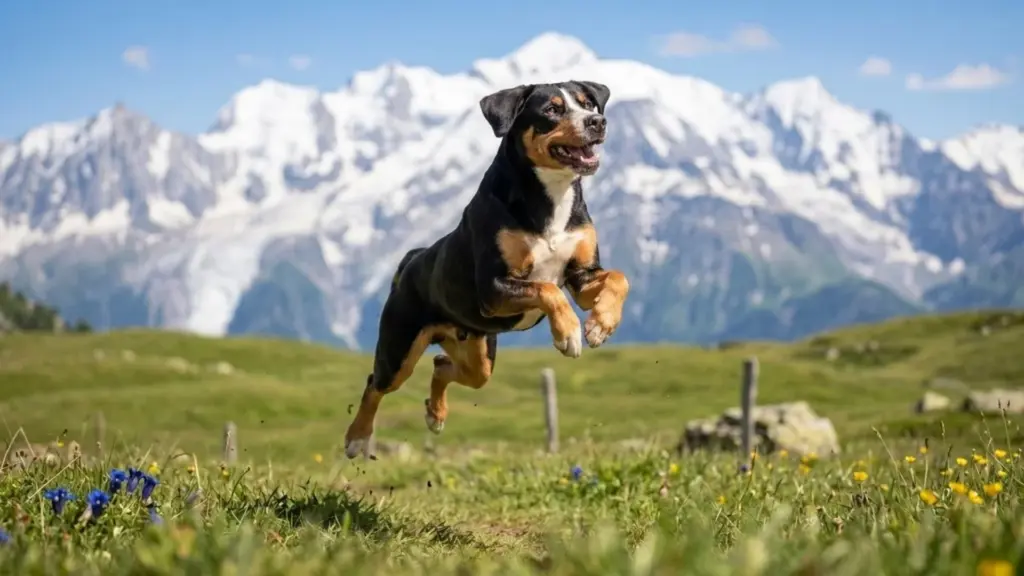
Below is a list of French dog breeds with size, temperament, and origin details for each one, so you can see the full range before picking a favorite. Photos are included throughout to help match a name with a face.
What Counts as a French Dog Breed
Not every dog linked to France was developed there from the start, and that distinction matters before you work through the list below.
Some breeds were built almost entirely within French borders. In contrast, others share a joint history with neighboring countries or picked up a French reputation over time without one clean origin story.
A few names most readers assume are French turn out to be more complicated once records get checked closely, and this list treats those cases honestly rather than glossing over them.
Working dogs bred for a single job, alongside today’s companion breeds, all show up here regardless of how tangled their backstory turns out to be.
French Dog Breeds in Detail
This list moves through twenty French dog breeds in one straightforward order, covering size, temperament, and home fit for each one, from familiar names to breeds most readers have never encountered before.
1. French Bulldog
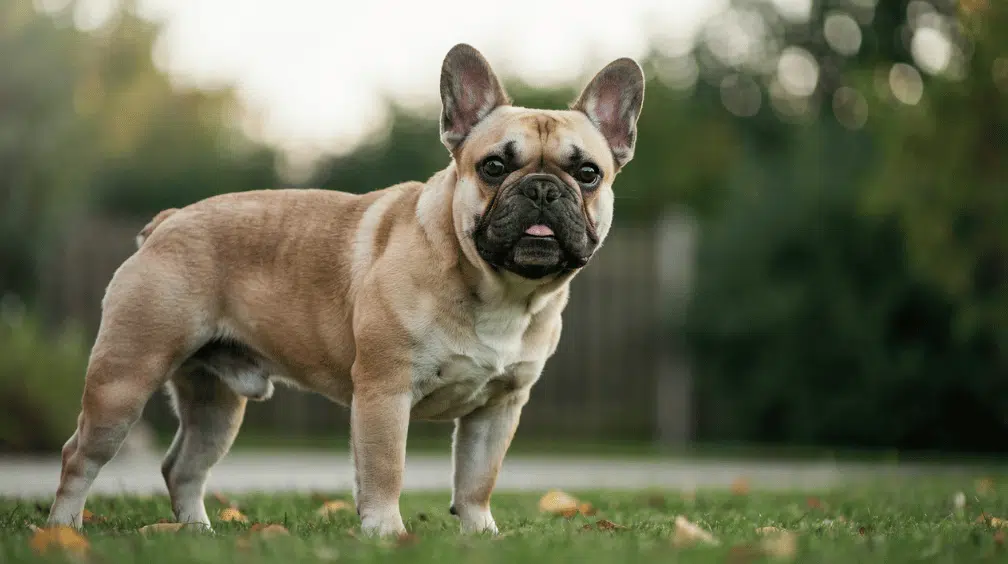
The French Bulldog is a small, muscular companion with bat-shaped ears and a flat face that makes it instantly recognizable.
Adults weigh sixteen to twenty-eight pounds, small enough for easy city living. It settles well into apartments and doesn’t need heavy exercise, though its short muzzle means heat and strenuous activity both call for extra caution.
Calm, playful, and affectionate, it bonds with its family and does best with owners who stay attentive to breathing and temperature during warmer months.
Owners weighing it against another popular flat-faced favorite often want to see how it compares to pugs before deciding.
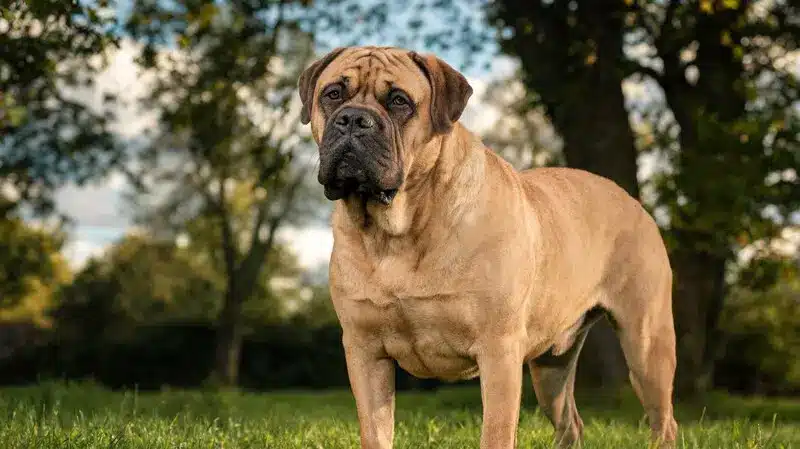
2. Dogue de Bordeaux
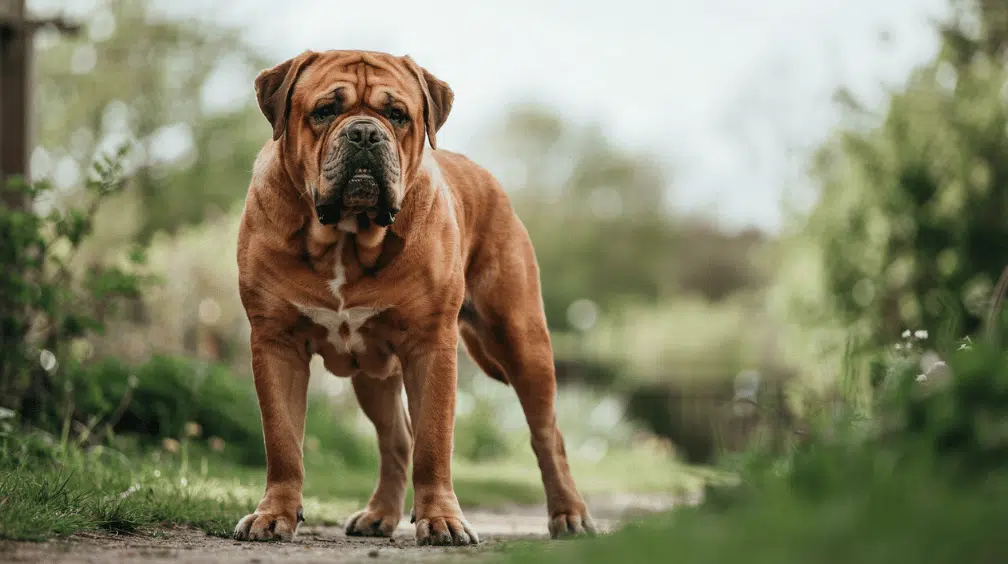
The Dogue de Bordeaux is a heavy, powerful mastiff-type breed with a wrinkled face and a long history as a guard dog.
Adults often weigh well over one hundred pounds, and the breed tends toward a shorter lifespan than many large dogs. Gentle and loyal with its own family, it can stay reserved around strangers, so early socialization matters more than usual.
Its size and strength mean training should start young, and it suits owners with experience handling large, strong-willed dogs at home.
3. Beauceron
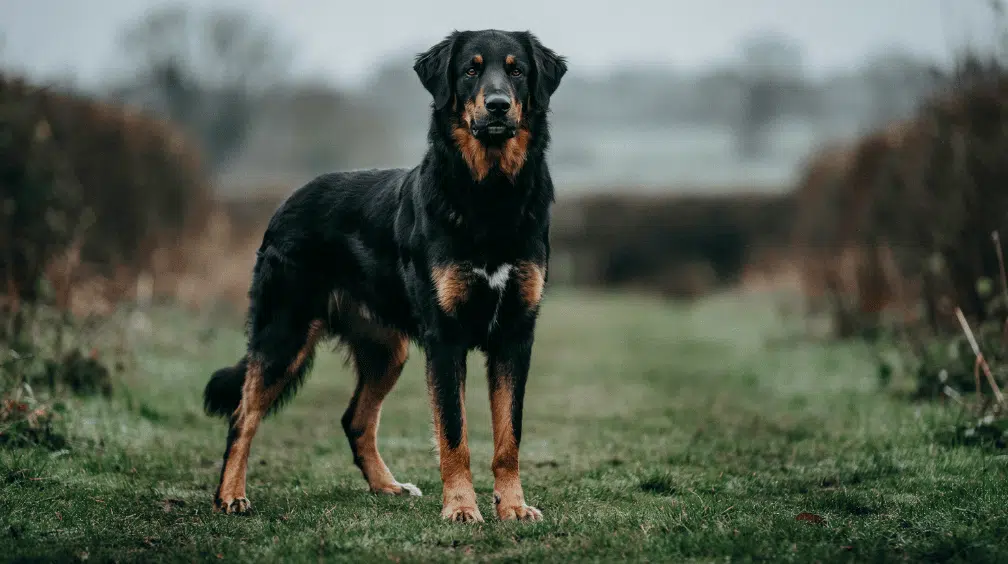
The Beauceron is a large, athletic herding dog built for stamina and independent decision-making out in the field.
One breed standard quirk is its double dewclaws on the back legs, a trait rarely seen outside a handful of breeds. Intelligent and loyal, it needs consistent mental work, or it can turn bored and pushy around the house.
This breed responds best to confident, experienced handling and daily structure, making it a strong match for active owners who enjoy ongoing training.
4. Briard
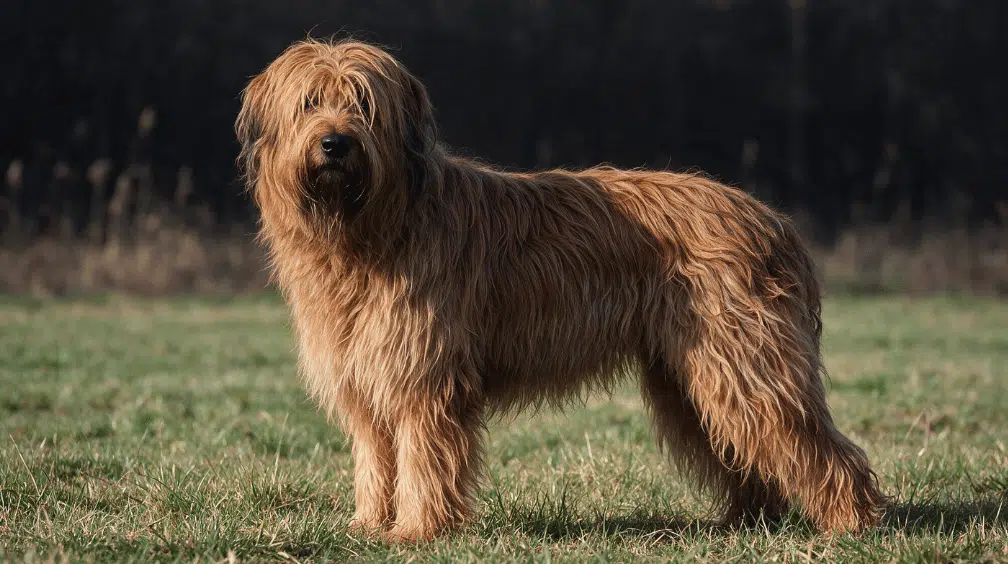
The Briard carries a long, shaggy coat over a sturdy herding frame and tends to bond closely with its family; it served as a French army sentry and messenger dog during the First World War.
Protective without turning aggressive, it needs steady socialization around unfamiliar people. Regular brushing keeps its coat from matting, and daily exercise satisfies its herding instincts.
Families with time for both grooming and activity tend to do well with this breed.
5. Berger Picard
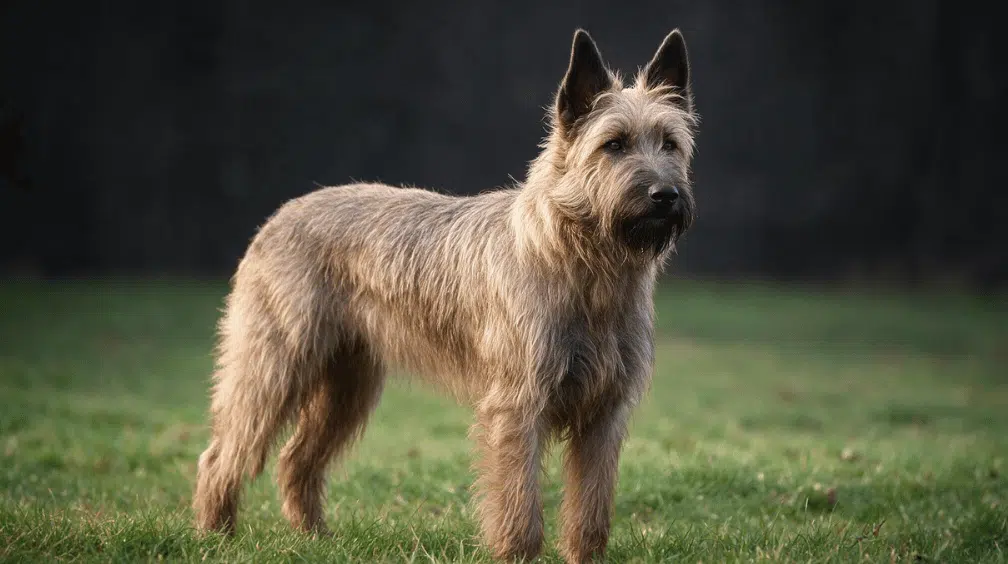
The Berger Picard is a rough-coated herding breed that’s still fairly uncommon outside working circles in the United States.
It gained some public recognition after playing the lead dog role in the film Because of Winn-Dixie, though that has done little to boost its numbers. Smart and independent, it needs steady socialization early on to stay confident around new people and unfamiliar places.
It thinks for itself more than many herding breeds, which suits owners who want an active, engaged dog.
6. Pyrenean Shepherd
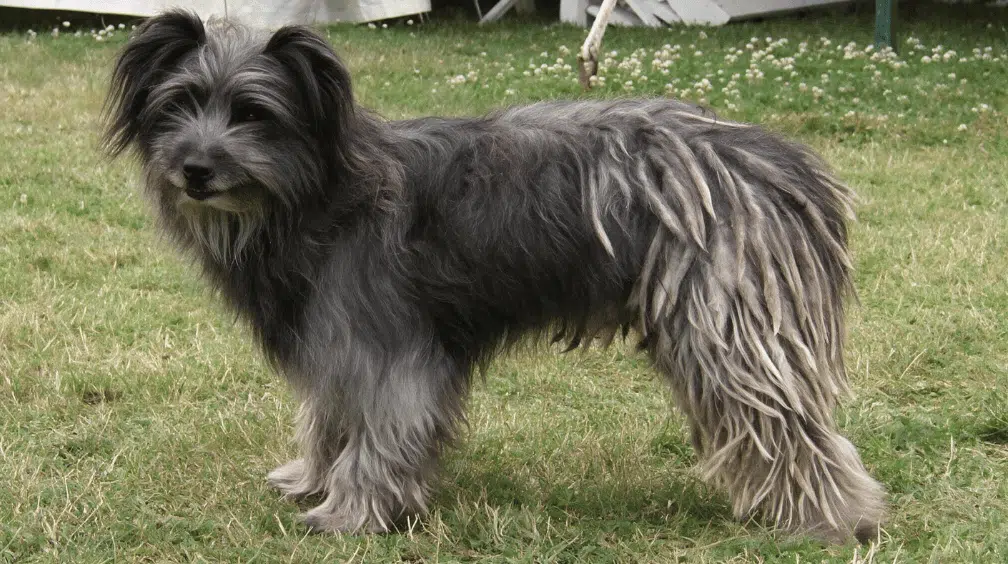
The Pyrenean Shepherd is a small, wiry herding dog with far more stamina than its size suggests at first glance.
It comes in two coat types, rough-faced and smooth-faced, though both share the same wiry, weather-resistant texture built for mountain work. Quick, alert, and eager to work, it thrives when given agility, herding, or structured daily training rather than a quiet routine.
This breed fits owners who want a small dog with a genuinely big work ethic.
7. Great Pyrenees
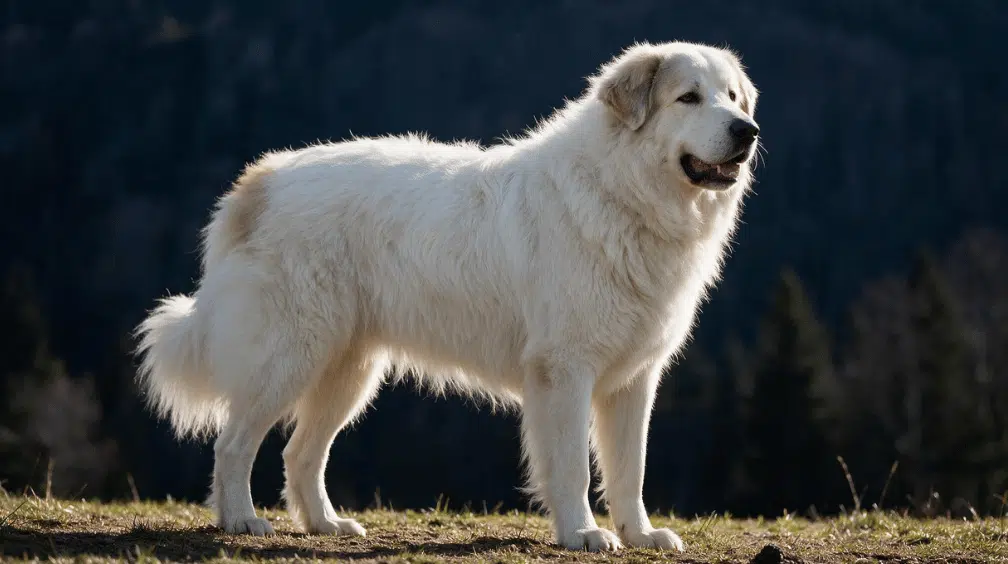
The Great Pyrenees is a giant livestock guardian originally bred to watch over flocks in mountain terrain far from its handler.
Adults weigh between eighty-five and one hundred sixty pounds, with a thick double coat built to handle harsh winters. Calm indoors but naturally alert, it often barks at anything unfamiliar after dark, and its heavy white coat sheds throughout the year.
Owners with secure fencing, patience for independent thinking, and enough outdoor space tend to suit this breed best.
Owners drawn to its steady, watchful temperament often look at other calm, easygoing dog breeds before settling on one.
8. Brittany
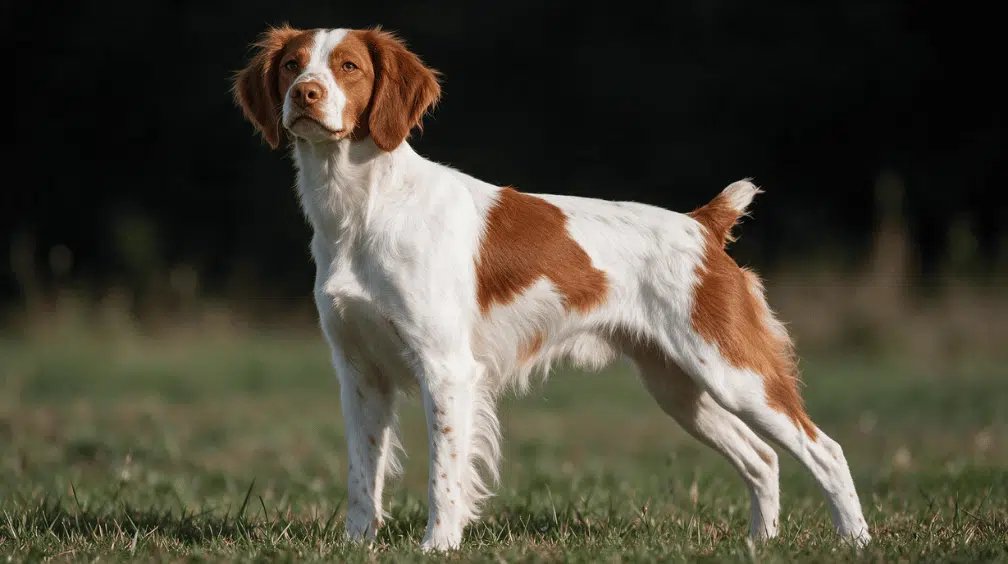
The Brittany is a medium-sized pointing breed built for long days out in the field alongside a hunting partner.
Standing around eighteen to twenty inches tall, it works both as a pointer and a flusher, a dual skill set fairly rare among French hunting breeds.
Affectionate and eager to please, it carries high energy that needs a genuine outlet rather than a short daily walk. Active households, ideally with access to open space, tend to suit this breed well.
9. Barbet
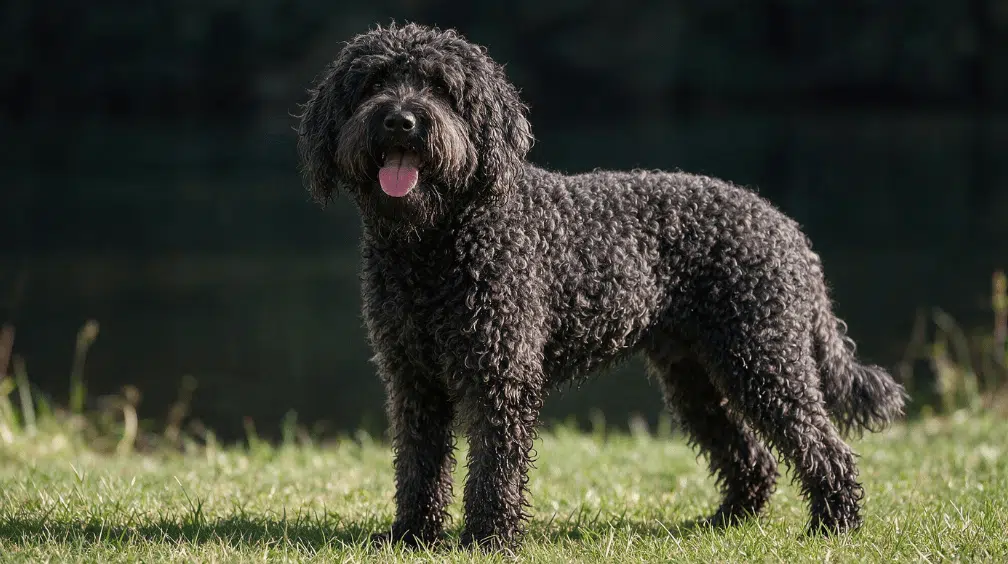
The Barbet is a curly-coated water dog with a friendly, easygoing nature and a strong love of swimming whenever given the chance.
Some historians consider it an ancestor of several other European water breeds, including an early influence on the Poodle line.
Its coat needs regular upkeep to avoid matting, and it does best with owners who can offer plenty of exercise and mental engagement each day. Active families near water or open space tend to suit this breed well.
10. Papillon
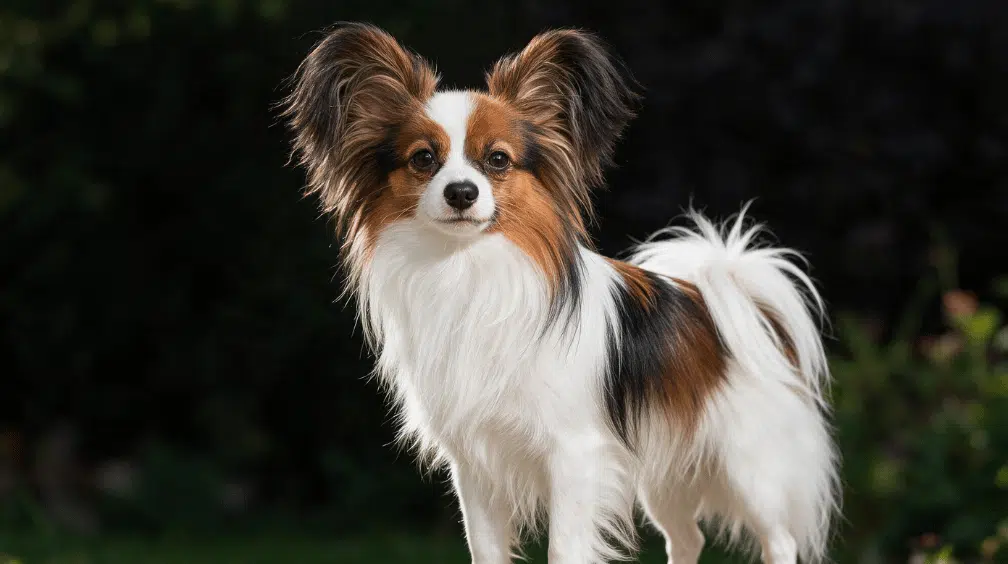
The Papillon is a tiny companion breed named for its butterfly-shaped ears, developed as a Continental Toy Spaniel with roots shared between France and Belgium.
European portrait painters featured the breed for centuries, and it remains one of the older toy companion lines still recognized today.
Alert and quick to learn, it’s more athletic than its size suggests and often does well in obedience or agility. Apartment owners who want an active, trainable dog will find this breed a good fit.
If a toy breed like this appeals to you, it’s worth browsing other small companion dogs built for tight living spaces.
11. Petit Basset Griffon Vendéen
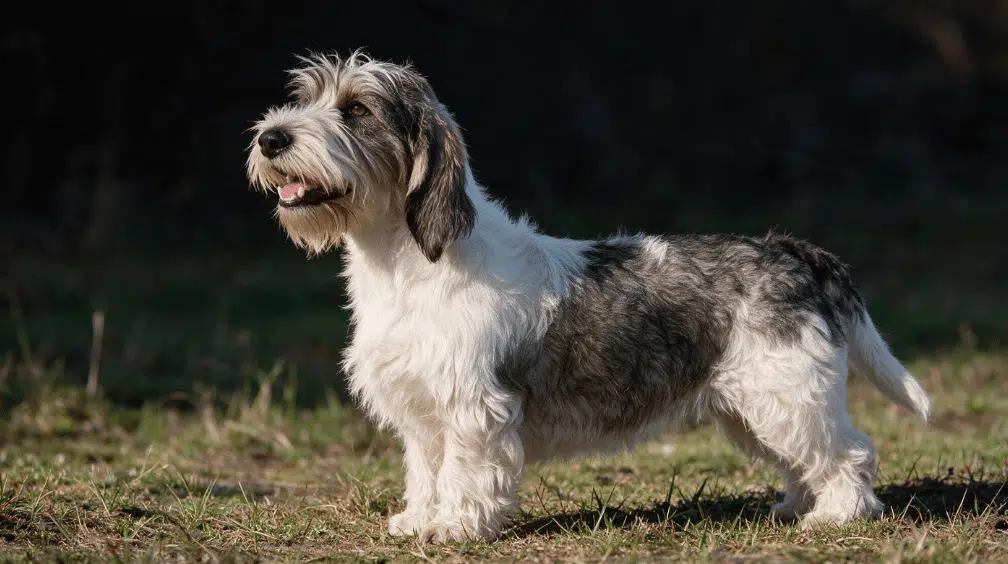
The Petit Basset Griffon Vendéen is a small scent hound with a cheerful, independent streak and a genuinely strong nose.
Fans often nickname it the big dog on short legs, since its confident personality rarely matches its compact frame. Bred for hare hunting, it tends to follow scent over recall commands once something interesting crosses its path outdoors.
Owners with a securely fenced yard and patience for an independent dog tend to do well with this breed long term.
12. Grand Basset Griffon Vendéen
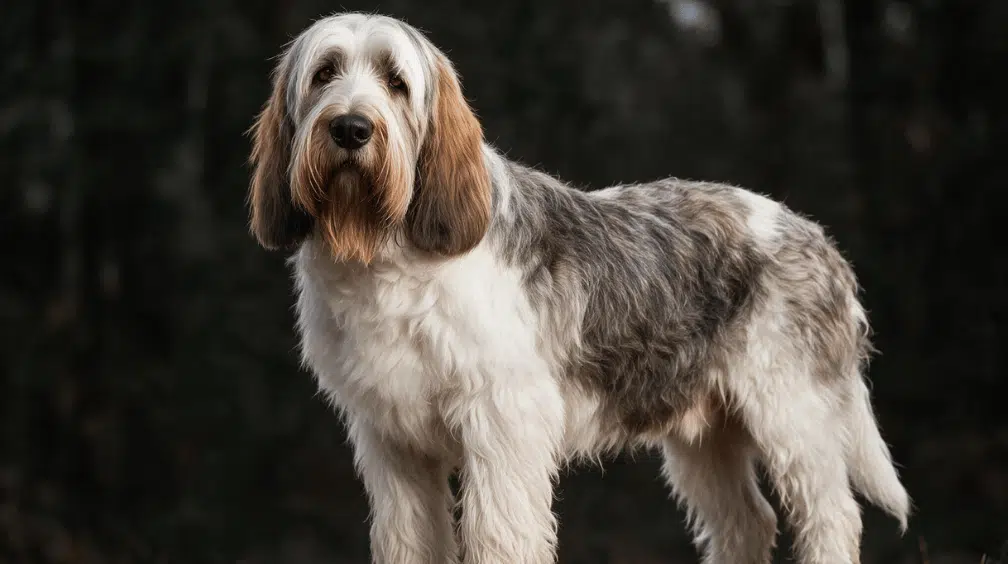
Larger than its Petit counterpart, the Grand Basset Griffon Vendéen shares the same scent-hound drive but with more size and stamina behind it.
Standing around fifteen to seventeen inches tall, it was originally built to trail tougher game like wild boar rather than hare. Affectionate at home, it can turn stubborn during training, especially once something interesting catches its nose.
This breed suits owners ready for daily exercise and a firm, patient approach to obedience work from the very start.
13. Grand Bleu de Gascogne
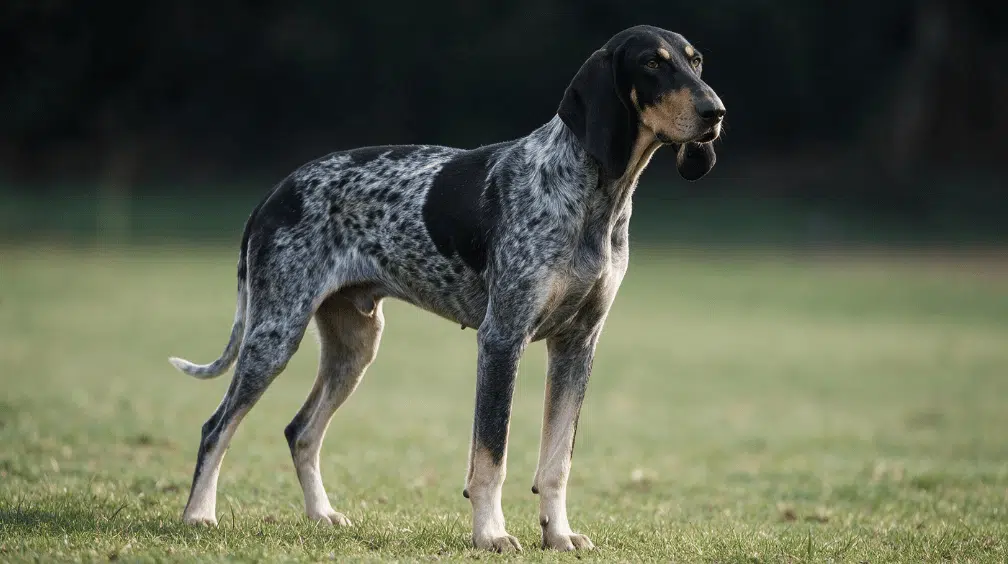
The Grand Bleu de Gascogne is a large scent hound with a distinctive mottled coat and a deep, carrying voice.
Adults often stand over twenty-five inches tall, and hunters historically tracked the pack’s location by ear, guided by each dog’s distinctive voice. Developed for pack hunting, it tends to do best with company, whether human or canine, plus plenty of outdoor time.
Owners with rural space and prior hunting-breed experience are generally the best match for this dog.
14. Basset Artésien Normand
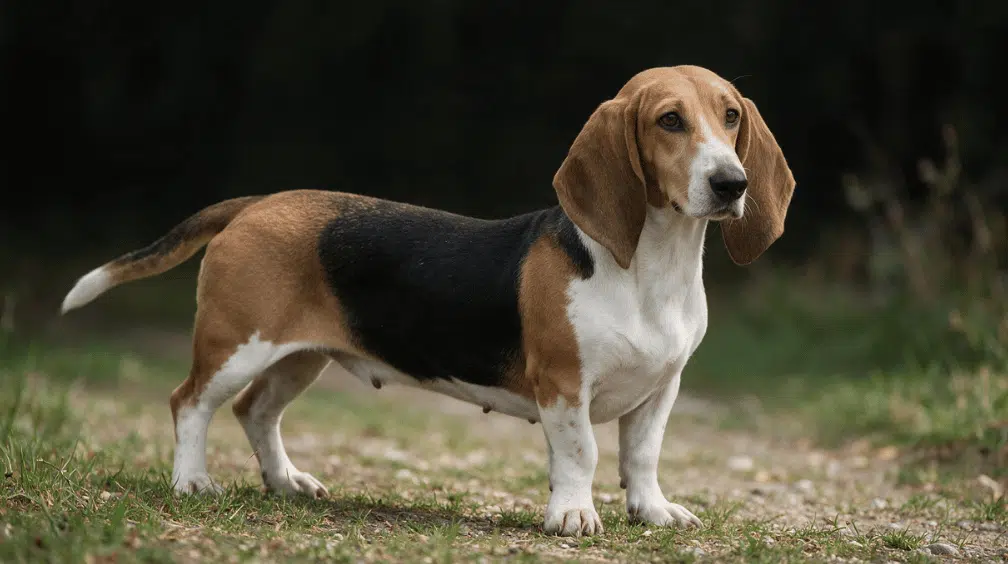
The Basset Artésien Normand is a low-slung scent hound, related to but distinct from the more familiar Basset Hound.
Its legs stay noticeably shorter than most hound breeds, though its body remains lighter than the heavier Basset Hound line. Affectionate and steady, it still carries a hunting instinct that can lead to wandering if left off leash near an interesting trail.
This breed fits owners who want a calm companion paired with secure outdoor boundaries at home.
15. Braque du Bourbonnais
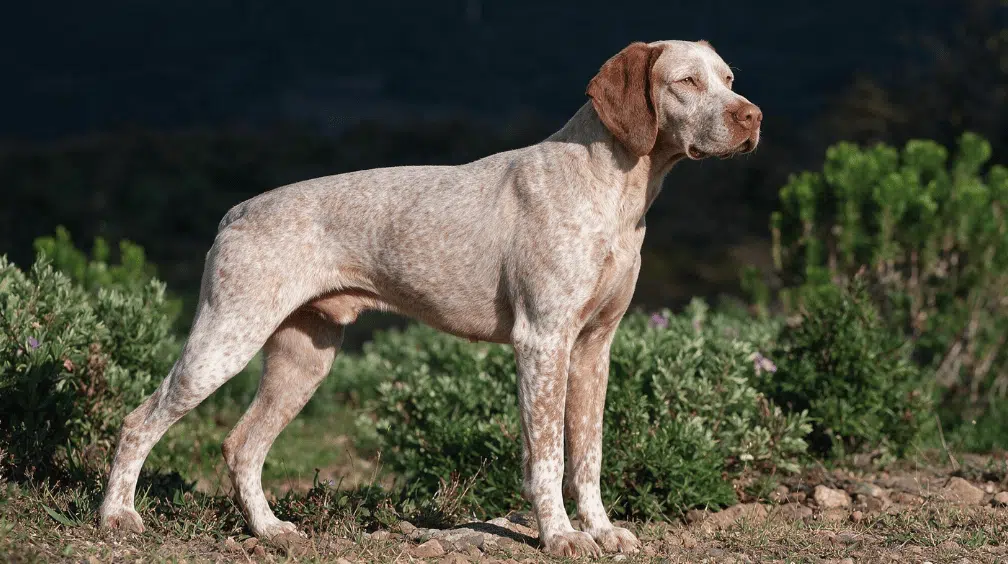
The Braque du Bourbonnais is an older pointing breed with a compact, muscular build and a cooperative, biddable nature in the field.
Written references to the type reach back several centuries, making it one of the older documented French pointing lines still bred today.
It works closely with handlers during hunts and carries that same attentiveness straight into everyday home life. Active owners who enjoy hands-on training tend to get along especially well with this breed.
16. Picardy Spaniel
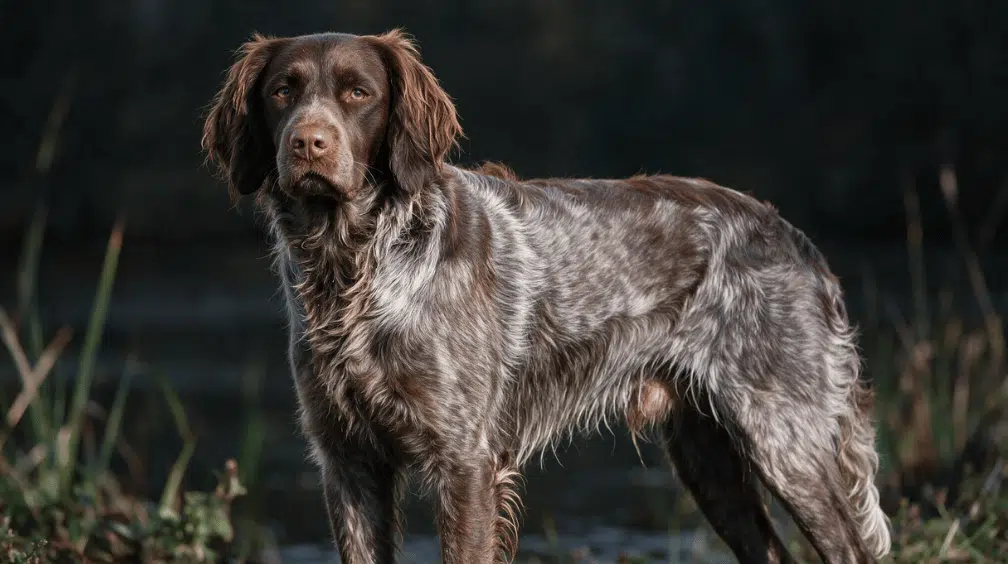
The Picardy Spaniel is a medium-to-large hunting dog with a gentle temperament and a strong retrieving instinct passed down through generations.
Its dense, wavy coat comes in a distinctive gray-and-brown speckled pattern that helps it blend into marshland cover.
It responds well to training and genuinely enjoys time spent outdoors, though it remains uncommon outside its home region even today. This breed suits patient owners with regular access to open space for exercise.
17. Porcelaine
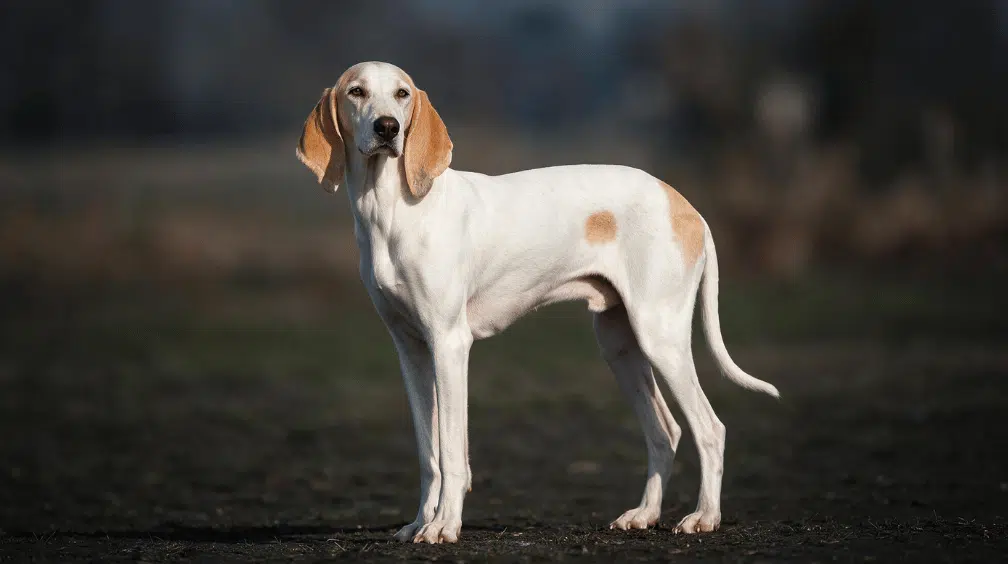
The Porcelaine is a glossy white scent hound named for its smooth, shining coat, historically used to hunt hare and larger game across the countryside.
Standing around twenty-two inches tall, it was traditionally hunted in packs, coordinating with other Porcelaines to trail a single scent line.
Gentle at home, it carries serious stamina and drive once it picks up a scent outdoors. Owners with rural space and prior hound experience are typically the best match for this breed.
18. Löwchen
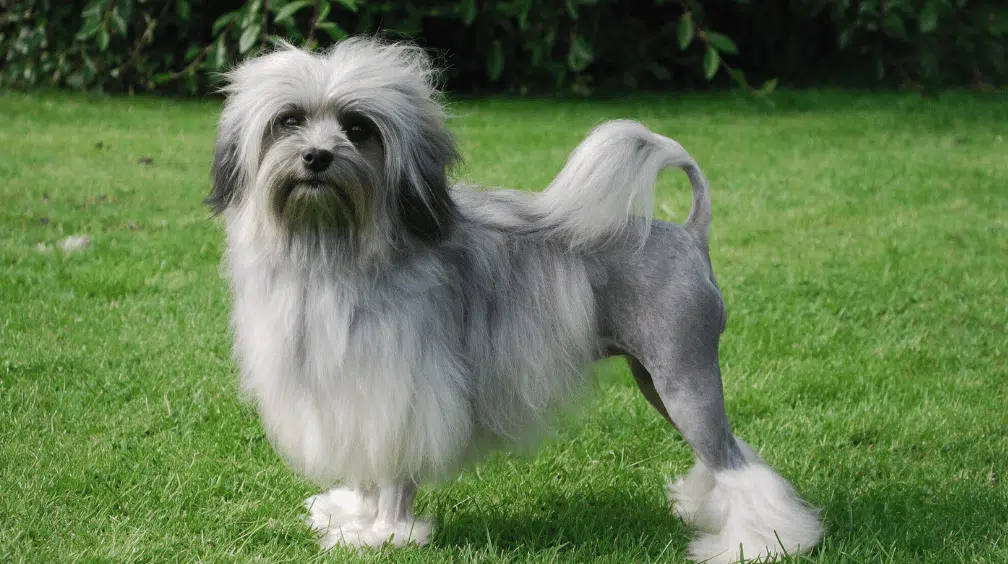
The Löwchen, meaning little lion dog in German, is a small companion breed best known for its distinctive lion-style trim and lively personality.
Its exact birthplace is debated, much like the Poodle’s, with France, Germany, and Belgium all holding historical claims.
It once held the dubious title of rarest dog breed in the world, with only a handful of registered dogs at one low point. Cheerful and alert, it trains fairly easily and adapts well to smaller households without fuss.
19. Poodle (Standard)
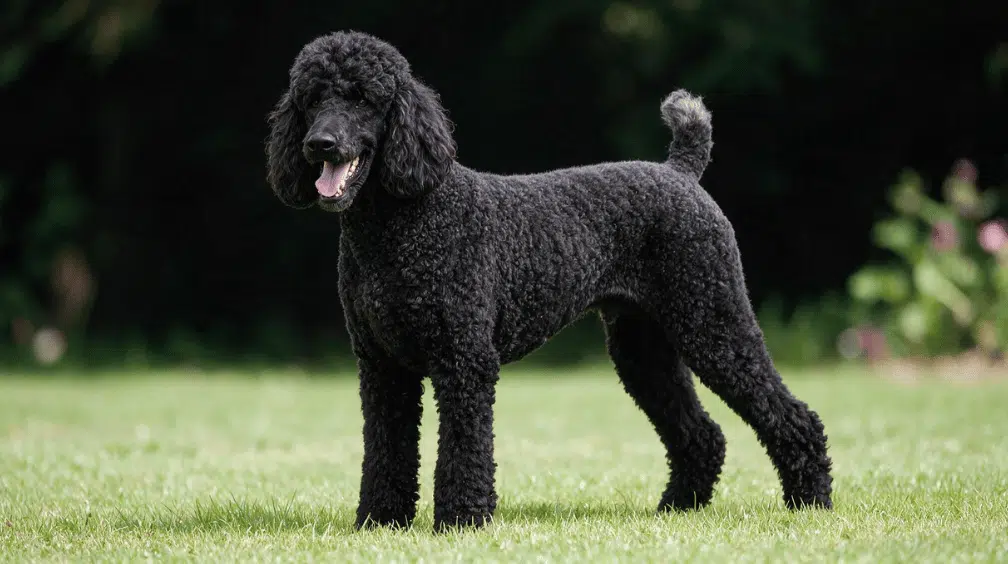
The Standard Poodle is a tall, athletic, low-shedding breed with a sharp, quick-to-train mind built for mental work.
Standing over fifteen inches at the shoulder, it was originally developed as a water retriever. Its coat needs regular professional grooming, and it does best with daily physical and mental activity.
Owners managing allergies while wanting a trainable dog often land on this breed, though its exact origin story turns out to be more complicated than its reputation suggests.
20. Basset Hound
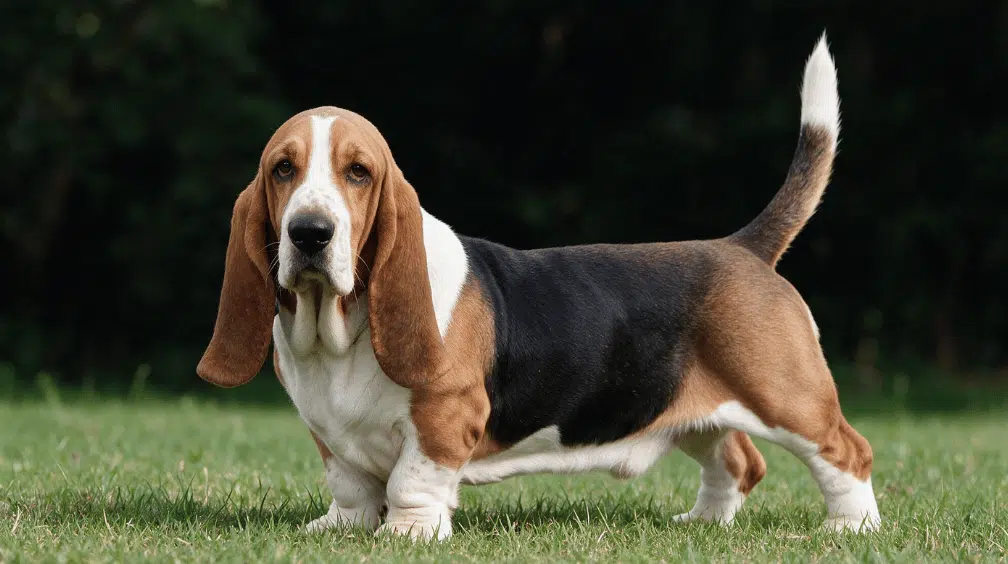
The Basset Hound is a low, heavy-boned scent hound with long ears and a famously calm, easygoing temperament.
Adults often weigh between forty and sixty-five pounds, and its long, low-hanging ears help stir scent up toward its nose while trailing.
Affectionate and good with children, it can turn stubborn once its nose picks up an interesting trail. Owners wanting a laid-back companion with moderate exercise needs tend to suit this breed well.
Breeds People Often Mix Up
A few names on this list get mixed up constantly, usually because they sound alike or share a similar look. Here’s a quick clarification for the pairs that trip up new readers most often.
| Pair | Key Difference |
|---|---|
| Petit vs. Grand Basset Griffon Vendéen | The Petit is the smaller of the two, bred mainly for hare hunting, while the Grand stands taller and was built for tougher game. |
| Great Pyrenees vs. Pyrenean Shepherd | The Great Pyrenees is a giant livestock guardian bred to watch flocks, while the Pyrenean Shepherd is a small, wiry herder built for moving them. |
| Basset Hound vs. Basset Artésien Normand | Both are low, long-eared scent hounds, but the Basset Hound was standardized in England while the Basset Artésien Normand stayed a lighter, French-bred hunting line. |
| French Bulldog vs. Boston Terrier | The two get confused constantly online, but the Boston Terrier is an American breed with no French bloodline at all, despite the similar bat ears and flat face. |
None of these mix-ups are embarrassing, since even breed clubs get asked about them constantly, but knowing the difference up front saves a wasted search for the wrong dog later.
How to Pick the Right French Breed for Your Home
With this many options on one list, narrowing things down usually comes down to matching daily lifestyle and living space to a breed’s original job rather than choosing based on looks alone.
- Apartments and smaller homes: Papillon, Löwchen, and French Bulldog tend to adapt well to limited space.
- Active households: Brittany, Beauceron, Berger Picard, and Pyrenean Shepherd need daily physical and mental work.
- Owners with prior large-breed experience: Dogue de Bordeaux, Great Pyrenees, and Grand Bleu de Gascogne bring size and independence that reward a confident handler.
- Readers drawn to less common breeds: Porcelaine, Braque du Bourbonnais, and Picardy Spaniel are harder to find but worth researching through breed clubs.
None of these categories are strict rules, and plenty of dogs surprise their owners either way, but matching energy and space up front tends to prevent most early frustration down the road.
Final Verdict
French dog breeds cover a wide range, from small companions like the Papillon to working dogs like the Beauceron, and no single breed fits every home.
What matters most is matching a breed’s original job, energy level, and coat needs to your own daily routine rather than picking a name because it sounds appealing.
If a French breed on this list caught your attention, spend time with a breed-specific rescue group or a responsible breeder before making a final choice, and ask plenty of questions about temperament and health along the way.
Reach out to one this week and set up a meeting before deciding, since a little research now tends to save a lot of frustration later on.
Frequently Asked Questions
What Is the National Dog of France?
The Poodle is widely regarded as the country’s national dog, largely because of its long-standing cultural association with France, even though France has no official national breed and several sources trace the Poodle’s development back to Germany.
How Many Dog Breeds Come from France?
Estimates vary widely depending on how loosely “French breed” is defined, but broader geographic counts put the number well past fifty when related and regional variants are included.
What Is the Rarest French Dog Breed?
The Porcelaine is among the hardest to find outside France, with far fewer registered in the United States than more familiar hound breeds.
Are French Dog Breeds Good for First-Time Owners?
Some are, particularly smaller companion breeds like the Papillon or Löwchen. Still, many working and hunting breeds on this list have independence and exercise needs that suit more experienced owners.
Is the Basset Hound Actually French?
Its ancestors were French basset breeds used for centuries to hunt on foot, but the modern Basset Hound as a standardized breed was developed in England, using those French bloodlines as a starting point rather than being French from start to finish.
Sources
- American Kennel Club (AKC) — The AKC’s Great Pyrenees breed profile covers the dog’s centuries-long guardian role protecting flocks in the French Pyrenees and its official recognition as an AKC breed since 1933.
- American Kennel Club (AKC) — AKC’s Briard history article documents the breed’s World War I service for the French army as a messenger, sentry, and search dog on the front lines.
- Britannica — Britannica’s Poodle entry explains that the breed most likely originated in Germany as a water retriever, despite its strong and enduring cultural association with France.