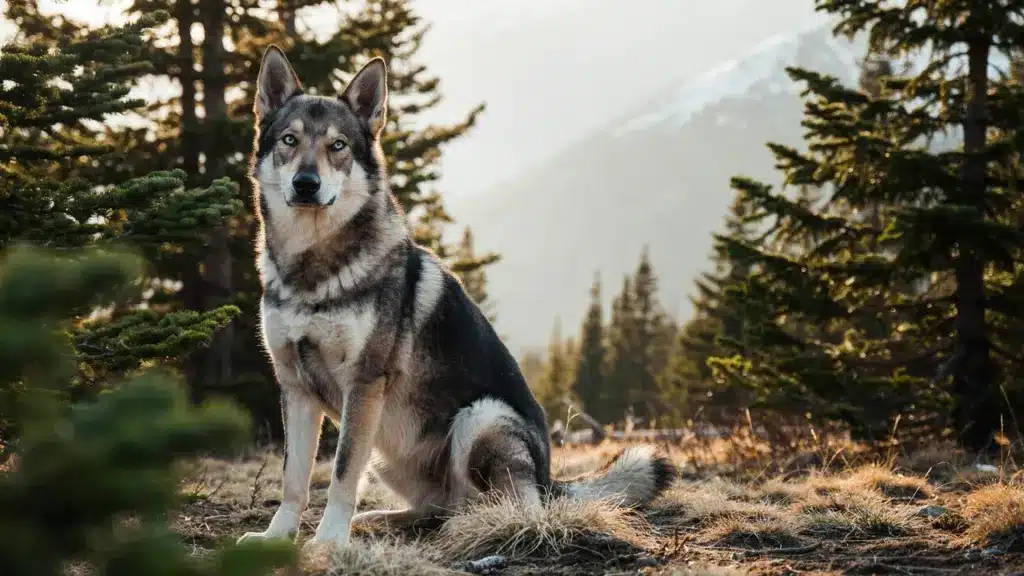
Your neighbor’s new dog has one ice-blue eye, one brown eye, and a bark that turns into a full-blown howl at every passing car. That combination is a classic sign of a German Shepherd Husky mix, and it’s probably why you’re reading this instead of finishing whatever you were doing.
This crossbreed puts together two working breeds with very different personalities, so both the rewards and the challenges run bigger than average.
Before the striking eyes and thick coat win you over, it helps to know what actually comes with this dog day to day.
This guide covers appearance, temperament, daily care, training, health, and real costs, so you can decide with the full picture instead of just a few good photos.
What Is a German Shepherd Husky Mix?
A German Shepherd Husky mix, often nicknamed a “Shepsky,” is a crossbreed between a purebred German Shepherd and a Siberian Husky. You’ll also hear it called a Gerberian Shepsky or a Husky Shepherd, same dog, different name depending on who’s talking about it.
Breeders began pairing the two in the early 2000s to combine the German Shepherd’s trainability with the Husky’s stamina and striking looks. The AKC’s published breed standards describe the working traits each parent typically passes down, which explains why this mix leans so heavily on drive and focus.
The American Kennel Club doesn’t recognize the Shepsky as an official breed, since it’s a designer mix rather than a standardized line. Hobbyist registries such as the Dog Registry of America and the American Canine Hybrid Club do recognize it, which can matter if you ever want paperwork tracing your dog’s lineage.
No two Shepskies are guaranteed to turn out alike. One litter can produce puppies that lean heavily German Shepherd in build, while a sibling looks almost pure Husky.
That unpredictability is also pushing more owners toward at-home DNA tests out of curiosity, some have discovered a “straightforward” Shepsky actually carries a third breed in the mix, since a breeder’s word isn’t the same as a lab result.
The German Shepherd side contributes loyalty and strong guard instincts. The Husky side contributes independence, stamina, and a tendency to howl or “talk” rather than stay quiet.
Appearance and Physical Traits
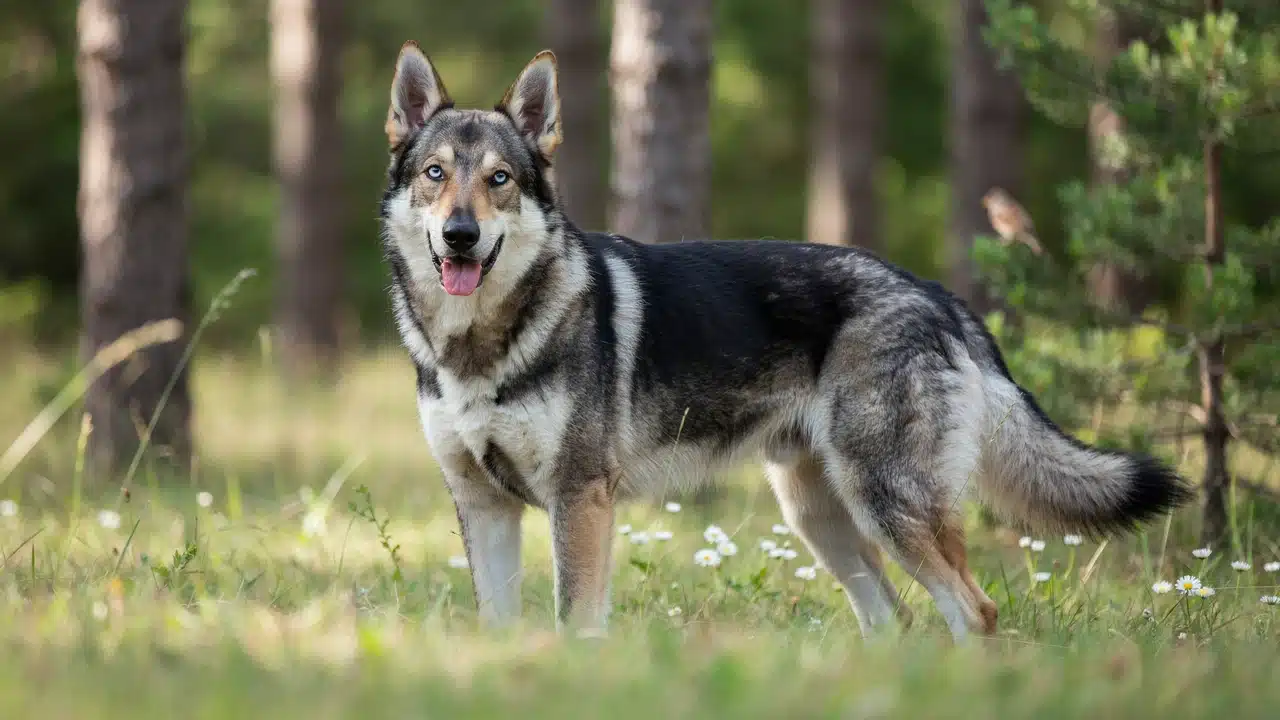
There’s no single “look” for this mix; coat, build, and eye color can lean toward either parent breed or land somewhere in between. Here’s what to expect across size, coat, build, and eyes.
Size, Weight, and Coat
Size and coat depend heavily on which parent’s genes come out stronger in a given litter.
- Weight: 45–90 lbs depending on genetic split
- Height: 20–25 inches at the shoulder
- Build: Males run larger and more muscular; females tend to be leaner and lighter.
- Coat: Thick double layer, sheds year-round with heavier spring and fall blowouts.
- Common colors: black, gray, white, brown, sable, or mixed
Either way, expect a sturdy, medium-to-large dog built for activity, not a lap dog.
Build, Ears, and Tail
Beyond size, the overall frame and features can lean toward either parent breed.
- Back and body: Sloped, muscular Shepherd build or a leaner, more compact Husky frame
- Ears: Fully erect, either broad and triangular or smaller and rounder
- Tail: Straight and saber-like, or a thicker plume curled over the back
- Face: Anywhere from a sharp Shepherd muzzle to a softer, fox-like Husky face
No combination is more “correct” than another — it simply comes down to genetics.
Eye Color and Heterochromia
Eye color is the trait most people fall for first, and it’s entirely a matter of chance.
- Common outcomes: Standard brown or amber eyes, striking pale blue eyes, or heterochromia (one blue, one brown)
- Purely cosmetic: No link to hearing or vision problems, despite old myths
- Not guaranteed: Even reputable breeders can’t promise a specific eye color in a litter
- Worth noting: Puppies’ eye color can shift slightly in the first few weeks before settling permanently
Whatever the outcome, it’s a genetic roll of the dice every time.
Temperament and Personality
This is not a low-key, couch-friendly dog. This mix typically inherits sky-high energy from the Husky side and sharp intelligence from the Shepherd side, rewarding for active owners, exhausting for anyone hoping for a laid-back pet.
If a calmer household sounds more like yours, it’s worth calmer, lower-energy breeds before committing to a Shepsky.
Expect a dog that’s loyal, alert, and quick to bond with its family, but also one that talks back. Literally. Many Shepskies “converse” through howls, grumbles, and half-barks, sometimes a dramatic “woo-woo” sound, rather than staying quiet, a trait borrowed straight from Huskies.
Around kids, they tend to be playful and protective when raised with proper socialization from puppyhood.
With other pets, results vary; some get along fine with cats and smaller dogs, while others retain a stronger prey drive. Early, consistent exposure to other animals makes the biggest difference in how this plays out long-term.
This mix is also people-oriented, closer to a pack animal than an independent housemate. Left alone for long stretches, some Shepskies develop separation anxiety, which can show up as destructive chewing, digging, or nonstop vocalizing.
Daily Care, Exercise, and Training
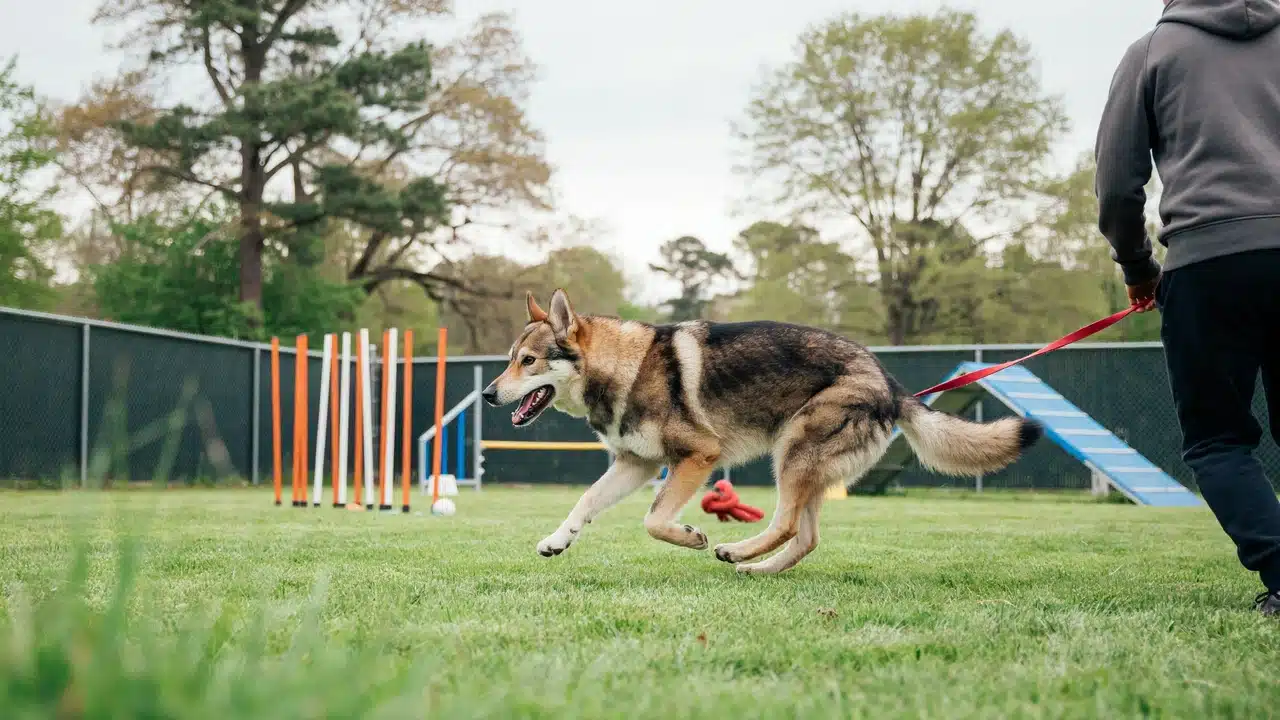
Owning this mix is less “walk the dog” and more “give the dog a job.” Skimp on exercise or training, and the fallout shows up fast. Here’s what daily care and training actually take.
Exercise and Grooming Needs
Meeting this mix’s physical needs takes more than a casual daily walk.
| Need | What It Looks Like |
|---|---|
| Daily exercise | At least 60–90 minutes of vigorous activity, running, hiking, or structured play |
| Mental work | A “job” like weight-pulling, agility courses, or scent work to prevent boredom-driven destruction |
| Grooming | Brush two to three times weekly, daily during seasonal shedding |
| Basic upkeep | Regular nail trims, ear checks, and teeth brushing |
For structured mental work beyond walks, dog puzzle toy options built for working breeds this smart can fill the gap on rainy days or slow weeks.
Apartment living isn’t impossible, but a house with a secure, tall fence makes life considerably easier for both dog and owner. When shedding season hits, picking the right brush for a double coat saves a lot of frustration compared to grabbing whatever’s already in the drawer.
Training Tips for This Mix
Training success comes down to managing two competing instincts at once.
| Factor | What to Know |
|---|---|
| The challenge | The Shepherd’s eagerness to please versus the Husky’s independent, stubborn streak |
| The approach | Start socialization and obedience work by 8 to 10 weeks old, using positive reinforcement over harsh correction. |
| Session style | Short, varied sessions hold attention better than long repetitive drills |
| Priority skill | Recall training, since Husky independence often means selective hearing outdoors. |
| Structure | Crate training and consistent boundaries help offset separation-related destruction. |
A structured approach to loose-leash walking basics makes outdoor recall work far less of a tug-of-war while you’re building reliability.
Crate training matters here too, since separation-related destruction shows up often in working-breed crosses left alone before they’re ready. Working through crate training for anxiety early heads off bigger problems down the road.
A secure yard or leash stays non-negotiable until recall is genuinely reliable.
Health, Lifespan, and Cost
Like most crossbreeds, this dog can inherit health issues from either parent line. Here’s what to watch for, alongside lifespan and cost expectations.
- Hip and elbow dysplasia: A common concern inherited from the German Shepherd side, and more likely in dogs carrying extra weight
- Eye conditions: Progressive retinal atrophy shows up more often through Husky genetics
- Bloat: A serious digestive emergency worth discussing with a veterinary emergency resource, given both parent breeds’ deep chests — this condition can turn fatal within hours, so knowing the warning signs in advance matters.
- Weight gain: Despite the high energy level, Shepskies can pack on pounds quickly if food portions aren’t adjusted to match real activity
- Average lifespan: 10–14 years with proper care
- Breeder puppy cost: Roughly $250–$1,500+, depending on lineage, location, and breeder reputation — treat any figure as an estimate and confirm current pricing locally
- Rescue/adoption cost: Typically far lower than breeder pricing, though fees vary by shelter
Purchase price is only part of the budget. Grooming alone adds up fast for a heavy-shedding coat like this, and knowing typical grooming price ranges helps with planning beyond the adoption or breeder fee.
Routine vet visits and a healthy weight go a long way toward keeping this mix in the 10-to-14-year range or beyond.
What Shepsky Owners Say Online

Reddit user Brilliant-Lie-8600 shared their experience raising a German Shepherd and Husky mix named Logan.
At just 11 weeks old, Logan had already learned commands such as sit, down, wait, and come, and was mostly house-trained. His owner also noticed that he constantly watched people, cats, and his surroundings, quickly learning how things worked.
Other German Shepherd and Husky mix owners reported similar experiences, describing their dogs as highly intelligent, observant, energetic, and sometimes mischievous.
Many recommended mental stimulation through scent games, puzzle toys, obedience training, and regular exercise to prevent boredom.
As Logan grew older, Brilliant-Lie-8600 said he became calmer but remained “super sweet, super snuggly, super smart, and super mischievous,” showing how intelligence can remain a major trait of this mix.
Final Paw
A German Shepherd Husky mix isn’t a dog you casually add to your household. It takes daily exercise, consistent training, and tolerance for a fair amount of noise, but for the right owner, that trade-off produces a loyal, whip-smart companion unlike almost any other breed.
This mix suits active households far more than quiet ones, and families willing to put in early, consistent training tend to see the strongest results.
Size, coat, and temperament vary widely from litter to litter, so meeting a puppy’s parents or spending real time with the individual dog matters more than chasing a specific look. Shelters often have Shepskies waiting, and that’s usually worth checking before the breeder route.
Frequently Asked Questions
Can a German Shepherd Husky mix live with cats already in the home?
It’s possible with slow, supervised introductions from puppyhood, but prey drive varies by dog. Never assume compatibility without a gradual, monitored trial period first.
Do German Shepherd Husky mixes need a special diet?
No special diet is required, but a high-protein formula suited for active, medium-to-large breeds supports their energy needs better than standard maintenance dog food.
Are German Shepherd Husky mixes hypoallergenic?
No. Their thick double coat sheds heavily year-round, making them a poor choice for households managing pet allergies or dander sensitivities.
Can a German Shepherd Husky mix tolerate hot weather?
Not well. Their dense double coat, inherited largely from the Husky side, makes them prone to overheating, so shade, water, and shorter walks matter in summer.
Is a German Shepherd Husky mix an officially recognized breed?
No major kennel club like the AKC recognizes it, since it’s a designer cross rather than a purebred line. Hobbyist registries do list it, but that paperwork isn’t the same as breed certification.
Do German Shepherd Husky mixes do okay left alone during the day?
Not for long stretches. This mix bonds closely with its family, and extended time alone without crate training or enrichment often leads to anxious, destructive behavior.