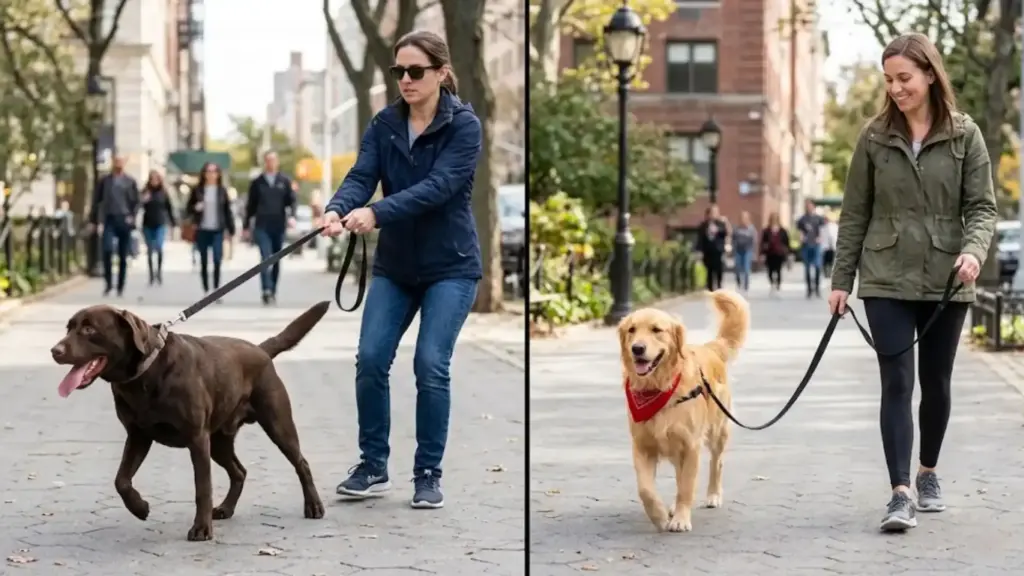
The first time a dog reacts out of nowhere, it does not feel like a training issue. It feels confusing, stressful, and sometimes even embarrassing.
One moment, the walk is calm, and the next, everything spirals into barking, pulling, or a complete loss of control.
Many dog owners go through this phase without knowing what actually triggered the reaction or how to handle it in the moment.
What makes it harder is the flood of advice that often sounds too generic or unrealistic. Every dog reacts differently, and what works for one may fail for another.
This is where real experiences matter. Learning how to train a reactive dog becomes easier when the approach is practical, tested, and built around situations that actually happen in daily life.
What Makes a Dog Reactive?
A reactive dog is not the same as an aggressive dog, and understanding this distinction is the first step in effectively training a reactive dog.
In professional training, we refer to this as the “threshold.” This is the point where a dog goes from aware to overwhelmed.
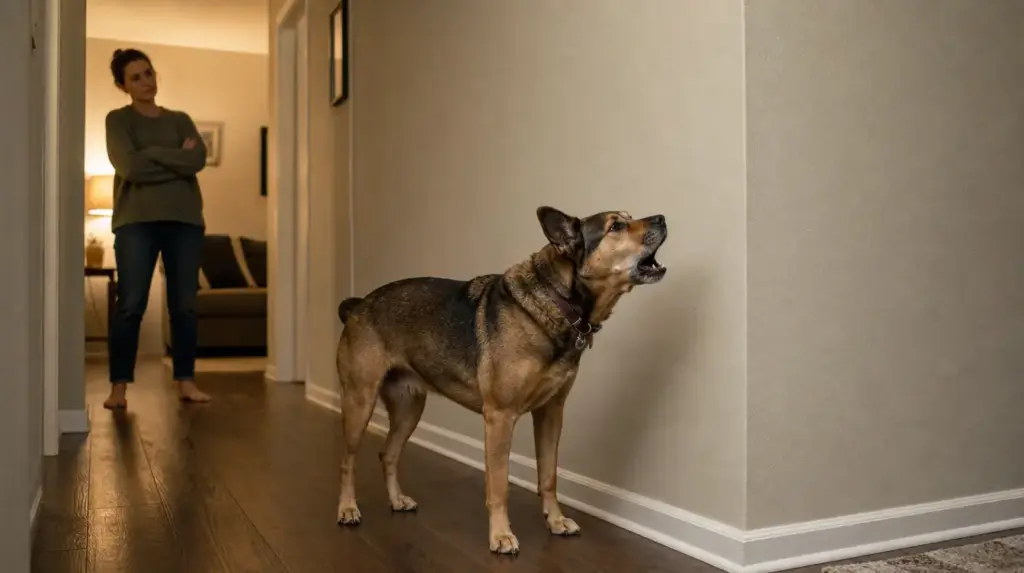
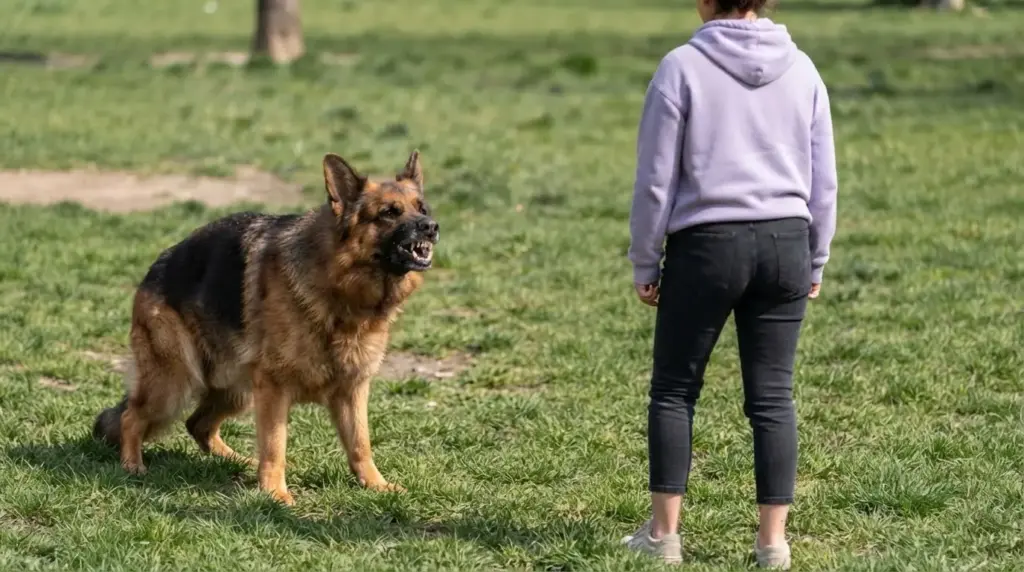
Reactivity usually shows up as barking, lunging, or overexcitement, often triggered by specific situations rather than a true intent to harm.
In many real-life situations, common triggers include other dogs, unfamiliar people, loud noises, or sudden movements, all of which can quickly overwhelm a dog.
Most reactions are rooted in fear, anxiety, or built-up stress rather than dominance or stubborn behavior.
Recognizing these emotional drivers helps shift the focus from punishment to proper training, making progress more realistic and long-lasting.
What Actually Helped Me Train My Reactive Dog
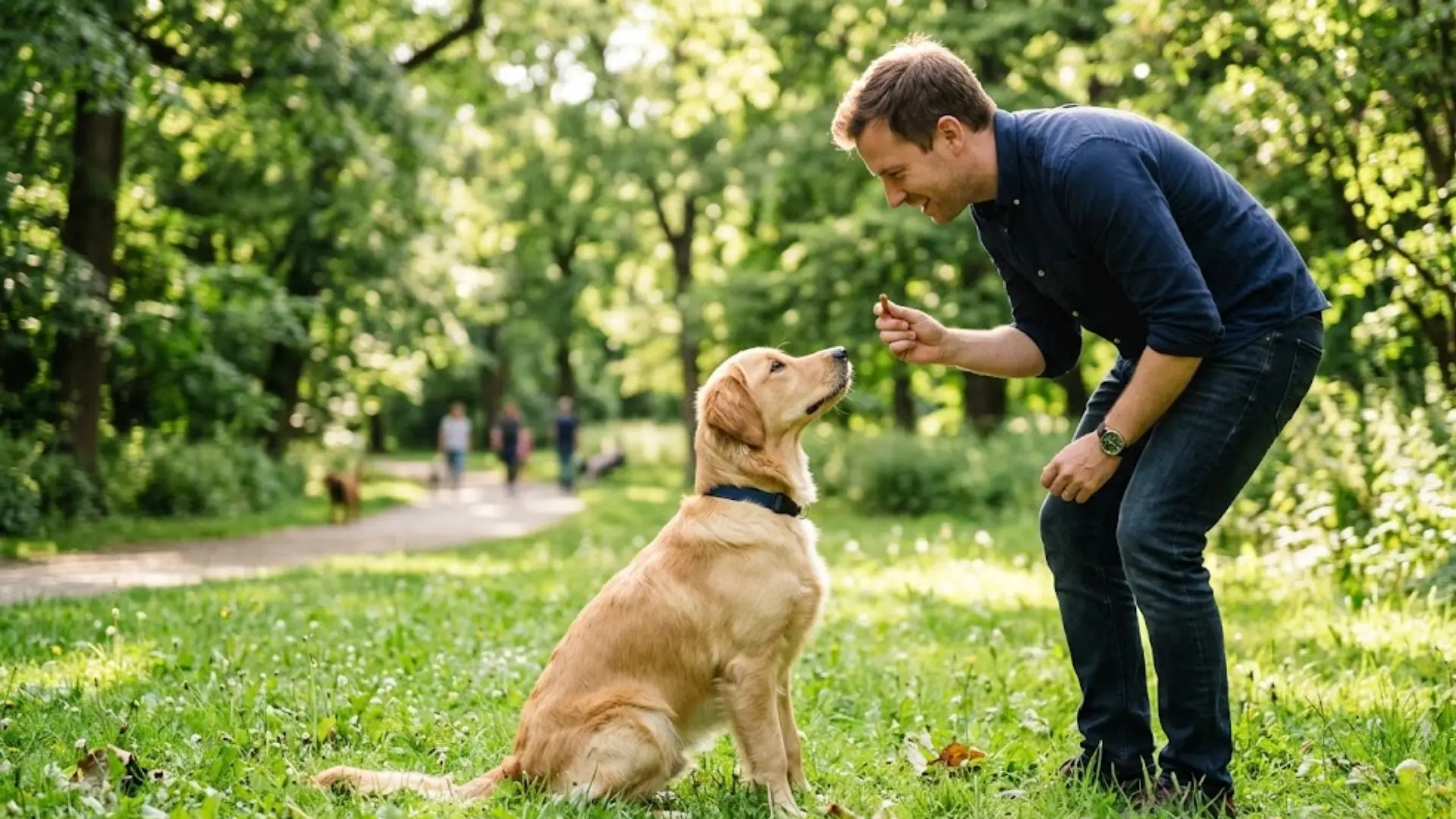
Real progress began with a shift in mindset. Instead of trying to control every reaction, the focus moved toward understanding how to train a reactive dog through patience, observation, and consistent practice.
These are the same reactive dog training techniques I use with clients who want to train a reactive dog at home without relying on expensive programs.
At first, identifying triggers and threshold distance changed everything. Noticing how close it was and how quickly it could escalate helped prevent reactions before they started.
Distance then became the most effectivetool, creating space that allowed calm behavior to occur naturally rather than forcing control.
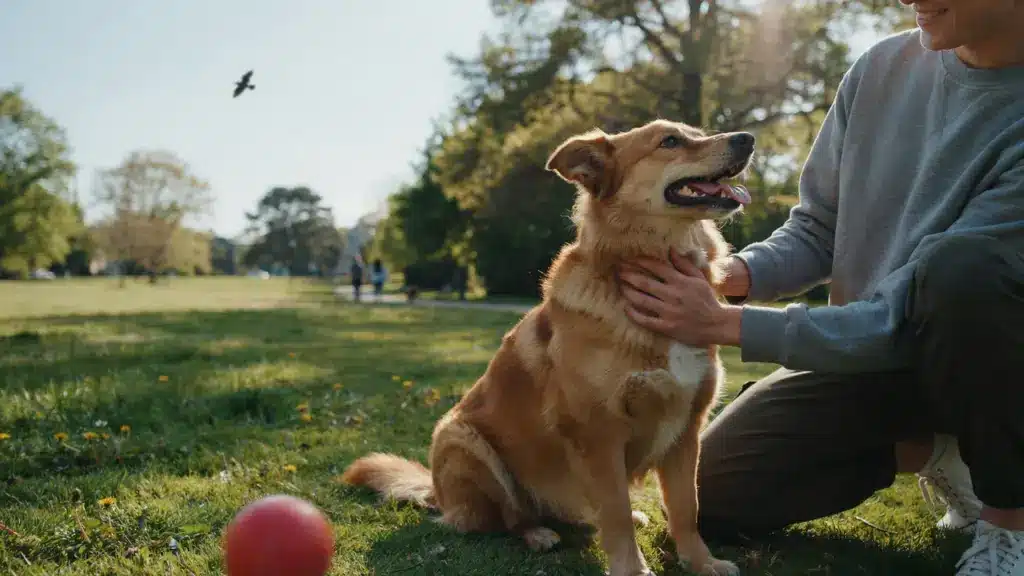
Correcting reactions and rewarding calm behavior proved far more effective, building confidence instead of fear.
Over time, these simple but consistent methods turned stressful moments into manageable situations, making daily walks and encounters feel more controlled and less overwhelming.
Simple Steps to Train a Reactive Dog
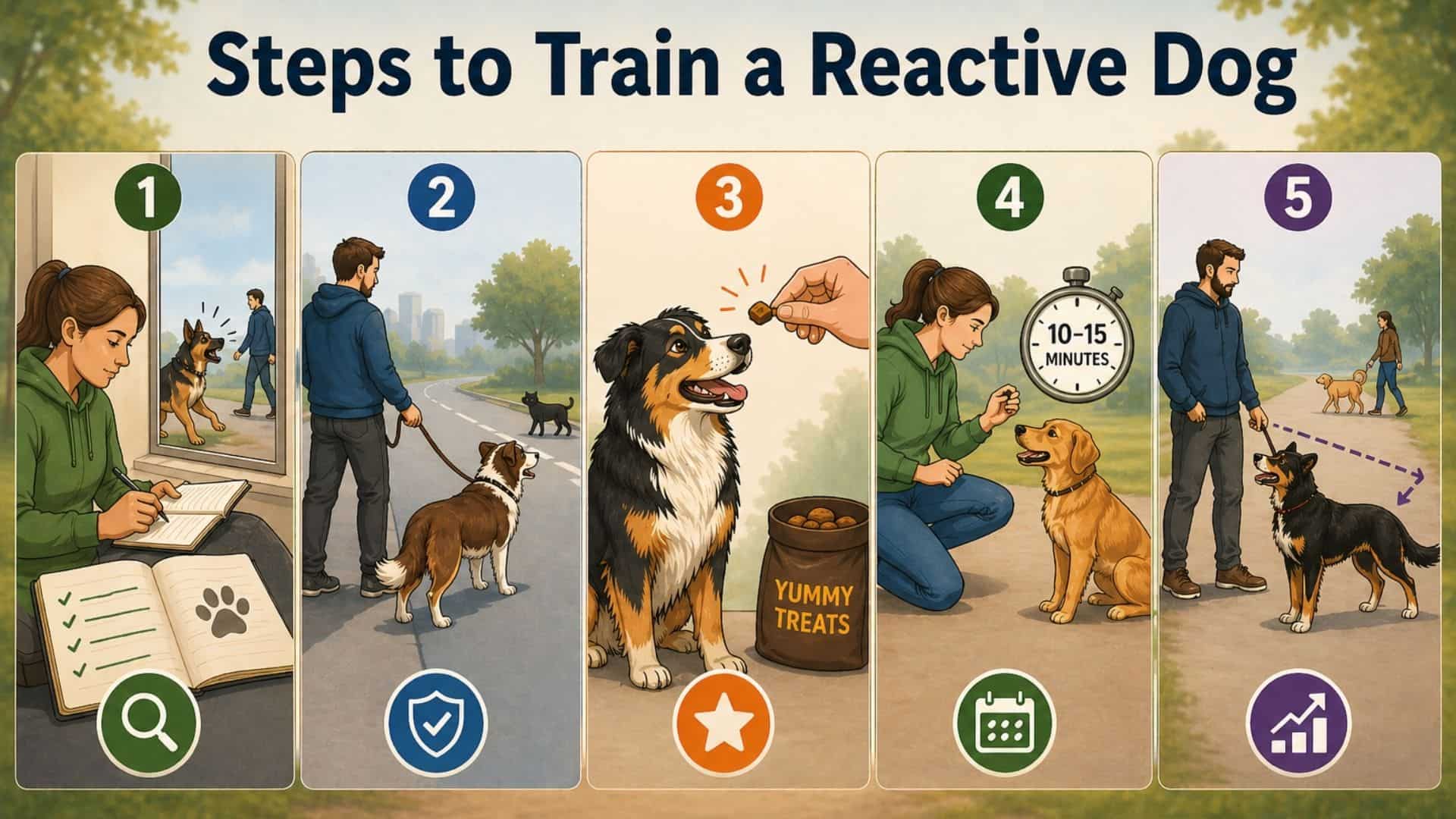
Training a reactive dog did not yield instant results, but following a structured, consistentapproach made a noticeable difference over time. Learning how to train a reactive dog required patience, observation, and daily effort.
1. Identify Triggers and Track Patterns
Progress started with understandingwhat caused reactions. Certain dogs, loud sounds, crowded spaces, or unfamiliar people triggered instant responses.
Writing these down in a simple journalmade patterns easier to spot. It also helped focus on situations that needed the most work.
In most cases, early improvements were evident within a few weeks, while long-term changes required sustainedeffort over months.
2. Create Distance With Your Dog
Maintaining asafe distance from triggers was essential in the early stages. When a dog is too close to a trigger, it becomes difficult for them to focus or respond to commands.
By staying at a comfortable distance, the dog remained calm and below its reaction threshold.
This created a controlled environment where training could begin without fear or stress. Over time, this distance served as a foundation for building confidence and gradually introducing more challenging situations.
3. Use Rewards That Actually Matter
Usinghigh-value treatsplayed a major role in gaining attention and reinforcing positive behavior. Regular kibble was not enough in distracting environments, so switching to treats the dog truly loved made a big difference.
These rewards helped redirect focus quickly and encouraged calm responses when facing triggers.
Consistently pairing triggers with something positivealso helped change the dog’s emotional response over time.
4. Shorter Sessions of Training
Keeping training sessions short and focused prevented mental fatigue and frustration. Long sessions often led to overstimulation, which could trigger setbacks.
Instead, short sessions of 10 to 15 minutes worked best.
Practicing regularly in controlled environments helped reinforce learning without overwhelming the dog. This consistency allowed steady progress while maintaining a positive training experience.
5. Reducing Distance over Time
Once the dog became more comfortable, the distance from triggers was slowly reduced. This step required patience, as rushing the process could undo previous progress.
Each small improvement built confidence and helped the dog stay calm in situations that once caused strong reactions.
Over time, thesegradual adjustments transformed stressful triggers into manageable and predictable experiences, leading to long-term behavioral improvement.
Reactive Dog Training Experience: Real Owner Insights
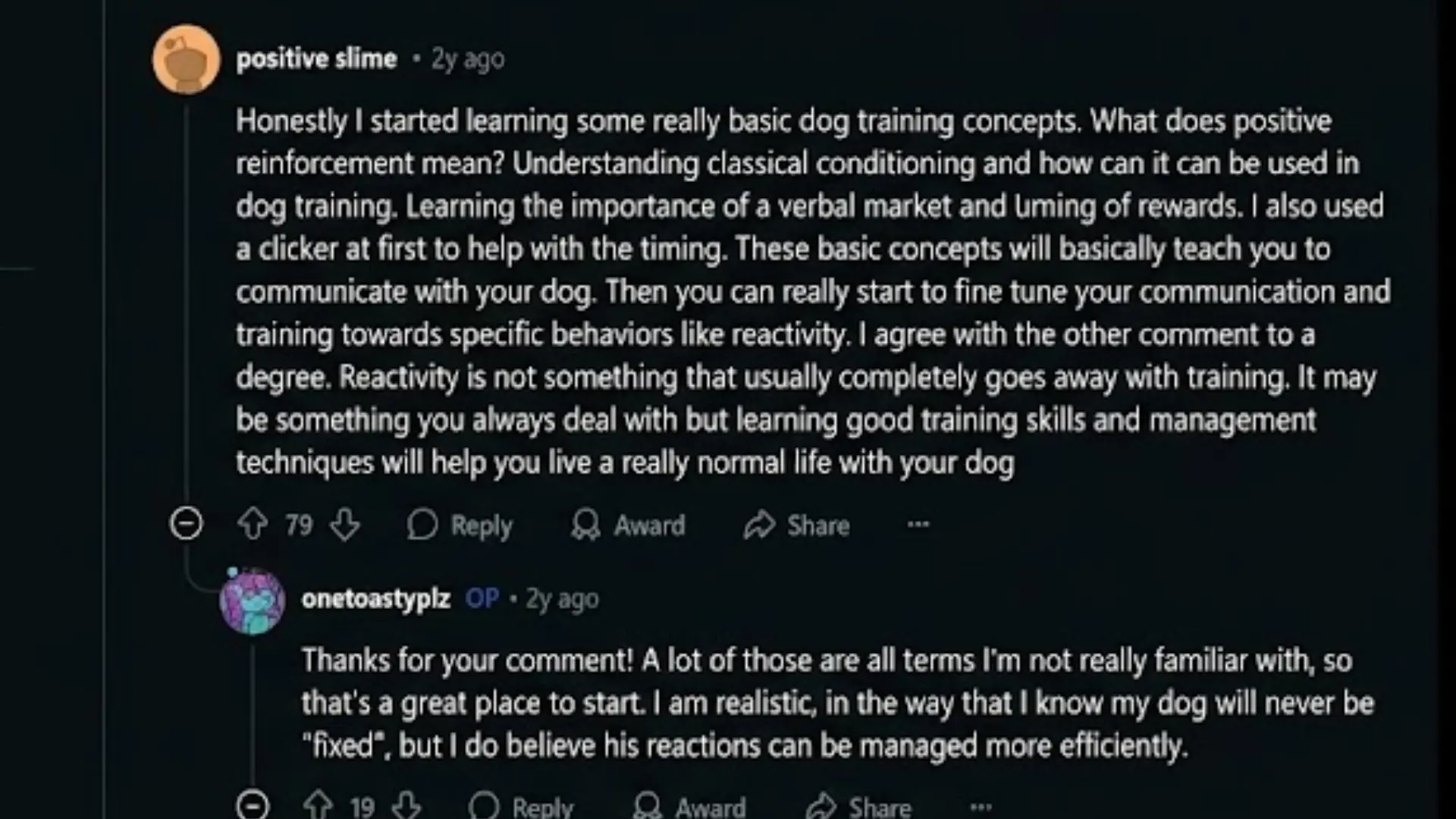
This Reddit discussion reflects a very common experience among dog owners dealing with reactivity.
Many people turn to Reddit when they feel stuck, especially after investing in training programs that did not deliver expected results.
The post highlights confusion, frustration, and the financial burden that can result from choosing the wrong approach without sufficient research. It also shows a strong desire to restart training, but is limited by cost.
The response shared on Reddit offers a more practical perspective, focusing on understanding basic training concepts like positive reinforcement, timing, and communication.
It explains that reactivity may not completely disappear but can be managed with consistency and realistic expectations. Tools like clicker training and structured methods can improve communication between the dog and owner.
Overall, the exchange shows that progress comes from patience, proper guidance, and consistent effort rather than quick solutions.
Best Training Techniques for Reactive Dogs
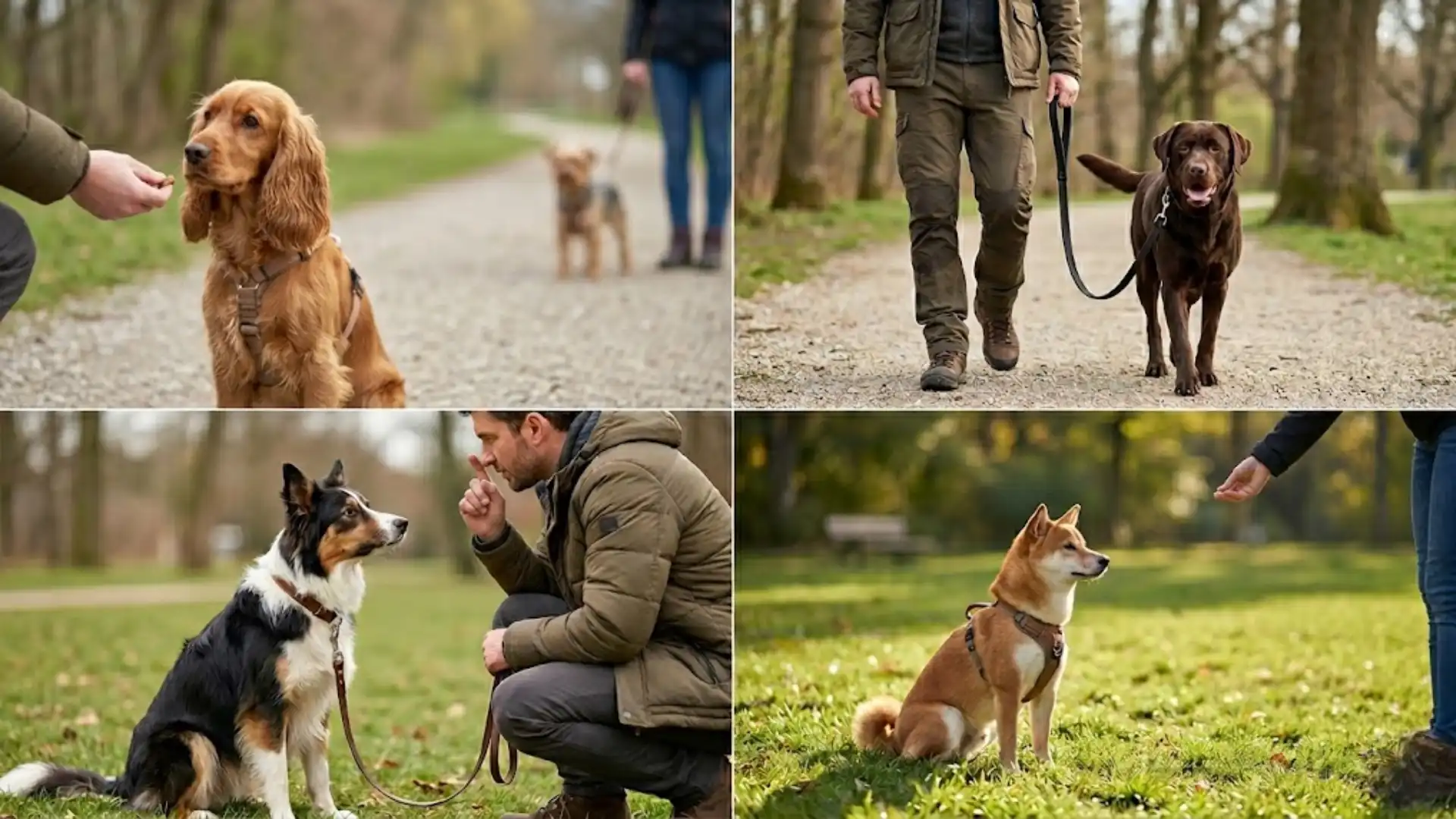
Some techniques stood out and made a real difference when learning how to train a reactive dog in everyday situations. Instead of trying random methods, focusing on a fewproven approaches helped build better control & confidence.
- “Look at That” (LAT) method in action: This method helped turn triggers into training opportunities. Each time the dog noticed a trigger without reacting or marking, a calmer response built over time.
- Loose-leash walking for reactive dogs: Keeping the leash relaxed reduced tension and prevented stress from being transferred to the dog. Working on how to stop pulling on walks was one of the first steps that made reactive moments noticeably easier to manage.
- Teaching focus commands like “watch me.”: Simple cues redirected attention back to the handler. This made it easier to break fixation on triggers and regain control quickly.
- Creating safe training environments: Practicing in quiet, controlled areas first allowed for better learning and built confidence before facing real-world distractions.
Best Tools and Setup for Training a Reactive Dog
A consistent setup created a better structure during training sessions. Environment, timing, and preparation played a key role in shaping steady behavior.
Keeping things simpleand predictable made it easier to guide progress without confusion.
A well-fitted harness paired with a strong leash improved control without adding pressure or discomfort.
High-value treatskept attention strong and allowed precise reward timing, which reinforced calm behavior effectively.
Quiet areas with fewer distractions supported better focus and reduced overwhelming reactions during early training stages.
Keeping rewardsready at all times ensured quick responses, while simple and repeated commands clarified expectations and made learning easier during walks and training sessions.
Common Mistakes to Avoid When Training a Reactive Dog
A consistent training setup often gets ignored, causing slower progress and confusion during daily sessions. Many owners unknowingly use the wrong tools, which creates discomfort and increases stress rather than improving control.
Using low-value treats in distracting environments reduces motivation. And also, training in crowded or noisy areas too early can overwhelm the dog and trigger unwanted reactions quickly.
Inconsistent timing of rewards makes it harder for the dog to clearly understand which behavior is expected. Repeating too many commands without proper clarity can confuse the dog over time.
Skipping short and focused sessions often leads to mental fatigue. Ignoring small improvements can slow overall progress, as these moments indicate behavior change
Conclusion
Training a reactive dog changes more than just behavior during walks. It builds awareness, timing, and a deeper understanding of how a dog responds to the world.
Progress may feel slow in the beginning, but small improvements add up in ways that are easy to overlook at first.
A calmer reaction, a shorter recovery time, or better focus are all signs that the process is working.
Consistency remains the biggest factor. Sticking to simple methods, maintaining distance, and rewarding calm responses create lasting change.
Every step forward strengthens trust and makes daily situations easier to handle.
If this journey has started or feels overwhelming, keep going. The right approach can turn reactive moments into manageable ones with time and effort.
Frequently Asked Questions
Can a Reactive Dog Ever Become Completely Calm?
Some dogs improve to the point where reactions are minimal and manageable. Full calmness depends on the dog’s history, consistency of training, and environment.
How Long Should Daily Training Sessions Be for a Reactive Dog?
Short sessions of 10 to 15 minutes work best. Longer sessions can overwhelm the dog and slow progress.
Should I Avoid All Triggers While Training a Reactive Dog?
Avoiding triggers completely is not the goal. The focus should be on controlled exposure at a safe distance where the dog can stay calm. This helps build better responses over time without overwhelming the dog.