Your cat has a way of making discomfort look personal. One minute, she is curled up like nothing is wrong, and the next, she is scratching her ears, shaking her head, and dodging your hand like you caused the problem.
It is easy to laugh it off at first because cats do have a flair for drama.
But repeated ear scratching deserves a second look. Small changes in a cat’s behavior often appear before the real problem becomes obvious.
Cats most commonly get ear mites through direct contact with an infected animal.
A quick greeting with a stray, shared bedding with a housemate, or mutual grooming for a few minutes can be enough to pass them along.
Maybe it is nothing serious, or maybe it is the first sign of something that needs attention. The hard part is knowing when to stop guessing.
If your cat keeps going back to her ears, that tiny habit may be trying to tell you more than you think.
What are Ear Mites in Cats?
Ear mites are microscopic parasites known as Otodectes cynotis that live inside a cat’s ear canal.
They feed on skin oils and earwax, which makes the ear canal an ideal place for them to survive, reproduce, and spread if left untreated.
These parasites complete their life cycle in about three weeks, so a small problem can quickly turn into a severe infestation.
Kittens face a higher risk because their immune systems are still developing, while cats in multi-pet homes are more exposed through grooming, shared sleeping spaces, and close contact. Ear mites stay around the ear canal.
They do not travel through the blood or burrow deep into the skin, but they cause enough irritation, dark debris, and discomfort that most cats need proper veterinary care to clear the infestation.
Causes of Ear Mites in Cats
Direct contact with an infected animal is how ear mites spread in almost every case. A cat does not need to be in a fight or have any kind of wound for transmission to happen.
A quick sniff-and-greet with an infected stray, a nap on the same blanket as an infested housemate, or even mutual grooming for a few minutes can be enough.
1. Contact with Infected Cats or Dogs
The most common cause is direct contact with an infected animal. Ear mites spread easily through grooming, sleeping close together, or brief greetings.
Dogs often carry ear mites with fewer visible symptoms, acting as quiet spreaders in many households. If one pet has mites, the others can pick them up quickly through normal contact.
Understanding how ear mites in dogs present differently can help you spot the problem across all your pets at once, not just the one showing obvious signs.
2. Outdoor Exposure
Outdoor cats face constant risk from stray, feral, and wild animals.
A single encounter with an infected cat or wildlife, such as foxes, can quickly spread mites. Because ear mites are contagious, even brief contact can expose roaming cats to infestation.
Parasites like ear mites are just one of several indoor parasite risks worth understanding if you share your home with other pets or have recently brought a new pet into your home.
Outdoor spaces make it much harder to track that hidden exposure.
3. Shared Bedding and Grooming Tools
Ear mites can survive a few days off a host on blankets, beds, and brushes.
Shared items in multi-cat homes can become hidden sources of reinfection because mites are contagious and can move from one animal to another via recently used surfaces.
A cat may pick them up after resting in the same bed or using the same grooming brush. Washing these items regularly in hot water helps break the cycle and lowers the chance of repeated spread.
4. Shelter and Rescue Environments
Shelters and rescues frequently experience outbreaks due to close quarters.
Even healthy-looking cats can harbor mites without obvious signs, since ear mites are contagious before symptoms become apparent.
Cats may share cages, bedding, grooming tools, or play spaces, increasing the likelihood that mites will spread. This is why newly adopted cats should receive a prompt vet check after coming home.
Early screening protects the new cat and reduces the risk of passing mites to existing pets in the household.
5. Mother-to-Kitten Transmission
Kittens are among the most common ear mite patients seen in clinical practice. Many of them catch mites directly from their mother during nursing and close contact in the first weeks of life.
Because kittens spend so much time nestled against their mother, transmission can happen before the infestation is even visible.
If you have a nursing queen in your home, getting her checked promptly is the fastest way to protect the whole litter.
Signs Your Cat Has Ear Mites
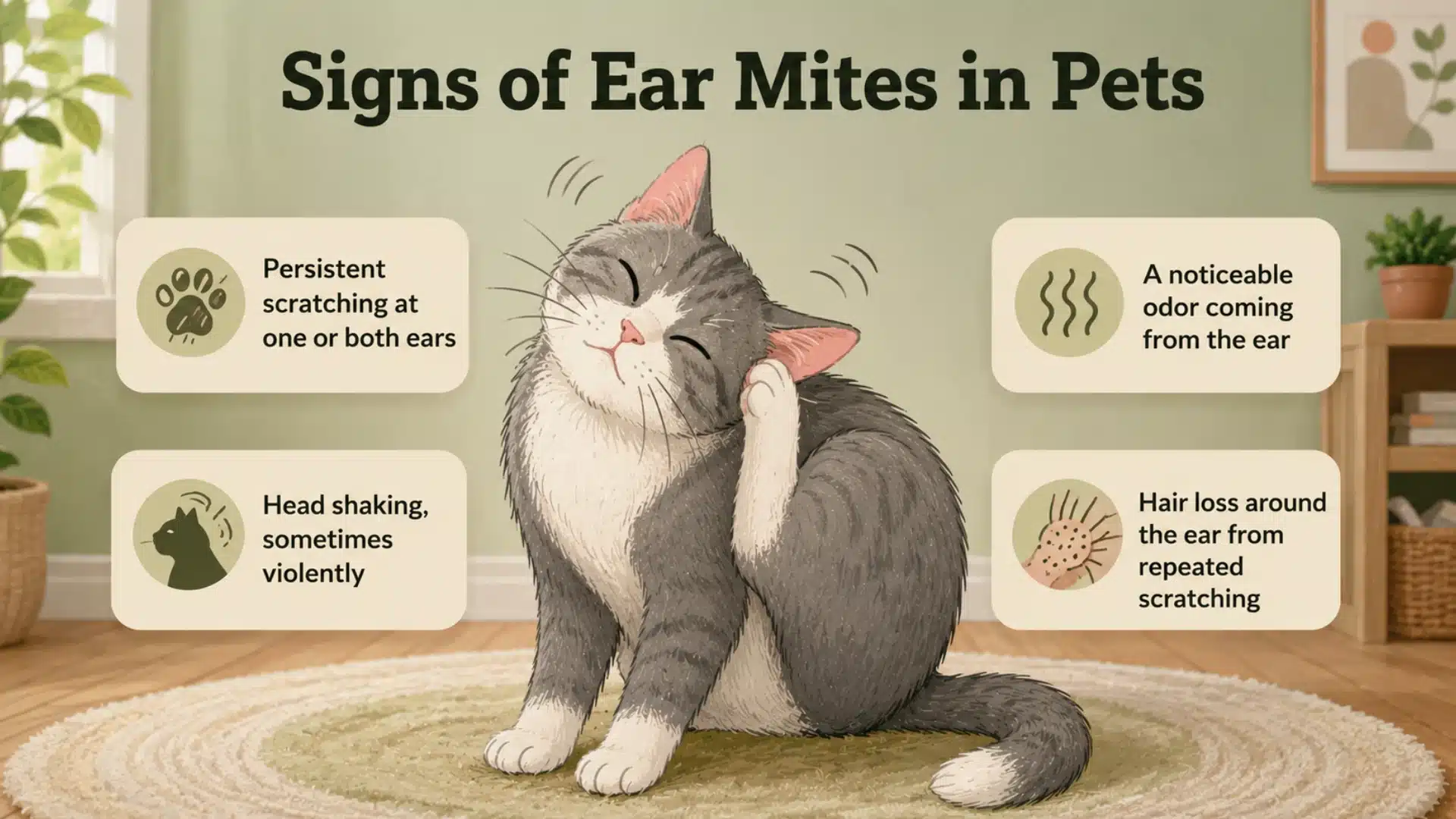
The most reliable sign of ear mites is dark, crumbly debris in the ear canal that looks like coffee grounds. This consists of earwax, dried blood, and mite waste.
Other signs include:
- Scratching: Your cat may scratch one or both ears due to intense irritation.
- Head shaking: Frequent shaking occurs when debris and inflammation build up.
- Bad odor: A strong smell may indicate mites, infection, or both.
- Hair loss: Repeated scratching can cause thinning around the ears.
Not every ear issue means mites. Light wax or occasional scratching can be normal, but thick discharge, redness, pain, or repeated behavior needs a vet visit.
If your cat is also sneezing frequently, mention it during the same vet visit.
Our guide on frequent cat sneezing explains what those patterns can mean and when a separate condition may be involved.
What Happens if Ear Mites Go Untreated?
Most ear mite cases resolve cleanly with treatment. The problem is when they go unaddressed for weeks. Left untreated, ear mites cause secondary bacterial or yeast infections in the ear canal.
The constant scratching damages the sensitive lining, which creates an opening for bacteria to take hold.
In severe cases, the infection can spread deep enough to rupture the eardrum, leading to permanent hearing loss. There is also the risk of feline mange.
If the mites spread beyond the ears to the surrounding skin, the result is widespread itching, hair loss, and inflamed skin that is much harder to treat than the original infestation.
In my experience, delay is what turns a manageable case into a painful one. Cats that come in within the first few weeks almost always clear up quickly.
The ones that come in after months of scratching tend to have secondary infections that need separate treatment on top of the mites themselves.
How Do Vets Diagnose Ear Mites in Cats?

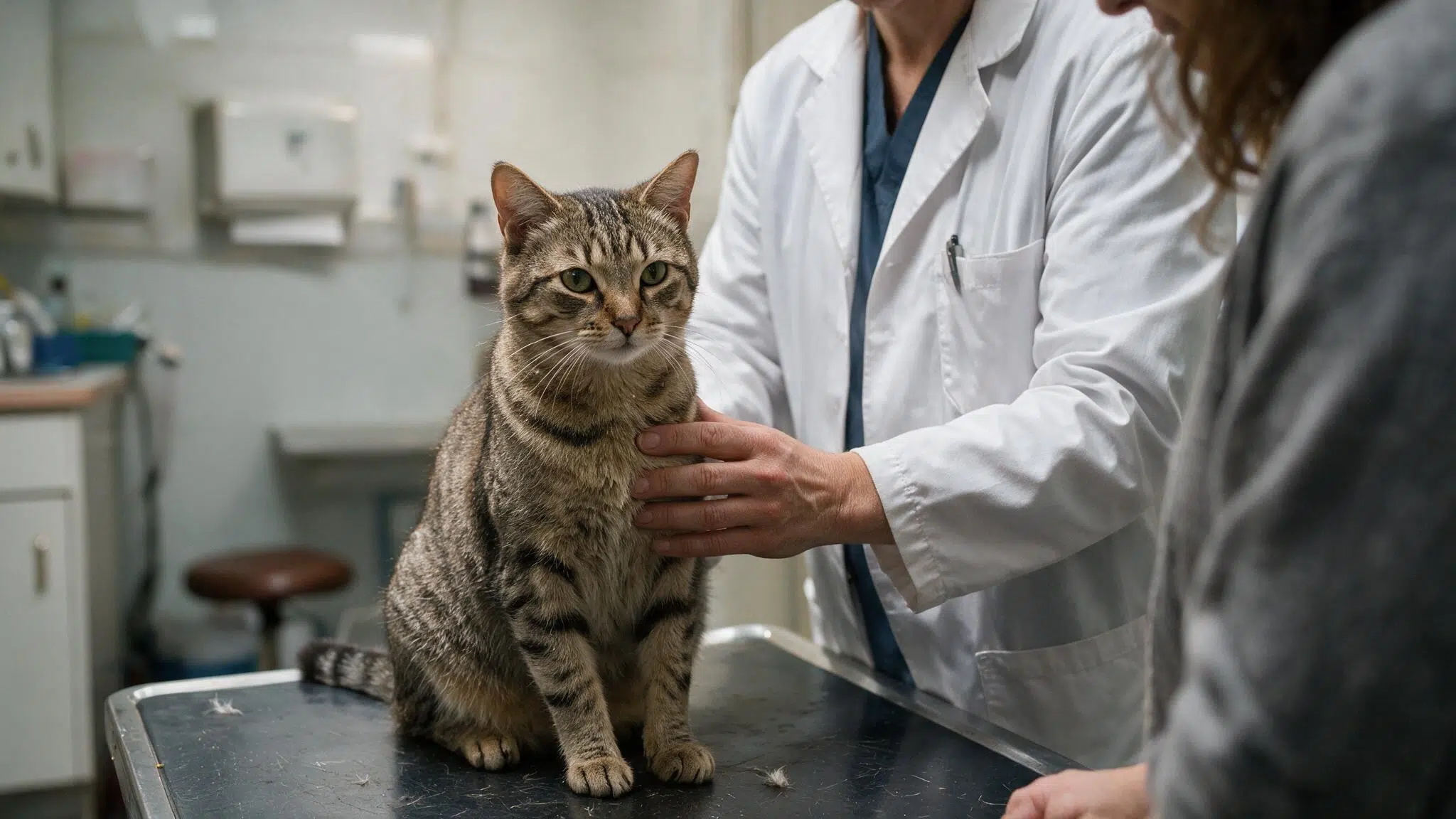
Getting a vet diagnosis before treating matters because ear mite symptoms can look like bacterial or yeast infections. Treating the wrong thing means the real problem keeps getting worse.
- Ear canal exam: Your vet looks inside the ear canal using an otoscope, which is a handheld tool. It helps them check how deep the irritation goes.
- Debris sample: Your vet collects ear debris, rolls it onto a glass slide, stains it, and checks it under a microscope. This helps find mites, mite eggs, bacteria, or yeast.
- Final check: The visual exam and microscope check usually confirm the diagnosis. They also help rule out infections that need a different treatment plan.
In my experience, the debris pattern often tells a clear story early, but the slide check is still worth doing.
Can Ear Mites Spread to Humans?
Yes, ear mites can spread to humans from cats, but this is rare. They may briefly land on human skin and cause mild itching, redness, or irritation in some cases.
However, ear mites do not usually live, reproduce, or cause a full infestation in people the way they do in cats. Human risk remains very low, but basic hygiene still matters.
Wash your hands after handling a cat with suspected ear mites, avoid close face contact until your cat is checked, and clean shared bedding.
The best way to break the cycle is to have every pet in the home checked by a vet and treated if needed.
How to Treat Ear Mites in Cats?

Once your vet confirms ear mites, treatment usually has three parts: knowing when to call, using the right medicine, and stopping reinfection.
This section is for general information only and is not a substitute for veterinary advice. A vet-confirmed diagnosis should come first, as ear mites can mimic bacterial or yeast ear infections. Consult your vet before starting any treatment.
1. When to Call a Vet?
Call your vet if you see coffee-ground debris, constant scratching, swelling, bleeding, strong odor, head tilting, balance issues, disorientation, or ear pain.
These signs can mean mites, infection, or deeper ear damage.
Quick care matters because untreated ear problems can move from annoying to painful pretty fast.
2. What Treatment May Include?
Once mites are confirmed, your vet may prescribe topical medicine such as selamectin, moxidectin, or ivermectin.
These treatments are used to kill the mites, but the exact option depends on your cat’s age, health, and ear condition, which will be prescribed by the vet itself.
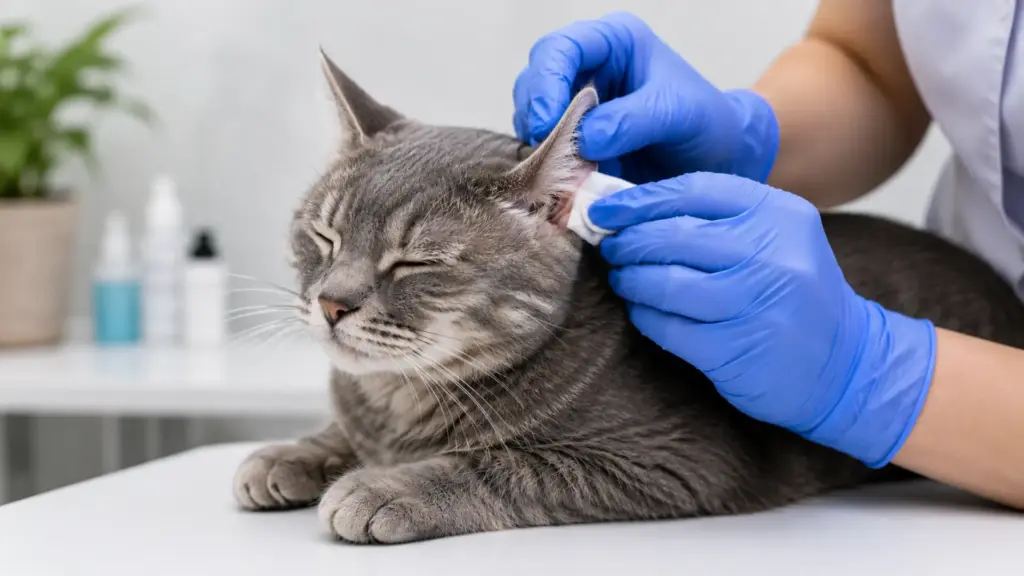
Some cats may also need vet-approved ear drops placed directly into the ear canal. If wax or debris is heavy, professional cleaning may be needed first.
That cleaning matters because medicine cannot work well if it cannot reach the mites properly.
3. How To Prevent Reinfection?
Every pet in the home should be checked because ear mites can move between cats, dogs, and other close-contact animals.
Treating only one cat can leave mites on another pet, which can restart the same problem within weeks. Wash bedding, soft toys, shared blankets, and favorite sleeping spots in hot water when possible.
The goal is not to deep-clean the whole house like crazy, but to remove the common places where mites may spread again.
Preventing Ear Mites in Cats
Prevention comes down to limiting exposure and staying consistent with routine care. You can’t put your cat in a bubble, but you can significantly reduce the risk.
- Keep cats indoors or supervise outdoor time: Indoor cats have lower exposure to ear mites. Limit contact with strays or unfamiliar neighborhood cats.
- Use safer outdoor alternatives: A catio or supervised outdoor time lets your cat enjoy fresh air with less parasite risk.
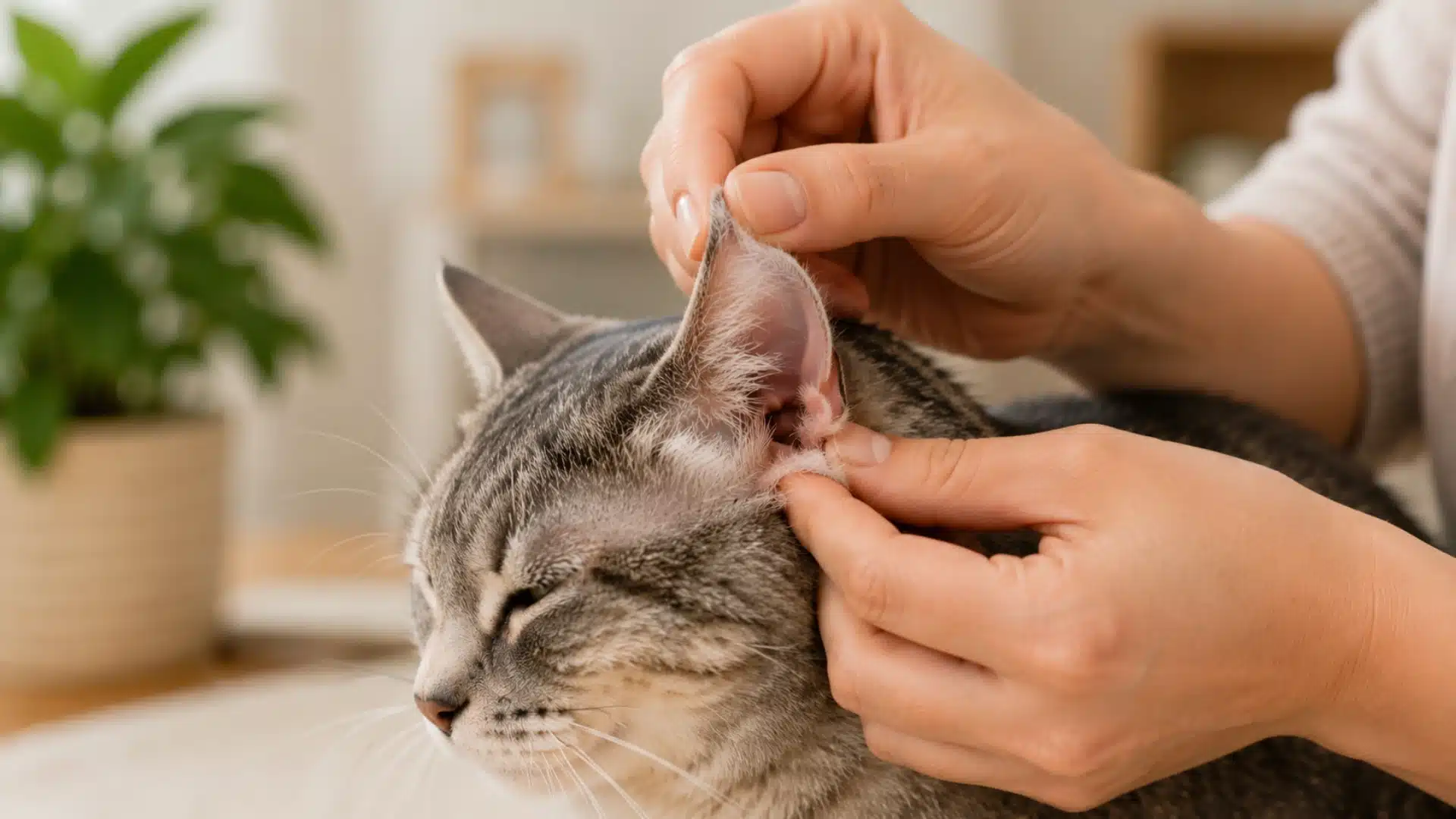
- Check ears regularly: Healthy ears should look pale pink, with little wax and no strong odor.
- Watch for warning signs : Dark debris, redness, swelling, scratching, or unusual odor means you should contact your vet.
- Treat all pets together: If one pet has ear mites, every cat and dog in the home should be checked and treated if needed.
Conclusion
When a cat keeps scratching her ears, it is hard not to worry. She cannot explain the itch, the pain, or why she suddenly pulls away from your hand. All you see is a small change that no longer feels small.
Ear discomfort can quietly wear a cat down, especially when scratching, head shaking, or irritation keeps coming back. The kindest thing you can do is stop guessing and let your vet check what is really happening.
A quick visit can bring relief sooner, prevent complications, and protect the other pets in your home.
If your cat has dealt with ear mites before, share what helped her in the comments. Another worried pet parent may find exactly what they need.
Frequently Asked Questions
Can Indoor-Only Cats Get Ear Mites?
Yes, though the risk is much lower. Indoor cats can still be exposed through contact with a newly adopted pet, a visitor’s dog, or a human who recently handled an infected animal.
Regular ear checks are a good habit even for strictly indoor cats.
How Long Do Ear Mites Live off a Host?
Ear mites can survive for a few days without a host in warm, humid conditions.
This is long enough to transfer via bedding, grooming tools, or soft surfaces that an infested animal has used recently. Washing shared items in hot water removes the risk.
Are Ear Mites the Same in Cats and Dogs?
Yes, the same species infests both cats and dogs. Cats tend to show more obvious symptoms, while dogs can carry a significant infestation with less visible irritation.
This is why treating all household pets together is so important.
Can You See Ear Mites with the Naked Eye?
Technically, yes, but they’re tiny enough to miss easily. Under bright light, you might see very small white specks moving in the ear canal, but most people can’t reliably spot them without magnification.
The debris they leave behind is a much clearer indicator than trying to spot the mites themselves.