Small pets can fool you at first glance. A hamster and a gerbil may both look cute, tiny, and easy to manage, but they do not live, act, or need care in the same way.
In my work as a veterinarian, I often remind new pet owners that the best choice is not always the animal that looks the sweetest in the store.
The right choice depends on sleep schedule, social needs, handling comfort, space, and daily care. This hamster vs gerbil guide will help you understand the real differences before bringing one home.
You will learn how their personalities, activity levels, housing needs, lifespan, and care routines compare, so choosing the better small pet feels simple and practical.
Are Hamsters and Gerbils From the Same Family?
Hamsters and gerbils are both rodents, but they belong to different subfamilies. Gerbils come from the Gerbillinae subfamily and originated in Africa, the Middle East, and Central Asia. Hamsters belong to the Cricetinae subfamily and are native to Europe and Asia.
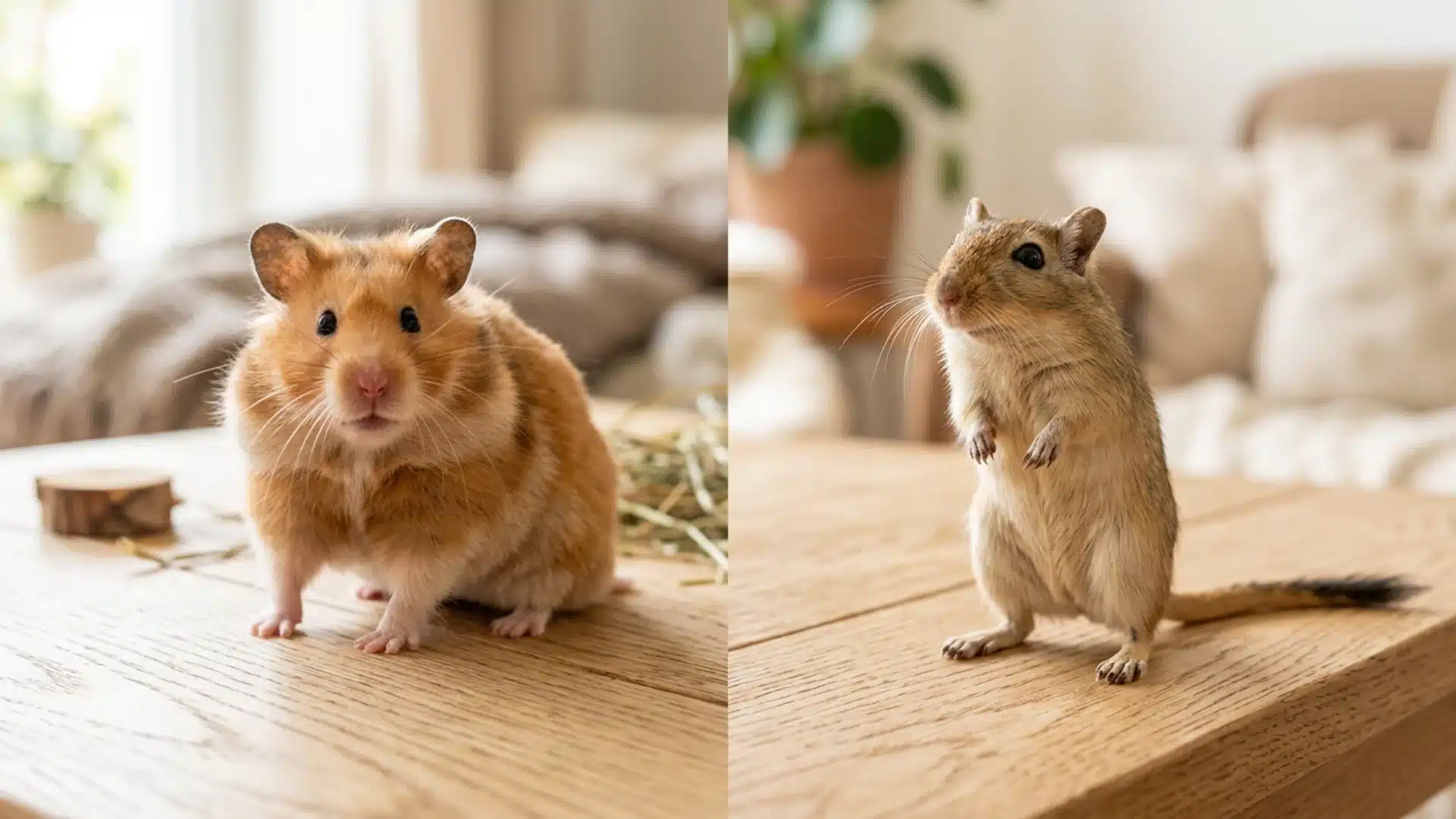
That’s why their bodies, habits, and care needs don’t match up. Hamsters have round, compact bodies, short tails, and cheek pouches for hoarding food.
Gerbils have slimmer builds, long furry tails, and strong back legs built for jumping and digging. They’ve evolved for completely different environments, and that shows once you get them home.
Hamsters also prefer living alone, while gerbils genuinely need a same-sex companion to thrive. That single difference shapes nearly every care decision you’ll make.
Hamster vs Gerbil: Key Differences

Hamsters and gerbils may look similar in a pet store, but their body shape, tail, face, size, and care needs make them different pets.
1. Body Shape
Hamsters usually have a round, compact body with short legs and a stockier build. Syrian hamsters look especially broad because of their larger body size and full cheeks.
Gerbils have a slimmer frame with longer back legs and a lighter build. Their body shape helps them stand upright, jump, and move quickly through tunnels.
This difference matters for care because gerbils need room for digging and active movement, while hamsters need deep bedding and safe floor space for burrowing.
2. Tail
The tail is one of the clearest physical differences. Gerbils have long, furry tails that often measure close to the length of their bodies, and the tail helps with balance during quick movement and standing.
Hamsters have very short tails that are usually hidden under their fur. A hamster’s tail is not used much for balance or movement.
This makes identification easier for new owners. If the small pet has a long, visible, furry tail, it is a gerbil, not a hamster.
3. Face and Cheek Pouches
Hamsters often have round faces and large cheek pouches on both sides of the mouth. These pouches allow food, bedding, and nesting material to be carried from one area to another.
A hamster’s face can look much wider after storing food. Gerbils do not have the same cheek pouches. Their faces are slimmer, with more pointed snouts and a mouse-like side profile.
This gives gerbils a sharper look, while hamsters usually appear rounder and softer around the face.
4. Size
Size can vary by species, but Syrian hamsters are usually larger than gerbils in body length. A Syrian hamster commonly grows around 5 to 7 inches long.
Gerbils usually measure about 4 to 6 inches in body length, not including the tail. Dwarf hamsters are smaller and can be closer to gerbils in size.
In a hamster vs guinea pig vs gerbil comparison, guinea pigs are much bigger, often reaching 8 to 12 inches and needing a larger enclosure.
How Hamsters and Gerbils Behave Differently
Behavior often decides which pet is easier to care for. Hamsters usually suit owners who want one pet and have time in the evening. Gerbils suit owners who want active pets to watch during the day and can keep a same sex pair.
- Syrian hamsters should live alone because they can fight with another hamster.
- Some dwarf hamsters may live together, but fighting can still happen.
- Gerbils are social animals and usually do best with another gerbil.
- Hamsters are mostly active at night, while gerbils are more active during the day.
Hamsters can bite when startled or picked up too quickly. They’re not aggressive by nature, but they need time and patience to get comfortable with handling.
Gerbils are generally more curious and easier to pick up. They rarely bite and tend to warm up to gentle handling faster than hamsters do.
How to Care for a Hamster vs a Gerbil
Hamsters and gerbils both need a clean enclosure, deep bedding, chew toys, hiding spots, tunnels, and a safe exercise wheel.
The biggest difference is their social setup and daily routine. Most hamsters, especially Syrian hamsters, should live alone. Gerbils usually need a same sex companion because they are social animals.
- Hamsters: They need adequate floor space and at least 6 inches of bedding for burrowing. A 40-gallon tank or equivalent with good ventilation works well for Syrian hamsters. Wire cages from pet stores are often undersized and can cause stress.
- Gerbils: They need deep bedding too, since they dig tunnels and stay active throughout the day. A gerbilarium or large glass tank works well for a pair.
Both pets can eat species-appropriate pellets or food mixes with small portions of fresh vegetables. Avoid cedar and pine shavings because they can irritate the breathing. Spot-clean daily, replace dirty bedding as needed, and provide gerbils with safe sand for coat care.
Note: This section is for informational purposes only and does not replace veterinary advice. Always consult a qualified exotic animal vet for care guidance specific to your pet.
Hamster vs Gerbil Lifespan and Health
Hamsters typically live 2 to 3 years, with Syrian hamsters often reaching the upper end of that range.
Dwarf hamster species tend to average closer to 2 years.
Gerbils generally live longer, with an average lifespan of 3 to 4 years, and some well-cared-for individuals can reach 5 years.
That extra year or two may not sound significant, but it can make a big difference, especially for families looking for a longer-term pet.
Common health issues to watch for in each:
Hamsters:
- Wet tail (a bacterial infection, particularly in Syrians; can be fatal quickly)
- Respiratory infections from dusty bedding or cold drafts
- Overgrown teeth if they don’t have enough to chew
- Diabetes, particularly in dwarf species
Gerbils:
- Tumors (Mongolian gerbils are notably prone to scent gland tumors)
- Dental problems and abscesses
- Seizures triggered by stress or sudden noise (a real thing; it looks alarming but is often temporary)
- Tail degloving if handled by the tail
Both animals should see a veterinarian experienced with small exotic mammals within the first two weeks after coming home, and annually thereafter.
Most problems caught early are manageable. Most problems ignored are not.
Hamster vs Guinea Pig vs Gerbil: Quick Comparison
The table below provides a simple side-by-side look at each pet, making it easier to choose the right one.
| Feature | Hamster | Gerbil | Guinea pig |
|---|---|---|---|
| Size | 3-7 inches | 4-6 in (+ tail) | 8-12 inches |
| Lifespan | 2-3 years | 3-4 years | 4-7 years |
| Social needs | Solitary | Pair required | Pair/group preferred |
| Active hours | Night | Day | Day |
| Space needed | Moderate | Moderate | Large |
| Handling | Requires patience | Relatively easy | Generally calm |
| Maintenance | Low-moderate | Low-moderate | Moderate-high |
| Vitamin C needed | No | No | Yes (dietary) |
Which Pet is the Better Fit for Your Lifestyle?
By now, you’ve probably noticed that there isn’t a single “best” pet in the hamster vs guinea pig vs gerbil debate. The right choice depends on your schedule, available space, and how much interaction you’re looking for.
- Choose a Hamster: if you prefer a solo pet, have free time in the evenings, and enjoy building a one-on-one bond with your animal.
- Choose a Gerbil: if you enjoy an active, daytime pet that’s constantly exploring and interacting with its environment.
- A Hamster May Suit You Better: if you’re working with limited space and only want to care for one pet.
- A Gerbil May Suit You Better: if you’re a first-time owner who wants a curious, daytime-active pet that’s generally easy to observe and handle.
The best choice isn’t the cutest animal in the pet store. It’s the one whose natural behavior, social needs, and care requirements fit the way you actually live.
If you’re still weighing all your options, our guide to low-maintenance pets for busy owners covers hamsters alongside other small pets so you can see where they stack up.
Conclusion
Choosing between a hamster and a gerbil becomes easier when daily care, handling, space, and natural behavior matter more than looks.
Hamsters suit owners who want one small pet and can give attention during evening hours. Gerbils suit owners who can care for a same sex pair and enjoy watching active digging, climbing, and social behavior during the day.
Both pets need clean housing, safe bedding, chew toys, proper food, and gentle handling. A good match helps the animal feel secure and makes care more enjoyable for the owner.
Before bringing one home, think about schedule, budget, and space.
Have a favorite between the two? Share your thoughts in the comment section and help other readers choose wisely.
Frequently Asked Questions
Can a Hamster and a Gerbil Live Together?
No. Hamsters and gerbils should never share a cage. Their social behaviors are very different, and a hamster’s territorial nature can lead to serious fighting or injury.
Do Gerbils Smell More than Hamsters?
No. Gerbils typically have less odor than hamsters because they produce less urine and groom themselves frequently. With proper cleaning, both pets can be kept relatively odor-free.
Do Hamsters and Gerbils Recognize Their Owners?
Both can learn familiar voices, scents, and gentle handling routines. They may come closer when they feel safe, but they do not bond like dogs or cats.