

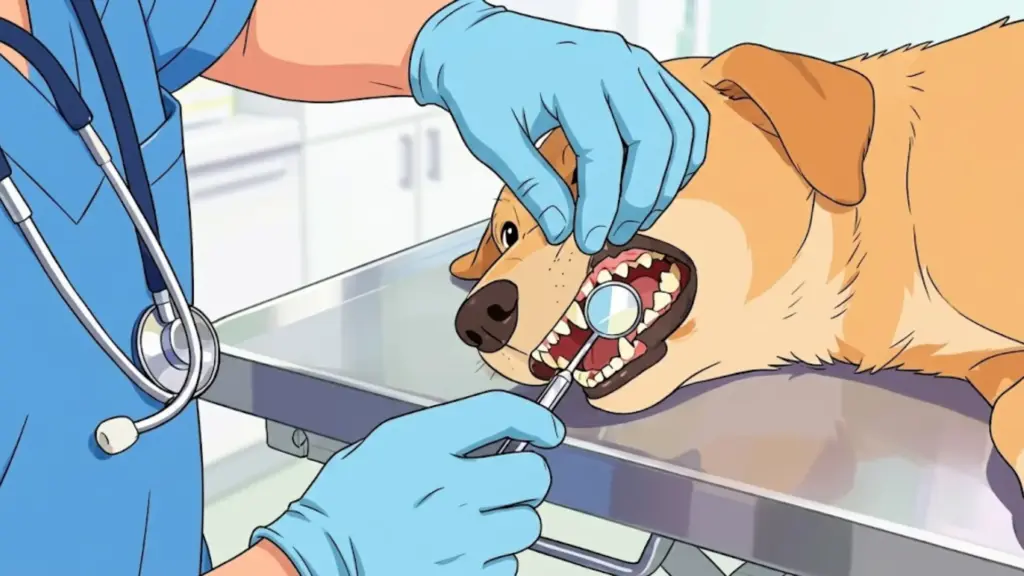
You noticed your dog’s breath lately. Maybe the gums look redder than usual, or your pup flinches when you touch near the mouth.
These aren’t just cosmetic quirks. They’re your dog’s way of telling you something is wrong underneath the gum line, where you can’t easily see.
Left untreated, plaque can harden into tartar, irritate the gums, and slowly damage the tissue and bone that hold each tooth in place.
The earlier signs are easy to miss, but they can lead to pain, infection, loose teeth, and trouble eating.
This blog walks through each stage of dog periodontal disease, what it looks like, how it progresses, and what you can actually do at each step to protect your dog’s health and comfort.
What is Dog Periodontal Disease?
Periodontal disease in dogs is an infection-driven breakdown of the structures that surround and support the teeth, including the gums, periodontal ligament, and jawbone.
It begins when plaque (a soft, sticky film of bacteria) builds up on the tooth surface.
If plaque isn’t removed through daily brushing, it hardens into tartar within 24 to 72 hours.
Tartar irritates the gum tissue, creates pockets where bacteria multiply, and triggers an inflammatory response that progressively destroys bone and soft tissue.
Untreated dental disease can let bacteria enter the bloodstream, potentially harming the heart, kidneys, and liver.
Small and toy breeds tend to be hit hardest because their teeth are often crowded into undersized jaws, accelerating plaque buildup.
Age matters too: the older the dog, the longer the disease has had to take hold.
Dog Periodontal Disease Stages
Dog periodontal disease stages show how gum disease moves from mild irritation to serious tooth and bone damage.
Stage 1: Gingivitis
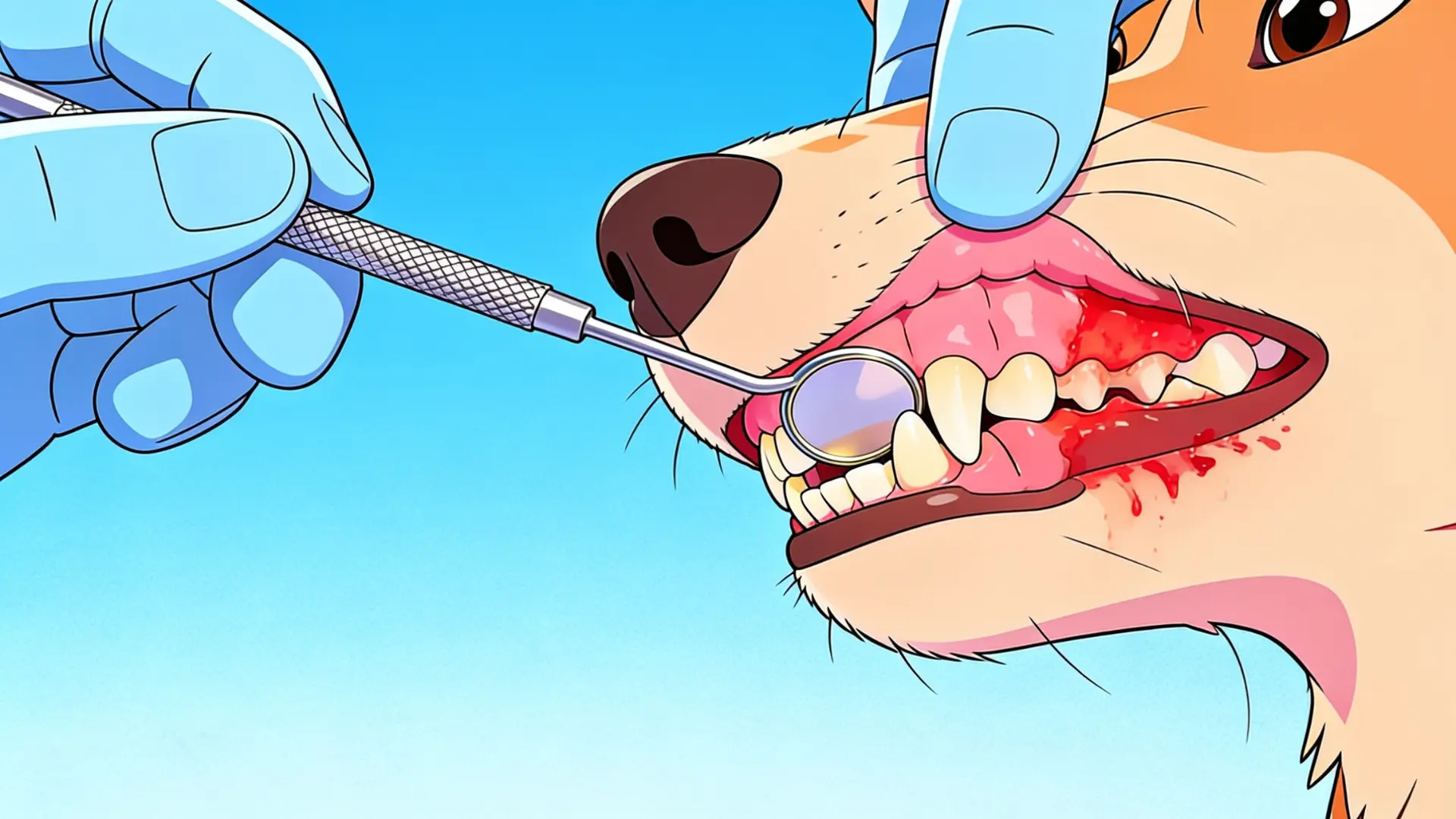
Gingivitis is the earliest and least severe stage of periodontal disease in dogs. At this point, inflammation is limited to the gum tissue itself; no bone loss has occurred yet.
What you’ll see:
- A thin red or pink line along the gum edge where it meets the teeth
- Mild gum swelling
- Early bad breath (halitosis)
- Light bleeding when chewing hard food or during brushing
Stage 1 gingivitis is fully reversible with professional dental cleaning and regular brushing.
The Cornell University College of Veterinary Medicine’s dental care guide confirms that daily brushing is the most effective single action for preventing disease from progressing past this stage.
Stage 2: Early Periodontitis
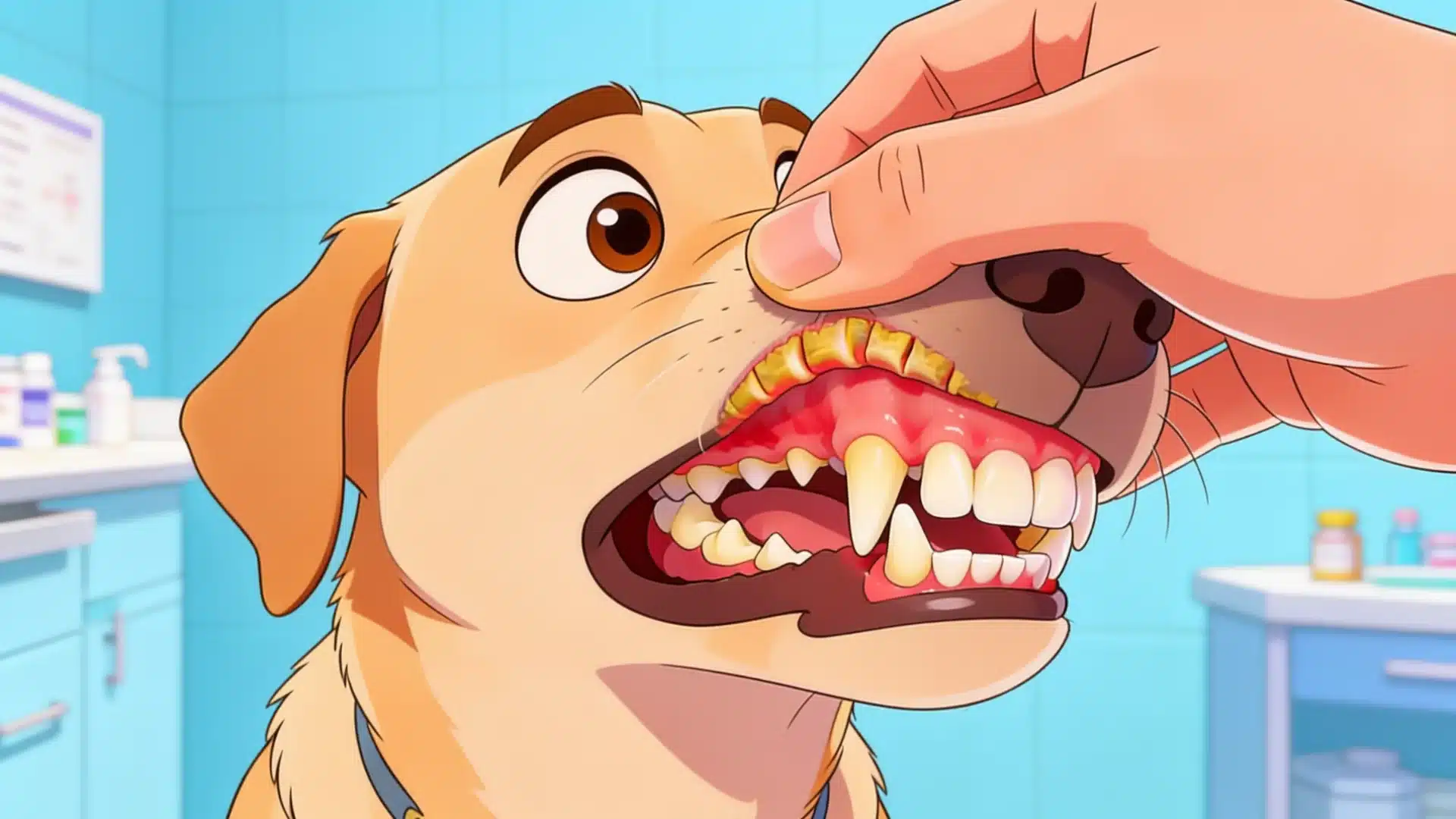
When gingivitis is left untreated, the infection spreads below the gum line and progresses to periodontitis.
At this stage, early bone loss (less than 25%) begins around the tooth root.
Small pockets form between the teeth and gums, trapping bacteria and gradually weakening the tissues and bone that support the tooth.
What you’ll see:
- More pronounced redness and swelling in the gums
- Visible tartar buildup on the tooth surface
- Noticeably worse breath
- Mild discomfort when eating hard kibble or chews
Stage 2 periodontal disease is still highly treatable but requires a professional dental procedure under anesthesia.
Understanding how dog tooth decay progresses alongside periodontal disease helps clarify why home plaque control matters so much between professional cleanings.
Stage 3: Moderate Periodontitis
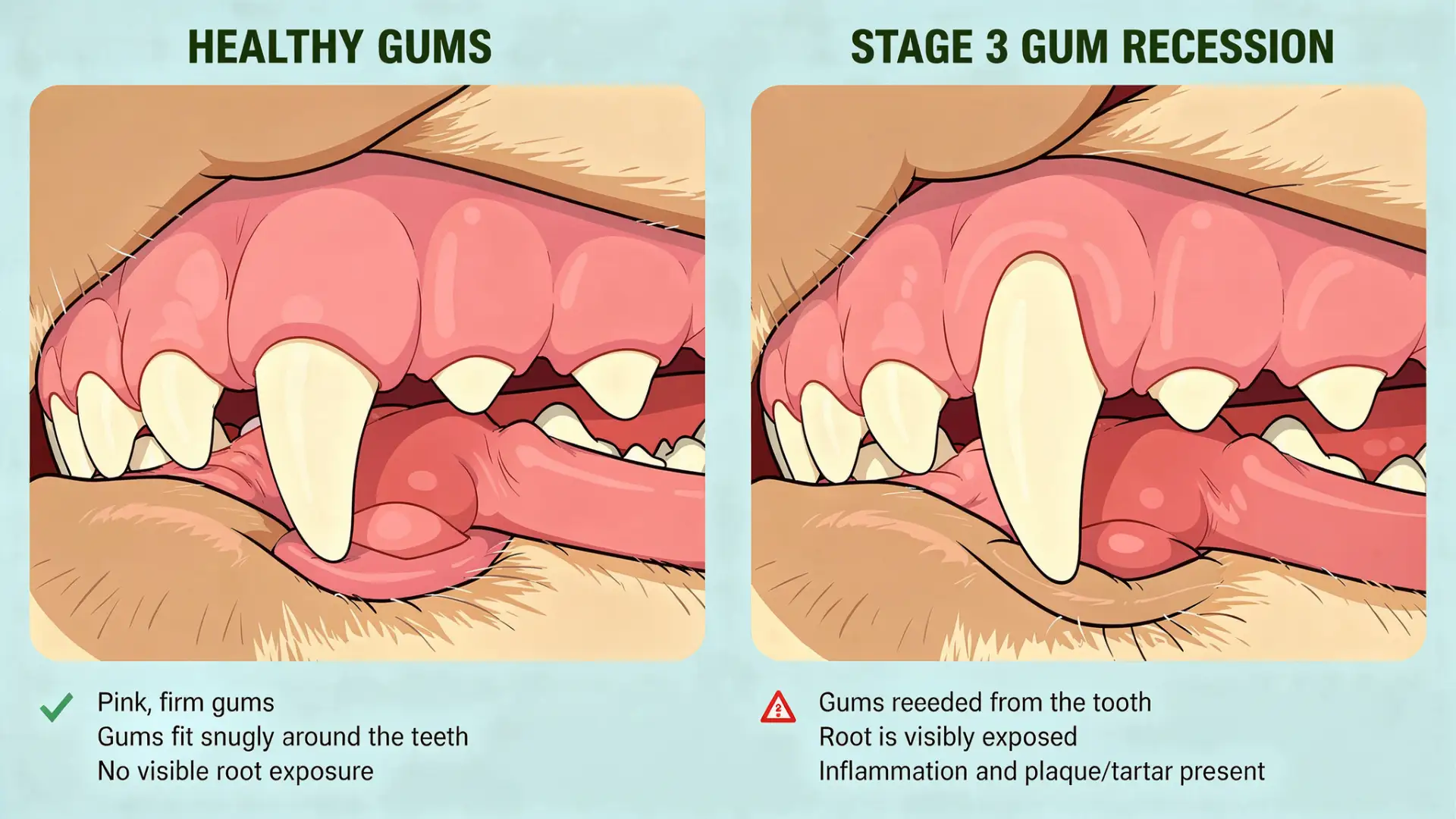
At Stage 3, 25–50% of the supporting bone is lost.
Deep gum pockets (4–6 mm) allow bacteria to reach the tooth roots and surrounding bone, causing significant damage
What you’ll see:
- Receding gums, with more of the tooth root visible
- Loose teeth or teeth that shift position
- Obvious pain signals: reluctance to eat hard food, pawing at the mouth, dropping food mid-chew, changes in eating behavior
- Stronger, persistent bad breath
- Occasional facial swelling near the jaw
Many dogs hide dental pain and may continue eating despite significant discomfort.
In Stage 3 periodontal disease, some teeth can be saved with advanced treatment, while others may require extraction, depending on the extent of support loss.
Knowing how often to brush your dog’s teeth after treatment helps prevent Stage 3 from progressing in dogs with salvageable teeth.
Stage 4: Advanced Periodontitis
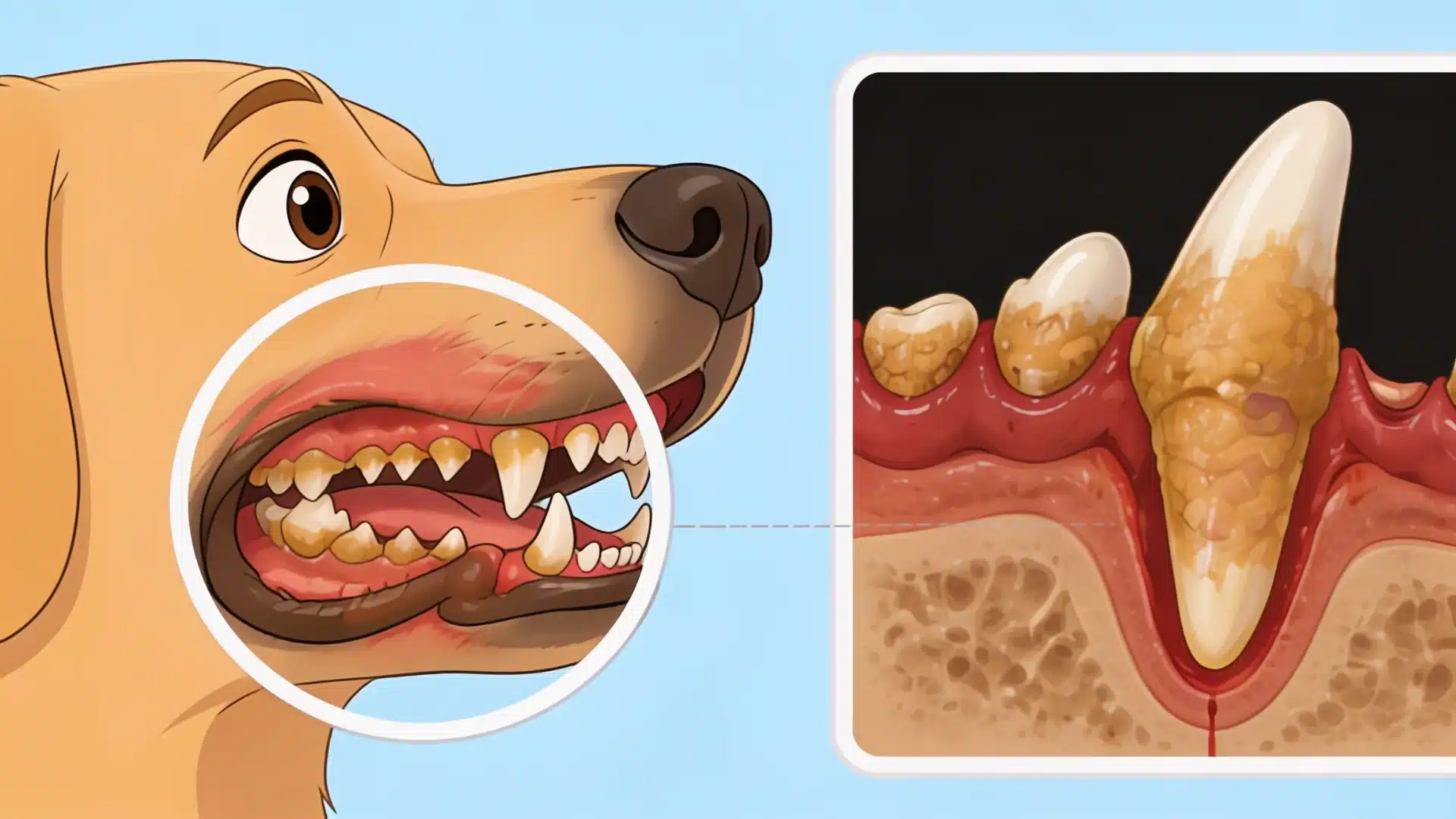
Severe periodontal disease with over 50% bone loss, deep gum pockets, exposed roots, and loose or missing teeth.
What You’ll See:
- Visibly loose or missing teeth
- Severely receding gums
- Mouth ulcers or open sores along the gum line
- Possible jaw fractures in small breeds (where bone loss has weakened the mandible significantly)
- Weight loss from chronic pain affecting the ability to eat
- Lethargy or behavioral changes from persistent discomfort
Advanced periodontal disease can impact overall health as bacteria enter the bloodstream. Stage 4 treatment often requires tooth extractions, along with pain relief, antibiotics, and a soft diet.
Periodontal Disease Stages in Dogs at a Glance
Each stage of dog periodontal disease shows a different level of gum, tooth, and bone damage. This table gives a quick look at how each stage appears, what signs to watch for, whether it can be reversed, and what treatment is usually needed.
| Stage | Bone Loss | Key Signs | Reversible? | Typical Treatment |
|---|---|---|---|---|
| Gingivitis | None | Red gum line, mild bad breath, light bleeding | Yes, fully | Professional cleaning and daily brushing |
| Early Periodontitis | Less than 25 percent | Visible tartar, worse breath, mild eating discomfort | No, but it can be stopped from getting worse | Dental cleaning under anesthesia and scaling below the gumline |
| Moderate Periodontitis | 25 percent to 50 percent | Loose teeth, receding gums, pawing at the mouth | No | Advanced dental procedures or extractions, depending on bone loss |
| Advanced Periodontitis | Over 50 percent | Missing teeth, ulcers, jaw problems, weight loss | No | Extractions, pain relief, antibiotics if needed, and soft food support |
Symptoms That Mean Your Dog’s Dental Disease May Be Getting Worse
Dental disease in dogs often starts with small signs, but it can get worse faster than many pet owners expect. If these symptoms appear together or keep getting worse, a vet dental checkup is the safest next step.
- Stronger bad breath: Mild dog breath can happen, but a strong rotten smell often means bacteria, plaque, tartar, or infection is building up around the gums and teeth.
- Red, swollen, or bleeding gums: Healthy gums should not bleed during normal eating or gentle brushing. Redness, swelling, or bleeding can mean gum inflammation is getting worse.
- Chewing changes: A dog that drops food, chews on one side, avoids hard treats, or stops playing with chew toys may be dealing with mouth pain.
- Loose or missing teeth: Adult dog teeth should stay firm. Loose teeth, shifting teeth, or sudden tooth loss may point to advanced periodontal disease.
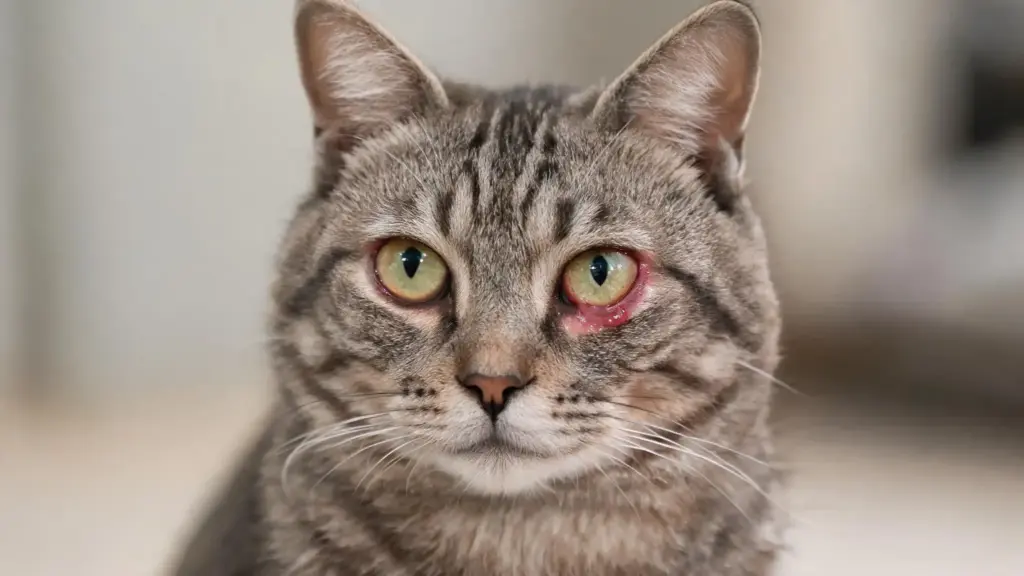
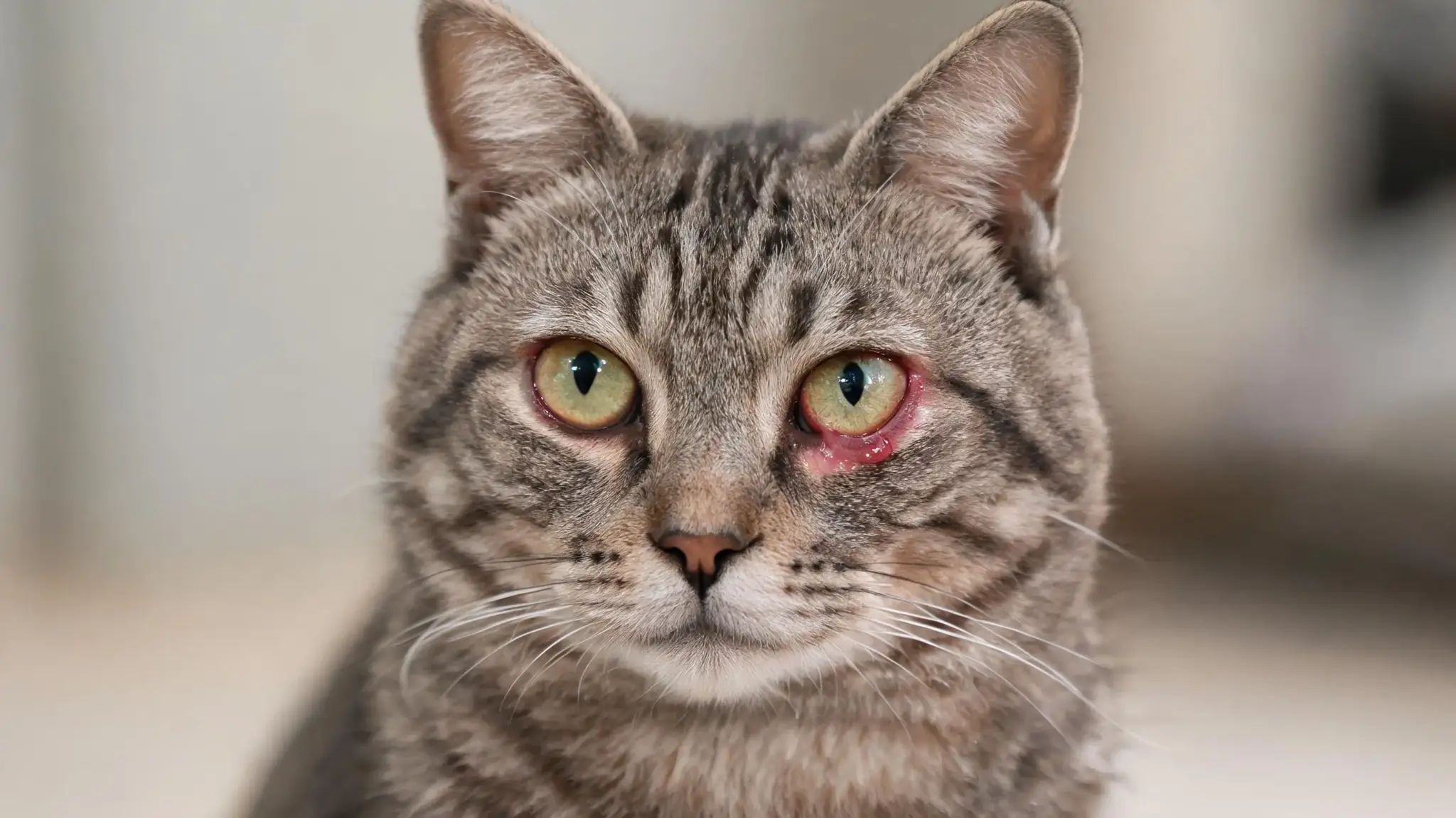
- Pus, drooling, or facial swelling: These signs can suggest infection or serious dental pain. Swelling near the mouth, jaw, or under the eye should be checked by a vet quickly.
When to Call Your Vet About Your Dog’s Teeth?
Most dental issues don’t announce themselves loudly, and that’s exactly what makes them dangerous.
A few situations where you should book a vet appointment without waiting for the next scheduled checkup:
- Persistent bad breath: A smell that doesn’t improve after brushing or dental chews is almost always a sign of active bacterial buildup below the gum line, not just food residue.
- Visible gum changes: Any redness, puffiness, or bleeding along the gum line that lasts more than a few days needs a professional eye.
- Eating behavior shifts: Dropping food, chewing only on one side, suddenly preferring soft food over kibble, or losing interest in meals altogether are pain signals most owners miss.
- Facial swelling or discharge: Swelling under the eye or along the jawline often indicates a tooth root abscess, which requires immediate attention.
If something looks or smells off between those visits, trust your instinct and call. Early intervention at any stage costs less, heals faster, and spares your dog unnecessary pain.
How Vets Diagnose the Stage of Periodontal Disease?
Vets diagnose the stage of periodontal disease by checking the teeth, gums, breath, pain signs, and the support around each tooth.
A simple look at the mouth can show tartar, redness, swelling, bleeding, or loose teeth, but it does not show the full problem.
Much of the damage can hide under the gumline, where owners cannot see it at home.
The American Animal Hospital Association’s dental care resources outline that professional cleanings under anesthesia, combined with dental X-rays, are the only reliable way to assess the extent of damage at this stage.
Probing helps measure gum pockets, while X-rays show bone loss around the tooth roots.
After this, the vet can tell whether the disease is mild, moderate, or severe and suggest the right treatment.
How to Prevent Dog Periodontal Disease at Home?

Prevention is simpler and much more affordable than treating advanced disease; daily brushing remains the gold standard. Beyond brushing, these approaches help:
- Vohc-Approved Dental Chews: Look for the Vohc seal on chews, treats, and water additives. Only Vohc-Approved products are proven to reduce Plaque or Tartar.
- Dental Diets: Some kibble formulas help clean teeth while chewing, but they should supplement, not replace, brushing.
- Water Additives: Added to the water bowl, these solutions reduce bacterial load in the mouth between brushings. They’re low-effort and generally well-tolerated.
- Regular Vet Checkups: Annual dental exams for dogs under 7 and twice-yearly for seniors. Many diseases visible only on dental X-Rays would go undetected without these visits.
Start dental care early; getting puppies comfortable with oral handling makes lifelong tooth care much easier.
A good introduction to teething puppy dental care sets the foundation for long-term oral health.
Conclusion
At the end of the day, your dog’s mouth is part of their daily comfort. Every meal, toy, treat, and lick depends on healthy teeth and gums.
That is why dog periodontal disease stages matter. They help you notice when a small gum problem may be turning into pain, infection, or tooth loss.
You do not need to diagnose your dog at home or feel guilty for missing early signs.
You only need to pay attention, compare what you see, and get a vet involved when something feels off. A cleaner mouth can mean easier eating, fresher breath, and a happier dog beside you.
Has your dog ever had dental disease or a vet dental cleaning? Share your experience in the comments below so other dog owners can learn from it too.
Frequently Asked Questions
Can a Dog Live a Normal Life with Periodontal Disease?
Early treatment helps dogs live comfortably with periodontal disease. Even after extractions, most return to normal eating and play.
Is Dog Periodontal Disease Painful?
Yes. Periodontal disease causes ongoing pain and sensitivity, often leading to changes like difficulty chewing, pawing at the face, or mood shifts.
How Quickly Does Periodontal Disease Progress in Dogs?
Progression varies by breed, genetics, diet, and home care. Small breeds often worsen faster, but daily brushing and regular cleanings can slow or prevent disease.
At What Age Should I Start Worrying About My Dog’s Gum Health?
Dental care should start early. Most dogs show signs of periodontal disease by age three, so regular brushing and yearly vet checkups are key to lifelong oral health.