Your dog always knows when something is off. One minute you are coughing on the couch, and the next he is curled against you like a tiny nurse with paws.
It feels sweet until the question hits: can my dog catch what I have?
Most people worry about getting sick from pets, but the reverse can happen too. Dogs share our beds, sofas, kisses, blankets, and sometimes our germs.
The risk is not the same for every illness, and most healthy dogs are not fragile. Still, certain infections can cross that invisible line between human and pet.
Before you pull your pup closer during flu season, it helps to know when comfort is harmless, when caution matters, and which simple habits keep both of you safer.
Can Dogs Get Sick from Humans?
Yes, dogs can get sick from humans, but it is uncommon. Most human pathogens cannot survive or multiply well in a dog’s body because of the species barrier.
The common cold is one example. Rhinoviruses usually do not bind well to canine cell receptors, so a sick owner is unlikely to give a dog a cold.
Risk is higher with certain bacterial infections, some influenza strains, and a few viral or fungal illnesses.
Close contact, shared beds, face licking, and shared food areas can increase exposure. Healthy adult dogs may fight off exposure without symptoms.
The bigger concern is for puppies, senior dogs, and dogs with weak immune systems, where infection may be more likely or harder to handle.
What is Reverse Zoonosis?
Reverse zoonosis, also called zooanthroponosis, means an illness spreads from a person to an animal. It is the less common direction of disease spread, but it can happen.
The CDC explains that zoonotic diseases involve germs such as viruses, bacteria, parasites, and fungi that can move between people and animals.
For dogs, the risk is usually low, but close contact can raise exposure when an owner is sick.
Shared beds, face licking, food areas, and indoor living all matter. Simple hygiene, like handwashing and clean bedding, helps protect your dog.
Diseases Humans Can Pass to Dogs
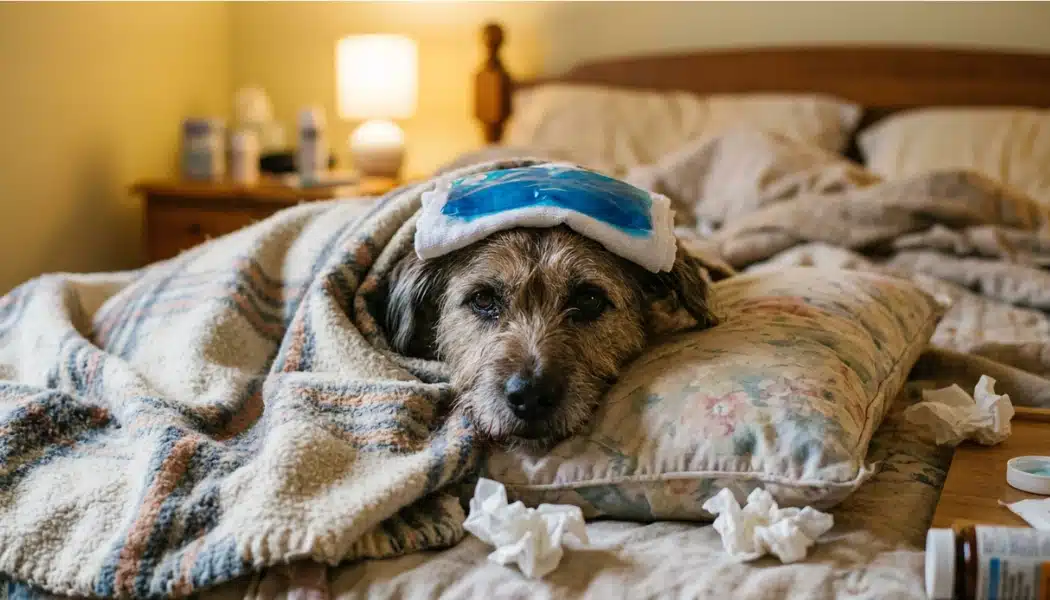
While most human illnesses cannot infect dogs, a small number of bacterial, viral, and fungal diseases have been documented in dogs after close contact with infected people.
1.MRSA
MRSA is a drug-resistant bacterial infection that can move from humans to dogs through close contact, especially when a person carries it without symptoms.
It can affect a dog’s skin, respiratory tract, or urinary tract, causing sores, swelling, coughing, or urinary discomfort. Hospital workers and caregivers may face a higher risk of exposure.
If MRSA is suspected, avoid sharing bedding, wash hands frequently, and quickly contact a veterinarian for testing and treatment.
Dogs with open wounds are more vulnerable, so knowing how infected wounds develop can help you act faster if skin problems appear.
2. Ringworm
Ringworm is a contagious fungal infection, not a worm, and it can spread between humans and dogs in both directions.
In dogs, it often causes circular patches of hair loss, flaky skin, redness, or broken hairs around the face, ears, paws, or legs.
It spreads through direct skin contact and shared bedding, brushes, towels, or furniture. Cleaning fabrics, washing hands, and treating all infected pets or people help stop reinfection.
3. Salmonella
Salmonella is a bacterial infection that dogs may catch from contaminated food , dirty surfaces , or close contact with an infected person.
Symptoms can include vomiting, diarrhea, fever, loss of appetite, stomach pain, and fatigue. Some dogs may carry Salmonella without obvious illness and still shed bacteria.
Good kitchen hygiene matters: wash hands after handling raw meat, keep dog bowls clean, avoid sharing unsafe foods, and call a veterinarian if diarrhea is severe or persistent.
4. The Flu
Most human colds do not infect dogs, but some influenza strains have been documented in dogs after close contact with infected people.
Strains such as H1N1 and H3N2 have raised concern in past cases. When dogs are affected, symptoms are often mild and may include coughing, sneezing, low energy, fever, or reduced appetite.
If you have the flu, limit face-to-face contact, avoid sharing bedding, and wash your hands before handling your dog.
5. Mumps
Mumps is a viral illness that can rarely move from humans to dogs. Because human vaccination has reduced mumps cases, exposure is uncommon.
Reported signs in dogs may include swollen salivary glands, fever, lethargy, reduced appetite, and tenderness around the jaw or neck.
Most affected dogs recover within several days , but symptoms should still be checked by a veterinarian. Keep sick family members from kissing or sharing food with pets.
6. Norovirus
Norovirus is a highly contagious stomach virus best known for causing vomiting and diarrhea in people.
Evidence suggests dogs may be exposed through contaminated hands, surfaces, or fecal-oral contact, especially in homes where someone is actively sick.
Affected dogs may develop vomiting, diarrhea, reduced appetite, or low energy.
During a stomach virus, wash hands carefully, disinfect shared surfaces, keep bathroom areas clean, and avoid letting dogs lick faces or contaminated bedding.
6 Diseases Dogs Can Pass to Humans
Illness can move both ways between dogs and humans, so basic hygiene matters on both sides. Watch for these common zoonotic risks:
- Salmonella: Spreads through infected feces, food bowls, or poor handwashing. In people, it can cause diarrhea, cramps, and fever.
- Ringworm: A contagious fungal infection that causes circular, itchy rashes in humans, especially children.
- MRSA: Dogs can carry it and pass it through direct contact, especially if the skin is broken.
- Rabies: Rare in the U.S. due to vaccines, but serious and spread through bites.
- Leptospirosis: Spread through infected urine and linked to fever, muscle pain, and kidney or liver issues.
- Campylobacter: Spread through feces and can cause diarrhea, fever, and stomach cramps.
Wash hands after handling dogs, waste, bowls, or bedding, and keep vet care current.
Human Viruses That Rarely Infect Dogs
Not every human illness can infect dogs, and several common worries are myths.
The common cold caused by rhinovirus does not readily infect dogs because it binds to human respiratory cells rather than canine cells.
Chickenpox is also not a concern because the varicella-zoster virus is human-specific and cannot replicate in dogs.
Strep throat usually does not spread to dogs through normal household contact, although dogs can carry other Streptococcus bacteria.
COVID-19 sits in a different category. While dogs can be exposed to SARS-CoV-2 from infected owners, illness in dogs has been mild in documented cases, and serious disease is rare.
Still, it is worth noting that any mammal carries more cross-species risk than birds or reptiles, simply because of shared genetic similarities.
Most dog stomach issues are more likely caused by diet changes, spoiled food, or canine-specific infections.
Risk Factors that Increase Human-to-Dog Transmission
The species barrier blocks most infections, but age, immune health, close contact, and owner exposure can increase the chance of transmission.
1. Dog Age and Immune Status
Puppies under six months and senior dogs have weaker immune protection than healthy adult dogs.
Puppies are still developing immune defenses, while older dogs may respond more slowly to infection.
Both groups can be more vulnerable to pathogens that a healthy adult dog might fight off without symptoms. If a young or elderly dog lives in the home, use stricter hygiene when sick.
Following a proper puppy vaccination schedule builds a stronger baseline against disease from the very first weeks.
2. Immunocompromised Dogs
Immunocompromised dogs face a higher risk because their bodies cannot fight germs as effectively.
This includes dogs taking long-term corticosteroids, chemotherapy, or other immune-suppressing medications.
Dogs recovering from surgery or living with chronic illness may also be more vulnerable. For these pets, even low-level exposure can matter more.
When someone in the home is sick, limit close contact and keep shared surfaces cleaner.
3. Contact Type and Frequency
The closer the contact, the higher the exposure risk.
Dogs that sleep in bed, receive face kisses, lick hands, or share food areas may be exposed to more germs from a sick owner.
This does not mean affection is unsafe all the time. It means extra care is needed during illness. Wash hands often, avoid contact with the face, and keep food bowls and bedding clean.
4. Owner Exposure History
People who work in hospitals, clinics, nursing homes, shelters, or care facilities may bring home drug-resistant bacteria such as MRSA without symptoms.
That does not mean infection is likely, but it raises the risk of exposure.
Simple habits help reduce the risk of transfer: wash your hands after work, change clothes before close contact, and avoid letting dogs lick your face or any broken skin.
How to Tell if Your Dog Caught Something from You
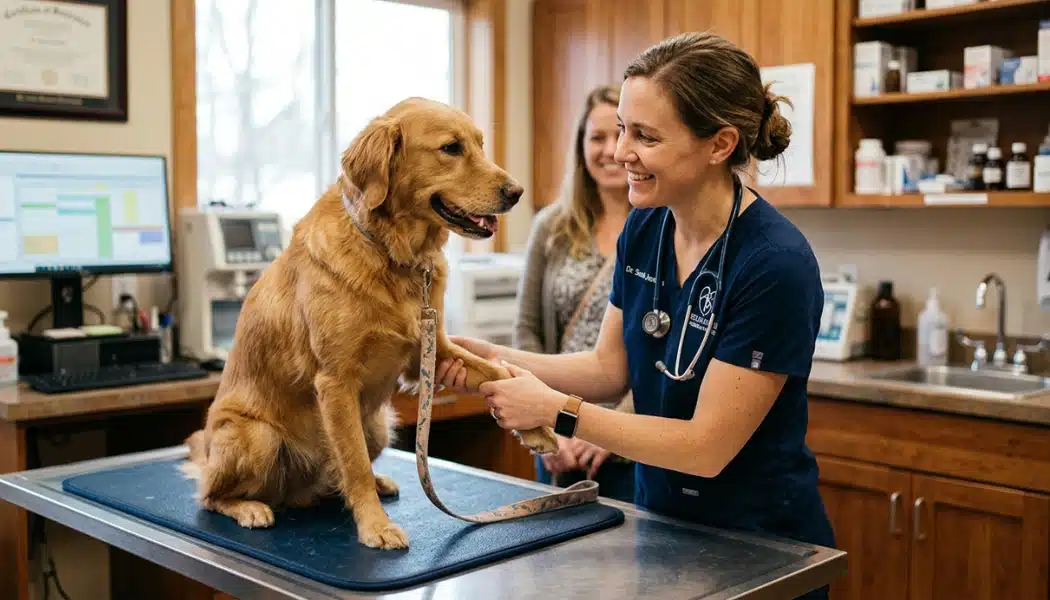
Dogs cannot explain when they feel sick, so watch for behavior and body changes after close contact with an ill person. Possible warning signs include:
- Lethargy: Less interest in walks, play, food, or greeting you.
- Loss of appetite: Refusing meals for more than 24 hours, especially with other symptoms.
- Vomiting or diarrhea: Repeated or worsening digestive upset needs attention.
- Skin changes: Hair loss, redness, scaling, sores, or heavy scratching.
- Fever: A temperature above 103°F should prompt a vet call.
- Respiratory signs: Coughing, sneezing, nasal discharge, or labored breathing.
If these symptoms appear within one to two weeks after you were sick, tell your vet about the timing and your illness. That detail may help with diagnosis and treatment.
How to Protect Your Dog When You Are Sick
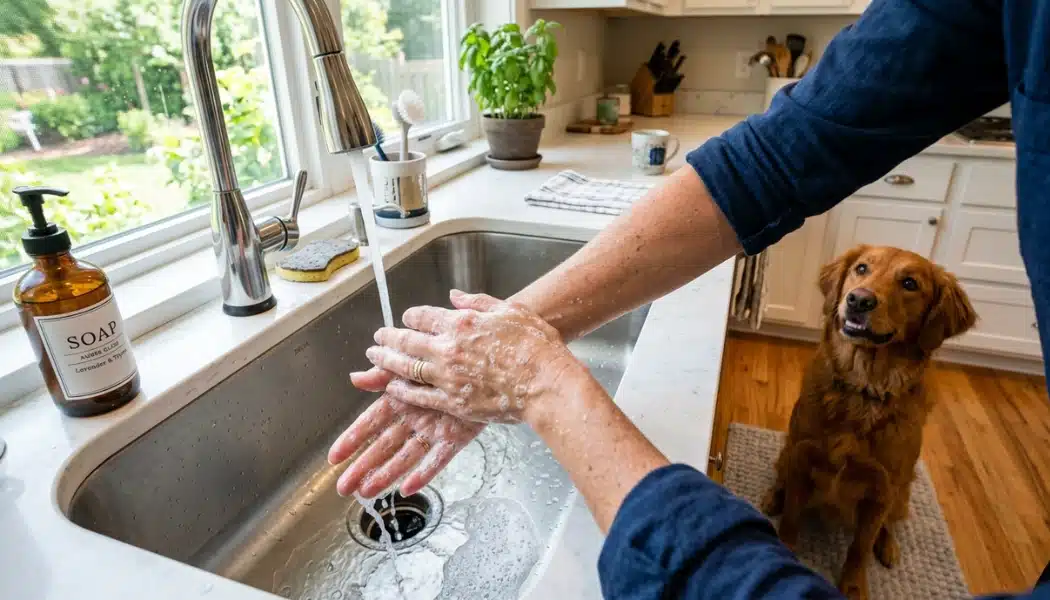
Most precautions that protect your dog also protect the household. Focus on reducing close contact and the spread of germs.
- Wash your hands: Clean hands before feeding, petting, or handling your dog, especially after sneezing, coughing, or blowing your nose.
- Limit face contact: Avoid kissing your dog or letting them lick your mouth, nose, or face while you are sick.
- Keep distance when needed: If you have the flu, MRSA, ringworm, or another contagious infection, reduce close contact for a few days.
- Do not share food or utensils: Plates, cups, and utensils can carry germs.
- Wash bedding: Clean your dog’s bedding more often when someone at home is sick.
- Keep vaccines current: Regular vet care supports stronger baseline protection.
A few small hygiene habits while you are sick can lower your dog’s exposure risk without changing the bond you share.
Conclusion
Can dogs get sick from humans? In some cases, yes, but the risk is usually low and depends on the illness, your dog’s age, immune health, and the closeness of contact.
The main goal is not to avoid your dog completely when you are unwell. It is important to be careful with the habits that spread germs.
Clean hands, fresh bedding, separate food, and fewer face kisses during illness can make a real difference. Watch for changes such as coughing, vomiting, diarrhea, tiredness, skin irritation, or loss of appetite.
A quick vet call is always better than guessing when symptoms appear. Dogs give comfort on sick days, and a little care helps return that love safely.
Share your experience in the comment section below.
Frequently Asked Questions
Can Dogs Catch a Stomach Bug from Humans?
Usually, no. Human stomach bugs are not commonly known to make dogs sick the same way they affect people. Dogs can vomit or have diarrhea for many other reasons, including diet changes, spoiled food, or canine infections. If symptoms appear, call your vet.
Can My Dog Sleep in My Room When I Have the Flu?
It is safer to give your dog a separate sleeping spot until symptoms improve. Keep bedding clean, reduce cuddling, and wash hands often.
Should I Wash My Dog’s Bedding After I’ve Been Sick?
Yes. Washing your dog’s bedding, blankets, and soft toys after illness can help reduce lingering germs, especially if your dog sleeps near you.