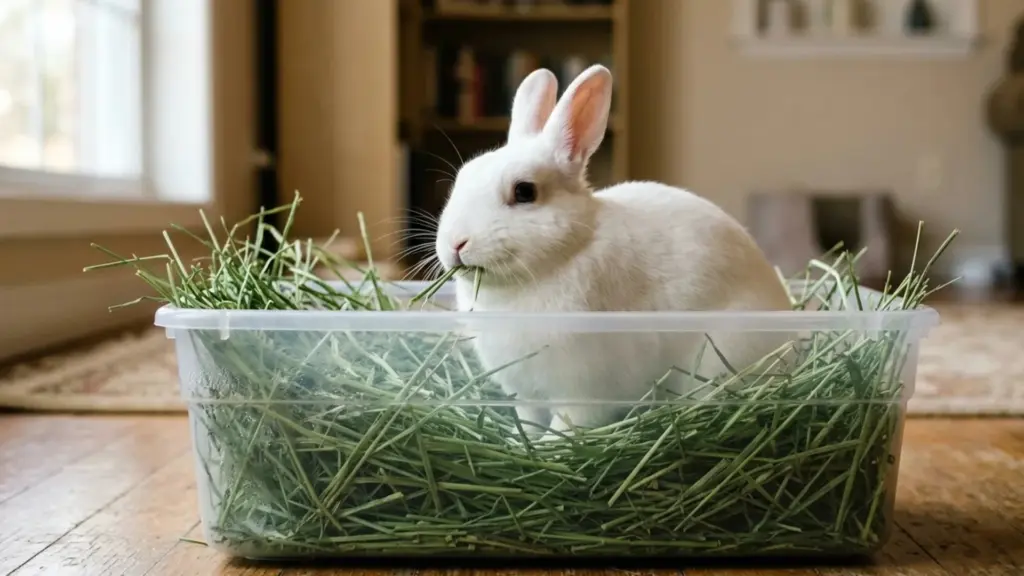
Your rabbit may look calm near a full hay rack, but the real question is whether that hay is actually helping. Some hay keeps the gut moving, some helps teeth wear down, and some just sits there like wasted cage decor.
If you want the best hay for rabbits, you need to look at freshness, fiber, age, and how much your rabbit eats.
If you are trying to choose rabbit hay, the good news is that a few simple details can make the decision much easier.
I will share personal recommendations and advice from other owners about hay types, quality, feeding amounts, safe swaps, and hays to avoid.
Before picking another bag, let’s fix the biggest hay mistake many rabbit owners make without even realizing it.
What Most Rabbit Owners Get Completely Wrong About Hay?
Most rabbit owners know hay is important, but they still treat it like a snack, a side food, or a bowl filler. That is the biggest mistake, because hay should be the main part of your rabbit’s daily food routine.
A healthy rabbit should eat hay throughout the day, not just when pellets or greens are finished.
Hay keeps the gut moving, helps prevent scary digestive issues, and wears down teeth that grow nonstop. Another big mix-up is thinking that any hay bag will do, even if it looks yellow or dusty, or smells stale.
Fresh hay should look green, smell grassy, and make your rabbit want to dig in like it is buffet time.
Old hay often gets ignored, and that is when eating habits can go downhill fast.
Best Hay for Rabbits According to Vets
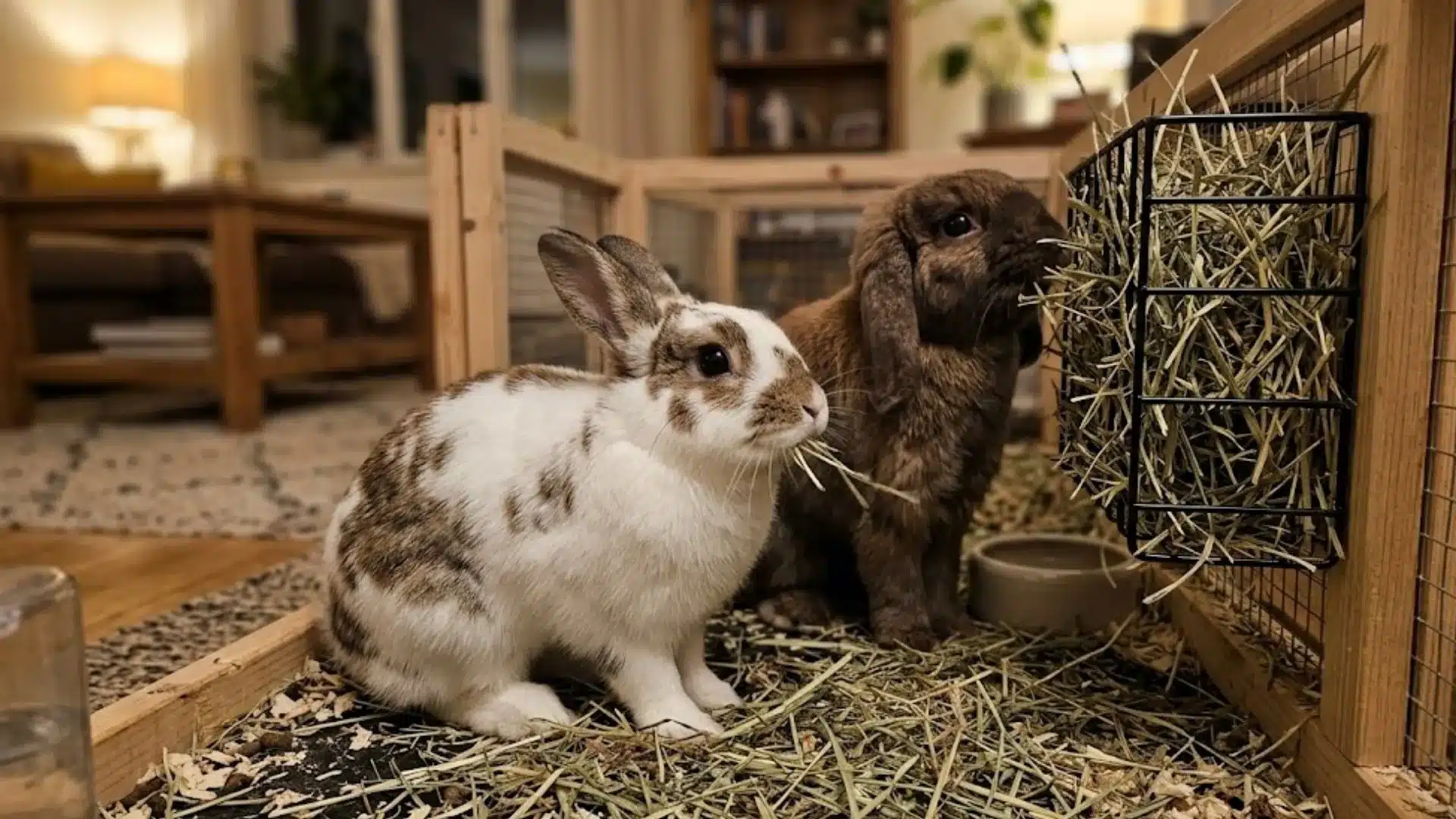
For most adult rabbits, Timothy hay is the safest starting point, and vets recommend it for very clear reasons. It has high fiber, low calcium, and lower calories, which makes it easier for rabbits to eat freely.
That fiber keeps the gut moving, while the rough chewing helps wear down teeth that keep growing nonstop.
Second-cut timothy hay is usually the best daily pick because it has a nice balance of leaves and stems. First-cut timothy is rougher and better for extra tooth wear, while third-cut timothy is softer and richer.
Third-cut can help picky rabbits, but it should not be the only hay they eat every day.
Nutrition Breakdown of 2nd Cut Timothy Hay per 100g
Nutrition values for 2nd-cut timothy hay can vary by batch, brand, and growing conditions, so the figures below are only approximate.
| Nutrient | Amount per 100 g |
|---|---|
| Calories | 188.5 kcal |
| Carbohydrates | 41.69 g |
| Protein | 8.54 g |
| Fat | 1.49 g |
| Fiber | 33.22 g |
| Ash | 6.58 g |
| Moisture | 8.48 g |
Best Hay for Baby Rabbits and Kits: It’s Not Timothy
Baby rabbits and kits need Alfalfa hay first, not Timothy hay, because their bodies are still growing fast.
Alfalfa has more protein and calcium, which young rabbits need while their bones, muscles, and bodies are developing.
Kits can usually start eating alfalfa around 3-4 weeks old, then continue through 6-7 months.
After that stage, Timothy hay becomes the better daily choice because adult rabbits need lower calcium and fewer calories.
Do not switch the hay overnight, because sudden food changes can be refused and upset the whole routine. Start with mostly alfalfa and a smaller amount of timothy, then shift the mix slowly each week.
Our baby bunny feeding guide walks through the full transition week by week if you want a closer look at what kits need during their early months.
Most rabbits can move fully to Timothy hay within 4-6 weeks, but stubborn ones may need extra patience.
How Much Timothy Hay Should a Rabbit Eat?
A healthy rabbit should have unlimited timothy hay available at all times, and the hay rack should never stay empty for long.
| Time | Action | What to Watch For |
|---|---|---|
| 7 AM to 9 AM | Refresh hay fully and add leafy greens. | Check whether your rabbit ate hay overnight, because healthy rabbits graze during the night. |
| 12 PM to 2 PM | Do a quick hay check and top it off if needed. | Hay levels should be noticeably lower than the morning amount. |
| 4 PM to 6 PM | Refresh hay again if needed and offer a small pellet portion. | Your rabbit should still be actively foraging and chewing hay. |
| 7 PM to 9 PM | Give a full hay refresh before nighttime. | This is a peak eating period for many rabbits. |
| Before Bed | Do one final hay check. | The hay rack should be well-stocked because rabbits often eat heavily overnight. |
Hay should always be the main event in your rabbit’s daily routine, not something added on the side after pellets.
Before adding pellets or other foods, it helps to understand how rabbit treats affect the daily diet so the balance between hay, pellets, and extras stays right.
Note: This is only a sample timetable. You can adjust it according to your schedule and your rabbit’s individual needs.
Timothy Hay Alternatives That Owners Actually Use
Timothy hay is the usual go-to, but these grass hays can still work when your rabbit refuses it.
- Orchard grass: Softer than timothy, slightly sweeter, and usually the best first swap for picky rabbits.
- Oat hay: Coarser and high in fiber, with seed heads many rabbits enjoy picking through during chewing time.
- Meadow hay: A mixed grass option with more taste and texture variety, though nutrition can change by batch.
- Bermuda grass hay: Similar to timothy or orchard grass, but some rabbits ignore it because the flavor feels boring.
This keeps your rabbit more interested, adds different textures, and helps avoid food drama when one hay runs out.
Mixing tip: Use two or three safe grass hays together instead of fully replacing timothy with one random option.
What Do Rabbit Owners Say?
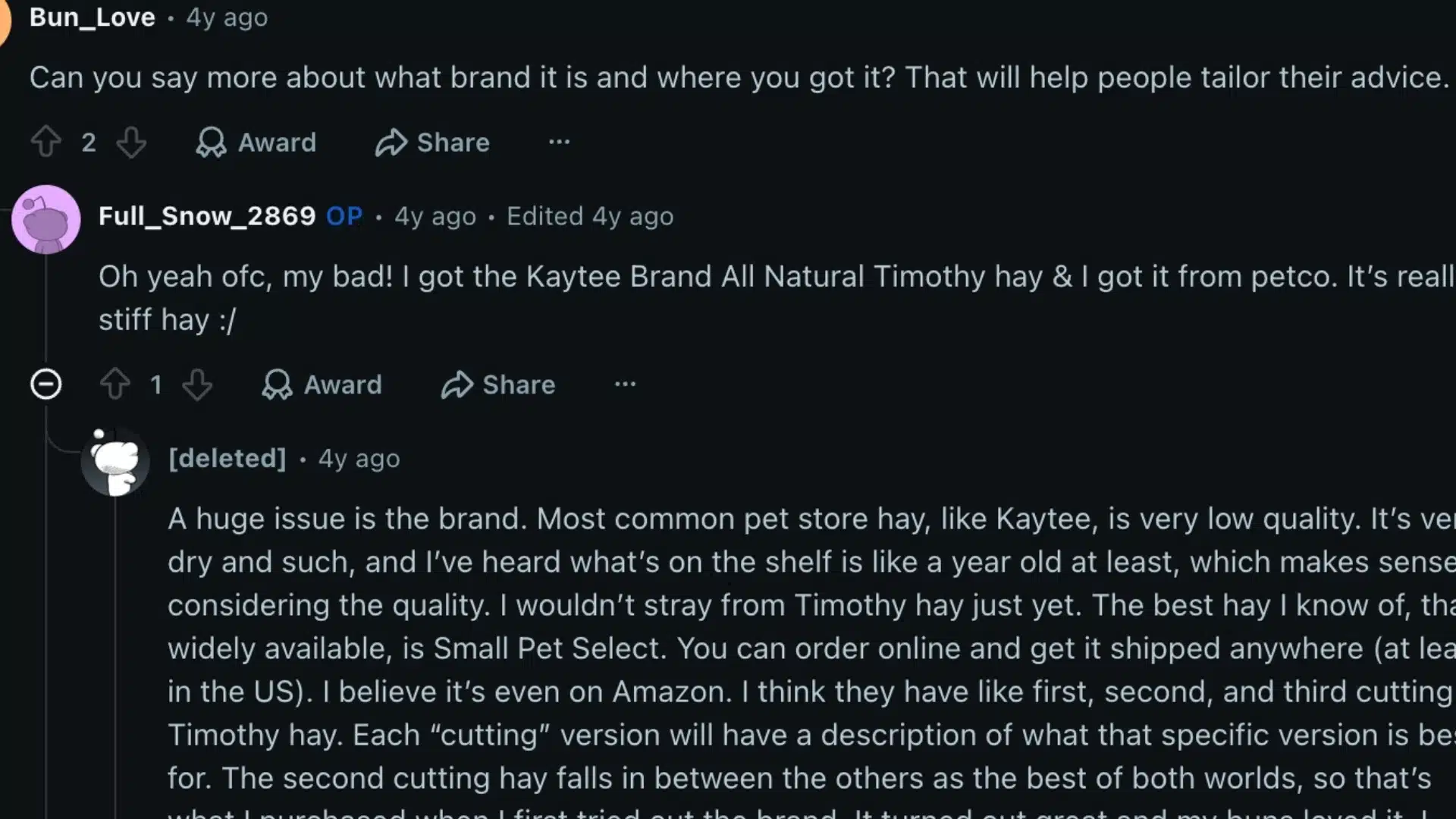
Rabbit owners shared their opinions on Reddit, and most of them focused on freshness, texture, and what the rabbit will actually eat.
The main advice was not to quit timothy hay too fast, especially if the problem is a stiff or low-quality pet store bag.
Some owners suggested softer second-cut timothy hay, while others said orchard grass is a great swap for picky rabbits and owners with allergies.
A few also liked oat hay for variety, though it can get messy around the cage. The bigger point was clear: rabbits may reject dry, dusty, or old hay, so quality matters just as much as the type.
Owners also agreed that adult rabbits should avoid alfalfa as a daily staple, unless a vet says otherwise.
Does Hay Quality Actually Matter?
Yes, hay quality matters a lot, and your rabbit will usually clock bad hay before you even think twice. Fresh hay should look green or light green, smell grassy, and feel dry without being dusty or rough.
If hay smells musty, looks yellow, or sends up a dust cloud, it is already giving bad news. Rabbits may push stale hay around instead of eating it, and that can mess with their daily hay intake.
That matters because hay is supposed to keep their gut moving and their teeth wearing down properly. Storage is part of the deal too, because heat, sunlight, and moisture can ruin good hay very quickly.
Keep it in a breathable bag or box, away from damp spots, direct sun, and airtight plastic containers.
Types of Hay to Avoid for Rabbits
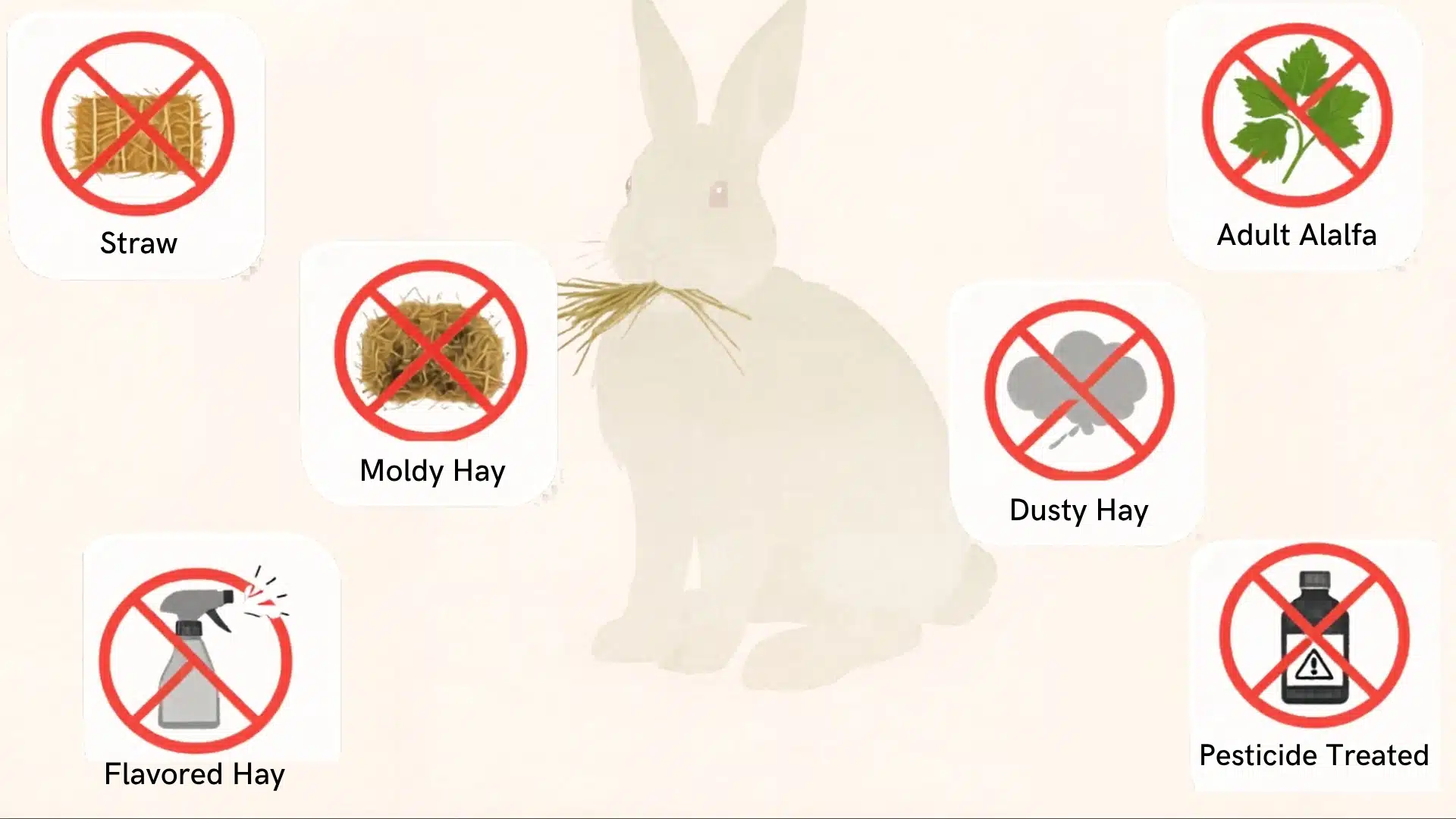
Not every hay-looking thing is safe for rabbits, so check the type, smell, texture, and source before feeding.
- Straw: Looks like hay, but it is usually bedding material, not real food for rabbits. A rabbit can nibble it safely, but it should never replace proper grass hay. If you are unsure what to line your rabbit’s space with instead, checking out safe rabbit bedding options can clear up the straw vs. hay confusion fast.
- Adult alfalfa staple: Alfalfa is helpful for kits, but it is too rich for healthy adult rabbits. Too much can lead to extra calcium, extra calories, and weight problems.
- Moldy or wet hay: Throw this away immediately, even if only one part looks bad.
- Dusty hay: Skip hay that releases a big dust cloud when opened. Dust can irritate the nose, eyes, and lungs, especially in rabbits that already sneeze easily.
- Flavored or colored hay: Avoid sprayed flavors, dyes, and cute-looking add-ons. Rabbits need plain, fresh hay, not a bag trying to cosplay as candy.
- Pesticide-treated hay: Be careful with farm hay unless you know how it was grown. Hay is safe for bigger animals, but it is not always safe for small rabbits.
How to Tell If Your Rabbit Is Not Eating Enough Hay?
The biggest clues usually show up in droppings, appetite, teeth, and behavior before things look really serious.
- Droppings look smaller: Healthy hay eating usually creates round, firm, even pellets. If they turn tiny, odd-shaped, or fewer than usual, hay intake may be dropping.
- Droppings slow down: This is more serious than simple picky eating. A rabbit’s gut needs to keep moving, and very few droppings can become an emergency fast.
- Less chewing: Rabbits need long chewing time to wear down their teeth properly. When hay intake drops, teeth may start wearing unevenly over time.
- Drooling or dropping food: These signs can point to tooth pain, especially when your rabbit wants food but struggles to chew hay.
- Weight changes: Weight loss with poor hay intake is worrying. Weight gain can also happen when pellets or treats quietly replace hay.
- Low interest in hay: Try fresher hay, another cut, or orchard grass. If your rabbit has not eaten for 12 hours, call your vet quickly.
Conclusion
Choosing the best hay for rabbits comes down to fresh hay, steady eating, and watching how your rabbit acts each day.
Timothy hay for rabbits is still my first adult pick, but I would never ignore age, taste, or droppings either. Baby rabbits need Alfalfa first, while picky adults may do better with orchard grass or another safe grass hay.
The main thing is simple: keep hay available, keep it fresh, and do not wait until eating changes suddenly appear.
I always treat hay refusal as a health clue, not just a cute, picky rabbit moment at home each day. If your rabbit stops eating or pooping, your vet should be the next call, not another hay order from you.
What hay does your rabbit actually eat without drama? Tell us, share with us in the comments below.
Frequently Asked Questions
Can Rabbits Eat Hay that Has Been Rained on or Gotten Wet Accidentally?
No, wet hay should be thrown away, even if it looks dry later. Damp hay can grow mold quickly, and rabbits can get breathing or digestive trouble from it.
It is safer to replace the hay and check that your storage spot stays dry.
Do Rabbits Need Hay if They Have Access to Fresh Grass Outside?
Yes, rabbits still need hay even when they eat fresh grass outside. Grass can support the diet, but it does not replace coarse dried hay.
Hay gives longer fiber, helps teeth wear down, and keeps eating steady when outdoor time is limited.
Why Does My Rabbit Scatter Hay Everywhere Instead of Eating It?
Scattering hay is normal because rabbits like to dig, pick, and choose their favorite pieces. It does not always mean waste.
Place hay near or over the litter box to control mess. If your rabbit barely eats it, try fresher hay or another cut.
Can a Rabbit Eat Too Much Hay?
No, healthy rabbits can eat hay freely because hay is meant to be available all day. It is not like pellets, fruit, or treats. The fiber helps them feel full, keeps the gut moving, and gives them something safe to chew often.