Every pregnancy I’ve managed has followed its own timeline, and yours will too, even with the patterns above as a guide.
Owners often assume something’s wrong the moment their dog deviates from a chart, but real deliveries rarely stay perfectly on schedule.
What matters most is staying observant, keeping your vet in the loop, and trusting that most deliveries go smoother than owners expect once they know what to watch for.
Don’t wait for labor to start. Call your veterinarian now, bring a list of medications and past pregnancies, and get a plan in place before you need one. A few minutes on the phone today can save a lot of worry later.
How Long is a Dog Pregnant?
Canine pregnancy averages 63 days from ovulation. If you only know the mating date, the expected delivery window will be broader because mating, ovulation, and fertilization do not always happen on the same day.
According to Cornell’s whelping guidance, delivery may occur approximately 63 days, plus or minus seven days, from the first mating. When ovulation was tracked through progesterone testing, the due date can usually be estimated more closely.
Breed size does not greatly change the average pregnancy length. However, breed, litter size, previous pregnancies, maternal health, and fetal development can affect delivery and the risk of complications, and what constitutes a typical litter size varies widely by breed and individual dog.
Do not treat a calculated date as a guarantee. Ask your veterinarian how the date was estimated and when you should call if labor has not begun.
How to Confirm Your Dog is Pregnant
Early physical and behavioral changes are not dependable proof of pregnancy, and knowing which home signs are worth watching for can help you decide when a vet visit is warranted. Similar signs can occur with false pregnancy, illness, weight gain, or normal hormonal changes after a heat cycle.
Ultrasound is most useful about 25 to 35 days into gestation. It can confirm pregnancy, assess fetal viability, and help your veterinarian estimate how far the pregnancy has progressed.
A relaxin blood test may detect pregnancy after approximately 22 to 27 days. Testing too early can produce a negative result even when the dog is pregnant, so your veterinarian may recommend repeating the test.
At home, you may notice:
- Enlarged or more noticeable nipples
- Temporary appetite changes
- Occasional vomiting
- Lower energy
- Increased attention-seeking or quiet behavior
- Gradual abdominal growth later in pregnancy
These changes cannot show whether the pregnancy is progressing normally. Contact your veterinarian if your dog has bloody, green, or foul-smelling discharge, persistent vomiting, pain, weakness, fever, or a marked loss of appetite.
A radiograph taken after day 55 is the most accurate method for estimating litter size because fetal skeletons are clearly visible by that stage. Knowing the expected number can help determine whether delivery is complete.
Veterinary confirmation provides a safer foundation for planning food, activity, examinations, and the expected delivery window.
Dog Pregnancy Stages Week by Week
The changes below are general estimates rather than fixed milestones for every dog. Fetal development may be underway before you notice a clear difference in your dog’s appearance or behavior. Your veterinarian should guide feeding, medication, parasite prevention, exercise, and testing throughout the pregnancy.
Weeks 1–3: Fertilization and Implantation
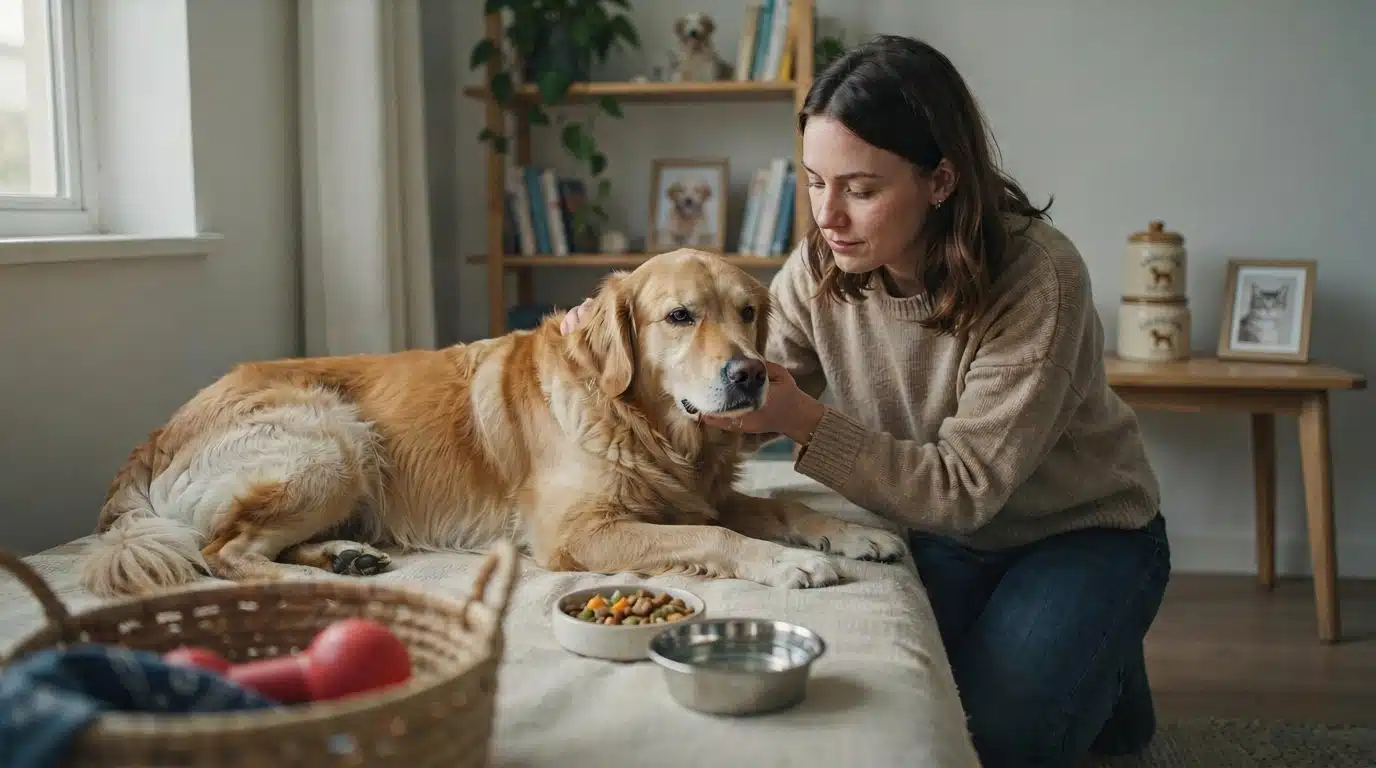
Fertilization occurs after ovulation, and implantation takes place at approximately day 18. Most dogs show few dependable outward changes during this period.
Your dog may seem slightly tired or experience a temporary change in appetite, but many dogs continue to act normally. These signs cannot confirm pregnancy.
Schedule a veterinary appointment if the mating was planned or pregnancy is possible. Provide the dates of every known mating and a list of medications, supplements, preventives, and current foods.
Weeks 4–6: Confirmation and Visible Growth
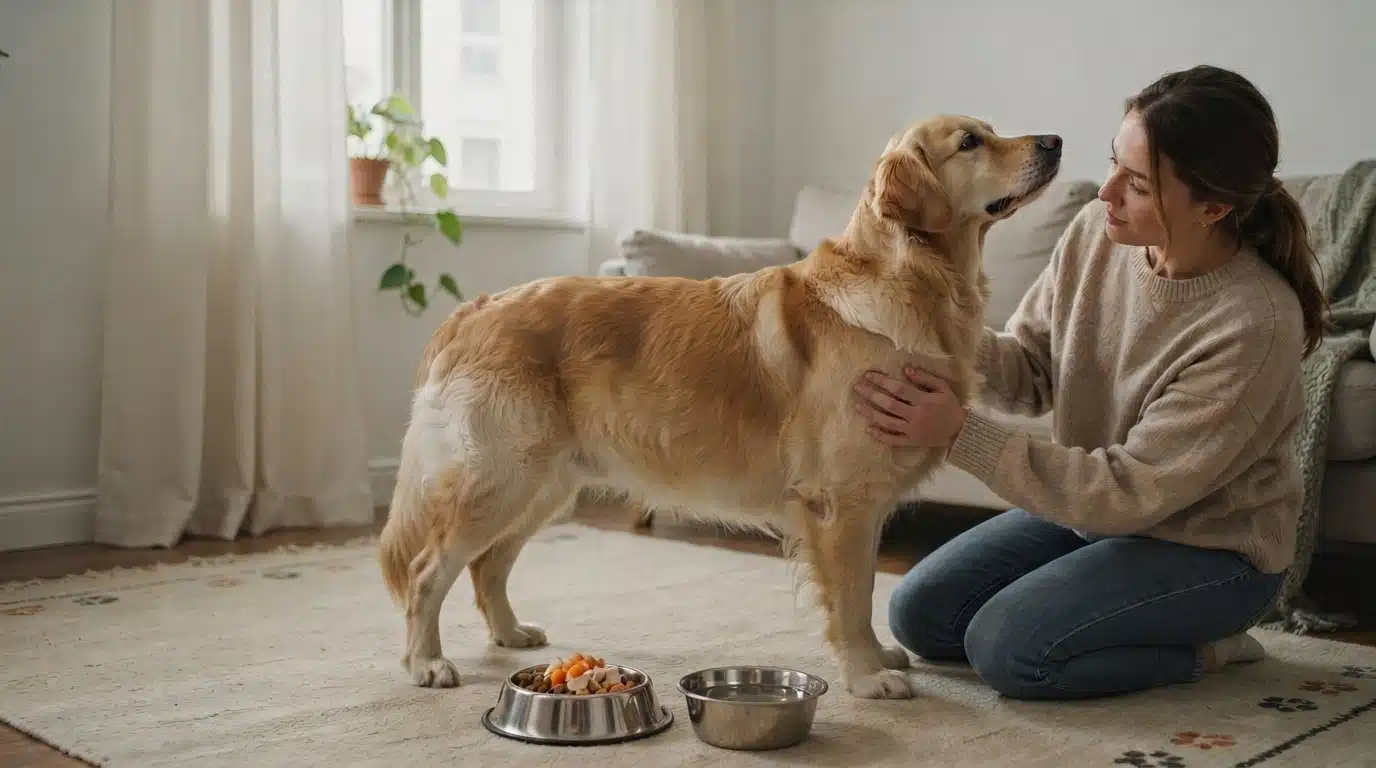
Ultrasound is most useful during this period. Abdominal growth, mammary development, and weight gain may become more noticeable, although the extent varies with body size, condition, and litter size.
Ask your veterinarian when to adjust food portions or change diets. Many pregnant dogs eventually need food approved for gestation and lactation, but increasing calories too early may lead to unnecessary weight gain.
Continue suitable daily activity unless your veterinarian recommends restrictions. Avoid forced distance running, rough play, overheating, and activities that place pressure on the abdomen.
Weeks 7–9: Preparing for Delivery
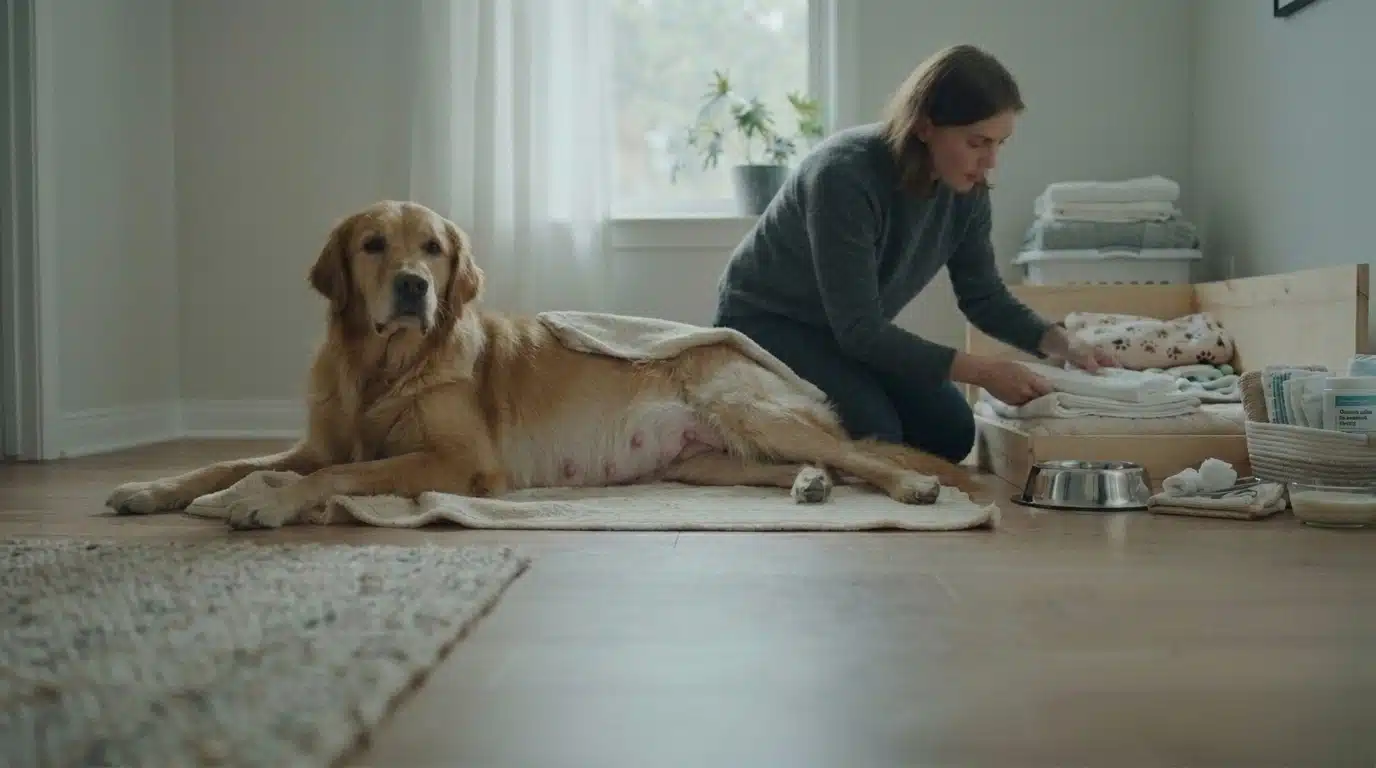
The abdomen and mammary glands usually become more prominent as delivery approaches. Your dog may rest more, seek a quiet location, or have difficulty finding a comfortable sleeping position.
Prepare the whelping space before the expected delivery window. It should be quiet, easy to clean, free from drafts, and large enough for your dog to lie down without trapping the puppies against the sides.
Do not squeeze the nipples to check for milk or press the abdomen to feel puppies. Your veterinarian can assess the pregnancy without causing unnecessary discomfort.
Careful preparation during the final weeks makes it easier to monitor labor without repeatedly disturbing your dog.
Signs Labor is Approaching
As the expected delivery window nears, your dog’s behavior and body may begin to change. No single sign guarantees that puppies will arrive at an exact time, so watch for several changes together.
Possible signs include:
- Persistent nesting or rearranging bedding
- Restlessness or repeatedly changing positions
- Panting or trembling
- Reduced interest in food
- Seeking privacy or staying unusually close to you
- Clear or white vaginal discharge
- A temporary rectal temperature drop below 99°F
A temperature drop may occur within 24 hours of delivery, but it is not detected in every dog. Ask your veterinarian whether temperature monitoring is appropriate and how to perform it without causing distress.
Green discharge indicates placental separation and should be followed promptly by a puppy. Contact a veterinarian immediately if green discharge appears and no puppy follows, or if your dog seems weak, in pain, or distressed.
Once these signs appear, keep the area calm, limit unnecessary visitors, and make sure your regular clinic and emergency hospital numbers are easy to reach.
What to Expect During Whelping

Whelping occurs in three stages, although the second and third stages often overlap. Stay nearby, record important times, and avoid intervening unless your veterinarian gives direct instructions.
Stage I: Cervical Dilation
Internal uterine contractions begin while the cervix opens. Visible abdominal pushing is not normally present during this stage.
Your dog may nest, pant, tremble, refuse food, vomit, hide, or remain close to you. Stage I commonly lasts 12 to 24 hours.
Stage II: Puppy Delivery
Stage II begins when visible abdominal pushing starts. Puppies are commonly delivered 30 to 60 minutes apart, although an interval of up to two hours can occur.
Record the time each puppy is born. Do not pull a visible puppy unless a veterinarian provides immediate, specific instructions.
Stage III: Placenta Delivery
Placentas are expelled during stage III, but one may not follow every puppy immediately. Two puppies may be born before their placentas are passed.
The mother may consume a placenta before you see it. Eating several may cause vomiting or diarrhea, and consuming them is not necessary for her recovery.
Quiet monitoring helps you recognize normal progress and identify when delivery has stalled.
When to Call a Veterinarian
Some pauses and behavior changes occur during normal delivery, but certain signs require immediate veterinary direction. Keep track of contractions, discharge, puppy arrival times, and your dog’s condition so you can explain exactly what is happening.
| Situation | What to Do |
|---|---|
| Stage I continues beyond 24 hours without active delivery | Contact your veterinarian |
| Strong contractions continue for 20 to 30 minutes without producing a puppy | Seek immediate veterinary help |
| More than two hours pass between puppies | Call your veterinarian |
| Green discharge appears without a puppy following promptly | Seek immediate veterinary help |
| A puppy appears stuck | Call an emergency veterinarian and do not pull |
| Heavy bleeding or foul-smelling discharge occurs | Seek immediate veterinary help |
| Your dog collapses, becomes weak, or shows severe pain | Go to an emergency veterinary hospital |
| Labor stops while puppies may remain | Contact your veterinarian |
| A puppy is cold, weak, unresponsive, or unable to nurse | Seek prompt veterinary care |
Do not give oxytocin, calcium, or another labor treatment unless a veterinarian has examined your dog and prescribed it. These treatments can be dangerous when a puppy is blocking the birth canal.
Calling early allows the veterinary team to assess the timing, determine the level of urgency, and prepare for examination or emergency delivery.
Caring for Mom and Puppies After Delivery
Once delivery appears complete, check that every puppy is warm and able to nurse. Keep the space quiet while continuing to observe the mother’s comfort, appetite, discharge, temperature, and interest in her puppies.
Normal postpartum discharge may be green, red, brown, or nearly black. It should remain odorless and gradually decrease. Contact your veterinarian if it becomes foul-smelling, grows heavier, or is accompanied by fever, weakness, pain, poor appetite, or reduced milk production.
Weigh each dry puppy after birth and at least daily using the same scale. Contact your veterinarian promptly if a puppy:
- Loses weight after the first day
- Fails to gain weight
- Cannot latch or nurse
- Cries continuously
- Feels cold
- Separates from the litter
- Becomes weak or unresponsive
Arrange a postpartum examination according to your veterinarian’s instructions, especially if delivery was difficult or the number of puppies does not match the late-pregnancy radiograph. Consistent monitoring during the first days can reveal concerns before they become harder to manage.
Conclusion
Every pregnancy I’ve managed has followed its own timeline, and yours will too, even with the patterns above as a guide.
Owners often assume something’s wrong the moment their dog deviates from a chart, but real deliveries rarely stay perfectly on schedule.
What matters most is staying observant, keeping your vet in the loop, and trusting that most deliveries go smoother than owners expect once they know what to watch for.
If your dog is showing early signs, call your veterinarian now and get a plan in place before labor starts.
Bring a list of medications, past pregnancies, and any questions you’ve been sitting on. A few minutes on the phone today can save a lot of worry later.
Frequently Asked Questions
Can a Pregnant Dog Continue Taking Preventive Medication?
Some parasite preventives and medications may be suitable during pregnancy, while others may not be recommended. Give your veterinarian a complete list of products and confirm each item before administering another dose, including supplements and nonprescription treatments.
Should You Pull a Puppy That Appears Stuck?
Do not pull on a visible puppy unless a veterinarian gives immediate, specific instructions. A stuck puppy can signal dystocia, meaning difficult birth. Call an emergency veterinarian and describe the contractions, discharge, timing, and the puppy’s visible position.
Can Other Pets Stay Near the Whelping Area?
Keep other pets away during labor and the early nursing period unless your veterinarian recommends otherwise. Their presence may cause stress or create accidental injury risks. Give the mother a quiet space with controlled, supervised access.
When Can the Mother Leave Her Puppies?
Allow short bathroom breaks while keeping the puppies safely warm. The mother should return willingly to nurse and settle with them. Contact your veterinarian if she repeatedly avoids the litter, appears painful, or refuses to allow nursing.