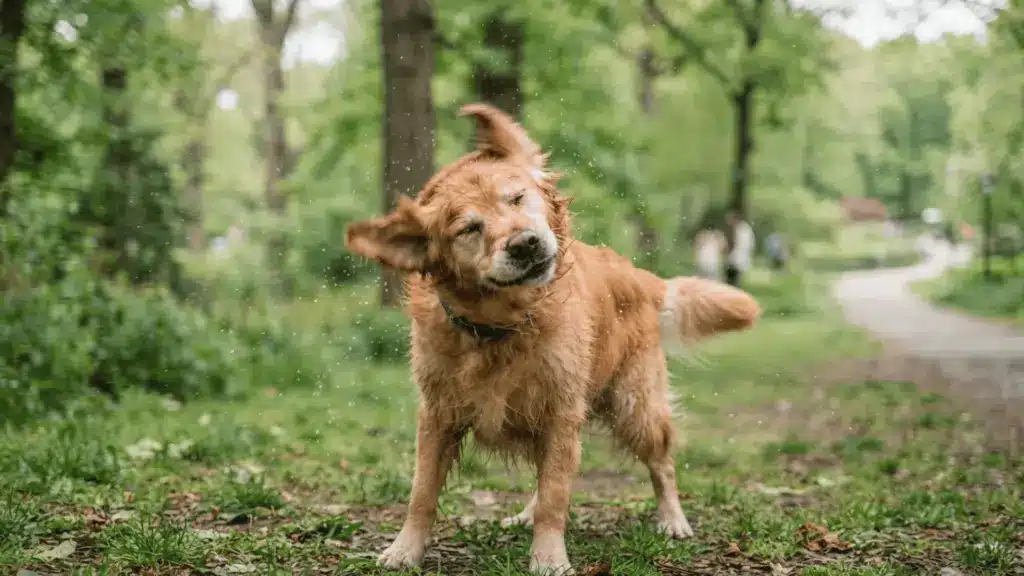
When a dog suddenly snaps its head side to side, it often looks harmless at first but quickly draws attention.
That small motion can come from simple irritation, trapped water, or something deeper happening inside the ear.
Dogs rely on head shaking as a natural way to clear discomfort, yet the meaning behind it is not always obvious.
Some episodes fade within seconds, while others repeat often enough to raise concern about infection, allergies, or hidden pain.
Reading these patterns correctly helps separate normal behavior from early warning signs that should not be ignored. Clear understanding prevents guesswork and supports better care decisions.
This blog explains what triggers head shaking, hidden causes, warning signs, home care tips, and when veterinary help becomes important for dogs in everyday situations.
Why Do Dogs Shake Their Head?
Head shaking in dogs often serves a simple mechanical purpose. It helps remove trapped moisture or loose particles from the ear canal.
The rapid side-to-side motion creates enough force to dislodge water, dust, pollen, or small debris that cannot be removed by normal grooming or wiping.
This response is not learned later in life. Even young puppies display it as soon as their ear canals develop.
The movement is effective because the sudden acceleration generates enough force to shift liquid and particles that lighter actions like pawing or gentle cleaning cannot reach.
Dogs also perform a second version known as a “shake off.” This is a full-body reset that starts at the head and travels down the spine.
It usually appears after stress, excitement, or a brief scare, helping the dog release tension rather than clear the ears.
Common Reasons Dogs Shake Their Heads
Dogs shake their heads for many small and serious reasons. The key is watching how often it happens and what other signs appear.
1. Ear Infection
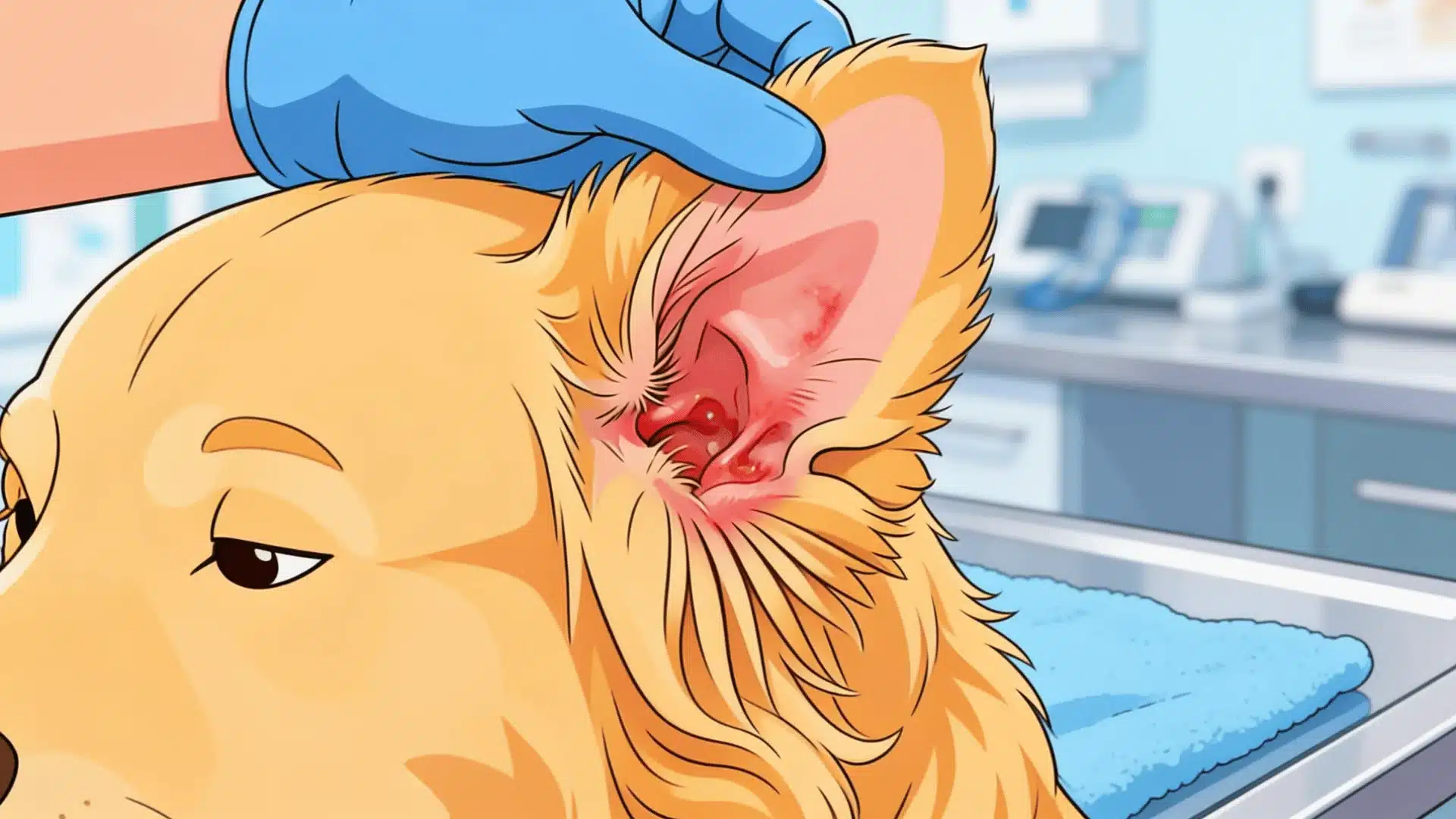
An ear infection is one of the most common reasons behind repeated head shaking. The ear may feel itchy, sore, or full, so the dog keeps shaking to find relief.
You may also notice redness, a bad smell, swelling, or brown, yellow, or black discharge.
Some dogs scratch the ears or pull away when they are touched. Ear infections can worsen without treatment, so a vet check is important if the shaking keeps up.
2. Ear Mites
Ear mites are tiny parasites that can make a dog’s ears very itchy. They are more common in puppies or dogs that have been around infected pets.
A dog with mites may shake its head often, scratch hard, or have dark crumbly debris in the ear. It can look like coffee grounds.
Mites are not something to guess at because wax, infection, and allergies can look similar. A vet can confirm the cause and treat it properly.
3. Allergies
Allergies can affect a dog’s ears as much as the skin. Pollen, dust, grass, mold, or food sensitivities can cause itching and swelling in the ear canal.
The ear may not look terrible at first, but the dog may keep shaking its head or scratching.
Other clues can include paw licking, belly redness, face rubbing, or repeated ear problems. If the shaking comes back often, allergies may be part of the reason.
4. Water in the Ear
Water trapped in the ear after bathing, swimming, or playing outside can make a dog uncomfortable. The dog may shake its head to clear the feeling.
A little shaking after water exposure can be normal, but it should settle quickly. If moisture stays in the ear, it can irritate the canal and sometimes promote the growth of an infection.
Dogs with floppy ears may have more trouble because their ears hold warmth and moisture longer.
5. Wax Buildup
Some dogs naturally produce more earwax than others. When wax builds up, the ear can feel blocked, itchy, or heavy.
This can make the dog shake its head or scratch at the ear. Wax may look brown, yellow, or greasy, but heavy wax can also hide infection deeper inside.
Overcleaning or using the wrong product can worsen irritation. If the wax keeps returning or smells bad, a vet should check it.
6. Grass Seed or Dirt in the Ear
A grass seed, dirt, or small outdoor debris can get trapped in a dog’s ear, especially after walks, running through tall grass, or playing in dusty areas.
This can cause sudden head shaking, pawing at one ear, or holding the ear in an odd position.
A stuck seed can move deeper, causing pain or infection. Do not try to dig inside the ear with cotton swabs. If the shaking starts suddenly after outdoor time, call the vet.
7. Skin Irritation Around the Ear
Sometimes the problem is not deep inside the ear but around it. Irritated skin on the ear flap, behind the ear, or near the base of the ear can make a dog shake its head.
This may happen because of bug bites, scratching, grooming irritation, allergies, hot spots, or small cuts.
The skin may look red, scabby, swollen, or damp. Repeated shaking can make the ear flap sore and may even lead to swelling, so it should not be ignored.
Ear Infection Signs to Watch For
Ear infections can start small, but they often become painful fast. These signs can help you know when a vet check is needed.
- Bad smell from the ear: A strong or sour smell can mean that bacteria or yeast are growing inside the ear canal.
- Redness: Red skin inside or around the ear often indicates irritation, swelling, or an infection starting deeper inside.
- Brown, yellow, or black discharge: Any unusual fluid, thick wax, or dark debris can indicate infection, mites, or heavy buildup.
- Scratching the ear: If your dog keeps scratching one ear, the ear may feel itchy, painful, or blocked.
- Crying when the ear is touched: Pain on touch is a clear warning sign and should not be brushed off as normal sensitivity.
- Head tilt: A tilted head can mean the ear feels painful, full, or affected deeper within the canal.
- Swelling: Swelling around the ear or ear flap can result from infection, injury, or repeated shaking and scratching.
What Causes Head Shaking When the Ears Look Normal?
A dog may keep shaking its head even when the ears look clean and healthy from the outside, which often confuses pet owners.
In many cases, the issue begins deeper in the ear canal, where early-stage infections develop before any visible signs such as redness, odor, or discharge appear.
Allergies from food ingredients or environmental triggers such as pollen, dust, or mold can also create internal inflammation that leads to repeated head shaking over time.
Dental or jaw pain is another overlooked cause, as discomfort can radiate toward the ear area and mimic an ear problem. Stress, excitement, or mild irritation from trapped debris may also trigger this behavior.
These hidden causes often require closer examination, as a basic inspection may not reveal the true source of discomfort, making symptom monitoring important for timely care.
Warning Signs of Serious Dog Head Shaking
Most cases of dog shaking head resolve on their own or with basic ear care. But some patterns mean it is time to stop waiting and book an appointment.
- Shaking continues for more than a day or two without improvement, suggesting ongoing irritation or infection that is not resolving naturally and needs attention.
- The dog reacts in pain when the ear is touched, pulling away, whining, or showing clear discomfort even with light handling around the ear.
- The ear flap appears swollen, puffy, or filled with a fluid-like buildup, which may indicate infection, inflammation, or developing internal ear complications that may require care.
- Foul odor, dark discharge, or visible debris deep inside the ear canal often signals a bacterial or yeast infection that requires proper veterinary treatment.
- Head tilting, imbalance, stumbling, or unusual walking patterns may suggest inner ear involvement affecting balance and should not be ignored or delayed.
- Violent or repeated shaking increases the risk of rupture of the ear’s blood vessels, potentially leading to hematoma formation that may require drainage or surgical treatment.
Catching the shaking early is partly about comfort and partly about avoiding that outcome altogether. Ear hematomas can form faster than most owners expect once shaking turns vigorous.
What are Dog Owners Saying on Reddit?
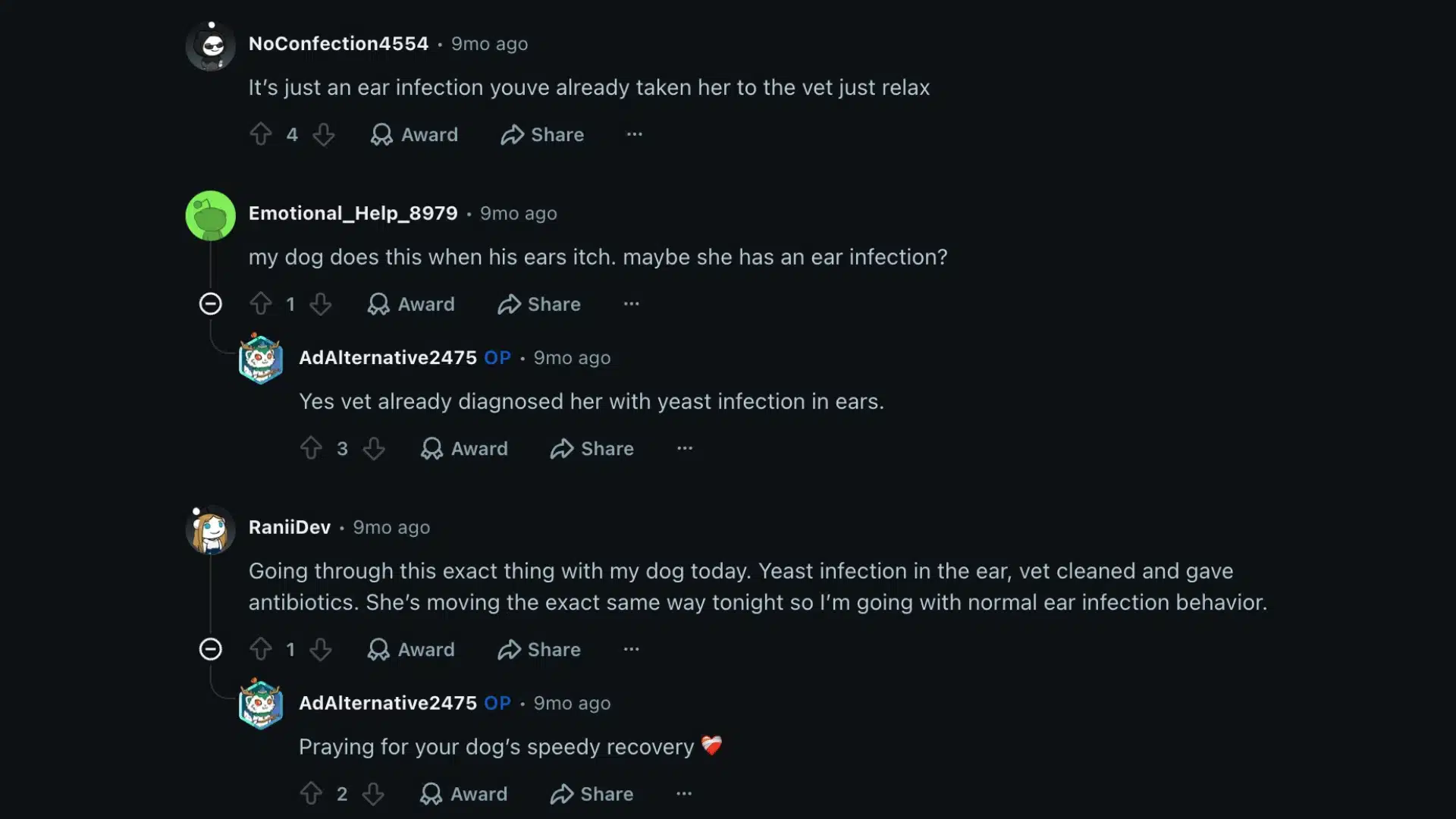
A Reddit discussion about dog head shaking highlights a recurring experience among owners of dogs that shake their heads despite no clear ear problems.
Many describe visiting veterinarians, receiving normal ear exam results, and still noticing intermittent head shaking once at home.
Some later link the behavior to mild allergies or environmental irritants that were not obvious during the first check.
Several comments also mention floppy-eared breeds such as Cocker Spaniels, Labradors, and Basset Hounds, where regular ear cleaning is common due to recurring mild irritation.
Another shared pattern involves dogs shaking their heads, mainly during excitement before walks or play, which usually stops once they settle down.
A smaller group of users reports rapid, tremor-like head movements that pause when the dog is distracted, often resembling benign head tremors rather than ear-related discomfort.
When to Call a Vet
Mild head shaking once in a while may not be serious, but repeated shaking should not be ignored. Call a vet if it lasts more than 2 days or keeps getting worse.
Ongoing irritation can mean an ear infection, trapped debris, allergies, or another deeper problem.
A vet visit is also needed if your dog seems painful, pulls away, whines, or refuses to be touched near the ear.
Redness, swelling, foul odor, or brown, yellow, or black discharge can indicate a yeast or bacterial infection. Head tilting, balance problems, or confusion are stronger warning signs and need quick care.
If gentle cleaning and basic care do not help, a vet can check for issues like otitis externa and give the right treatment.
How Do Vets Diagnose Head Shaking?
Veterinarians use a step-by-step clinical approach to identify the exact cause of head shaking, progressing from visual inspection to more in-depth diagnostic tests as needed.
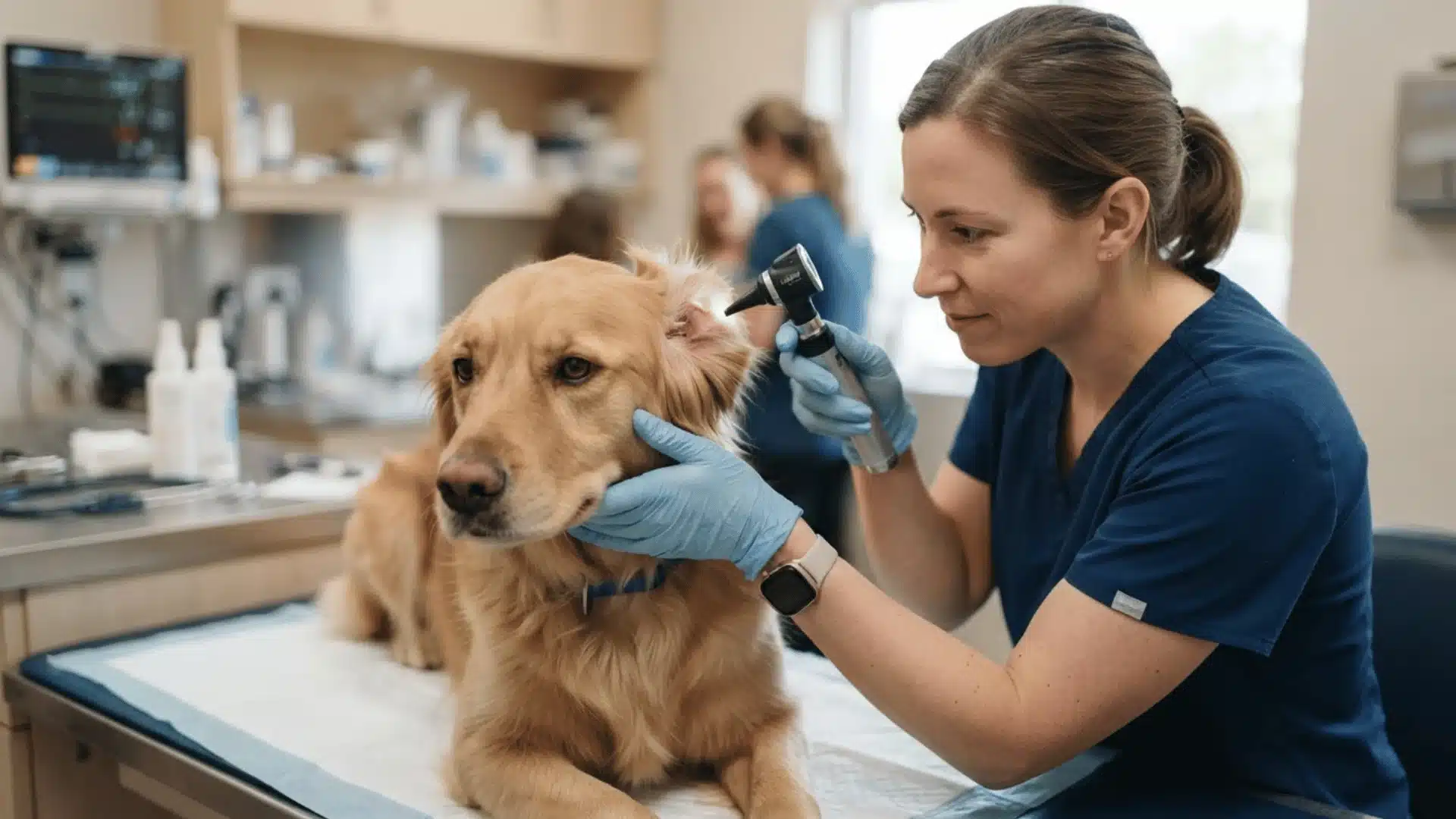
- Otoscope examination: The vet checks the ear canal for redness, swelling, wax buildup, or foreign objects that may indicate irritation or infection.
- Ear cytology test: A sample from the ear is examined under a microscope to detect bacteria, yeast, or ear mites that may be causing inflammation.
- Physical and oral check: The vet also evaluates the teeth, gums, and jaw area, as dental pain can sometimes mimic ear-related symptoms.
- Allergy evaluation: If symptoms recur, food or environmental allergy testing may be recommended to identify hidden triggers.
- Imaging tests (if needed): Advanced scans or imaging help assess deeper ear structures when inner ear or neurological issues are suspected.
Simple Home Care Tips for Healthy Dog Ears
Simple care routines can reduce the chances of recurring ear issues and help maintain ear health over time.
- Safe ear cleaning practices: Use vet-approved solutions and clean only the outer ear to avoid pushing debris deeper into the ear canal or causing irritation.
- Keeping ears dry after bathing or swimming: Gently dry the ears after water exposure to prevent moisture buildup that can lead to yeast or bacterial infections.
- Regular grooming for long-eared breeds: Maintain proper ear airflow by trimming excess hair and reducing trapped wax, dirt, and moisture inside the ear.
- Diet and allergy management support: Adjust diet and manage environmental allergens to reduce recurring inflammation and sensitivity inside the ear canal.
- Routine ear checks at home: Regularly inspect for early signs, such as redness, odor, or earwax buildup, to catch problems before they worsen.
Conclusion
One quick head shake is not always a reason to panic. Dogs may do it after waking up, while playing, after bathing, or when something is near the ear.
The bigger concern is the pattern. If the shaking occurs repeatedly or is accompanied by scratching, odor, redness, swelling, discharge, pain, or head tilting, it requires closer attention.
Ear problems can begin deeper inside the canal before anything looks obvious from the outside. That is why a dog shaking its head should be watched in the full context, not just in one moment.
Check when it happens, how often it happens, and whether one ear seems worse. A short video can also help your vet understand the issue faster.
Have you noticed a certain trigger behind your dog’s head shaking? Share your experience in the comments.
Frequently Asked Questions
Why Does My Dog Keep Shaking Its Head When Its Ears Look Clean?
Dogs may shake their heads even with clean ears due to early infections, allergies, jaw pain, stress, or deep ear irritation that is not visible on the outer ear surface.
How Long is Too Long for Dog Head Shaking?
Head shaking lasting more than 24-48 hours, especially with discomfort, odor, or redness, suggests an underlying issue that warrants veterinary evaluation rather than a normal, temporary irritation.
Can Ear Shaking Cause Permanent Damage?
Yes, constant vigorous head shaking can damage the blood vessels in the ear, leading to ear hematomas, pain, swelling, and sometimes requiring medical drainage or surgical treatment if severe.
Should I Clean My Dog’s Ears if They Keep Shaking?
Only clean outer ears with vet-approved solutions. Avoid deep cleaning, as it may worsen irritation or push debris deeper, especially if an infection is already developing.