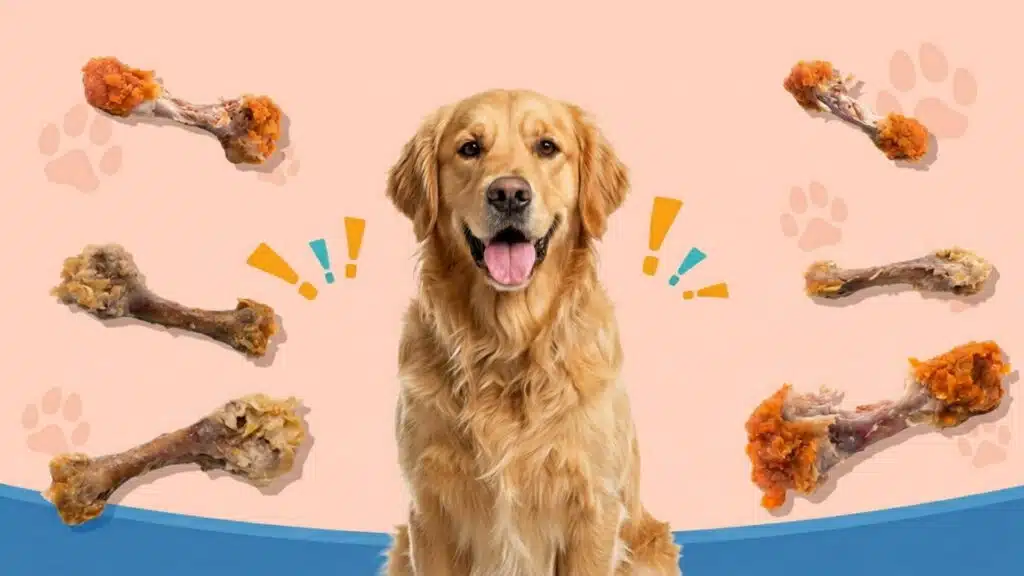
You turn your back for one second, and just like that, the chicken bone is gone. That heart-drop moment of realization that my dog ate a chicken bone is something no dog parent ever forgets.
It does not matter whether it came from the dinner table, the trash can, or a plate your kid left on the floor.
The bone is down, your dog looks perfectly happy about it, and you are the one spiraling.
As a veterinarian, I have seen this scenario more times than I can count, and the first thing I tell every panicked pet parent is the same: take a breath.
Most dogs that swallow a chicken bone come through it without serious harm, but how you respond in the next few minutes and the next few days makes all the difference.
This blog walks you through exactly what to do, what to watch for, and tips to prevent your dog from eating chicken bones.
Can Dogs Eat Chicken Bones?
Dogs should not eat chicken bones, neither cooked nor raw. Cooked chicken bones are the bigger concern because cooking makes them brittle.
When your dog chews one, it breaks into sharp splinters that can scratch the mouth, tear the esophagus, or puncture the intestinal lining.
Raw chicken bones are softer and less likely to splinter, but they carry their own risk of exposure to bacteria, including Salmonella.
Neither type is considered safe to feed intentionally.
The hollow structure of chicken bones makes them more fragile than beef or pork bones, which is why vets consistently advise against them.
Why Chicken Bones are Dangerous for Dogs?
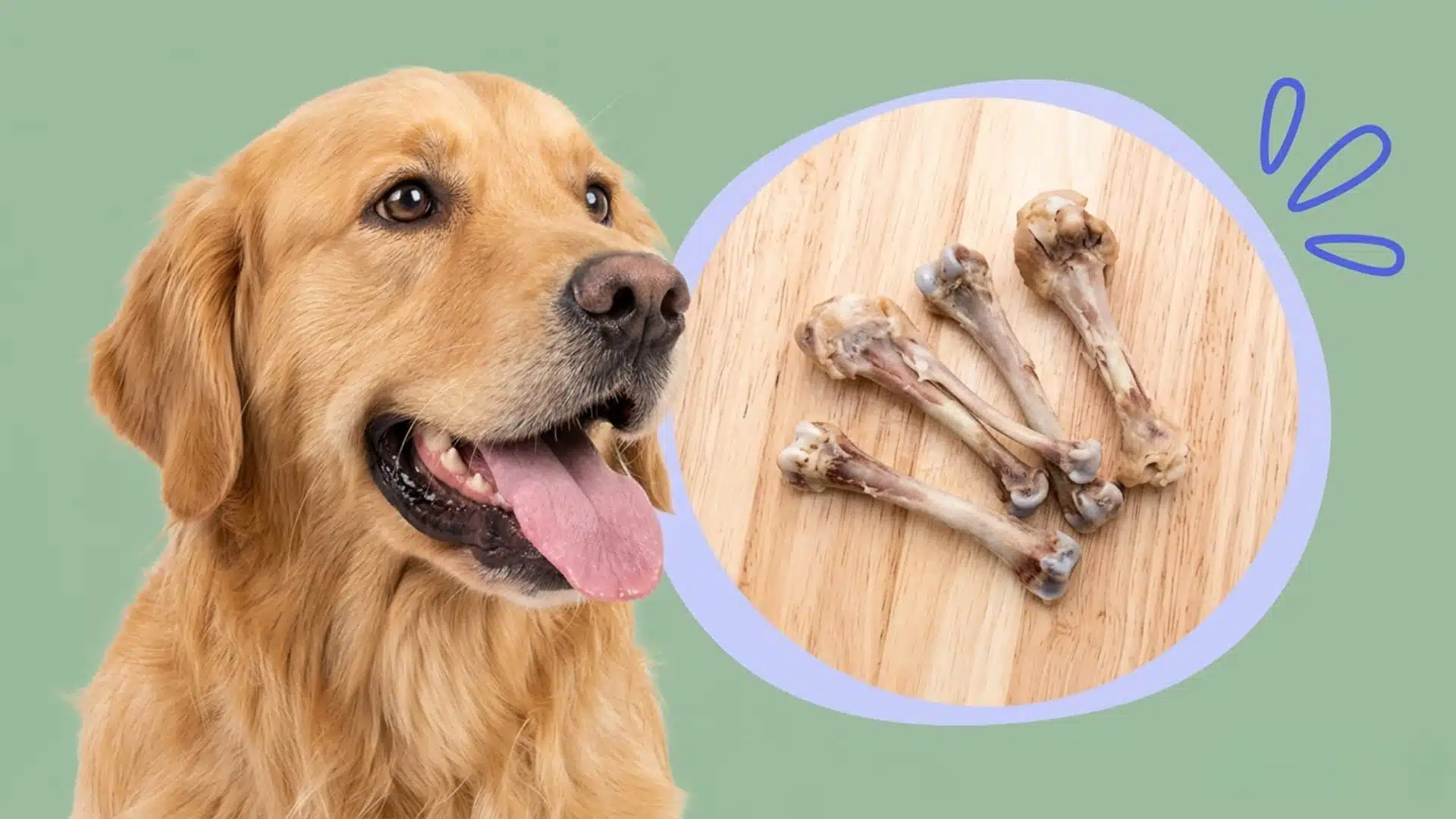
Chicken bones are dangerous because of how they break. Unlike denser bones, chicken bones splinter into sharp, jagged fragments when chewed.
Sharp fragments can injure the mouth, throat, stomach, or intestines.
Cooked bones are worse because heat makes them more brittle. A cooked chicken thigh bone can shatter with very little pressure.
Raw bones splinter less, but they can still carry bacteria and may block smaller dogs. Larger dogs can chew bones into fragments that cause just as much internal damage.
The size of the dog changes the risk, not whether the risk exists. Instead, stick to safe snacks for dogs that won’t put your pup at risk.
What Happens if a Dog Eats Chicken Bones?
When a chicken bone goes down, the damage does not always happen at once. It can occur at any point along the digestive tract, and the symptoms sometimes show up hours after the bone was swallowed.
1. In the Throat and Esophagus
A splintered bone can catch in the throat before it ever reaches the stomach.
This leads to gagging, retching, drooling, and visible discomfort. If the fragment is sharp, it can tear the esophageal lining.
That kind of internal scratch is not always obvious from the outside, which is why watching your dog closely in the first hour matters more than most people realize.
2. In the Stomach
The stomach can break down small, soft fragments using acid over time. Larger or sharper pieces are a different story.
They can scratch the stomach wall, cause persistent irritation, and in serious cases puncture through it entirely.
Gastric perforation is a medical emergency.
If your dog seems hunched, uncomfortable, or stops eating within hours of swallowing a bone, do not wait.
3. In the Intestines
This is where complications tend to show up last and hit hardest.
A fragment that passes through the stomach can lodge in the intestines, causing a blockage or perforation.
Symptoms often appear 24 to 72 hours after ingestion and include bloody stool, bloating, abdominal pain, and a dog that goes quiet and stops eating.
By the time these signs show up, the situation usually needs a vet.
Dogs do not always show symptoms immediately after swallowing a bone fragment. Even if your dog appears normal at first, monitor closely over the next several days and if your dog is showing any signs of distress, contact your vet immediately.
Signs Your Dog Swallowed a Chicken Bone
Most dogs won’t tell you what happened, but their body usually will. Watch for these signs in the first few hours after you suspect your dog ate a chicken bone:
- Gagging or retching: Your dog keeps making swallowing or coughing motions without bringing anything up, which can mean a fragment is caught in the throat.
- Pawing at the mouth: Repeated scratching at the face or mouth is a strong signal that something is lodged or causing irritation.
- Difficulty breathing: Labored, noisy, or unusually fast breathing may indicate a possible airway obstruction and requires immediate attention.
- Drooling more than usual: Excessive drool after eating can mean the esophagus is irritated or partially blocked by a bone fragment.
- Vomiting: One or two episodes can be the body trying to expel the bone, but repeated vomiting is a red flag that needs a vet.
- Bloody stool: Streaks of blood in your dog’s stool over the following 24 to 72 hours suggest internal scratching or tearing along the digestive tract.
What to Do if Your Dog is Choking on a Chicken Bone?
A choking dog needs action in seconds, not minutes.
If your dog is gasping, pawing at their mouth, or has gone completely silent, do not wait to see if it passes on its own.
Start by checking inside the mouth and carefully removing any visible fragments.
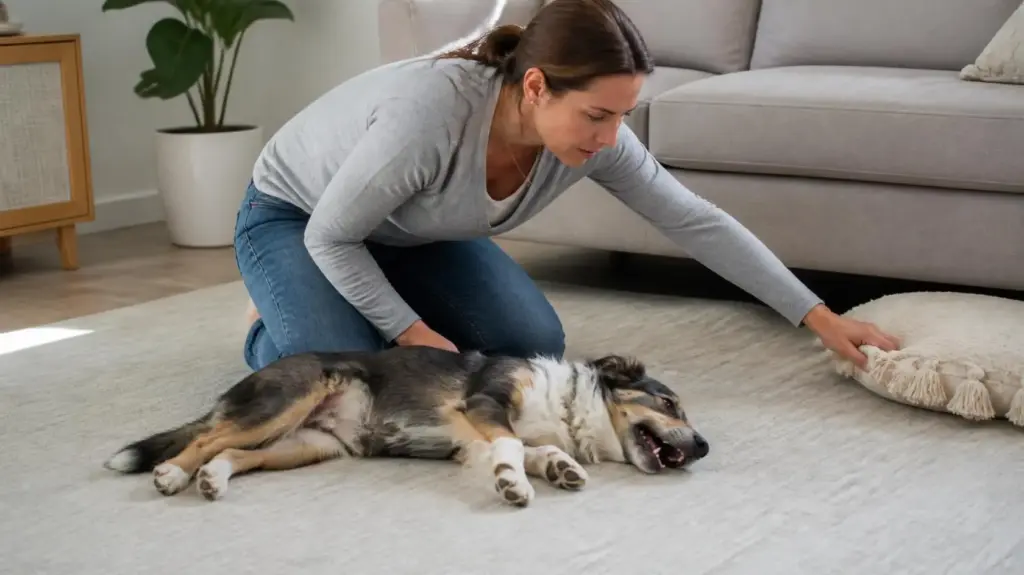
If nothing is visible and your dog is still struggling, attempt the canine Heimlich maneuver immediately.
And if your dog is fully blocked, unresponsive, or losing consciousness, skip everything else and get to an emergency vet now.
Every second counts with a full airway obstruction. Even if you manage to dislodge the bone at home, get your dog checked by a vet afterward.
What to Do if Your Dog Swallowed a Chicken Bone?
A choking dog needs action in seconds. If your dog is gasping, pawing at their mouth, or has gone completely silent, do not wait to see if it passes on its own.
Step 1: Check the Mouth
Open your dog’s mouth carefully and look for any visible fragments.
Place your hand over the muzzle, folding the gums over the canine teeth with your thumb and index finger so they don’t bite down.
If you can see the bone and remove it safely without pushing it further, do so. If you cannot see it or cannot reach it safely, do not probe blindly.
Step 2: Attempt the Canine Heimlich Maneuver
For a standing dog, stand behind your dog and wrap your arms around their abdomen just below the rib cage. Make a fist with one hand and cup your other hand around it.
Thrust firmly inward and upward five times in a swift, controlled motion. Check the mouth after each set. Repeat until the object is dislodged.
For a small dog, hold your dog on your lap and gently turn them onto their back.
Using the palm of your hand, apply firm pressure just below the rib cage and push inward and upward five times. Roll them back onto their side and check the mouth.
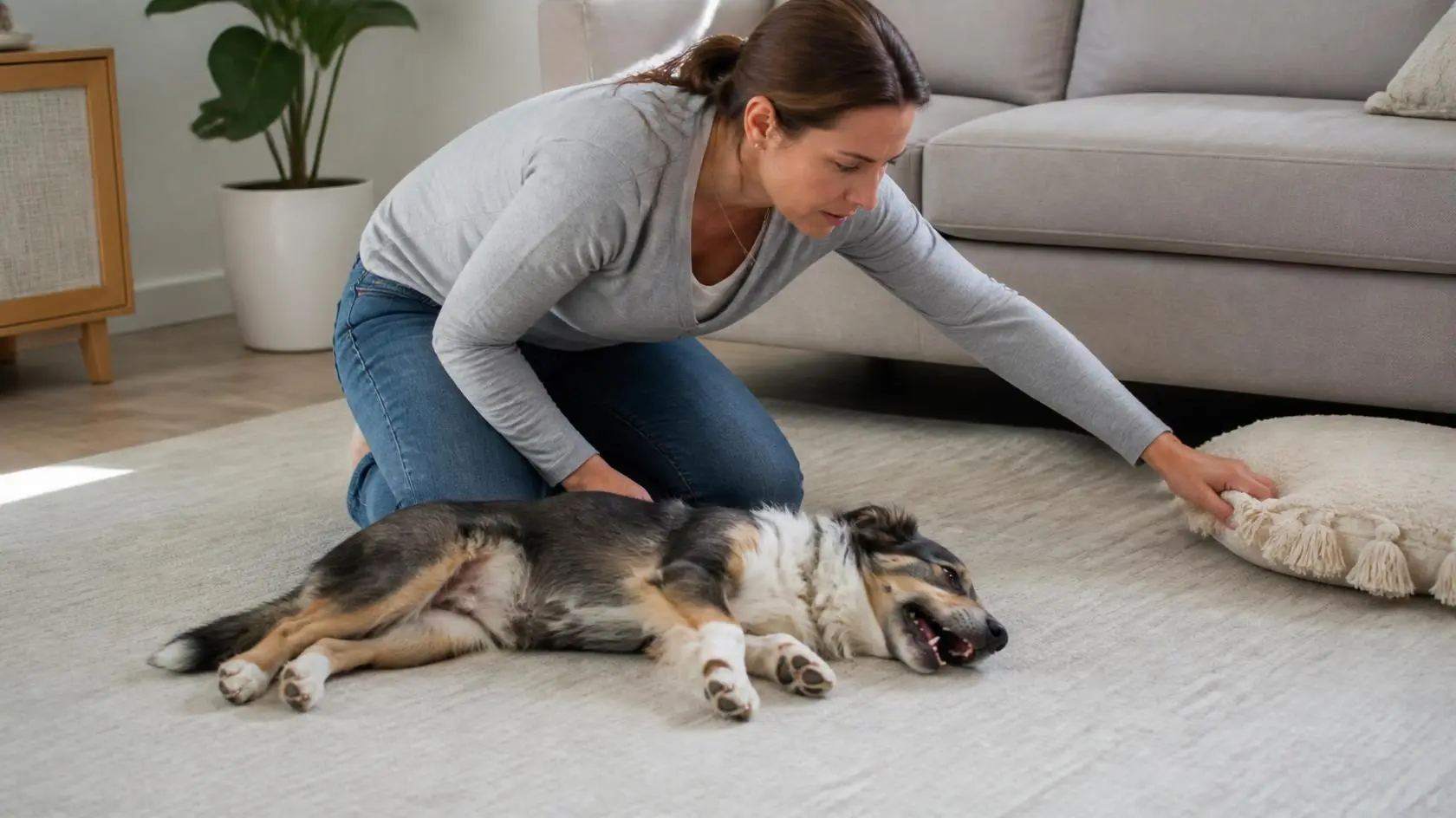
For alarge dog that can’t stand, place them on their side. Kneel behind their back and push firmly with both hands just below the rib cage, directing force toward the spine. Check the mouth between each set of thrusts.
After any five thrusts, give five sharp blows between the shoulder blades as a secondary technique. Alternate between the two until the airway is clear.
Step 3: Get to a Vet Immediately
Even if you dislodge the bone at home, an emergency vet visit is still required. Internal tears, remaining fragments, and airway trauma may not be visible without an examination.
The signs below are not something to sleep on or wait out until morning. If your dog is showing any of them, pick up the phone right away.
- Choking or labored breathing
- Blood in stool or swollen abdomen
- Loss of appetite for 24+ hours
- Repeated vomiting
If your dog is fully blocked, unresponsive, or losing consciousness, skip steps 1 and 2 and get to the vet now.
If your dog chokes on a bone, contact a veterinarian immediately for guidance. Prompt veterinary assessment can help identify complications that may not be apparent during the initial emergency.
Do Chicken Bones Dissolve in a Dog’s Stomach?
Chicken bones can partially dissolve in a dog’s stomach, but it depends on the size of the fragment and how long it stays there.
A dog’s stomach acid is significantly stronger than a human’s, which gives it some ability to break down small, soft bone pieces over time.
Cooked bones are more brittle and tend to splinter into sharp fragments that the stomach struggles to fully break down.
Raw bones are softer and more likely to dissolve without causing damage. Larger fragments are the real concern.
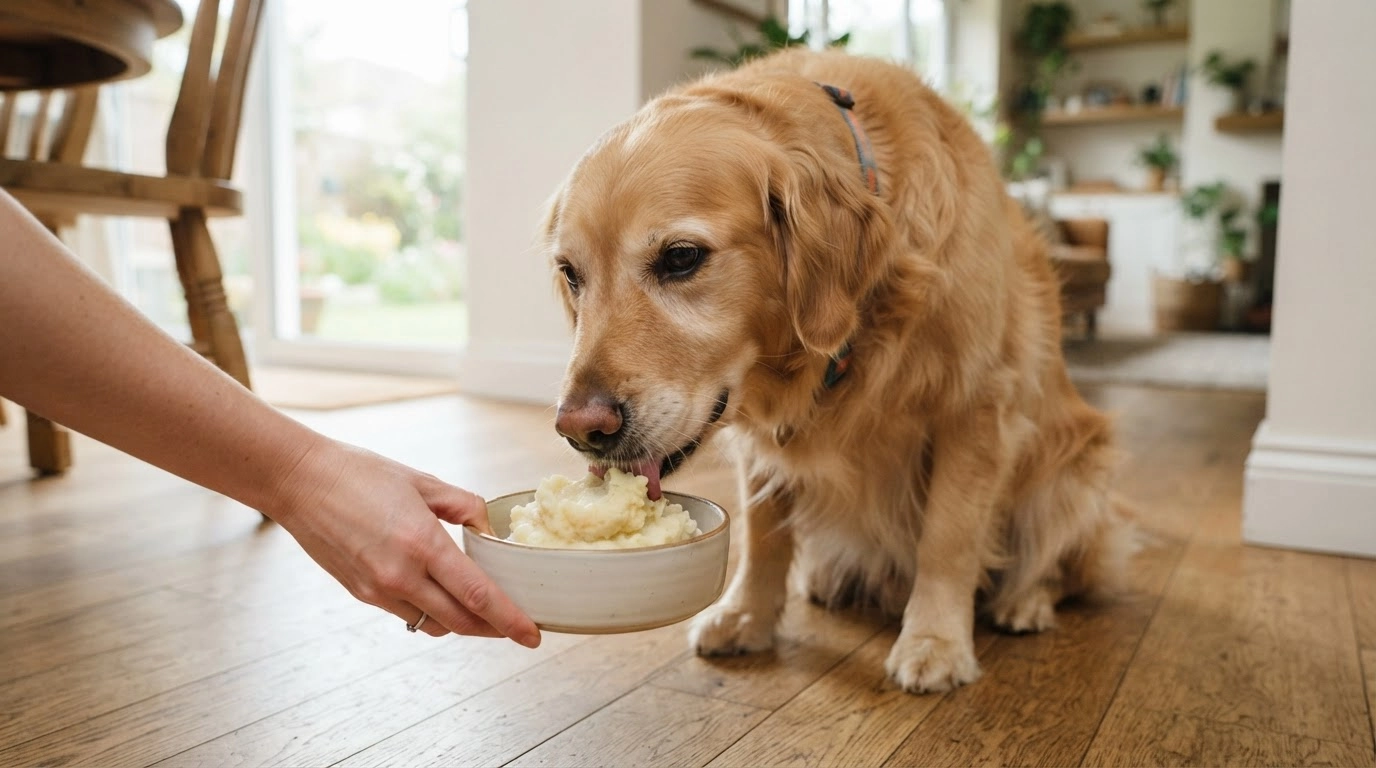
Supporting your dog’s digestion during recovery with the right fiber foods for dogs can help things move along more smoothly.
Tips to Prevent Your Dog from Eating Chicken Bones
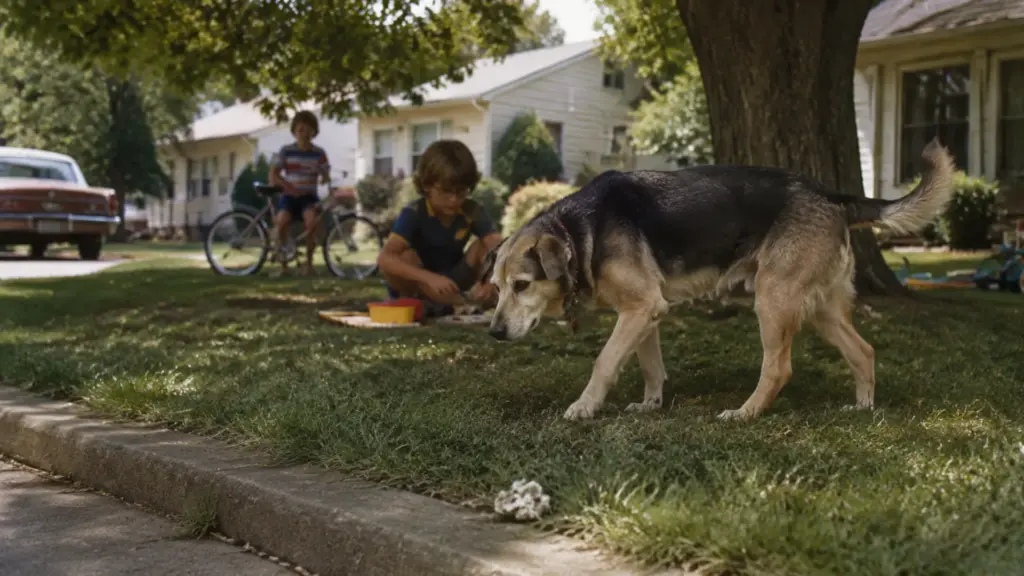
Most chicken bone incidents happen in seconds, usually when no one is watching. A few simple habits around the house can stop it from happening in the first place.
- Secure your trash can: Choose a locking bin or keep trash behind a closed door so chicken bones stay out of reach after meals daily.
- Clean up immediately after meals: Put bones in a sealed bag and remove them from the kitchen before your dog follows the lingering smell back.
- Keep your dog out of the kitchen: Use a baby gate during cooking or cleanup so dropped bones are not grabbed from the floor.
- Train drop-it and leave-it commands: These cues help you stop your dog before they swallow something risky during meals or walks.
- Warn guests and family members: Remind everyone not to feed table scraps, especially chicken bones, because one small mistake can create an emergency.
- Dispose of bones carefully: Wrap bones in a sealed bag before tossing them so the smell does not pull your dog toward the bin.
Conclusion
A chicken bone disappearing into your dog’s mouth is scary, but it does not have to end badly.
Many dogs pass small bones without serious trouble, but staying calm, calling a vet, and watching for warning signs is the safest approach.
As a veterinarian, the cases I worry about most are not the ones where the owner called me right away.
They are the ones where someone waited too long, hoping things would sort themselves out. Trust your instincts. If something feels off, it probably is.
Keep the steps in this guide somewhere easy to find, because these moments never happen when you are prepared for them.
Has your dog ever swallowed something they should not have? Drop a comment below and tell us how you handled it.
Frequently Asked Questions
Can a Dog Pass a Chicken Bone Naturally?
Yes, many dogs pass small chicken bone fragments through their stool without any issues, especially if the piece was small and swallowed whole.
How Long Does It Take a Dog to Pass a Chicken Bone?
Most dogs pass a chicken bone within 24 to 72 hours. Monitor their stool closely during this window for any fragments or blood.
Are Small Dogs More at Risk from Chicken Bones than Large Dogs?
Yes. Small dogs have narrower digestive tracts, making blockages more likely. Large dogs face fewer blockages but can still suffer internal damage from sharp fragments.