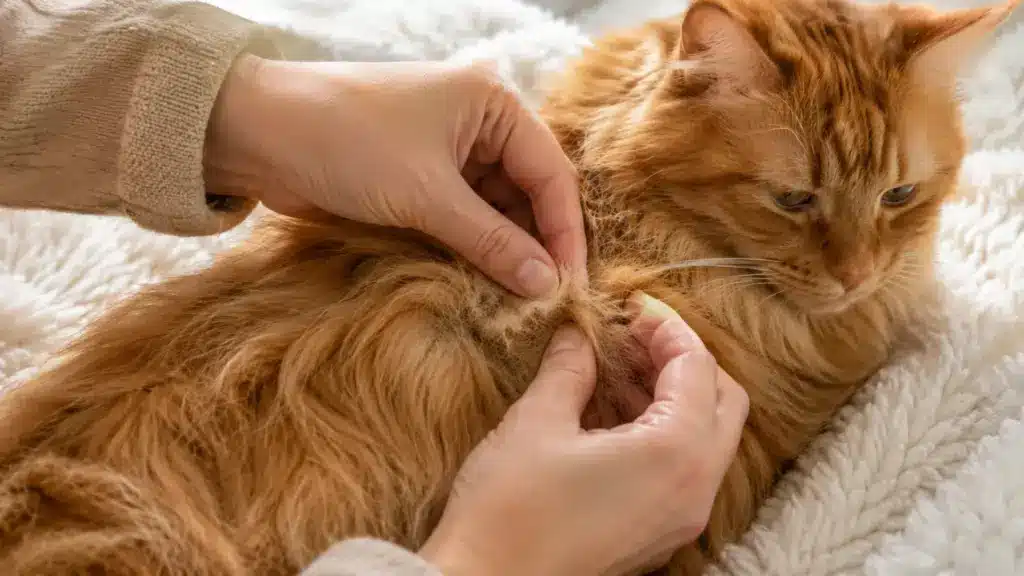
We know that sinking feeling when you run your hand along your cat’s back and hit a tight, tangled clump that wasn’t there last week.
It happens to the most attentive pet parents, especially with long-haired cats who seem to attract knots like magnets.
The good news is that most mats can be worked out at home, without scissors and without a vet bill, if you catch them before they’ve had months to tighten down to the skin.
If you are wondering how to remove matted cat hair without cutting, the right tools, patience, and a calm approach can make the process much less stressful.
This blog covers the gentlest, most effective methods to get your cat comfortable again.
Why Do Cats Get Matted Fur?
Matted fur happens when loose hairs get trapped in the coat instead of falling out naturally.
Over time, these hairs twist around healthy fur and tighten into knots. Mats form most often in high-friction areas like behind the ears, under the legs, around the collar, and on the belly.
Popular long-haired cat breeds like Persians, Maine Coons, Ragdolls, and Himalayans are at the highest risk because their coats have more material to tangle.
But short-haired cats with thick undercoats are not immune, and neither are cats going through heavy shedding seasons in spring and fall.
Health issues can also contribute. Older cats with arthritis, overweight cats, and cats with certain medical conditions may struggle to groom properly.
If your cat suddenly develops mats despite having had a clean coat in the past, a veterinary checkup is a good idea.
The Cornell Feline Health Center notes that as cats age, their skin becomes thinner, less elastic, and more prone to infection
What You’ll Need Before Removing Matted Cat Hair
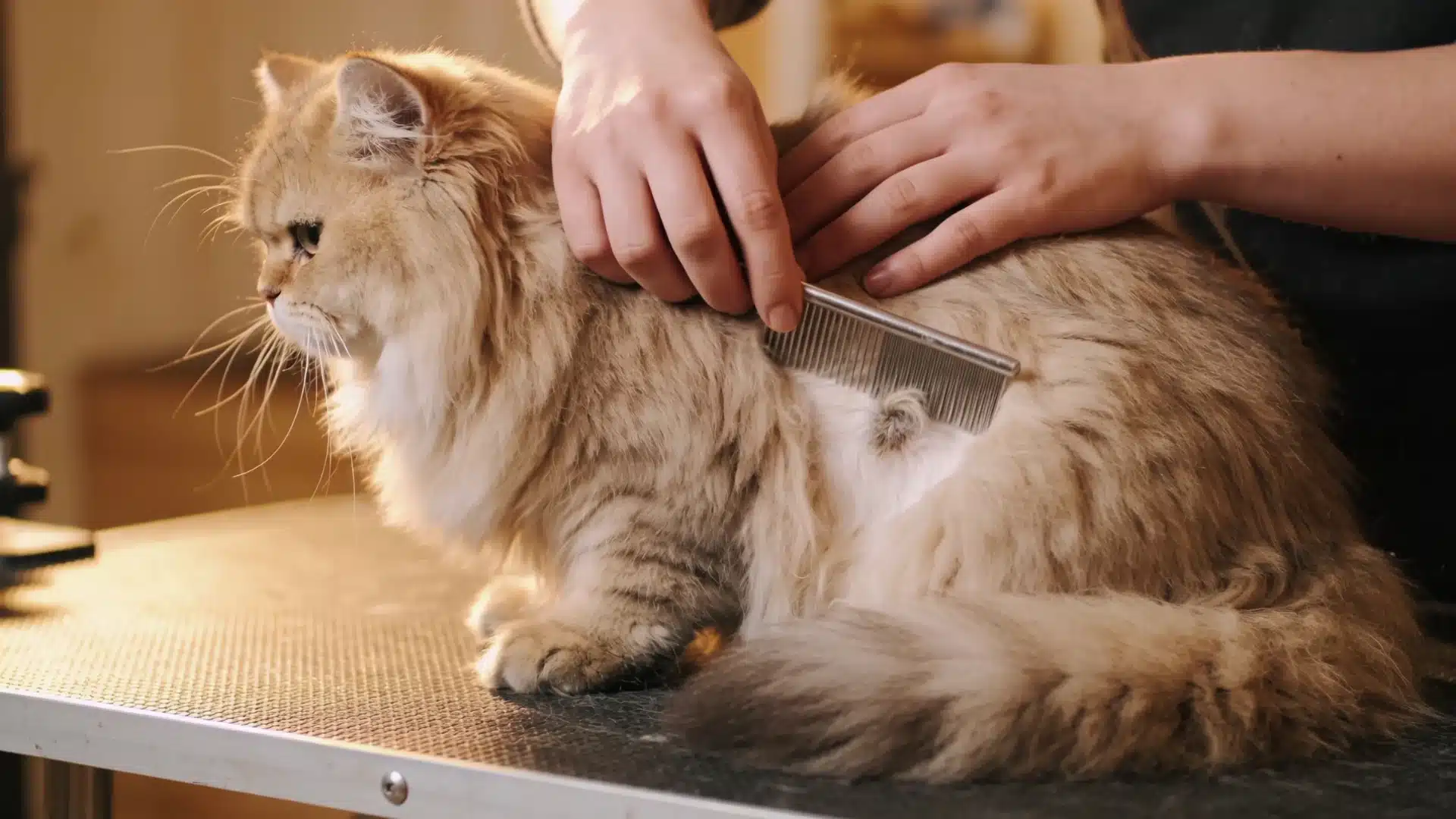
Gather everything before you sit down with your cat. Stopping mid-session to find a tool is a good way to lose your cat’s cooperation.
- Wide-tooth metal comb: Use this to loosen the outer edges of each mat slowly, without pulling hard against your cat’s sensitive skin.
- Slicker brush or soft bristle brush: Use it after the mat loosens to smooth the coat, lift loose hair, and make your cat look neat again.
- Coconut oil, olive oil, or cornstarch: These can help separate tight hair strands, but use only a small amount and keep oily products away from the eyes.
- Cat treats: Treats help your cat connect grooming with comfort, giving you more time to work through mats without panic or scratching.
- A quiet room: Choose a calm space with closed doors, soft light, and fewer distractions so your cat feels safer during grooming.
One tool to skip is scissors. Cat skin is thin, loose, and deceptively easy to nick because it folds into the base of the mat.
Professional groomers see skin injuries from scissors every week. If a mat is too tight to work out manually, electric clippers are a safer path, or simply visiting your groomer.
How to Assess the Severity of the Mat Before You Start?
Before you start, check how tight the mat is and how close it sits to your cat’s skin.
A mild mat usually feels loose and sits on the surface, and you can slide a finger under it without pressure. These mats often loosen with a little cornstarch or a tiny amount of oil and gentle combing from the outer edge.
A moderate mat feels firmer and sits closer to the skin, but you can still work a finger under the base. These need slower handling and may take more than one short grooming session.
A severe mat lies flat against the skin, covers a wide area, or leaves no space for your finger. Do not pull or comb these at home. A groomer or vet is the safer choice for removal.
Note: If your cat’s mat involves broken skin, discharge, or signs of pain, consult a veterinarian before attempting home removal.
How to Remove Matted Cat Hair without Cutting: Step-by-Step Process
Removing a mat takes patience, not force; the goal is to loosen the tangled hair slowly while keeping your cat calm and comfortable. Work in short sessions, start from the outer edge of the mat, and stop if your cat shows pain, stress, or skin irritation.
- Wait for a Calm Moment: Wait until your cat is calm and relaxed, ideally after a meal or during a quiet nap.
- Apply a Loosening Agent: Apply your chosen mat-loosening product and allow it to sit for the recommended time.
- Protect the Skin: Hold the base of the mat firmly between your thumb and forefinger, right against the skin. This prevents pulling from reaching your cat’s skin.
- Break Up the Mat: Use your fingers to gently separate the mat from the outer edge inward, dividing it into smaller sections. Never pull downward from the tip of the mat.
- Comb Through Carefully: Use a wide-tooth comb to work through each section, starting at the hair tips and gradually moving toward the skin.
- Take Breaks as Needed: If your cat becomes restless or irritated, stop and continue later. Several short sessions are less stressful than one long grooming session.
- Reward Your Cat: Offer treats, praise, or affection after each session, even if you only removed part of the mat.
Hairballs and grooming habits are connected in cats that self-groom heavily. When you’re working through mats regularly, keeping the coat brushed out also reduces the amount of loose fur your cat swallows.
Natural Methods to Loosen Mats
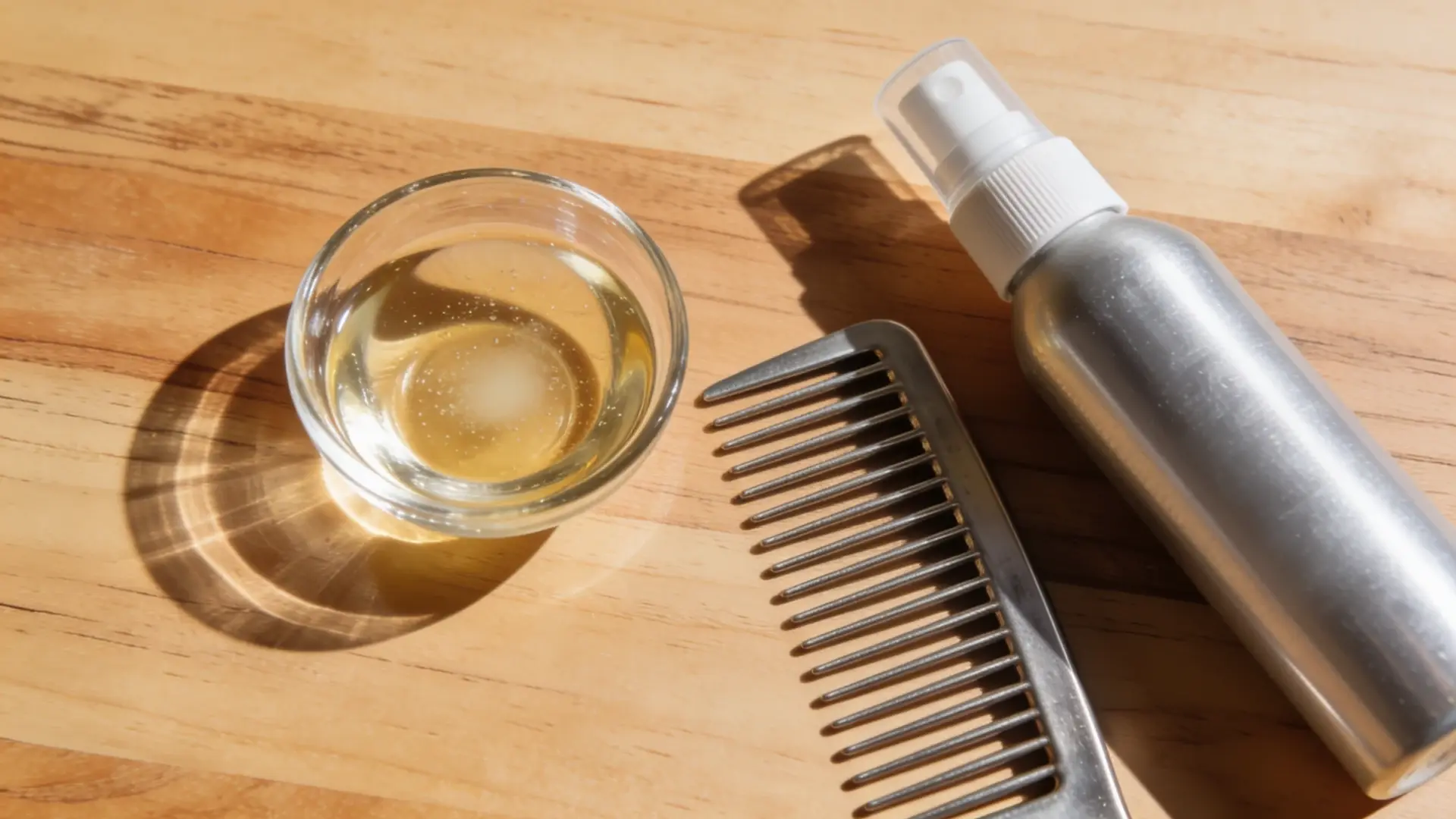
These are the approaches I recommend to cat owners who want to avoid cutting, and most of them work with things already in your kitchen.
1. Coconut Oil
Coconut oil softens the hair cuticle and adds slip between the tangled strands, which is exactly what you need to separate them without force.
Melt a small amount between your fingers first (it’s solid at room temperature), then massage it gently into the mat from the base outward.
Let it sit for five to ten minutes, then try separating the mat by hand before reaching for the comb.
Your cat will likely groom off any residue later, which is fine since coconut oil is safe for ingestion in small amounts.
2. Olive Oil
Olive oil works on the same principle. A light application at the base of the mat, worked in with your fingertips, can soften even fairly stubborn knots.
One note worth knowing: olive oil contains terpenic acids that a cat’s liver isn’t well equipped to process in large quantities, so use it sparingly and wipe away any excess rather than letting a thick coat sit. A thin application massaged into the mat is plenty.
Why cats shed so much is worth understanding here, because the same loose undercoat that drives shedding is what feeds mat formation.
Keeping shedding under control through diet and a brushing routine is the best long-term prevention.
3. Cornstarch or Baby Powder
These work differently from oils. Instead of adding slip, they reduce friction between the hairs, which loosens the mechanical grip of the knot.
Sprinkle a small amount directly onto the mat, work it in gently with your fingers, then try pulling the hairs apart from the outside edge.
Cornstarch is particularly useful for cats who object to having oil rubbed into their coat, or for mats in areas where you don’t want a slippery residue.
4. Detangling Spray
Pet-safe detangling sprays offer a convenient alternative to oils for loosening mats in a cat’s coat.
These products are specifically formulated for feline fur and can help reduce tangles without leaving a greasy residue behind.
Simply spray the product directly onto the mat, allow it to sit for the recommended amount of time, and then gently work the mat apart using your fingers and a wide-tooth comb.
For many owners, the biggest advantage is that most detangling sprays dry cleanly, leaving the coat soft and manageable.
Tips for Preventing Mats from Coming Back
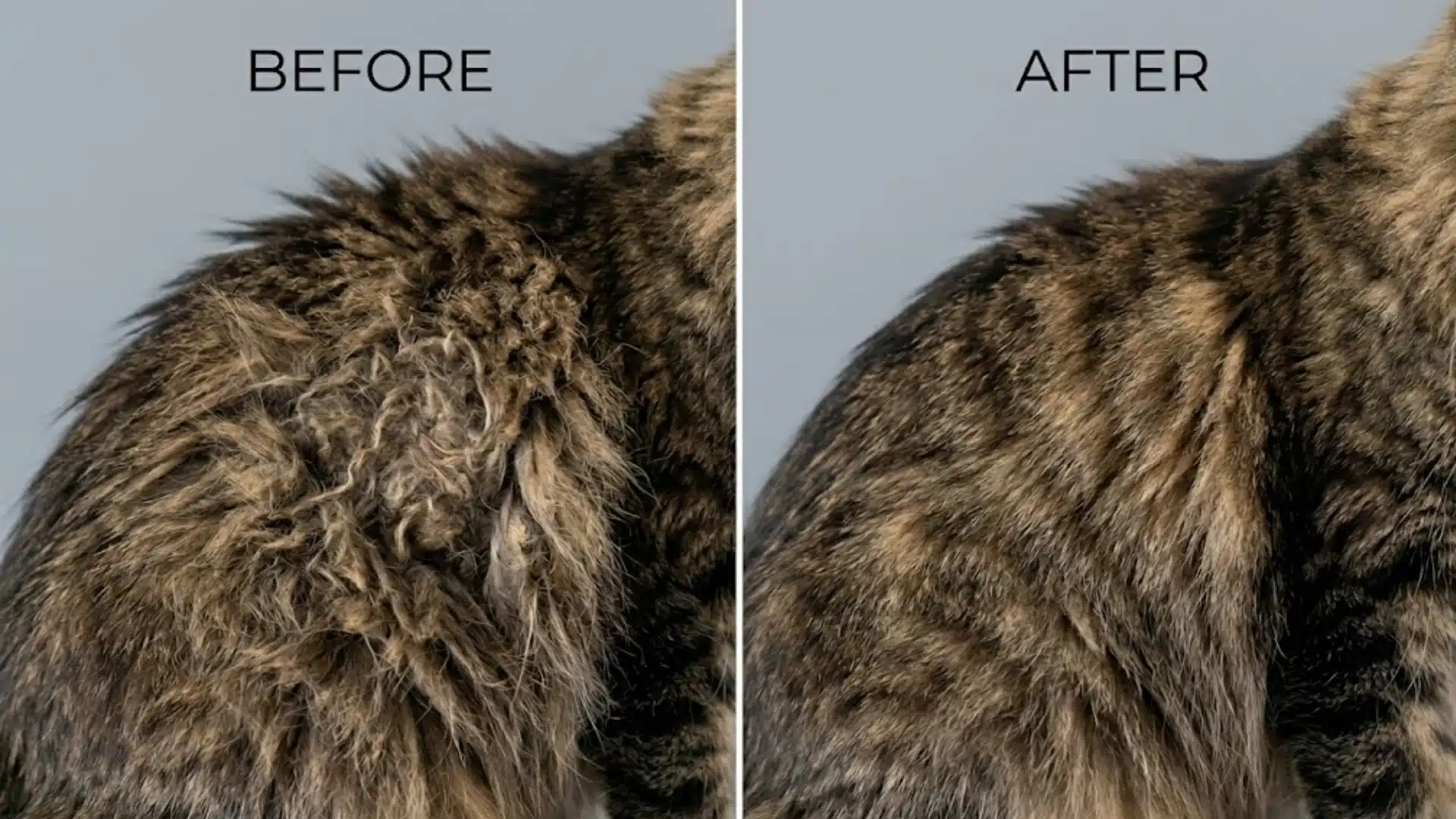
Removing mats can provide immediate relief and improve your cat’s comfort, but prevention is always the easier and less stressful option.
- Brush regularly: For long-haired cats, daily brushing is ideal. For medium-haired cats, three to four times a week keeps most mats from forming. Use a metal comb for the undercoat and follow up with a slicker brush.
- Focus on friction zones: Behind the ears, under the front legs, around the collar, and on the belly are where mats start. Spend extra time in these spots.
- Keep the coat dry: Mats form faster in wet or humid conditions. After a bath, dry your cat thoroughly before brushing, since wet mats tighten considerably as they dry.
- Consider diet: A diet with adequate protein and omega-3 fatty acids supports coat health and reduces excessive shedding. Fish oil supplements can help cats with persistently dry or tangle-prone coats.
- Schedule regular grooming appointments: Even if you brush at home, a professional grooming session every six to eight weeks can catch developing mats before they become serious, especially for Persian, Maine Coon, or Ragdoll owners.
When to Call a Professional Groomer or Vet?
Some mats are genuinely beyond home treatment, and knowing when to stop is important.
Call a groomer when the mat sits flat against the skin with no space to work a finger underneath, when your cat is visibly in pain or distress when you touch it, or when multiple tight mats cover a large area.
A groomer experienced with cat coats can remove these safely with professional clippers, in a way that’s much less traumatic than a prolonged home session.
Mats that have been present for a long time can trap moisture, restrict airflow, and create the conditions for skin infections.
A vet is also the right call if your cat suddenly develops widespread matting without any change in grooming routine.
Since that pattern can signal an underlying health issue rather than just a grooming gap.
Conclusion
Most cats do not enjoy being groomed through tangles, and that’s worth acknowledging. The goal isn’t a perfect grooming session; it’s an experience your cat will tolerate enough to repeat.
Short sessions, generous treats, and genuine patience go further than the best detangling spray on the market.
I’ve watched owners transform cats who once hissed at a brush into cats who walk over and sit down for their grooming time. It takes weeks, not days, but it’s possible.
Start with whatever mat bothers your cat the least, use one of the natural methods above to soften it, and work slowly from the outside edge in.
Have you used coconut oil or another home remedy to work through your cat’s mats? Share what worked in the comments below. We love hearing from fellow cat parents in the trenches.
Frequently Asked Questions
Can I Use Baby Oil to Remove Mats from My Cat’s Fur?
Baby oil can loosen mats, but it’s a mineral oil derivative and is not safe for cats to ingest in more than trace amounts. If you use it, apply very sparingly and wipe away any excess before your cat has a chance to groom the area. Coconut oil is a safer alternative with a similar effect.
How Long Should I Let Oil Sit on a Mat Before Trying to Comb It Out?
Most oils need five to fifteen minutes to penetrate the tangled hair and soften the cuticle. For very tight or large mats, leaving the oil for up to thirty minutes before working through it gives better results. Apply the oil, let your cat relax somewhere comfortable, then come back to it.
Will Matted Fur Grow out on Its Own if I Leave It?
No. Mats do not grow out. Without intervention, they tighten further over time as more loose hair gets caught, the skin underneath becomes irritated, and eventually the mat can restrict circulation or cause skin breakdown.
Is It Safe to Bathe a Matted Cat to Loosen the Knots?
Bathing a matted cat before the mats are out is not a good idea. Water causes mats to shrink and tighten as they dry, making them significantly harder to remove. Always work through mats before any bath, not after.