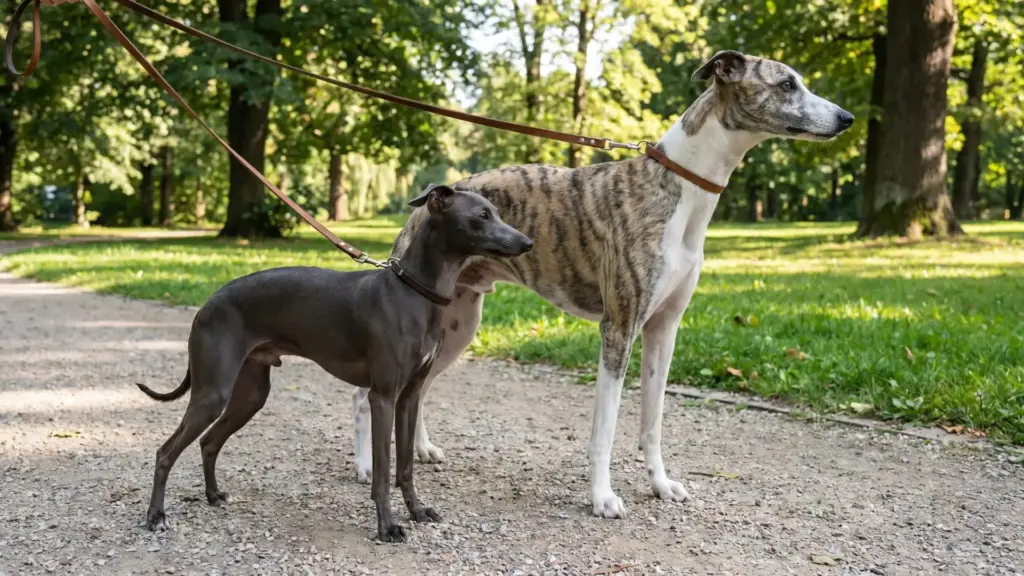
The Italian Greyhound and the Whippet are two of the most commonly misidentified dog breeds. Put them side by side, and most people can’t tell them apart. But choosing the wrong one for your lifestyle can be a costly mistake.
I’ve seen many owners assume they’re basically the same dog, only to discover they have very different needs. Both are gentle sighthounds, but they’re surprisingly different to live with.
One breed often needs you nearby almost all the time. The other is happy to share your life without depending on your constant presence.
Understanding that distinction before bringing one home can make all the difference.
Italian Greyhound vs Whippet: Breed Origins and History
Italian Greyhounds and Whippets may look alike, but their backgrounds are very different.
The Italian Greyhound is an ancient breed with roots going back more than 2,000 years.
It became especially popular during the Renaissance, when European nobles kept these small, elegant dogs as close companions. Their history is closely tied to indoor life, comfort, and human companionship.
Whippets developed much later in Victorian England. They were bred by working-class families, especially coal miners, who wanted a smaller, faster, and more affordable version of the Greyhound.
Whippets were used for rabbit hunting and racing, which made speed and practicality important parts of their background.
So, while both are sighthounds, one comes from a companion-focused past, and the other from a sporting and working background.
Italian Greyhound vs Whippet: Main Differences
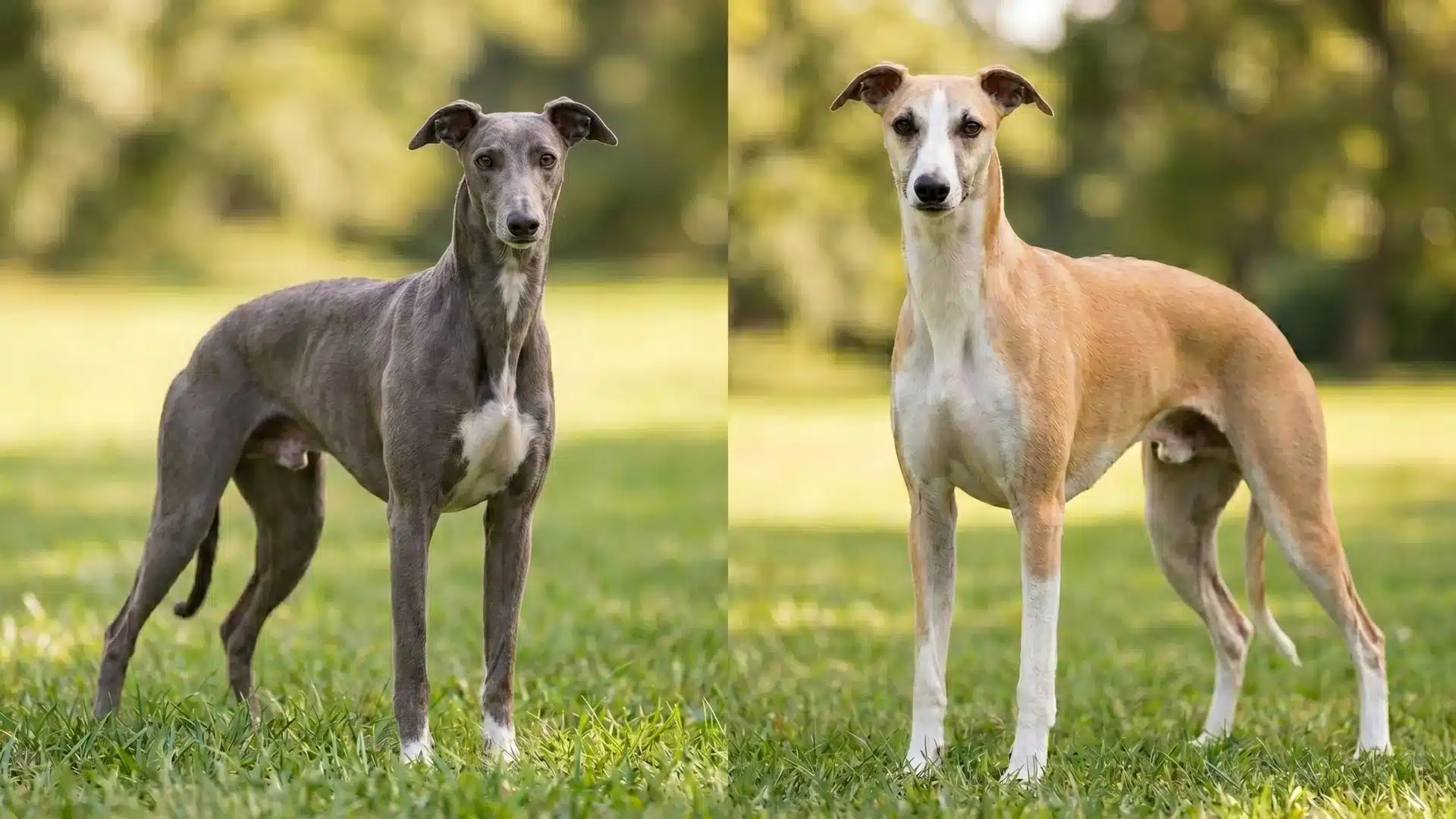
Italian Greyhounds and Whippets may look similar, but their size, personality, and training needs can make daily life with each breed very different.
1. Size and Appearance
The biggest difference between an Italian Greyhound and a Whippet is size.
Italian Greyhounds are much smaller, usually weighing 7 to 14 pounds and standing 13 to 15 inches tall.They have a fine bone structure, thin legs, and a very delicate frame.
Whippets are larger and stronger, usually weighing 25 to 40 pounds and standing about 18 to 22 inches tall.
Both breeds have slim sighthound bodies, but the Whippet looks more muscular, while the Italian Greyhound looks lighter and more fragile.
2. Temperament and Personality
Italian Greyhounds are usually more attached to their owners and often want constant closeness.
Many follow their people around the house and may become stressed when left alone for long periods. They are sweet, playful, and sensitive, but they need a calm home and gentle handling.
Whippets are also affectionate, but they are usually more relaxed and independent.
They enjoy attention, then settle quietly on their own. For families or busier homes, a Whippet is often easier to manage than an Italian Greyhound.
3. Training and Housebreaking
Italian Greyhounds and Whippets are smart, but they need gentle, consistent training.
Italian Greyhounds can learn basic commands like sit, stay, come, and leave it, but housebreaking often takes longer because they dislike cold, rain, and wet ground.
A fixed bathroom schedule, indoor potty pads, crate training, and praise after every success can help.
Whippets are usually easier to train because they are more food motivated and respond well to short daily sessions.
Focus on leash manners, recall practice in fenced areas, and impulse control, since both breeds may chase small animals.
4. Grooming and Coat Care
Italian Greyhound and Whippet are both low-maintenance when it comes to grooming. Their short, smooth coats do not need regular trimming, and a weekly brushing or wipe down is usually enough to remove loose hair.
Italian Greyhounds may need more skin protection because their coat is very thin and they get cold easily. Whippets also need warmth in cooler weather, but they are slightly hardier.
Both breeds need regular nail trimming, ear checks, and dental care, especially Italian Greyhounds, which can be more prone to dental issues.
Italian Greyhound vs Whippet: Exercise and Daily Routine
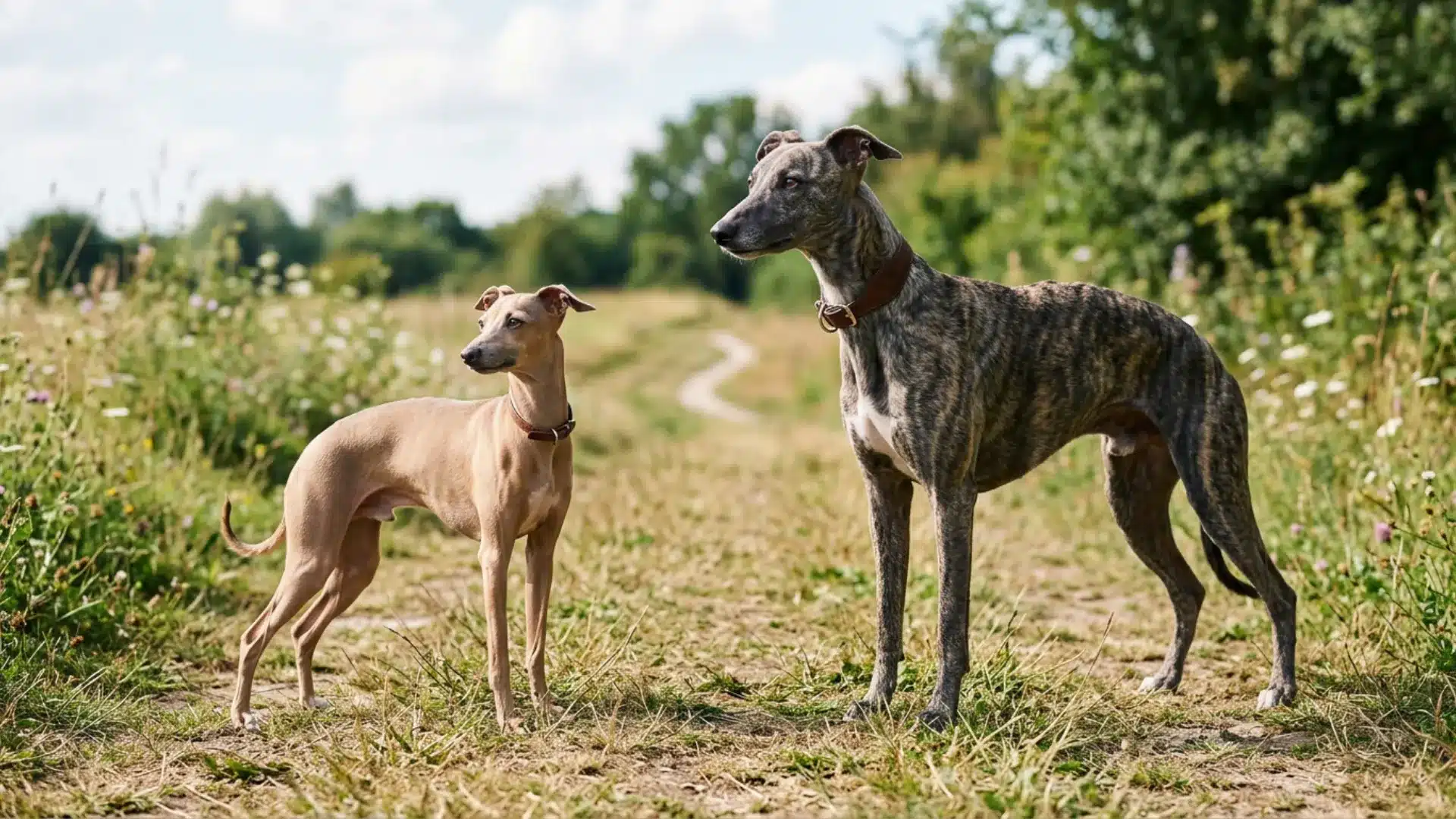
Many people assume these breeds need endless exercise because they are so fast. In reality, both are built for speed, not stamina. They enjoy short bursts of activity followed by plenty of relaxation.
Italian Greyhound
- Usually needs 30-40 minutes of daily exercise.
- Enjoys short walks, play sessions, and occasional sprints in a secure area.
- Extremely sensitive to cold weather due to its thin coat and low body fat.
- Often needs a sweater or coat during cooler months and may even appreciate extra warmth indoors.
- Well-suited to apartment living because it is generally quiet and happy to lounge for much of the day.
Whippet
- Typically does well with around 60 minutes of daily activity.
- Benefits from regular walks, plus opportunities to run safely in a fenced space.
- Handles cool weather slightly better than an Italian Greyhound but still needs protection in colder temperatures.
- Usually enjoys a calm indoor lifestyle and is not known for excessive barking.
- Adapts well to apartments as long as daily exercise needs are met.
Note: Never let either breed off leash in open areas. Their prey drive can override recall, so use fenced spaces for safe running.
If you’re also considering long-term ownership costs, you may want to explore other budget-friendly dog breeds for comparison.
Italian Greyhound vs Whippet Health and Lifespan
Both breeds are generally healthy and long-lived, but their risks are not the same.
The Italian Greyhound often lives around 14 to 15 years, and some can live even longer with excellent care.
The Whippet usually lives about 12 to 15 years, which is strong for a medium-sized dog.
For the Italian Greyhound, the biggest concerns are:
- Leg fractures: Their fine bones are delicate, so rough play, high furniture, and awkward jumps can cause serious injuries.
- Dental disease: Iggies have small, crowded mouths, so brushing and professional cleanings matter.
- Progressive retinal atrophy: This inherited eye condition can lead to vision loss, so responsible breeders should screen for it.
- Hypothyroidism: This can be missed because sighthounds naturally have different thyroid patterns than many other breeds.
For the Whippet, the main concerns are:
- Mitral valve disease: This heart condition is more common in older Whippets, and regular vet checks can help catch it early, as noted by ASPCA Pet Insurance.
- Bloat: Their deep chest can increase the risk, so meals should be spaced away from hard exercise.
- Eye conditions: Routine eye checks are a smart part of long-term care.
Note: Italian Greyhounds and Whippets can be sensitive to anesthesia.
Which Breed Actually Fits Your Life?
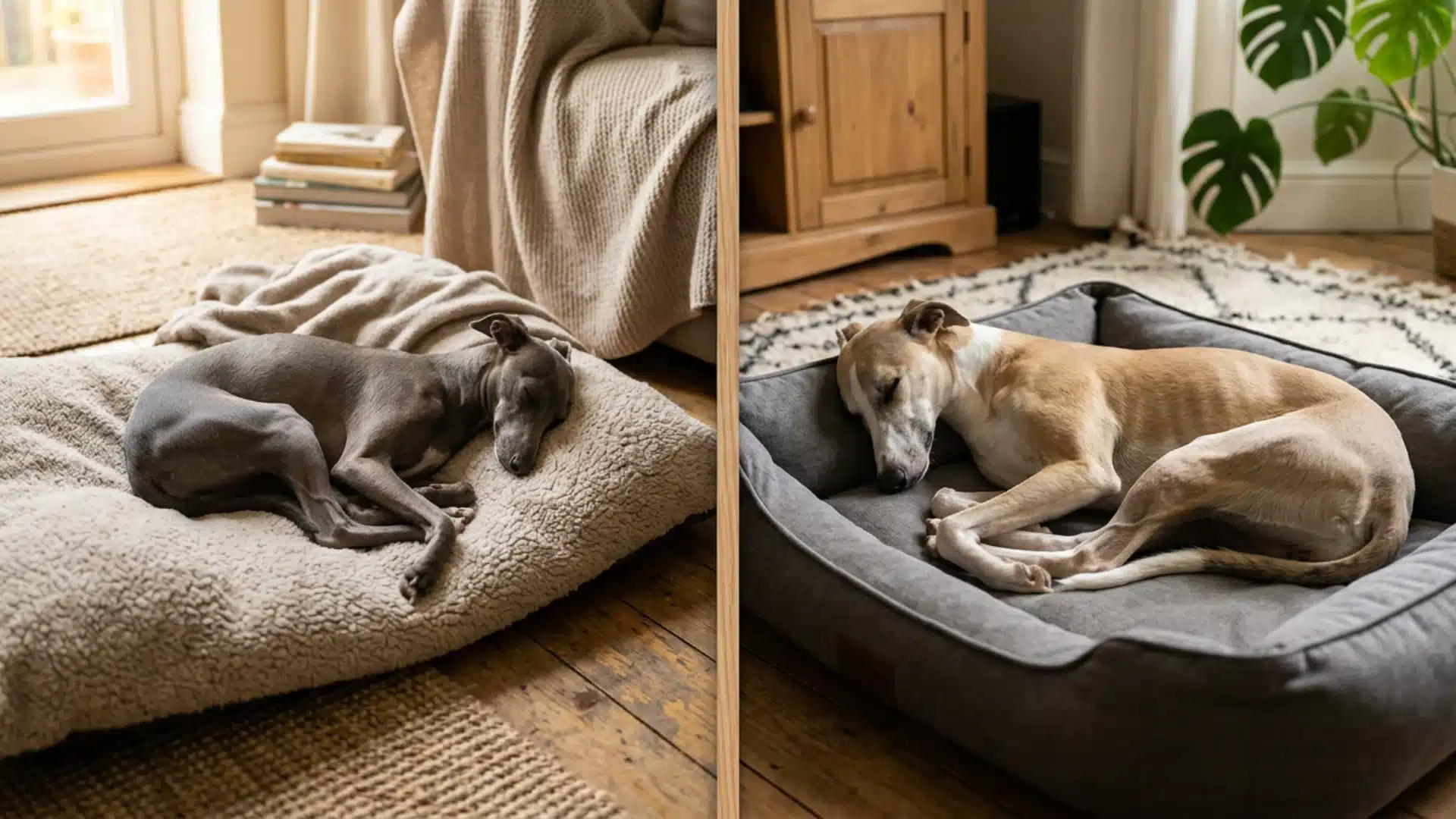
Choosing between an Italian Greyhound and a Whippet depends on your home, schedule, activity level, and how much daily attention you can realistically give.
- New Owners: A Whippet is usually the easier choice because it is calmer, more consistent with training, and more forgiving of small routine changes.
- Young Children: A Whippet often fits better in busy family homes because its sturdier body can handle normal household movement more safely.
- Apartment Homes: Both breeds can live well in apartments if they get daily walks, warm resting spots, and enough quiet time indoors.
- Busy Schedules: A Whippet usually handles short periods alone better, but neither breed should be left by itself for long hours every day.
- Calm Companion: A Whippet is often better for owners who want an affectionate dog that can relax without needing constant attention.
- Close Bond: An Italian Greyhound is better for someone who wants a deeply attached dog that follows closely and loves constant companionship.
- Older Adults: Either breed can suit a peaceful home, as long as exercise, warmth, gentle handling, and routine care are provided.
If you want a more independent, adaptable dog, the Whippet is usually the safer choice.
If you want a tiny, sensitive shadow who bonds deeply and wants constant closeness, the Italian Greyhound may be the better match.
For more context, you can also compare them with other calm companion dogs before making a decision.
Conclusion
Choosing between an Italian Greyhound and a Whippet is less about picking the better breed and more about matching the dog to your daily life.
Italian Greyhounds suit people who want a small, sensitive companion and can offer plenty of closeness, warmth, and gentle care. Whippets are usually better for homes that need a sturdier, calmer dog with a little more independence.
Both breeds can be loving, quiet, and easy to live with when their needs are understood. Before deciding, think about your schedule, family setup, training patience, activity level, and how much alone time the dog may face.
The right choice is the one that fits your routine, not just your preference in appearance or size.
Share your experience in the comment section to help other readers choose wisely.
Frequently Asked Questions
Can an Italian Greyhound and a Whippet Live Together?
Yes. Italian Greyhounds and Whippets can usually live together well. Both are gentle sighthounds, and many enjoy the company of dogs with a similar play style. The main thing to watch is thesize difference, especially during rough play.
Are Italian Greyhounds or Whippets Good with Cats?
Sometimes, but caution is important. Both breeds have a strong prey drive, so cats are not always a safe match. They are most likely to do well with cats if they are raised with them from puppyhood.
Do Italian Greyhounds or Whippets Shed a Lot?
No. Neither breed is a heavy shedder. Both have short, smooth coats that are easy to maintain. A weekly wipe-down or gentle brushing is usually enough.