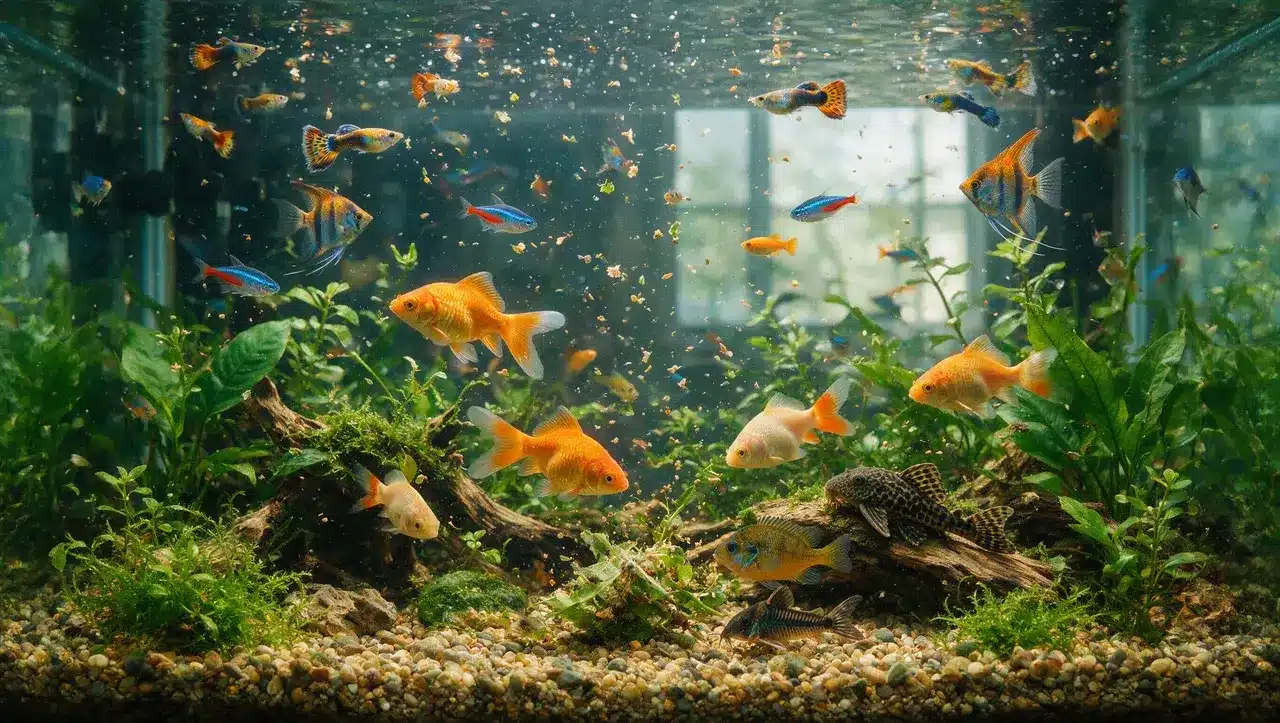
Turtles are easy to recognize, but their animal group can still confuse many readers. They live around water, swim well, and some spend most of their lives in ponds, rivers, or oceans.
That makes people link them with frogs, toads, and salamanders. The real answer to whether turtles are reptiles or amphibians comes down to their body, skin, eggs, breathing, and life cycle.
Turtles live around water, swim well, and some spend most of their lives in ponds, rivers, or oceans. That makes a lot of people link them with frogs, toads, and salamanders.
The confusion is understandable, but the science is not complicated once you know what to look for.
Ahead, you will learn the clear difference between reptiles and amphibians, why turtles fit one group, why they do not fit the other, and how to identify turtles with simple visual signs.
Are Turtles Reptiles or Amphibians?
Turtles are reptiles, not amphibians. They belong to the animal class called Reptilia, which includes snakes, lizards, and crocodiles.
Scientists place turtles in this group because they have dry, scaly skin, breathe air with lungs, and lay eggs on land. These features match reptiles and not amphibians.
Amphibians, such as frogs and salamanders, usually have moist skin and spend part of their early life in water with gills.
Turtles do not go through that kind of life cycle. Even sea turtles must come to land to lay eggs, which is another reptile trait.
In scientific grouping, turtles are part of the reptile family because of their body structure and how they grow and survive. Their shell may make them look unique, but their main traits clearly place them among reptiles.
Why Turtles are Considered Reptiles?
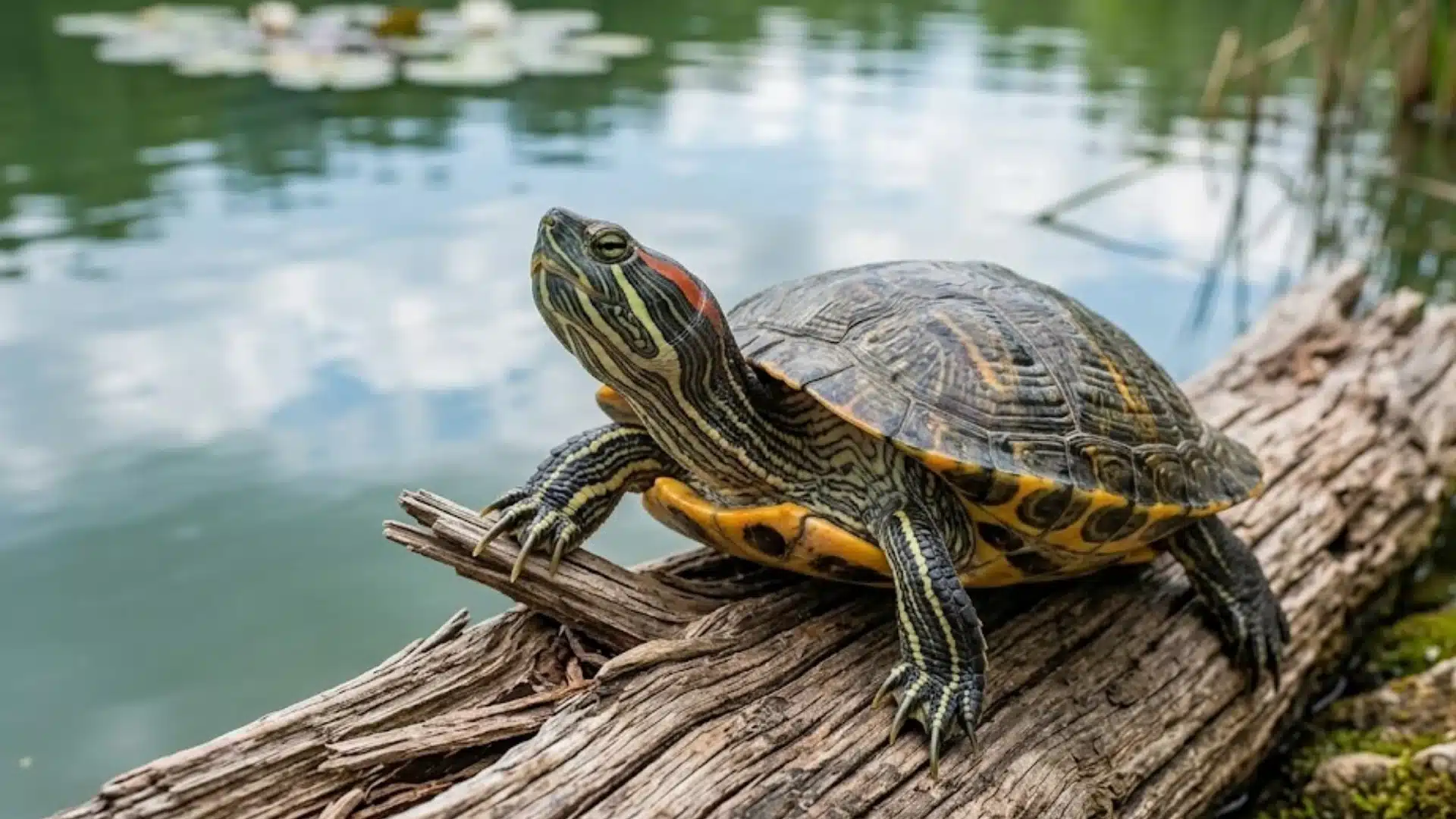
Turtles share the same basic traits as other reptiles. Their bodies are built to survive both on land and in water, but their main features clearly place them in the reptile group.
Scientists use physical traits and life cycles to classify animals, and turtles match reptiles in several ways.
- Turtles have dry, scaly skin instead of moist skin
- They breathe air through their lungs from birth to adulthood
- Female turtles lay eggs on land, even though many water-dwelling species do
- Turtles are cold-blooded, so their body temperature changes with the environment
- They have a backbone, which makes them vertebrates
These traits separate turtles from amphibians like frogs and salamanders. Their shell may look unusual, but their skin, breathing system, and reproduction all follow reptile characteristics.
For a closer look at another cold-blooded reptile often confused with amphibians, check out our full guide on geckos: species, traits, and facts.
Turtle vs Amphibian: Key Differences
Turtles and amphibians may both live near water, but their bodies, breathing, and life cycles are very different from each other.
| Feature | Turtles | Amphibians |
|---|---|---|
| Skin Type | Dry and scaly skin | Soft and moist skin |
| Breathing | Breathe with lungs their whole life | Young often use gills, adults may use lungs and skin |
| Eggs | Lay eggs on land with protective shells | Usually lay soft eggs in water |
| Life Cycle | Keep a similar body shape from birth | Go through major body changes during growth |
| Habitat | Live on land, in freshwater, or in oceans | Mostly stay in wet environments near water |
| Body Structure | Have a hard shell and strong limbs | Do not have shells and usually have softer bodies |
Is a Turtle a Fish?
No, a turtle is not a fish. A turtle is a reptile, even if it lives in water or swims very well.
Fish breathe through gills and stay underwater, but turtles breathe air through lungs and must come to the surface to breathe.
Fish usually have fins, while turtles have legs or flippers, depending on the type. Turtles also have dry, scaly skin and a hard shell, which fish do not have.
Sea turtles may spend almost their whole life in the ocean, but they still return to land to lay eggs. This is another clear sign that turtles are reptiles, not fish.
Unlike fish, turtles cannot live underwater forever because they need oxygen from the air. Their body structure, breathing system, and egg-laying habits all match those of reptiles.
So, a turtle may look like a water animal, but scientifically, it belongs to the reptile group.
Common Types of Turtles
Turtles come in different forms and habitats. Some live in oceans, while others stay in rivers, ponds, forests, or swampy areas around the world.
1. Sea Turtles
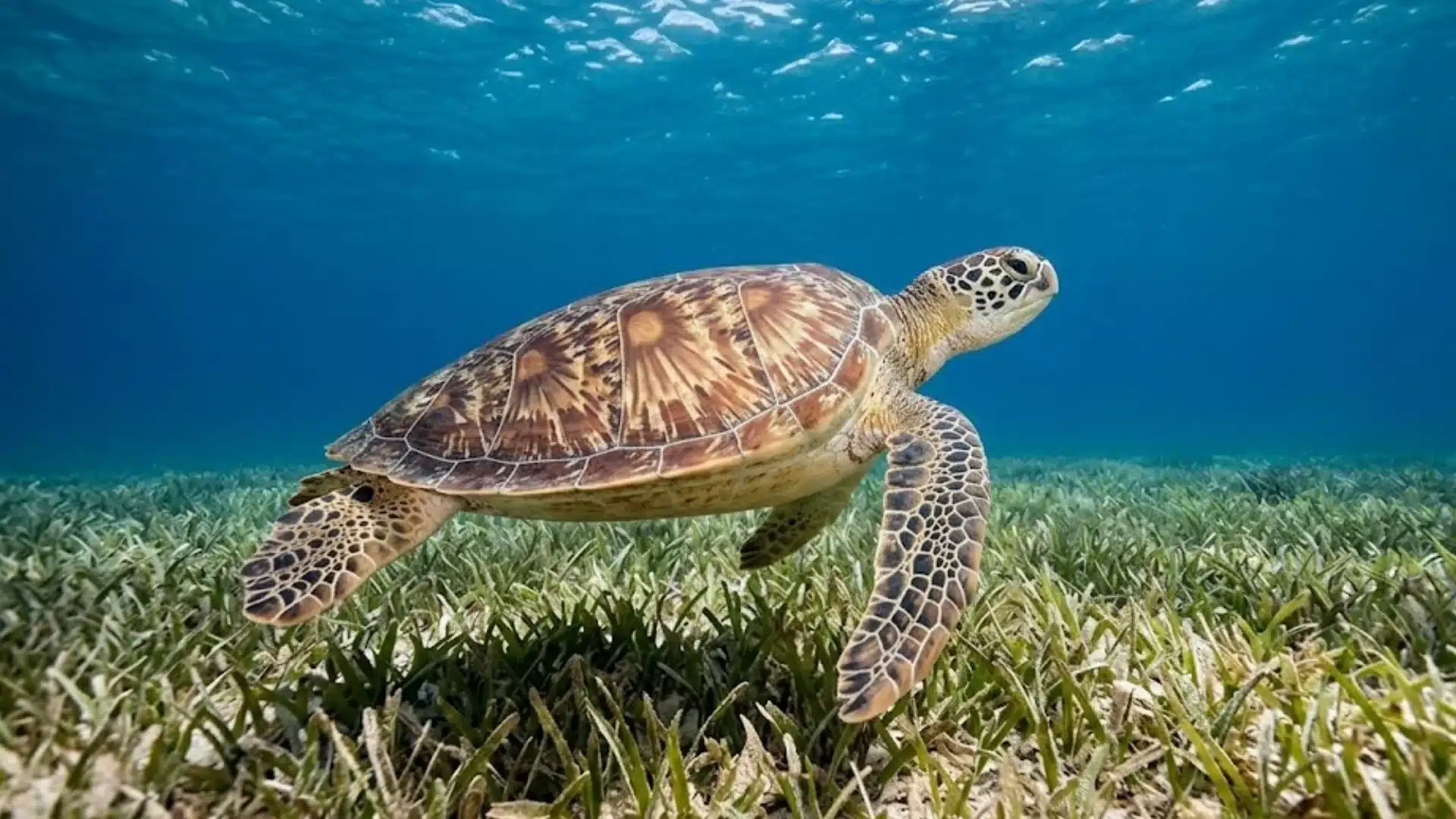
Sea turtles spend most of their lives in the oceans and are built for swimming long distances. They have large flippers instead of feet, which help them move smoothly through water.
Most sea turtles return to beaches to lay eggs, even after traveling far across the ocean. Popular species include the green sea turtle and loggerhead turtle.
Unlike land turtles, they cannot pull their heads fully into their shells. Sea turtles mainly eat jellyfish, seagrass, algae, or small sea animals, depending on the species.
Many are now protected because pollution, fishing nets, and habitat loss have reduced their numbers in different parts of the world.
2. Freshwater Turtles
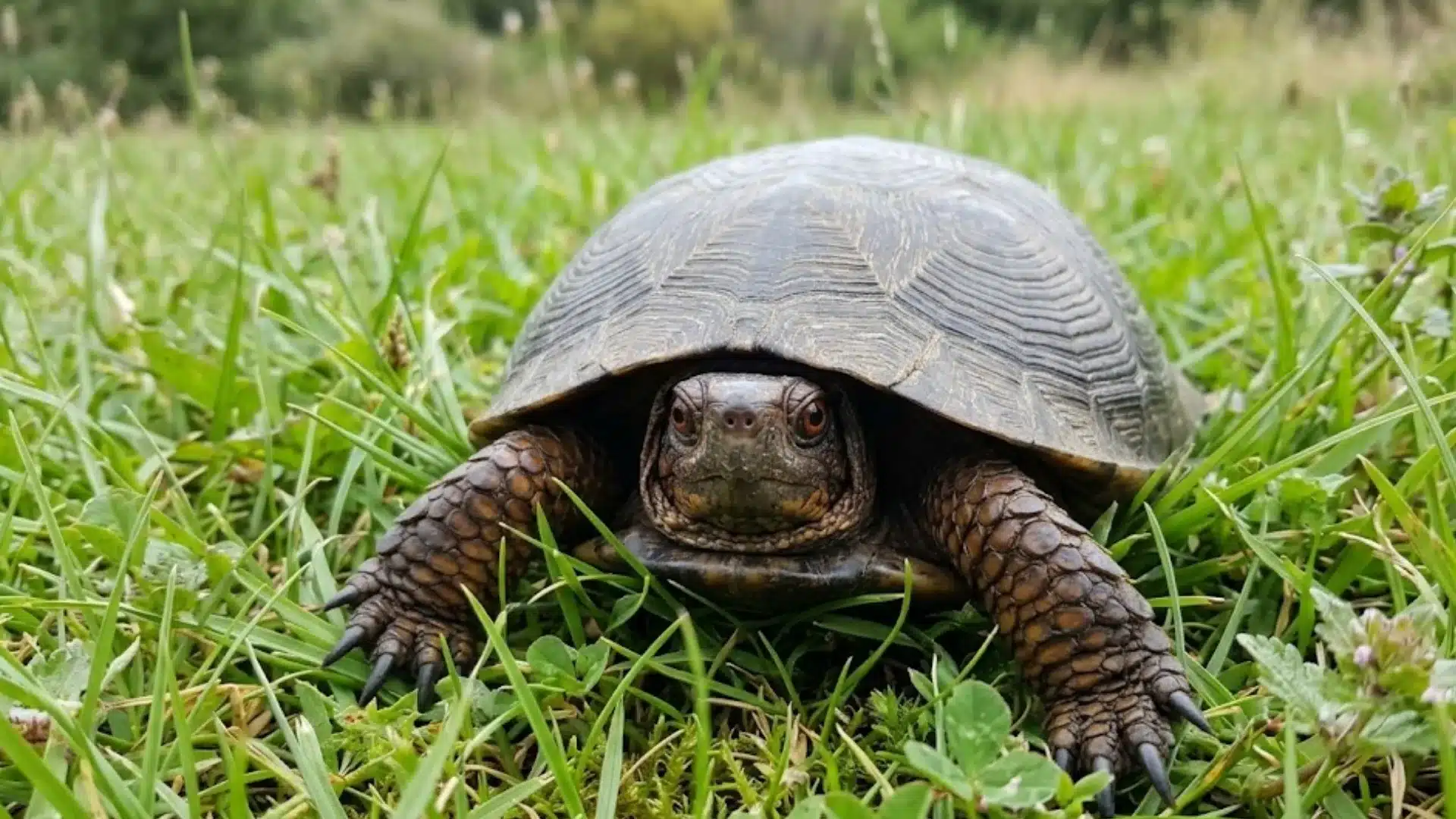
Freshwater turtles live in ponds, lakes, rivers, and marshes. They spend time both in water and on land, often resting on rocks or logs in the sunlight.
These turtles usually have webbed feet that help them swim easily. Common examples include painted turtles and red-eared sliders.
Their diet can include insects, fish, plants, and small water animals. Freshwater turtles breathe with lungs and must come to the surface for air.
Many people keep them as pets because of their small size and calm behavior. They are commonly found in North America, Asia, and other warm regions with slow-moving water.
3. Tortoises
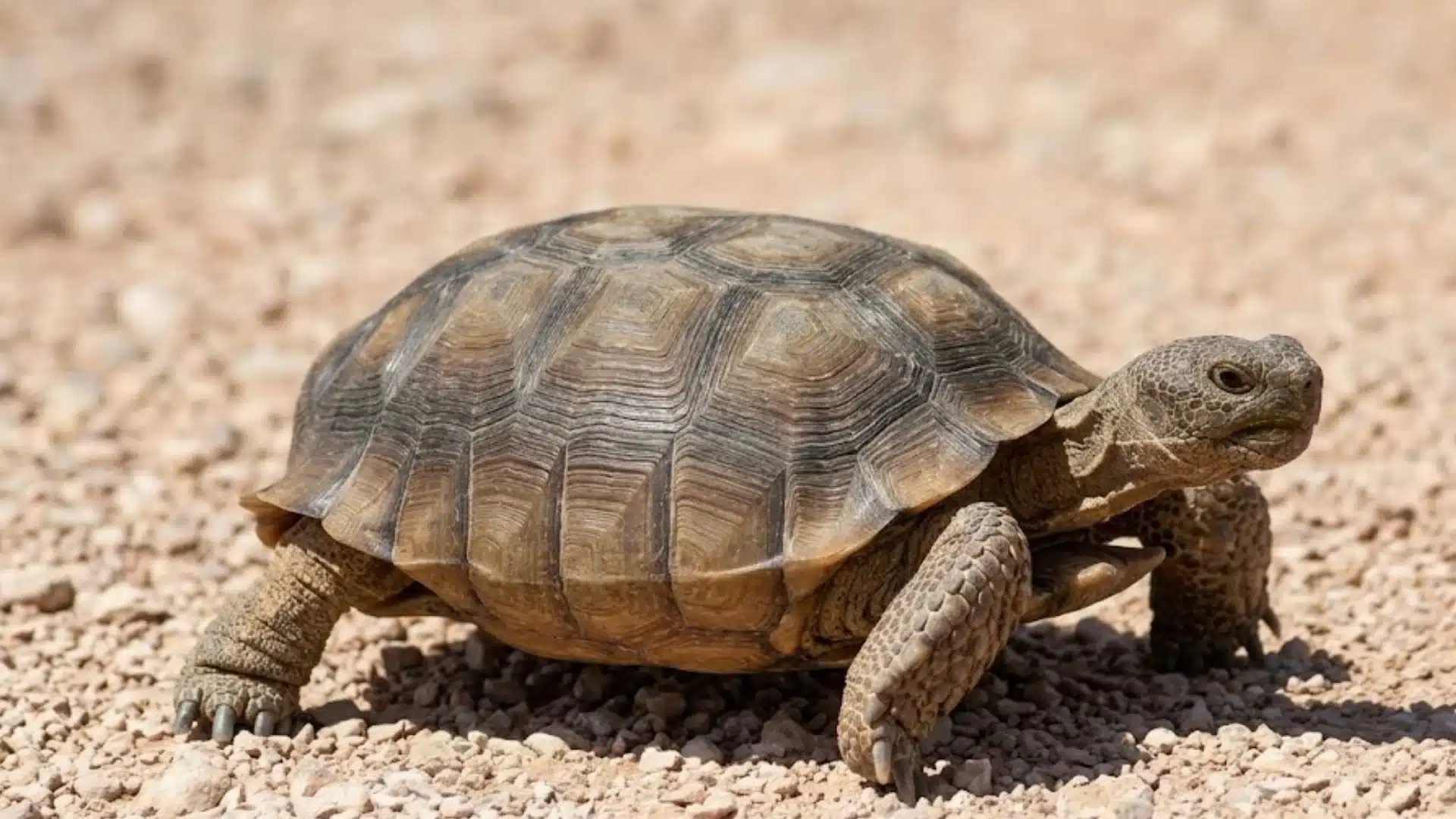
Tortoises are land-dwelling turtles known for their round, heavy shells and thick legs. Unlike sea turtles or freshwater turtles, tortoises are not built for swimming.
Their strong feet help them walk across dry ground, deserts, forests, and grasslands. Most tortoises eat plants such as leaves, grass, flowers, and fruits.
Some species can live for several decades, and giant tortoises may survive for more than 100 years. Their slow movement and hard shell protect them from many predators.
Tortoises are found in Africa, Asia, and parts of the Americas. They prefer warm climates and spend much of their time searching for food and resting.
4. Terrapins
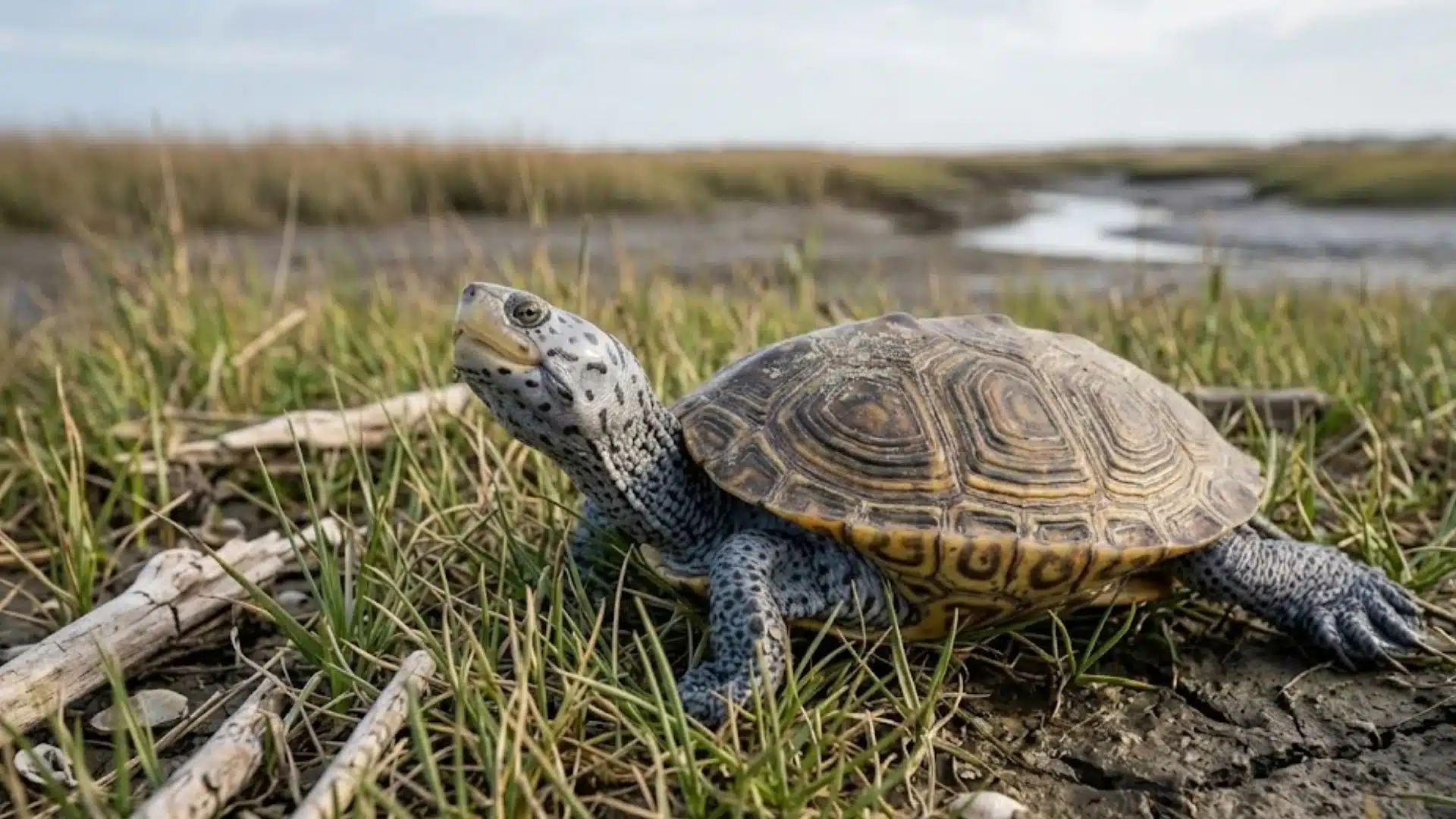
Terrapins are turtles that usually live in brackish water, which is a mix of fresh water and salt water. They are often found in coastal marshes, estuaries, and mangrove areas.
Terrapins have features that help them survive in changing water conditions. Diamondback terrapins are one well-known example.
They are smaller than many sea turtles but stronger swimmers than tortoises. Terrapins eat fish, insects, snails, and small shellfish.
Their shells often have unique patterns and colors that help them stand out. Because they live between land and water environments, many people confuse them with other turtle types.
Why Do People Confuse Turtles with Amphibians?
Many people mistake turtles for amphibians because turtles spend a lot of time near or inside water. Seeing them swim in ponds, lakes, or rivers makes them seem similar to frogs and salamanders.
Some turtle species also move between land and water during daily activities, which adds more confusion. At first glance, their habitat can make them look closely related to amphibians.
- Many turtles live in water for feeding, swimming, or resting
- Some turtles regularly move between land and water environments
- Amphibians also stay around ponds, marshes, and wetlands
- Living near water does not automatically make an animal an amphibian
This mix-up is common because people often judge animals by where they live instead of how their bodies work.
Scientists classify animals by body traits, breathing systems, skin type, and reproduction.
Even though turtles share wet habitats with amphibians, their dry scales, lungs, and egg-laying process clearly place them in the reptile group instead.
Conclusion
Turtles are easy to confuse with amphibians because many of them swim, live near ponds, or move between land and water.
Still, their body traits tell the real story. Turtles have dry, scaly skin, breathe with lungs, lay eggs on land, and stay cold-blooded like other reptiles.
That is why the answer to whether turtles are reptiles or amphibians is simple: turtles are reptiles.
Their shells make them look different from snakes and lizards, but their main features still place them in the reptile group. So, the next time you see a turtle near water, look beyond the habitat and notice its body.
Have you ever mistaken a turtle for an amphibian? Share your thoughts below
Frequently Asked Questions
Can Turtles Leave Their Shells?
No, turtles cannot leave their shells. The shell is part of their body and is connected to their ribs and spine.
Do Turtles Have Teeth?
No. Turtles have a hard, beak-like jaw with sharp edges that they use to bite, tear, and crush food. They’ve had this instead of teeth for their entire evolutionary history.
Do Baby Turtles Need Parents After Hatching?
Most baby turtles survive on their own after hatching. They leave the nest and find food, shelter, and water by instinct.